
India’s Long Road to Independence is Chapter 2 of Exploring Society: India and Beyond, Part 2 and these NCERT Solutions for Class 8 Social Science Part 2 Chapter 2 answer its questions for the 2026-27 session. The story runs from 1858, when the British Crown took direct control of India, to the independence and Partition of 1947. Its questions range from true-or-false statements and ‘Who Am I?’ riddles about leaders to discussions of Tilak’s call for Swaraj and Nehru’s ‘tryst with destiny’ speech. Once you have checked the answers, use the dated timeline, the four approaches to the struggle and the table of leaders below.
On this page:
- The Big Questions: Page 36
- LET’S EXPLORE: Page 38
- LET’S EXPLORE: Page 42
- LET’S EXPLORE: Page 43
- LET’S EXPLORE: Page 50
- LET’S EXPLORE: Page 52
- LET’S EXPLORE: Page 55
- LET’S EXPLORE: Page 56
- LET’S EXPLORE: Page 63
- LET’S EXPLORE: Page 69
- Questions and activities: Page 81
- Very Short Answer Type Questions
- Short Answer Type Questions
- Long Answer Type Questions
- FAQs
India’s Long Road to Independence Class 8 Question Answers (Part 2, Chapter 2)
Class 8 Social Science Part 2 Question-Answers of Page 36
Page 36 – The Big Questions
1. How did a land of diverse geographies, languages and religions come together to challenge and finally end nearly two centuries of British rule?
Answer:
People in different parts of India came to see that they shared a goal: freedom from British rule. The Congress gave people from different regions a place to organise. Songs such as ‘Vande Mataram’ stirred a sense of belonging. Movements such as Swadeshi, the Salt March and Quit India gave ordinary people ways to take part. Students, workers, peasants, women and tribal communities helped make it a nationwide struggle.
2. What were the main developments and who were some important figures in India’s struggle for freedom?
Answer:
The Indian National Congress was founded in 1885. Early leaders such as Dadabhai Naoroji demanded reforms. The 1905 partition of Bengal led to the Swadeshi and boycott movements, supported by leaders such as Tilak, Lala Lajpat Rai and Bipin Chandra Pal. Gandhi led mass campaigns such as Non-Cooperation and the Salt March. Revolutionaries such as Bhagat Singh also challenged British rule. In 1929 the Congress demanded complete independence and in 1942 Quit India called for an immediate end to British rule. Subhas Chandra Bose led the INA during World War II. India gained independence in 1947, along with the pain of Partition.
3. What issues did the leading freedom fighters agree or disagree upon?
Answer:
Most leaders wanted Indians to control their own future. They disagreed on how quickly to demand full independence and what methods to use. Early Congress leaders relied on petitions and reforms. Tilak and other Nationalists supported Swadeshi and boycott. Gandhi insisted on non-violent mass action, while some revolutionaries took up arms. Leaders also disagreed over separate electorates, as Gandhi and Ambedkar did, and over the idea of Partition.
Class 8 Social Science Part 2 Question-Answers of Page 38
Page 38 – LET’S EXPLORE
1. Talk to your grandparents or elderly family members and find out what they remember or heard about India’s freedom struggle. Note which leaders or methods people supported. Discuss in class how, despite sharing the same goal of freedom, people followed different paths.
Answer:
In a family conversation I would ask which stories the elders heard growing up and which leaders their families admired. My notes for class would compare Gandhi’s peaceful protests with Tilak’s call for Swaraj and the use of Swadeshi and boycott. Gandhi’s followers broke unjust laws without violence. Swadeshi supporters bought Indian goods and refused foreign goods. Both groups wanted India to govern itself and found different ways for ordinary people to help.
Class 8 Social Science Part 2 Question-Answers of Page 42
Page 42 – LET’S EXPLORE
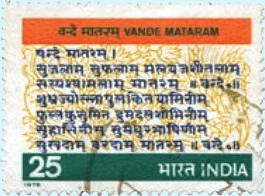
1. Below are the first two stanzas of the song. Can you make out some of their meaning?
Vande mātaram!
sujalām suphalām malayajaśhītalām
śhasyaśhyāmalām, mātaram!
Vande mātaram!
Śubhrajyotsnām pulakitayāminīm
phullakusumita drumadalaśhobhinīm
suhāsinīm sumadhura bhāṣhiṇīm
sukhadām varadām, mātaram!
Vande mātaram!
Answer:
‘Vande Mataram’ means ‘I bow to the Motherland.’ The first stanza describes a land rich in water and fruit, with cool breezes and green fields. The second shows its beauty through moonlit nights, flowering trees and leaves. The poet imagines the motherland as a smiling mother who speaks sweetly and brings happiness and blessings.
Class 8 Social Science Part 2 Question-Answers of Page 43
Page 43 – LET’S EXPLORE
1. How are the values expressed by Swami Vivekananda above relevant in the 21st century? Can some of them help you achieve your goals? Share your thoughts with your classmates.
Answer:
Self-confidence, curiosity and service matter even today. Vivekananda’s advice to keep working towards a goal reminds me to continue even when something feels difficult. If I find a lesson hard, I can break it into smaller parts, ask questions and practise. His interest in science and Indian traditions also reminds me to welcome new ideas and learn from my own culture. I would share with my class how we can help each other reach our goals by studying together.
Class 8 Social Science Part 2 Question-Answers of Page 50
Page 50 – LET’S EXPLORE
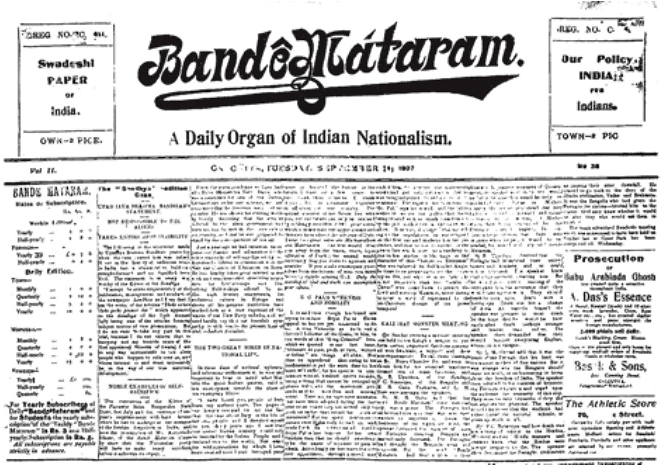
1. Why do you think the Bande Mataram daily avoided using the word ‘independence’?
Answer:
I think the editors chose their words carefully because the British could prosecute people or shut down newspapers that openly challenged colonial rule. The words ‘absolute national autonomy’ still made their goal clear to readers.
2. Comment on the phrase ‘absolute national autonomy’ in the above quotation from a Bande Mataram article.
Answer:
‘Absolute’ means complete, and ‘national autonomy’ means a nation’s right to govern itself. The writer was asking for India to have full control over its own affairs. Cancelling Bengal’s partition alone would leave British control in place.
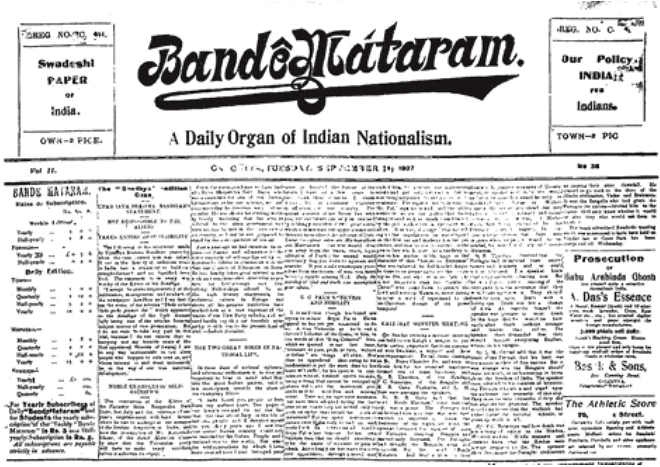
3. Looking at the two boxes on either side of the daily’s title in Fig. 2.12, what do you observe?
Answer:
The left box calls it the ‘Swadeshi PAPER OF India.’ The right box says, ‘Our Policy: INDIA FOR Indians.’ They show that the paper supported Indian self-reliance and wanted Indians to decide how their country was governed.
Class 8 Social Science Part 2 Question-Answers of Page 52
Page 52 – LET’S EXPLORE
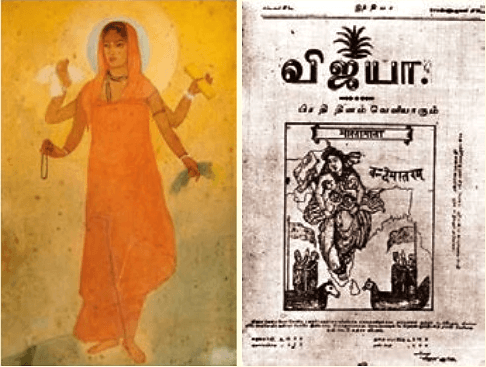
1. In what ways are these two representations of Mother India similar or different?
Answer:
Both pictures show India as a mother. Abanindranath Tagore’s painting shows her alone, in a saffron robe, with a halo and objects in her four hands. Bharati’s black-and-white Vijaya cover places her inside a framed scene with an outline map and groups of people below her.
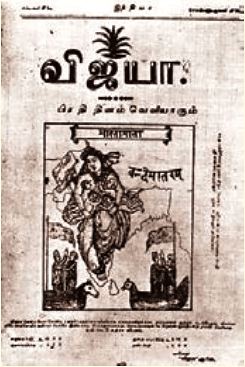
2. What details can you discern in the front cover of Subramania Bharati’s Vijaya?
Answer:
I can see the magazine’s Tamil title at the top, with a leafy design above it. The framed picture shows Mother India over an outline of the subcontinent, with ‘Vande Mataram’ beside her. Smaller groups of figures appear at the two bottom corners.
Class 8 Social Science Part 2 Question-Answers of Page 55
Page 55 – LET’S EXPLORE
1. You may explore further and find out more about the freedom struggle in the North-East and known and lesser-known freedom fighters from this area.
Answer:
Resistance in the North-East began long before Quit India. Tirot Sing led the Khasi Revolt in present-day Meghalaya, and the Singphos resisted British rule in eastern Assam. In Assam, Maniram Dewan and Piyali Baruah were hanged during the 1857 rebellion. Rani Gaidinliu began resisting as a teenager and asked people to refuse to pay taxes or work for the British. In the Quit India Movement, Kanaklata Barua was killed while leading a procession to raise the national flag at Gohpur. Kushal Konwar also gave his life during that movement.
Class 8 Social Science Part 2 Question-Answers of Page 56
Page 56 – LET’S EXPLORE
1. When the judge asked Tilak if he had anything to say after being sentenced, Tilak replied, “There are higher powers that rule the destinies of men and nations; and I think, it may be the will of Providence that the cause I represent may be benefited more by my suffering than by my pen and tongue.” What message do you think he was trying to convey?
Answer:
Tilak believed his punishment might make more people pay attention to the cause of freedom. The court could put him in prison, but even his suffering could inspire people to continue the work he had done through his writing and speeches.
2. On another occasion, Tilak famously declared, “Swaraj is my birthright and I shall have it.” What does this reveal about Tilak’s character?
Answer:
Tilak was bold and determined. He believed self-rule was a right that belonged to Indians from birth. He had the courage to say so openly and the conviction to keep working for it.
Class 8 Social Science Part 2 Question-Answers of Page 63
Page 63 – LET’S EXPLORE
1. Rabindranath Tagore sent a strong letter of protest to the then Viceroy. “The accounts of the insults and sufferings by our brothers in Punjab,” wrote Tagore, “have trickled through the gagged silence, reaching every corner of India, and the universal agony of indignation roused in the hearts of our people has been ignored by our rulers—possibly congratulating themselves for what they imagine as salutary lessons.” In the same letter, Tagore returned the knighthood he had received from the British. What does Tagore mean when he assumes that the colonial rulers ‘congratulated themselves’ after the Jallianwala Bagh massacre?
Answer:
Tagore was criticising the rulers for possibly being pleased that their violence had frightened people into silence. They may have thought they had taught people a lesson. To Tagore, that showed how little they cared about the suffering and anger across India. He returned his knighthood to protest.
Class 8 Social Science Part 2 Question-Answers of Page 69
Page 69 – LET’S EXPLORE
1. Form groups to analyse, compare and discuss the various elements or demands contained in the above resolution.
Answer:
Our group could divide the Lahore resolution into three points. First, people have a right to freedom, to enjoy what they earn, and to have the basic things they need to live and grow. Second, people can change or remove a government that denies them these rights. Third, British rule had damaged India’s economy, politics, culture and spirit, so the resolution demanded Purna Swaraj. The first point states the rights people should have, the second explains what people can do to defend them and the third applies both ideas to India.
Class 8 Social Science Part 2 Question-Answers of Page 81
Pages 81 – Questions and activities
True or False. Find out whether the following statements are true or false:
1. Right from its inception, the Indian National Congress called for India’s independence.
2. Bal Gangadhar Tilak turned a Shivaji festival into a popular event.
3. The Ghadar Movement of 1914–15 aimed to start a mutiny within the British Indian Army while British troops were busy with World War I.
4. Vallabhbhai Patel earned the title ‘Sardar’ for his leadership during the Satyagraha agitation in Gujarat.
5. The Kakori train robbery of 1925 was carried out to fund the activities of the Hindustan Republican Association.
6. The ‘Do or Die’ call was given by Mahatma Gandhi during the Non-Cooperation Movement in 1920.
7. B.R. Ambedkar and Gandhi were in total agreement regarding the issue of ‘separate electorates’ for Dalits.
8. Sir Stafford Cripps was sent to India in 1942 because Winston Churchill supported immediate independence for India.
9. Subhas Chandra Bose raised an army during his stay in Germany.
10. The Radcliffe Line, which divided India and Pakistan, was announced a few weeks before Independence Day.
Answer:
1. False. At first, the Congress asked for reforms and a greater role for Indians in government.
2. True. Tilak used the Shivaji festival to bring people together and encourage pride in their history.
3. True. The movement hoped to organise a revolt in the British Indian Army during World War I.
4. True. Patel earned the title through his leadership of the Bardoli Satyagraha in Gujarat in 1928.
5. True. The money was meant to support the Hindustan Republican Association’s work.
6. False. Gandhi gave the ‘Do or Die’ call during the Quit India Movement in 1942.
7. False. Ambedkar initially supported separate electorates for Dalits, while Gandhi opposed them. They later agreed to reserve seats in a common electorate.
8. False. The British wanted India’s help in the war. The Cripps Mission offered dominion status after the war.
9. True. Bose raised the Indian Legion in Germany. He later took charge of the Indian National Army in Southeast Asia.
10. False. The Radcliffe Award was made public on 17 August 1947, two days after India’s Independence Day.
Who Am I? Can you identify these figures?
1. Known as the ‘Lion of Punjab’, I was severely injured during a brutal lathi charge while protesting against the Simon Commission.
2. I famously declared, ‘Swaraj is my birthright, and I shall have it!’ I used the Kesari newspaper and festivals like Ganesh Chaturthi to unite people against British rule.
3. I was a leader of the Nationalist faction of the Congress. In the daily Bande Mataram, I wrote on the need for India to attain absolute autonomy.
4. I earned my nickname ‘Bagha’ after wrestling a tiger with my bare hands. I was a revolutionary leader who died in a gunfight at while waiting for a shipment of German arms to start an uprising.
5. I organised the daring attempt to throw a bomb at the Viceroy in 1912. I later escaped to Japan, where I spent years working to organise a movement from there.
6. I was martyred at a young age after an attempt on the life of a British judge.
7. I was martyred at a young age after throwing non-lethal bombs in Delhi’s Central Legislative Assembly.
8. I turned the freedom struggle into a mass movement through the principles of ahimsa and satyagraha, leading campaigns such as the Dandi March.
9. I sought help from the Axis powers during World War II to organise the Indian National Army.
10. A British lawyer, I was given just five weeks to draw the boundary line that would partition the Indian subcontinent into two separate nations.
Answer:
1. Lala Lajpat Rai
2. Bal Gangadhar Tilak
3. Aurobindo Ghose (Sri Aurobindo)
4. Jatin Mukherjee (Bagha Jatin)
5. Rash Behari Bose
6. Khudiram Bose
7. Bhagat Singh
8. Mahatma Gandhi
9. Subhas Chandra Bose
10. Cyril Radcliffe
What kinds of sacrifices are needed to achieve freedom?
Think about the lives of Indian soldiers during wars, families suffering during famines, leaders and ordinary people who were arrested, and countless others who lost their homes and safety while participating in protests. If you were living during India’s freedom struggle, would you have chosen to participate in it? What comforts, opportunities, or personal goals might you have been willing to give up for a cause you strongly believed in?
Answer:
Some people risked their lives, while others gave up their income, studies or years with their families. Indian soldiers faced danger during wars. During famines, families struggled to feed themselves and arrests and violence left many people without safety or a home. I would have joined peaceful protests and encouraged people to buy Indian goods. I would have given up some of my free time and comforts to help others join in.
What values does Tilak’s statement, “Swaraj is my birthright and I shall have it,” reflect? Can these values be meaningful for young people today?
Answer:
It shows courage, self-respect, determination and belief in the right to self-rule. These values matter to young people today. For example, if classmates are being treated unfairly, we can speak up respectfully and keep looking for a fair solution.
How did peasants, workers, tribals, and students contribute to the national movement in ways different from political leaders?
Answer:
Peasants resisted unfair demands for land revenue, as they did at Bardoli. Workers went on strike, including during Quit India. Tribal communities resisted British rule in their own regions, as Tirot Sing and the Khasis did. Students left government institutions or joined protests. Political leaders called meetings, set demands and negotiated. These groups brought the movement into fields, factories, villages and classrooms.
Discuss in class this extract from Nehru’s speech on 15 August 1947:
“Long years ago we made a tryst with destiny, and now the time comes when we shall redeem our pledge, not wholly or in full measure, but very substantially. At the stroke of the midnight hour, when the world sleeps, India will awake to life and freedom. A moment comes, which comes but rarely in history, when we step out from the old to the new, when an age ends, and when the soul of a nation, long suppressed, finds utterance…”
What is meant by “redeem our pledge”? How would you define the ‘soul of a nation’?
Answer:
‘Redeem our pledge’ means to keep the promise to win India’s freedom. ‘Very substantially’ suggests that independence fulfilled much of that promise and there was still work ahead. To me, the ‘soul of a nation’ means the shared memories, hopes and values of its people. With freedom, Indians could express those hopes and decide their future themselves.
Imagine you are a freedom fighter.
a) Explain the method you support to achieve freedom.
b) Discuss with your classmates any other method they would support. Be respectful in your debate.
c) What does this debate teach us about unity and disagreement?
Answer:
a) I would choose satyagraha. I would join peaceful marches and resist unfair laws without hurting anyone.
b) A classmate might prefer Swadeshi and boycott, arguing that buying Indian goods helps local makers and puts pressure on British trade. I would agree that this lets families help from home and explain that marches also give people a chance to act together in public.
c) We can disagree about a method and still work towards the same goal. Listening to each other helps us see how different methods can support one another.
Write a news report based on an important event in the Freedom Movement (Swadeshi, boycott, satyagraha, Non-Cooperation, Quit India, or Partition).
a) Write a headline.
b) Include one interview or public reaction.
c) Explain why this event was important.
Answer:
Gandhi Breaks British Salt Law at Dandi
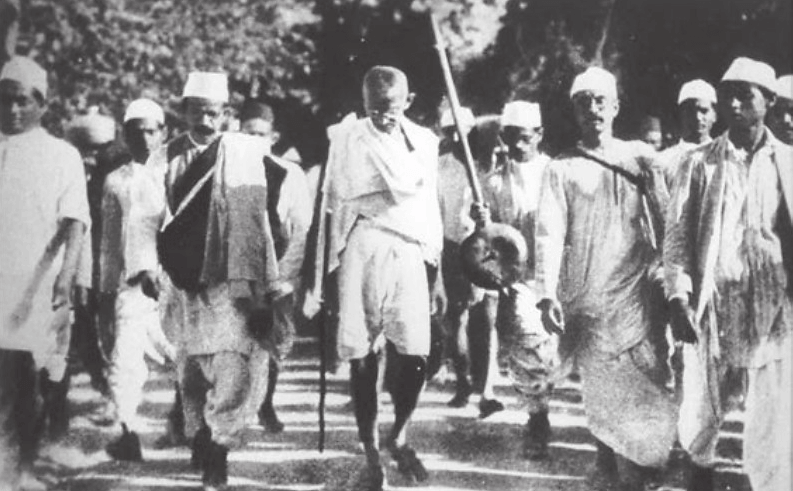
Dandi, April 1930. After a march of about 380 kilometres, Mahatma Gandhi reached the coast and picked up salt in defiance of the British salt law. The government controls salt production and charges a tax on it.
As word spread, more salt marches took place and many women came out to break the salt law. The march began the Civil Disobedience Movement and showed how ordinary families could challenge British rule by acting together on an issue that touched every home.
Imagine you are part of a team creating a small museum exhibition on India’s freedom struggle for students of your age.
a) Choose a title for your exhibit.
b) Select three objects (for example: a letter, a photograph, a newspaper, a prison diary — you can add to these examples) and explain what each object represents.
c) Write a short note on what visitors should learn or feel after seeing this exhibit.
Answer:
a) Our exhibit would be called ‘Three Objects, One Freedom Struggle’.
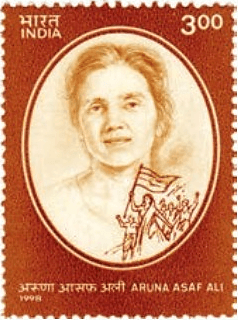
b) A front page of Bande Mataram would show how newspapers spread the ideas of Swadeshi and self-rule. A photograph of the Dandi March would show how a peaceful protest over salt brought people together. A postage stamp honouring Aruna Asaf Ali would remind visitors of the women who kept the Quit India Movement going.
c) I would like visitors to feel that freedom was won through the courage of many people. The three objects would help them see how writing, marching and keeping a movement going all played a part.
As a class activity, write and stage a small play or skit based on the Freedom Movement.
Answer:
The Salt We Use Every Day
Characters: Narrator, Gandhi, a marcher and a villager.
Narrator: It is April 1930. After walking for many days, the marchers reach Dandi.
Villager: Why have you walked so far for a little salt?
Marcher: We all need salt, but the British control how it is made and make us pay a tax on it.
Gandhi: We will break this unfair law peacefully. We must stay calm and hurt no one.
[Gandhi bends and picks up a handful of salt. The others gather around him.]
Villager: I can see how all of us can do something for freedom.
Narrator: The news spread. People in many parts of India began making salt in defiance of the law.
India achieved freedom after great sacrifice. What responsibilities do citizens have today to protect and strengthen this freedom? Write 5 to 10 lines.
Answer:
- I should respect the Constitution and the rights of others.
- I can treat people of different religions, languages and backgrounds fairly.
- I can listen to others and disagree without using violence.
- I should look after public places and protect our environment.
- I should check information before passing it on.
- When I am old enough to vote, I can learn about the candidates and choose carefully.
- I can speak up when someone is treated unfairly and help people in my community.
Class 8 SST Part 2 Ch: 2 Extra Question-Answers for Practice
Very Short Answer Type Questions
1. Who took direct control of British India from the East India Company in 1858?
See AnswerThe British Crown took direct control in Queen Victoria’s name.
2. Which law passed in 1878 censored Indian-language newspapers?
See AnswerThe Vernacular Press Act of 1878 regulated and censored the Indian-language press.
3. Who founded the Brahmo Samaj, and where was it founded?
See AnswerRaja Ram Mohan Roy founded it in Calcutta in 1828. It was first known as the Brahmo Sabha.
4. In which novel did Bankim Chandra Chattopadhyay include ‘Bande Mataram’?
See AnswerHe included it in Anandamath, a novel published in 1882.
5. What was the aim of the Ramakrishna Mission founded by Swami Vivekananda?
See AnswerIt aimed to bring spiritual practice and social service together.
6. Who presided over the first session of the Indian National Congress?
See AnswerWomesh Chunder Bonnerjee presided over the first session, held in Bombay in 1885.
7. Why were the followers of the Namdhari Movement called Kukas?
See AnswerTheir name came from the high-pitched chants, called kūks, that they made during prayers.
8. What was the uprising led by Birsa Munda in 1899–1900 called?
See AnswerIt was called Ulgulaan, meaning the Great Tumult.
9. Which Swadeshi textile enterprise did Jamsetji Tata establish in 1886?
See AnswerHe established the Swadeshi Mills in Bombay.
10. What kinds of training did the Anushilan Samiti offer young men?
See AnswerIt offered intellectual, moral and physical training.
11. What power did the Rowlatt Act give the police in 1919?
See AnswerIt allowed the police to detain people without a trial.
12. Who was the first Indian woman to become president of the Indian National Congress?
See AnswerSarojini Naidu became the first Indian woman to lead the Congress as president in 1925.
13. Who led the soldiers who refused to fire on an unarmed crowd at Peshawar in 1930?
See AnswerChandra Singh Garhwali led the Royal Garhwal Rifles soldiers who refused to fire.
14. Who proposed a separate Muslim territory within an Indian federation at the Muslim League session in Allahabad in 1930?
See AnswerThe Urdu poet and philosopher Muhammad Iqbal made this proposal.
15. Where did the Royal Indian Navy mutiny begin in February 1946?
See AnswerIt began in Bombay and soon spread to other places in India.
Short Answer Type Questions
1. Give two examples of the unequal treatment of Indians under colonial rule.
See AnswerIndians in the army and civil services could receive less pay than British employees doing the same work. Indians were also kept apart from Europeans in places such as clubs, trains and some public spaces.
2. Which social practices did the Arya Samaj question, and what changes did it support?
See AnswerThe Arya Samaj opposed caste divisions based on birth and questioned rituals. It supported education for women and the remarriage of widows. It also urged people to think for themselves, be self-reliant and return to the teachings of the Vedas.
3. How did the Kuka Movement practise self-reliance?
See AnswerThe Kukas rejected foreign goods and wore simple white clothes made of hand-spun cloth. They set up their own postal system and private courts, which helped them avoid using some of the institutions controlled by the British.
4. How did people use rakhis and songs to protest the partition of Bengal in 1905?
See AnswerPeople tied rakhis on one another’s wrists to show unity, especially between Hindus and Muslims. They also sang ‘Vande Mataram’ in processions to express pride in their country. The colonial authorities banned the public singing of the song.
5. What kind of education did the founders of Bengal National College want to provide?
See AnswerThey wanted students to learn modern subjects while staying connected to Indian thought and values. The National Council of Education set up the college in 1906, and Aurobindo Ghose became its first principal.
6. How did World War I affect food supplies and prices in India?
See AnswerThe colonial government sent food out of India to feed soldiers who were fighting in the war. That led to food shortages at home. Heavy spending on defence also pushed up the prices of goods people needed.
7. Why did many Indians protest against the Simon Commission, and how did they show their opposition?
See AnswerThe commission was sent to study constitutional reform in India but had no Indian members. People objected to being left out of decisions about their own future. They held rallies, waved black flags and shouted ‘Simon Go Back!’
8. What brought people to Jallianwala Bagh on 13 April 1919?
See AnswerThousands had gathered at Jallianwala Bagh in Amritsar. Some people had come to celebrate Baisakhi. Others had gathered to protest peacefully against the arrest of local leaders and the Rowlatt Act, which allowed detention without trial.
9. What did the provincial reforms of 1935 change, and what powers did the British retain?
See AnswerThe reforms allowed elected governments to run the provinces with some independence. The British still controlled defence, foreign affairs and internal security. British-appointed governors could also take over a province’s administration, which limited the power of its elected government.
10. What did the Cabinet Mission propose to help transfer power in 1946?
See AnswerThe Cabinet Mission proposed putting the provinces into three groups. The groups would govern most of their own affairs, while defence, foreign affairs and communication would stay at the centre. Disagreements between the Congress and the Muslim League stalled talks.
Long Answer Type Questions
1. What did Queen Victoria’s proclamation in 1858 promise Indian princes, and how did British control work in practice?
Answer:
The proclamation promised to respect the rights, dignity and honour of Indian princes. They could stay in charge of their states under British supremacy, a system called paramountcy. In practice, the British placed Residents or Political Agents in most princely states. These officials often interfered with local administration. A prince might keep his throne and title and still have little freedom to make important decisions.
2. Why did rural communities in Chota Nagpur rally behind Birsa Munda, and what happened to the uprising he led?
Answer:
Many Mundas were angry about British exploitation and the pressure placed on them by landlords. Birsa called on them to reclaim their land and revive their faith and traditions. He led an uprising in 1899–1900 that challenged colonial authority. The British suppressed it and arrested him. Birsa died in prison, but his stand for land and dignity continued to inspire tribal communities in eastern India.
3. Why did Gandhi call off Non-Cooperation in 1922, and how did some Congress leaders respond?
Answer:
At Chauri Chaura, protesters set fire to a police station and killed policemen. Gandhi had made non-violence a condition of the Non-Cooperation Movement, so he called it off. Several Congress leaders disagreed with the decision. Motilal Nehru and Chittaranjan Das went on to form the Swaraj Party to try a different political strategy. The episode showed that leaders could share the aim of self-rule and disagree about how a protest should continue.
4. What did each side agree to in the Gandhi–Irwin Pact, and why did some Congress leaders criticise it?
Answer:
In 1931, the British agreed to release political prisoners who had not been involved in violence and to allow some private salt-making. The Congress agreed to suspend Civil Disobedience and take part in a Round Table Conference in London. The pact opened formal negotiations between the two sides, but some younger Congress leaders criticised it because it gave no guarantee of complete independence.
5. What choices did the princely states face in 1947, and what role did Vallabhbhai Patel play in their integration?
Answer:
When the British left, the princely states could join India or Pakistan, and they could technically choose to remain independent. Vallabhbhai Patel worked to bring the states into India by talking to rulers and persuading them to join. Most joined peacefully. Military action was used in a few cases as a last resort. Integration brought many separately ruled territories together and helped build a geographically united India.
India’s Long Road to Independence: Key Events from 1858 to 1947
- 1858: A royal proclamation in Queen Victoria’s name lets some 560 Indian princes keep ruling their states under British supremacy.
- 1885: The Indian National Congress holds its first session in Bombay, with Womesh Chunder Bonnerjee as its president.
- 1905: Viceroy Curzon partitions Bengal, and ‘Bande Mataram’ becomes a rallying cry.
- 1907: The Congress splits at Surat between the Moderates and the Nationalists.
- 1915–1916: Gandhi returns to India; the Lucknow Pact is agreed, and Tilak and Annie Besant launch the Home Rule Movement.
- 1919: The Rowlatt Act lets the police detain anyone without trial, and troops fire on a crowd at Jallianwala Bagh on 13 April.
- 1920–1922: The Non-Cooperation Movement spreads until Gandhi calls it off after the violence at Chauri Chaura.
- 1929–1930: The Congress demands Purna Swaraj at Lahore and the Salt March to Dandi begins the Civil Disobedience Movement.
- 1942–1943: The Quit India Movement begins and Subhas Chandra Bose forms the Indian National Army in Singapore.
- 1946–1947: Direct Action Day on 16 August 1946 is followed by the Radcliffe Line, Independence and Partition.
For the remaining chapters, open our Class 8 Social Science NCERT Solutions for all chapters page.
Four Approaches in India’s Freedom Struggle
- Moderates hoped that gradual reforms would win India a degree of autonomy within the British Empire.
- Nationalists worked for independence and mass awakening through Swaraj, Swadeshi and boycott, led by figures such as Tilak and Aurobindo Ghose.
- Revolutionaries believed that violent acts would unsettle colonial rule and spark an armed uprising, from Khudiram Bose and the Ghadar Party to Bhagat Singh.
- Gandhi relied on non-violence, satyagraha and mass mobilisation, from the indigo farmers of Bihar to the Salt March and Quit India.
- Peasants, workers, tribal communities and students also took part in their own ways and the textbook asks you to explain how their role differed from that of political leaders.
- Practise these ideas with our MCQs on India’s Long Road to Independence.
Leaders of the Freedom Struggle and What They Are Remembered For
| Leader | Remembered for |
|---|---|
| Bal Gangadhar Tilak | ‘Swaraj is my birthright’; used the Kesari and festivals such as Ganesh Chaturthi to unite people; launched the Home Rule Movement with Annie Besant |
| Aurobindo Ghose | Took charge of the English daily Bande Mataram, launched by Bipin Chandra Pal in 1906, and became principal of the Bengal National College |
| Lala Lajpat Rai | The ‘Lion of Punjab’; led a non-violent march against the Simon Commission in Lahore in 1928 and died two weeks after a police lathi charge |
| Mahatma Gandhi | Ahimsa and satyagraha; the Non-Cooperation Movement, the Salt March and Quit India |
| Bhagat Singh | Dropped two low-intensity bombs in Delhi’s Central Legislative Assembly; executed in 1931 with Sukhdev and Rajguru |
| Subhas Chandra Bose | Formed the Indian National Army and declared the Azad Hind government in Singapore in 1943 |
| B.R. Ambedkar | Fought for the political voice of the Depressed Classes; the Poona Pact gave them more reserved seats |
| Vallabhbhai Patel | Led the Bardoli movement of 1928 and was given the title ‘Sardar’ by Gandhi |
For other classes and subjects, see our Tiwari Academy NCERT Solutions.
FAQs on Class 8 SST Part 2 Chapter 2
What is Class 8 Social Science Part 2 Chapter 2 about?
It covers nearly ninety years of India’s fight for freedom, from the year the British Crown took direct control in 1858 to 1947. Along the way it discusses the founding of the Congress, the 1905 Partition of Bengal and the Swadeshi movement, the revolutionaries, Gandhi’s mass campaigns, Bose and the INA, and Quit India, and it ends by showing that freedom came with both triumph and tragedy.
What was the Surat split of 1907?
After the Congress called for Swaraj at its Calcutta session, the British put pressure on its moderate leaders. At the Surat session in December 1907, the Moderates tried to step back from the Calcutta resolutions, and the Congress split between the Moderates and the Nationalists led by Tilak and Aurobindo Ghose. The two groups came together again at the Lucknow session in 1916.
What happened at Jallianwala Bagh on 13 April 1919?
Thousands of people had gathered in the garden in Amritsar, some to celebrate Baisakhi and others to protest peacefully against the arrest of local leaders and the Rowlatt Act. Brigadier-General Dyer’s troops sealed the main exit and fired on the unarmed crowd. Official British counts admitted to nearly 400 dead and over 1,200 wounded, while Indian estimates put the death toll at over 1,000.
Why was the Salt March important?
It began the Civil Disobedience Movement. In March–April 1930, Gandhi led a 380-km march to Dandi, a coastal village in southern Gujarat, and symbolically collected salt there. It came soon after the Congress demanded Purna Swaraj at its Lahore session in December 1929, and it was followed by repression and arrests.
What was the Poona Pact?
It was a compromise over the representation of the Depressed Classes. Ambedkar believed that separate electorates were the only way to secure their political voice, while Gandhi feared they would permanently divide Hindu society and began a fast unto death. The Poona Pact dropped separate electorates and increased the number of seats reserved for the Depressed Classes in the legislatures instead.
Why did Independence come with Partition?
The national movement united the subcontinent but could not settle the political Hindu–Muslim question, as some Muslim leaders insisted on separateness. The demand for a separate Muslim state grew, Jinnah called for Direct Action Day on 16 August 1946, and widespread violence followed. In 1947, Cyril Radcliffe was given just five weeks to draw the new borders, and Independence came with Partition, violence and displacement.