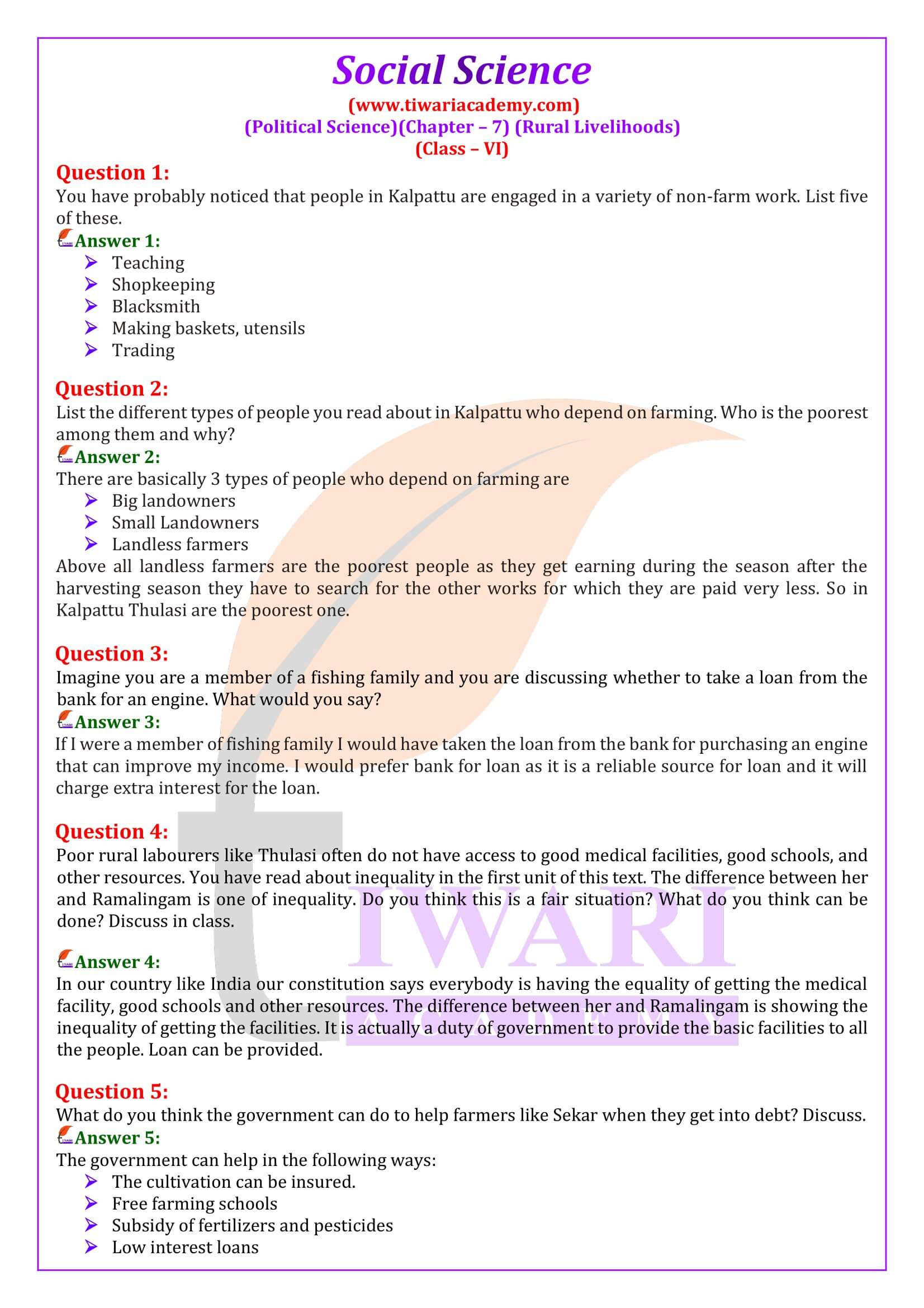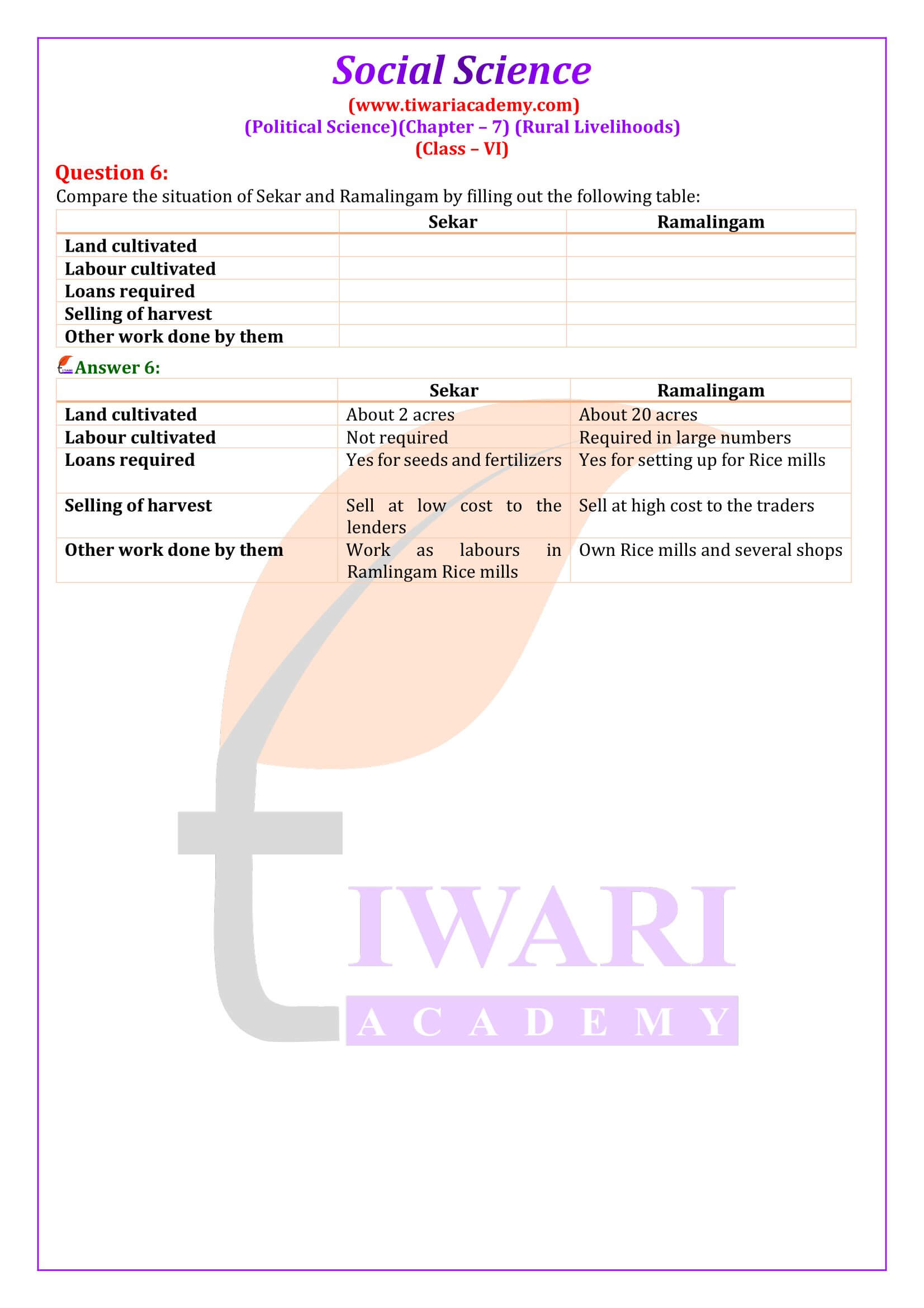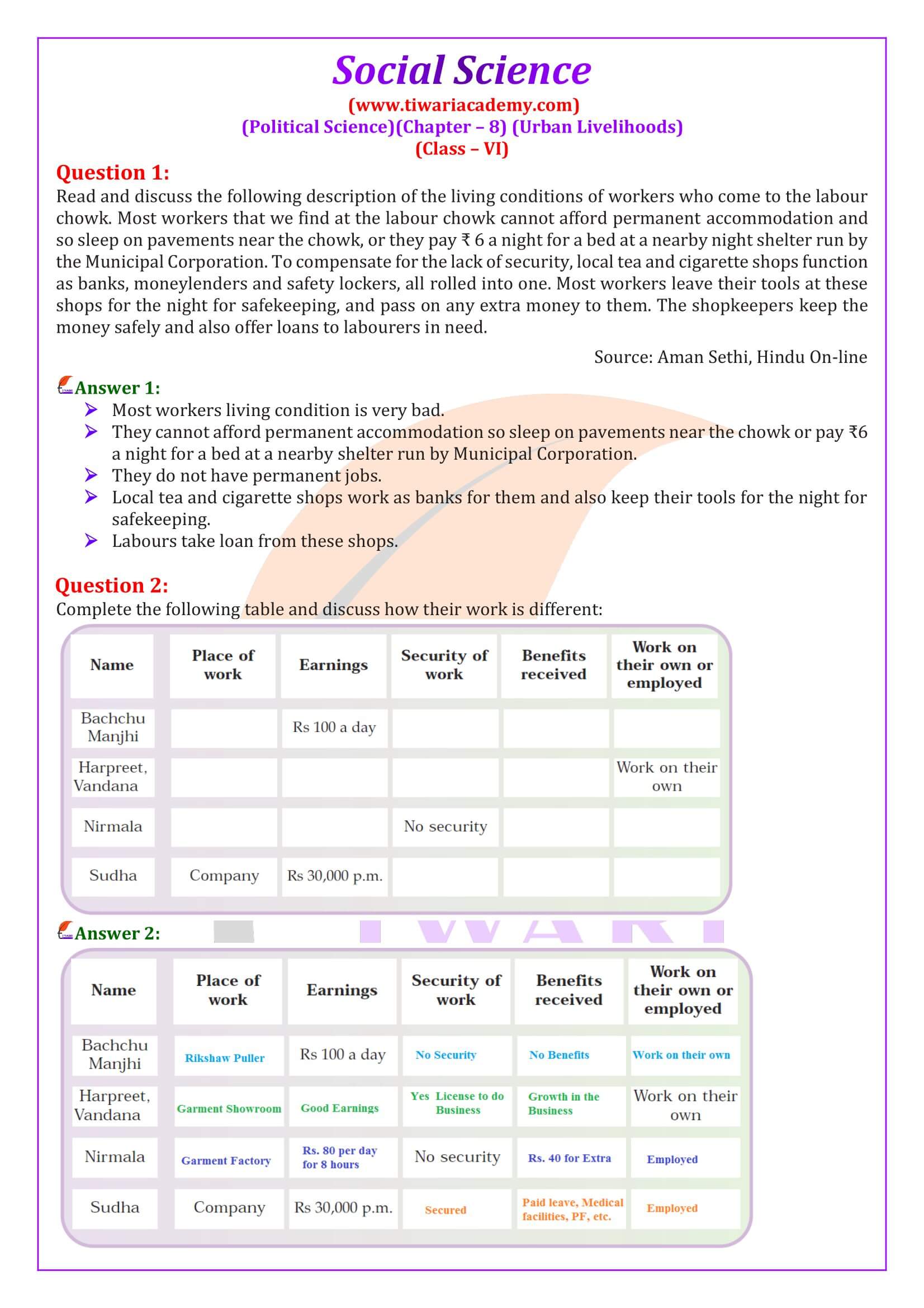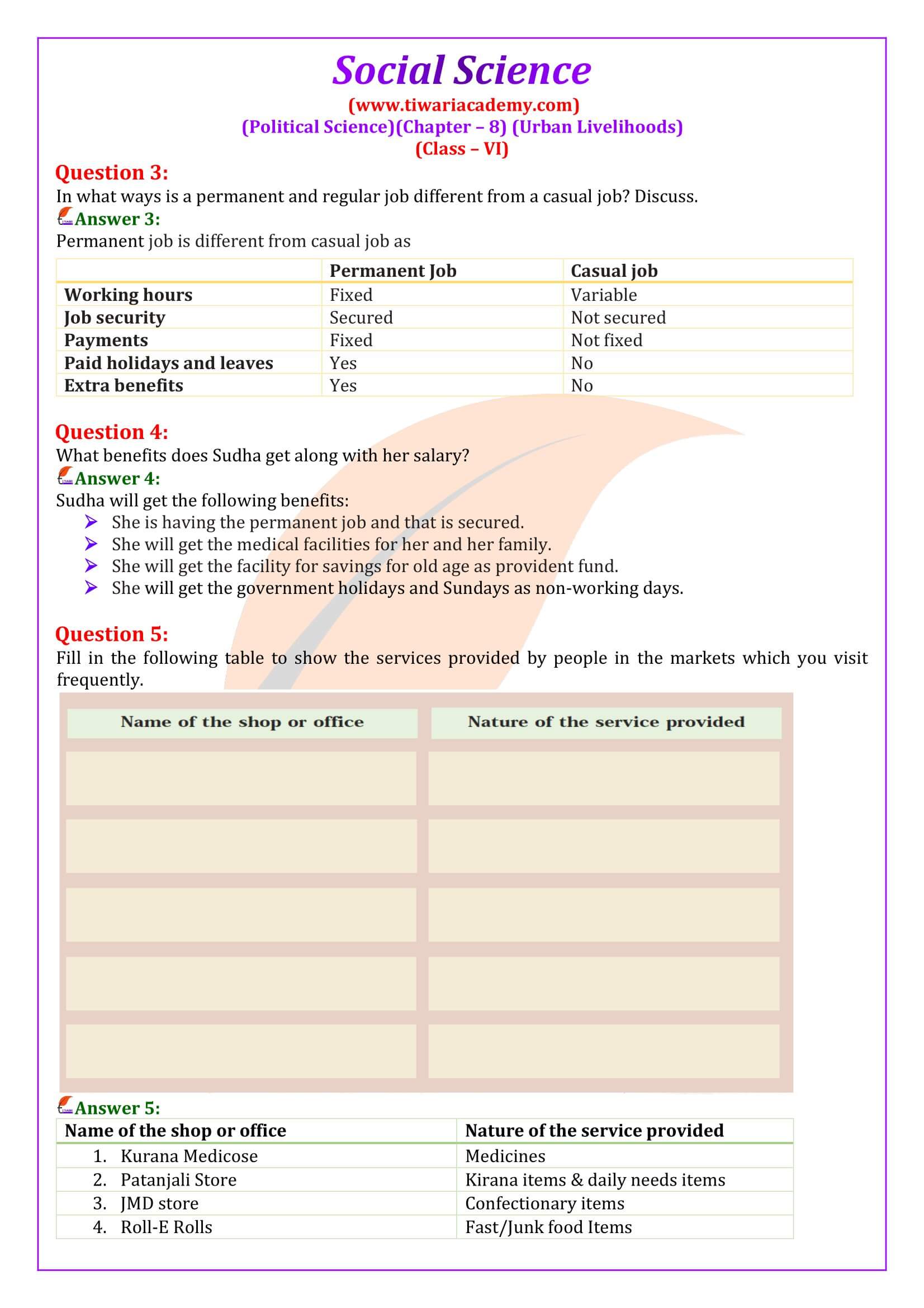



NCERT Solutions for Class 6 Social Science for session 2026-27 cover all 14 chapters of the NCERT textbook Exploring Society: India and Beyond. Every in-text question, activity and end-of-chapter exercise is answered in simple words, in both English and Hindi medium, so that a Class 6 student can read an answer once and write it in the notebook with confidence.
The Class 6 SST book no longer has three separate parts. Geography, History, Civics and Economics are now taught together through five themes. This page gives you the chapter-wise solutions, a short overview of every chapter, a revision table of important facts, an answer-writing guide and a study plan for the full year. Schools that still follow the earlier books (Our Pasts – I, The Earth: Our Habitat and Social and Political Life – I) will find those solutions in the old syllabus section of this page.
On this page:
- Chapter-wise Solutions
- Five themes of Exploring Society
- Chapter-wise overview of all 14 chapters
- Chapter-wise MCQs – English & Hindi Medium
- How to use the solutions correctly
- Full-year study plan for 2026-27
- New book versus old books
- Old syllabus Solutions
- Common mistakes to avoid
- Frequently asked questions
Class 6 Social Science at a Glance (2026-27)
| Particular | Details |
|---|---|
| Class | 6 (Middle Stage) |
| Subject | Social Science (SST) |
| NCERT textbook | Exploring Society: India and Beyond |
| Hindi medium textbook | समाज का अध्ययन: भारत और उसके आगे |
| Publisher | NCERT, New Delhi |
| Academic session | 2026-27 |
| Total chapters | 14 (in 5 Themes: Theme A to Theme E) |
| Subject areas covered | Geography, History, Culture, Civics (Political Science) and Economics |
| Solutions available in | English medium and Hindi medium |
Chapter-wise NCERT Solutions for Class 6 Social Science in English and Hindi Medium (2026-27)
Select a chapter in your medium to open its complete question answers. The English medium link opens the solutions of Exploring Society: India and Beyond, and the Hindi medium link opens the solutions of समाज का अध्ययन: भारत और उसके आगे. Both follow the latest NCERT edition.
Five Themes of Exploring Society: India and Beyond
The textbook was introduced under the National Education Policy 2020 and the National Curriculum Framework for School Education 2023. It does not divide Social Science into History, Geography and Civics. The same 14 chapters are arranged under five themes and each theme answers one large question about the world a child lives in.
| Theme | Chapters | What the student learns |
|---|---|---|
| Theme A: India and the World: Land and the People | 1, 2, 3 | Reading maps, finding places with latitude and longitude, oceans, continents and how landforms shape human life |
| Theme B: Tapestry of the Past | 4, 5, 6 | How historians measure time, how India got its names and how the first Indian cities came up |
| Theme C: Our Cultural Heritage and Knowledge Traditions | 7, 8 | Vedic, Buddhist, Jain and tribal traditions, and how one culture holds many kinds of food, dress, festivals and stories |
| Theme D: Governance and Democracy | 9, 10, 11, 12 | Family and community life, the three organs and three levels of government, Panchayati Raj and urban local bodies |
| Theme E: Economic Life Around Us | 13, 14 | Economic and non-economic activities, value addition and the three sectors of the economy |
Why this matters for answers: Questions in the new book often join two subject areas. A question from Landforms and Life may ask how a plain supports farming and trade, which is Geography and Economics together. Our solutions point out such links wherever they help the student write a fuller answer.
Chapter-wise Overview of Class 6 Social Science (All 14 Chapters)
Read the overview of a chapter before opening its solutions. It tells you what the chapter is about, which terms you must know and which kind of questions teachers usually set from it.
Chapter 1: Locating Places on the Earth
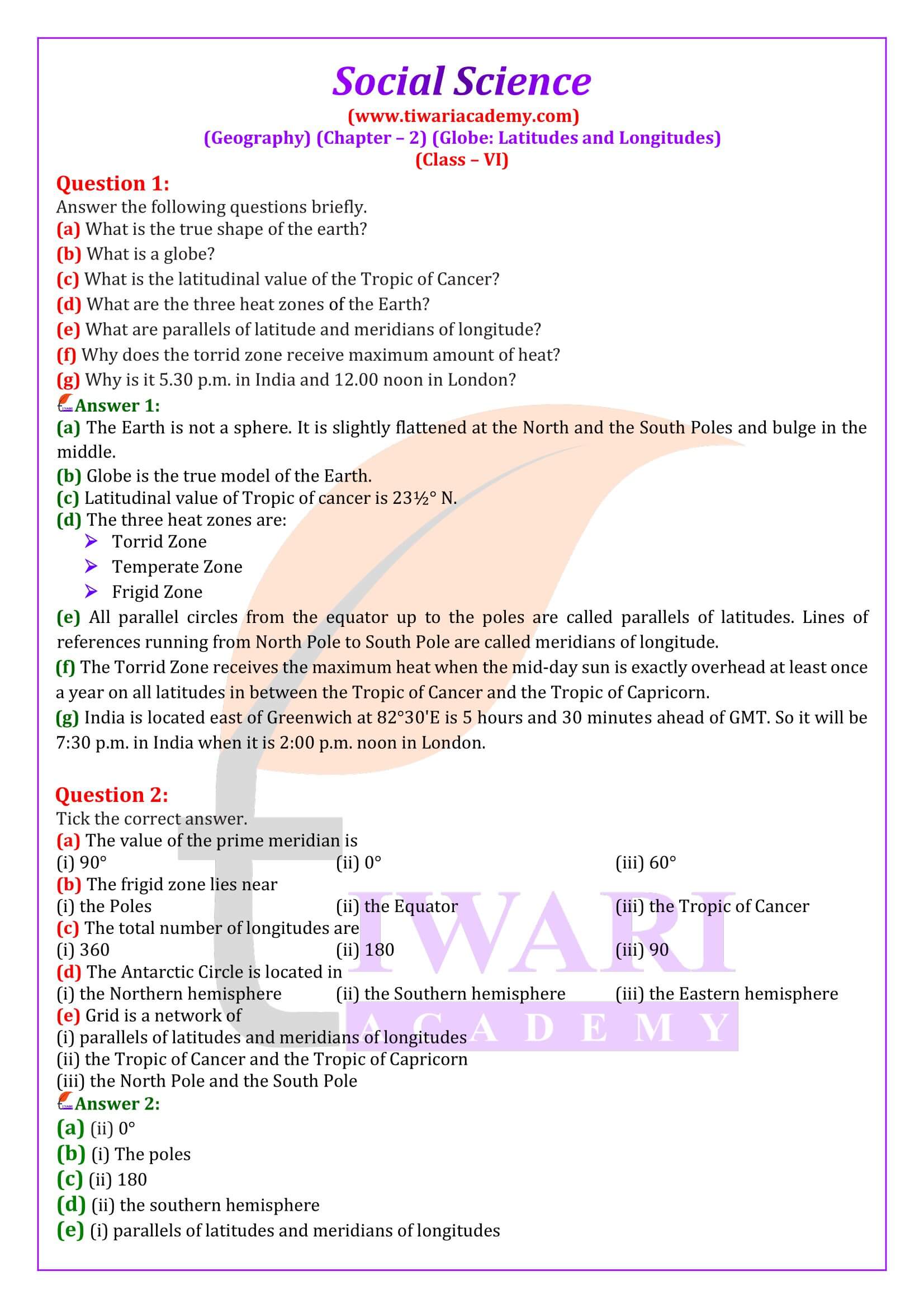
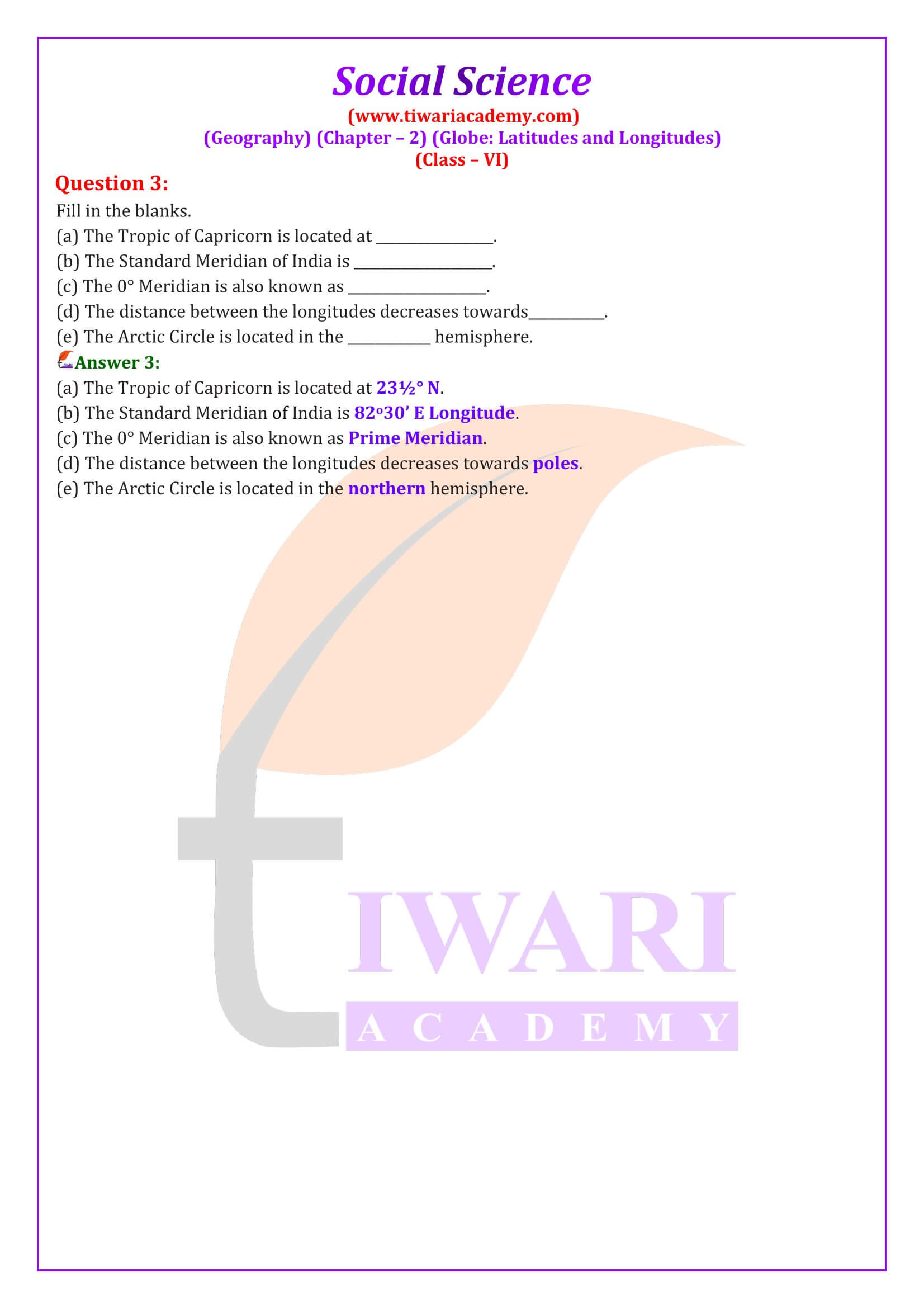
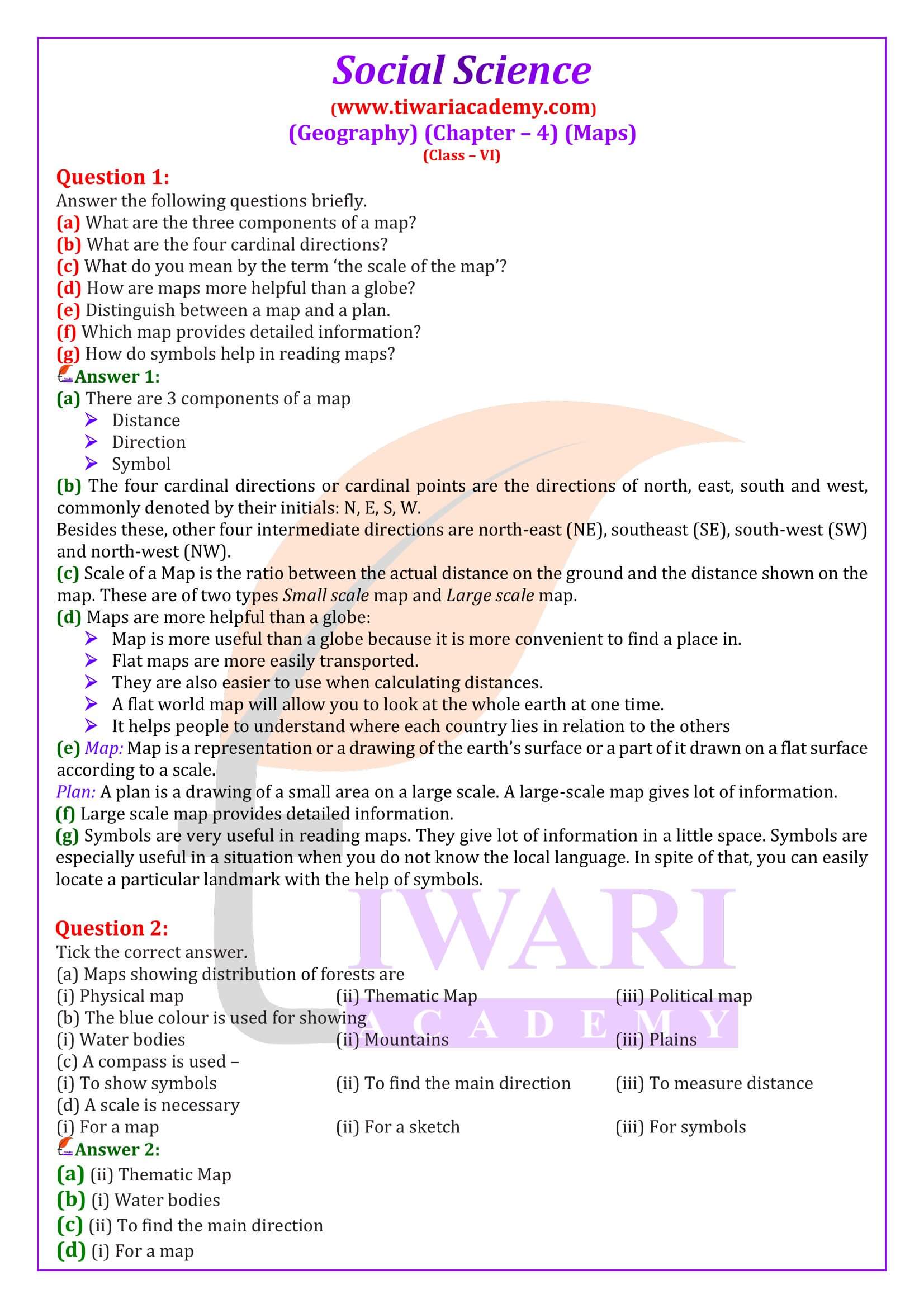
This chapter teaches how to read a map and how to find any place on the globe. It explains the three components of a map (distance, direction and symbols), the grid of latitudes and longitudes, and how longitude decides local time. It also tells why India follows one standard time for the whole country.
- Key terms: Scale, cardinal directions, Equator, Prime Meridian, parallels, meridians, coordinates, time zone, Indian Standard Time, International Date Line.
- Questions usually asked: Difference between latitude and longitude, finding the time of a place from its longitude, drawing and labelling important parallels, use of map symbols.
- Solutions: Class 6 Social Science Chapter 1 question answers
Chapter 2: Oceans and Continents
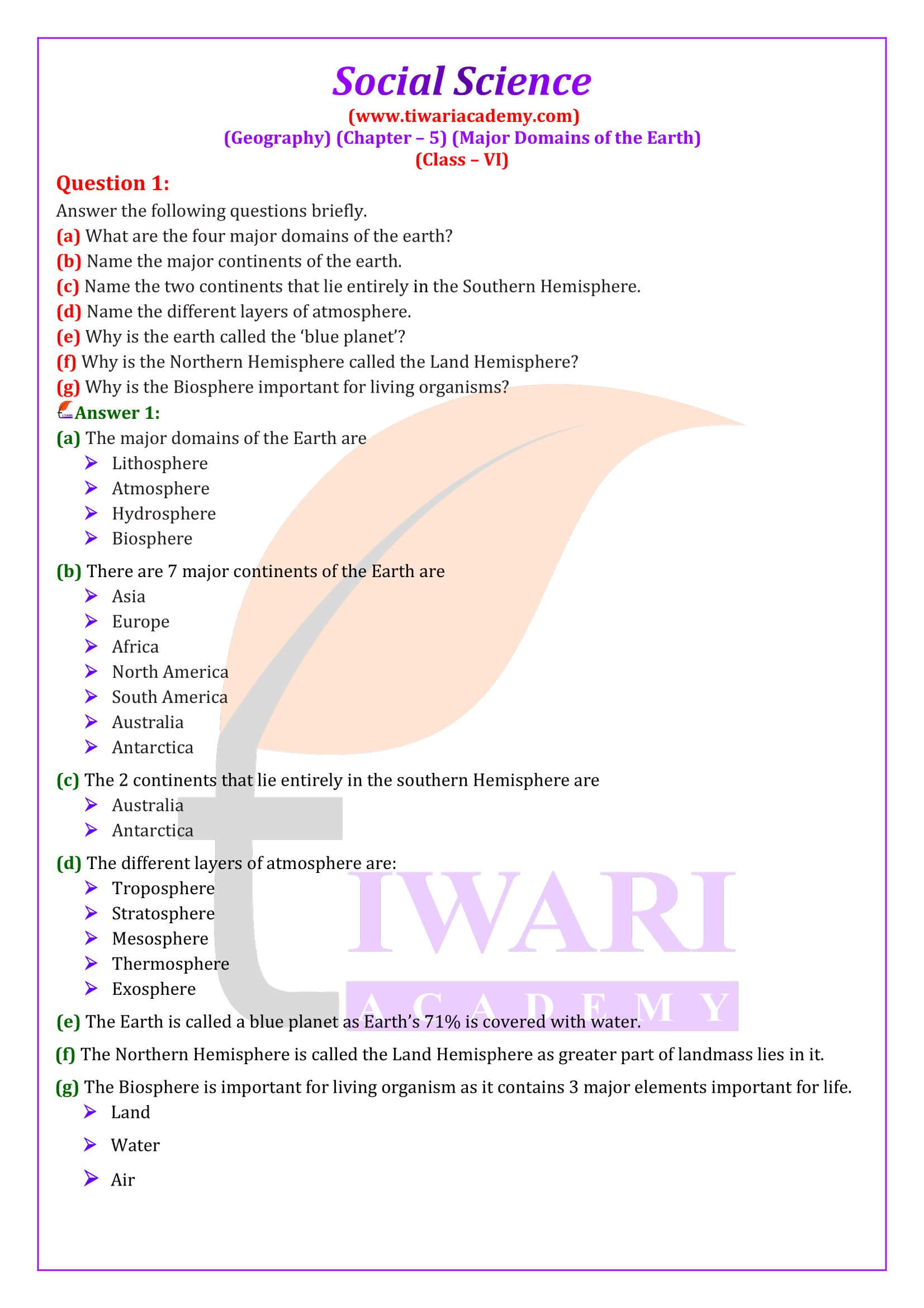
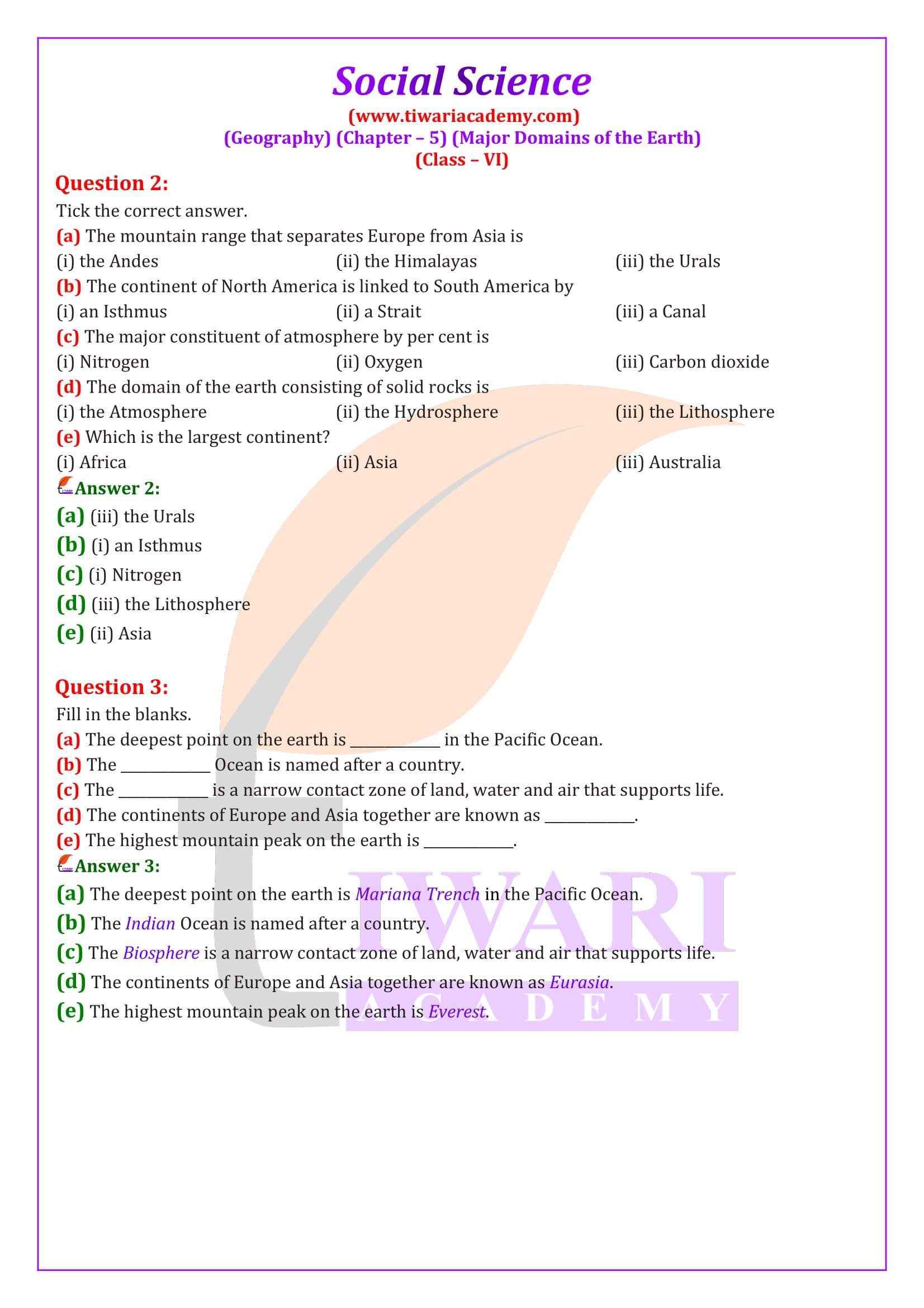
The Earth is called the blue planet because water covers most of its surface. This chapter introduces the five oceans and the continents, shows how land and water are distributed between the two hemispheres and explains how oceans affect rainfall, climate, food and trade. It also discusses ocean-related disasters such as tsunamis and cyclones.
- Key terms: Hemisphere, ocean, sea, continent, island, marine life, tsunami, cyclone.
- Questions usually asked: Naming and locating oceans and continents on an outline map, why oceans matter to people who live far from the coast, how humans harm oceans and how they can be protected.
- Solutions: Class 6 Social Science Chapter 2 question answers
Chapter 3: Landforms and Life
Mountains, plateaus and plains are the three major landforms studied here. For each one, the chapter describes how it looks, what grows there and how people adapt their houses, farming and occupations to it. Students learn why plains are thickly populated, why plateaus are rich in minerals and why mountains attract pilgrims and tourists.
- Key terms: Mountain range, snow line, terrace farming, plateau, mineral, waterfall, floodplain, fertile soil.
- Questions usually asked: Differences between a mountain and a plateau, why early civilisations grew in river plains, challenges of life in the mountains, matching landforms with features.
- Solutions: Class 6 Social Science Chapter 3 question answers
Chapter 4: Timeline and Sources of History
This is the first History chapter. It explains how time is counted with the terms BCE and CE, how to place events on a timeline, and how historians collect evidence from objects, buildings, inscriptions, books and oral traditions. The last part describes the life of early humans, from hunting and gathering to the first farming settlements.
- Key terms: Timeline, decade, century, millennium, BCE, CE, source, archaeology, inscription, manuscript, hunter-gatherer.
- Questions usually asked: Calculating the gap between a BCE and a CE year, types of historical sources with examples, work of archaeologists and other experts, how farming changed human life.
- Solutions: Class 6 Social Science Chapter 4 question answers
Chapter 5: India, That Is Bharat
How did our country come to have names such as Bharat, India and Hindustan? The chapter traces the names used by the people of the subcontinent in ancient texts and the names given by visitors from Persia, Greece and China. It ends with the opening words of the Constitution, which use both names together.
- Key terms: Sapta Sindhava, Bhāratavarsha, Jambudvīpa, Sindhu, Hindu, Indoi, Hindustan.
- Questions usually asked: Origin of the name Bharat, how the word Sindhu changed in other languages, why different people used different names, the name used in the Constitution of India.
- Solutions: Class 6 Social Science Chapter 5 question answers
Chapter 6: The Beginnings of Indian Civilisation
This chapter studies the Harappan civilisation, also called the Indus or Indus-Sarasvati civilisation. Students read about planned cities, straight roads, drainage, the Great Bath, reservoirs, crops, crafts, seals and trade with distant lands. The chapter closes with the reasons suggested for the decline of these cities.
- Key terms: Civilisation, urbanisation, citadel, lower town, Great Bath, seal, dockyard, reservoir.
- Questions usually asked: Features of a civilisation, town planning of Harappan cities, water management at Dholavira, trade and occupations, possible causes of decline, locating major sites on a map.
- Solutions: Class 6 Social Science Chapter 6 question answers
Chapter 7: India’s Cultural Roots
Indian culture is compared to an old tree with many roots and branches. The chapter introduces the four Vedas and Vedic society, the questions raised in the Upanishads, the teachings of the Buddha and Mahavira, and the contribution of folk and tribal traditions. The stress is on shared values such as truth, non-violence and respect for nature.
- Key terms: Vedas, rishi, Upanishad, ātman, brahman, ahimsa, sangha, anekāntavāda, aparigraha, tribe.
- Questions usually asked: Names of the four Vedas, main teachings of Buddhism and Jainism, common ideas among different schools of thought, how tribal and folk beliefs enriched Indian culture.
- Solutions: Class 6 Social Science Chapter 7 question answers
Chapter 8: Unity in Diversity, or ‘Many in the One’
India has many languages, foods, clothes and festivals, yet a common thread runs through all of them. The chapter shows this with everyday examples: the same grains cooked in different ways, the sari worn in many styles, one harvest festival celebrated under different names, and the Ramayana and Mahabharata retold in almost every region.
- Key terms: Diversity, unity, staple food, textile, festival, epic, folklore.
- Questions usually asked: Meaning of unity in diversity with examples, how festivals show unity, role of epics and the Panchatantra in connecting people, examples from the student’s own region.
- Solutions: Class 6 Social Science Chapter 8 question answers
Chapter 9: Family and Community
The Civics part begins at home. The chapter describes joint and nuclear families, the duties family members perform for one another, and the values a child first learns in the family. It then moves to the community and shows, through real examples, how people come together to share work, protect resources and help in times of need.
- Key terms: Joint family, nuclear family, roles and responsibilities, cooperation, community, interdependence.
- Questions usually asked: Difference between joint and nuclear families, values learnt at home, how communities solve common problems, examples of community service around you.
- Solutions: Class 6 Social Science Chapter 9 question answers
Chapter 10: Grassroots Democracy – Part 1: Governance
Why does a society need rules, and who makes them? This chapter explains governance, the three organs of government (legislature, executive and judiciary), the idea of separation of powers and the three levels of government in India: local, State and Central. It introduces democracy as rule by the people through their elected representatives.
- Key terms: Governance, law, legislature, executive, judiciary, separation of powers, democracy, representative.
- Questions usually asked: Functions of the three organs, why powers are kept separate, which level of government handles a given problem, difference between direct and representative democracy.
- Solutions: Class 6 Social Science Chapter 10 question answers
Chapter 11: Grassroots Democracy – Part 2: Local Government in Rural Areas
The Panchayati Raj system brings self-government to villages. Students learn about the Gram Sabha, the Gram Panchayat and its Sarpanch, and the three tiers at village, block and district level. The chapter also shows how women and disadvantaged groups take part in panchayats and how children can voice their concerns.
- Key terms: Panchayati Raj, Gram Sabha, Gram Panchayat, Sarpanch, Panchayat Samiti, Zila Parishad, Panchayat Secretary, Patwari.
- Questions usually asked: Three tiers of Panchayati Raj, difference between Gram Sabha and Gram Panchayat, functions and sources of funds, how a village problem is taken up and solved.
- Solutions: Class 6 Social Science Chapter 11 question answers
Chapter 12: Grassroots Democracy – Part 3: Local Government in Urban Areas
Towns and cities are managed by urban local bodies. The chapter explains how a city is divided into wards, how Nagar Panchayats, Municipal Councils and Municipal Corporations differ, what services they provide and how they raise money. It also reminds citizens of their own duties in keeping a city clean and orderly.
- Key terms: Urban local body, ward, Municipal Corporation, Municipal Council, Nagar Panchayat, mayor, civic amenities, tax.
- Questions usually asked: Types of urban local bodies, functions of a municipal corporation, comparison of rural and urban local government, duties of a responsible citizen.
- Solutions: Class 6 Social Science Chapter 12 question answers
Chapter 13: The Value of Work
All work has value, though not all work earns money. This chapter separates economic activities, done to earn money or something of monetary value, from non-economic activities, done out of love, care or gratitude. It explains wages, salary, fees, payment in kind and value addition, and it introduces the idea of sevā, or selfless service.
- Key terms: Economic activity, non-economic activity, wage, salary, payment in kind, value addition, sevā.
- Questions usually asked: Classifying activities as economic or non-economic, meaning of value addition with an example, why non-economic work is important, ways people are paid for work.
- Solutions: Class 6 Social Science Chapter 13 question answers
Chapter 14: Economic Activities Around Us
Economic activities are grouped into three sectors. The primary sector takes goods from nature, the secondary sector turns them into finished products and the tertiary sector provides services. Using the journey of milk from a village dairy cooperative to a city shop, the chapter shows that the three sectors depend on one another.
- Key terms: Primary sector, secondary sector, tertiary sector, raw material, manufacturing, services, cooperative, interdependence.
- Questions usually asked: Classifying occupations into sectors, how sectors are linked, the story of a product from farm to market, examples of each sector from your locality.
- Solutions: Class 6 Social Science Chapter 14 question answers
Class 6 Social Science Chapter-wise MCQs in English and Hindi Medium
Students of Hindi medium schools study the same book under the title समाज का अध्ययन: भारत और उसके आगे. The chapters, questions and activities are identical, so the Hindi medium solutions follow the same order. The Hindi medium link for every chapter is given beside the English medium link in the chapter-wise solutions table on this page. The table below gives chapter-wise MCQ practice in both mediums, so that a student can test each chapter in the language of the school.
- Complete Hindi medium page: कक्षा 6 सामाजिक विज्ञान एनसीईआरटी समाधान
- Complete MCQ page: Class 6 Social Science MCQ with answers
What You Get in Each Class 6 SST Solution Page
Every chapter page is built around the way the new NCERT book asks questions. The book does not keep all questions at the end. It places them throughout the chapter and our solutions follow the same order.
- The Big Questions: short answers to the guiding questions printed on the first page of each chapter.
- Let’s Explore: answers and hints for the in-text activities, including map and picture-based tasks.
- Think About It: model responses for open questions, with a reminder that students may add their own views.
- Questions, Activities and Projects: complete answers to the end-of-chapter exercise.
- Key terms: meanings of difficult words, including Sanskrit words printed with diacritical marks in the textbook.
- Extra questions and MCQs: additional practice for class tests and periodic assessments, with MCQs in English and Hindi medium.
- Two mediums: the same answers in English medium and Hindi medium.
- Study formats: text for quick reading, PDF for offline revision and videos for difficult topics.
How the answers are prepared: subject teachers write each answer from the current NCERT edition, keep the language at Class 6 level and match the length of the answer to the type of question. History answers are reviewed by Indra Prakash Tripathi (M.A. Ancient History, NET qualified). When NCERT releases a reprint, the pages are checked again and the update date is changed at the top.
How to Use NCERT Solutions for Class 6 Social Science Correctly
Solutions help only when they come after your own effort. Follow these steps for each chapter.
- Read the chapter from the NCERT book first. Look at every map, picture and box, because many questions are based on them.
- Mark the new words and write their meanings in the margin or in a small glossary at the back of your notebook.
- Try the in-text questions on your own. Even two lines in your own words are enough at this stage.
- Open the solution and compare. Note the points you missed and the terms you did not use.
- Rewrite the answer in your own language. Do not copy sentence by sentence; teachers can tell and you will forget it faster.
- Do the map or diagram work on the same day. A labelled sketch often earns marks that a long paragraph cannot.
- Solve the MCQs of the chapter after two or three days. This shows what you still remember.
- Revise the chapter once in the same week and once before the test.
How to Write Answers in Class 6 Social Science
Class 6 examinations are conducted by schools, so the pattern and marks differ from school to school. The question types below are the ones used most often. The suggested lengths are a guide and your teacher’s instructions come first.
| Type of question (usual marks) | Suggested length | How to answer |
|---|---|---|
| MCQ, fill in the blanks, true or false, match the columns (1 mark) | One word or option | Read all options before choosing. Check spellings of names and terms. |
| Very short answer (1 or 2 marks) | One or two sentences | Give the fact directly. No introduction is needed. |
| Short answer (3 marks) | Three to four points, about 40 to 60 words | Write in points. Start each point with the key term. |
| Long answer (5 marks) | Five to six points, about 80 to 100 words | One line of introduction, the main points and one example or a small diagram. |
| Picture, source or case-based question (3 to 5 marks) | As per sub-parts | Use the information given in the picture or passage, then add what you learnt in the chapter. |
| Map work (2 to 5 marks) | Labels only | Use a pencil, write neatly and place the label close to the correct spot. |
Three habits that improve SST marks quickly:
- Underline key terms such as Equator, Gram Sabha or primary sector in every answer.
- Give one example from the textbook and, where the question allows, one from your own surroundings.
- Leave a line between two answers and number them exactly as in the question paper.
Important Facts from Class 6 Social Science for Quick Revision
Keep this table handy during revision. It collects the facts that students most often mix up.
| Topic | Fact to remember | Chapter |
|---|---|---|
| Equator | 0° latitude; divides the Earth into the Northern and Southern Hemispheres | 1 |
| Tropics | Tropic of Cancer 23½°N and Tropic of Capricorn 23½°S | 1 |
| Polar circles | Arctic Circle 66½°N and Antarctic Circle 66½°S | 1 |
| Prime Meridian | 0° longitude; passes through Greenwich, near London | 1 |
| Earth’s rotation and time | The Earth turns 15° of longitude in one hour | 1 |
| Indian Standard Time | Based on 82½°E longitude; 5 hours 30 minutes ahead of Greenwich Mean Time | 1 |
| Oceans | Five: Pacific, Atlantic, Indian, Southern and Arctic; the Pacific is the largest | 2 |
| Continents | Asia is the largest and Australia the smallest of the seven continents | 2 |
| Major landforms | Three: mountains, plateaus and plains | 3 |
| Counting time | BCE years are counted backwards and CE years forwards; there is no year zero | 4 |
| Century and millennium | Century = 100 years; millennium = 1,000 years | 4 |
| Names of India | Sapta Sindhava, Bhāratavarsha, Jambudvīpa, Hindustan, India, Bharat | 5 |
| Harappan sites in India | Dholavira and Lothal (Gujarat), Rakhigarhi (Haryana), Kalibangan (Rajasthan) | 6 |
| Harappan sites now in Pakistan | Harappa and Mohenjo-daro | 6 |
| The Vedas | Four: Rig Veda, Yajur Veda, Sāma Veda and Atharva Veda | 7 |
| The Buddha | Born at Lumbini; attained enlightenment at Bodh Gaya | 7 |
| Jainism | Key ideas: ahimsa, anekāntavāda and aparigraha | 7 |
| Types of family | Joint family and nuclear family | 9 |
| Organs of government | Three: legislature, executive and judiciary | 10 |
| Levels of government | Three: local, State and Central | 10 |
| Panchayati Raj | Three tiers: Gram Panchayat, Panchayat Samiti and Zila Parishad | 11 |
| Urban local bodies | Nagar Panchayat, Municipal Council and Municipal Corporation | 12 |
| Kinds of activities | Economic and non-economic | 13 |
| Economic sectors | Primary, secondary and tertiary | 14 |
Full-Year Study Plan for Class 6 Social Science (2026-27)
Fourteen chapters spread over a school year means about three weeks for a chapter, with time left for revision. Most schools divide the book into two terms. The plan below is a model; follow the split given in your own school syllabus.
| Period | Chapters and focus of study | Revision task |
|---|---|---|
| April – May | Chapters 1 and 2: map reading, latitudes and longitudes, oceans and continents | World outline map: oceans and continents |
| June – July | Chapters 3 and 4: landforms, timeline and sources of history | Draw one timeline of your own family or school |
| August | Chapters 5 and 6: names of India and the Harappan civilisation | India outline map: Harappan sites |
| September | Chapter 7: cultural roots, followed by Term 1 revision of chapters 1 to 7 | MCQs of chapters 1 to 7 and one sample paper |
| October – November | Chapters 8, 9 and 10: unity in diversity, family and community, governance | Chart of three organs and three levels of government |
| December | Chapters 11 and 12: rural and urban local government | Comparison table: panchayat versus municipality |
| January | Chapters 13 and 14: value of work and economic sectors | List ten occupations around you and classify them |
| February – March | Revision of the whole book, chapters 1 to 14 | Two full-length papers with map work |
Weekly routine that works for most students:
- Day 1 and 2: read half a chapter each day and mark new terms.
- Day 3: attempt the in-text questions without help.
- Day 4: check with the solutions and correct your notebook.
- Day 5: write the end-of-chapter exercise.
- Day 6: map work, MCQs and a five-minute oral revision with a parent or friend.
More guidance: Preparation tips for Class 6 exams
New Class 6 Social Science Book versus the Old Books
Parents who studied or taught from the older books often ask what has changed. This comparison answers the common doubts.
| Point of comparison | New book (used in 2026-27) | Earlier books |
|---|---|---|
| Name | Exploring Society: India and Beyond | Our Pasts – I, The Earth: Our Habitat, Social and Political Life – I |
| Number of books | One | Three |
| Arrangement | Five themes that connect subjects | Separate History, Geography and Civics |
| Chapters | 14 | 24 in the rationalised edition (10 + 6 + 8) |
| Economics | A separate theme with two chapters | Limited to livelihood chapters in Civics |
| Placement of questions | Throughout the chapter and at the end | Mostly at the end |
| Style of questions | Activities, discussion, map and picture-based tasks | Mainly recall and short description |
| Indian knowledge traditions | Given clear space in Themes B and C | Covered briefly |
NCERT Solutions for Class 6 Social Science (Old Syllabus)
Some schools and State Boards continue with the earlier NCERT books and many students use them for Olympiads and general reading. Solutions for these books remain available in English and Hindi medium.
Class 6 History – Our Pasts – I
- Chapter 1. What Where, How and When?
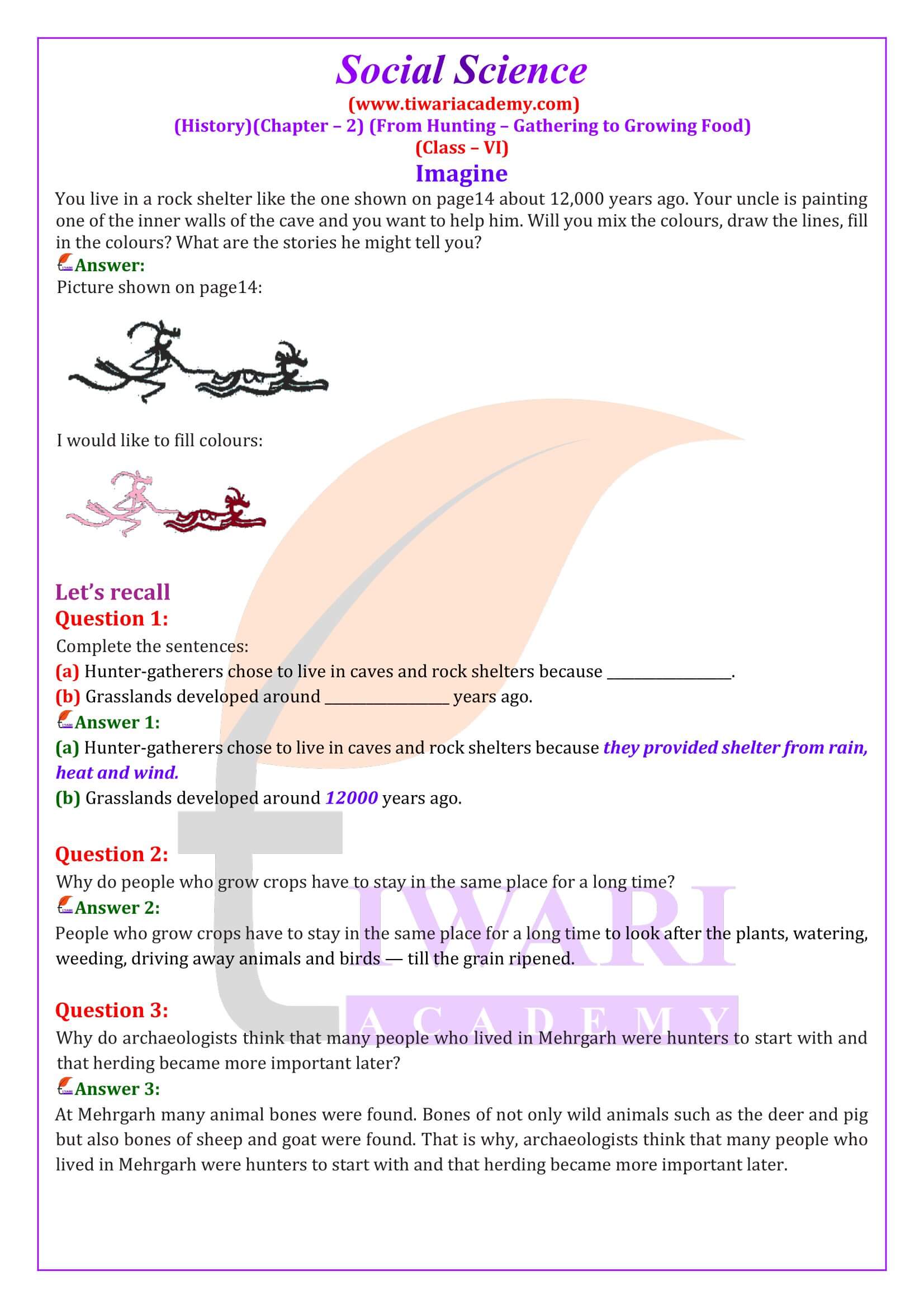
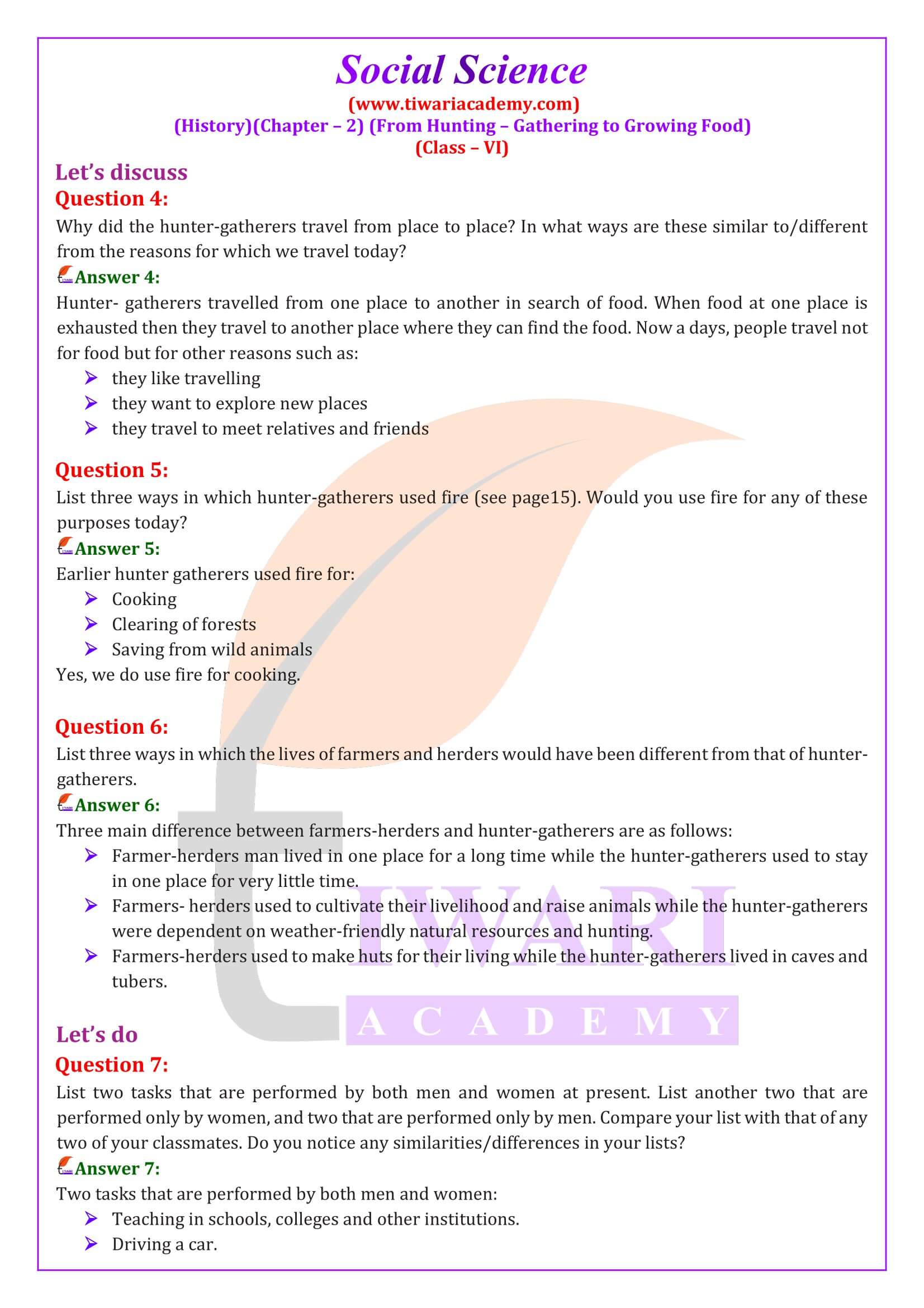
- Chapter 2. From Hunting Gathering to Growing Food
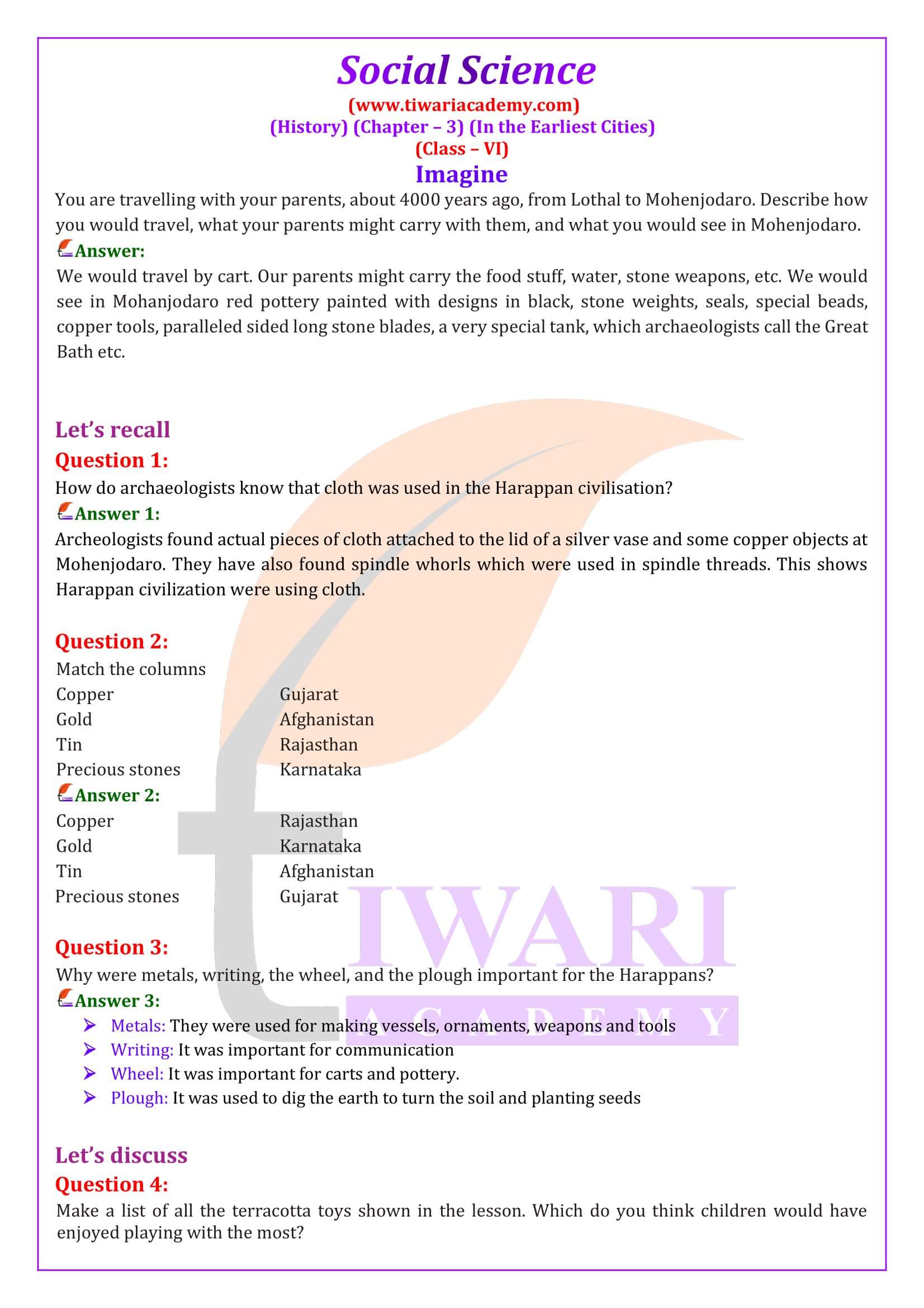
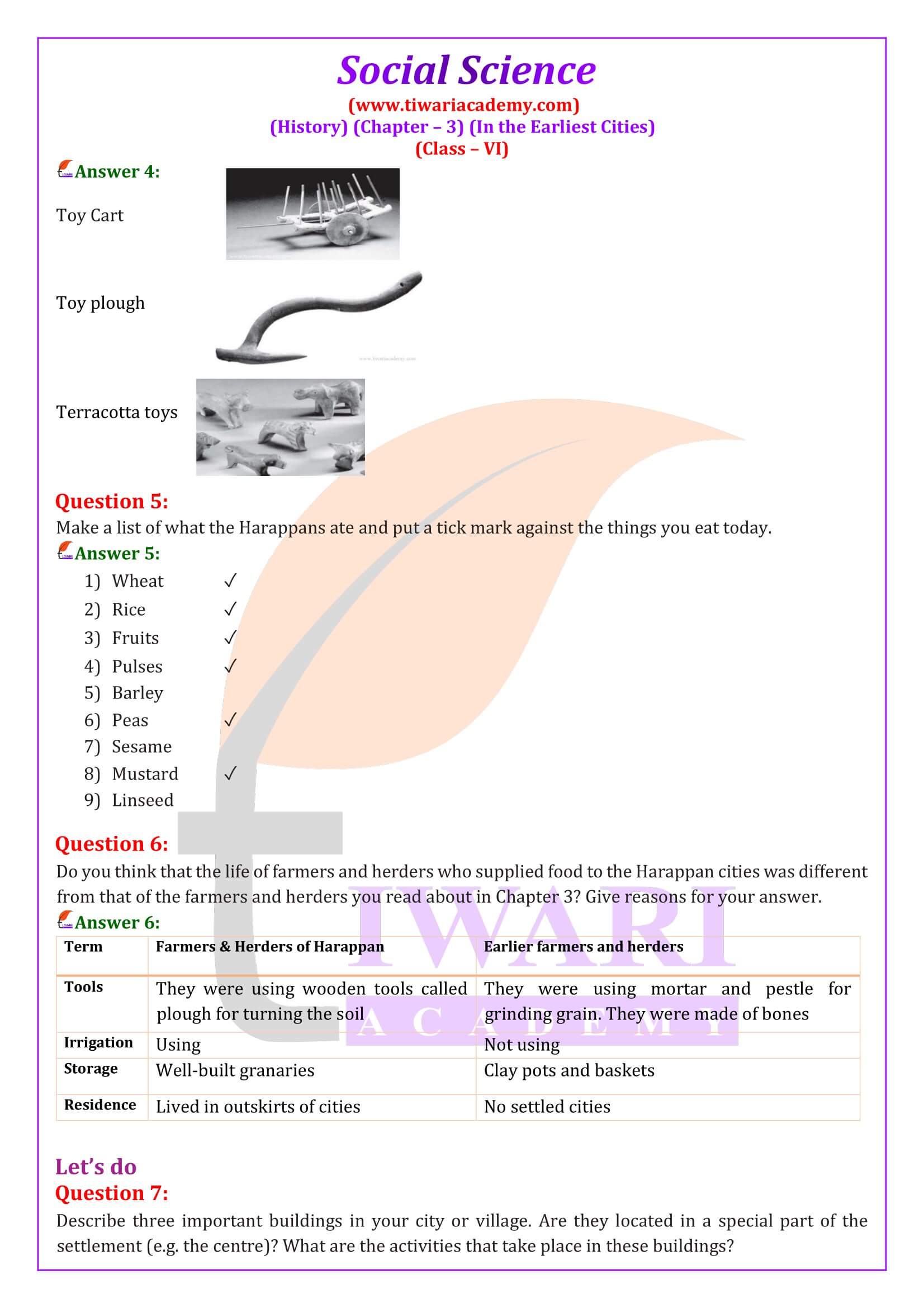
- Chapter 3. In the Earliest Cities
- Chapter 4. What Books and Burials Tell Us
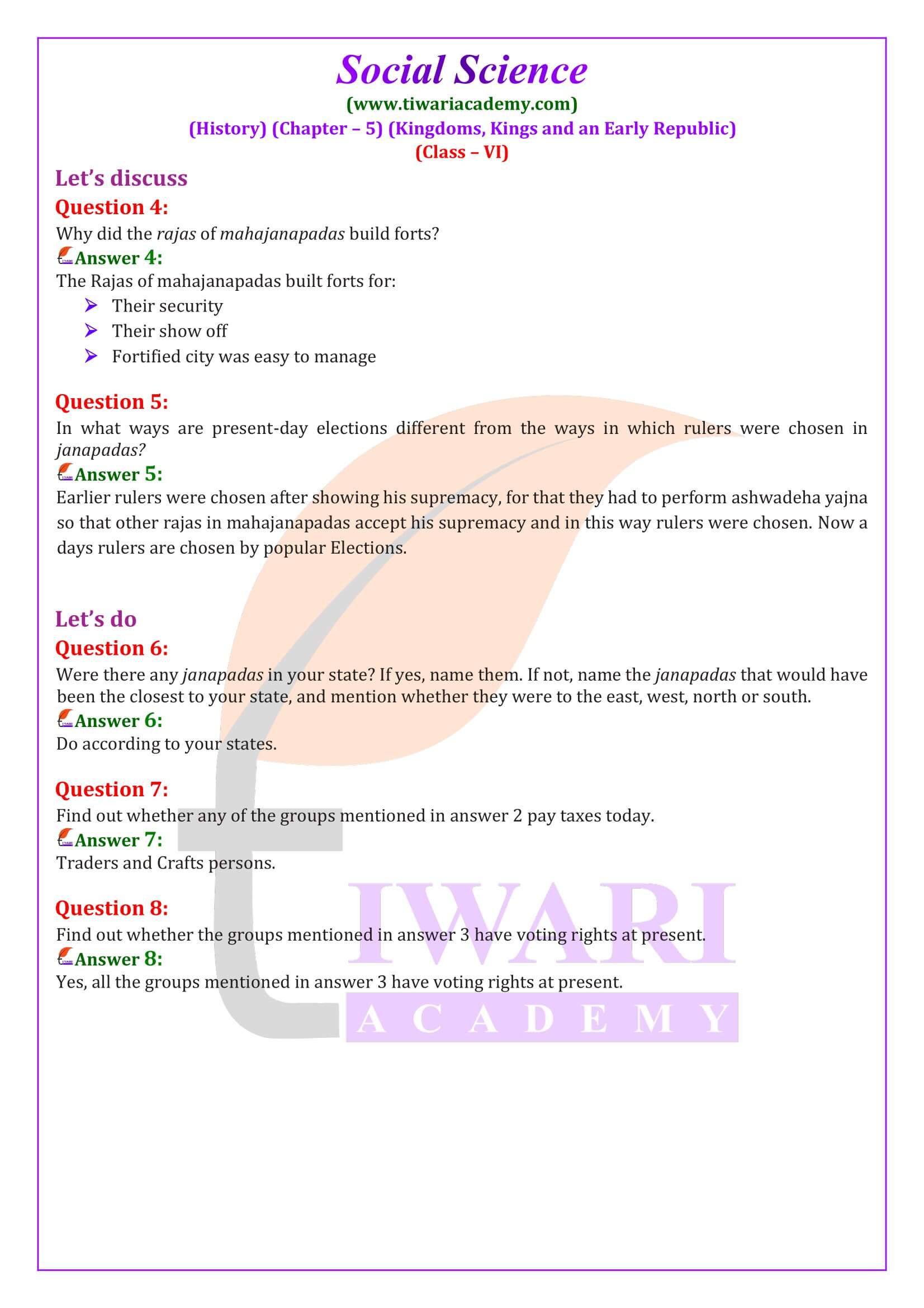
- Chapter 5. Kingdoms, Kings and an Early Republic
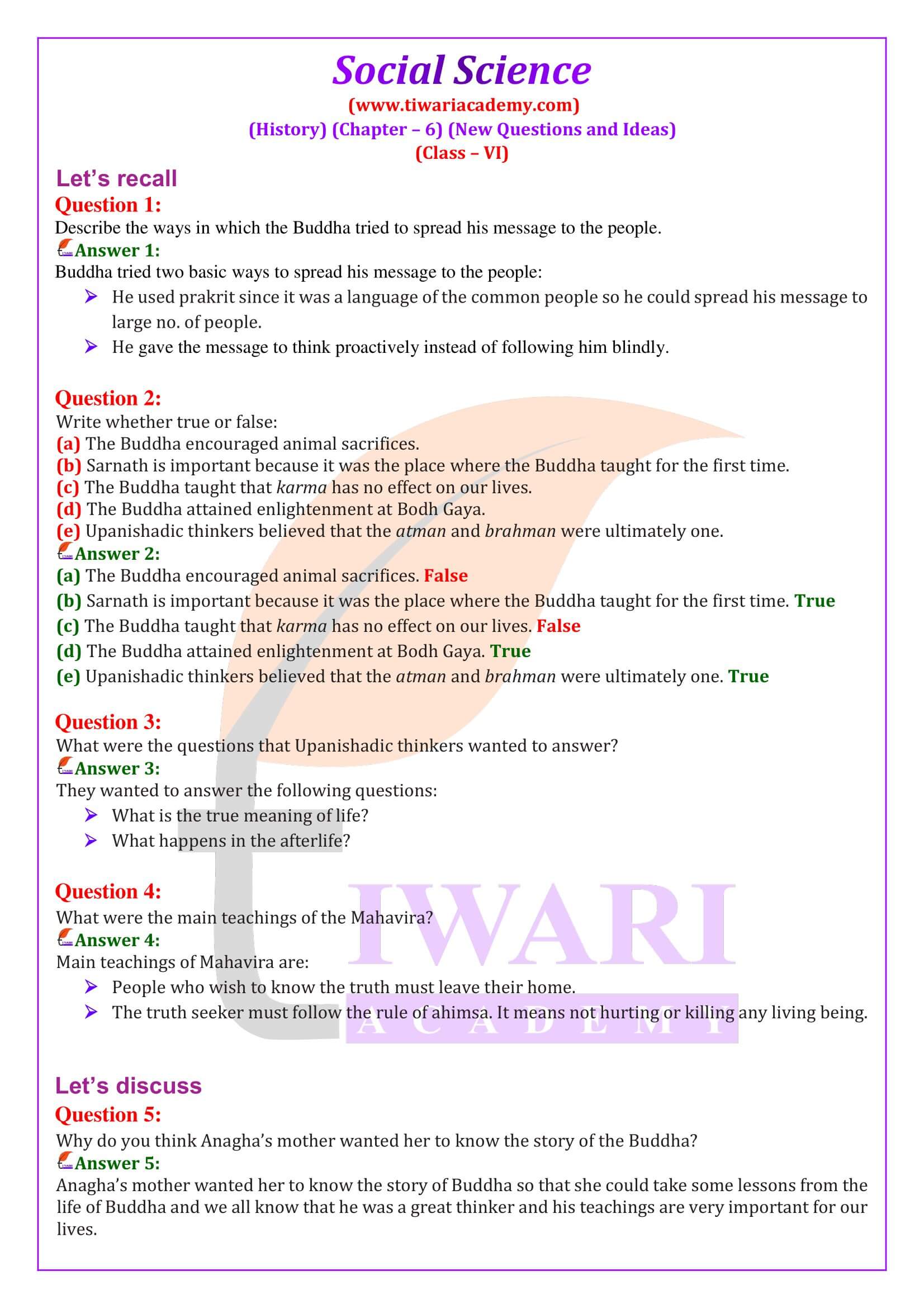
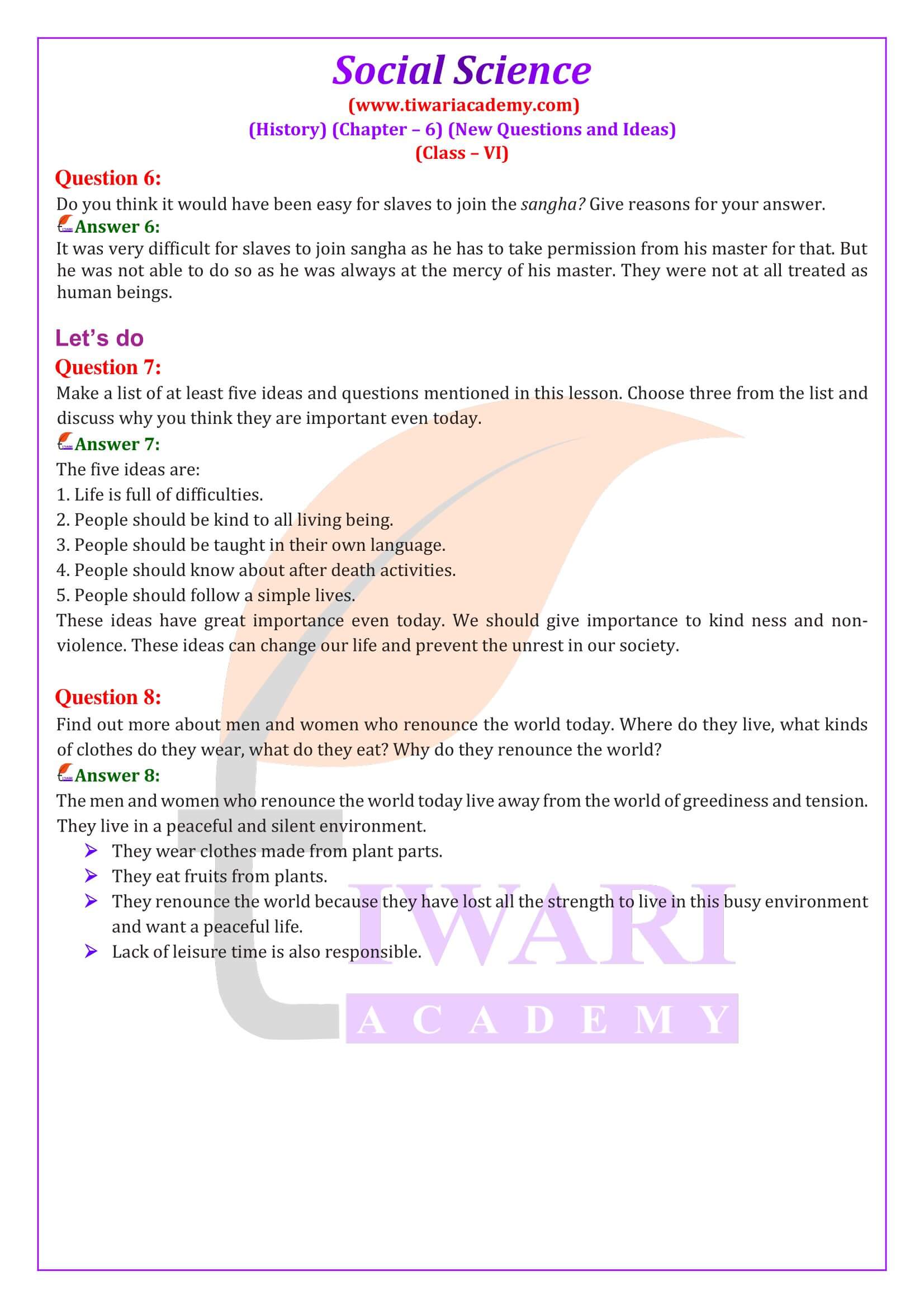
- Chapter 6. New Questions and Ideas
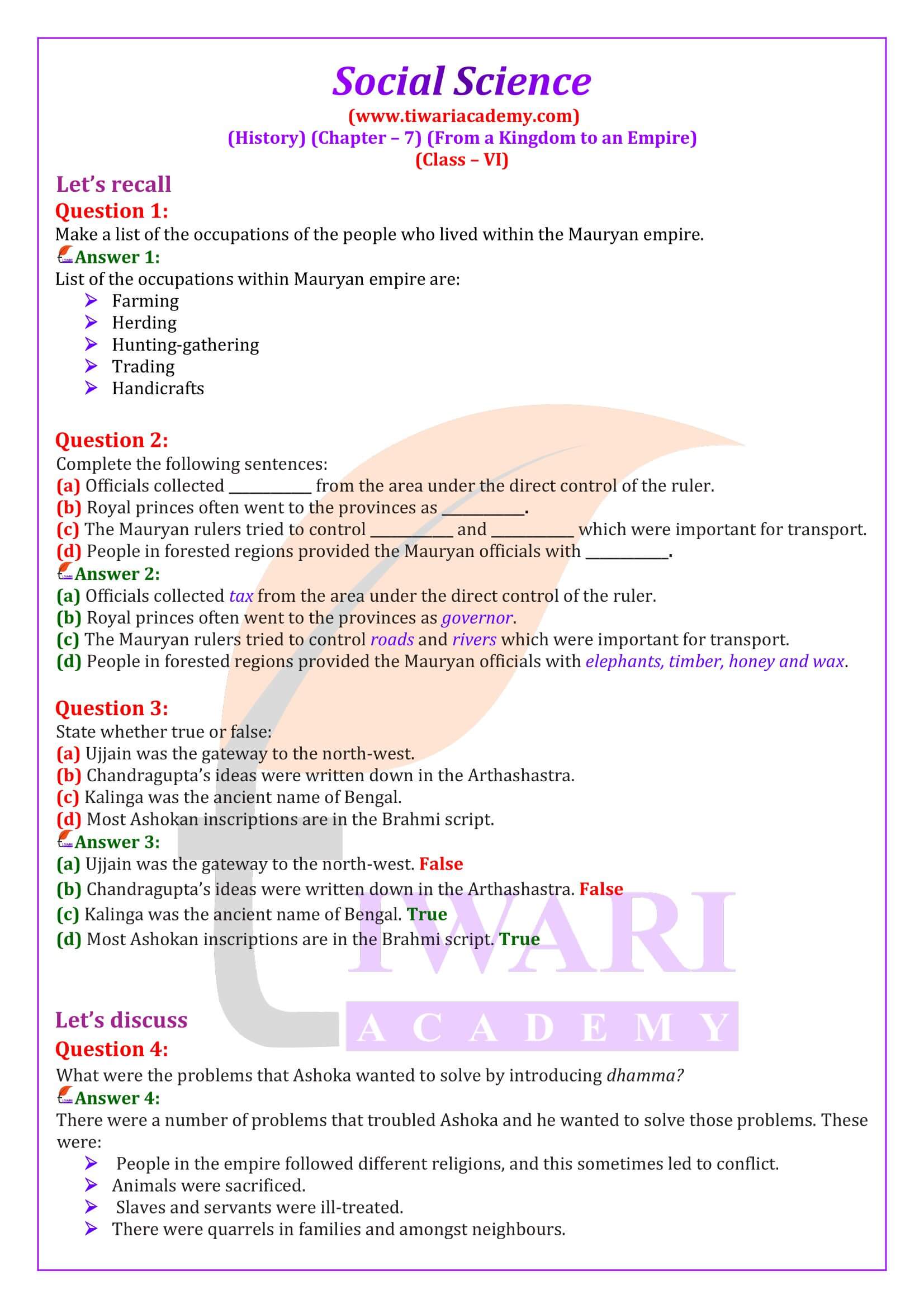
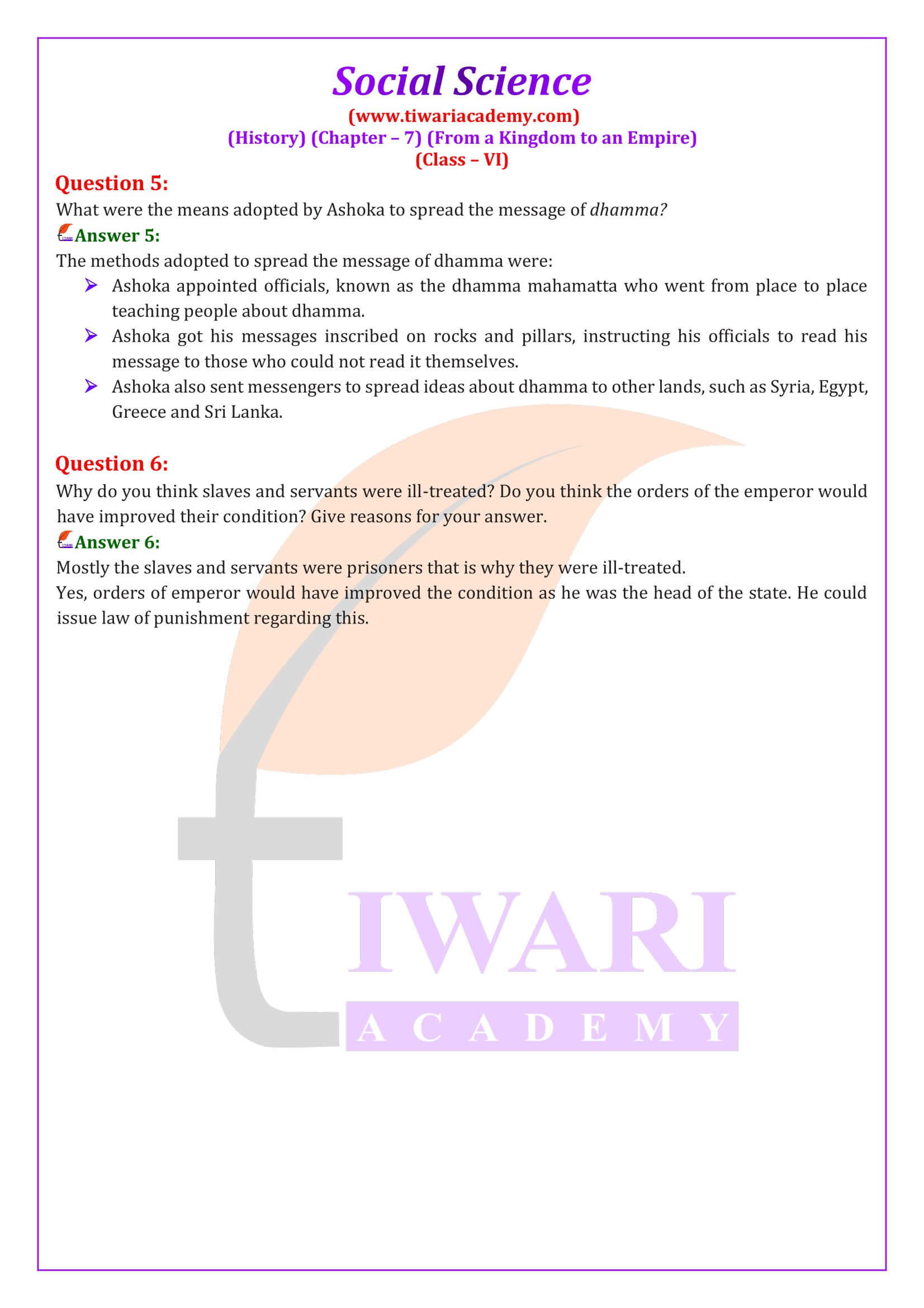
- Chapter 7. From a Kingdom to an Empire
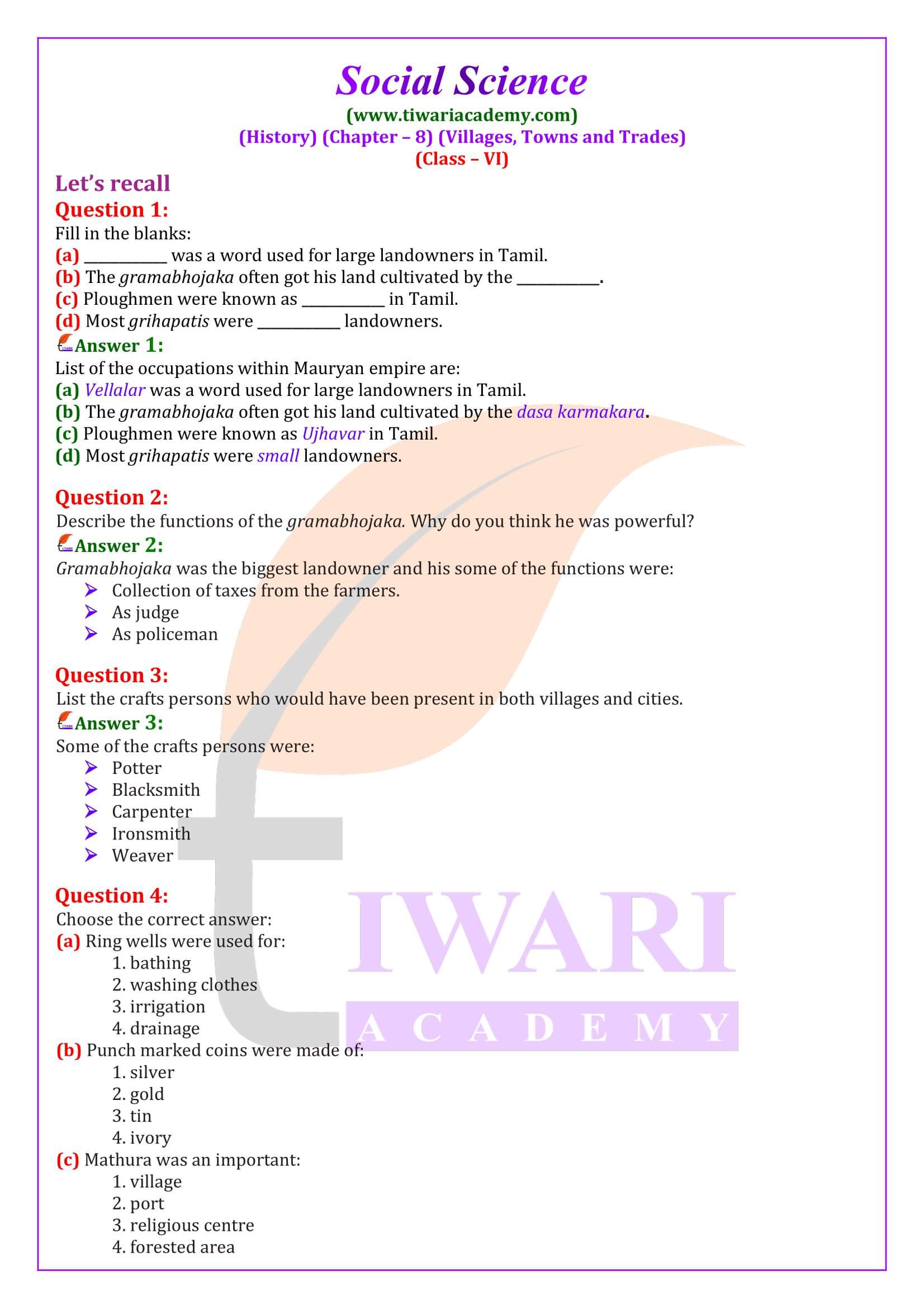
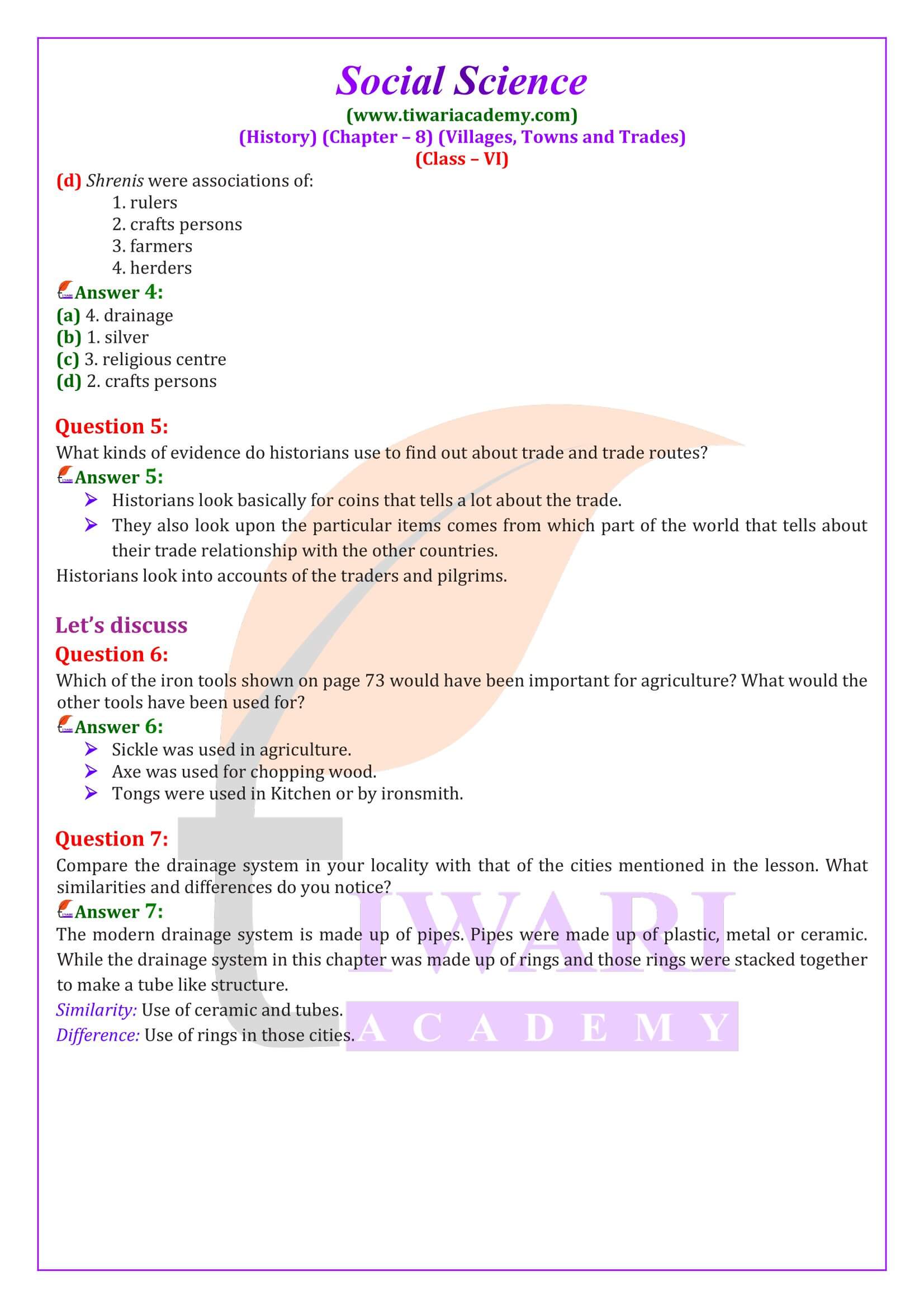
- Chapter 8. Villages, Towns and Trades
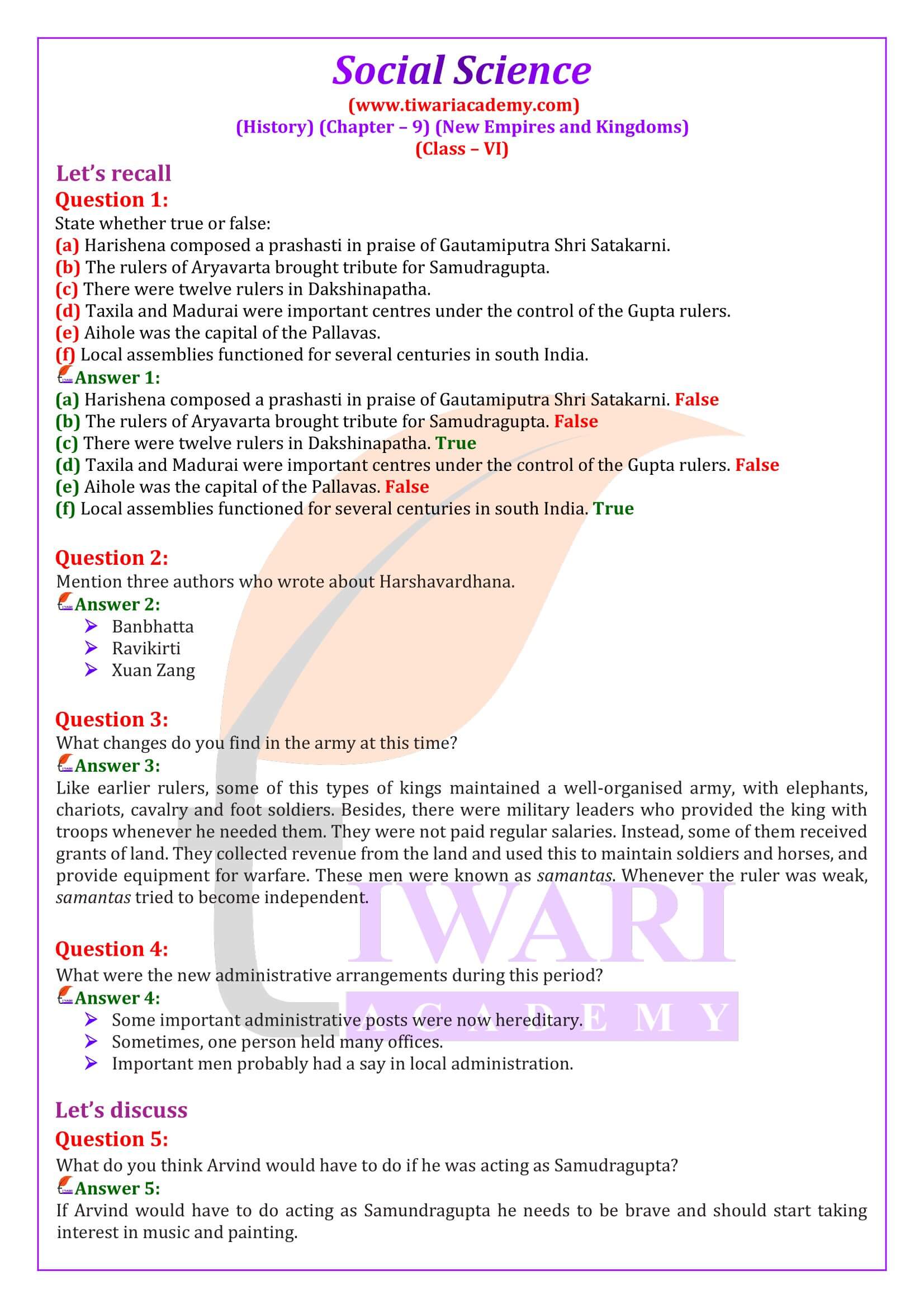
- Chapter 9. New Empires and Kingdoms
- Chapter 10. Buildings, Paintings and Books
Where the old and new books meet: If you have notes from the earlier books, this table shows which new chapter covers a similar topic.
| Topic in the old books | Closest chapter in the new book |
|---|---|
| Globe: Latitudes and Longitudes; Maps | Chapter 1: Locating Places on the Earth |
| Major Domains of the Earth | Chapter 2: Oceans and Continents |
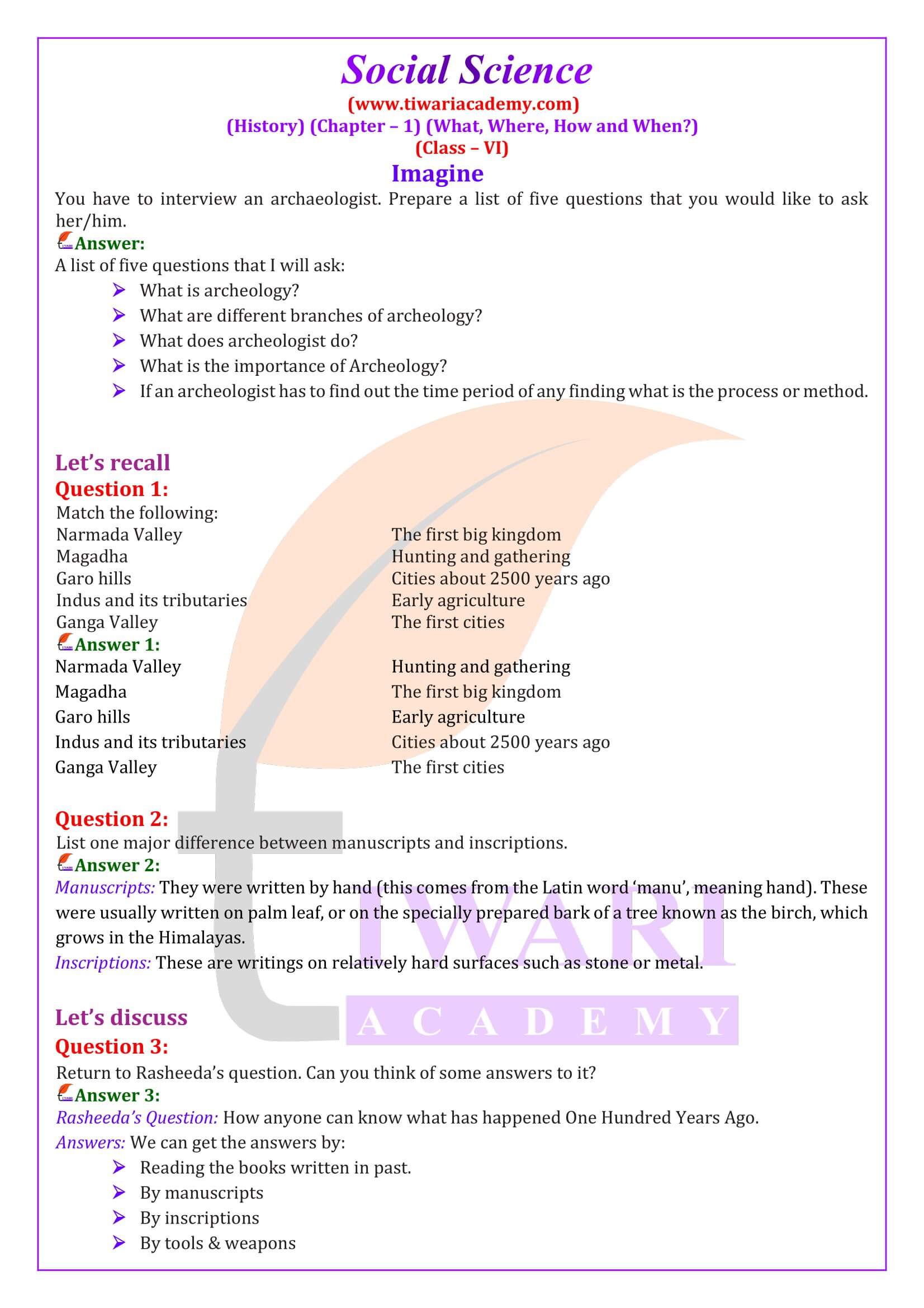
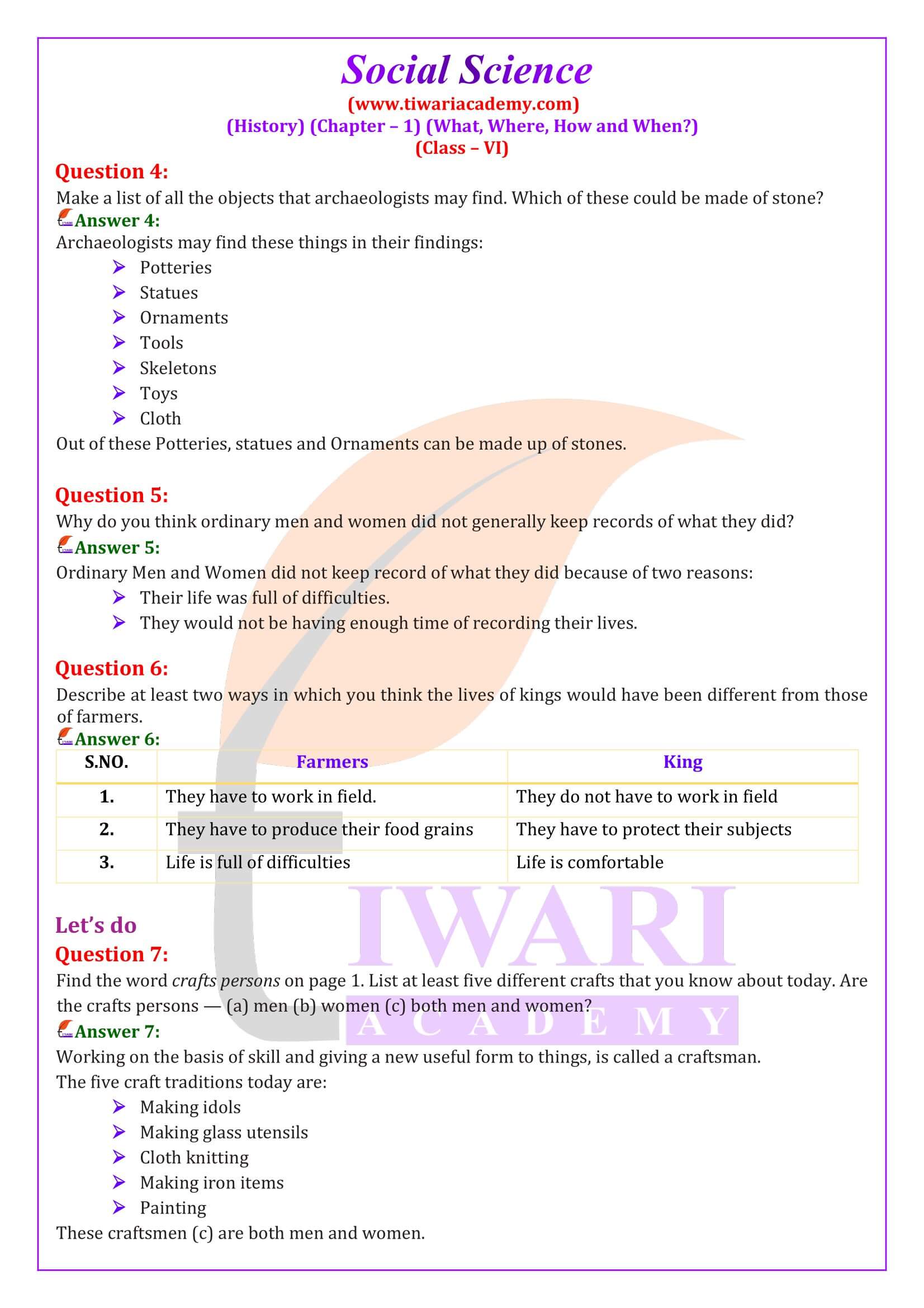
| What, Where, How and When? | Chapter 4: Timeline and Sources of History |
| In the Earliest Cities | Chapter 6: The Beginnings of Indian Civilisation |
| New Questions and Ideas | Chapter 7: India’s Cultural Roots |
| Understanding Diversity | Chapter 8: Unity in Diversity, or ‘Many in the One’ |
| What is Government? | Chapter 10: Grassroots Democracy – Part 1 |
| Panchayati Raj; Rural Administration | Chapter 11: Grassroots Democracy – Part 2 |
| Urban Administration | Chapter 12: Grassroots Democracy – Part 3 |
| Rural Livelihoods; Urban Livelihoods | Chapters 13 and 14 (Economic Life Around Us) |
Common Mistakes in Class 6 Social Science and How to Avoid Them
- Mixing up latitude and longitude: Remember: latitudes run east to west like the rungs of a ladder; longitudes run from pole to pole.
- Subtracting BCE and CE years wrongly: To find the gap between a BCE year and a CE year, add the two numbers and subtract one, because there is no year zero.
- Writing Gram Sabha when the answer is Gram Panchayat: The Gram Sabha is the body of all adult voters of the village; the Gram Panchayat is the group elected by them.
- Treating every kind of work as economic: Cooking at home for the family is non-economic; cooking in a restaurant for a salary is economic.
- Learning answers by heart without reading the chapter: The new book asks for opinions and examples, which cannot be memorised.
- Ignoring maps and pictures: Many questions in Themes A and B are based directly on them.
- Skipping the boxes and margin notes: Short facts in these boxes often appear as one-mark questions.
- Writing long paragraphs: Pointwise answers with underlined terms are easier to read and to mark.
For Parents and Teachers
The new textbook expects children to observe, discuss and form opinions. A few small steps at home and in class make this easier.
For parents:
- Ask your child to explain one idea from the chapter at the dinner table. Explaining is the best revision.
- Keep an atlas or a wall map of India and the world where the child studies.
- Link chapters to daily life: the ward councillor, the village panchayat office, the milk booth, a festival celebrated differently by neighbours.
- Use the solutions to check the notebook, not to dictate answers.
For teachers:
- The chapter overviews on this page can serve as a recap before starting a lesson.
- In-text activities such as Let’s Explore work well as pair or group tasks; the solutions give model responses to compare with.
- Chapter-wise MCQs can be used as a five-minute exit quiz at the end of a period.
Why Students Choose Tiwari Academy for Class 6 Social Science
- Based on the current book: All 14 chapters follow the latest NCERT edition for session 2026-27.
- Complete coverage: In-text questions, activities and end-of-chapter exercises are all answered.
- Language a Class 6 student can follow: Short sentences, familiar words and clear points.
- Both mediums in one place: English medium on this website and Hindi medium on the Hindi website.
- Reviewed by qualified teachers: The reviewer’s name and qualification are shown on the page.
- Free to use: Solutions are available on the website and in the Tiwari Academy apps for Android and iOS.
- Regularly updated: Pages are revised when NCERT issues a reprint or correction.
NCERT Solutions for Other Class 6 Subjects (2026-27)
| Subject | NCERT textbook | Link |
|---|---|---|
| Mathematics | Ganita Prakash | NCERT Solutions for Class 6 Maths |
| Science | Curiosity | NCERT Solutions for Class 6 Science |
| English | Poorvi | NCERT Solutions for Class 6 English |
| Hindi | Malhar | NCERT Solutions for Class 6 Hindi |
| Sanskrit | Deepakam | NCERT Solutions for Class 6 Sanskrit |
- CBSE syllabus for all classes
- NCERT books in PDF
- Ask a doubt on the discussion forum
Frequently Asked Questions – Class 6 Social Science 2026-27
Which book is prescribed for Class 6 Social Science in session 2026-27?
The NCERT textbook is Exploring Society: India and Beyond. Hindi medium students use the same book under the title समाज का अध्ययन: भारत और उसके आगे. It is a single book for the whole subject.
How many chapters are there in Class 6 Social Science?
There are 14 chapters arranged under five themes: India and the World: Land and the People; Tapestry of the Past; Our Cultural Heritage and Knowledge Traditions; Governance and Democracy; and Economic Life Around Us.
Has the Class 6 Social Science syllabus changed for 2026-27?
No, new book has been introduced. Schools continue with Exploring Society: India and Beyond and its 14 chapters. Use the latest reprint, because NCERT sometimes corrects small errors in a new print.
Are History, Geography and Civics separate books in Class 6 now?
No. The three subjects, along with Economics, are combined in one textbook. Chapters 1 to 3 are mainly Geography, 4 to 8 are History and Culture, 9 to 12 are Civics and 13 and 14 are Economics.
Are NCERT Solutions for Class 6 Social Science available in Hindi medium?
Yes. All 14 chapters are solved in Hindi medium on the Hindi website of Tiwari Academy for Class 6. The chapter order is the same as in the English medium book and the Hindi medium link for each chapter is given beside the English medium link in the chapter-wise table.
Which chapters of Class 6 SST are most important for exams?
Every chapter is part of the syllabus and the school decides the portion for each test. Topics that appear very often are latitudes and longitudes, oceans and continents, sources of history, Harappan town planning, the three organs of government, Panchayati Raj and the three economic sectors.
Is the new Class 6 Social Science book difficult?
Most students find it easier to read than the earlier books because it uses stories, pictures and activities. The parts that need extra practice are map work, time calculations with BCE and CE, and opinion-based questions.
How should I prepare Class 6 Social Science to score good marks?
Read the NCERT chapter, attempt the questions yourself, compare with the solutions, write answers in points, practise map work every week and solve MCQs after finishing each chapter. Revise once in the same week and once before the test.
Are these solutions useful for State Board students?
Yes. Any school that uses the NCERT Class 6 Social Science textbook, whether it is affiliated to CBSE or to a State Board, can use these solutions.
Where can I practise MCQs for Class 6 Social Science?
Chapter-wise MCQs with answers for all 14 chapters are available on the Tiwari Academy MCQ website and the English medium and Hindi medium MCQ links for each chapter are given side by side in the chapter-wise MCQ table on this page.
Do I still need the old books Our Pasts – I, The Earth: Our Habitat and Social and Political Life – I?
Only if your school has prescribed them. For schools following the current NCERT syllabus, Exploring Society: India and Beyond is the only textbook. Solutions for the old books are kept on this page for those who need them.
Is Economics a part of Class 6 Social Science?
Yes. Theme E, Economic Life Around Us, has two chapters: The Value of Work and Economic Activities Around Us. They introduce economic and non-economic activities and the primary, secondary and tertiary sectors.
Feedback and Suggestions
If you find a mistake in any answer or want a topic explained in more detail, write to us through the Contact Us page or post your question on the discussion forum of Tiwari Academy. Corrections suggested by students and teachers are checked and added to the pages.