National Education Policy
Post Date:

National Education Policy 2020 is now declared by Education minister caring a lots of changes in school and higher education. It is mainly focused on skilled education and easy to understand for everyone. Section is divided in to 5 + 3 + 3 + 4 (3 years in pre-schools and 12 years in school). Here, everyone has chance to complete his education at all the stage of his life. Age does not matter here to complete one’s education.
Agenda of National Education Policy 2020

    • Vision and key principles
    • Universal Access and early Childhood Education
    • The way of learning – Curricular and Pedagogic Structures
    • Curriculum – Learning Outcomes and Competencies
    • Teachers Education and Development
    • School Complex and Accreditation
    • Goals and Implementation Plan
    • Key Focus Areas like Equity, Gender and Special needs

Vision of the National Education Policy 2020

    1. Develops a sense of respect towards the fundamental rights, duties and Constitutional values, bonding with one’s country and a conscious awareness of one’s role and responsibilities in changing world.
    2. An education system that contributes to an equitable and vibrant knowledge society, by providing high quality education to all.
    3. Instills skills, values and dispositions and support responsible living and global well-being, thereby reflecting a truly global citizen of the Country.
National Education Policy 2020

Early Childhood Care and Education (ECCE)

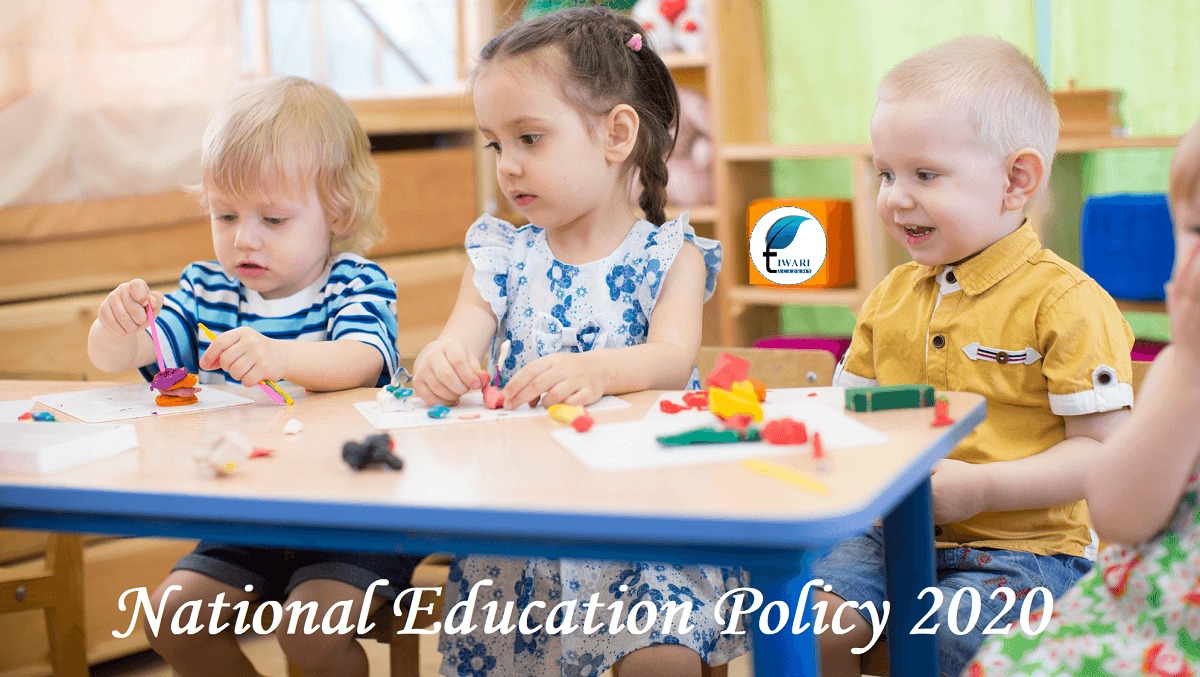
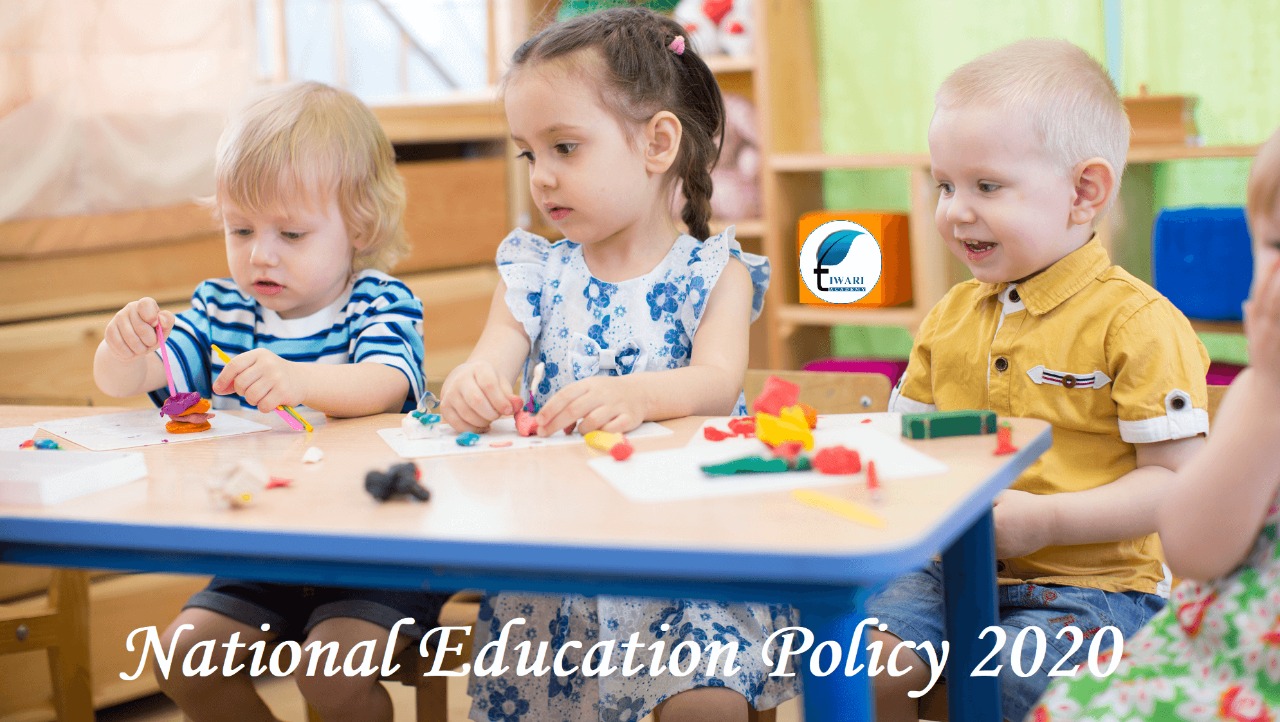
Prior to age of 5 every child will move to a Preparatory Classes or Balvatika. For the children age 3 to 6 years, access to free, safe and high quality Care and Education in Pre-School. For the age group 3 to 8 are divided into two part: (i) from 3 years to 6 years and (ii) from age of 6+ to 8 years. The way of education will be flexible, multi-level, play-based, activity-based and inquiry-based learning.


Universal Access to Education at all Levels

The would be multiple pathways to learn involving both formal and non-formal education modes. Opportunity to bring drop out children back to school. Promoting both governments and non-governmental organizations to build schools. Focus on desired learning at all levels.

Outcomes of NEP 2020

    • Universal sharing and access from Early Childhood education to Secondary level.
    • Bring back to school a lots of out-of-school children.
    • Help and support to all children to complete their secondary education.
    • Improve Quality and Achievement of learning outcomes.
    • Focus on modern skills in teaching, learning and assessment.
    • Resources sharing – School complexes.
    • Overcoming the language barrier in learning.
    • Common standards for public and private school education.
Transforming Curricular and Pedagogical Structure
    • Fundamental stage (5 years): 3 years for Aganwadi (pre-schools) and 2 years for class 1 and 2.
    • Preparatory Stage (3 years): Play, Discovery and activities based interactive classroom learning.
    • Middle Stage (3 years): Experiential learning in the science, mathematics, arts, social science and humanities.
    • Secondary Stage (4 years): Multidisciplinary study, greater critical thinking, flexibility and student choice of subjects.
Reduction in Syllabus

Curriculum in all subjects to be reduced to its core essentials. Interective teaching with reduced dependency on textbook learning and questions from students will be promoted. Focus on critical thinking, inquiry, discovery, discussion and analysis based teaching and learning methods for holistic education will be promoted. Fun, creative, collaborative and exploratory activities in classroom for experiential learning and deeper student learning will be included.


Mental and Physical Health

Annual health check up for all students. Reduction of school bags and textbooks through suitable changes in curriculum. Mandatory skills to be imbibed by all students – health, nutrition, physical education, fitness, sports and wellness. The basic training in preventive heath care, first aid, personal and public hygiene will be included in the curriculum. The role and expectations of principal and teachers will explicitly include developing a caring and inclusive culture at school. Differentiated interventions and suitable infrastructure development at schools to make access easier for children with disability.

Transforming Teaching Learning Process

Focus on experiential, inquiry and discovery based teaching learning methods. Arts, sports and story telling integrated pedagogy. Promoting peer tutoring as voluntary and joyful activity under the supervision of teachers. Integration of technology enabled pedagogy in classes from 6th to 12th. No hard separation between curricular, co-curricular and extra curricular areas. Freedom of choosing a variety of subjects combination to be provided. Bag less days to be scheduled in academic calendar.

Textbooks with Local Contents and Flavour

All textbooks to contain only essential core material while capturing any desired nuances and supplementary material as per local contexts and needs. Affordable, high-quality and energised textbooks to be provided along with free digital version. States to prepare their own curricula and textbooks based on NCERT Curriculum and NCERT textbooks, incorporating state flavour and material as needed. Concerted efforts through suitable changes in curriculum and pedagogy to significantly reduce the weight of school bags and textbooks.

Affordable and Quality Education for All

The Policy commits to significantly raising educational investment, as there is no better investment towards a societyโ€™s future than the high-quality education of our young people. Public spending on education has not yet even come close to the recommended level of 6% of GDP, as envisaged by the 1968 Policy, reiterated in the Policy of 1986, and which was further reaffirmed in the 1992 review of the Policy. The current public (Government – Centre and States) expenditure on education in India has hovered around 4.43% of GDP (Analysis of Budgeted Expenditure 2017-18); and only around 10% of the total Government spending goes towards education (Economic Survey 2017-18). These numbers are far smaller than most developed and developing countries.

In addition to one-time expenditures, primarily related to infrastructure and resources, this Policy identifies the following key longer-term thrust areas for financing to cultivate a world-class education system:

    1. Expanding and continually improving early childhood education;
    2. Ensuring foundational literacy and numeracy;
    3. Providing adequate and appropriate resourcing of school complexes;
    4. Providing food and nutrition (breakfast and midday meals);
    5. Investing in teacher education and continuing professional development of teachers;
    6. Revamping colleges and universities to foster excellence, and
    7. Cultivating research.


A rich variety of software for educational aid will be developed and made available for students and teachers at all levels. All such software will be available in all major Indian languages and will be accessible to a wide range of users including students in remote areas and with disabilities. Teaching-learning e-content will continue to be developed by all States in all regional languages, as well as by the NCERT (including CIET), CBSE, NIOS, and other bodies/institutions, and will be uploaded onto the National Teacherโ€™s Portal. This platform may also be utilised for e-content related to Teacherโ€™s Professional Development, etc. Video-viewing equipment will be made available to teachers at all schools so that teachers can suitably integrate open educational videos into teaching-learning practices.