Tiwari Academy  – Free CBSE NCERT Books and Solutions
  • Apps
    • CBSE Apps
    • Hast Rekha App
  • NCERT Solutions
    • NCERT Solutions for Class 12
      • NCERT Solutions for Class 12 Maths
      • NCERT Solutions for Class 12 Physics
      • NCERT Solutions for Class 12 Chemistry
      • NCERT Solutions for Class 12 Biology
      • NCERT Solutions for Class 12 English
      • NCERT Solutions for Class 12 Accounts
      • NCERT Solutions for Class 12 Business Studies
      • NCERT Solutions for Class 12 Economics
      • NCERT Solutions for Class 12 Geography
      • NCERT Solutions for Class 12 Physical Education
      • NCERT Solutions for Class 12 Political Science
      • NCERT Solutions for Class 12 Psychology
      • NCERT Solutions for Class 12 Sociology
    • NCERT Solutions for Class 11
      • NCERT Solutions for Class 11 Maths
      • NCERT Solutions for Class 11 Physics
      • NCERT Solutions for Class 11 Chemistry
      • NCERT Solutions for Class 11 Biology
      • NCERT Solutions for Class 11 English
      • NCERT Solutions for Class 11 Business Studies
      • NCERT Solutions for Class 11 Sociology
      • NCERT Solutions for Class 11 Political Science
      • NCERT Solutions for Class 11 Psychology
      • NCERT Solutions for Class 11 Physical Education
    • NCERT Solutions for Class 10
      • NCERT Solutions for Class 10 Maths
      • NCERT Solutions for Class 10 Science
      • NCERT Solutions for Class 10 English
      • NCERT Solutions for Class 10 Hindi Course A and B
      • NCERT Solutions for Class 10 Sanskrit
      • NCERT Solutions for Class 10 Social Science
    • NCERT Solutions for Class 9
      • NCERT Solutions for Class 9 Maths
      • NCERT Solutions for Class 9 Science
      • NCERT Solutions for Class 9 English
      • NCERT Solutions for Class 9 Hindi
      • NCERT Solutions for Class 9 Sanskrit
      • NCERT Solutions for Class 9 Social Science
    • NCERT Solutions for Class 8
      • NCERT Solutions for Class 8 Maths
      • NCERT Solutions for Class 8 Science
      • NCERT Solutions for Class 8 English
      • NCERT Solutions for Class 8 Hindi
      • NCERT Solutions for Class 8 Sanskrit
      • NCERT Solutions for Class 8 Social Science
      • NCERT Solutions for Class 8 Computer
    • NCERT Solutions for Class 7
      • NCERT Solutions for Class 7 Maths
      • NCERT Solutions for Class 7 Science
      • NCERT Solutions for Class 7 English
      • NCERT Solutions for Class 7 Hindi
      • NCERT Solutions for Class 7 Sanskrit
      • NCERT Solutions for Class 7 Social Science
      • NCERT Solutions for Class 7 Computer
    • NCERT Solutions for Class 6
      • NCERT Solutions for Class 6 Maths
      • NCERT Solutions for Class 6 Science
      • NCERT Solutions for Class 6 English
      • NCERT Solutions for Class 6 Hindi
      • Class 6 Sanskrit Deepakam NCERT Solutions 2026-27 Updated New Syllabus
      • NCERT Solutions for Class 6 Social Science
      • NCERT Solutions for Class 6 Computer
    • NCERT Solutions for Class 5
      • NCERT Solutions for Class 5 Hindi
      • NCERT Solutions for Class 5 English
      • NCERT Solutions for Class 5 Maths
      • NCERT Solutions for Class 5 EVS
      • NCERT Solutions for Class 5 Computer
      • NCERT Solutions for Class 5 GK
    • NCERT Solutions for Class 4
      • NCERT Solutions for Class 4 Hindi
      • NCERT Solutions for Class 4 English
      • NCERT Solutions for Class 4 Maths
      • NCERT Solutions for Class 4 EVS
      • NCERT Solutions for Class 4 Computer
      • NCERT Solutions for Class 4 GK
    • NCERT Solutions for Class 3
      • NCERT Solutions for Class 3 Hindi
      • NCERT Solutions for Class 3 English
      • NCERT Solutions for Class 3 Maths
      • NCERT Solutions for Class 3 EVS
      • NCERT Solutions for Class 3 Science
      • NCERT Solutions for Class 3 Computer
      • NCERT Solutions for Class 3 GK
    • NCERT Solutions for Class 2
      • NCERT Solutions for Class 2 Hindi
      • NCERT Solutions for Class 2 English
      • NCERT Solutions for Class 2 Maths
      • NCERT Solutions for Class 2 EVS
      • NCERT Solutions for Class 2 Science
      • NCERT Solutions for Class 2 Computer
      • NCERT Solutions for Class 2 GK
    • NCERT Solutions for Class 1
      • NCERT Solutions for Class 1 Hindi
      • NCERT Solutions for Class 1 English
      • NCERT Solutions for Class 1 Maths
      • NCERT Solutions for Class 1 EVS
      • NCERT Solutions for Class 1 Computer
      • NCERT Solutions for Class 1 Science
      • NCERT Solutions for Class 1 GK
    • Study Material for KG
      • Study Material for KG English
      • Study Material for KG Hindi
      • Study Material for KG Maths
    • Study Material for Nursery
      • Study Material for Nursery Maths
      • Study Material for Nursery English
      • Study Material for Nursery Hindi
  • MCQ
  • NEWS
    • Educational NEWS
    • Explore More
  • Grammar
    • Class 1 English Grammar
      • Class 1 Hindi Vyakaran
    • Class 2 English Grammar
      • Class 2 Hindi Vyakaran
    • Class 3 English Grammar
      • Class 3 Hindi Vyakaran
    • Class 4 English Grammar
      • Class 4 Hindi Vyakaran
    • Class 5 English Grammar
      • Class 5 Hindi Vyakaran
    • Class 6 English Grammar
      • Class 6 Hindi Vyakaran
    • Class 7 English Grammar
      • Class 7 Hindi Vyakaran
    • Class 8 English Grammar
      • Class 8 Hindi Vyakaran
  • Sample Papers
    • CBSE Sample Papers for Class 9
    • CBSE Sample Papers for Class 10
    • CBSE Sample Papers for Class 11
    • CBSE Sample Papers for Class 12
  • NCERT Books
    • NCERT Books for Class 1 All Subjects
    • NCERT Books for Class 2 All Subjects
    • NCERT Books for Class 3 All Subjects
    • NCERT Books for Class 4 All Subjects
    • NCERT Books for Class 5 All Subjects
    • NCERT Books for Class 6 All Subjects
    • NCERT Books for Class 7 All Subjects
    • NCERT Books for Class 8 All Subjects
    • NCERT Books for Class 9 All Subjects
    • NCERT Books for Class 10 All Subjects
    • NCERT Books for Class 11 All Subjects
    • NCERT Books for Class 12 All Subjects
  • Syllabus
    • CBSE Date Sheet 2025
    • CBSE Syllabus
    • NCERT Exemplar
    • What is NIOS?
    • NIOS Online Admission
  • Contact
    • Contact Us
    • About Us
    • Online Tutors
    • Career Options
  • Apps
    • CBSE Apps
    • Hast Rekha App
  • NCERT Solutions
    • NCERT Solutions for Class 12
      • NCERT Solutions for Class 12 Maths
      • NCERT Solutions for Class 12 Physics
      • NCERT Solutions for Class 12 Chemistry
      • NCERT Solutions for Class 12 Biology
      • NCERT Solutions for Class 12 English
      • NCERT Solutions for Class 12 Accounts
      • NCERT Solutions for Class 12 Business Studies
      • NCERT Solutions for Class 12 Economics
      • NCERT Solutions for Class 12 Geography
      • NCERT Solutions for Class 12 Physical Education
      • NCERT Solutions for Class 12 Political Science
      • NCERT Solutions for Class 12 Psychology
      • NCERT Solutions for Class 12 Sociology
    • NCERT Solutions for Class 11
      • NCERT Solutions for Class 11 Maths
      • NCERT Solutions for Class 11 Physics
      • NCERT Solutions for Class 11 Chemistry
      • NCERT Solutions for Class 11 Biology
      • NCERT Solutions for Class 11 English
      • NCERT Solutions for Class 11 Business Studies
      • NCERT Solutions for Class 11 Sociology
      • NCERT Solutions for Class 11 Political Science
      • NCERT Solutions for Class 11 Psychology
      • NCERT Solutions for Class 11 Physical Education
    • NCERT Solutions for Class 10
      • NCERT Solutions for Class 10 Maths
      • NCERT Solutions for Class 10 Science
      • NCERT Solutions for Class 10 English
      • NCERT Solutions for Class 10 Hindi Course A and B
      • NCERT Solutions for Class 10 Sanskrit
      • NCERT Solutions for Class 10 Social Science
    • NCERT Solutions for Class 9
      • NCERT Solutions for Class 9 Maths
      • NCERT Solutions for Class 9 Science
      • NCERT Solutions for Class 9 English
      • NCERT Solutions for Class 9 Hindi
      • NCERT Solutions for Class 9 Sanskrit
      • NCERT Solutions for Class 9 Social Science
    • NCERT Solutions for Class 8
      • NCERT Solutions for Class 8 Maths
      • NCERT Solutions for Class 8 Science
      • NCERT Solutions for Class 8 English
      • NCERT Solutions for Class 8 Hindi
      • NCERT Solutions for Class 8 Sanskrit
      • NCERT Solutions for Class 8 Social Science
      • NCERT Solutions for Class 8 Computer
    • NCERT Solutions for Class 7
      • NCERT Solutions for Class 7 Maths
      • NCERT Solutions for Class 7 Science
      • NCERT Solutions for Class 7 English
      • NCERT Solutions for Class 7 Hindi
      • NCERT Solutions for Class 7 Sanskrit
      • NCERT Solutions for Class 7 Social Science
      • NCERT Solutions for Class 7 Computer
    • NCERT Solutions for Class 6
      • NCERT Solutions for Class 6 Maths
      • NCERT Solutions for Class 6 Science
      • NCERT Solutions for Class 6 English
      • NCERT Solutions for Class 6 Hindi
      • Class 6 Sanskrit Deepakam NCERT Solutions 2026-27 Updated New Syllabus
      • NCERT Solutions for Class 6 Social Science
      • NCERT Solutions for Class 6 Computer
    • NCERT Solutions for Class 5
      • NCERT Solutions for Class 5 Hindi
      • NCERT Solutions for Class 5 English
      • NCERT Solutions for Class 5 Maths
      • NCERT Solutions for Class 5 EVS
      • NCERT Solutions for Class 5 Computer
      • NCERT Solutions for Class 5 GK
    • NCERT Solutions for Class 4
      • NCERT Solutions for Class 4 Hindi
      • NCERT Solutions for Class 4 English
      • NCERT Solutions for Class 4 Maths
      • NCERT Solutions for Class 4 EVS
      • NCERT Solutions for Class 4 Computer
      • NCERT Solutions for Class 4 GK
    • NCERT Solutions for Class 3
      • NCERT Solutions for Class 3 Hindi
      • NCERT Solutions for Class 3 English
      • NCERT Solutions for Class 3 Maths
      • NCERT Solutions for Class 3 EVS
      • NCERT Solutions for Class 3 Science
      • NCERT Solutions for Class 3 Computer
      • NCERT Solutions for Class 3 GK
    • NCERT Solutions for Class 2
      • NCERT Solutions for Class 2 Hindi
      • NCERT Solutions for Class 2 English
      • NCERT Solutions for Class 2 Maths
      • NCERT Solutions for Class 2 EVS
      • NCERT Solutions for Class 2 Science
      • NCERT Solutions for Class 2 Computer
      • NCERT Solutions for Class 2 GK
    • NCERT Solutions for Class 1
      • NCERT Solutions for Class 1 Hindi
      • NCERT Solutions for Class 1 English
      • NCERT Solutions for Class 1 Maths
      • NCERT Solutions for Class 1 EVS
      • NCERT Solutions for Class 1 Computer
      • NCERT Solutions for Class 1 Science
      • NCERT Solutions for Class 1 GK
    • Study Material for KG
      • Study Material for KG English
      • Study Material for KG Hindi
      • Study Material for KG Maths
    • Study Material for Nursery
      • Study Material for Nursery Maths
      • Study Material for Nursery English
      • Study Material for Nursery Hindi
  • MCQ
  • NEWS
    • Educational NEWS
    • Explore More
  • Grammar
    • Class 1 English Grammar
      • Class 1 Hindi Vyakaran
    • Class 2 English Grammar
      • Class 2 Hindi Vyakaran
    • Class 3 English Grammar
      • Class 3 Hindi Vyakaran
    • Class 4 English Grammar
      • Class 4 Hindi Vyakaran
    • Class 5 English Grammar
      • Class 5 Hindi Vyakaran
    • Class 6 English Grammar
      • Class 6 Hindi Vyakaran
    • Class 7 English Grammar
      • Class 7 Hindi Vyakaran
    • Class 8 English Grammar
      • Class 8 Hindi Vyakaran
  • Sample Papers
    • CBSE Sample Papers for Class 9
    • CBSE Sample Papers for Class 10
    • CBSE Sample Papers for Class 11
    • CBSE Sample Papers for Class 12
  • NCERT Books
    • NCERT Books for Class 1 All Subjects
    • NCERT Books for Class 2 All Subjects
    • NCERT Books for Class 3 All Subjects
    • NCERT Books for Class 4 All Subjects
    • NCERT Books for Class 5 All Subjects
    • NCERT Books for Class 6 All Subjects
    • NCERT Books for Class 7 All Subjects
    • NCERT Books for Class 8 All Subjects
    • NCERT Books for Class 9 All Subjects
    • NCERT Books for Class 10 All Subjects
    • NCERT Books for Class 11 All Subjects
    • NCERT Books for Class 12 All Subjects
  • Syllabus
    • CBSE Date Sheet 2025
    • CBSE Syllabus
    • NCERT Exemplar
    • What is NIOS?
    • NIOS Online Admission
  • Contact
    • Contact Us
    • About Us
    • Online Tutors
    • Career Options
हिंदी मीडियमहिंदी मीडियम Latest BlogsLatest Blogs Ask QuestionsAsk Questions
Tiwari Academy  /  CBSE 3-Language Rule: Will Hindi Become Compulsory Subject?

CBSE 3-Language Rule: Will Hindi Become Compulsory Subject?

CBSE 3 Language formula 2026
Post Date: May 19, 2026

Over the last few days, one major question has started circulating among CBSE students, parents and teachers after a new circular regarding language education was released. Many families are now trying to understand whether English, Hindi and Sanskrit will become compulsory together, whether students in Classes 9 and 10 will face additional academic pressure and if the new rule will affect future board examinations.
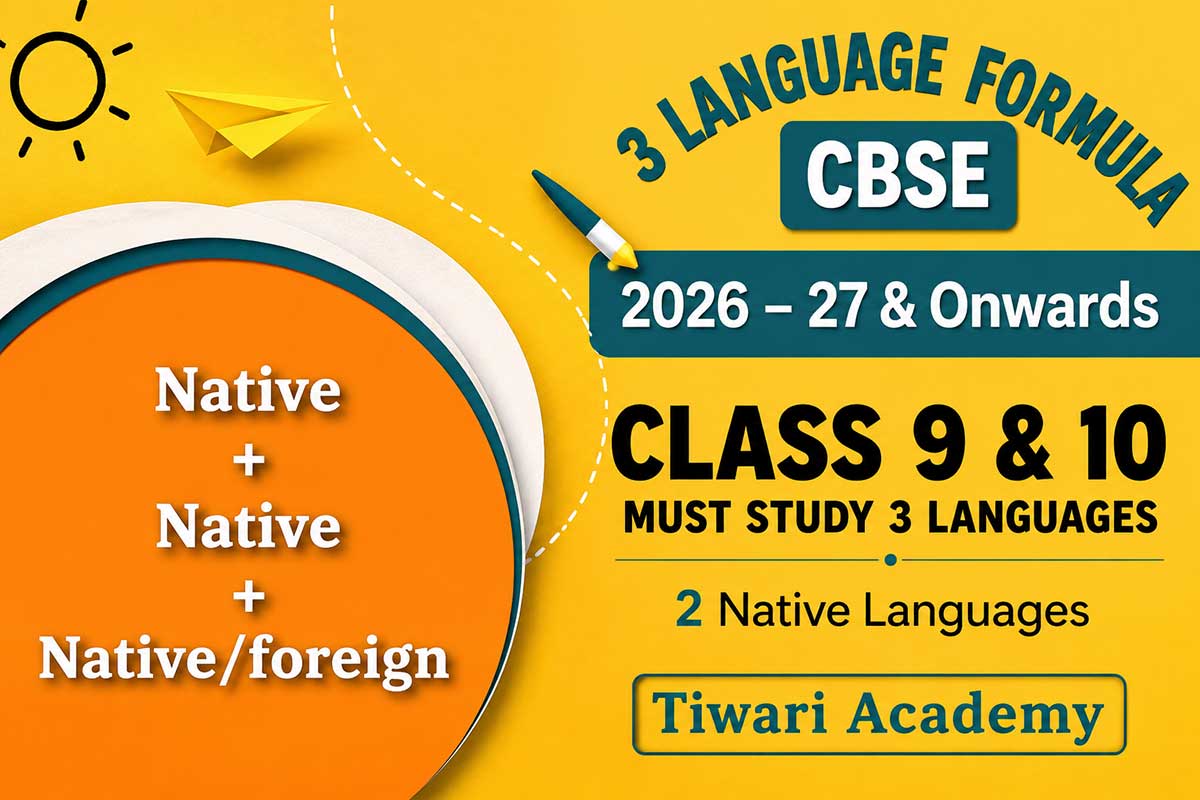

CBSE 3 Languages Formua for Class 9 & 10 (Session 2026-27 Onwords)

The confusion is understandable. Whenever an important change related to education appears, especially one involving school subjects and examinations, students naturally become concerned about how their studies may change. This time, the discussion revolves around CBSE’s revised language framework, which has been aligned with the broader vision of the National Education Policy (NEP) 2020 and the newly introduced NCERT curriculum structure for secondary classes. According to the latest circular, CBSE has decided to introduce a transition model for language studies in Class 9 from the academic session 2026–27 onward, where students will study three languages (R1, R2 and R3) instead of following the earlier pattern.

However, before students panic or parents begin worrying about additional study burden, it is important to understand one thing clearly: the reality of the new rule is very different from what social media rumours are suggesting.

Quick Comparison: Old Language Pattern vs. New CBSE 2026 Framework

Before students panic, it is important to understand that the new system is not a complete replacement but rather a structured transition. The table below helps explain the difference clearly.

FeaturePrevious PatternNew CBSE 2026 Language Framework
Number of LanguagesUsually 23 Languages (R1, R2, R3)
Indian Languages RequirementFlexibleMinimum 2 Indian languages compulsory
SanskritOptionalCan be selected as an Indian language
Foreign LanguageMore flexibilityLimited flexibility
Board ExaminationStandard formatNo Board Exam for R3
Assessment StyleRegular evaluationRegular evaluation
Class AffectedExisting structureStarts from Class 9 (2026–27 onward)

What Exactly Has CBSE Changed for Class 9 and 10 Student?

CBSE has announced an important academic transition regarding the study of languages at the secondary stage. Under the updated framework, students studying in Class 9 will now be required to study three languages, referred to as R1, R2 and R3. While this may sound like a dramatic shift at first, the actual structure is more flexible than many people assume.

The most important rule under this framework is that at least two out of the three languages must be native Indian languages. Students may still choose a foreign language, but only under specific conditions. For example, if a student wishes to study a foreign language, the other two selected languages must belong to Indian language categories. In some cases, schools may even allow such languages as an additional fourth subject instead of replacing Indian languages. This revised structure will officially come into effect for Class 9 students from 1 July 2026.

This change has mainly been introduced to bring CBSE’s scheme of studies closer to the newly revised NCERT syllabus and the multilingual goals promoted by NEP 2020. For solutions, refer to Class-Wise NCERT Solutions in Hindi and English Medium.

Quick Highlights of the New CBSE Language Rule (2026)

Before understanding the deeper impact, here are some important takeaways students and parents should know:

  • Students in Class 9 will study three languages
  • At least two languages must be Indian languages
  • English will continue, but combinations may vary
  • Sanskrit can be selected as one of the Indian language options
  • Foreign languages will have limited flexibility
  • No separate CBSE Board Examination will be conducted for the third language (R3)
  • Assessment for R3 will remain school-based
  • Students will not be prevented from appearing in Class 10 board exams because of the third language requirement.

At this stage, the policy is designed more around learning and language exposure rather than increasing examination stress.


Will English, Hindi and Sanskrit become Compulsory together?

  • This is probably the most searched question right now.
  • The simple answer is No – not necessarily.

CBSE has not announced that every student in India must compulsorily study English, Hindi, and Sanskrit together. Instead, the Board has explained that students must study three languages and that at least two of those should be Indian languages. Sanskrit is certainly one of the major Indian language options available to schools, which is why many people are discussing it, but students may also have access to several other regional or native Indian language choices depending on school availability.

For example, some schools may offer:

Possible CombinationLanguage Structure
Option 1English + Hindi + Sanskrit
Option 2English + Hindi + Tamil
Option 3English + Bengali + Sanskrit
Option 4English + Punjabi + Hindi
Option 5English + Marathi + Sanskrit
Option 6English + Hindi + Regional Language

This means students should not immediately assume that Sanskrit has suddenly become compulsory for everyone. Instead, schools will have flexibility in offering combinations while following CBSE guidelines.

Why has CBSE introduced this Three-Language-System?

The reasoning behind this decision is directly connected to the educational vision of NEP 2020, which strongly encourages multilingual learning and better understanding of Indian languages.
According to CBSE, language education is not just about memorising textbook lessons. It also plays a major role in improving:

  • Reading comprehension
  • Communication ability
  • Writing skills
  • Grammatical understanding
  • Cultural awareness
  • Confidence in language expression

The Board also mentioned that many competencies between middle school and secondary school language learning already overlap significantly, which means students are not starting completely from scratch. Schools will receive guidance and supporting material to help manage the transition effectively.

The Biggest Relief for Student: No Extra Board Exam Pressure

One of the strongest fears among students after hearing the phrase “third language” was obvious:

  • “Will we now have another board subject in Class 10?”
  • Thankfully, CBSE has addressed this concern very clearly.

The Board has confirmed that there will be no separate CBSE Board Examination for the third language (R3). Instead, evaluation will happen internally through schools. Performance in the subject may appear in the student’s certificate, but students will not face the stress of an additional high-pressure board paper. More importantly, no student will be stopped from appearing in the Class 10 Board Examination because of R3 requirements. For parents, this clarification should come as a major relief because it means the focus remains on learning languages naturally rather than increasing academic burden.


Myth vs. Reality: Clearing the Biggest Confusions

Social media rumours often spread faster than official information. Let us separate facts from assumptions.

MythReality
Sanskrit is compulsory for all studentsNo, schools can offer multiple Indian language options
Students will get one extra Board ExamNo separate Board Exam for R3
English will be removedNo, English continues
Students may fail boards because of R3CBSE clearly says students will not be stopped from appearing in Class 10 boards
Only Hindi + Sanskrit allowedSchools may choose multiple combinations

Conclusion: Should Students worry about this new Rule?

The short answer is No.
While the announcement initially sounds big, the actual structure is more balanced than many rumours suggest. The goal behind the updated framework is not to burden students but to promote stronger multilingual learning aligned with India’s educational vision. Since there is no additional board pressure for the third language, students can focus more calmly on building language understanding without unnecessary fear.

For now, the smartest step for students is simple: stay informed, avoid misinformation, strengthen NCERT concepts, and continue regular preparation. As CBSE releases further updates, schools will also guide students regarding language combinations and implementation details. The three-language model may feel new, but with proper preparation and reliable study resources, students can adapt comfortably.


How should Students prepare under this new Language Structure?

Even though implementation begins from Class 9, students should start strengthening their understanding of school subjects and language learning habits early. Reading comprehension, textbook understanding, grammar basics and consistent revision will become increasingly important under a multilingual structure.

For students looking for organised study material, chapter explanations, textbook solutions and subject-wise support, NCERT solutions can save a lot of time and confusion.

Students in Class 9 who want complete chapter-wise study help can check:

  • Class 9 English NCERT Solutions for literature, grammar support, prose, poetry and textbook questions.
  • Class 9 Hindi NCERT Solutions to understand explanations, question answers and chapter concepts more clearly.
  • Class 9 Sanskrit NCERT Solutions for students who may study Sanskrit under the three-language framework.

Students who want complete subject-wise preparation, including Maths, Science, Social Science and additional subjects, can also explore: Class-wise NCERT Solutions

Frequently Asked Questions – FAQs

Has CBSE made three languages compulsory in Class 9?

Yes, CBSE has announced that students studying in Class 9 from the 2026–27 academic session onward will follow a three-language structure, referred to as R1, R2 and R3. However, this does not mean that every student across India will study the exact same three languages. The Board has clarified that at least two of these languages should be native Indian languages, while schools may still offer flexibility in combinations depending on teacher availability and school policies. Students should wait for official communication from their schools before assuming any specific subject combination.

Is Sanskrit compulsory for all CBSE students?

No, Sanskrit is not compulsory for every student. This is one of the biggest misunderstandings currently spreading online. CBSE has not announced that all students must study Sanskrit. Instead, Sanskrit is one of the Indian language options that schools may offer under the new framework.
Depending on the school, students may also have access to other Indian languages such as Tamil, Punjabi, Bengali, Marathi, Gujarati and several regional language choices. Therefore, students should not panic or assume Sanskrit will automatically become mandatory everywhere.

Will there be an extra Board Examination because of the third language?

No, CBSE has clearly clarified that there will be no separate Board Examination for the third language (R3) in Class 10. This means students will not suddenly face an extra board subject or additional exam pressure.
Instead, the third language will be assessed through internal school-based evaluation, which may include assignments, periodic tests, projects or school-level assessments. The Board has specifically mentioned that the purpose of the new system is to encourage learning rather than increase academic burden.

Will English still continue under the new language structure?

Yes, English will continue to remain an important part of the educational structure. Many students were worried after hearing rumours that English might be removed or replaced, but there is no such announcement from CBSE. Schools may continue offering English alongside Indian languages depending on the language combination chosen. The key requirement under the policy is simply that at least two languages should belong to Indian language categories.
Therefore, students can expect English to remain an important academic language in most schools.

When will the new CBSE language system begin?

According to the official circular, the revised three-language framework will begin from 1 July 2026 for Class 9 students. This means students entering Class 9 in the 2026–27 academic session are expected to study under this updated structure.
Since implementation may differ slightly depending on school readiness, students and parents should regularly follow updates issued by their schools for complete clarity regarding language options and subject combinations.

Can schools choose other Indian languages apart from Hindi and Sanskrit?

Yes, schools may offer multiple Indian language options depending on resources, teacher availability and regional preferences. CBSE has not restricted schools to only Hindi and Sanskrit.
Schools may choose from a wider list of Indian languages, which means students could potentially study languages such as Punjabi, Tamil, Bengali, Marathi, Gujarati, Telugu and many others depending on their school. The exact language availability may vary from one institution to another.

Will students be stopped from appearing in Class 10 Board Exams because of R3?

No, CBSE has very clearly stated that no student will be barred from appearing in Class 10 Board Examinations because of the third language (R3). This clarification is extremely important because many parents feared that poor performance in the third language might affect board eligibility.
However, the Board has reassured students that the focus remains on meaningful learning and smooth transition rather than punishment or pressure.

Should parents worry about this new language rule?

At this stage, parents do not need to panic, but staying informed is definitely important. While the announcement may initially sound like a major academic change, CBSE has already clarified several student-friendly points, including no extra board exam pressure for the third language.
The goal behind the updated structure is to improve multilingual understanding and strengthen communication skills rather than make studies harder. Parents should avoid misinformation spreading online and instead rely on official school communication and CBSE updates.

Recent Posts
  • CBSE 3-Language Rule: Will Hindi Become Compulsory Subject?
  • NCERT Solutions for Class 10 Maths 2026-27 – Welcome to Your New Session
  • CBSE Class 10 English Exam Paper 2026: Solutions, Answer Key & Analysis
  • CBSE Class 10 Science Board Exam Paper 2026: Complete Solutions and Answer Key
  • Class 10 Maths CBSE Exam Paper 2026 Solutions


Important Links
  • What is NCERT?
  • Important Questions
  • Vedic Maths Tricks
  • Link Study Materials
  • Useful Resources & Formulae
  • Holiday Homework Solutions


Buy NCERT Books Online

NCERT Books for 2026-27

NCERT Solutions
  • NCERT Solutions for Class 6 Maths
  • NCERT Solutions for Class 7 Maths
  • NCERT Solutions for Class 8 Maths
  • NCERT Solutions for Class 11 Maths
  • NCERT Solutions for Class 12 Maths
  • NCERT Solutions for Class 11 Physics
  • NCERT Solutions for Class 12 Physics


High School
  • Class 9 NCERT Maths Solutions
  • Class 9 NCERT Science Solutions
  • Class 9 NCERT English Solutions
  • Class 10 NCERT Maths Solutions
  • Class 10 NCERT Science Solutions
  • Class 10 NCERT English Solutions
  • Class 10 NCERT Social Solutions

Quick Links
  • NCERT Books
  • NCERT Solutions
  • CBSE Syllabus
  • Home Tutors
  • NIOS Admissions
  • CBSE Sample Papers
  • Vedic Maths Tricks
Help & Support
  • About Us
  • Contact Us
  • Advertise With Us
  • Discussion
  • Latest Blogs
  • Holiday Homework
  • Useful Resources
Copyright 2026 by Tiwari Academy | A step towards Free Education
facebook
twitter
linkedin
youtube
instagram
pinterest
google-news