by Tiwari Academy Team
CBSE Sample Papers for Class 9 Maths Ganita Manjari with answer and solutions are free to use online or download in PDF file format for practice. The 2026-27 session is the first year of NCERT’s new Class 9 Maths textbook, Ganita Manjari, so older Class 9 sample papers no longer match what you study in class. These 20 CBSE Sample Papers for Class 9 Maths are written for the new syllabus and cover all 14 chapters of Ganita Manjari Part 1 and Part 2, from coordinates and polynomials to propositions, algorithms and probability. Each 80-mark paper has 38 questions in Sections A to E, to be solved in 3 hours. All 20 papers are available now in five monthly sets, while answers and solutions follow month by month until February 2027.
Ganita Manjari Sample Papers 1–4 with Solutions: October 2026 Set
With half-yearly exams behind most schools, October is the right time to start full-length practice. Papers 1 to 4 draw questions from both parts of Ganita Manjari, including new topics such as Euclid’s algorithm, geometric progressions and the slope of a line. Solutions for all four papers are available now. Attempt each paper within 3 hours, then compare your working with ours step by step.
Class 9 Maths Sample Papers for Practice in October 2026
- Class 9 Maths Ganita Manjari Sample Paper 1
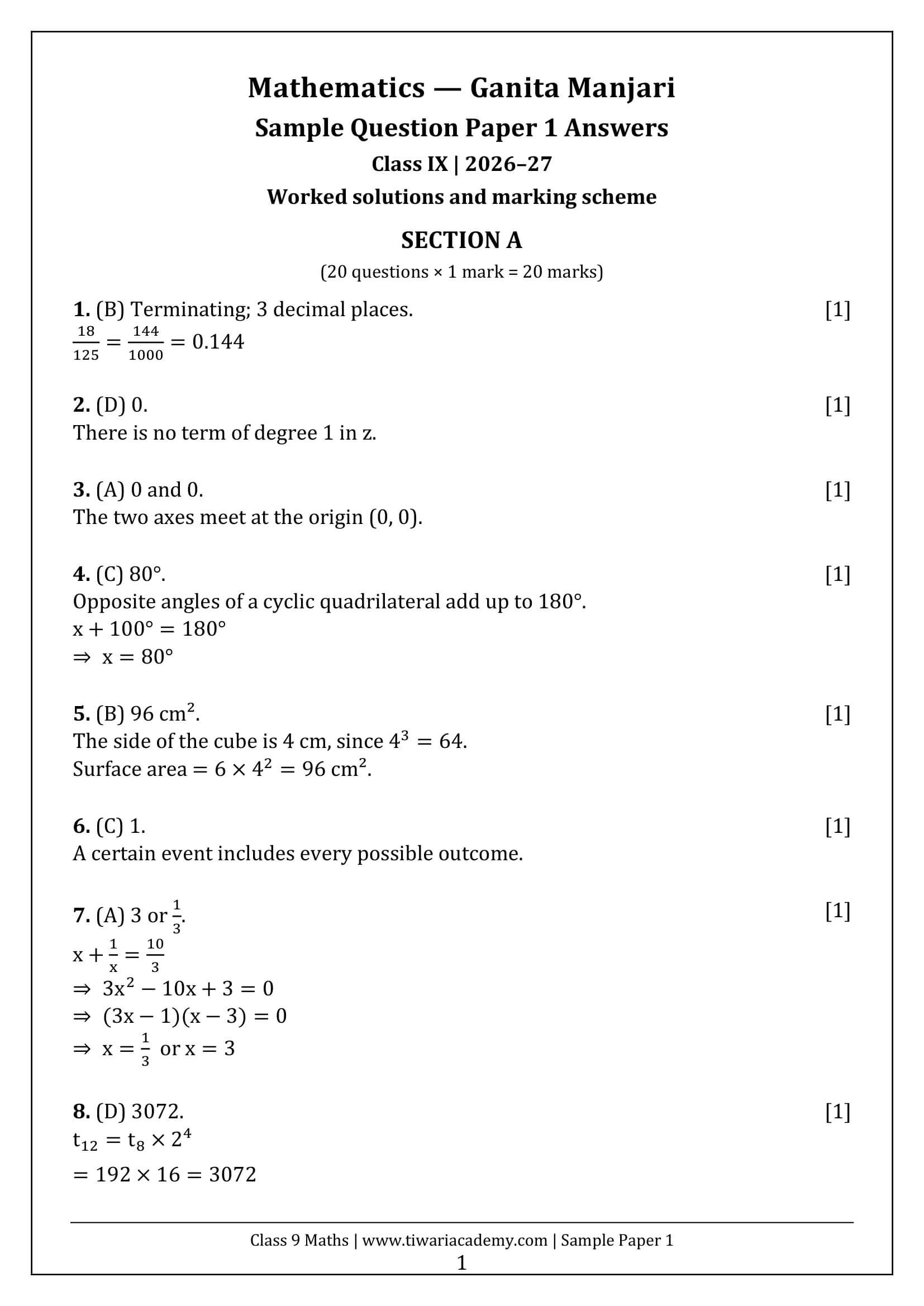
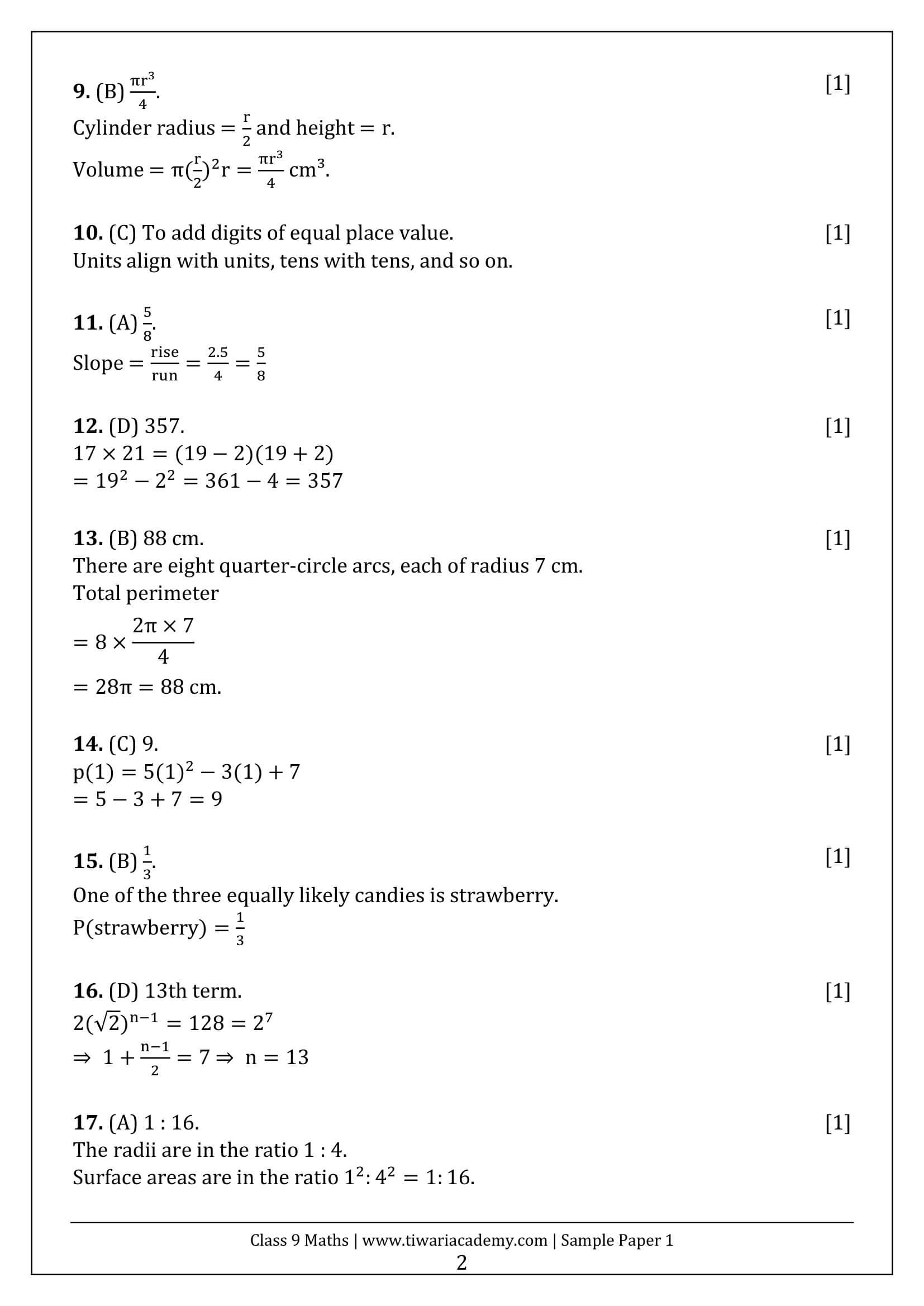
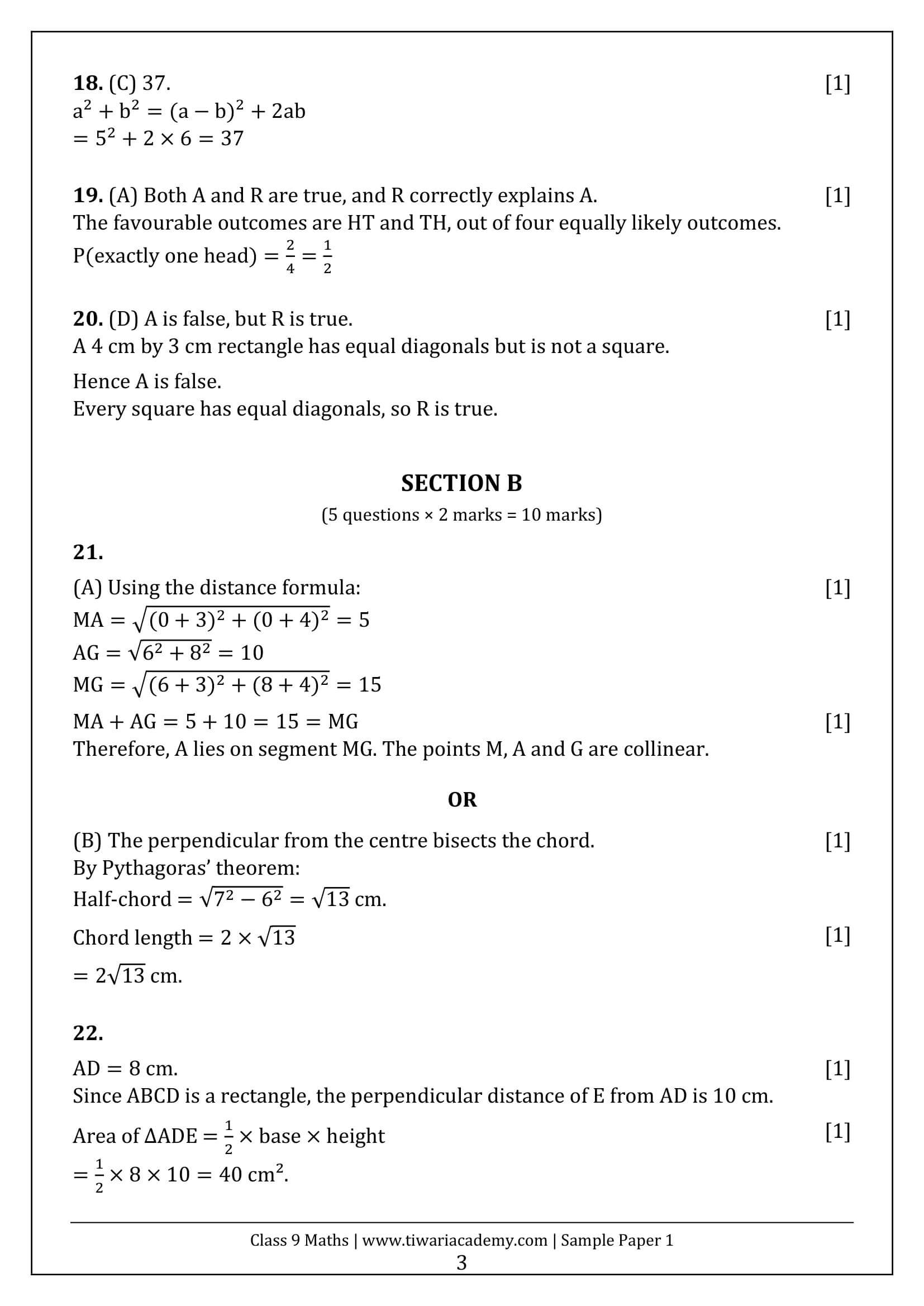
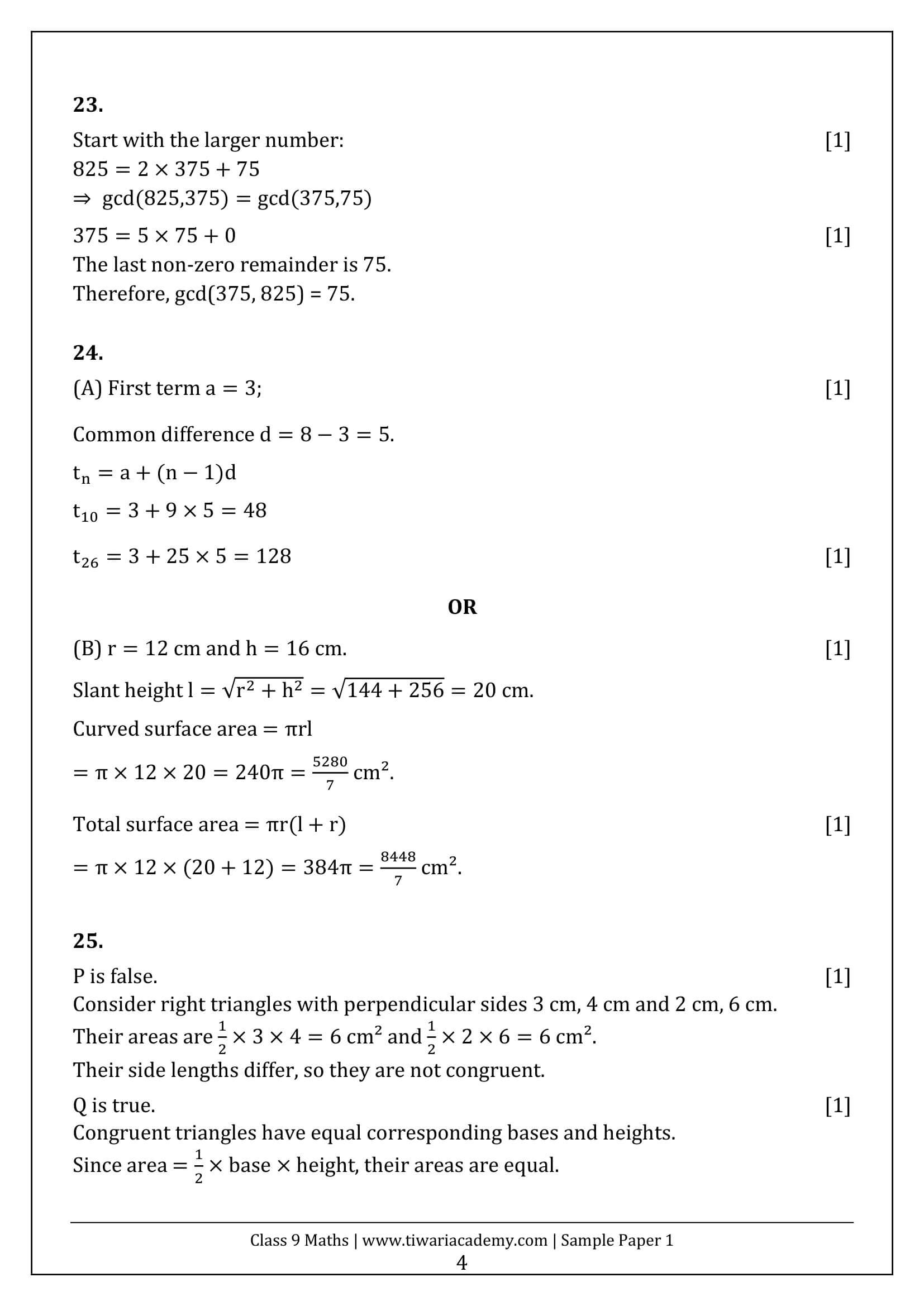
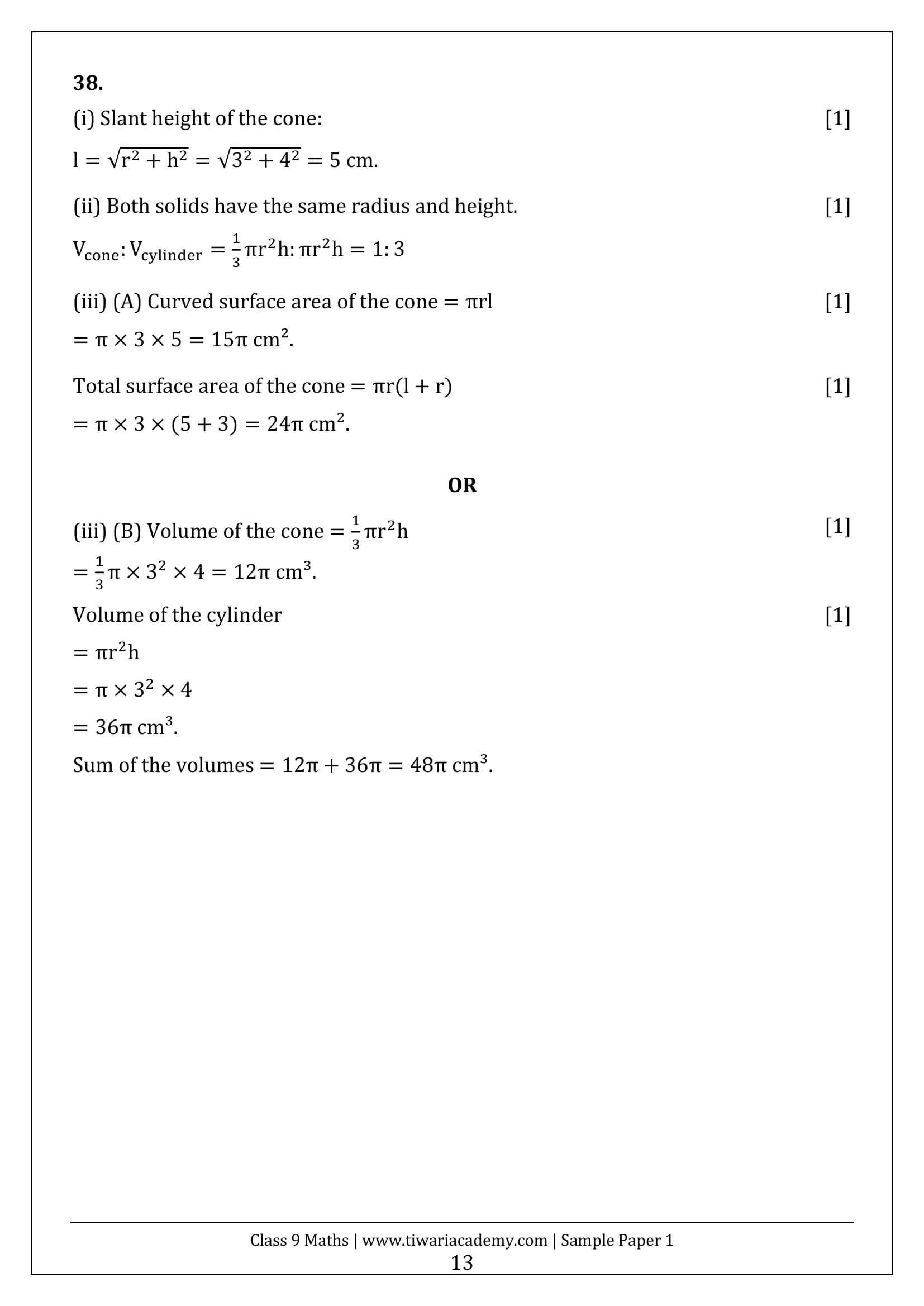
- Class 9 Maths Ganita Manjari Sample Paper 1 Answers
- Class 9 Maths Ganita Manjari Sample Paper 2
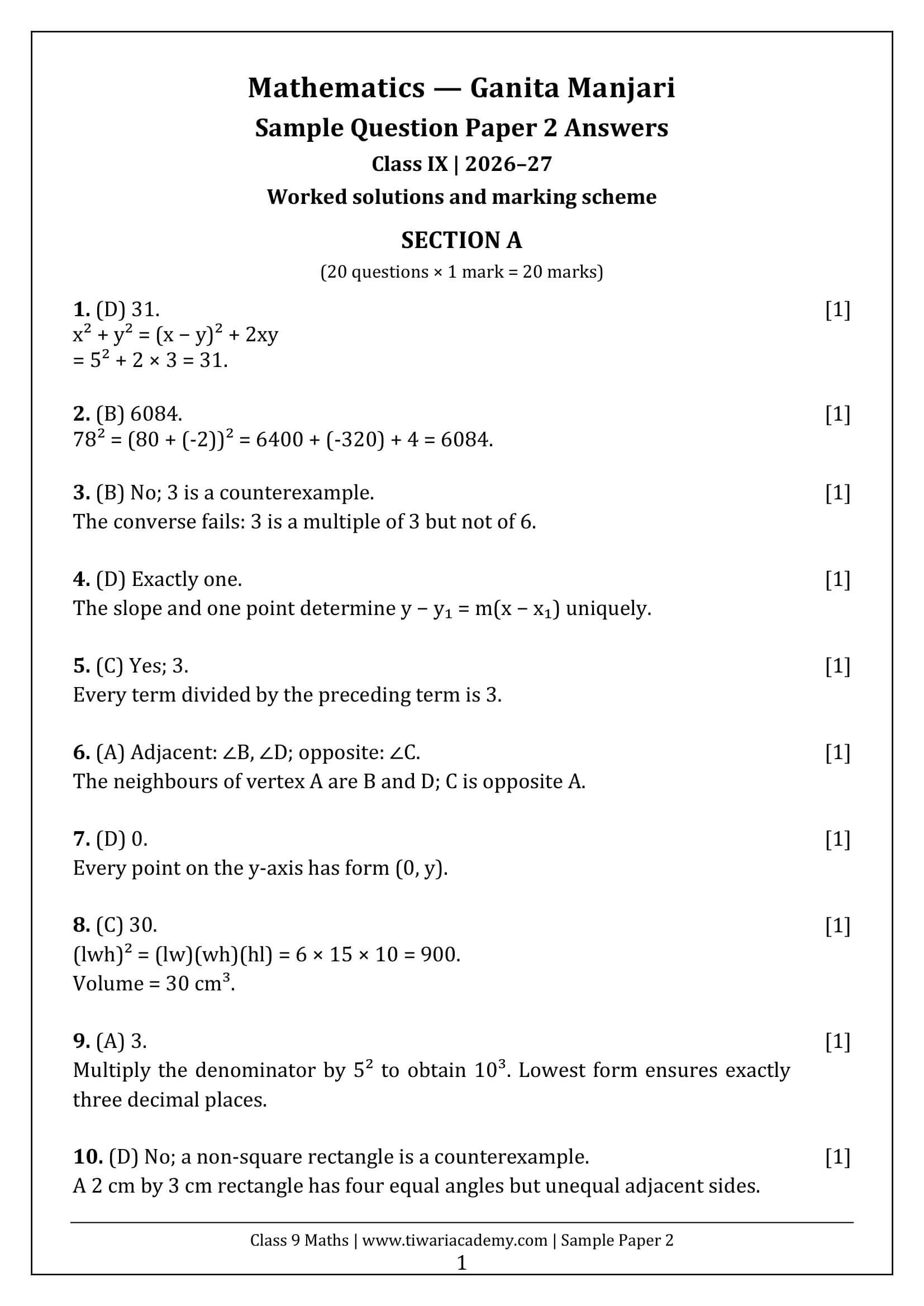
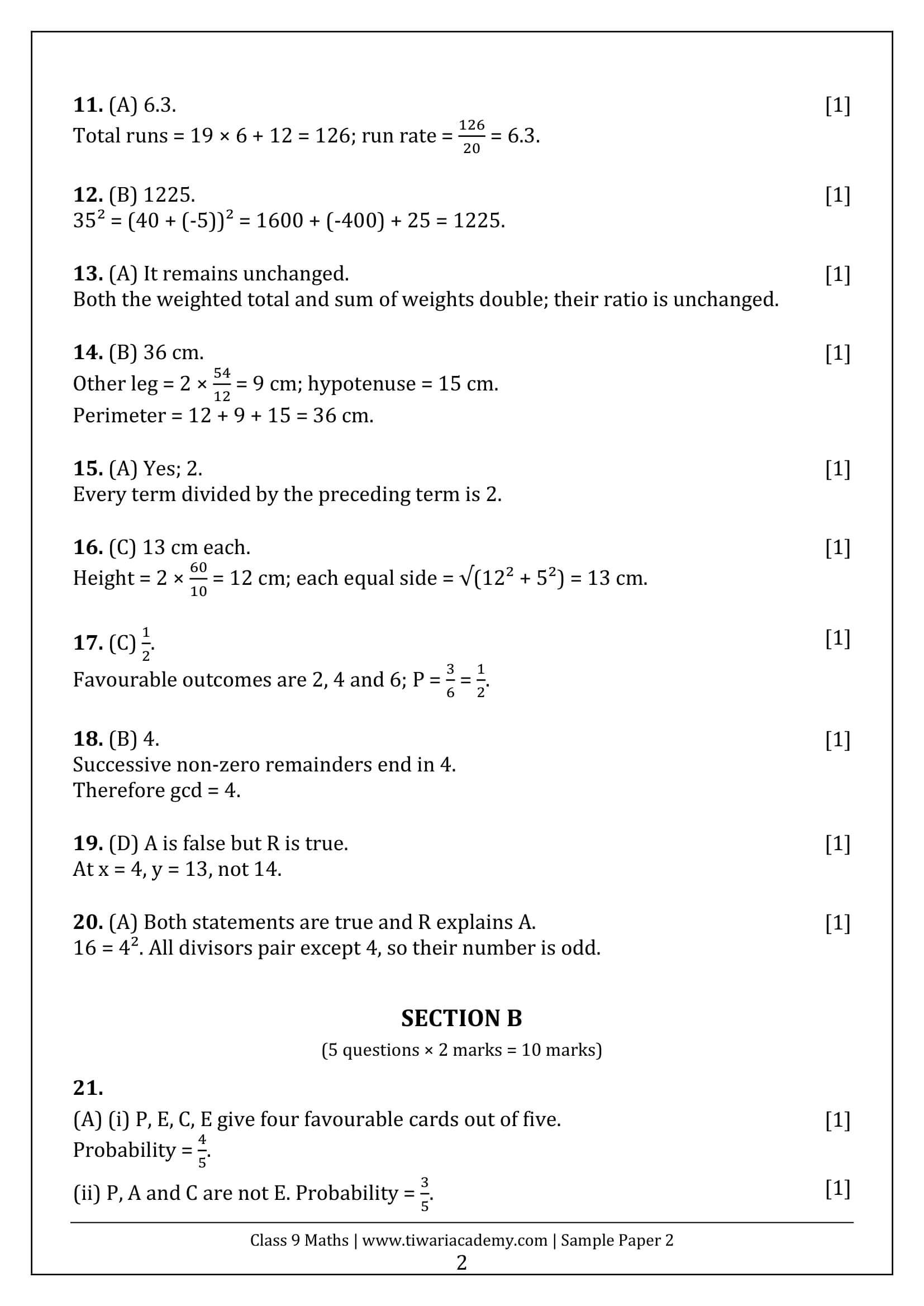
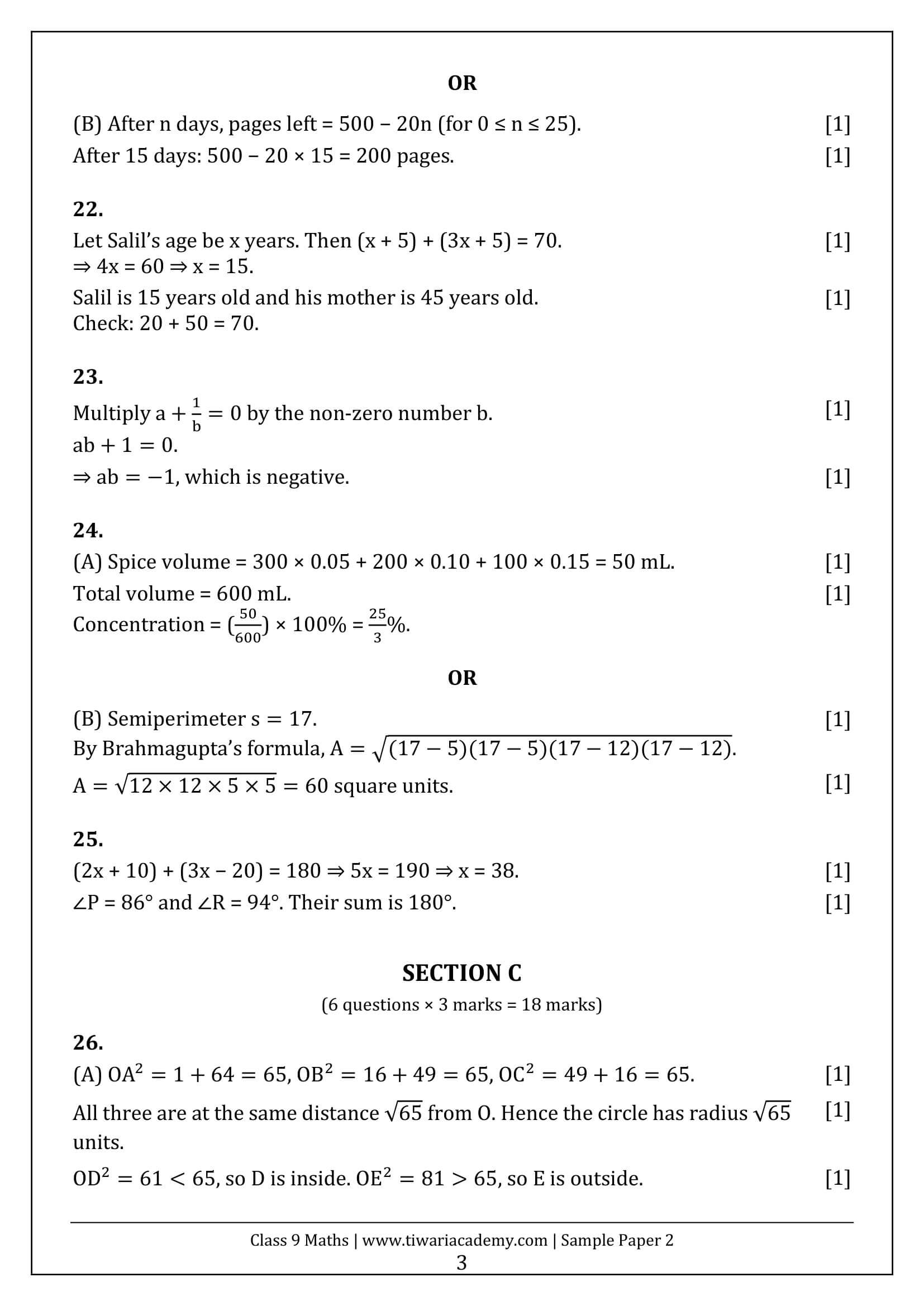
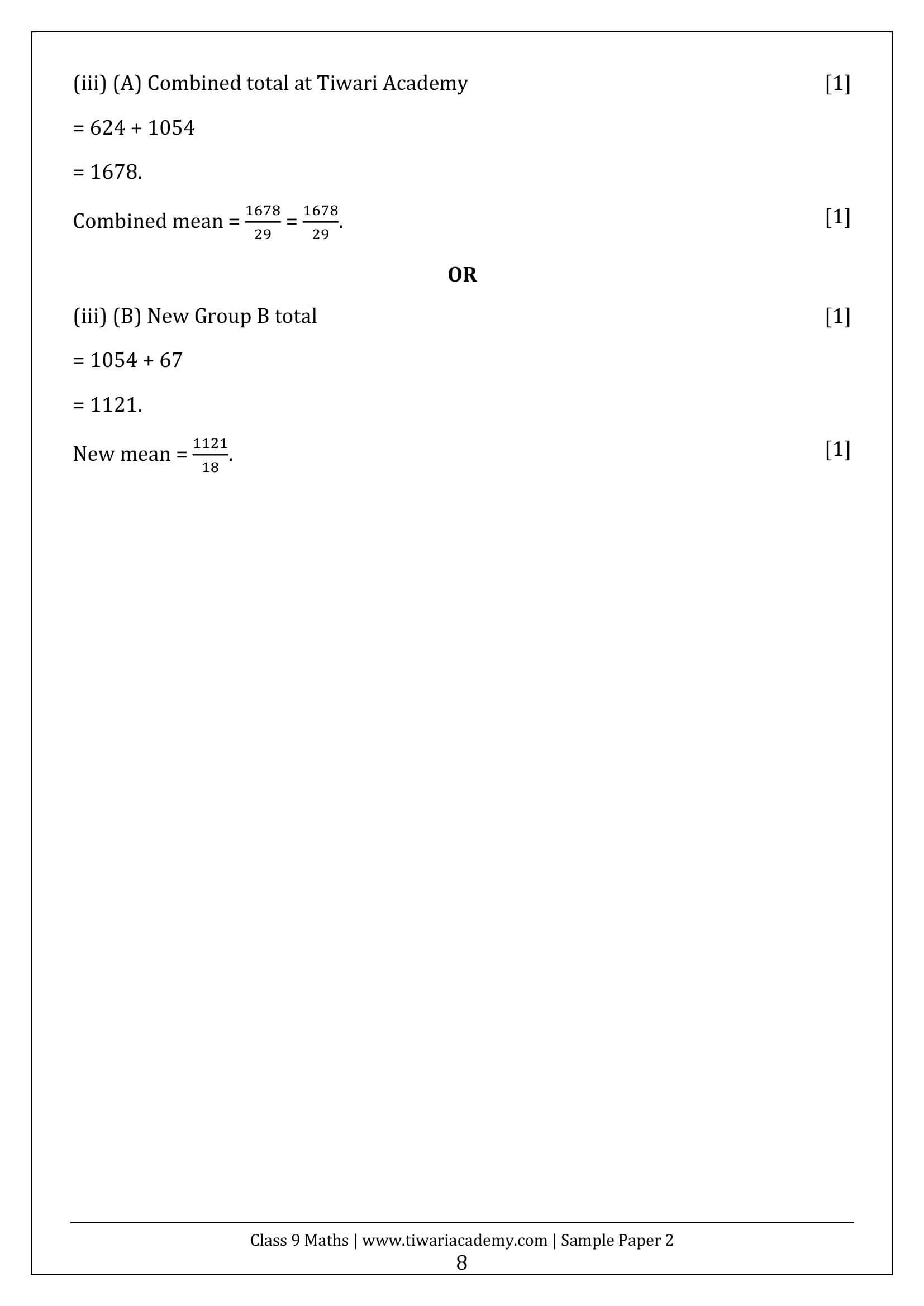
- Class 9 Maths Ganita Manjari Sample Paper 2 Answers
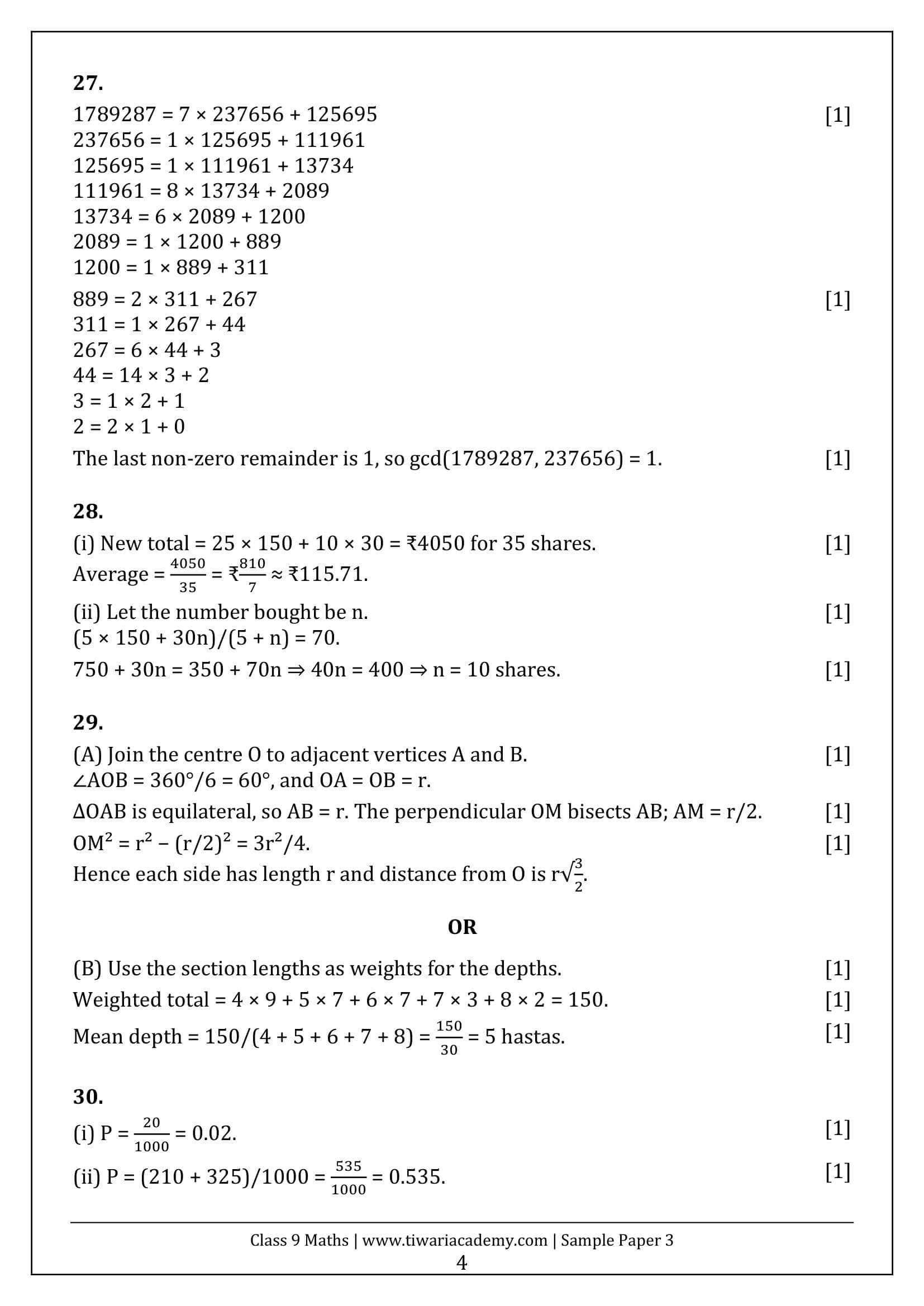
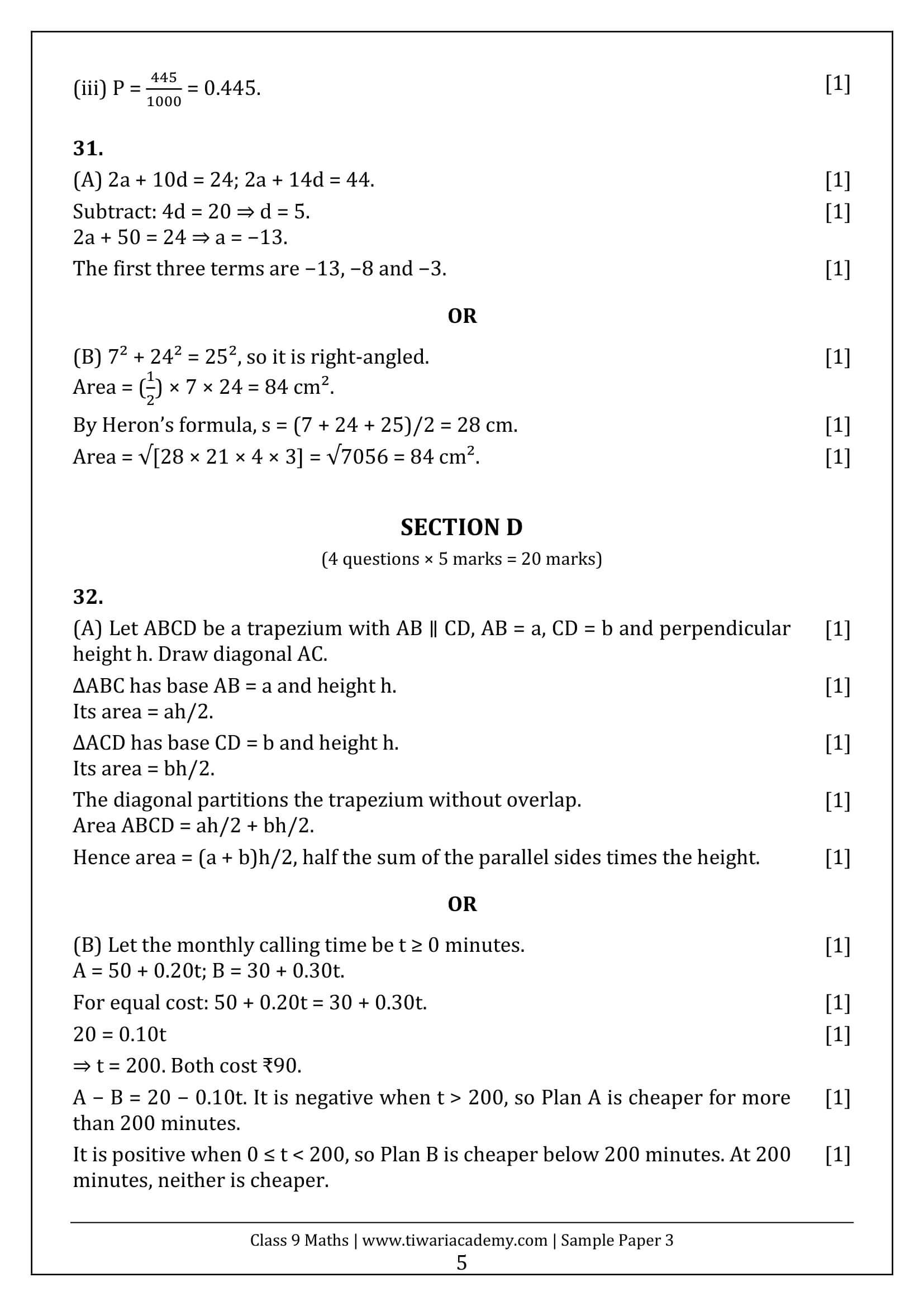
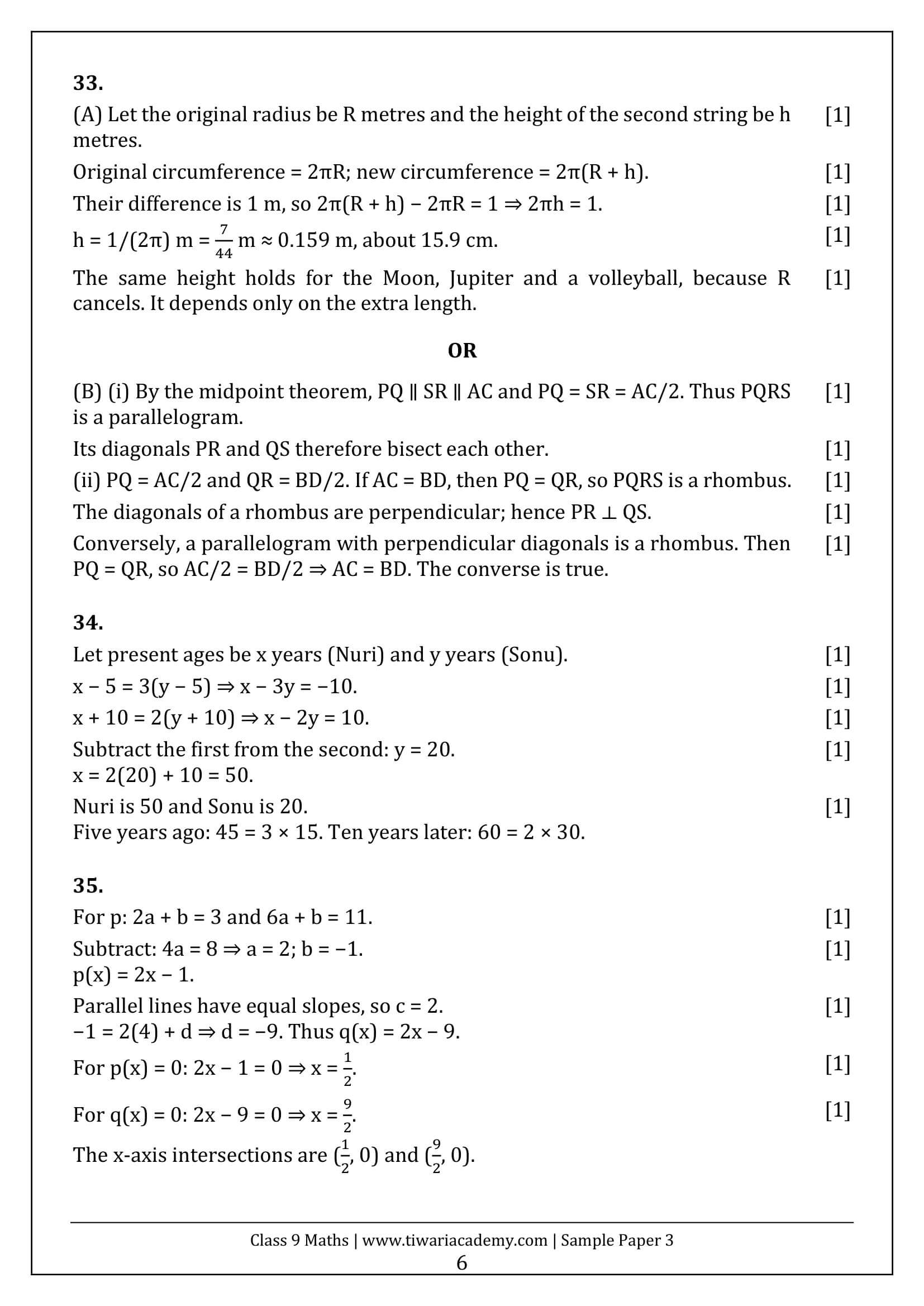
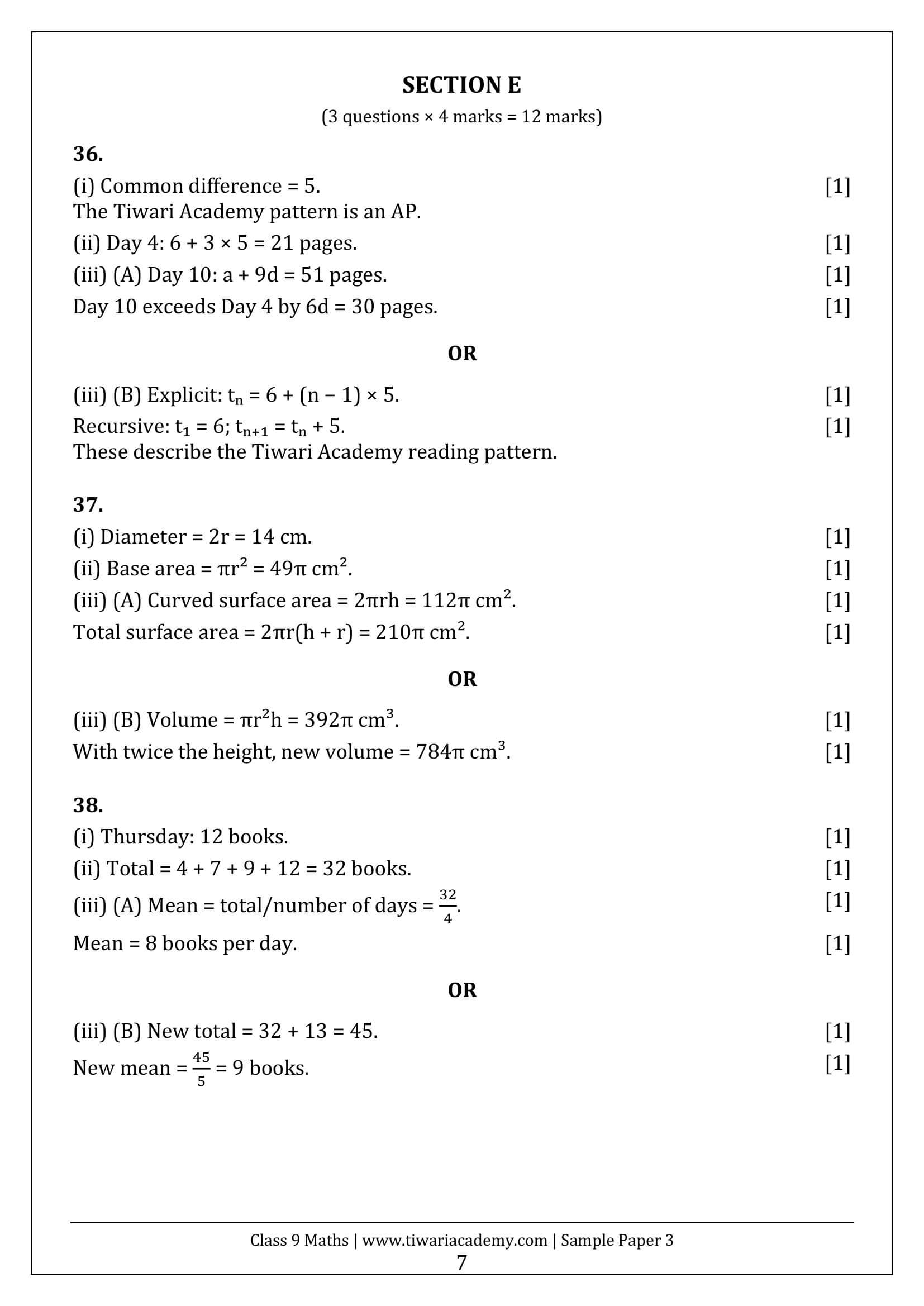
- Class 9 Maths Ganita Manjari Sample Paper 3
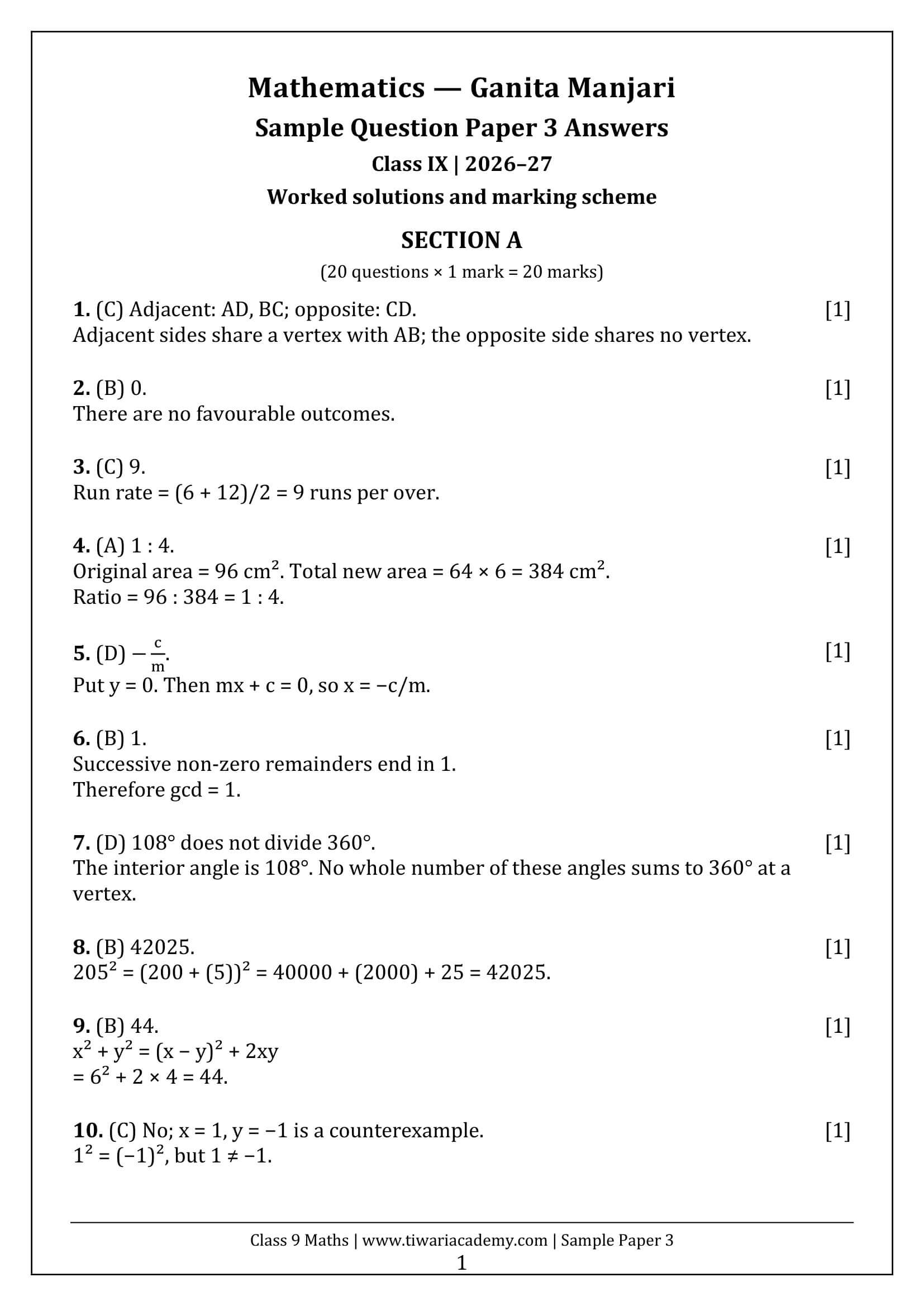
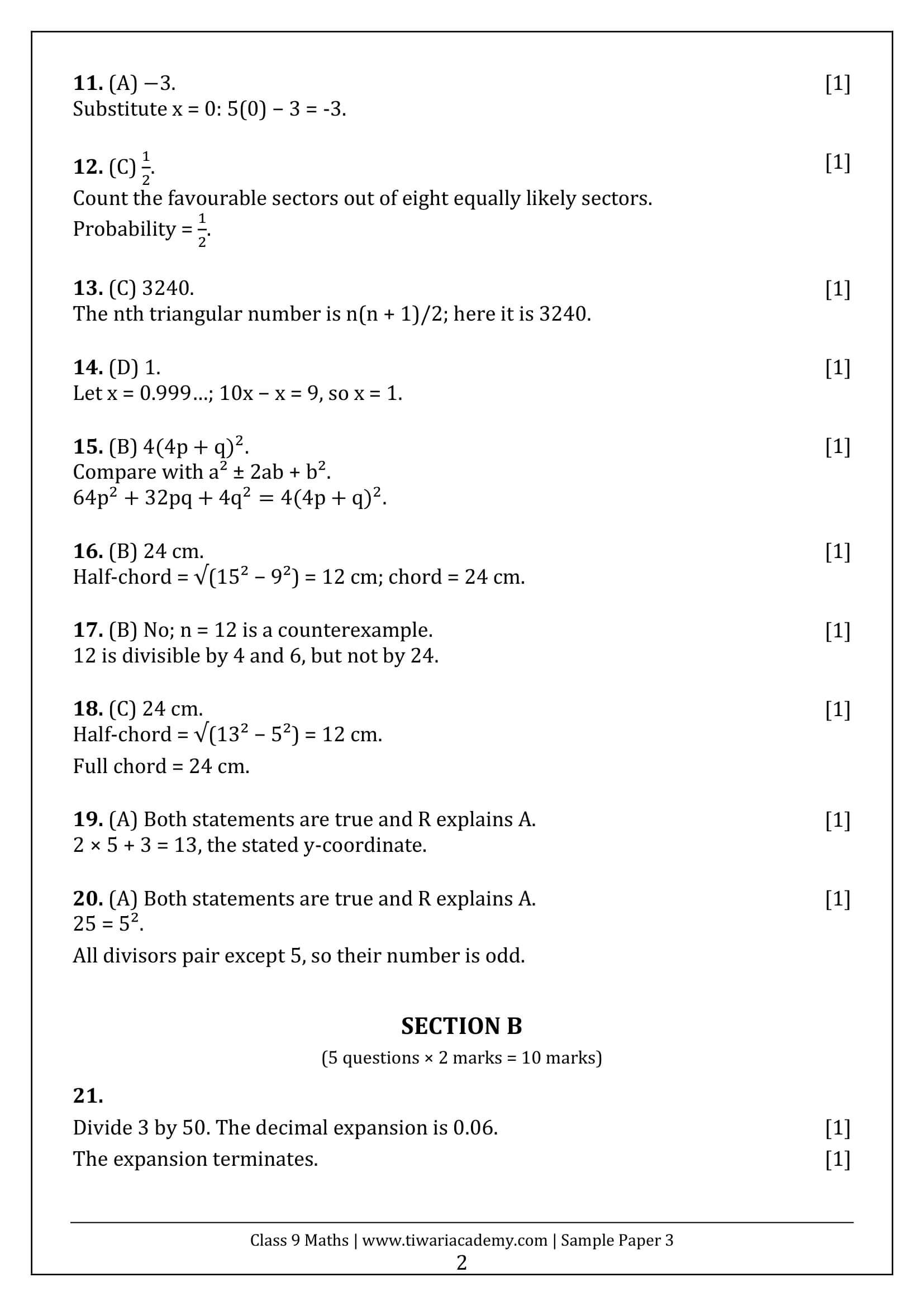
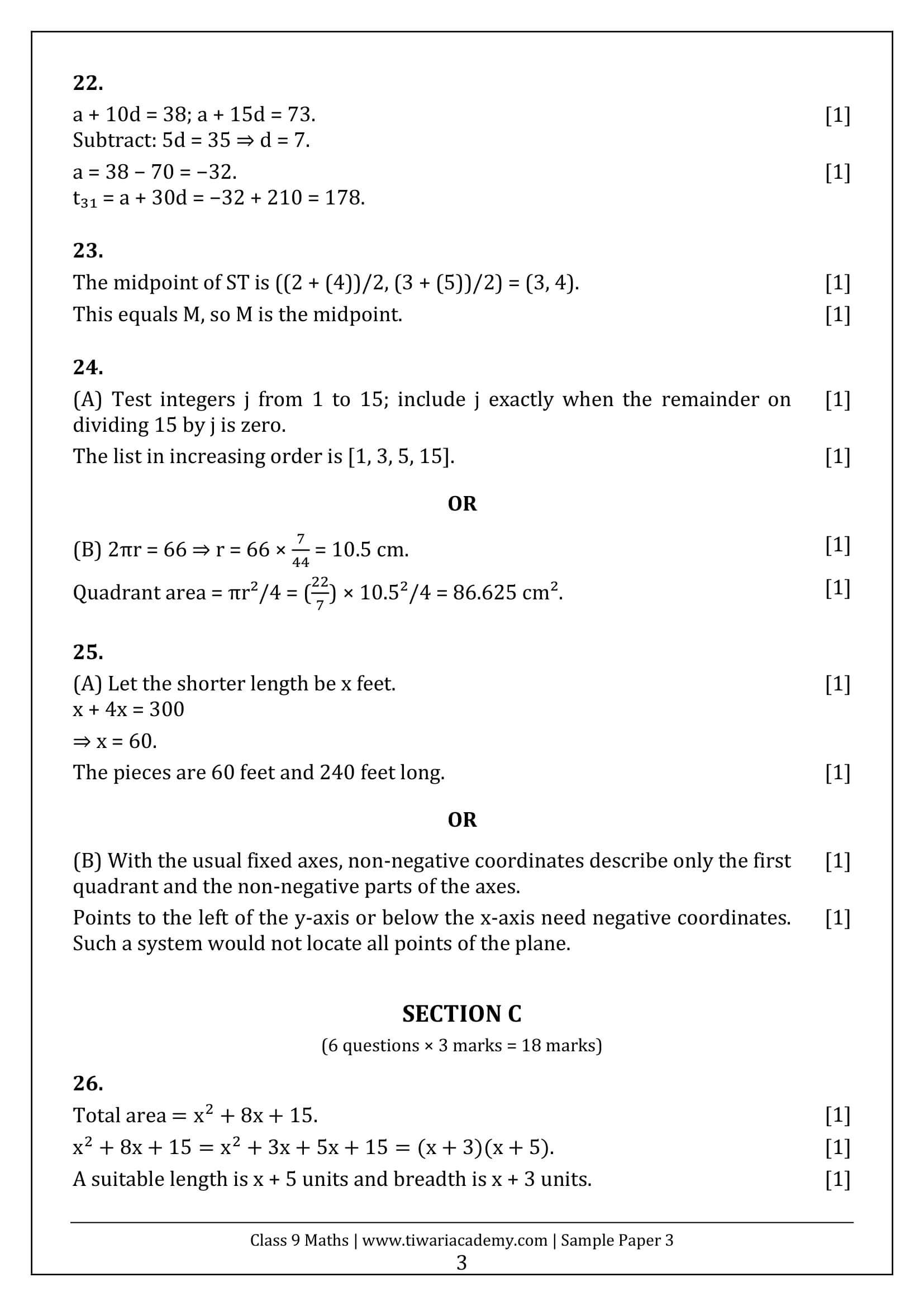
- Class 9 Maths Ganita Manjari Sample Paper 3 Answers
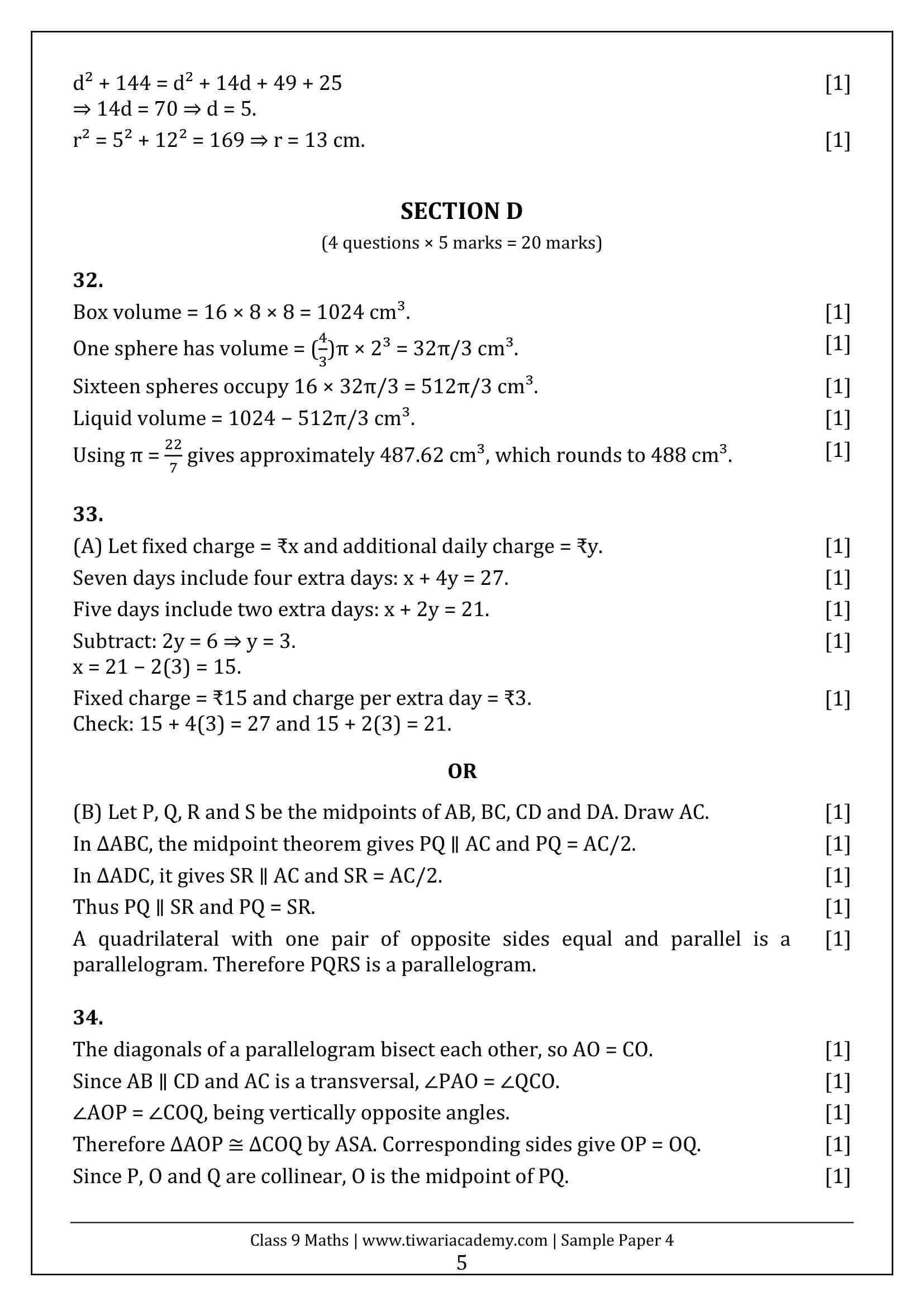
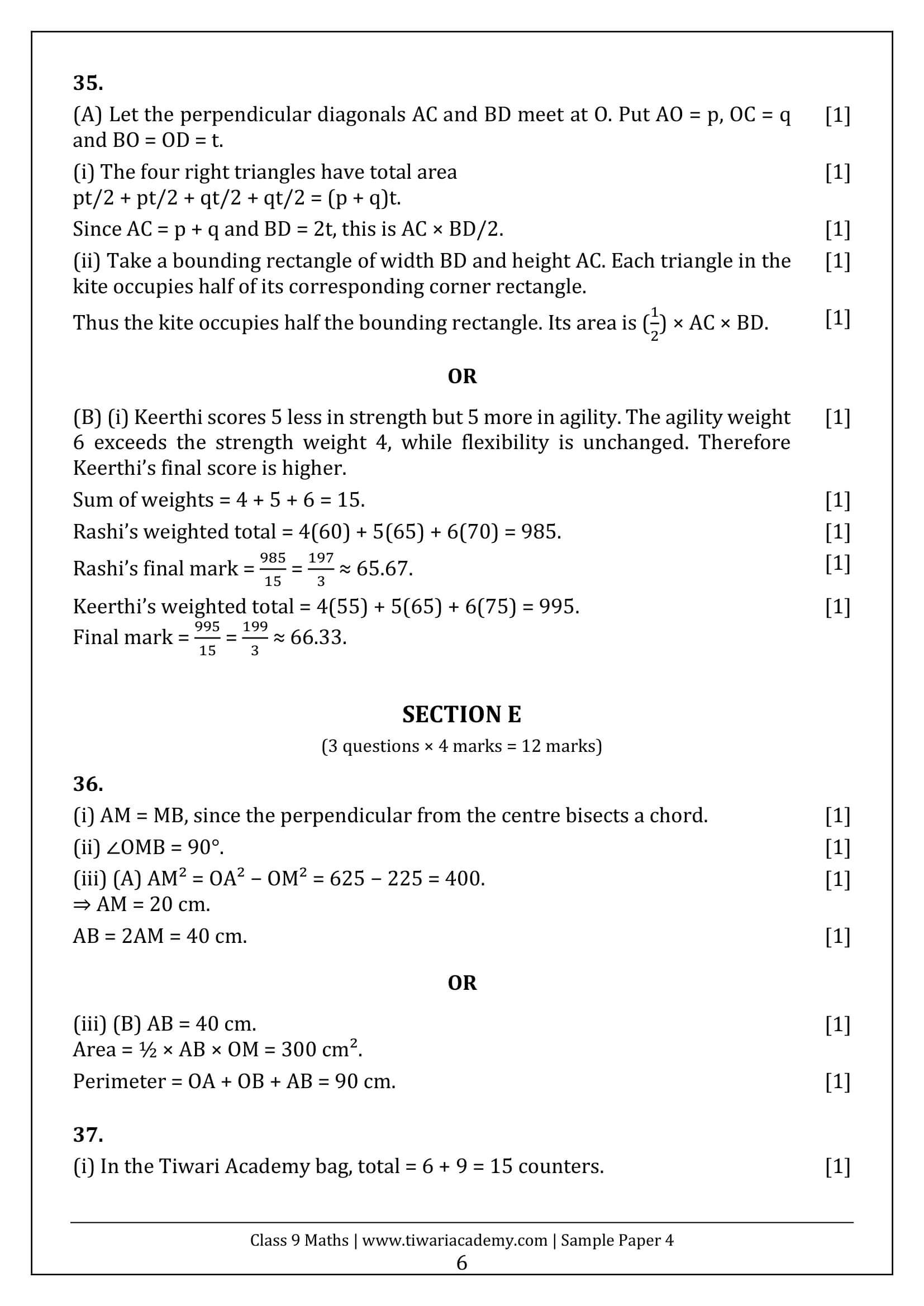
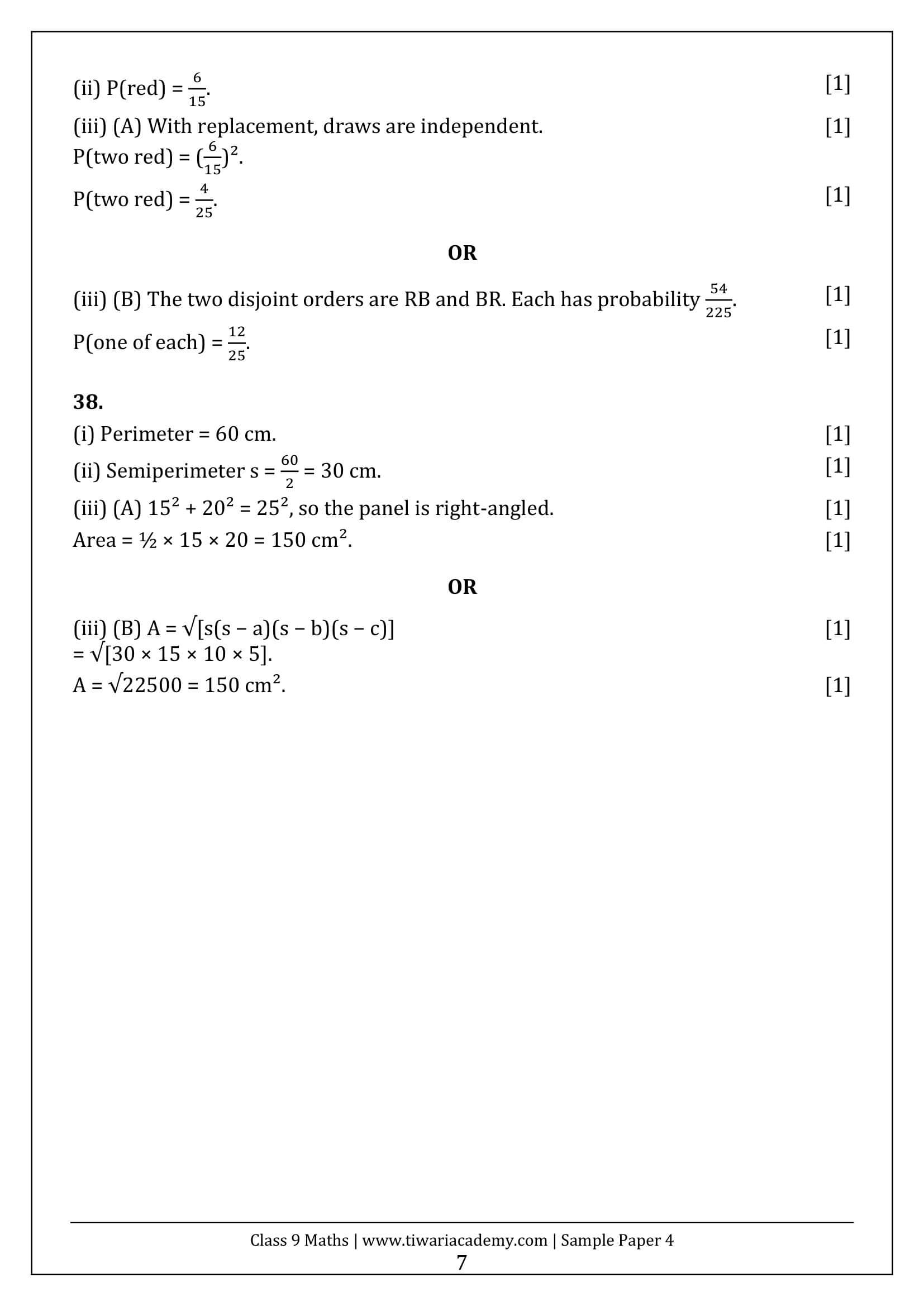
- Class 9 Maths Ganita Manjari Sample Paper 4
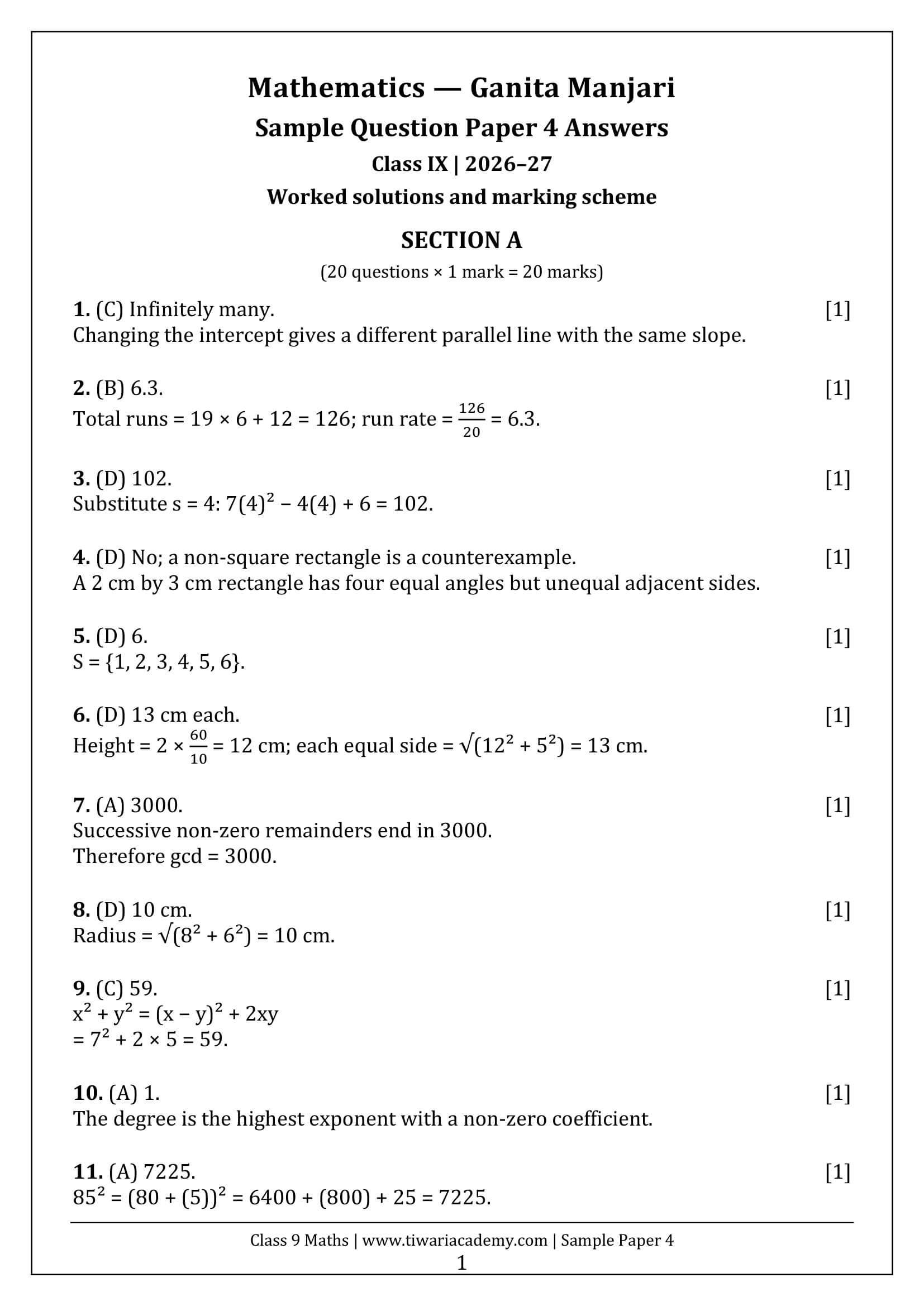
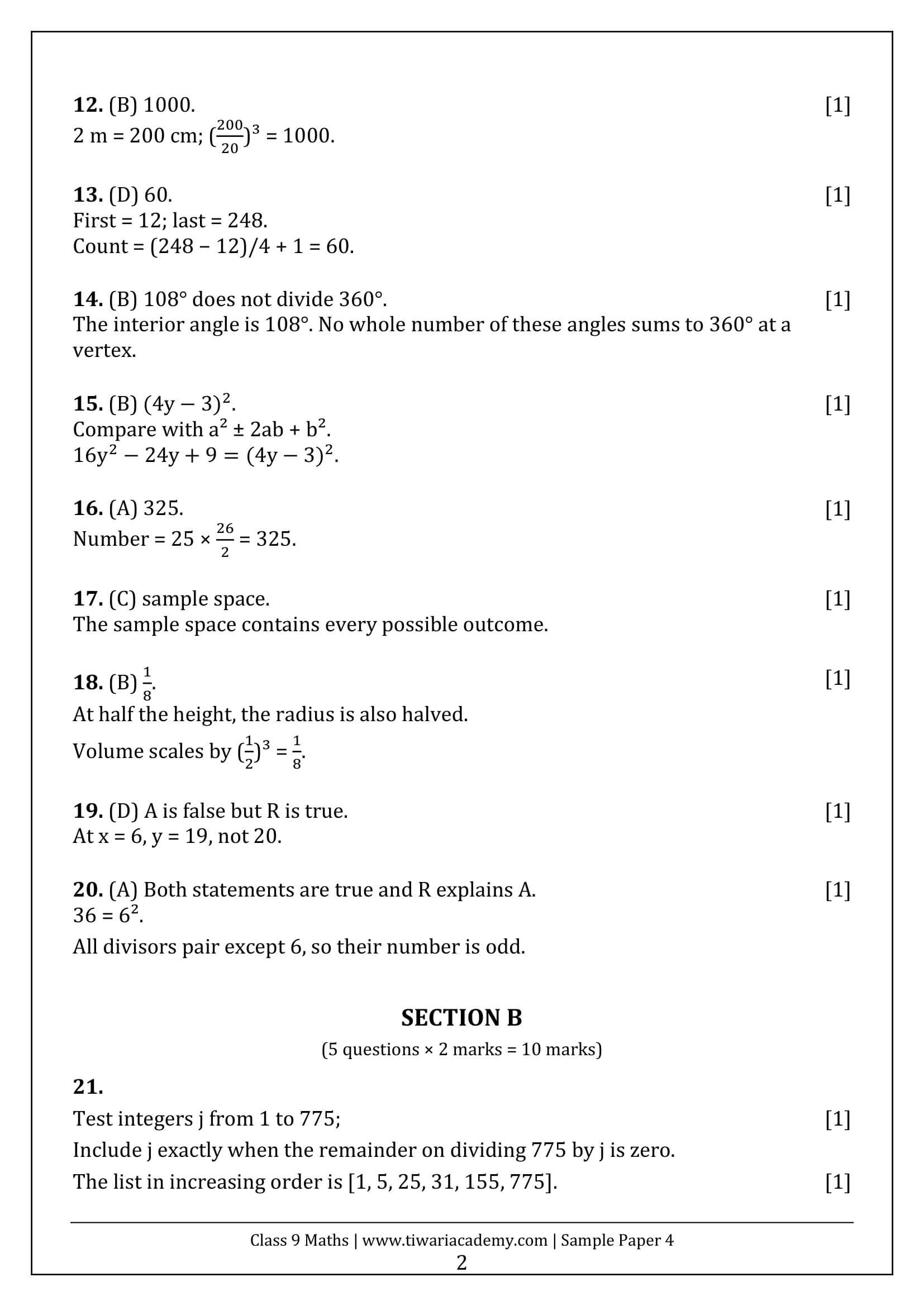
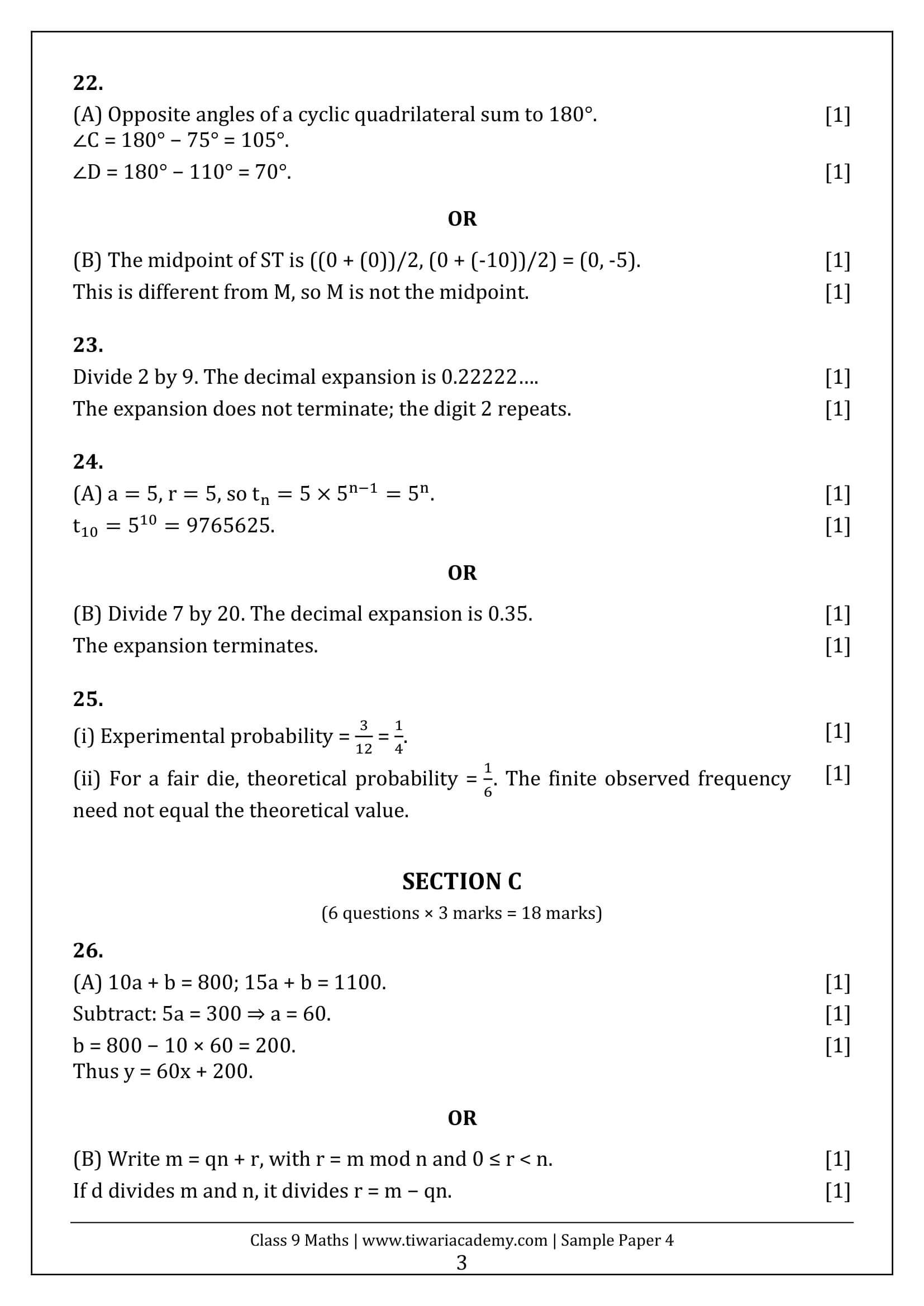
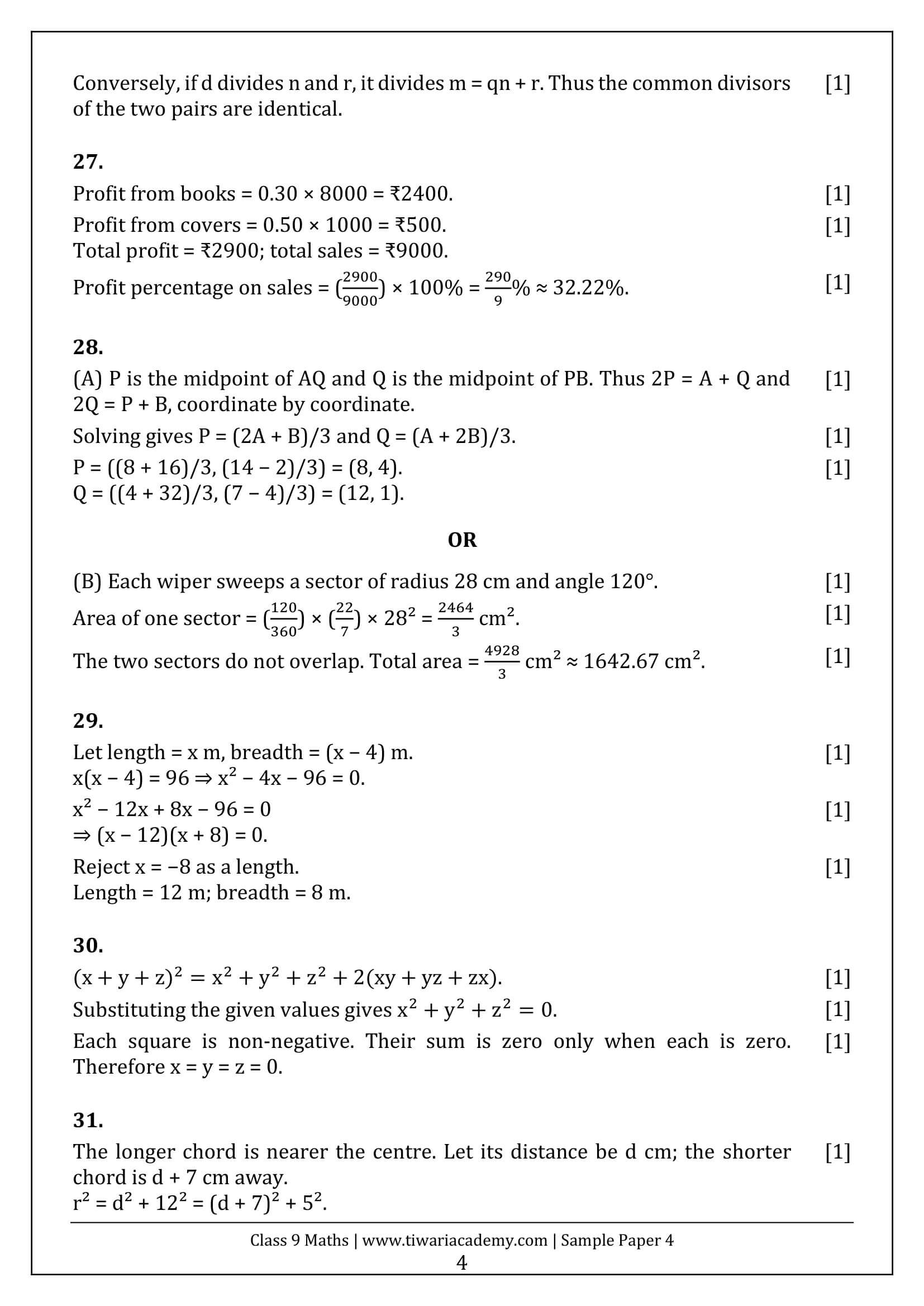
- Class 9 Maths Ganita Manjari Sample Paper 4 Answers
Class 9 Maths Sample Papers 5–8 with Answers: November 2026 Set
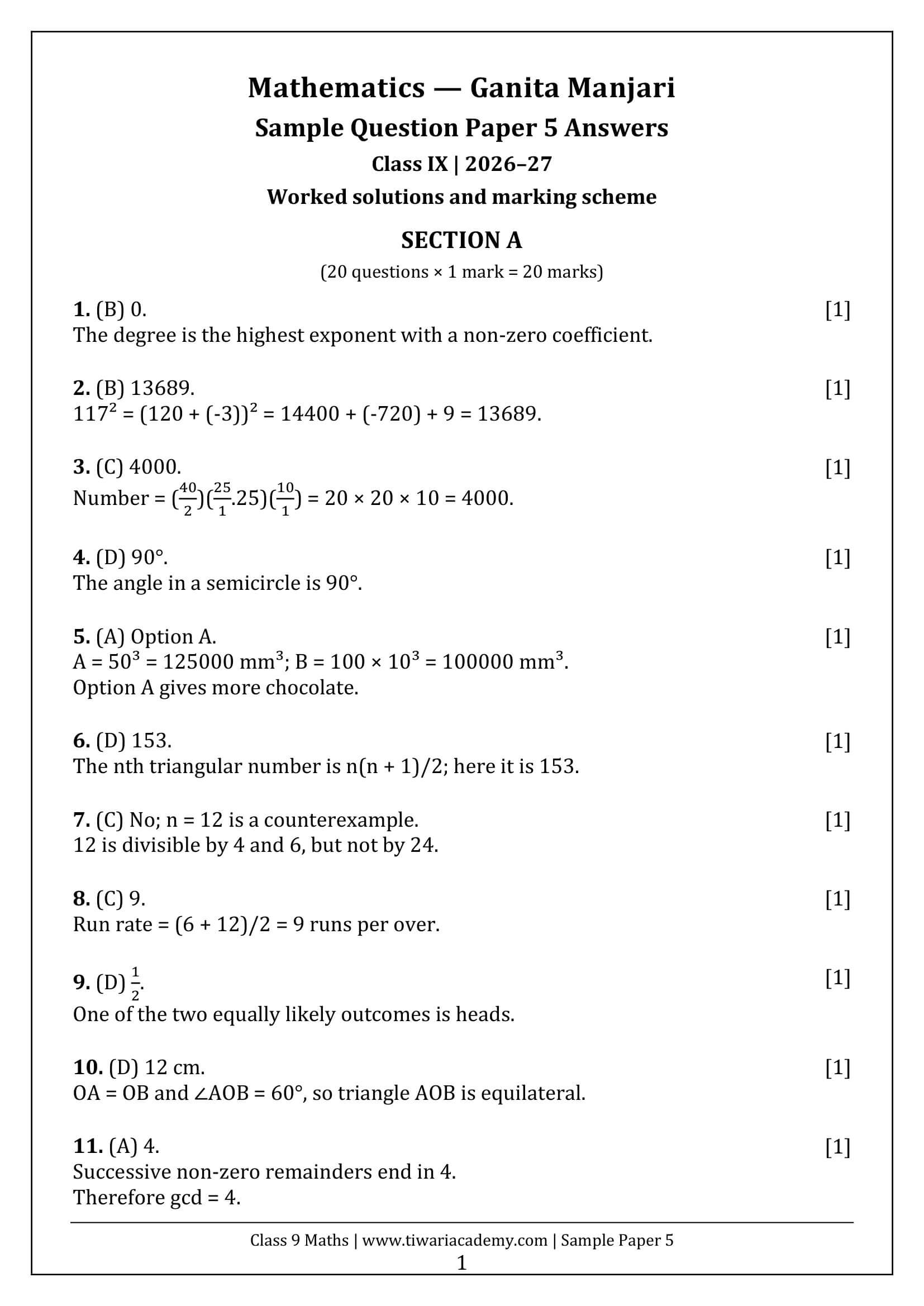
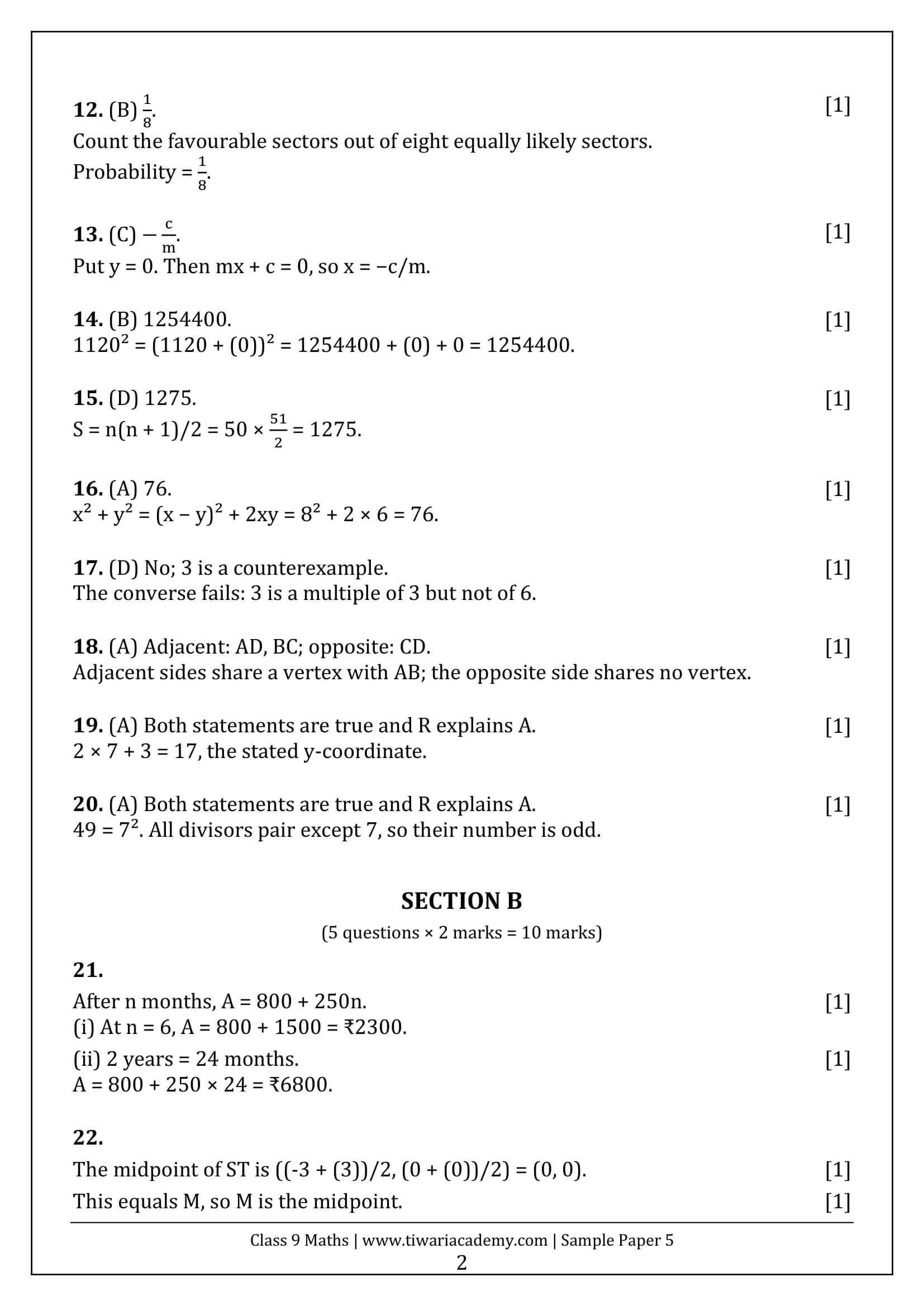
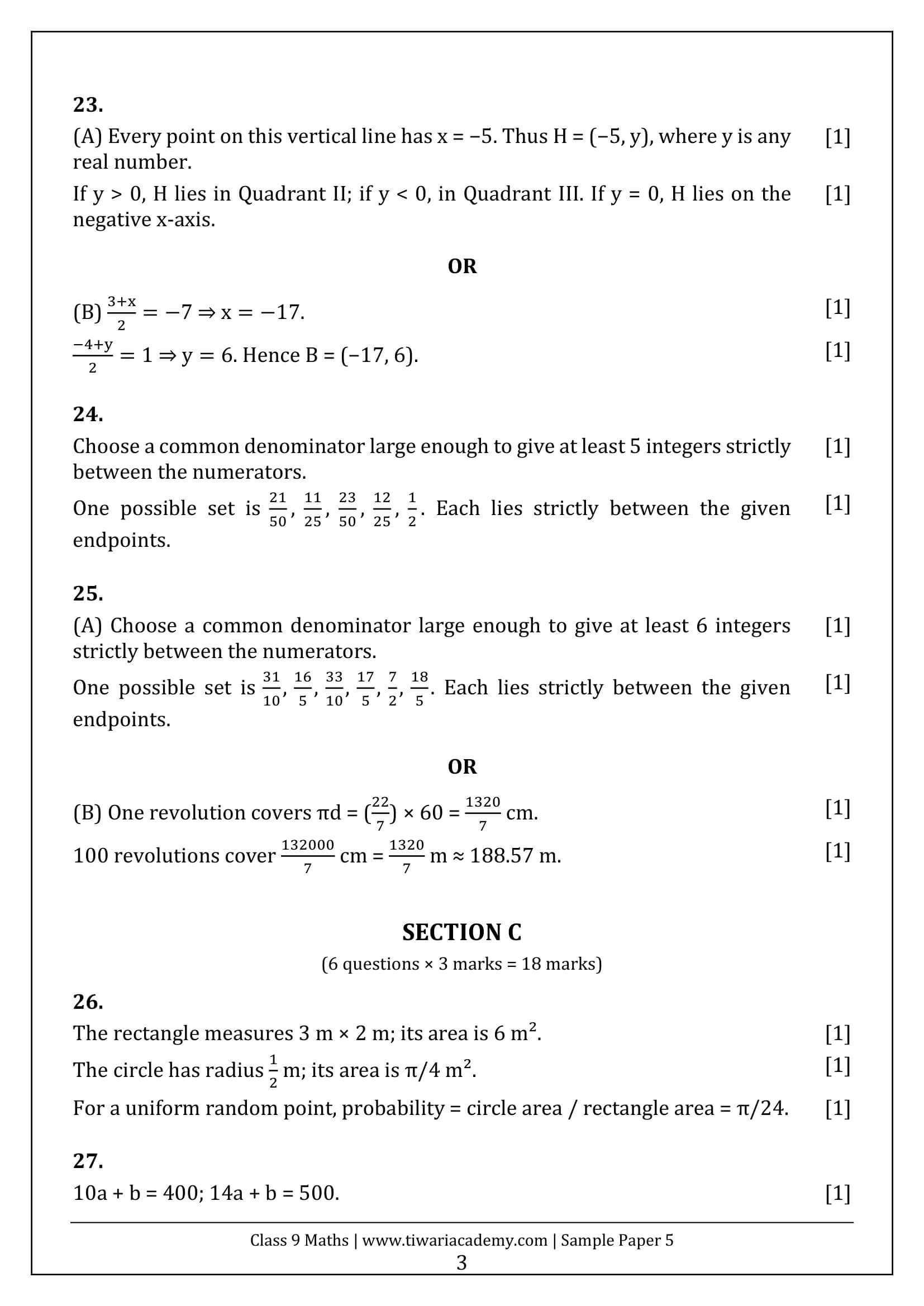
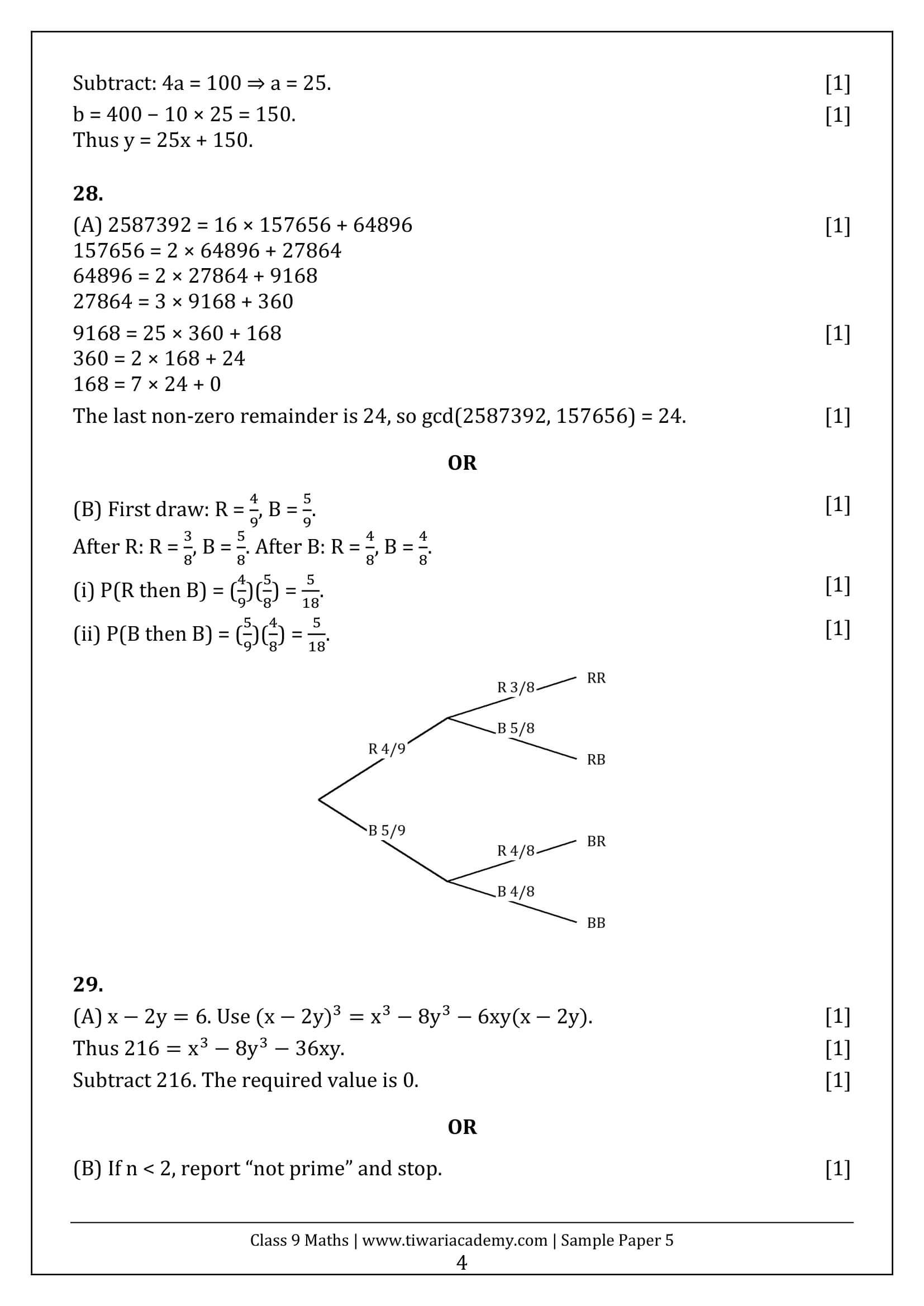
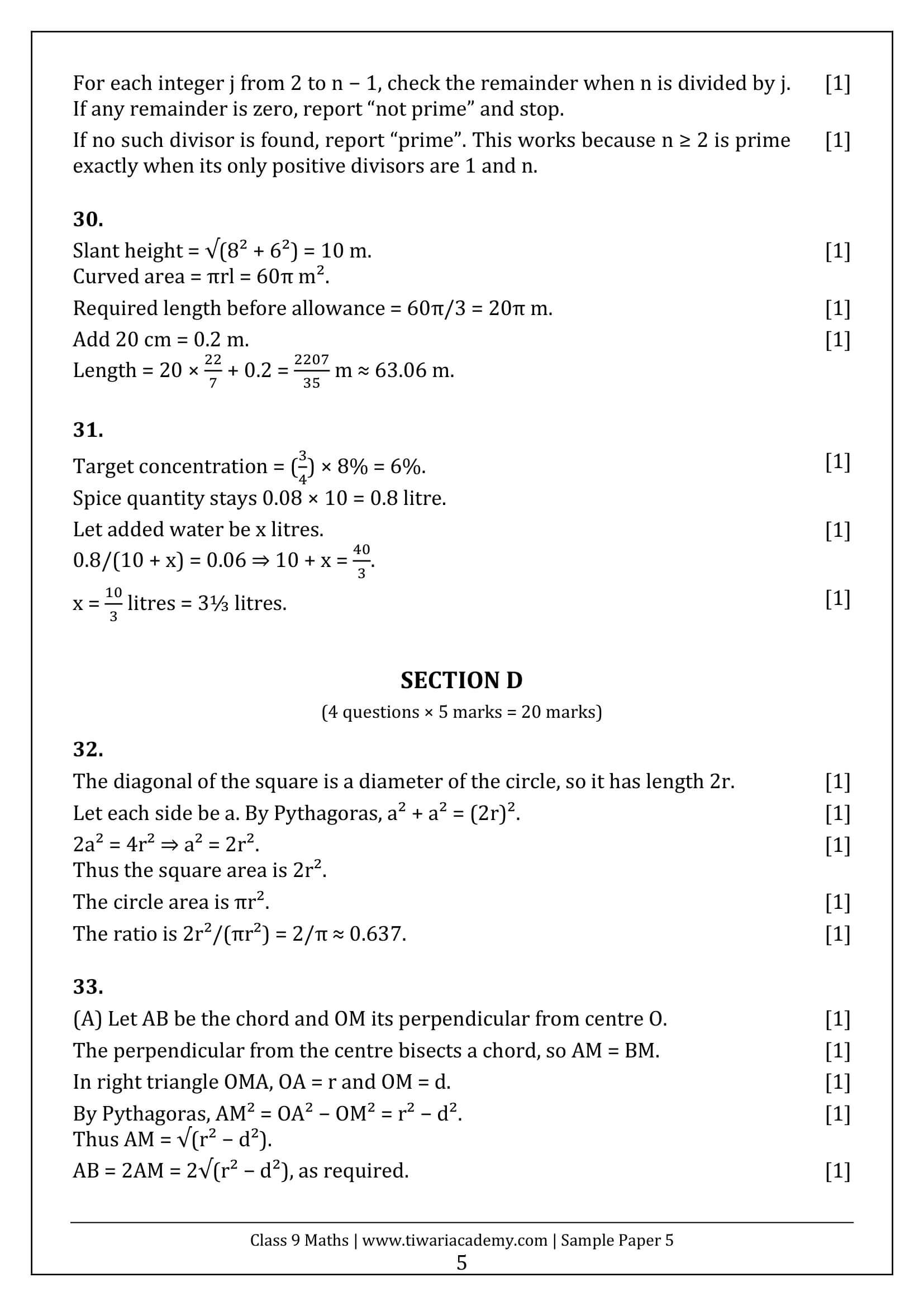
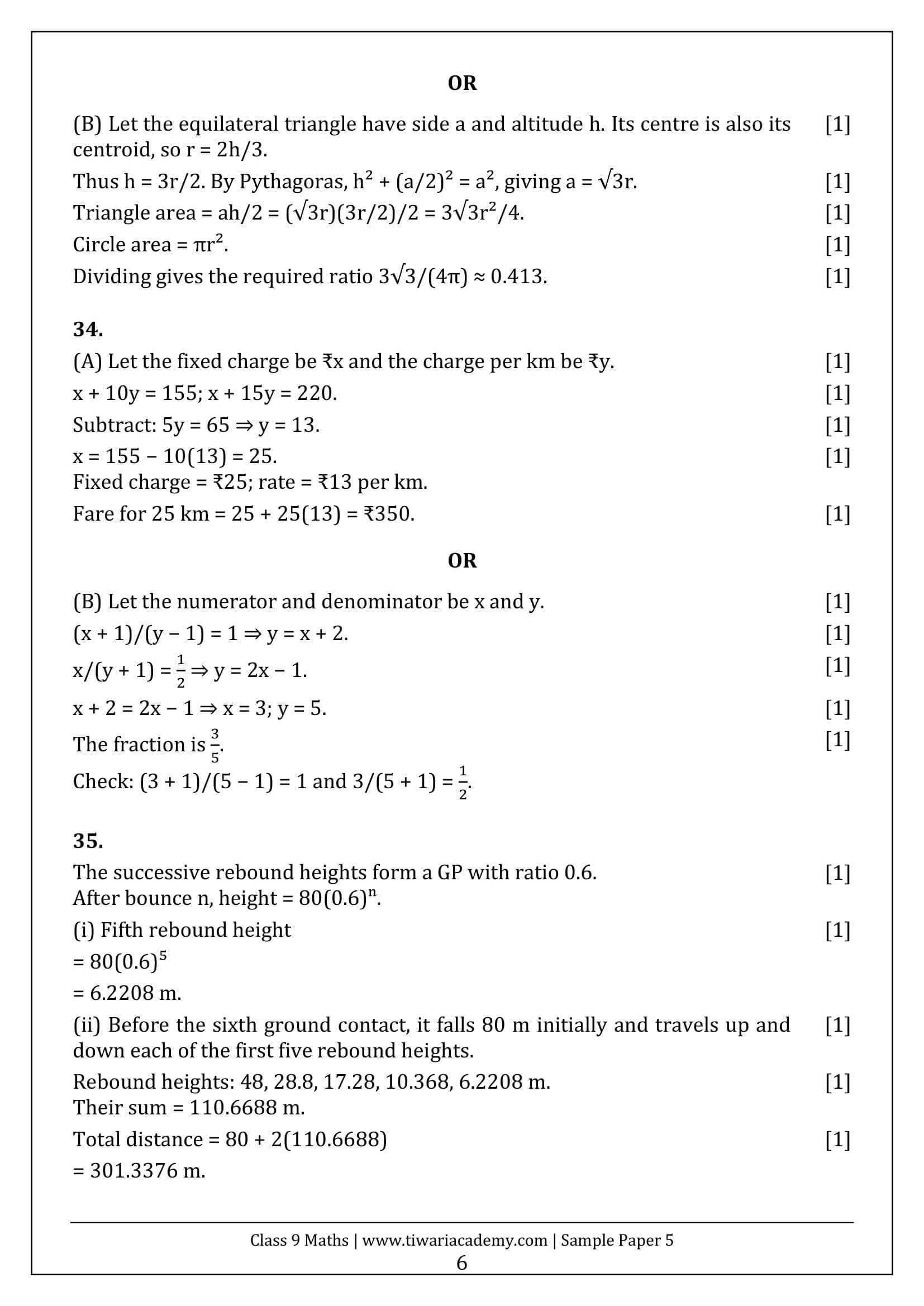
As your class moves into Part 2, this set gives you more practice on chapters like Propositions and their Converses, Quadrilaterals and Two Variables, One Line. The solution of Paper 5 is available now. Answers for Papers 6, 7 and 8 will be released in November 2026. Write complete answers first and mark the questions you are unsure about.
Class 9 Maths Sample Papers for Practice in November 2026
Class 9 Maths Practice Papers 9–12 on Part 1 and Part 2: December 2026 Set
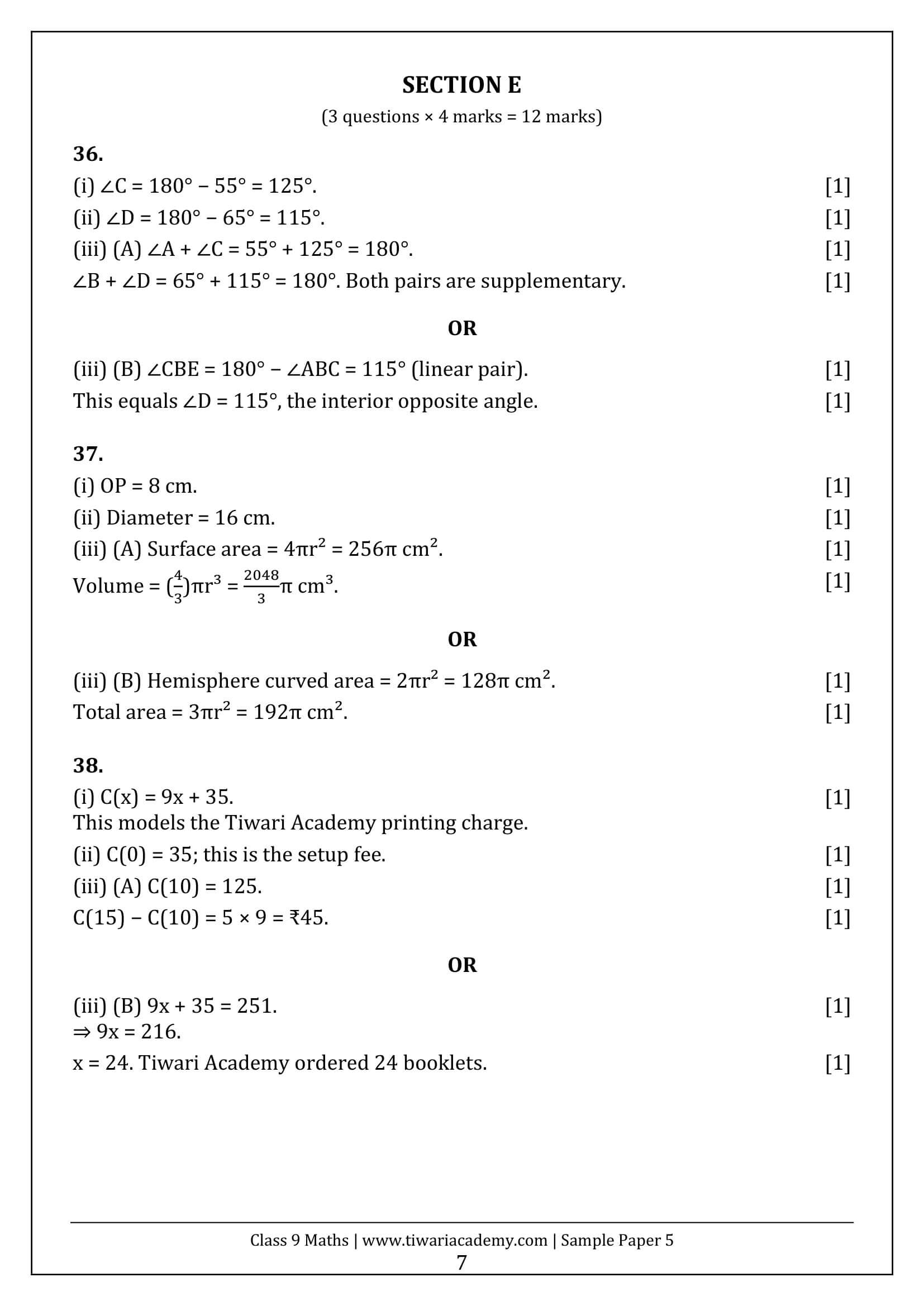
By December, practise both parts of the textbook together rather than chapter by chapter. Papers 9 to 12 mix algebra, geometry and mensuration in competency-based and case-study questions, which make up about half of the 2026-27 paper design. Step-by-step solutions for this set will be released in December 2026.
Class 9 Maths Sample Papers for Practice in December 2026
Class 9 Maths Mock Test Papers 13–16: January 2027 Set
Treat Papers 13 to 16 as proper mock tests. Solve each one in a single 3-hour sitting without a calculator, and note how long each section takes so you know where you slow down. Answers and solutions for this set will be released in January 2027, giving you an honest score before annual exam revision begins.
Class 9 Maths Sample Papers for Practice in January 2027
Class 9 Maths Annual Exam Sample Papers 17–20: February 2027 Set
The last four papers are for final revision before your Class 9 annual exam. Use Papers 17 to 20 to sharpen speed, draw neat figures and graphs, and write complete steps across all six units. Solutions for this set will be released in February 2027. Revise your error notebook from the earlier sets alongside them.
Class 9 Maths Sample Papers for Practice in February 2027
How to Get the Most from Class 9 Maths Sample Papers
- Finish the chapter in Ganita Manjari and using NCERT Solutions solve its exercises before you attempt a paper that tests it.
- Solve one paper a week in a strict 3-hour sitting, without a calculator.
- For proposition and converse questions, don’t stop at “true” or “false”. Justify true statements and give a clear counterexample for false ones.
- In geometry proofs, such as the midpoint theorem or cyclic quadrilaterals, write the reason for every statement, because marks are given for each step.
- Draw neat, labelled figures, graphs and tree diagrams wherever a question needs them and use π = 22/7 unless another value is given.
- In case studies, answer the 1-mark parts precisely and choose the 2-mark option you can fully justify.
- When the solutions are released, mark your paper strictly against each step and note the marks you lost in each chapter.
- Re-solve every wrong question after a week before moving on to the next paper.
Class 9 Maths Exam Pattern, Syllabus and Marks Distribution 2026-27
- Textbook: NCERT Ganita Manjari, Part 1 (Chapters 1–8) and Part 2 (Chapters 9–14)
- Theory paper: 80 marks, 3 hours, plus 20 marks internal assessment (pen-paper tests and multiple assessment 10, portfolio 5, lab practical 5)
- Paper format used in these sample papers: 38 compulsory questions in five sections
- Section A: 20 questions of 1 mark (18 MCQs + 2 assertion-reason)
- Section B: 5 questions of 2 marks; Section C: 6 questions of 3 marks; Section D: 4 questions of 5 marks
- Section E: 3 case studies of 4 marks each, with sub-parts of 1, 1 and 2 marks
- Internal choice: in two questions each in Sections B, C, D and in the 2-mark sub-part of every case study
- Unit-wise weightage: Number System 7, Algebra 20, Coordinate Geometry 4, Geometry 25, Mensuration 14, Statistics and Probability 10. Geometry carries the largest share.
- Question typology: about 54% remembering and understanding, 24% applying and 22% analysing, evaluating and creating
- Two levels of Maths: every student takes the 80-mark standard paper. An optional 25-mark, 1-hour advanced paper is shown separately on the mark sheet and not added to the total. These 20 papers are for the standard paper.
- Looking ahead: the 2026-27 Class 9 batch will be the first to take Class 10 board exams under the new curriculum, in 2028
Revise from Ganita Manjari Alongside Every Paper
Every question in these papers grows out of the ideas in Ganita Manjari, so the textbook stays your strongest revision tool. When a paper exposes a weak spot, whether it is algebraic identities, congruence, surface area or probability, return to that chapter and work through our NCERT Solutions for Class 9 Maths Ganita Manjari, available for both Part 1 and Part 2 with clear, step-by-step explanations. Pair one sample paper a week with focused chapter revision and check your work as each month’s solutions go live. By February, you will have solved 20 complete papers, ready for your annual exam and for the bigger challenge of Class 10.