



by Tiwari Academy
NCERT Solutions for Class 5 EVS Our Wondrous World Chapter 5 Our Vibrant Country are given here for Session 2025-26. These are part of Unit 3 Incredible India for new CBSE session. All questions are answered in simple language. The solutions make learning easy. Students can use them for quick revision. Each question has the correct answer marked. This helps in better preparation. These solutions are useful for practice before class tests and exams.
Class 5 EVS Chapter 5 Question Answers
Class 5 EVS Chapter 5 Practice Questions
Class 5 EVS Chapter 5 Revision Notes
Class 5 EVS Chapter 5 MCQs
Class 5 EVS all Chapters Answers
Our Vibrant Country Class 5 Our Wondrous World Chapter 5 Solutions
Page 76
Write
1. What special events or activities take place at your school on the occasion of Republic Day?
See AnswerOn Republic Day in my school, we have flag hoisting, everyone sings the National Anthem and we watch a small parade by the students. Some children present dances, songs and speeches about our country. We also see tableaux about different states of India.
2. We sing the National Anthem together on this day! Can you name some rivers and mountain ranges mentioned in the National Anthem? Fill in the table given below.
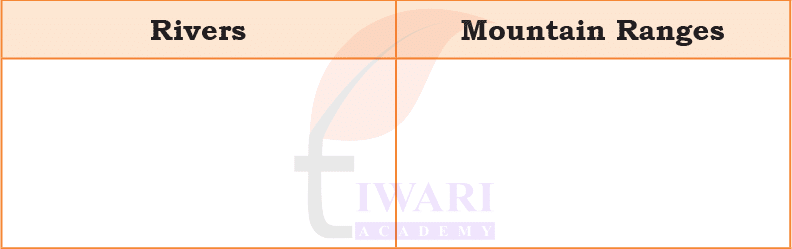
Answer:

3. On Republic Day, which activities would you like to participate in?
See AnswerOn Republic Day, I would like to participate in the parade and also in a dance that shows the culture of our country. I would also like to give a short speech about why we celebrate this day.
4. Have you ever watched the Republic Day parade in Delhi on television? What did you like the most about it?
See AnswerYes, I have watched the Republic Day parade in Delhi on television. I liked the colourful tableaux from different states the most because they showed the special clothes, dances and famous places of each state. I also enjoyed seeing the soldiers marching in uniform and the Air Force jets making colourful patterns in the sky.
Page 78
Activity 1
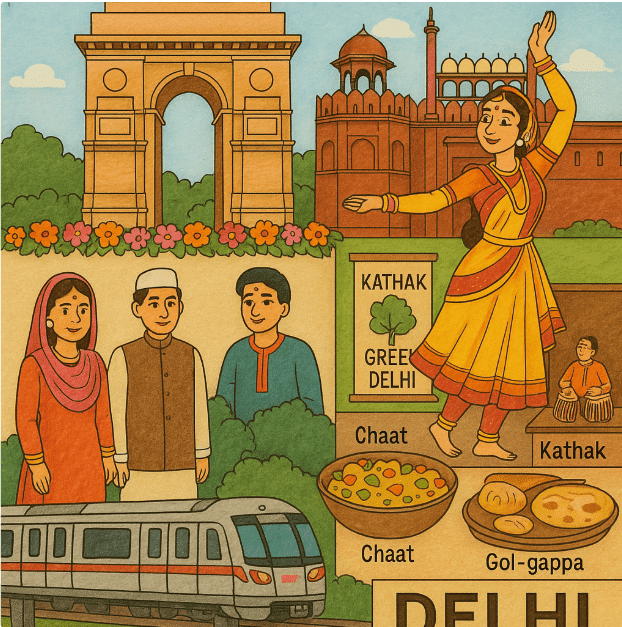
Discuss and list down the various items of your state tableau. Make a poster or a model of it.
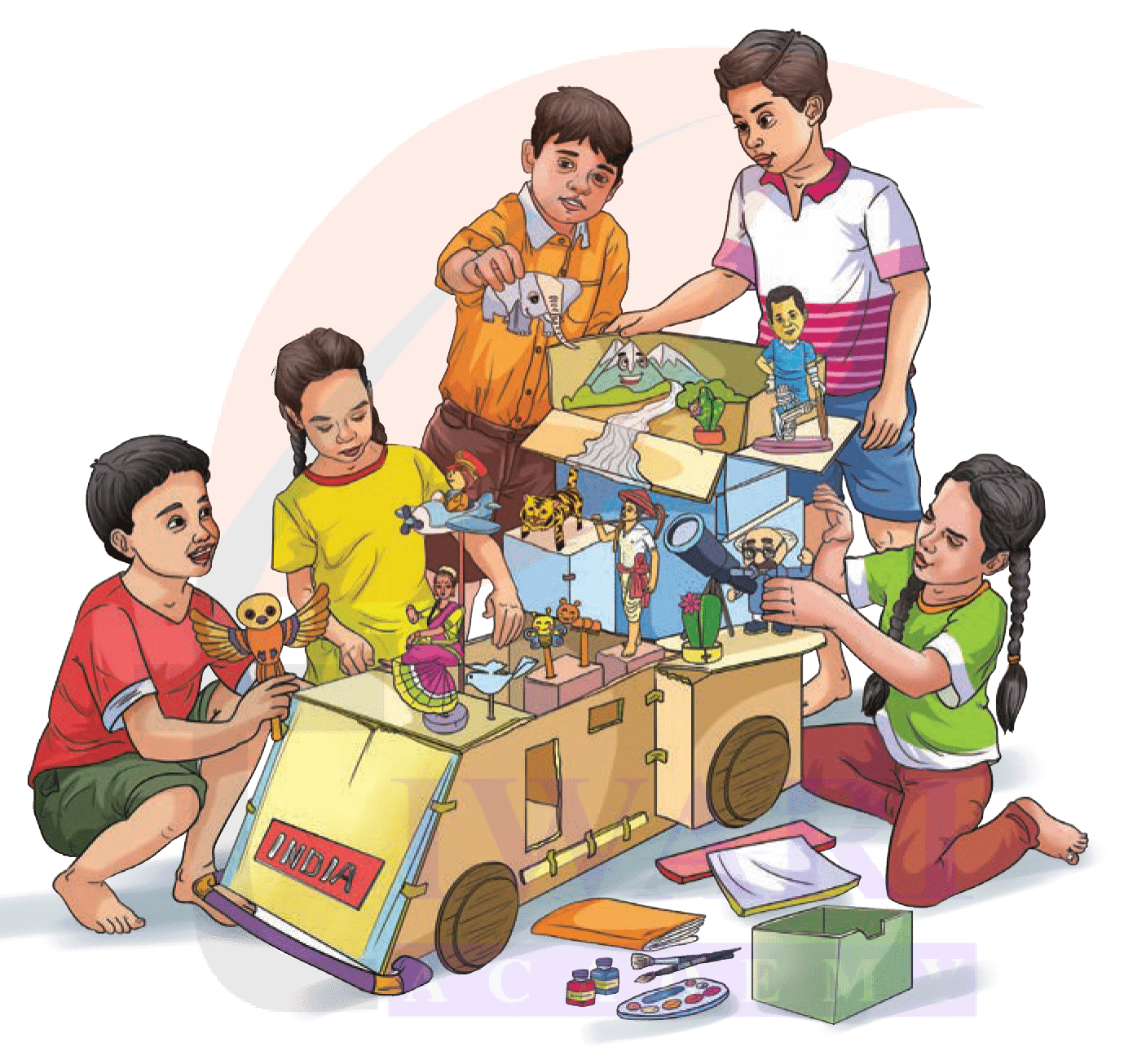
See AnswerI am from Rajdhani Park, Delhi, so my state tableau will have these items:
• India Gate at the centre with flowers around it.
• Red Fort in the background to show Delhi’s history.
• People wearing traditional dresses of Delhi.
• A model of the Delhi Metro.
• Street food stalls showing chaat, golgappa and paratha.
• Posters about Clean Delhi, Green Delhi.
• A small stage showing Kathak dance.
Page 79
Write
1. What events take place at your school on the Independence Day?
See AnswerOn Independence Day in my school, we hoist the national flag and sing the National Anthem together. There are speeches about freedom fighters, patriotic songs and dances. Some students perform short plays about India’s struggle for independence. We also decorate the school with tricolour flags and balloons.
Class 5 Our Wondrous World Chapter 5 Activities
Activity 2
Write down five rules that are followed at your school. If you were to make one new rule, what would it be?
See AnswerFive rules we follow at my school:
► Always wear the school uniform neatly.
► Be on time for the morning assembly.
► Keep the classroom and school clean.
► Show respect to teachers and classmates.
► Do not run or shout in the corridors.
My new rule:
Every Monday, we will have a “Reading Hour” where everyone reads their favourite book in the library or classroom.
Page 80
Activity 3
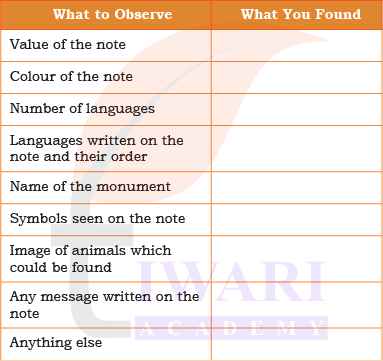
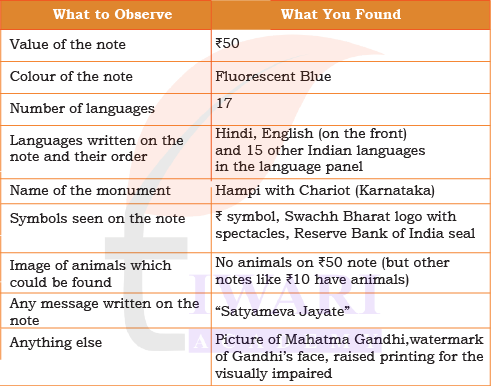
See AnswerWhat to Observe – What You Found
Value of the note – ₹50
Colour of the note – Fluorescent Blue
Number of languages – 17
Languages written on the note and their order – Hindi, English (on the front) and 15 other Indian languages in the language panel
Name of the monument – Hampi with Chariot (Karnataka)
Symbols seen on the note – ₹ symbol, Swachh Bharat logo with spectacles, Reserve Bank of India seal
Image of animals which could be found – No animals on ₹50 note (but other notes like ₹10 have animals)
Any message written on the note – “Satyameva Jayate”
Anything else – Picture of Mahatma Gandhi, watermark of Gandhi’s face, raised printing for the visually impaired.
Page 82
Activity 4
Design an emblem for your school. Think of the message you want to convey by using symbols, words, shapes and colours to make it special.
Answer:

Page 83
Write
Read the riddles given below and guess the national symbols of India:
I wear orange with black stripes bold,
I walk in the forest, deep and old.
With a mighty roar, I rule the land,
Guess who I am, strong and grand?
See AnswerNational animal of India: Tiger.
I dance in the rain in the morning light,
With green and blue feathers bright.
With a crown upon my head, I stand so tall,
It is a joy to watch when I move my tail.
See AnswerNational bird of India: Peacock.
Class 5 Our Wondrous World Chapter 5 Discussion Questions
Discuss
If we had to choose a national fruit for our country, which one would you suggest? Tell us why.
See AnswerI would suggest mango as the national fruit of our country. Mango is called the “king of fruits” and is loved by almost everyone in India. It grows in many parts of our country and has many varieties like Alphonso, Dussehri and Langra. It is sweet, juicy and healthy. Mango is also mentioned in our songs, stories and festivals, so it shows our culture and tradition.
Find out
States also have some symbols. With the help of your teacher, find out the following symbols of your state.
State animal : _____________ State bird : _____________
State tree : _____________ State flower : _____________
See AnswerI live in Delhi and our
State animal : Nilgai (Blue bull)
State bird : House Sparrow
State tree : Pilkhan (White Fig)
State flower : Alfalfa (Lucerne)
Page 84
Draw
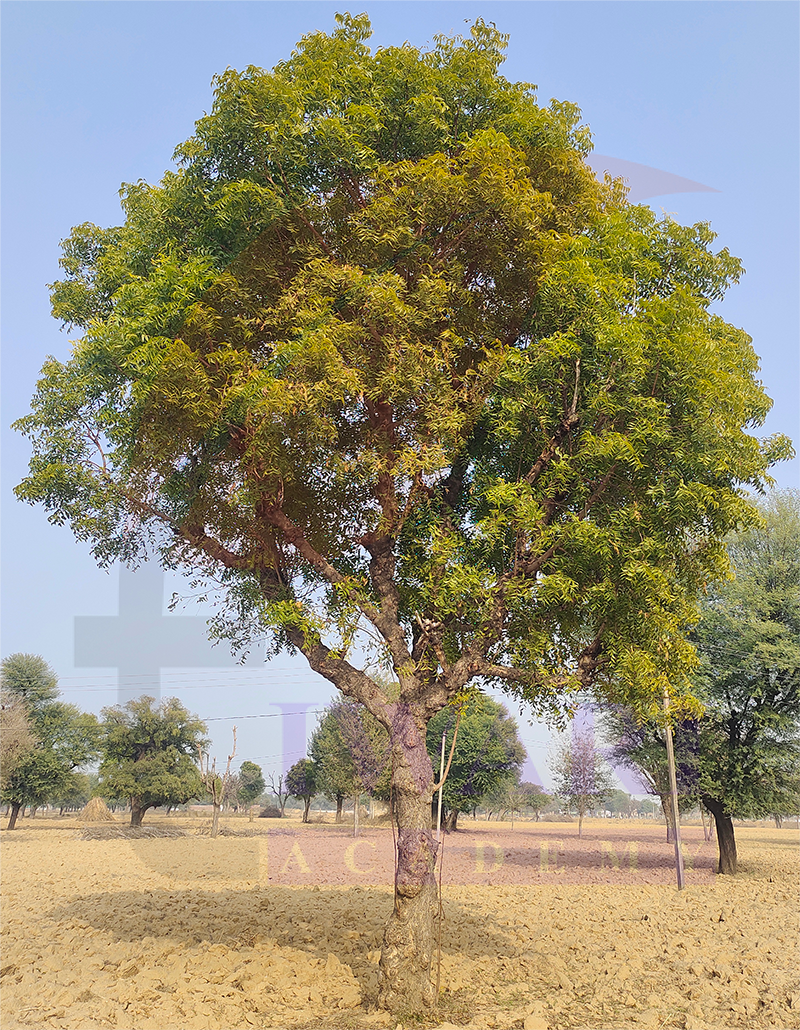
Spot a tree, bird, animal, flower or object near your school. Choose one as your school symbol. Draw it and write one line on why it can be your school’s symbol.
See AnswerI choose the Neem tree near my school as our school symbol.
The Neem tree can be our school’s symbol because it gives shade, keeps the air clean and stands strong like our school’s values.
Page 84
Activity 5
1. Find out about the languages spoken by students in your class and name them.
See AnswerIn my class, students speak many different languages at home. Some of them are:
• Hindi
• English
• Punjabi
• Bengali
• Tamil
• Marathi
• Gujarati
• Urdu
2. Pick a specific word (for example, mango) and have fun learning what it is called in different languages.
Name of the Language – How is it Said?
Tamil – Māmpalam
Telugu
Marathi
Bengali
See AnswerTamil – Māmpalam
Telugu – Mamidi Pandu
Marathi – Āmba
Bengali – Ām
Hindi – Ām
Gujarati – Keri
Kannada – Mavina Hannu
Malayalam – Maanga
Odia – Āmba
Page 87
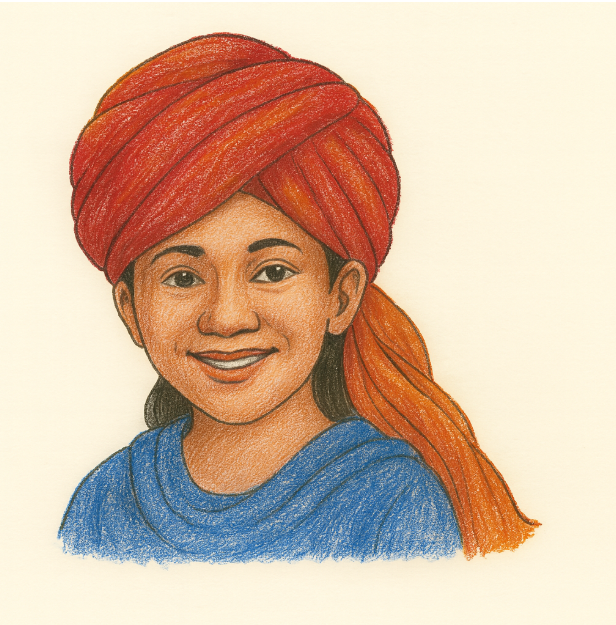
How many headgears can you name?
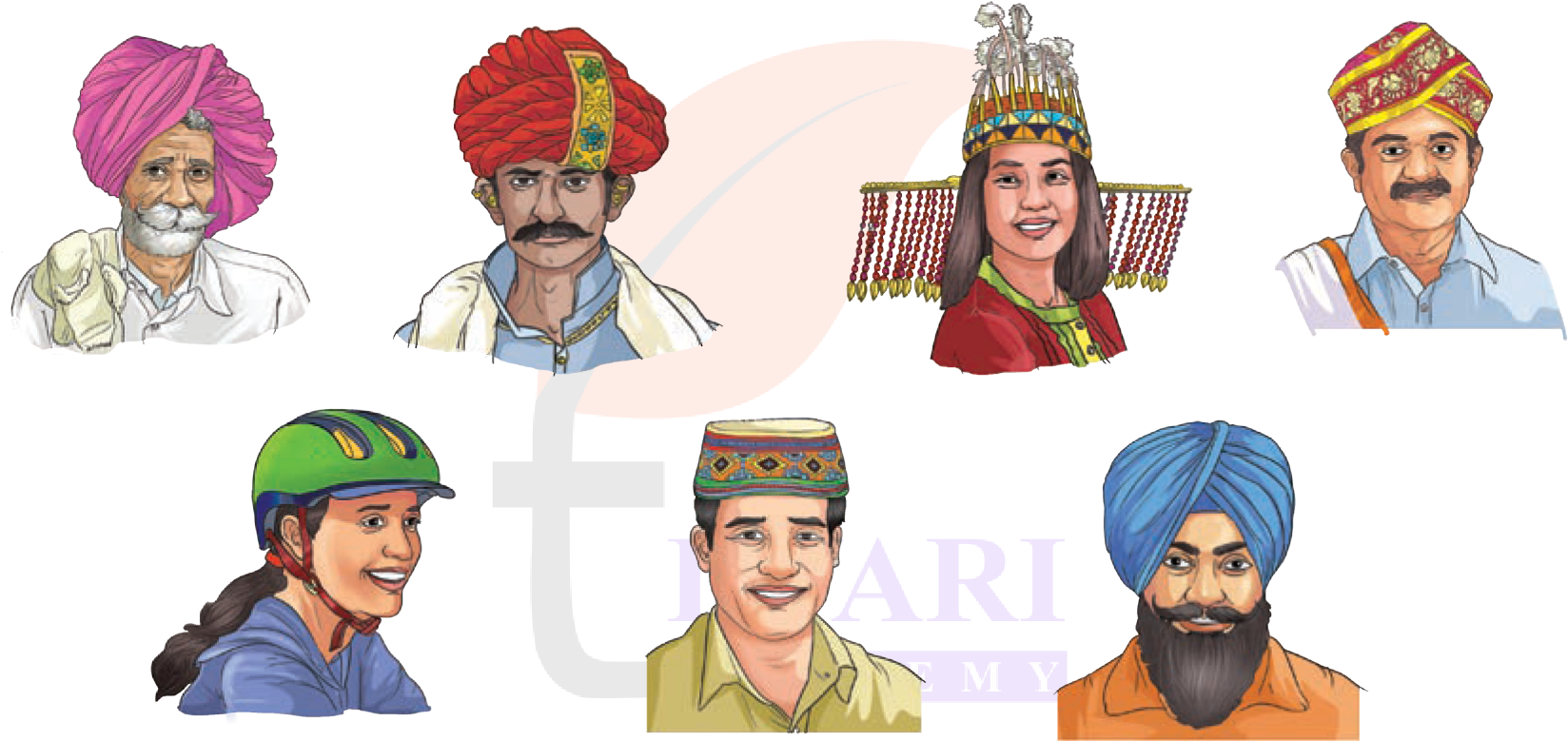
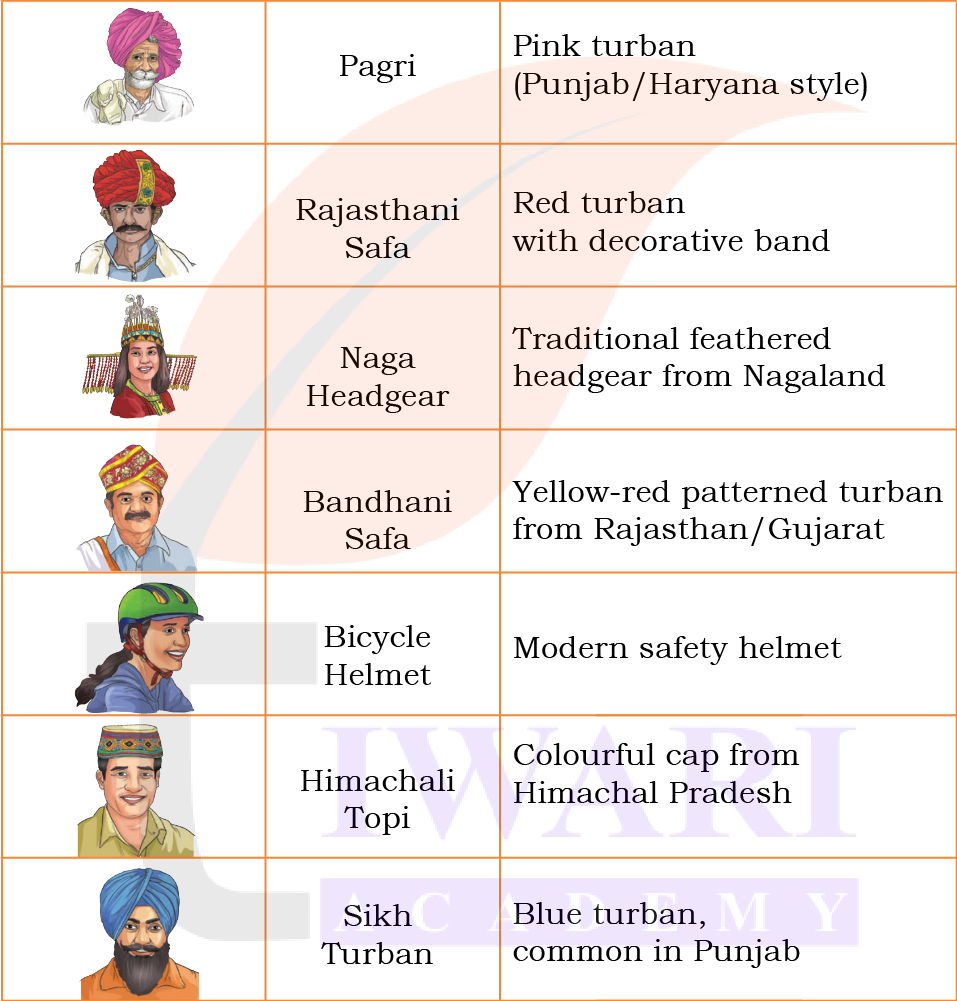
See Answer► Pagri – Pink turban (Punjab/Haryana style)
► Rajasthani Safa – Red turban with decorative band
► Naga Headgear – Traditional feathered headgear from Nagaland
► Bandhani Safa – Yellow-red patterned turban from Rajasthan/Gujarat
► Bicycle Helmet – Modern safety helmet
► Himachali Topi – Colourful cap from Himachal Pradesh
► Sikh Turban – Blue turban, common in Punjab.
Activity 6
• In small groups, take a dupatta or scarf and help each other make a traditional headgear.
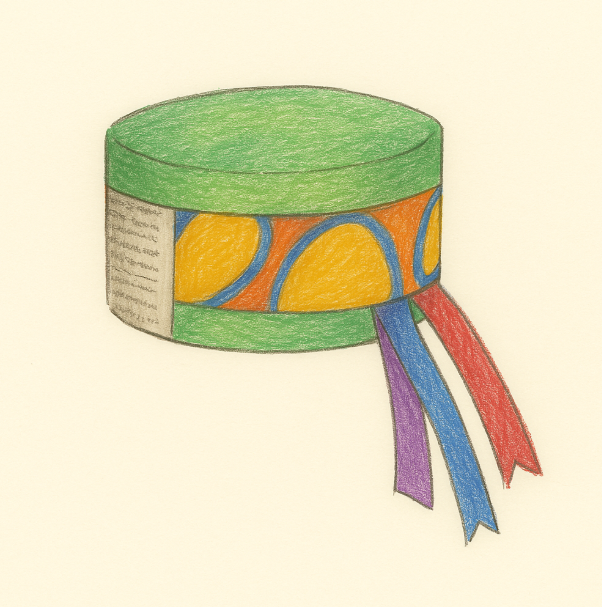
• Create a headgear or cap using waste materials.
Answer:
Page 89
Activity 7
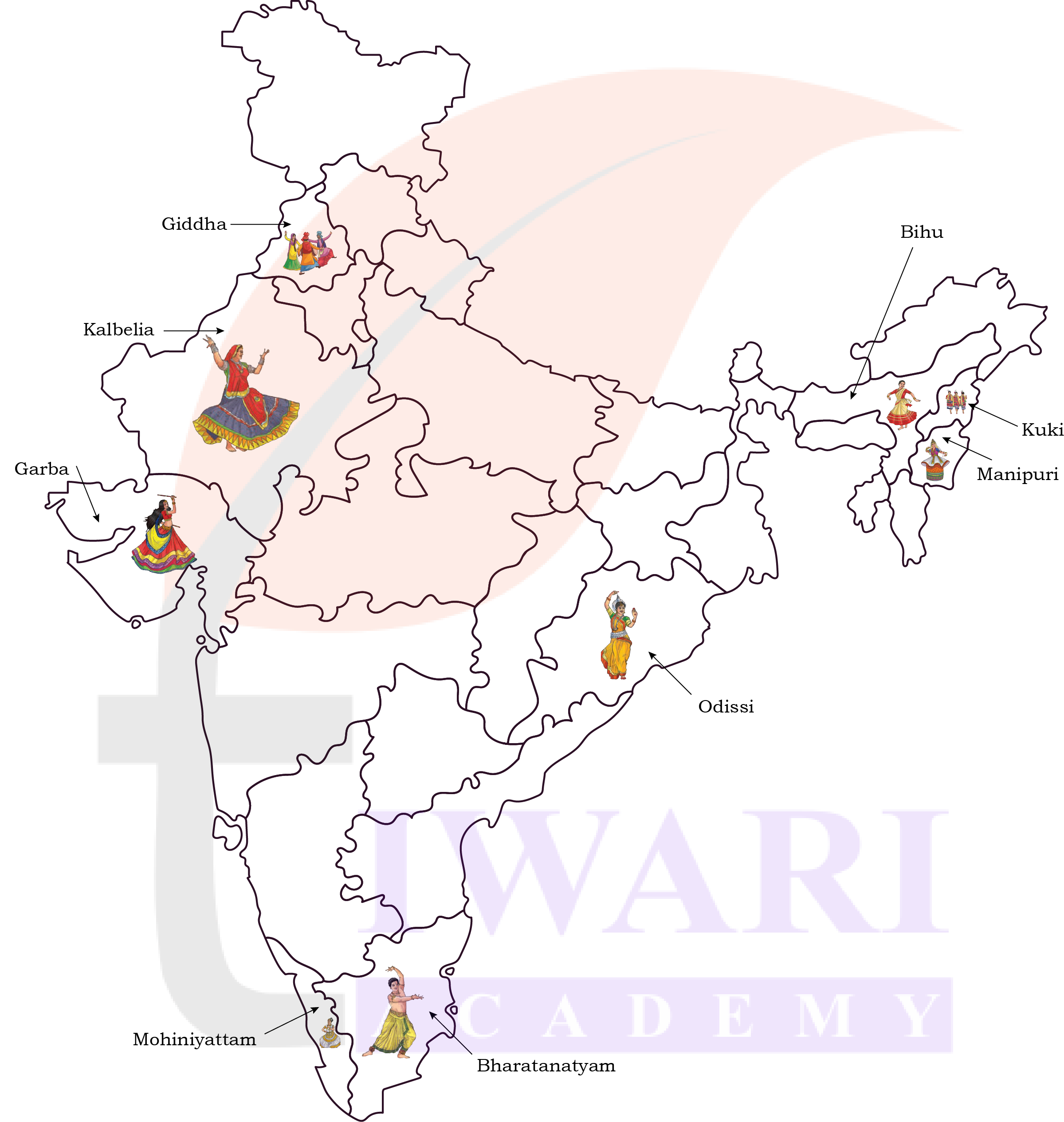
Under your teacher’s guidance, identify and mark the states on the map of India where these dance forms originated.
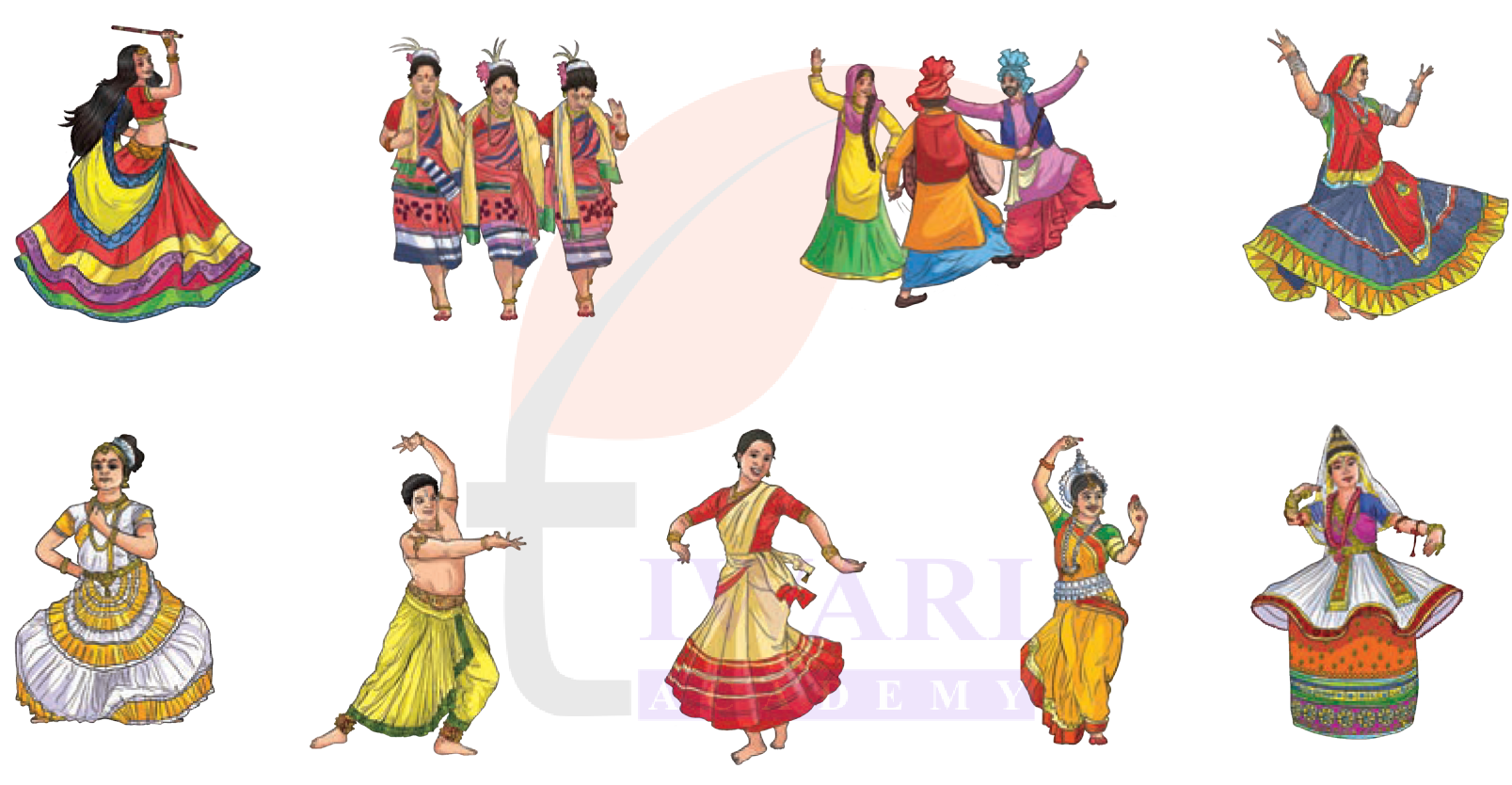
See AnswerHere are the dance forms in the picture and the states where they originated:
► Garba – Gujarat
► Bihu – Assam
► Giddha – Punjab
► Kalbelia – Rajasthan
► Mohiniyattam – Kerala
► Bharatanatyam – Tamil Nadu
► Kuki – Nagaland
► Odissi – Odisha
► Manipuri – Manipur
Writing on topics of Class 5 Our Wondrous World Chapter 5
Write
1. What are some traditional Indian musical instruments that you know of?
See AnswerSome traditional Indian musical instruments I know are:
► Sitar
► Tabla
► Shehnai
► Harmonium
► Dhol
► Veena
► Mridangam
► Santoor
► Flute (Bansuri)
► Sarangi
2. Try to make a musical instrument from locally available materials.
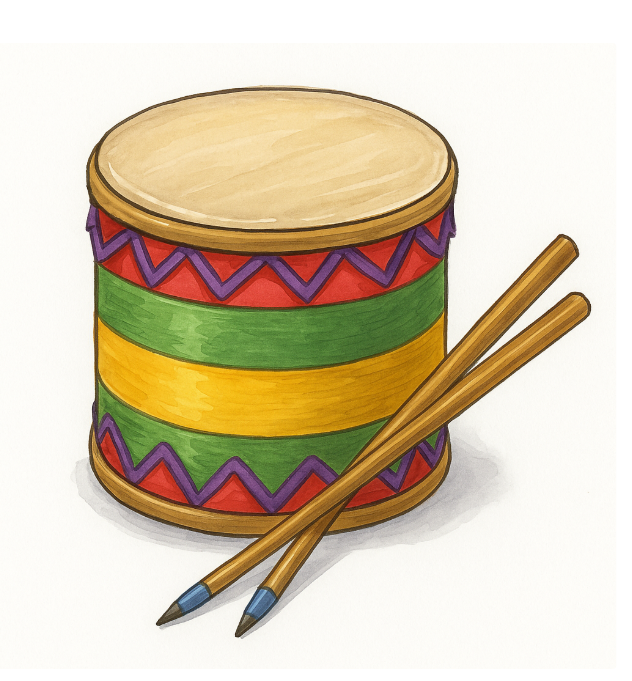
See AnswerUsing an empty tin can or plastic container, a piece of old rubber balloon or thick plastic sheet, strong rubber bands or tape, two wooden sticks (can be old pencils or chopsticks) and paints and decorative paper for decoration, I can make drum.
Steps:
• Clean the container well.
• Stretch the balloon piece or plastic sheet over the open end of the container.
• Fix it tightly using rubber bands or tape so it makes a drum-like surface.
• Decorate the body with coloured paper, paints, or stickers.
• Use the wooden sticks to beat the drum and enjoy the sound.
Page 91
Let us reflect
1. If you could learn one more Indian language, which one would you select and why?
See AnswerI would like to learn Bengali because it is a very sweet-sounding language and is spoken by many people in India and Bangladesh. It has a rich culture with beautiful songs, poems and stories by famous writers like Rabindranath Tagore.
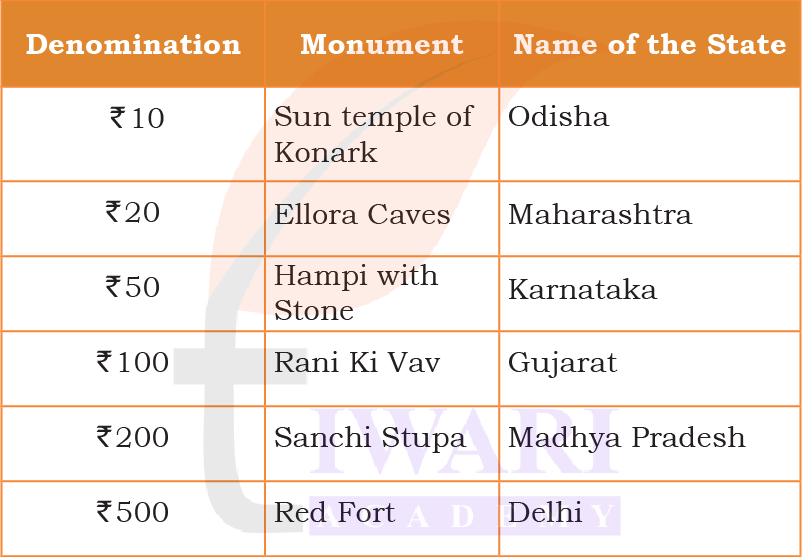
2. Which monuments do you see in different currency notes? Make a table.
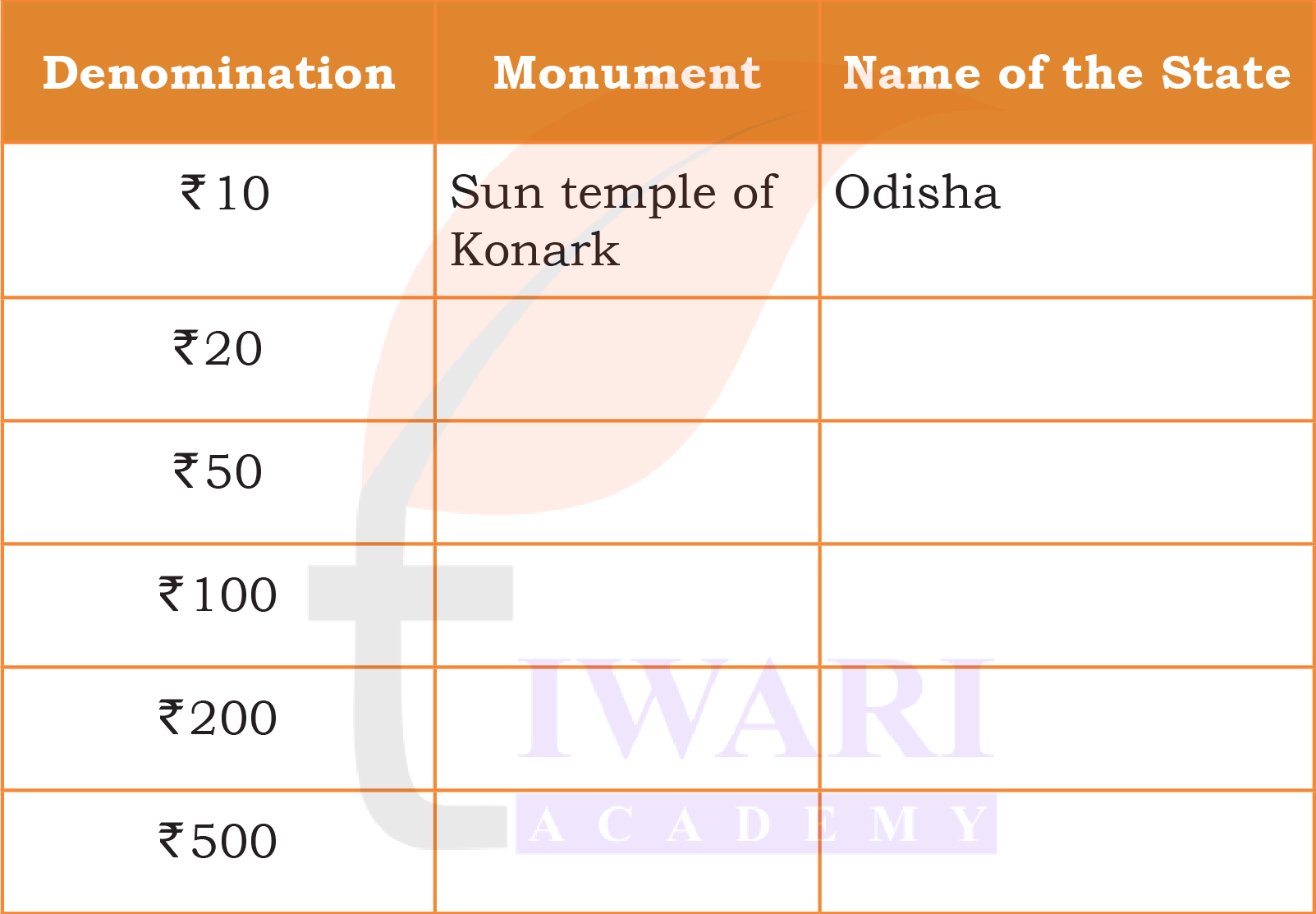
See Answer₹10 – Sun Temple of Konark, Odisha
₹20 – Ellora Caves, Maharashtra
₹50 – Hampi with Stone Chariot, Karnataka
₹100 – Rani Ki Vav, Gujarat
₹200 – Sanchi Stupa, Madhya Pradesh
₹500 – Red Fort, Delhi
3. Identify the currency symbol of India among the images shown below (the clue is in our currency note). Which other country’s currency symbol can you identify?

See Answer€ – Euro
$ – Dollar
₽ – Russian Ruble
₹ – Indian Rupee
¥ – Japanese Yen
¥ – Chinese Yuan
£ – British Pound
£ – British Pound

4. Which animals do you see in a ₹10 note?
See AnswerOn a ₹10 note, I can see rhinoceros, elephant and tiger.
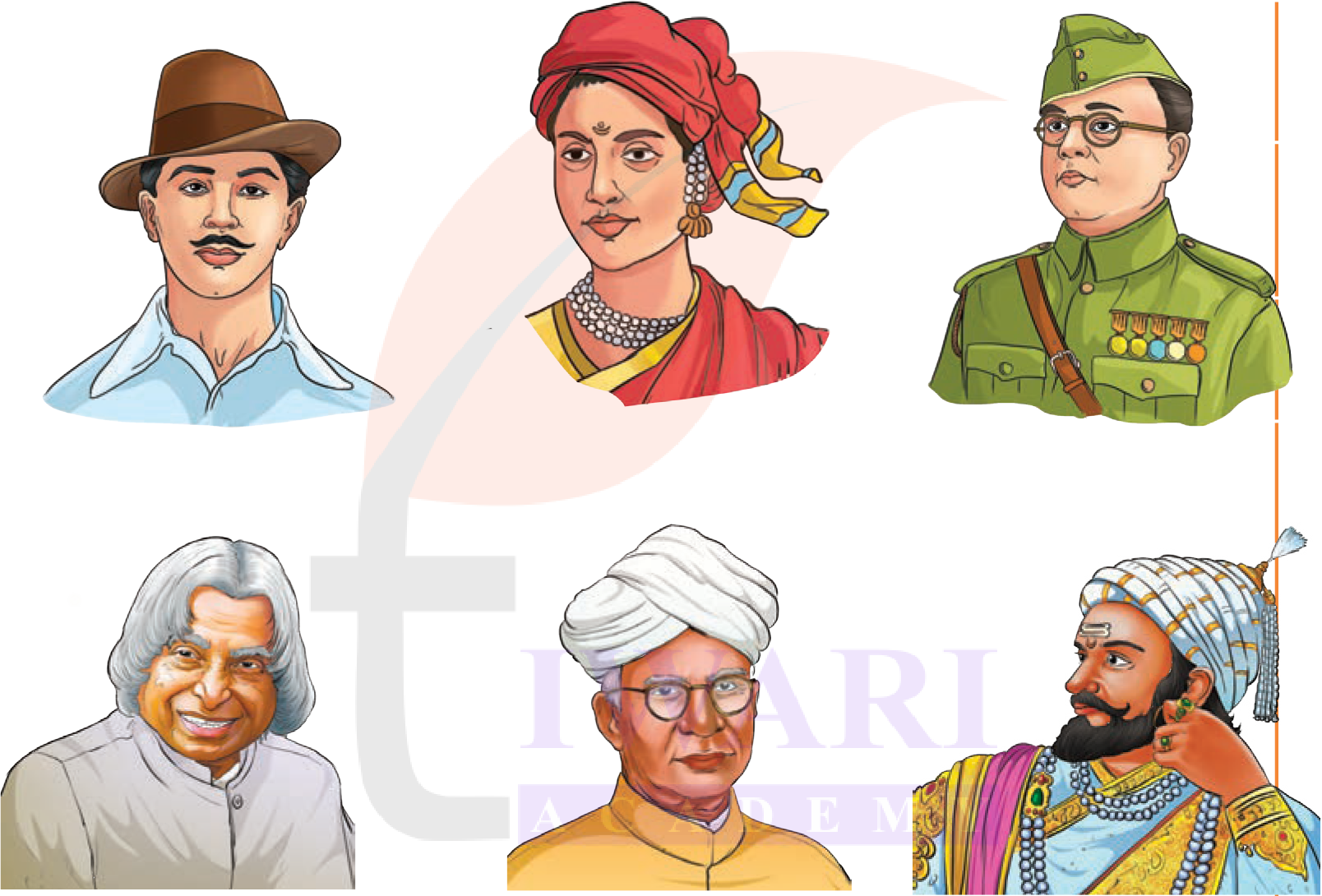
5. You must have seen pictures of a few great people of India in your school or any other place. Identify the names of these great men and women shown below and write a few lines about their contributions.
See AnswerSardar Vallabhbhai Patel:
Also called the Iron Man of India, he played a key role in uniting over 500 princely states into one nation after independence. He was India’s first Deputy Prime Minister and Home Minister.
Bhagat Singh:
A brave freedom fighter who fought against British rule. He is remembered for his courage and sacrifice for India’s independence.
Rani Lakshmibai:
The Queen of Jhansi who fought bravely against the British during the Revolt of 1857. She became a symbol of courage and patriotism.
Subhas Chandra Bose:
Leader of the Indian National Army (INA) who worked to free India from British rule with the slogan “Give me blood, and I will give you freedom”.
Dr. A.P.J. Abdul Kalam:
Known as the “Missile Man of India” and the 11th President of India. He contributed greatly to India’s space and missile programs.
Dr. Sarvepalli Radhakrishnan:
A great teacher, philosopher and the second President of India. Teacher’s Day is celebrated on his birthday, 5th September.
Shivaji Maharaj:
Founder of the Maratha Empire who fought against the Mughal Empire. He is remembered for his leadership, bravery and good governance.
Mahatma Gandhi:
Known as the Father of the Nation, he led India’s freedom struggle through non-violence and truth. His movements like the Dandi March and Quit India Movement inspired millions to fight peacefully against British rule.
6. Group activity: Find out from your elders about people, who have contributed to the nation from your locality or state and share what you learnt in the classroom.
See AnswerI asked my elders about people from my state, Delhi, who have contributed to the nation. I learnt about Ram Manohar Lohia, who contributed a lot to our nation. He was a freedom fighter and a socialist leader who actively took part in the Quit India Movement. He worked for equality, removal of caste discrimination and upliftment of the poor. Even after independence, he continued to raise his voice for social justice and the rights of common people.
Practice Questions for Exam Preparation in Class 5 EVS Our Wondrous World Chapter 5 Our Vibrant Country
Class 5 Our Wondrous World Chapter 5 Short Answer Type Questions
1. When do we celebrate Republic Day?
See Answer26 January
2. What does the saffron colour in the national flag represent?
See AnswerStrength and courage
3. Name one river mentioned in the National Anthem.
See AnswerGanga
4. What is the blue wheel in the middle of the national flag called?
See AnswerAshoka Chakra
5. When did India become independent?
See Answer15 August 1947
6. What is the special book of rules for our country called?
See AnswerConstitution
7. Whose picture is printed on Indian currency notes?
See AnswerMahatma Gandhi
8. What is the symbol of the Swachh Bharat Abhiyan on currency notes?
See AnswerGandhi ji’s spectacles
9. How many lions are shown in the National Emblem?
See AnswerThree (visible from the front)
10. What is the national animal of India?
See AnswerTiger
11. What is the national bird of India?
See AnswerPeacock
12. Name one traditional Indian musical instrument.
See AnswerSitar
13. Name one state known for the dance form Bharatanatyam.
See AnswerTamil Nadu
14. Which animals are shown on the ₹10 note?
See AnswerRhinoceros, elephant, tiger.
15. What is the currency symbol of India?
See Answer₹
Class 5 Our Wondrous World Chapter 5 Short Questions
1. Why do we celebrate Republic Day on 26 January?
See AnswerWe celebrate it because on 26 January 1950, India’s Constitution came into effect, giving us the rules to run our country and making India a republic.
2. Explain the meaning of the three colours in the national flag.
See AnswerSaffron stands for strength and courage, white stands for peace and truth, and green stands for growth and prosperity. The Ashoka Chakra in the centre represents duty (dharma).
3. What did you enjoy most about the Republic Day parade?
See AnswerI enjoyed the colourful state tableaux, the disciplined marching of soldiers, and the Air Force jets making patterns in the sky.
4. What is written below the lions in the National Emblem?
See Answer“Satyameva Jayate”, which means “Truth alone triumphs”.
5. What is special about the MANI app?
See AnswerThe MANI app helps people with visual impairment identify currency notes by using sound and vibration.
6. Name any four national symbols of India.
See AnswerTiger (animal), Peacock (bird), Banyan tree (tree), Lotus (flower).
7. Why are headgears important in India?
See AnswerThey show tradition, cultural heritage, and identity and are also used for protection from heat, cold, or injury.
8. Name any three dance forms and their states.
See AnswerBharatanatyam – Tamil Nadu, Bihu – Assam, Kathakali – Kerala.
9. Why is India called a land of diversity?
See AnswerBecause it has many languages, religions, festivals, clothing styles, music and dance forms, yet all people live together with unity.
10. What values does the national emblem represent?
See AnswerStrength, courage and confidence.
Notes to revise the complete chapter 5 before exams.
Class 5 Our Wondrous World Chapter 5 Notes
Describe the celebrations of Republic Day in your school.
See Answer► Flag hoisting by the head teacher
► Singing of the National Anthem
► Speeches about freedom fighters
► Cultural programmes like dances and songs
► Decoration with flowers and flags.
List the features you can observe on an Indian currency note.
See Answer► Value of the note and its colour
► Picture of Mahatma Gandhi
► Watermark of Gandhi ji
► Swachh Bharat Abhiyan symbol
► Monument picture and ₹ symbol
► Languages panel.
What are some uses of traditional headgear in India?
See Answer► Shows cultural identity
► Worn during weddings and festivals
► Protects from heat and cold
► Shows respect in certain places
► Used for safety in work and travel.
Name any five traditional Indian musical instruments.
See Answer► Sitar
► Tabla
► Shehnai
► Mridangam
► Dhol.
How does diversity make India stronger?
See Answer► Encourages sharing of knowledge and traditions
► Brings new ideas from different regions
► Helps people learn from each other
► Shows unity despite differences
► Makes culture colourful and rich.