


by Tiwari Academy
NCERT Solutions for Class 5 EVS Our Wondrous World Chapter 8 Clothes How Things are Made for Session 2025-26. It helps students learn about natural fibres, yarn, weaving, stitching, handloom, tailor tools and recycling old clothes. Class 5 EVS solutions clearly explain how clothes are made from threads, why each thread is important and how cloth can be reused. Written in simple language, they are ideal for Class 5 EVS exam preparation, homework and quick revision.
Class 5 EVS all Chapters Answers
Clothes How Things are Made Class 5 EVS Our Wondrous World Chapter 8 Solutions
Page 133
Discuss
Have you seen products woven out of natural material at home or elsewhere? What are they?
See AnswerYes, I have seen products woven out of natural materials.
► At home, I have seen cotton clothes and woollen sweaters.
► I have also seen mats made of grass and baskets made of bamboo.
► In the market, I have seen jute bags and ropes made from natural fibres.
These things are made by weaving natural materials together.
Page 134
Think
What can you find in your classroom that is woven? If we weave with threads instead of paper strips, it becomes cloth.
See AnswerIn the classroom, many things are woven. My school bag is made of woven fabric. My uniform shirt and trousers are woven cloth. Some of my friends have sweaters which are knitted (a type of weaving) and the carpet or mat on the floor is also woven.
Class 5 EVS Our Wondrous World Chapter 8 Activity based Questions
Page 138
Activity 4
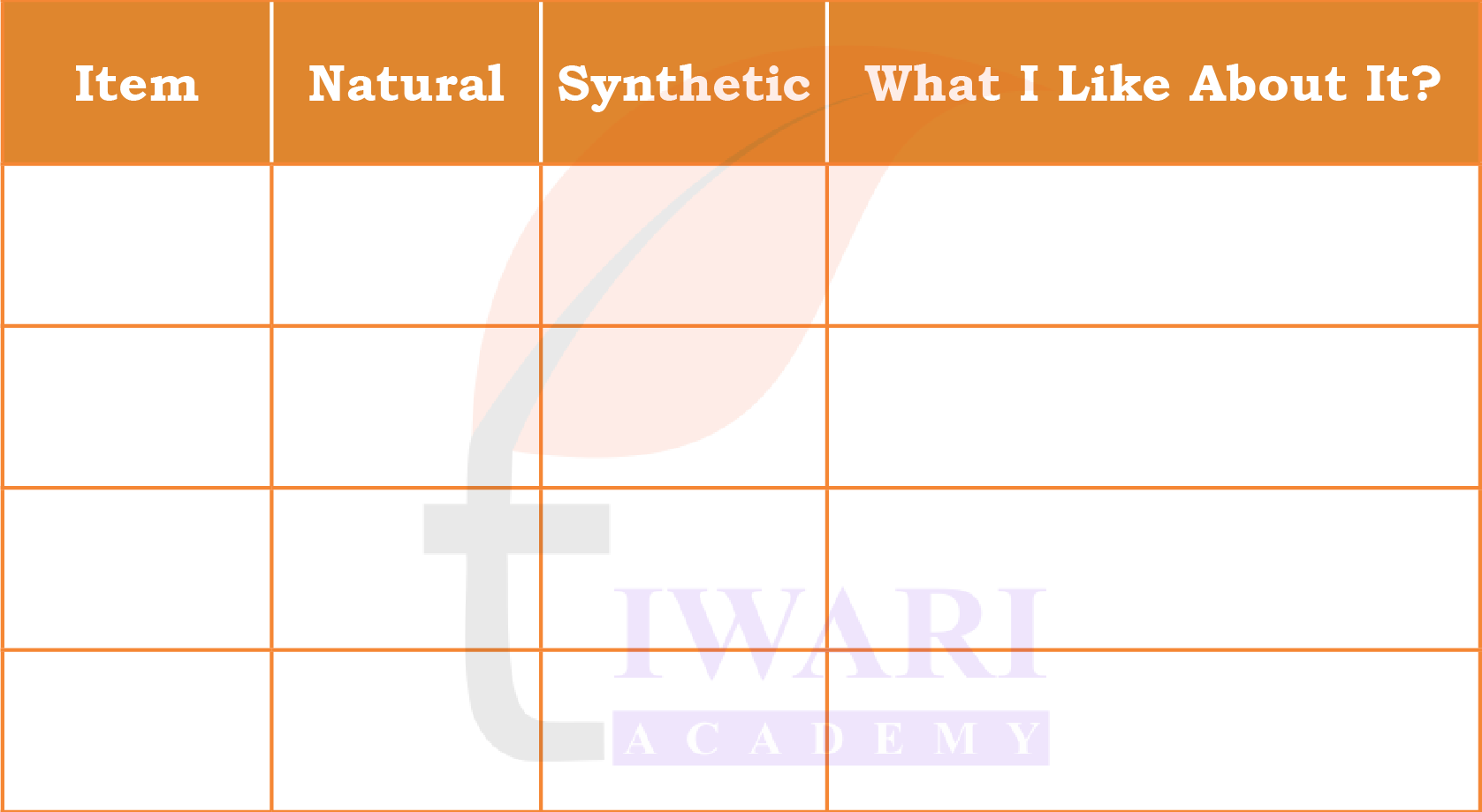
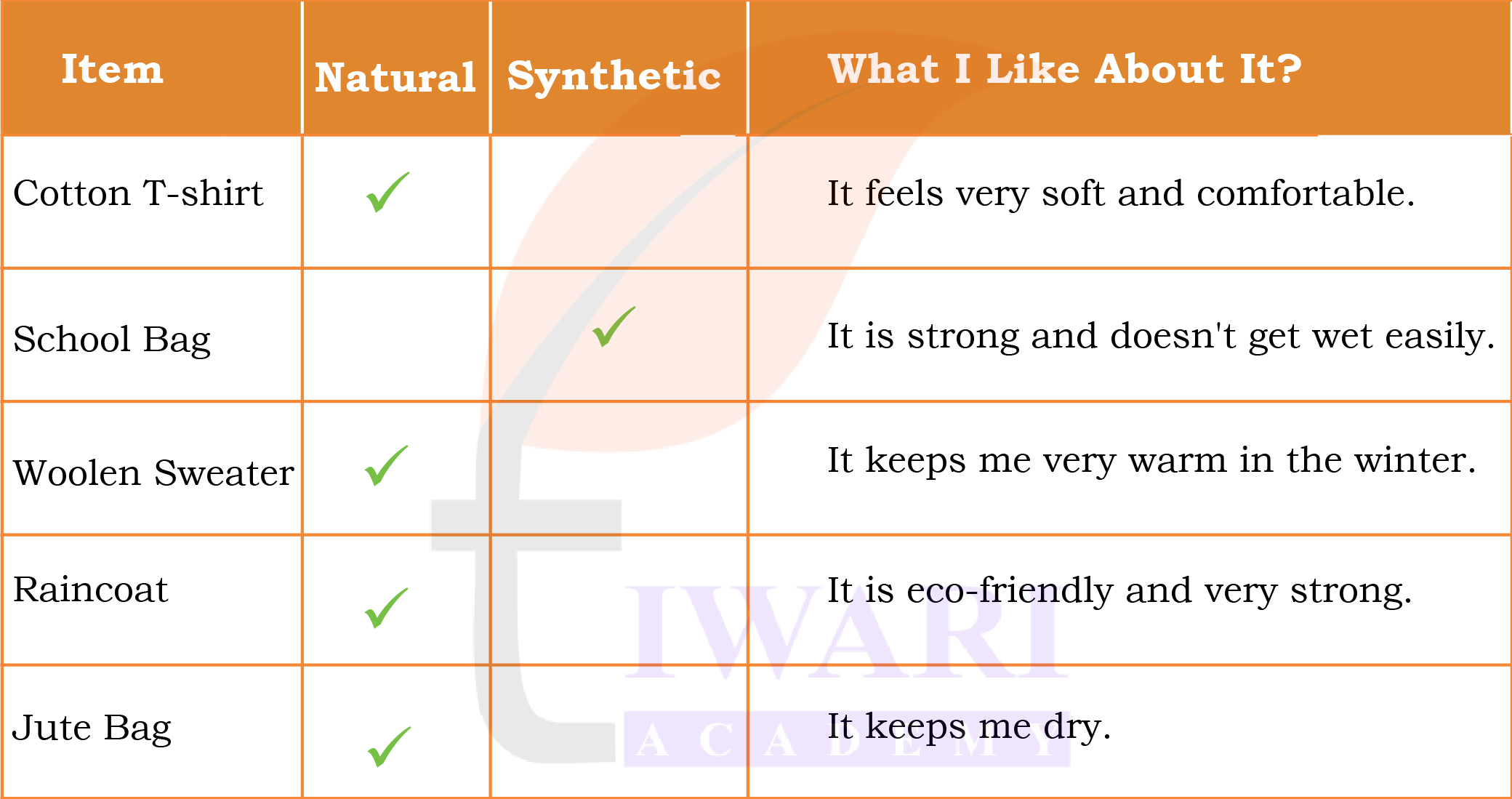
Look at some clothes, bags or other things you use every day. List some of the materials that you have used. Are they made from natural or synthetic fibres? Then, write one thing you like about it in the table below.
Answer:
Class 5 EVS Our Wondrous World Chapter 8 Thinking Based Questions
Page 139
Think
1. Have you ever seen someone stitching at home or in your neighbourhood? What were they making or fixing?
See AnswerYes, I have seen my grandmother stitching. She was fixing a tear in my pants. I have also seen a tailor in my neighbourhood who stitches new clothes like shirts and dresses for people.
2. Look at your shirt or school bag. Can you find where the pieces have been stitched together?
See AnswerYes, I can see the lines of stitches on my shirt where the sleeves are attached to the body and along the sides. On my school bag, I can see stitching where the straps are attached and where different pockets are sewn on.
Inpage Questions of Class 5 EVS Our Wondrous World Chapter 8
Page 141
Where else can we use running stitches in daily life?
See AnswerWe can use running stitches to decorate cloth, like in Kantha embroidery from West Bengal. We can also use it for temporarily holding two pieces of cloth together before sewing them properly or for making beautiful quilts by joining small pieces of fabric.
If one thread breaks in your stitching, what do you think will happen to the rest of the stitches?
See AnswerIf one thread breaks, the stitches next to it might become loose. If we pull on the broken thread, several other stitches in the line could come undone, creating a hole.
Class 5 EVS Our Wondrous World Chapter 8 Let us reflect
Page 143
1. Have you ever reused or recycled an old piece of cloth? What did you or your family make from it?
See AnswerYes, my mother turned my old favourite t-shirt, which was too small for me, into a cleaning cloth for the kitchen. We also used old bedsheets to make a beautiful quilt by stitching different pieces together.
2. If one thread breaks in a stitched cloth or in a woven mat, what might happen? Why is each thread important?
See AnswerIf one thread breaks, the whole structure can become weak. In a woven mat, a broken thread can create a hole that gets bigger over time. In stitched cloth, it can cause the seam to open up. Each thread is important because it works together with all the other threads to hold the fabric together and make it strong.
3. Visit a tailor’s shop or a handloom store with an adult. What tools or machines did you see being used there?
See AnswerAt the tailor’s shop, I saw a sewing machine, scissors, measuring tape, chalk for marking and lots of needles and threads of different colours. At a handloom store, I saw a large wooden loom which the weaver uses to make cloth by hand.
4. Find out what kind of weaving or stitching work is famous in your area or state. Name it.
See AnswerIn Gujarat, a famous weaving technique is used to make ‘Patola’ sarees. A well-known embroidery from Punjab is called ‘Phulkari’. In Delhi, one can find many artisans skilled in ‘Zardozi’ work, which is an intricate form of metal embroidery.
In my area, handloom weaving is famous. People make clothes by weaving threads on handlooms.
5. We should not throw the old clothes away. Why?
See AnswerWe should not throw old clothes away because they can be reused or recycled. We can give them to younger siblings or someone in need. They can also be made into new things like quilts, mats or cleaning cloths. This is good for the environment because it reduces waste.
6. Below are the jumbled-up steps of the life cycle of a moth. Read and number them from 1 to 6 in the correct order.
[] Adult moth comes out of the cocoon.
[] Eggs hatch into tiny caterpillars.
[] Silk moth lays eggs.
[] The cycle begins again.
[] Caterpillars eat mulberry leaves and grow big.
[] Caterpillars spin cocoons around themselves.
See Answer[5] Adult moth comes out of the cocoon.
[2] Eggs hatch into tiny caterpillars.
[1] Silk moth lays eggs.
[6] The cycle begins again.
[3] Caterpillars eat mulberry leaves and grow big.
[4] Caterpillars spin cocoons around themselves.
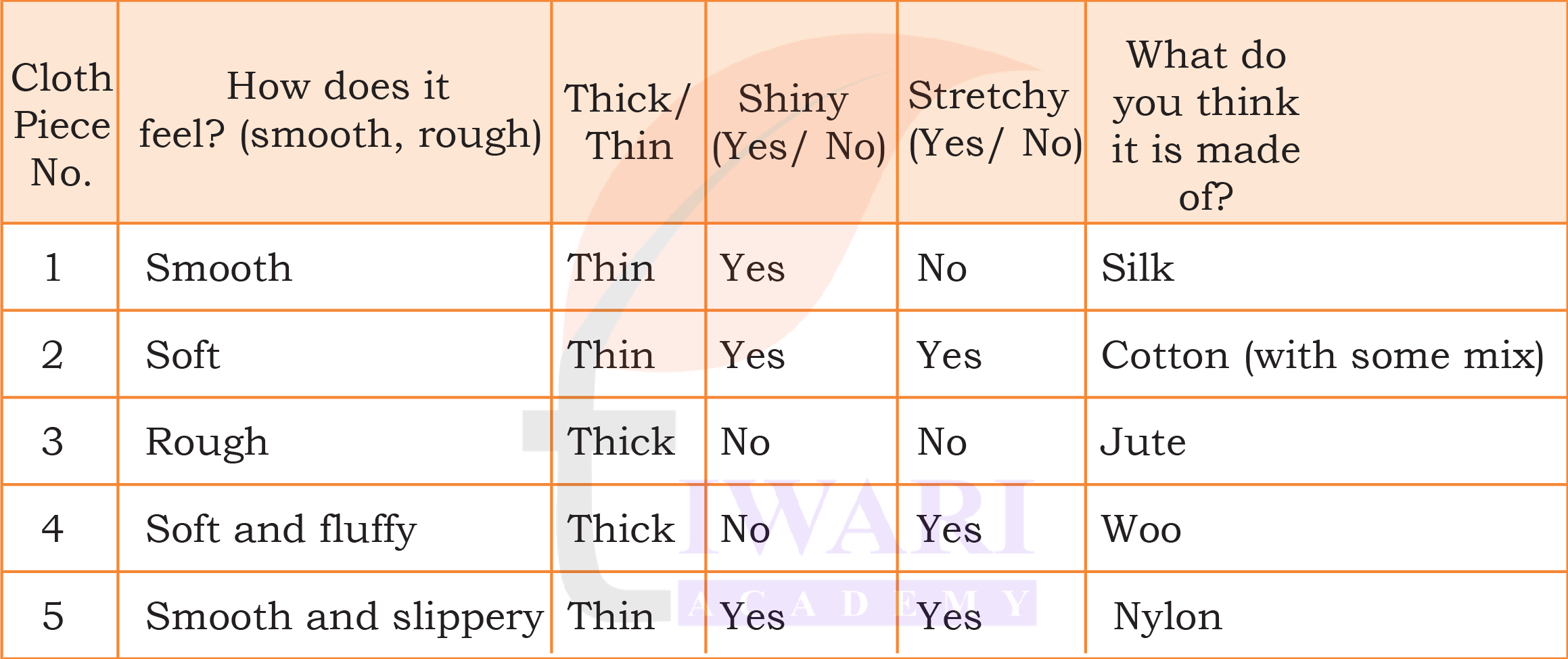
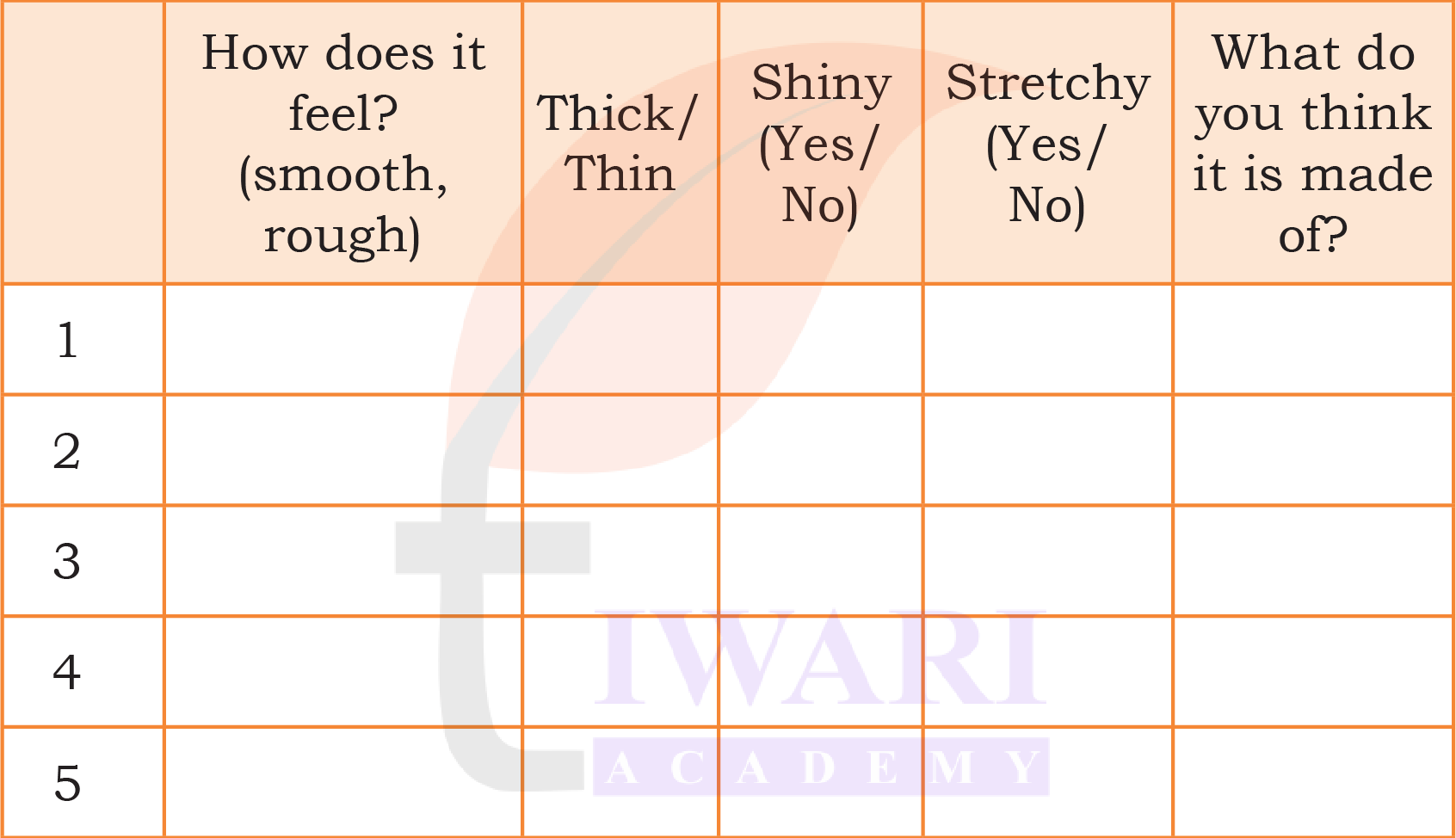
7. Bring 5-6 pieces of different types of clothes from home or nearby tailors (leftover scraps). Observe the material closely and complete the table. Ask an elder or search in your book to find out whether it is made from cotton, wool, silk, jute, polyester or nylon.
Answer: