


by Tiwari Academy
NCERT Solutions for Class 5 EVS Our Wondrous World Chapter 9 Rhythms of Nature updated for Session 2025-26. Grade 5 EVS solutions provide a clear child-friendly answers based strictly on NCERT textbook. This chapter explains changes in nature, day and night, seasons and natural rhythms through simple examples and activities. These NCERT EVS Class 5 solutions help students understand summer, monsoon and winter, seasons’ journaling and long-term changes in the environment. The content is exam-oriented, easy to learn and useful for revision and concept clarity.
Class 5 EVS all Chapters Answers
Rhythms of Nature Class 5 EVS Our Wondrous World Chapter 9 Solutions
Page 147
Write
Try to remember the time you were in Grades 3 and 4. Think and write about the changes that you have noticed in yourself and your friends, in your school, and in your environment.
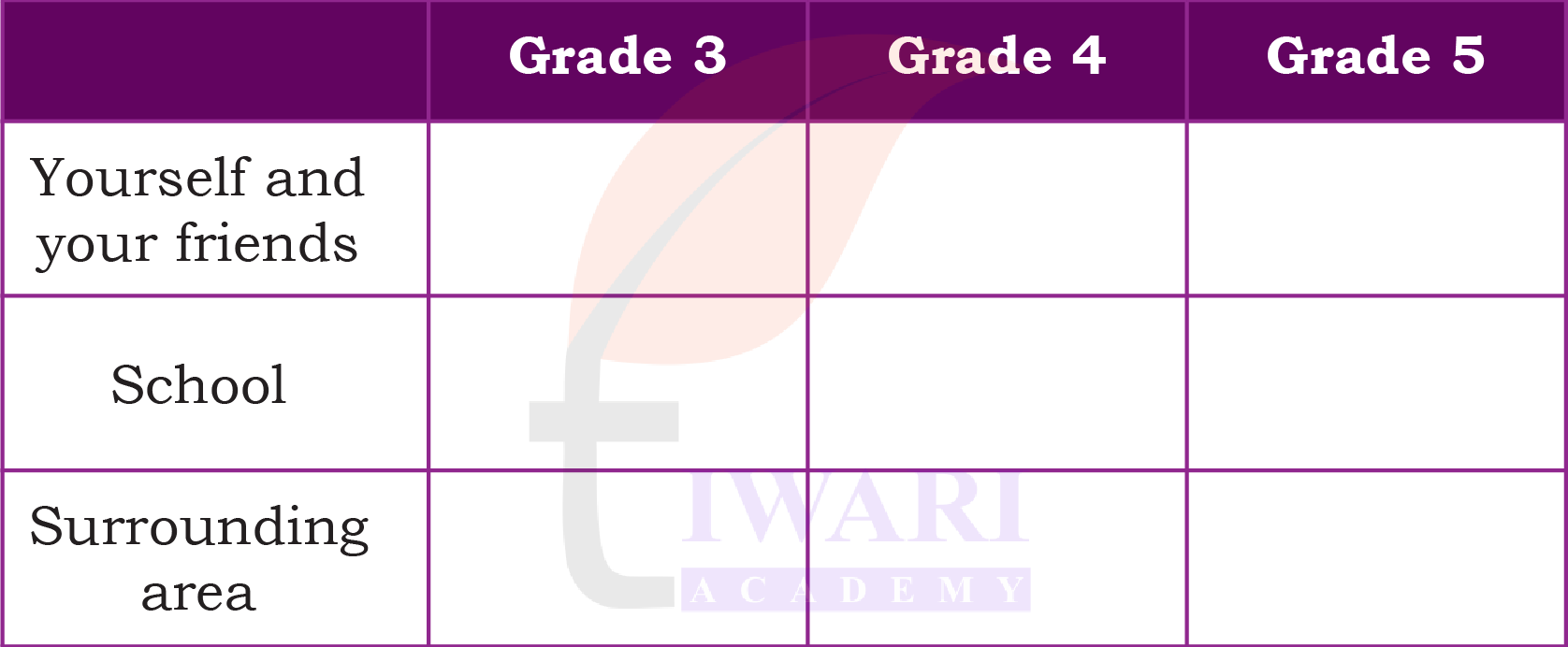
Answer:

Class 5 EVS Our Wondrous World Chapter 9 Writing based Questions
Page 148
Write
1. Can you think of something that takes a really long time to change, maybe over years?
See AnswerYes. A tree growing from a small plant into a big tree takes many years.
Also, a child growing into an adult happens slowly over a long time.
So, some changes happen very slowly and we notice them only after many years.
2. What about something that changes within just a few years?
See AnswerOur height, the number of houses in our area and new roads or buildings change within a few years.
3. Are there changes that happen every year, again and again?
See AnswerYes, the seasons (summer, monsoon, winter), crops and school reopening happen every year.
4. Can you name something that changes in just a few minutes or even seconds?
See AnswerThe colour of the sky during sunrise or sunset, a flower closing or clouds moving.
Class 5 EVS Our Wondrous World Chapter 9 Finding Out based Questions
Page 151
Find out
Study the globe and write, when it is day time in India, which countries will have night?
See AnswerAccording to globe, when it is day in India, countries like the United States, Canada, Brazil and Mexico have night.
Page 156
Do you know how many seasons we have in India? In India, we experience six seasons based on how nature changes in every few months.
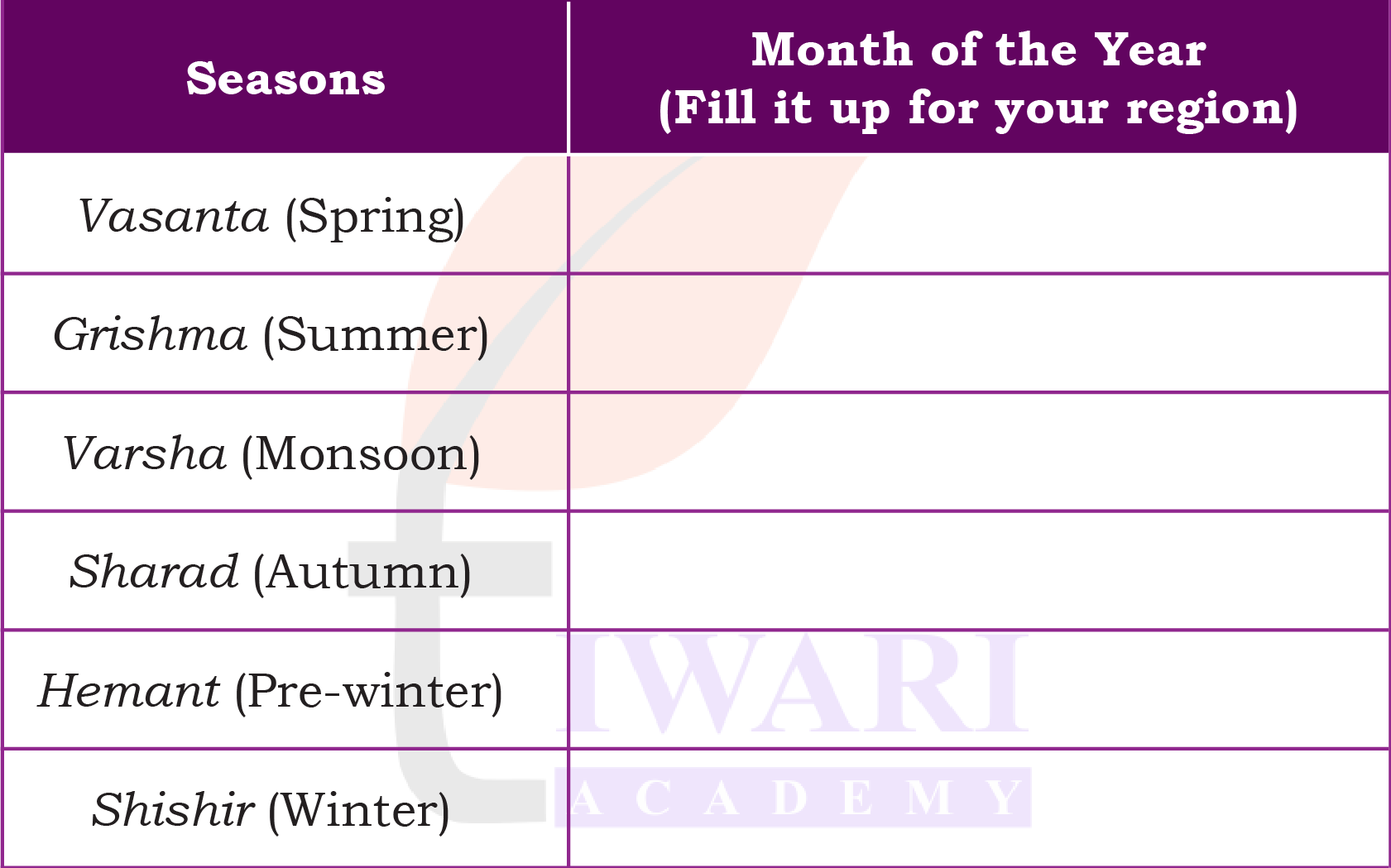
Answer:
Class 5 EVS Our Wondrous World Chapter 9 Writing Based Questions
Page 157
Write
How do you feel when the season changes? Would you prefer one season to continue throughout the year? Give the reasons for your answer.
See AnswerI feel excited and fresh when the season changes. I would not prefer one season throughout the year because each season brings new joys – flowers in spring, rains in monsoon, festivals in autumn and cool weather in winter.
Discuss
Winter in Kerala is different from winter in Kashmir valley. Monsoon in Assam is different from Rajasthan. Why do you think it is so?
See AnswerThis is because the climate, rainfall and temperature are different in different regions of India. Kerala has mild winters while Kashmir has very cold winters with snow. Assam gets heavy rains in monsoon, while Rajasthan remains mostly dry.
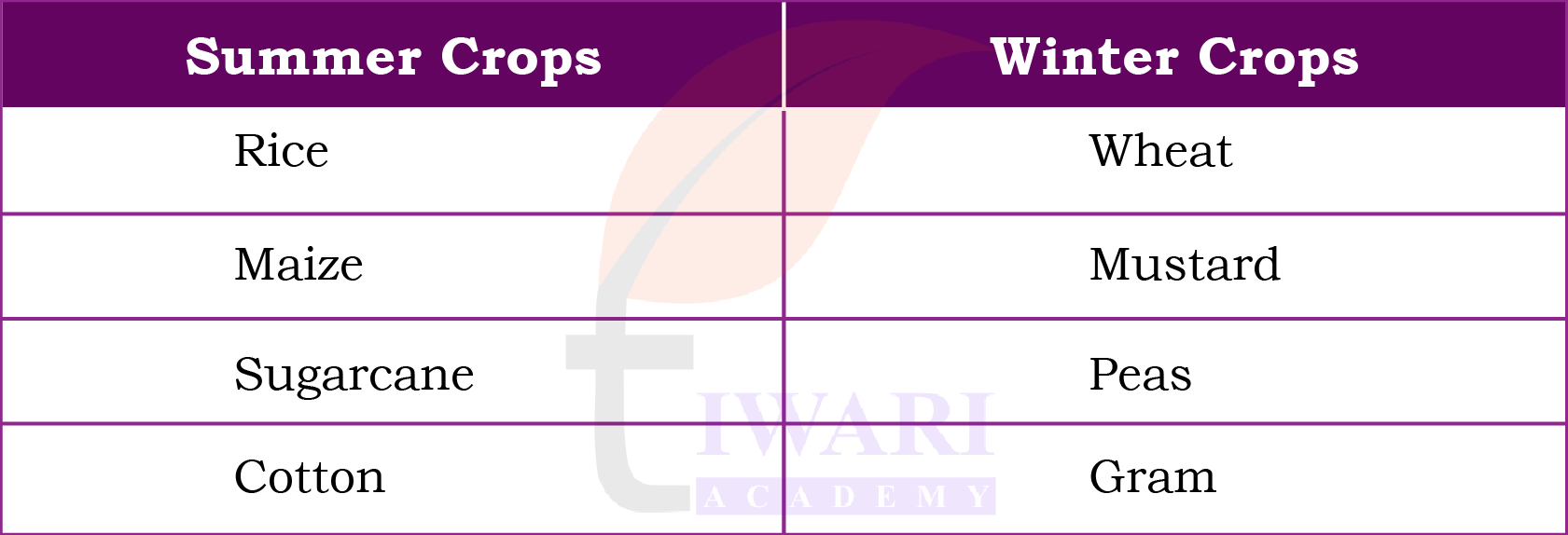
With the help of your teacher and elders, name the crops that grow in summer and winter in your region.
Answer:
Page 158
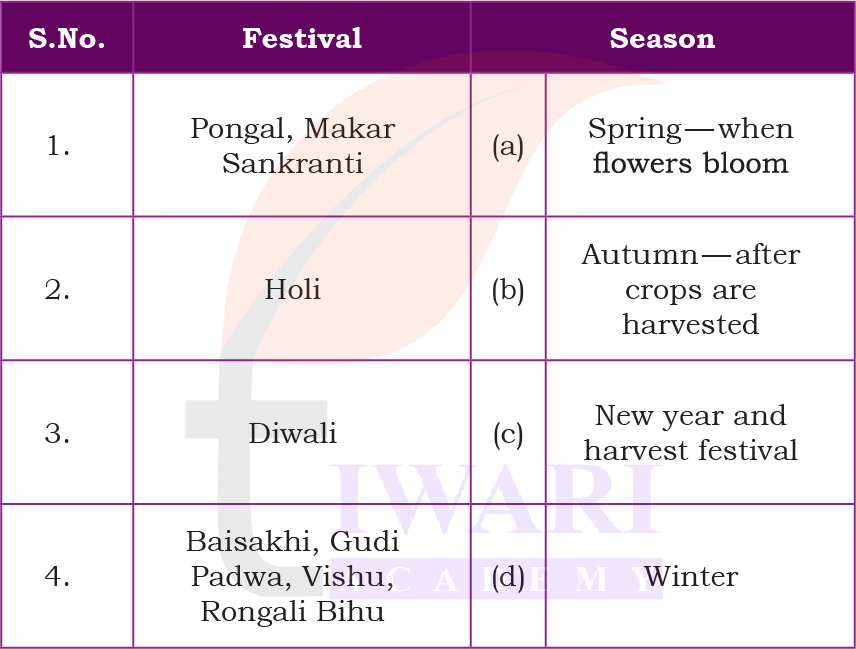
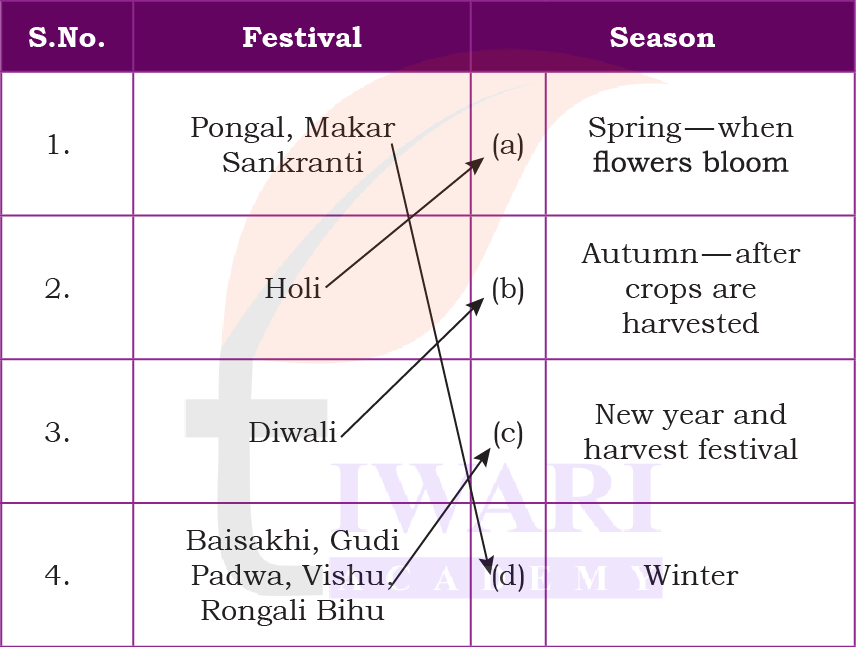
Many of our festivals are connected with seasons. See if you can match these festivals to the season they are celebrated in!
Answer:
Class 5 EVS Our Wondrous World Chapter 9 Let us reflect
Page 159
1. Narrate your experiences about the season changes.
See Answer► In summer, I eat mangoes and play in the evening.
► In monsoon, I use an umbrella and enjoy the rain.
► In winter, I wear warm clothes and celebrate festivals like Lohri and Diwali.
2. Ask your family members and write about seasons. Do you find any major differences in the patterns or changing seasons? What could be possible reasons for these differences?
See AnswerMy grandparents told me that earlier winters were longer and summers were not so hot. Now, summers are very hot and rains are sometimes less but sometime at large scale. This change is due to pollution, cutting of trees and global warming.
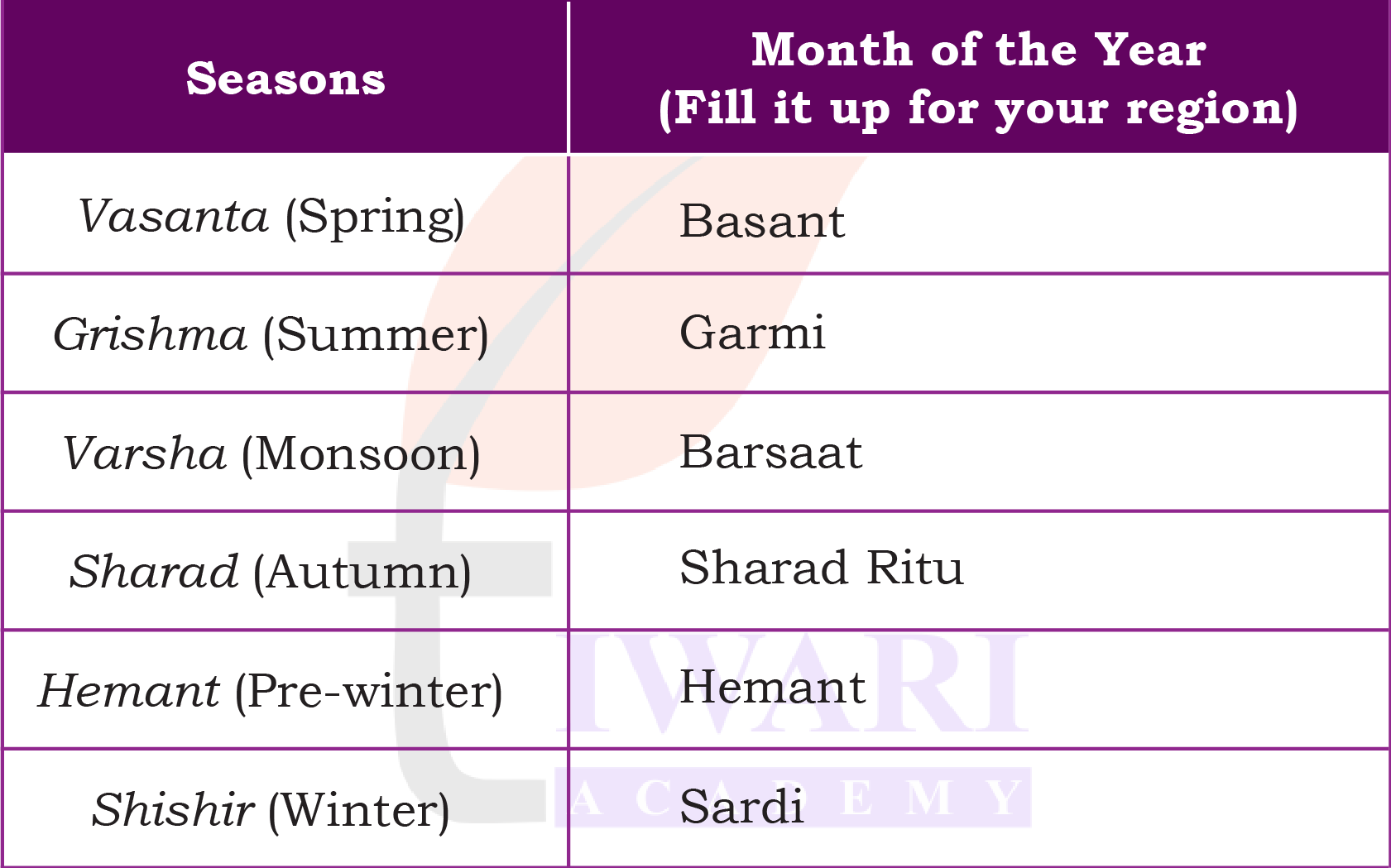
3. Seasons have local names. Find out and write the seasons mentioned below are called in your region, and your local language.
(a) Spring: _______________
(b) Summer: _______________
(c) Monsoon: _______________
(d) Autumn: _______________
(e) Pre-winter: _______________
(f) Winter: _______________
See Answer(a) Spring – Basant
(b) Summer – Garmi
(c) Monsoon – Barsaat
(d) Autumn – Sharad Ritu
(e) Pre-winter – Hemant
(f) Winter – Sardi
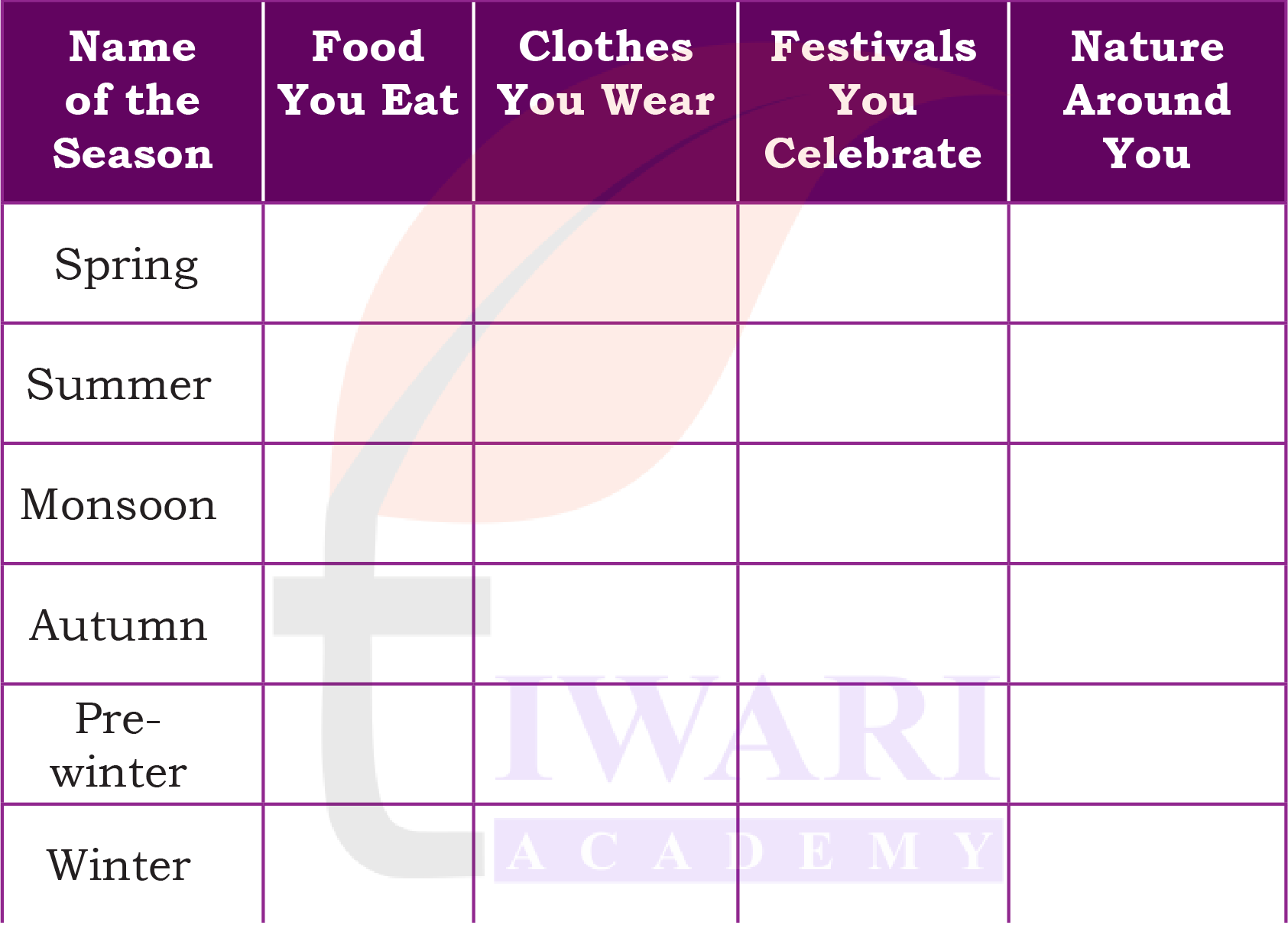
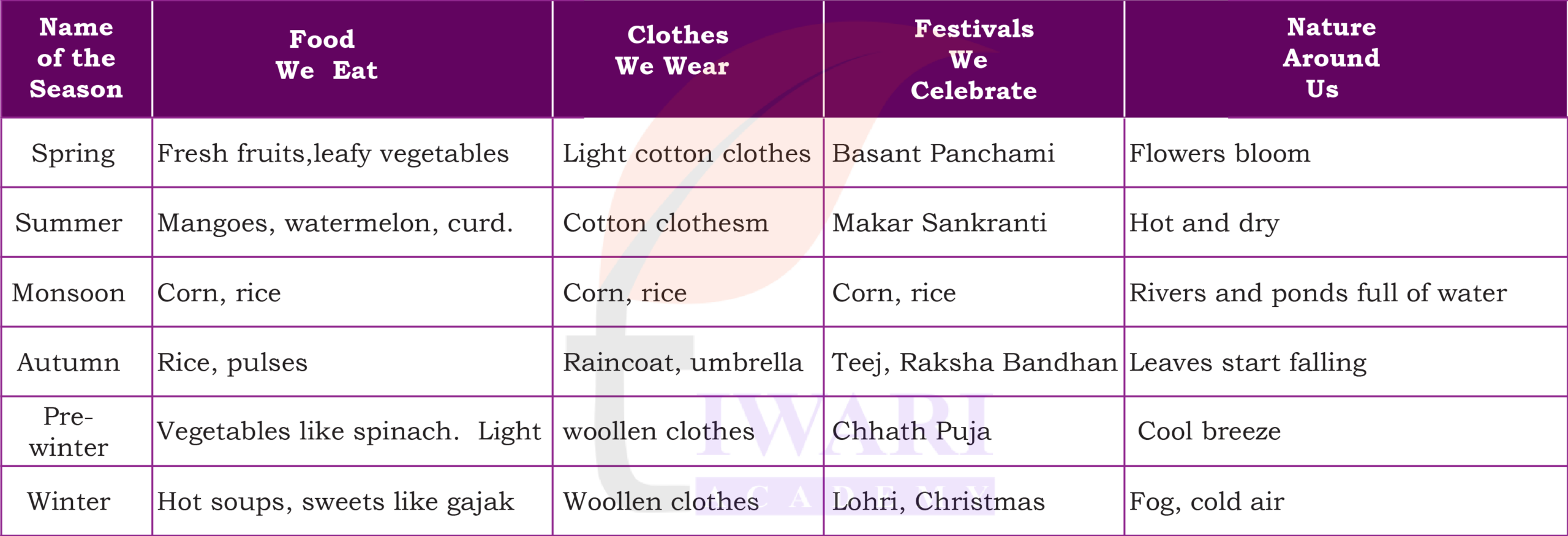
4. Fill the table based on your observations and experiences.
Answer:
5. Share your experience of seasons’ journaling.
See AnswerMy experience of seasons’ journaling:
Keeping a seasons’ journal was fun and interesting. I observed changes in trees, weather, birds and our daily activities in different months. I noticed that in summer it was very hot and people wore cotton clothes, while in monsoon everything looked green. In winter, the weather became cold and foggy. Writing regularly helped me understand how nature changes with seasons.
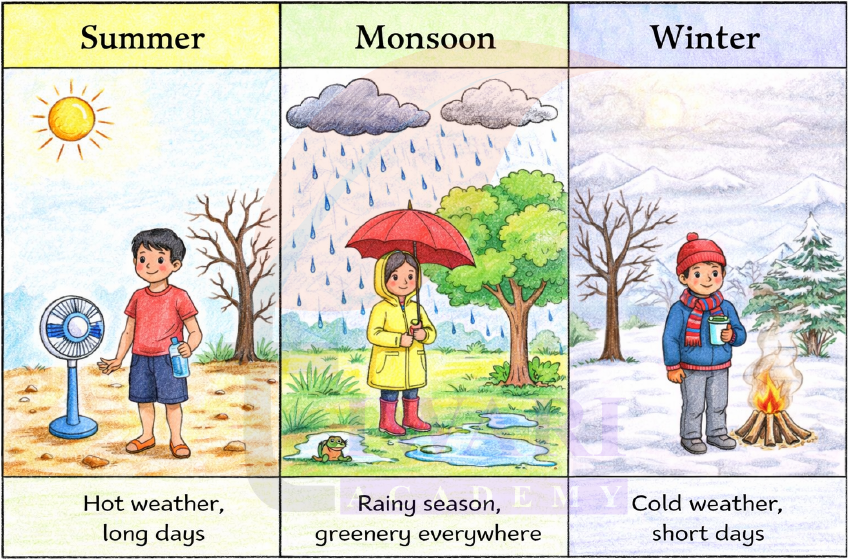
6. Make a comparative drawing of the three major seasons: Summer, Monsoon, Winter.

Answer: