


by Tiwari Academy Team
NCERT Solutions for Class 4 EVS Our Wondrous World Chapter 9 Different Lands, Different Lives – Question Answers for session 2026-27. Here four classmates back from their holidays — Gurpreet from the plains of Amritsar, Ritika from the Rajasthan desert, Chandni from the Odisha coast and Nayan from the mountains of Sikkim. Through their stories, students discover how landforms shape everyday life: the food people cook, from makki di roti to dal-bati-churma, dalma and thukpa; the clothes they wear; the houses they build; and the festivals they celebrate, from the Golden Temple’s langar to Puri’s Rath Yatra and yak rides in Sikkim. These solutions cover every observation activity, the coastal-creatures task, the four-landform comparison table and the closing design-your-own-landform challenge, making this chapter’s EVS notebook work easy to complete.
NCERT Class 4 EVS Our Wondrous World Chapter 9 Solutions
Page 131 – Activity 1
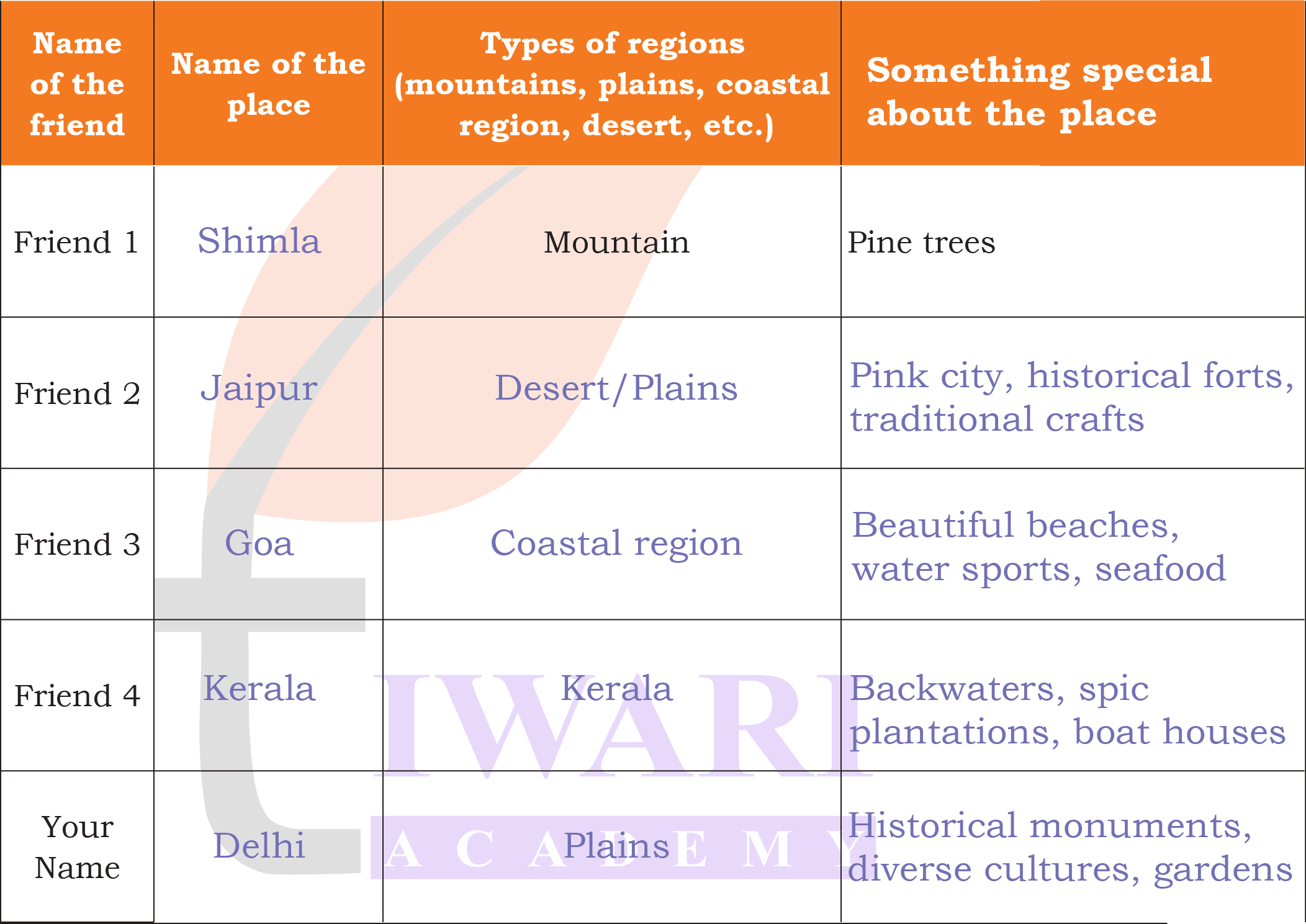
You might have visited some places during your vacation. Write the name of the places and something special about them. Ask two or three of your friends about the places they had visited, and fill the table given below.
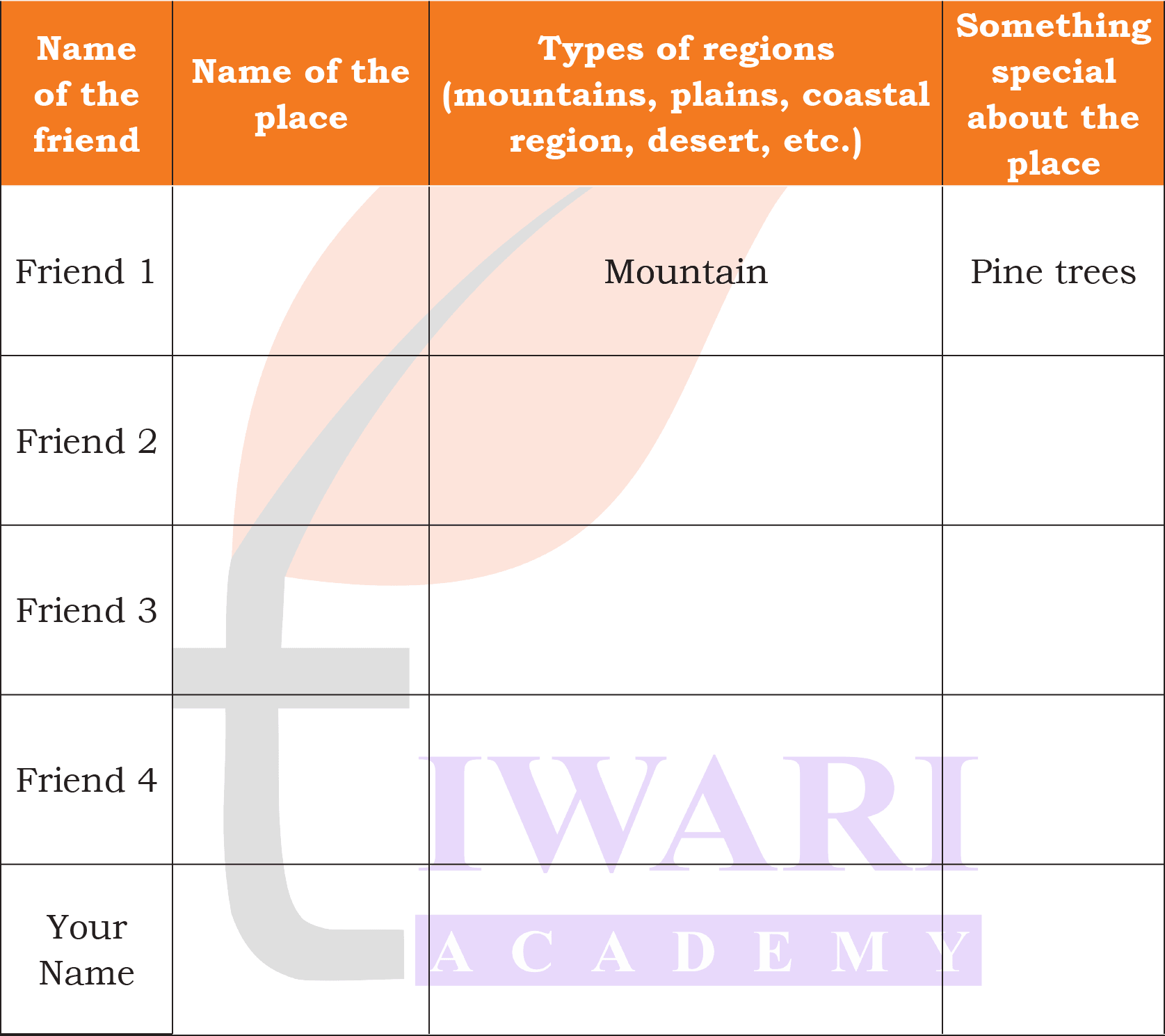
Answer:
Page 132 – Write
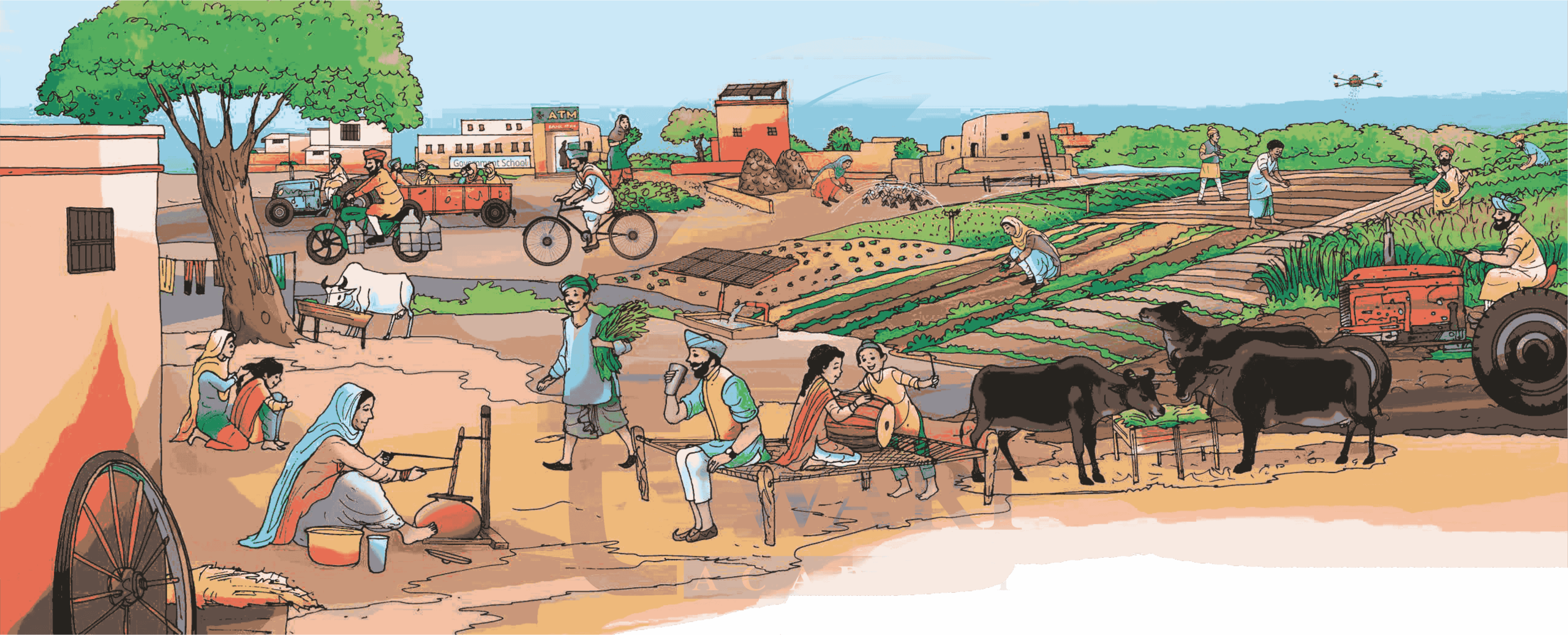
Look at the picture above and write your observation
1. What kind of land do you see in the picture?
Answer:
The picture shows plains with vast, flat agricultural fields. This is fertile farmland in Punjab with crops growing in organized rows.
2. List the activities that people are engaged in.
Answer:
People in the picture are engaged in farming activities like plowing fields, sowing seeds, harvesting crops and transporting agricultural produce.
3. Which animals do you see in the picture?
Answer:
In the picture, we can see farm animals like cows, buffaloes and bullocks which help in farming activities.
4. Do you notice anything unique about the clothing of the people?
Answer:
People are wearing traditional Punjabi attire. Men wear turbans (pagri) and kurta-pajamas, while women wear salwar-kameez with dupattas or chunnis, suitable for working in agricultural fields.
Page 133 – Write
1. What is the most popular food in your region? Can you list the main ingredients used in its preparation?
Name of the food item:___________________
Ingredients:___________________
Answer:
Name of the food item: Chole Bhature
Ingredients: Chickpeas (chole), wheat flour, yogurt, oil, spices (cumin, coriander, garam masala), onions, tomatoes, ginger, garlic, green chilies.
Page 134 – In the Land of Endless Sand, with Ritika
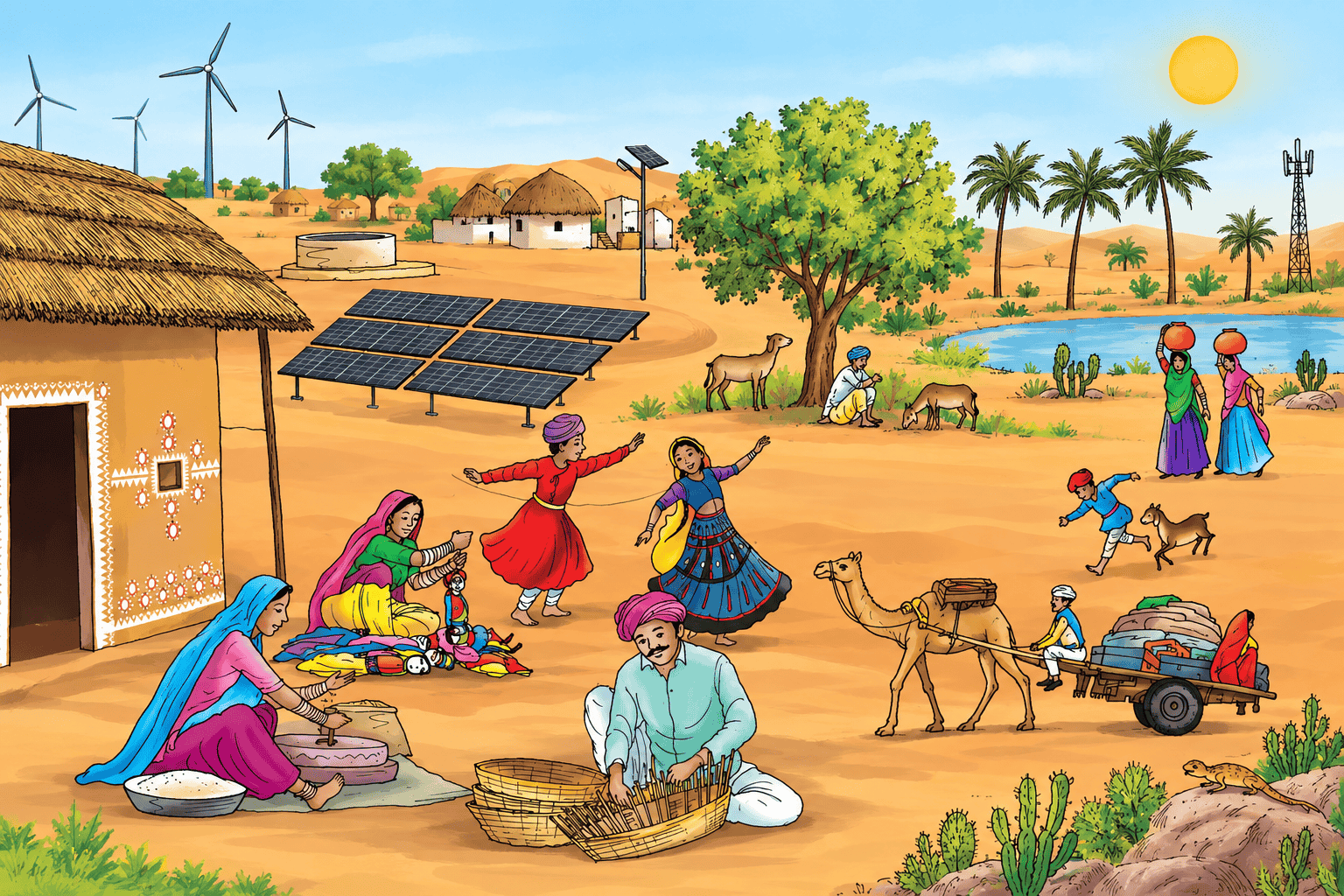
Look at the following picture and write your observations.
1. What kind of land do you see?
Answer:
The picture shows a desert landscape with dry, sandy terrain and limited vegetation.
2. What types of plants do you see in the picture? How are they different from the plants you see in your locality?
Answer:
The plants visible are desert plants like cactus, khejri trees, and babool. They are different from plants in non-desert regions because they have adaptations for surviving with very little water – like thorns instead of leaves, deep root systems and the ability to store water in their stems.
3. Is there something unique about the way people in this village are dressed?
Answer:
People in desert regions wear colorful, loose-fitting clothes. Women wear bright ghaghras (long skirts) with colorful bandhini dupattas, while men wear turbans (pagris) to protect themselves from the hot sun and sand.
4. How do you think people travel in deserts?
Answer:
People travel in deserts using camels (the “ship of the desert”), on foot or in vehicles designed for sandy terrain. Camels are especially useful as they can walk easily on sand and survive for days without water.
5. What do you like the most in the picture?
Answer:
I like the colorful traditional houses made of mud with thatched roofs that help keep the interiors cool despite the hot desert climate.
Page 137 – Find Out
Ask your family members about the folk songs and dances from your region, and note them down in the table below.
| Dance form | Folk music |
|---|---|
| – | – |
| – | – |
| – | – |
Answer:
| Dance form | Folk music |
|---|---|
| Bhangra (Punjab) | Boliyan |
| Garba (Gujarat) | Garba and Dandiya songs |
| Bihu (Assam) | Bihu geet |
| Lavani (Maharashtra) | Lavani songs |
| Ghoomar (Rajasthan) | Rajasthani folk songs |
Page 138 – Discuss
Why do you think water is scarce in the desert?
Answer:
Water is scarce in the desert because:
- Deserts receive very little rainfall throughout the year
- The sandy soil doesn’t retain water well as it quickly seeps deep into the ground
- High temperatures cause rapid evaporation of any surface water
- There are few rivers or natural water bodies in desert regions
- Groundwater is often found very deep below the surface
Page 139 – On the Seashore, with Chandni
Look at the picture given below and write your observations.
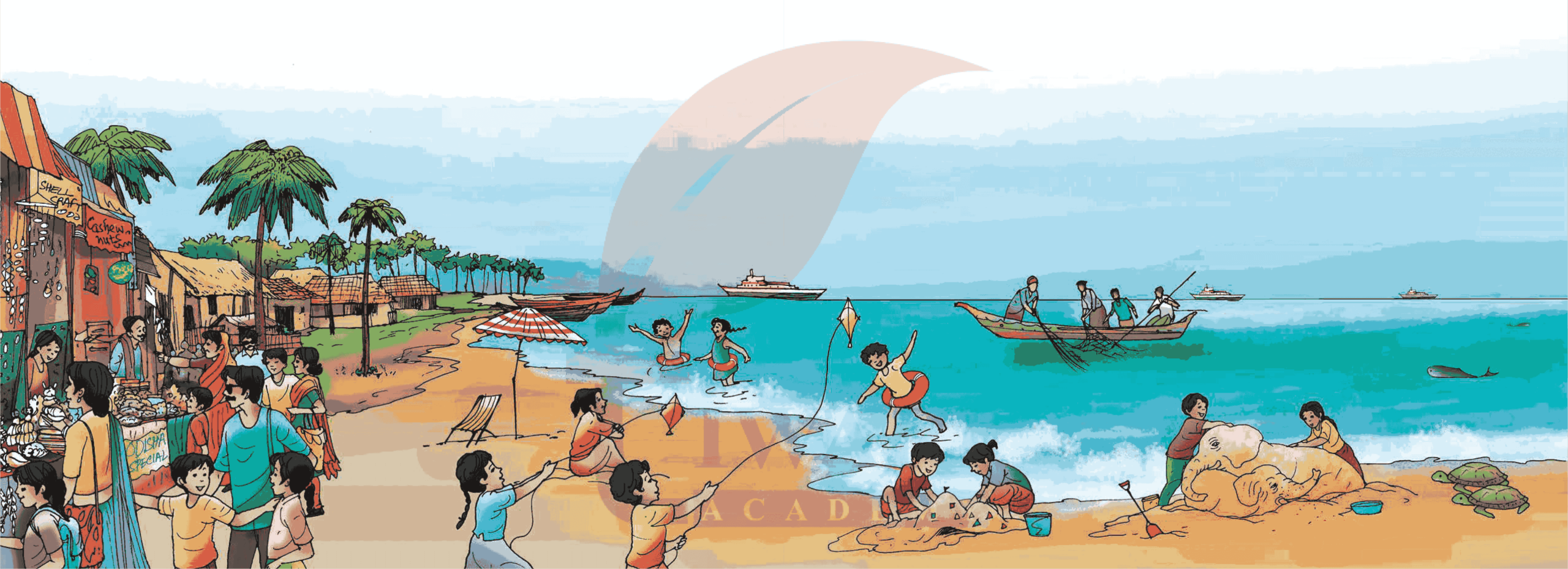
1. List the different kinds of activities that the people are doing.
Answer:
People on the seashore are engaged in activities like fishing, sailing boats, collecting seashells, creating sand art, swimming, playing beach games, buying/selling seafood and handicrafts and enjoying boat rides.
2. What kinds of trees are found near the sea, and how are they different from those in the deserts and plains?
Answer:
Coastal regions typically have coconut palms, casuarina trees and mangroves. These trees are different from desert and plains trees because:
- They can withstand salty water and strong winds
- Mangroves have special root systems that can grow in muddy, oxygen-poor soil
- Coconut trees have flexible trunks that can bend during storms
- These trees provide protection against coastal erosion and cyclones
3. List the fun activities you would like to do on a beach.
Answer:
Fun beach activities include:
- Swimming in the sea
- Building sand castles
- Collecting seashells
- Playing beach volleyball
- Going for boat rides
- Watching sunrise/sunset
- Trying local seafood
- Watching sand art being created
4. What is special about the dresses people wear in the coastal regions?
Answer:
People in coastal regions typically wear light, loose cotton clothes that dry quickly and are comfortable in humid weather. In Odisha’s coastal regions, women often wear traditional Sambalpuri sarees. Fishermen wear minimal clothing while fishing to allow for easy movement in water.
Page 142 – Discuss
1. Write your observations on how the life around a coastal region differs from the life in a desert.
Answer:
Life in coastal regions differs from desert life in many ways:
- Coastal regions have abundant water while deserts have water scarcity
- Coastal areas have rich marine life (fish, crabs, turtles) while deserts have limited wildlife adapted to dry conditions
- Coastal people often depend on fishing while desert people may be herders or practice limited agriculture
- Coastal vegetation includes coconut trees and mangroves that can tolerate salt, while desert plants like cactus store water
- Coastal regions face challenges like cyclones, while deserts face extreme heat and sandstorms
- Houses in coastal areas are built to withstand strong winds, while desert houses focus on keeping cool
2. Why is it important to keep our beaches clean?
Answer:
It’s important to keep beaches clean because:
- It protects marine life from harmful waste and plastic that can injure or kill sea animals
- Clean beaches support local tourism and livelihoods of people who depend on visitors
- It preserves the natural beauty and ecosystem of the coastal environment
- It prevents pollution of the ocean and coastal waters
- It maintains healthy spaces for both humans and wildlife to enjoy
- It prevents the spread of diseases that can occur from accumulated waste
Page 142 – Activity 3
Can you identify these creatures?

Answer:

Page 143 – Discuss
1. What are the adverse effects of a cyclone?
Answer:
Adverse effects of cyclones include:
- Loss of human lives and injuries
- Destruction of homes and buildings
- Damage to crops and agricultural lands
- Uprooting of trees and destruction of forests
- Flooding of low-lying areas
- Contamination of drinking water sources
- Disruption of electricity and communication services
- Loss of livelihood for fishermen and farmers
- Spread of waterborne diseases after flooding
2. How can communities be better prepared for such situations?
Answer:
Communities can be better prepared for cyclones by:
- Creating early warning systems to alert people before cyclones hit
- Building cyclone shelters in vulnerable areas
- Conducting regular evacuation drills
- Constructing stronger houses that can withstand strong winds
- Developing disaster management plans at community level
- Planting trees along coastlines to act as wind barriers
- Storing emergency supplies like food, water and medicines
- Training community members in first aid and rescue operations
- Creating awareness about cyclone safety measures
Page 145
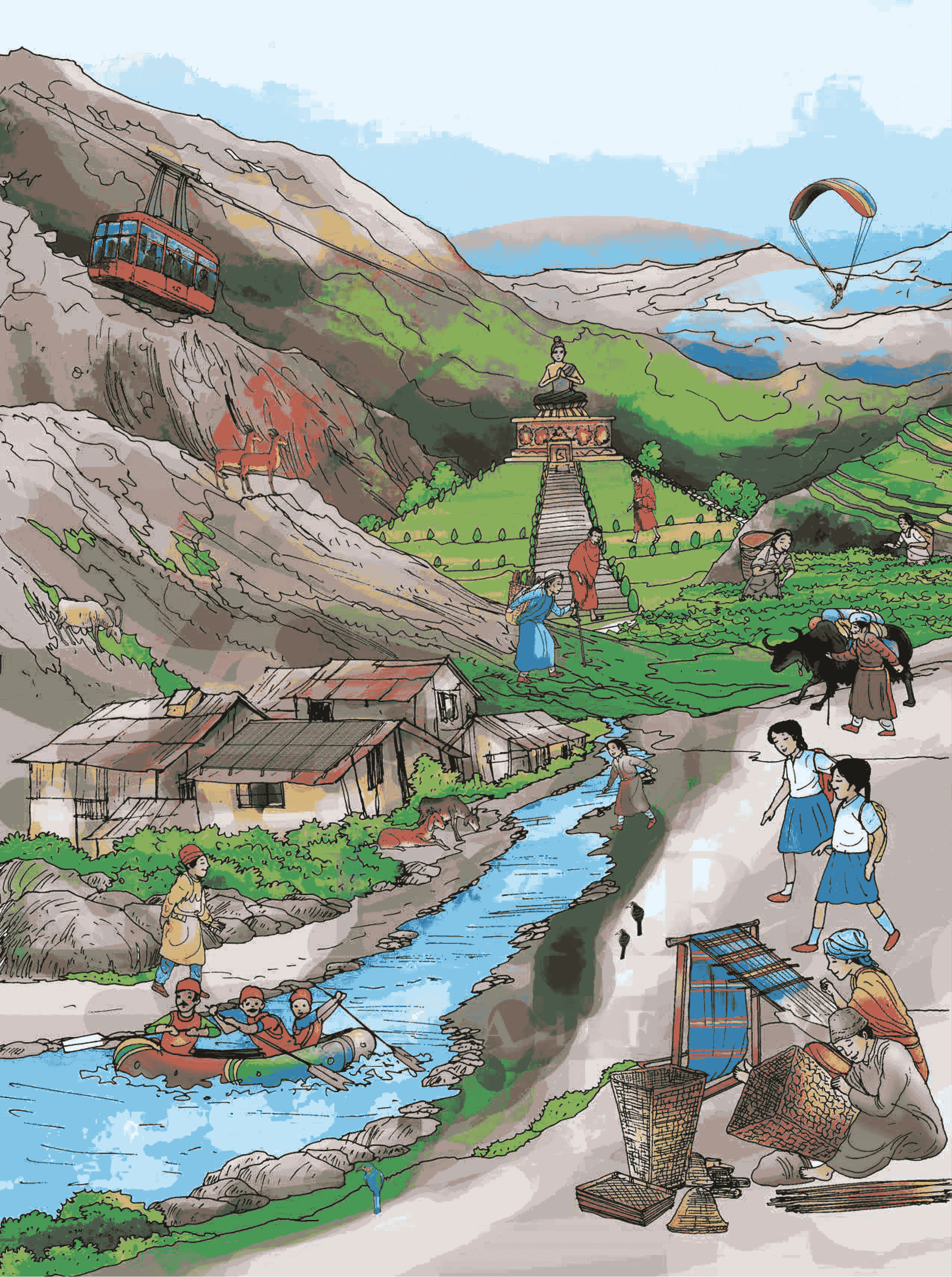
Look at the picture above and write your observations.
1. What type of animals do you see in the picture?
Answer:
In the mountain picture, we can see animals like yaks, mountain goats and birds adapted to mountain life.
2. How are the dresses worn by people living in the mountains different from those worn in your region?
Answer:
People in mountain regions like Sikkim wear warm, woolen clothing such as bakhu (traditional Sikkimese dress), dumdyam and Gunyo cholo. These clothes are thicker, often layered and designed to protect from cold weather. They are different from clothing in plains that is typically made of lighter cotton materials suitable for warmer climates.
3. Describe the trees found in the mountains.
Answer:
Mountain regions have trees like oak, pine, walnut, and chestnut. These trees have needle-shaped leaves (conifers), are evergreen, grow tall and straight, have strong roots to anchor in steep slopes and can withstand cold temperatures and snowfall. Their conical shape helps shed snow easily.
Page 147 – Discuss
1. How does the cold climate in mountain regions affect the way people live and dress?
Answer:
The cold climate in mountain regions affects people’s lifestyle by:
- Making them wear thick, woolen, layered clothing like bakhu and dumdyam
- Requiring houses built with wood and slanting roofs to shed snow
- Influencing their diet to include hot foods like thukpa to keep warm
- Using animals like yaks that can survive in cold conditions
- Developing festivals that celebrate the harsh climate and seasons
- Creating storage methods for food during heavy snowfall periods
2. What traditional clothes are worn in your region? How do they match with the local climate?
Answer:
Traditional clothes in plains regions include cotton kurta-pajama, sarees, and salwar kameez. These light, breathable fabrics are perfect for the hot and humid climate, allowing air circulation and sweat absorption. During winter, people add woolen shawls and sweaters for warmth.
3. Why do you think certain trees, like pine and oak, grow better in the mountains?
Answer:
Pine and oak trees grow better in mountains because:
- They have evolved to withstand cold temperatures and snowfall
- Their needle-shaped leaves minimize water loss in dry mountain air
- The conical shape helps snow slide off easily, preventing branch breakage
- They have strong root systems to anchor in steep mountain slopes
- They can photosynthesize even during short growing seasons
- They’re adapted to the thin, rocky soil found in mountain regions
4. How do animals like yak survive in the cold climate of Sikkim?
Answer:
Yaks survive in cold mountain climates through adaptations like:
• Thick, woolly coats that provide insulation against extreme cold
• Long hair that covers their bodies, including their legs
• A compact body shape that conserves heat
• Strong hooves that can navigate rocky, snowy terrain
• The ability to digest tough mountain vegetation that other animals cannot eat
• Special blood circulation that allows them to thrive at high altitudes with less oxygen
• The ability to lower their metabolic rate during harsh winter months
Page 148 – Discuss
1. Why do you think traditional houses in Sikkim are built with wood and have slanting roofs?
Answer:
Traditional houses in Sikkim are built with wood and have slanting roofs because:
- Wood provides better insulation against cold compared to stone or brick
- Slanting roofs help snow and rainwater slide off easily, preventing accumulation and roof collapse
- Wood is flexible and can withstand minor earth tremors common in mountain regions
- These materials are locally available in forest-rich mountain areas
- The design helps maintain warmth inside during cold weather
- Elevated wooden structures help protect from dampness and small animals
2. Does your house have any feature that is similar to the houses in the mountains?
Answer:
My house has a sloping roof similar to mountain houses, which helps during monsoon season to drain rainwater quickly. We also have wooden windows that provide good insulation, similar to mountain homes.
3. Why are landslides common in mountains during the rainy season?
Answer:
Landslides are common in mountains during the rainy season because:
- Heavy rainfall saturates the soil, making it heavier and unstable
- Water seeps between rocks and soil layers, creating slippery surfaces
- Steep slopes become more vulnerable when wet
- Water can erode the base of slopes, removing support for the land above
- Deforestation reduces the root systems that would otherwise hold soil in place
- Construction activities can destabilize natural slopes
4. What do you think can be done to keep people safe during the landslides?
Answer:
To keep people safe during landslides:
- Early warning systems can alert communities before landslides happen
- Building stronger retaining walls to hold back unstable slopes
- Planting trees with deep roots to hold soil in place
- Constructing houses away from landslide-prone areas
- Creating evacuation plans and emergency shelters
- Building proper drainage systems to channel rainwater safely
- Regular monitoring of high-risk areas during rainy seasons
- Educating communities about warning signs of impending landslides
5. What can communities do to help people who lose their homes or get affected by natural disasters?
Answer:
Communities can help people affected by natural disasters by:
- Setting up temporary shelters for those who lost homes
- Organizing collection drives for food, clothes and essential supplies
- Providing medical assistance to injured people
- Creating community funds to help rebuild homes
- Offering emotional support and counseling services
- Helping with paperwork for government relief programs
- Volunteering labor to help clear debris and rebuild structures
- Supporting affected children by arranging continued education
- Sharing skills and resources to help affected families restart livelihoods
Page 149 – Life in my Landform
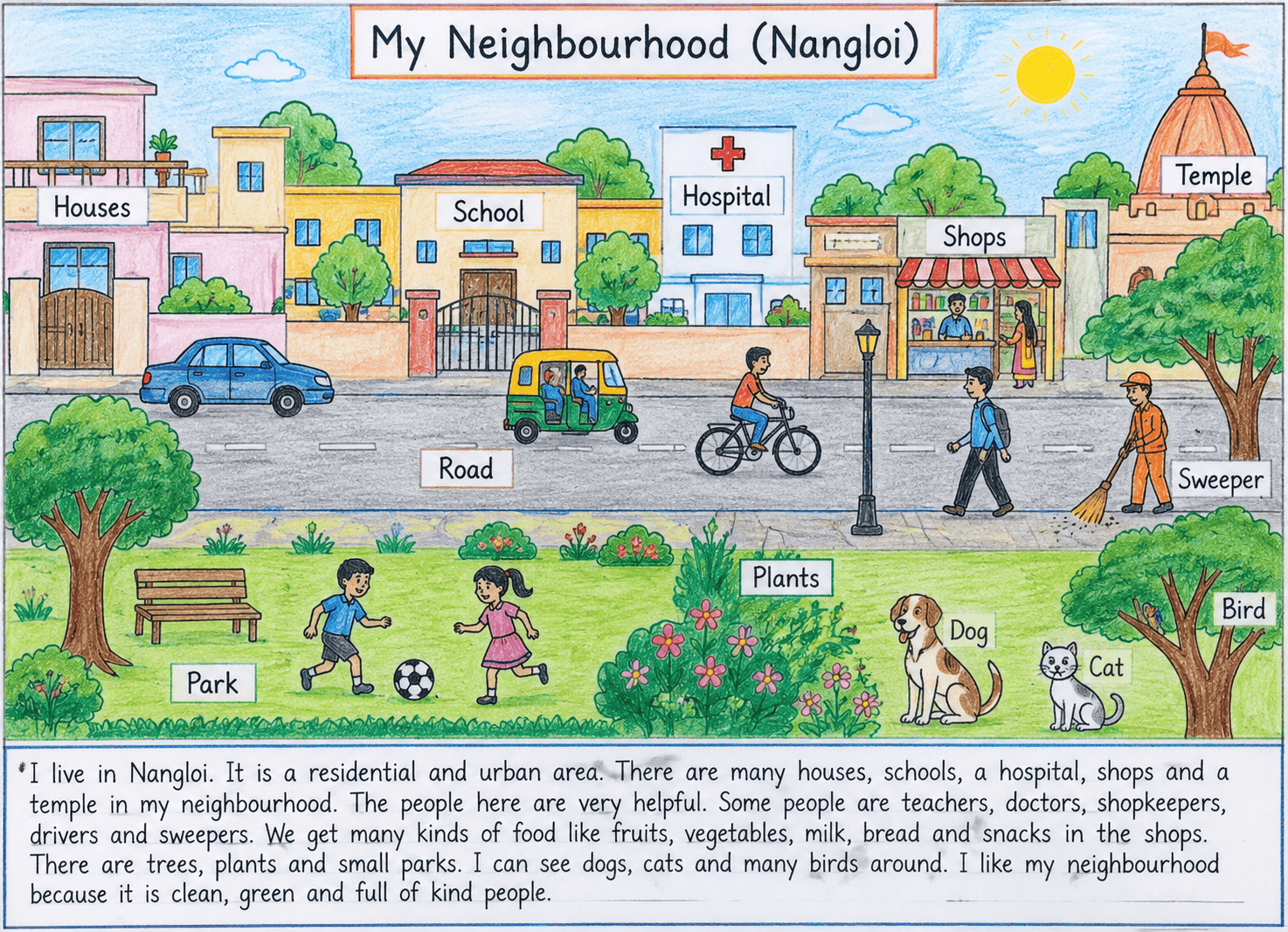
Draw the landform around you in the space given below. Name the area, the type of landform, some interesting features of the people, their professions, food, houses, plants and animals.

Answer:
Page 150 – Let Us Reflects
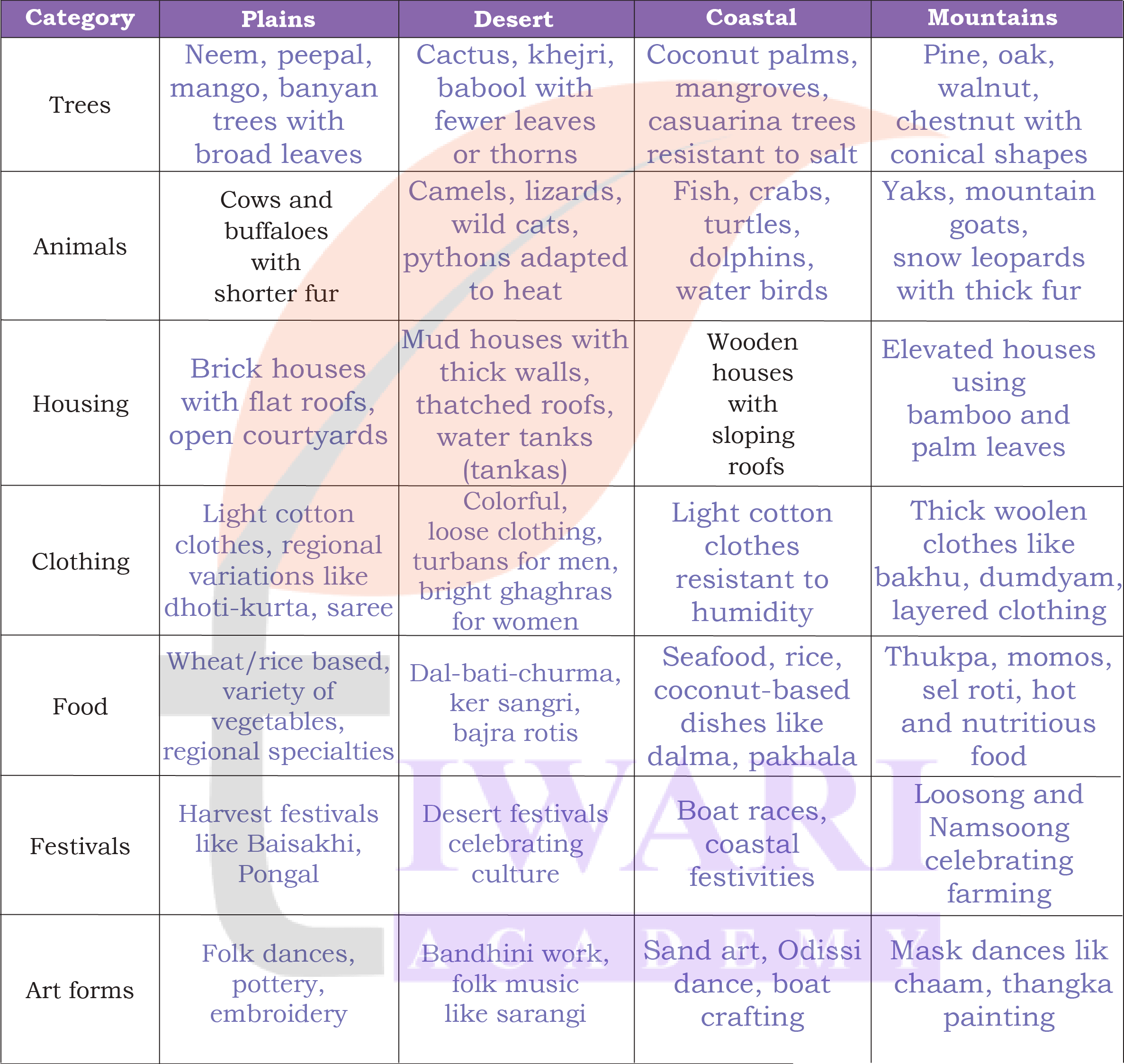
1. Compare life in the mountains and plains by capturing the differences in trees, animals, houses, clothes, food, festivals and art forms.
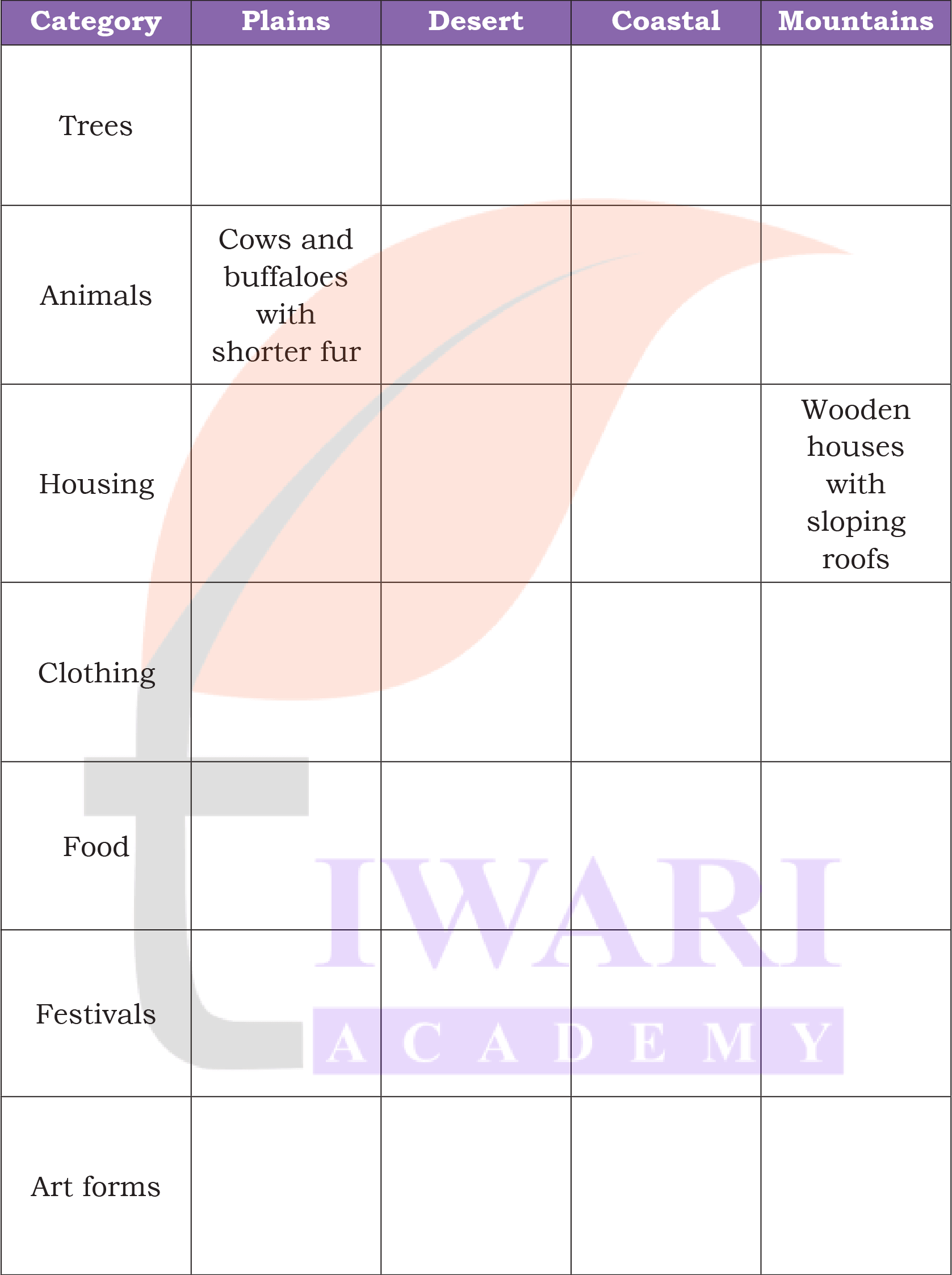
Answer:
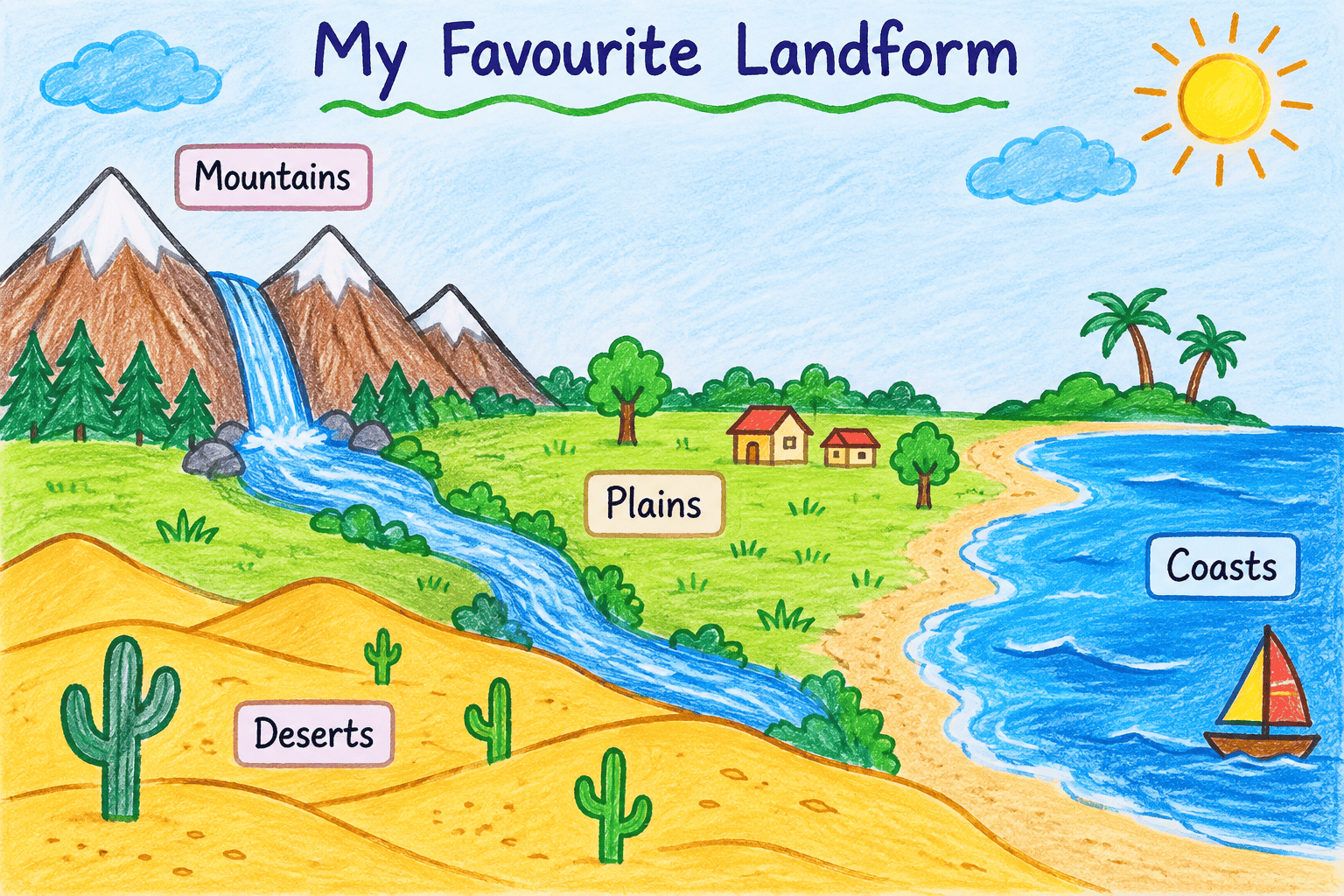
2. Design and draw a landform by combining your favourite features from mountains, plains, coasts, and deserts.

Answer:
a. What made you choose different features for your landform?
Answer:
I chose mountains for their beauty and cool climate, plains for growing food, coastal areas for beaches and seafood, and desert elements for unique plants like cactus. Each feature makes the landform special and provides different benefits to people living there.
b. How does each feature benefit people, animals or plants?
Answer:
• Mountain features provide cool climate for growing fruits and a habitat for unique animals
• Plains areas allow for farming and growing food for the community
• Coastal features provide seafood and beautiful beaches for recreation
• Desert areas have unique plants that have special adaptations and medicinal properties
c. What difficulties might people face living in your landform?
Answer:
People in my combined landform might face challenges like:
• Difficulty traveling between very different terrains
• Need for different types of clothing for different areas
• Preparing for different natural disasters like floods, landslides, and cyclones
• Managing water resources between water-rich coastal areas and water-scarce desert regions
• Adapting houses to different weather conditions in different parts of the landform
Class 4 EVS Chapter 9 Question Answers with Important Extra Questions