


by Tiwari Academy Team
NCERT Solutions for Class 4 EVS Our Wondrous World Chapter 3 Nature Trail of Unit 2 Life Around Us and A Day with Nandu for Session 2026-27. It provides clear, child-friendly explanations, activities and answers based on the latest NCERT syllabus. This chapter helps students understand plants, animals, insects and the web of life through engaging nature-based learning. These solutions are ideal for exam preparation, homework help and concept clarity, with simple language, structured answers and activity-based explanations aligned with Class 4 EVS learning outcomes.
Class 4 EVS Chapter 3 Nature Trail – Unit 2 Life Around Us Answers
Page 37
Write
1. Can you think of rules that should be followed while you are in a zoo or a forest?
For example,
(a) We should not feed birds.
(b) ………………………………
(c) ………………………………
(d) ………………………………
Answer:
(a) We should not feed birds.
(b) We should not tease animals.
(c) We should not pluck flowers or leaves.
(d) We should not throw garbage.
Now, look at the safety rules given below and match them with your list. Have you missed out any of the rules given?
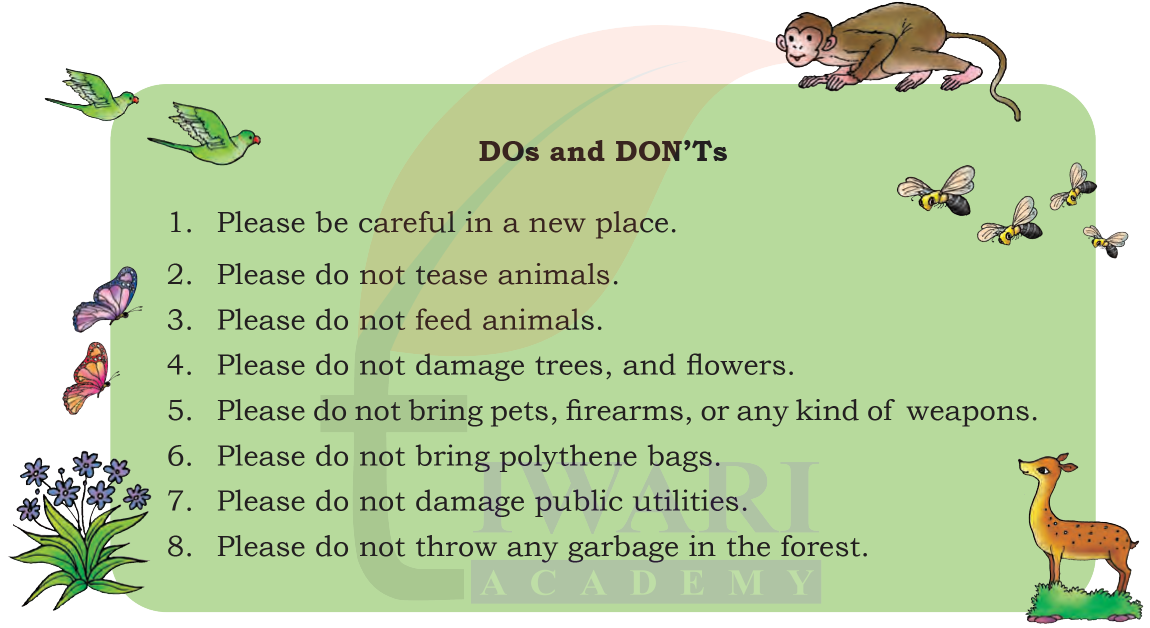
Answer:
Matched rules:
Do not tease animals
Do not feed animals
Do not damage trees and flowers
Do not throw garbage
Missed rules:
Be careful in a new place
Do not bring pets, firearms or weapons
Do not bring polythene bags
Do not damage public utilities.
Page 37
Discuss
Why are these rules important to be followed?
Answer:
These rules are important to follow because they help protect both the animals and visitors.
The rules ensure the natural habitat remains undisturbed, animals stay healthy with their natural diet and everyone stays safe during the visit.
Page 39
Activity 1
Animals in the Forest
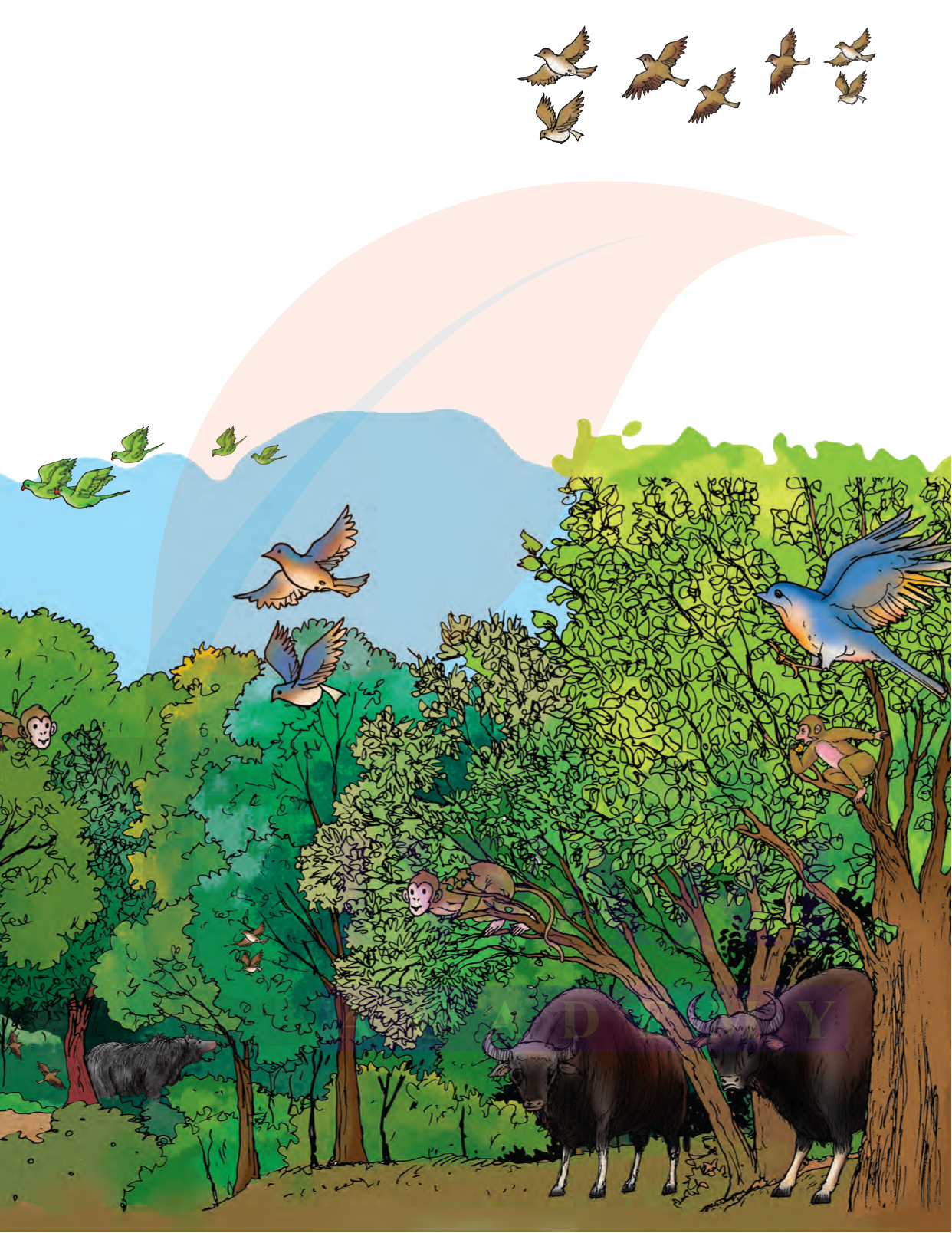
Look closely at the picture and identify the animals. You may take help from your teacher.
Divide them into two categories:
1. Animal on land:
2. Birds in the sky:
Answer:
1. Animals on land: Deer, Monkeys, Bison(wild buffalo), Bear, Nilgai.
2. Birds in the sky: Parrots, Bluebirds, Sparrow(Small Brown Birds).
Page 40
Write
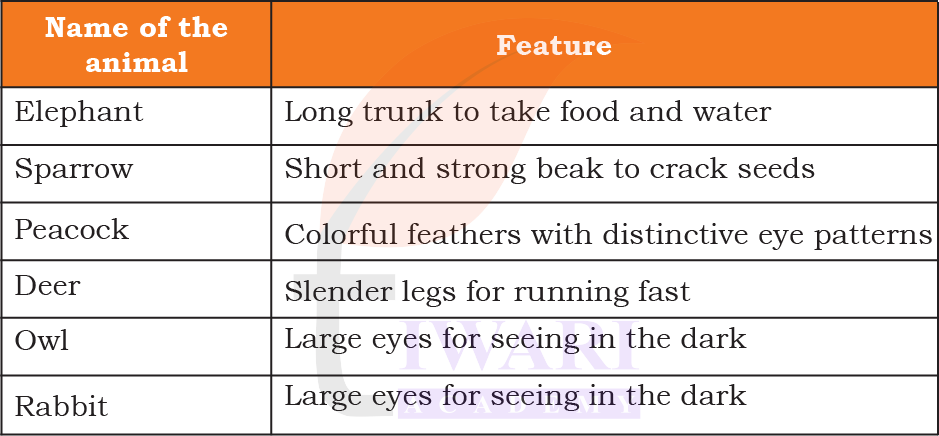
Name some animals including the birds that you have seen. Write any one feature of each of them.
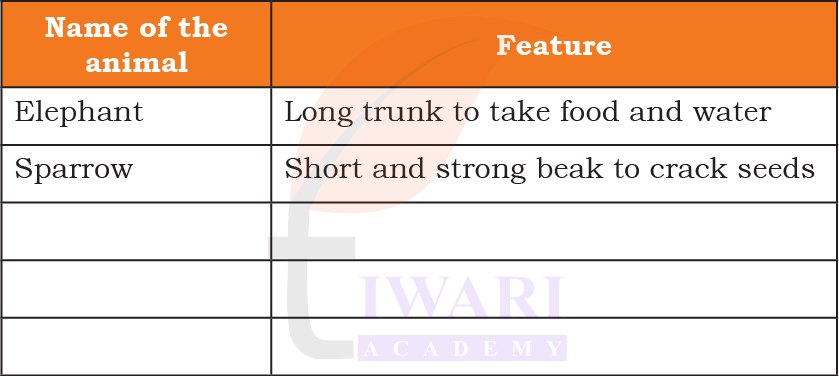
Answer:
Indian Giant Squirrel is a big, red-colored squirrel found in Pachmarhi and some other places.
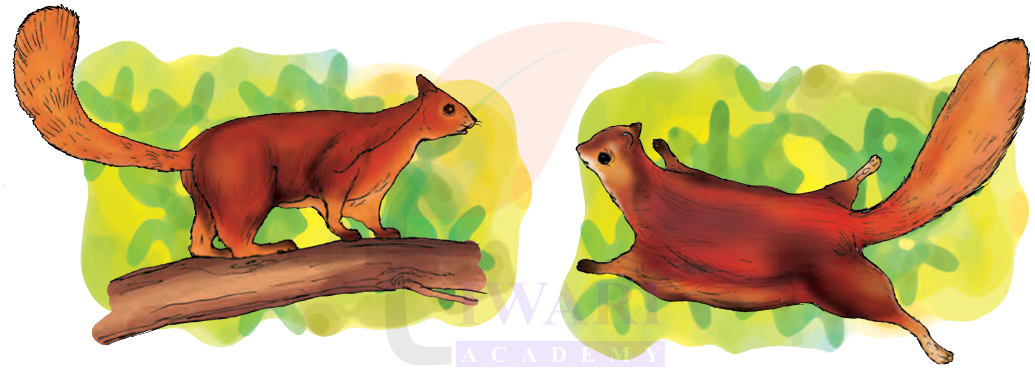
Compare its features with the squirrels you see in your area.
Answer:
► The Indian Giant Squirrel is much larger than common squirrels found in urban areas.
► While common squirrels are usually gray or brown in color, the Indian Giant Squirrel has a striking reddish coat.
► The Indian Giant Squirrel also has a much longer tail compared to common squirrels and primarily lives in dense forests, while common squirrels adapt well to urban environments.
NCERT Class 4 EVS Nature Trail Questions and Answers
Page 42
Discuss with students the difference between animals which look similar, like pigeon and dove, crocodile and alligator and others.
Answer:
► Pigeon vs. Dove: Pigeons are usually larger with stubbier tails, while doves are smaller, more slender and often seen as symbols of peace.
► Crocodile vs. Alligator: Crocodiles have a V-shaped snout and you can see their bottom teeth when their mouth is closed alligators have a wide U-shaped snout.
► Leopard vs. Cheetah: Leopards have rosette spots (circles with a center), while cheetahs have solid black dots and tear marks running down their faces.
► Frog vs. Toad: Frogs have smooth, slimy skin and live near water toads have bumpy, dry skin and prefer living on land.
► Butterfly vs. Moth: Butterflies usually fly during the day and rest with their wings closed upward, moths are active at night and rest with their wings flat.
Page 43
Activity 2
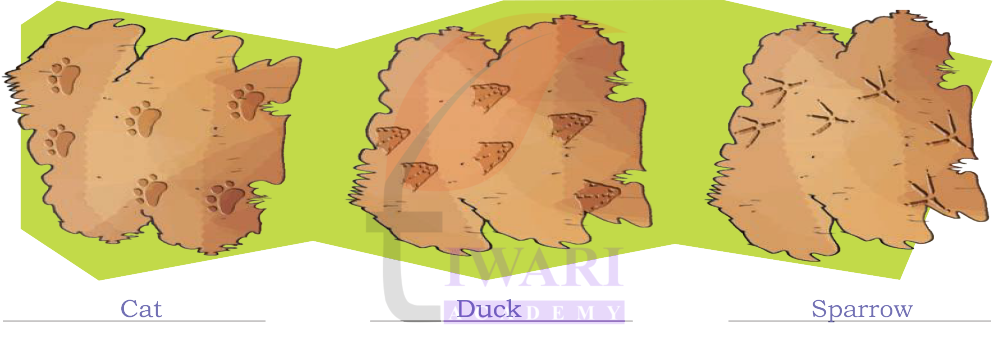
1. Look at the footprints and guess the name of the animals that you think must have come to the pond to drink water.
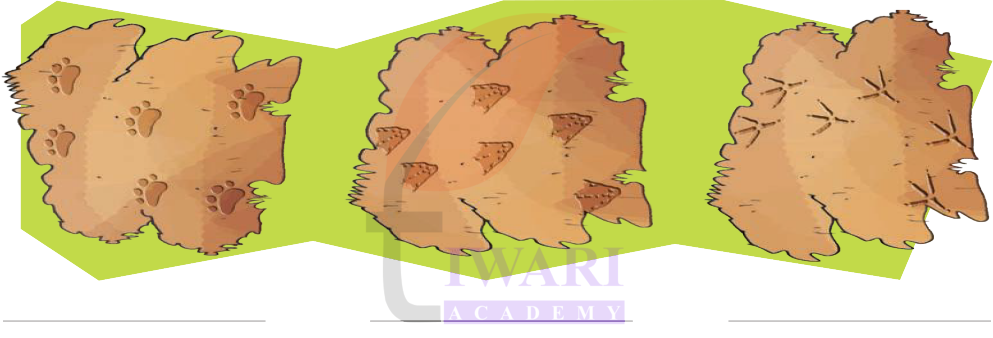
Answer:
► Left: Dog
The footprints show rounded paw prints with pads and toes, which are typical of a dog. Dogs often come to ponds to drink water.
► Middle: Duck These footprints have three forward toes with webbing, which is characteristic of ducks. Ducks commonly visit ponds and lakes.
► Right: Pigeon
The footprints show three toes pointing forward and one pointing backward, a classic bird track. This pattern matches a pigeon, which may come to the pond to drink water
Page 43 – Activity 2
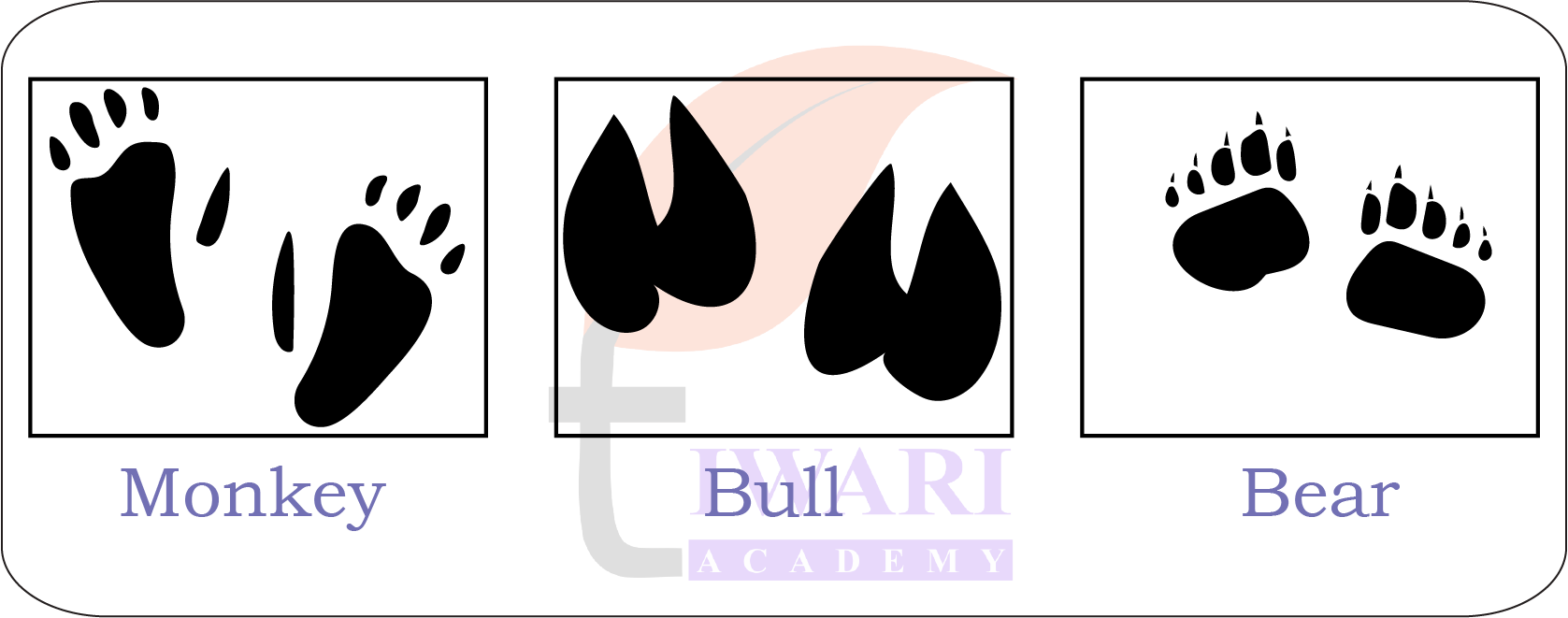
2. Observe and draw the footprint of any animal in the space given here.

Answer:
Page 44 – Write
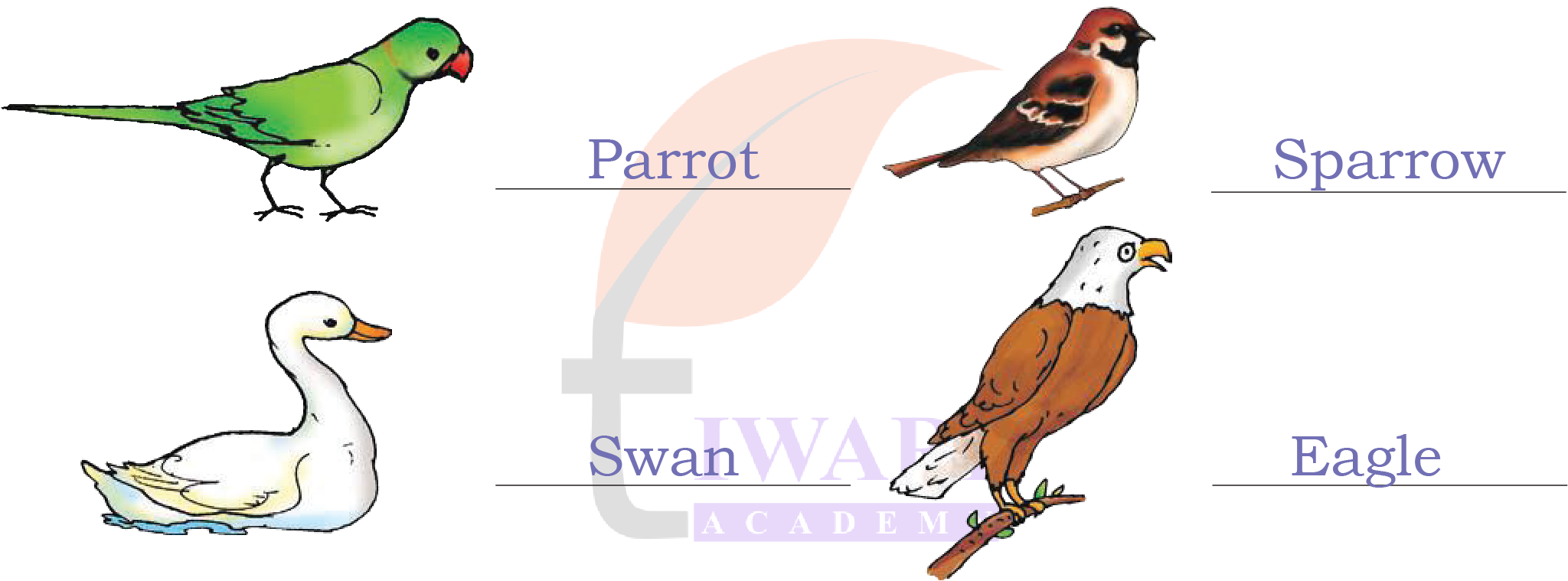
Name the birds shown below.
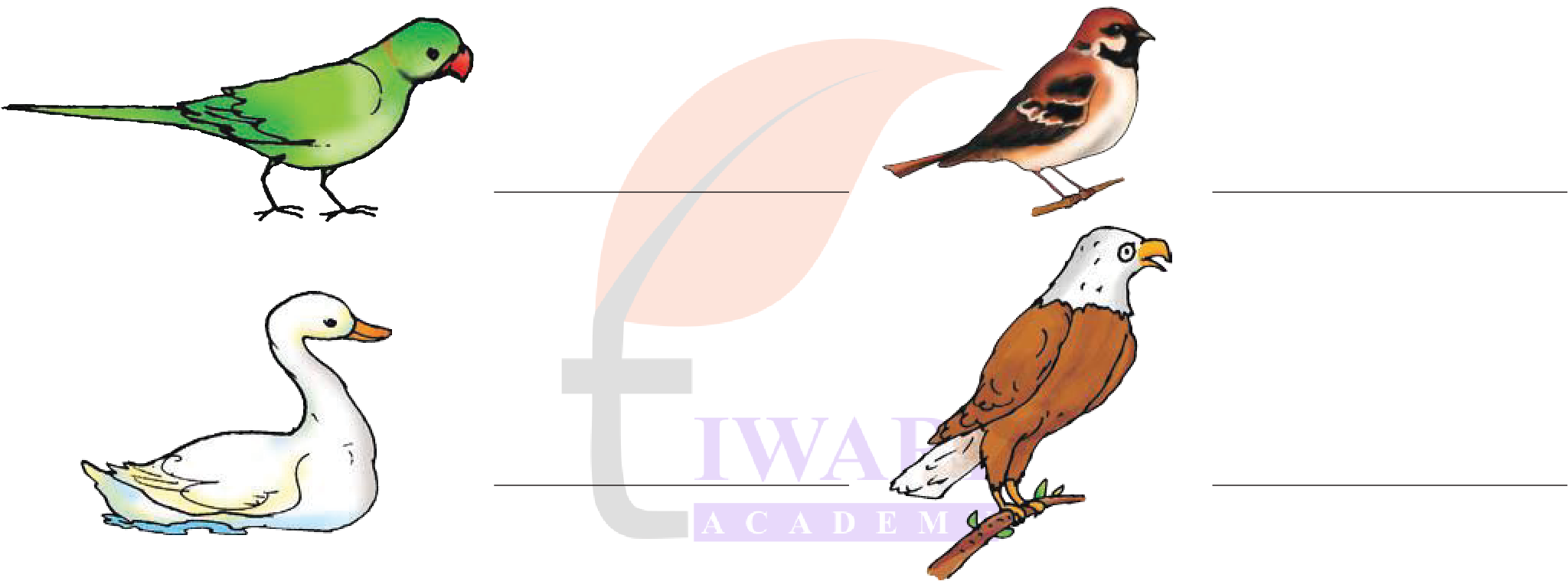
Answer:
Page 45 – Activity 3
Take different food items like grains, berries, fruits, nuts, etc., in a plate. Try to pick these food items using a spoon, a toothpick or a pair of sticks. Fill the table below with appropriate tool(s) for picking each of these food items.
| Food item | Appropriate tool(s) |
|---|---|
| Grains | |
| Berries | |
| Nuts | |
| Pieces of fruits |
Answer:
| Food item | Appropriate tool(s) |
|---|---|
| Grains | Spoon (like seed-eating birds with short, strong beaks) |
| Berries | Toothpick (like birds with pointed beaks for picking berries) |
| Nuts | Pair of sticks (like birds with strong, curved beaks for cracking nuts) |
| Pieces of fruits | Spoon or pair of sticks (like birds with broader beaks for eating fruits) |
Page 47 – Activity 4
1. Bird Diary
(a) Go near a tree.
(b) Close your eyes and listen to the sounds of different birds.
(c) Now open your eyes and focus on one bird at a time.
(d) Observe how it moves, what it eats, and where it sits.
(e) Write your observations in a Bird Diary!
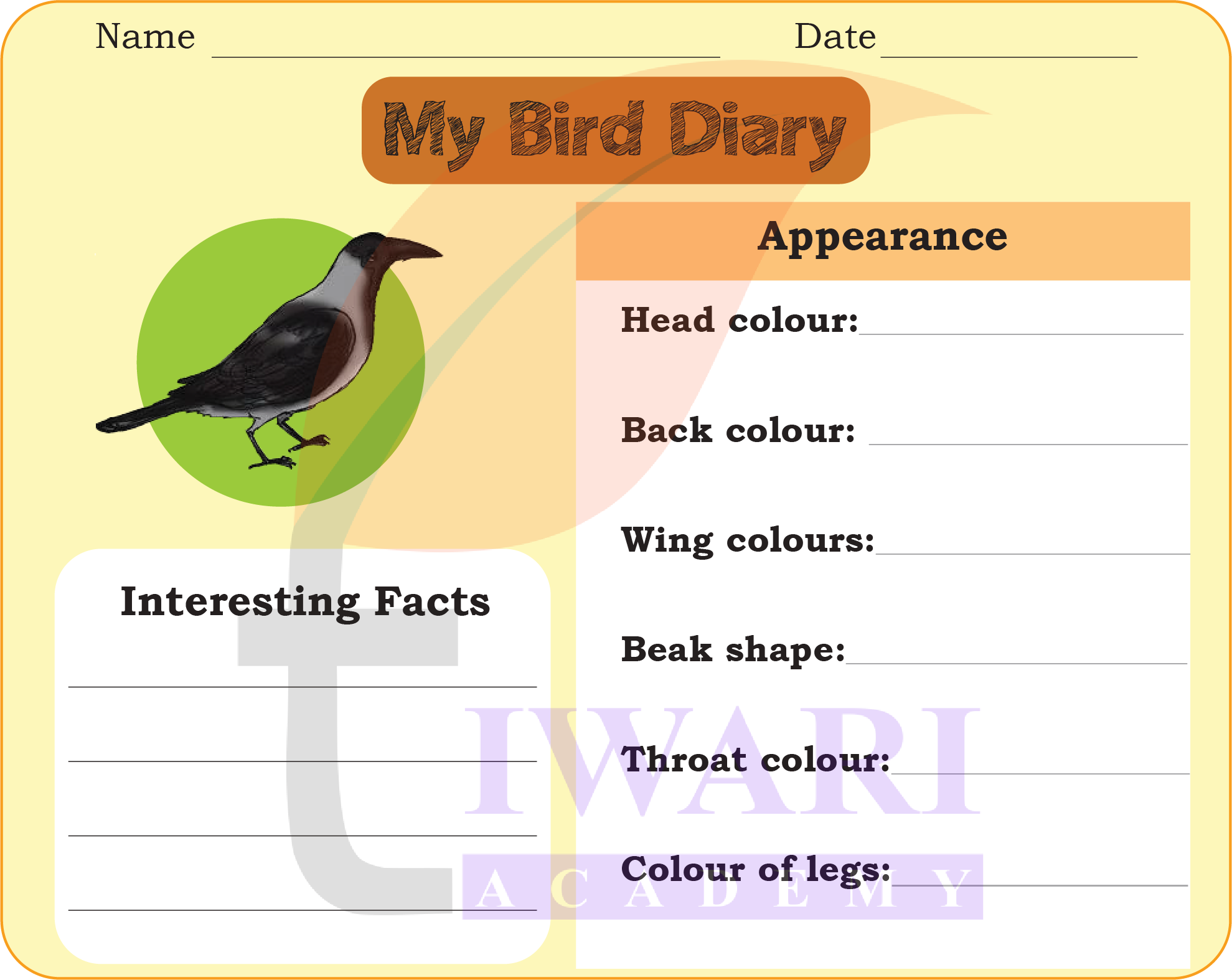
Answer:
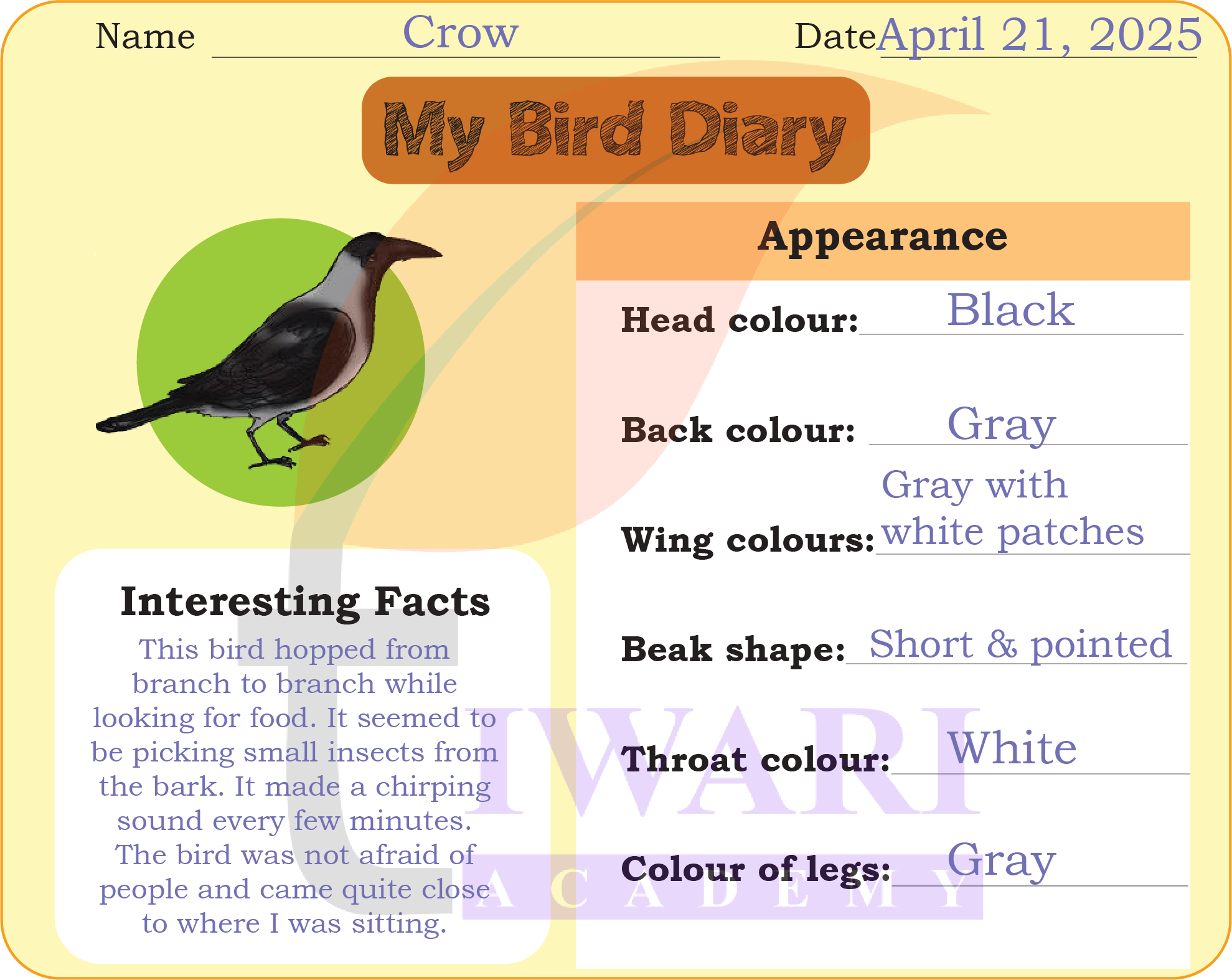
2. List the animals which live in and around water bodies. Fill in the table given below.
| Name of the animal | Movements |
|---|---|
| Fish | Swims |
| Crab | Walks |
| Frog | Jumps |
| Turtle | |
| Crocodile | |
| Snakes |
Answer:
| Name of the animal | Movements |
|---|---|
| Fish | Swims |
| Crab | Walks |
| Frog | Jumps |
| Turtle | Swims and crawls |
| Crocodile | Swims and crawls |
| Snakes | Slithers |
| Duck | Swims and waddles |
| Heron/Egret | Wades and flies |
| Kingfisher | Dives and flies |
Page 49 – Write
1. What are the insects that you find at your home and in your surroundings?
Answer:
Common insects found at home and in surroundings include:
- Ants
- Mosquitoes
- Houseflies
- Cockroaches
- Butterflies
- Bees
- Grasshoppers
- Ladybugs
- Spiders
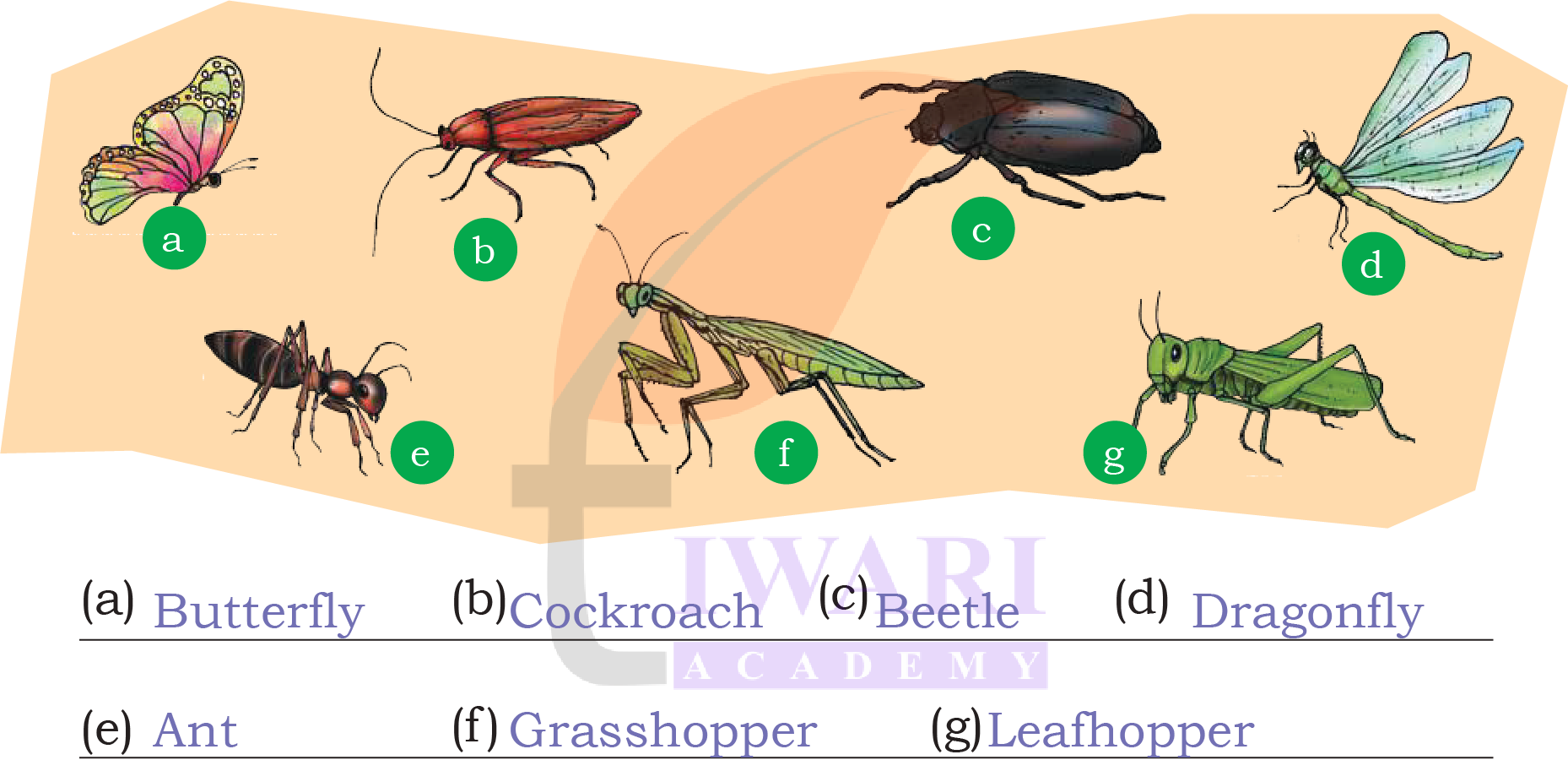
2. Name the insects shown below.
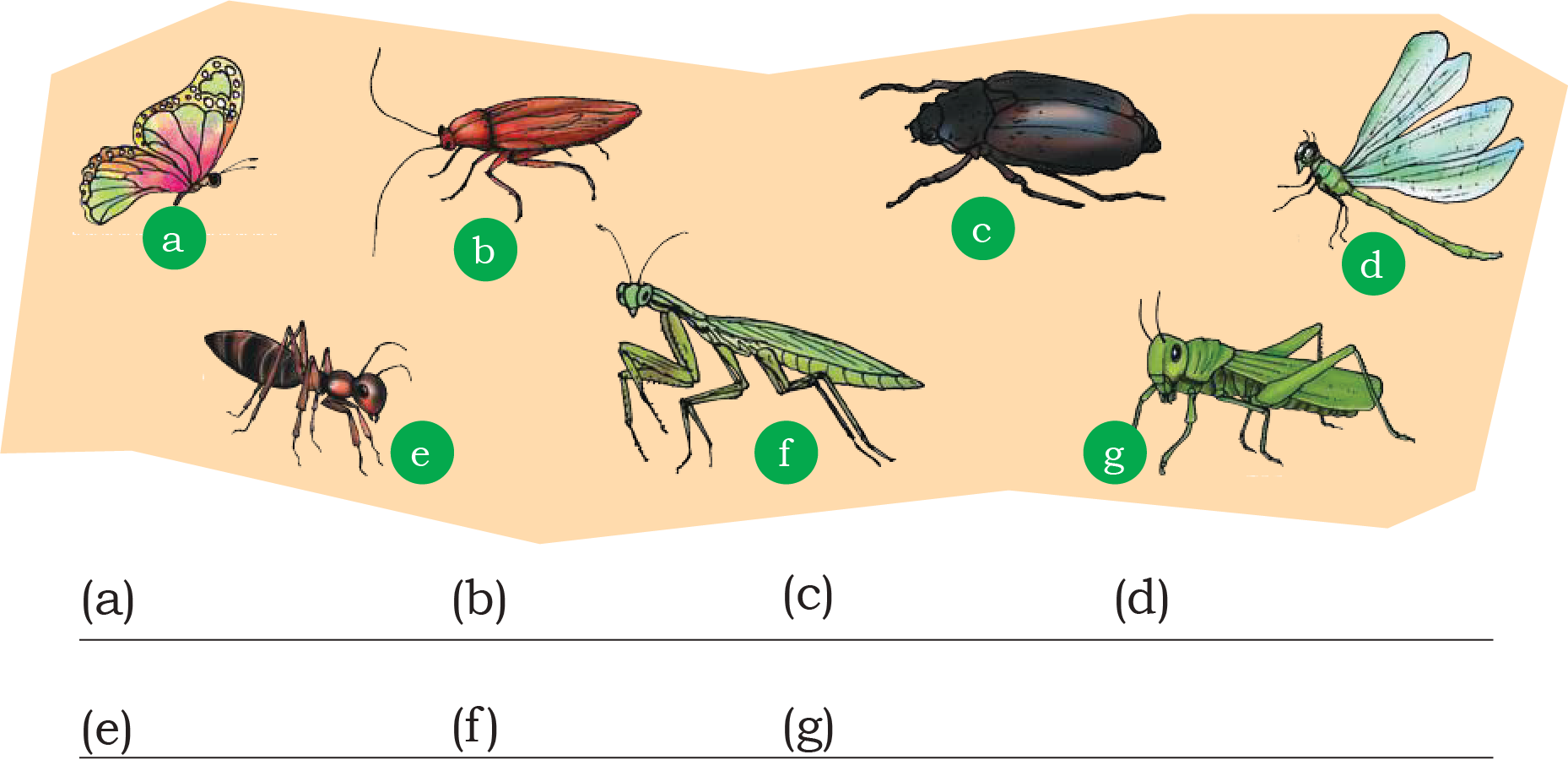
Answer:
Page 50 – Activity 5
1. During the visit to the nature trail, students collected leaves from different plants. Help them identify the plants based on the pictures of the leaves given below.
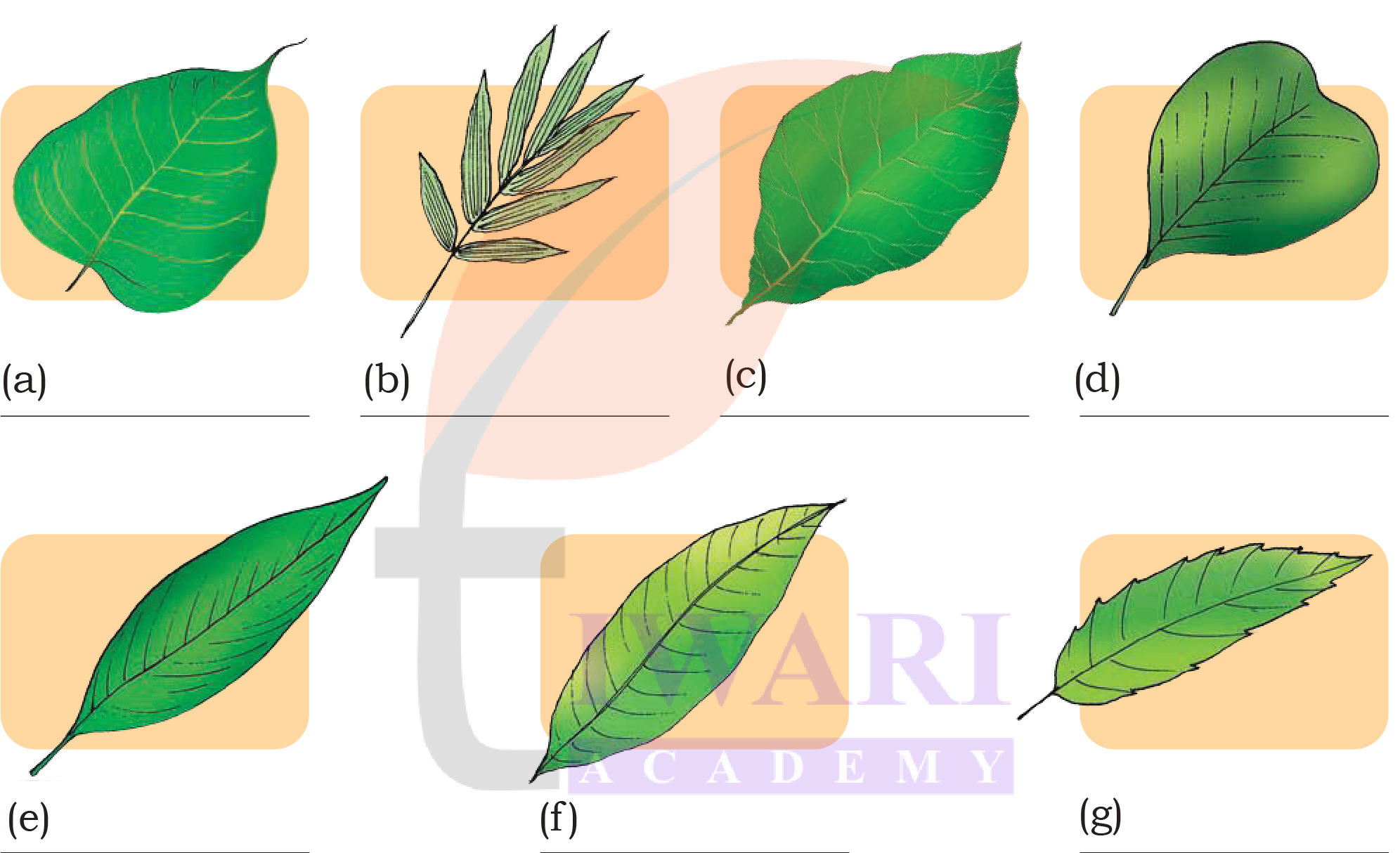
Answer:
(a) Peepal
(b) Bamboo
(c) Guava
(d) Banyan
(e) Eucalyptus (Gum)
(f) Mango
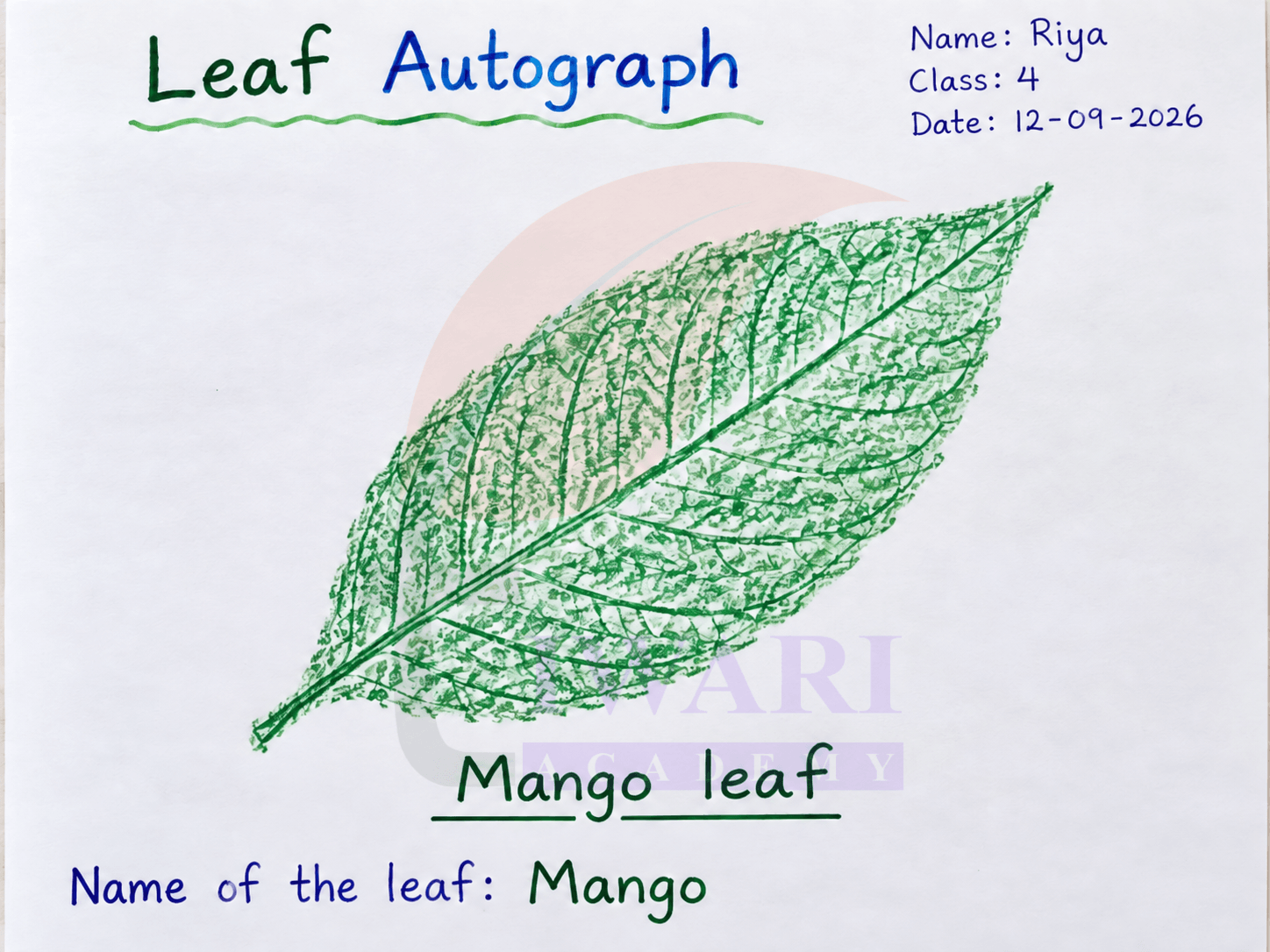
(g) Neem
2. Observe the leaves of different plants in your neighbourhood and fill the table.
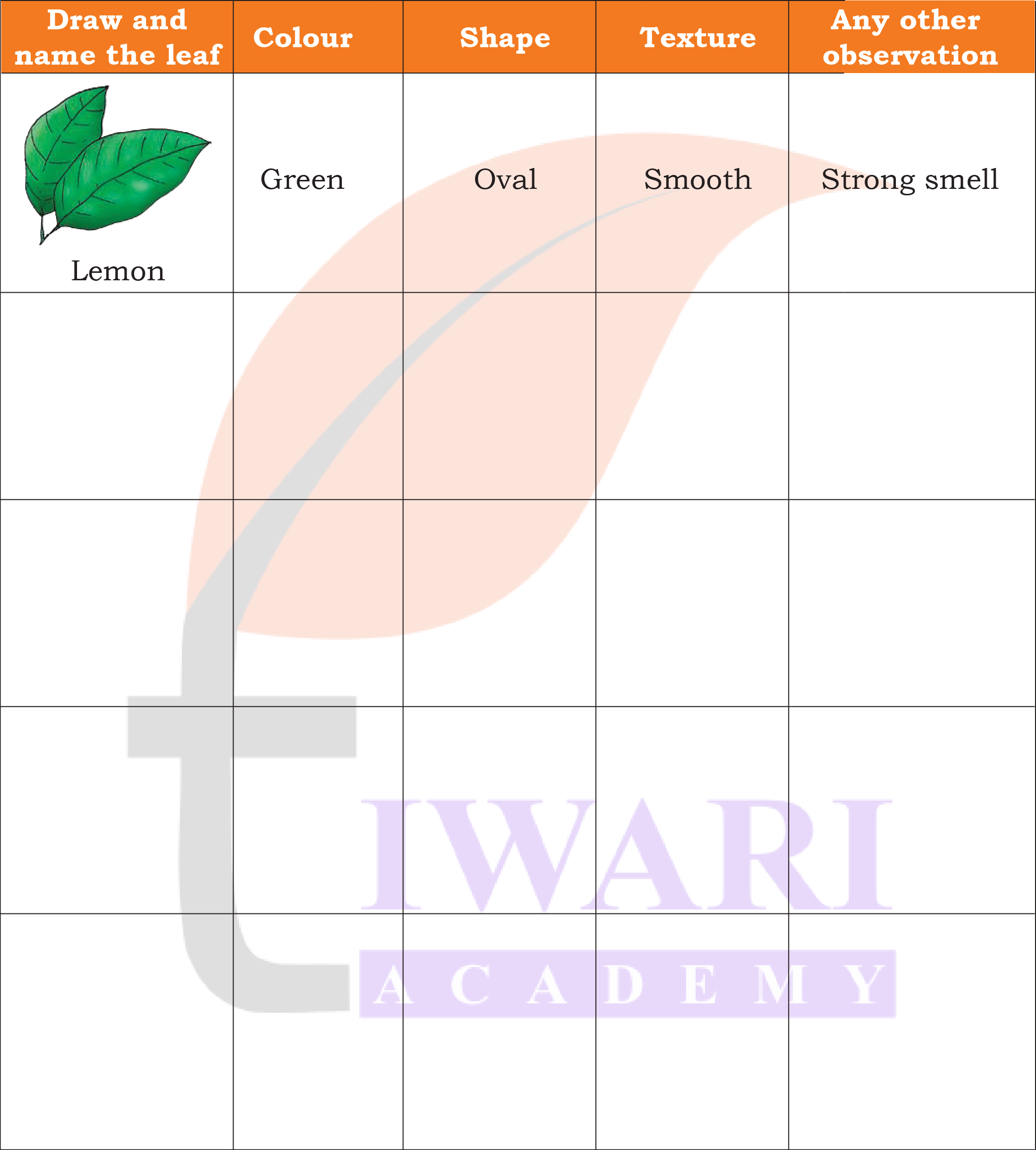
Answer:
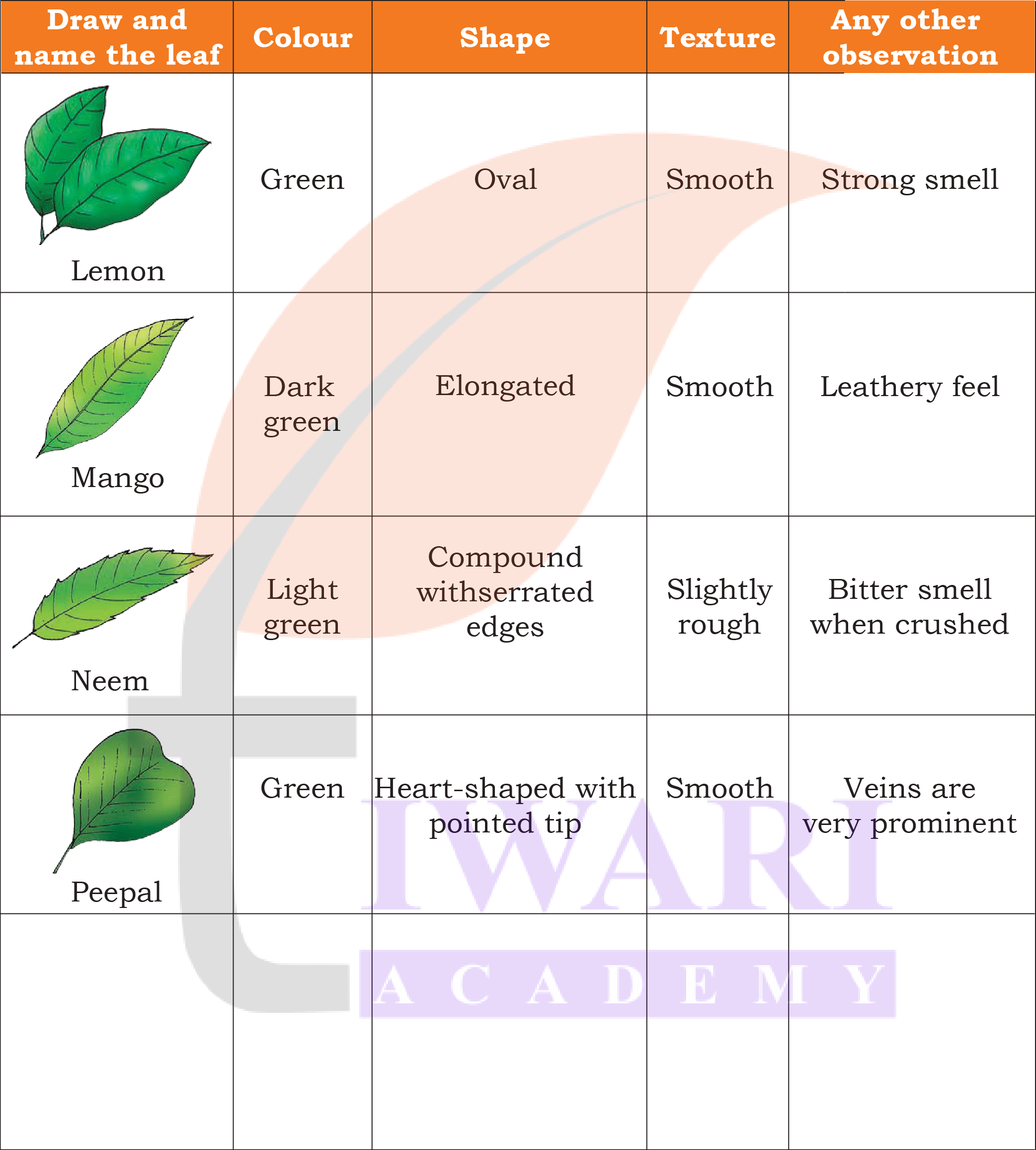
Page 52 – Leaf Autograph
Place a leaf on a notebook with the rough, vein-side facing up. Cover it with a plain sheet of paper. Rub a crayon over the paper, and watch the leaf’s shape appear like magic! Try this with different leaves and see how each one has its own unique pattern. Name the plant or tree to which the leaf belongs.
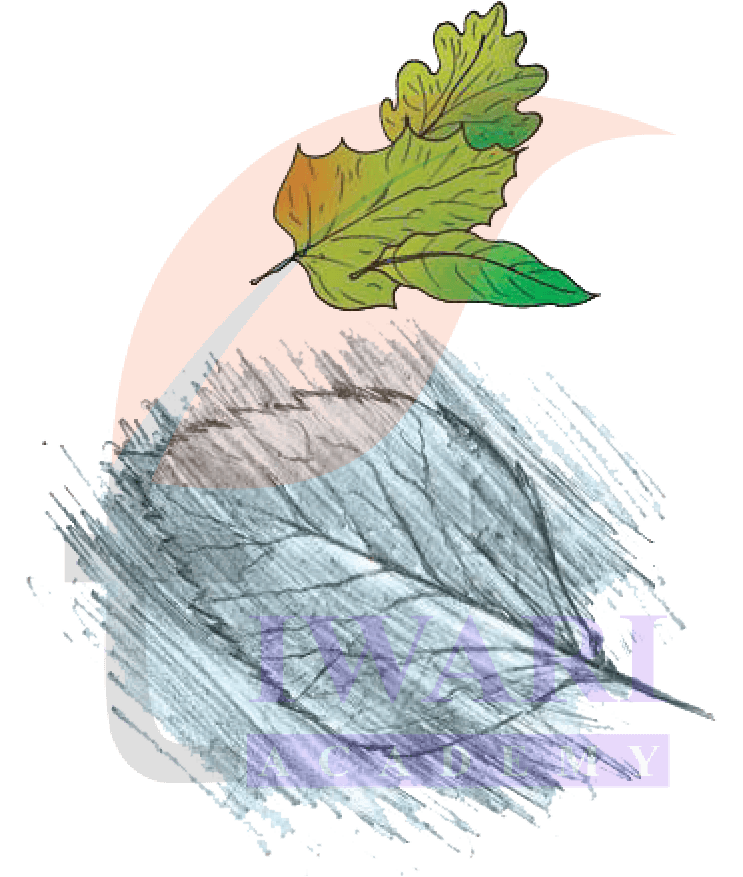
Answer:
Page 55 – Let Us Reflect
1. Which animal would you love to be? What special abilities would it give you?
Answer:
I would love to be an eagle because it would give me the ability to fly high in the sky and have incredible eyesight. Eagles can spot prey from great distances, which would be an amazing superpower. I could soar above mountains and rivers, feeling the freedom of flying through the clouds. Eagles are also known for their strength and majesty, which I find inspiring.
2. How do you think different plants and animals are dependent on each other?
Answer:
Plants and animals depend on each other in many ways:
- Plants provide food for herbivores like deer and rabbits
- Herbivores become food for carnivores like tigers and lions
- Plants provide oxygen for animals to breathe
- Animals provide carbon dioxide for plants to make food
- Insects help in pollination of flowers
- Birds help in seed dispersal
- Some animals provide protection to plants from other animals
- Decomposers like worms break down dead plants and animals to return nutrients to the soil
This creates a “web of life” where each living thing plays an important role in sustaining others.
3. What is the role of a nature scientist?
Answer:
A nature scientist studies plants, animals and their environments. Their roles include:
- Observing and documenting different species
- Studying how plants and animals adapt to their environments
- Discovering new species and understanding their characteristics
- Researching how different species interact with each other
- Monitoring changes in ecosystems and biodiversity
- Finding solutions to protect endangered species
- Educating people about the importance of nature conservation
- Advising on sustainable practices to protect natural habitats
Nature scientists like Abha Didi help us understand and appreciate the wonders of nature.
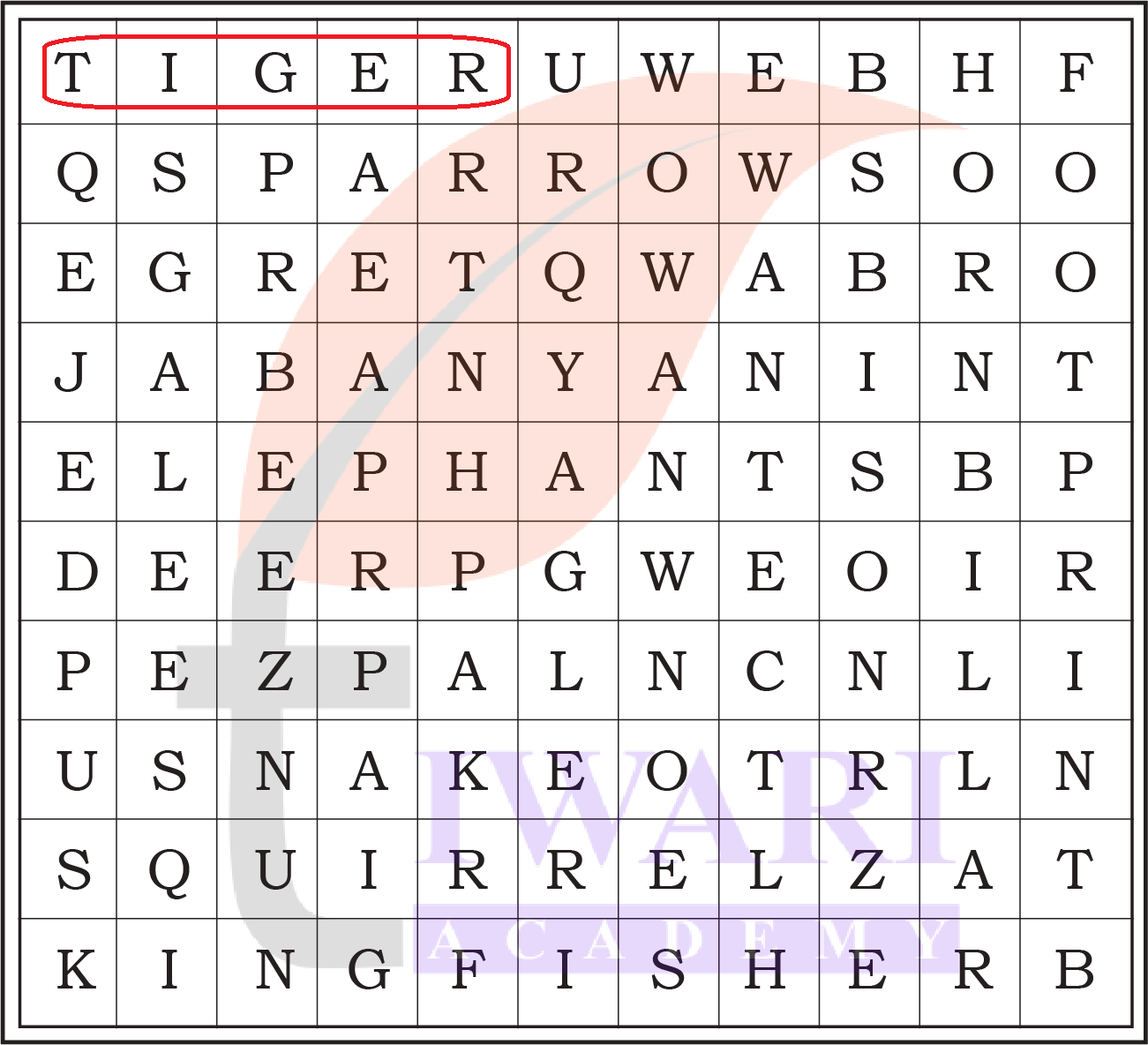
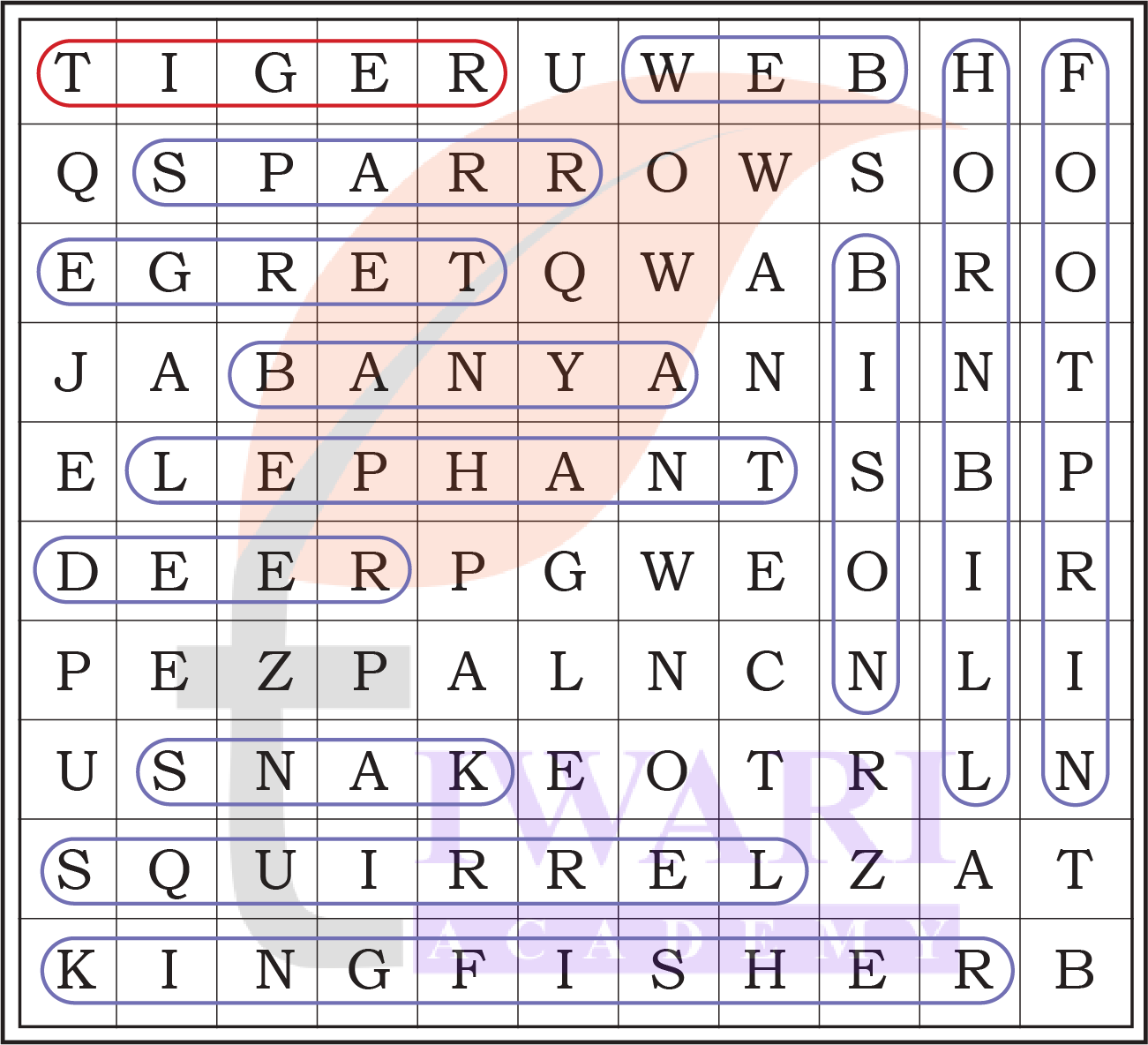
4. Solve the puzzle.
Find the treasures of the forest.
Answer:
5. Take on the challenge.
Plan a nature walk with your family or friends in a nearby park. To prepare yourself as a guide, identify few plants and animals, and study their features and interesting facts which you can explain during the walk.
Answer:
My Nature Walk Plan
I will go on a nature walk with my family this weekend, in the park near my house, early in the morning when the birds are the most active.
To be a good guide, I have picked a few plants and animals and learned about them:
Animals
- Sparrow – It is small and brown, with a short beak for eating seeds. Fun fact: it likes to take dust baths to clean its feathers!
- Squirrel – It has a bushy tail and three stripes on its back. Fun fact: people say the stripes are Lord Rama’s fingerprints.
- Butterfly – It has colourful wings with tiny scales on them. Fun fact: it tastes food with its feet!
Plants
- Hibiscus – A red, trumpet-shaped flower. Fun fact: its petals can be used to make natural shampoo.
- Neem tree – Small, bitter-tasting leaves. Fun fact: neem leaves keep away insects and are used to make medicines.
- Tulsi – A small green plant with a strong smell. Fun fact: many people grow it at home and use it to make tea when they have a cold.
When I take my family on the walk, I will point out these plants and animals and tell them my fun facts. I will also remind everyone to follow the safety rules we learnt in class – not to pluck flowers, not to disturb any animal and not to leave garbage behind.
I am excited to be everyone’s nature guide!
Class 4 EVS Chapter 3 Question Answers with Important Extra Questions
Class 4 EVS Chapter 3 Nature Trail – FAQs
What is the chapter “Nature Trail” about in Class 4 EVS?
In Class 4 EVS, the chapter “Nature Trail” teaches students about plants, animals, birds, insects and their natural surroundings. It helps children understand nature and the importance of caring for the environment.
What do students learn from the Nature Trail chapter in Class 4 EVS?
In Class 4 EVS, students learn to observe animals, birds and plants closely. They understand different living habits, body features and how living beings depend on each other in nature.
Why are safety rules important in the Nature Trail chapter of Class 4 EVS?
In Class 4 EVS, safety rules are taught to protect students, animals and plants. These rules help prevent accidents and teach children how to behave responsibly during a nature visit.
What is the Leaf Autograph activity in Class 4 EVS Nature Trail?
In Class 4 EVS, the Leaf Autograph activity helps students learn about leaf shapes and veins by rubbing a crayon over a leaf. It shows that every plant has a unique leaf pattern.
What does the Web of Life activity explain in Class 4 EVS?
In Class 4 EVS, the Web of Life activity explains how plants, animals and humans are connected. It teaches that harming one part of nature affects all living beings.
Why is the Nature Trail chapter important in Class 4 EVS?
The Class 4 EVS Nature Trail chapter develops observation skills and environmental awareness. It encourages students to respect nature and understand the importance of protecting plants and animals.