
Tiwari Academy  – Free CBSE NCERT Books and Solutions
  • Apps
    • CBSE Apps
    • Hast Rekha App
  • NCERT Solutions
    • NCERT Solutions for Class 12
      • NCERT Solutions for Class 12 Maths
      • NCERT Solutions for Class 12 Physics
      • NCERT Solutions for Class 12 Chemistry
      • NCERT Solutions for Class 12 Biology
      • NCERT Solutions for Class 12 English
      • NCERT Solutions for Class 12 Accounts
      • NCERT Solutions for Class 12 Business Studies
      • NCERT Solutions for Class 12 Economics
      • NCERT Solutions for Class 12 Geography
      • NCERT Solutions for Class 12 Physical Education
      • NCERT Solutions for Class 12 Political Science
      • NCERT Solutions for Class 12 Psychology
      • NCERT Solutions for Class 12 Sociology
    • NCERT Solutions for Class 11
      • NCERT Solutions for Class 11 Maths
      • NCERT Solutions for Class 11 Physics
      • NCERT Solutions for Class 11 Chemistry
      • NCERT Solutions for Class 11 Biology
      • NCERT Solutions for Class 11 English
      • NCERT Solutions for Class 11 Business Studies
      • NCERT Solutions for Class 11 Sociology
      • NCERT Solutions for Class 11 Political Science
      • NCERT Solutions for Class 11 Psychology
      • NCERT Solutions for Class 11 Physical Education
    • NCERT Solutions for Class 10
      • NCERT Solutions for Class 10 Maths
      • NCERT Solutions for Class 10 Science
      • NCERT Solutions for Class 10 English
      • NCERT Solutions for Class 10 Hindi Course A and B
      • NCERT Solutions for Class 10 Sanskrit
      • NCERT Solutions for Class 10 Social Science
    • NCERT Solutions for Class 9
      • NCERT Solutions for Class 9 Maths
      • NCERT Solutions for Class 9 Science
      • NCERT Solutions for Class 9 English
      • NCERT Solutions for Class 9 Hindi
      • NCERT Solutions for Class 9 Sanskrit
      • NCERT Solutions for Class 9 Social Science
    • NCERT Solutions for Class 8
      • NCERT Solutions for Class 8 Maths
      • NCERT Solutions for Class 8 Science
      • NCERT Solutions for Class 8 English
      • NCERT Solutions for Class 8 Hindi
      • NCERT Solutions for Class 8 Sanskrit
      • NCERT Solutions for Class 8 Social Science
      • NCERT Solutions for Class 8 Computer
    • NCERT Solutions for Class 7
      • NCERT Solutions for Class 7 Maths
      • NCERT Solutions for Class 7 Science
      • NCERT Solutions for Class 7 English
      • NCERT Solutions for Class 7 Hindi
      • NCERT Solutions for Class 7 Sanskrit
      • NCERT Solutions for Class 7 Social Science
      • NCERT Solutions for Class 7 Computer
    • NCERT Solutions for Class 6
      • NCERT Solutions for Class 6 Maths
      • NCERT Solutions for Class 6 Science
      • NCERT Solutions for Class 6 English
      • NCERT Solutions for Class 6 Hindi
      • NCERT Solutions for Class 6 Sanskrit
      • NCERT Solutions for Class 6 Social Science
      • NCERT Solutions for Class 6 Computer
    • NCERT Solutions for Class 5
      • NCERT Solutions for Class 5 Hindi
      • NCERT Solutions for Class 5 English
      • NCERT Solutions for Class 5 Maths
      • NCERT Solutions for Class 5 EVS
      • NCERT Solutions for Class 5 Computer
      • NCERT Solutions for Class 5 GK
    • NCERT Solutions for Class 4
      • NCERT Solutions for Class 4 Hindi
      • NCERT Solutions for Class 4 English
      • NCERT Solutions for Class 4 Maths
      • NCERT Solutions for Class 4 EVS
      • NCERT Solutions for Class 4 Computer
      • NCERT Solutions for Class 4 GK
    • NCERT Solutions for Class 3
      • NCERT Solutions for Class 3 Hindi
      • NCERT Solutions for Class 3 English
      • NCERT Solutions for Class 3 Maths
      • NCERT Solutions for Class 3 EVS
      • NCERT Solutions for Class 3 Science
      • NCERT Solutions for Class 3 Computer
      • NCERT Solutions for Class 3 GK
    • NCERT Solutions for Class 2
      • NCERT Solutions for Class 2 Hindi
      • NCERT Solutions for Class 2 English
      • NCERT Solutions for Class 2 Maths
      • NCERT Solutions for Class 2 EVS
      • NCERT Solutions for Class 2 Science
      • NCERT Solutions for Class 2 Computer
      • NCERT Solutions for Class 2 GK
    • NCERT Solutions for Class 1
      • NCERT Solutions for Class 1 Hindi
      • NCERT Solutions for Class 1 English
      • NCERT Solutions for Class 1 Maths
      • NCERT Solutions for Class 1 EVS
      • NCERT Solutions for Class 1 Computer
      • NCERT Solutions for Class 1 Science
      • NCERT Solutions for Class 1 GK
    • Study Material for KG
      • Study Material for KG English
      • Study Material for KG Hindi
      • Study Material for KG Maths
    • Study Material for Nursery
      • Study Material for Nursery Maths
      • Study Material for Nursery English
      • Study Material for Nursery Hindi
  • MCQ
  • NEWS
    • Educational NEWS
    • Explore More
  • Grammar
    • Class 1 English Grammar
      • Class 1 Hindi Vyakaran
    • Class 2 English Grammar
      • Class 2 Hindi Vyakaran
    • Class 3 English Grammar
      • Class 3 Hindi Vyakaran
    • Class 4 English Grammar
      • Class 4 Hindi Vyakaran
    • Class 5 English Grammar
      • Class 5 Hindi Vyakaran
    • Class 6 English Grammar
      • Class 6 Hindi Vyakaran
    • Class 7 English Grammar
      • Class 7 Hindi Vyakaran
    • Class 8 English Grammar
      • Class 8 Hindi Vyakaran
  • Sample Papers
    • CBSE Sample Papers for Class 9
    • CBSE Sample Papers for Class 10
    • CBSE Sample Papers for Class 11
    • CBSE Sample Papers for Class 12
  • NCERT Books
    • NCERT Books for Class 1 All Subjects
    • NCERT Books for Class 2 All Subjects
    • NCERT Books for Class 3 All Subjects
    • NCERT Books for Class 4 All Subjects
    • NCERT Books for Class 5 All Subjects
    • NCERT Books for Class 6 All Subjects
    • NCERT Books for Class 7 All Subjects
    • NCERT Books for Class 8 All Subjects
    • NCERT Books for Class 9 All Subjects
    • NCERT Books for Class 10 All Subjects
    • NCERT Books for Class 11 All Subjects
    • NCERT Books for Class 12 All Subjects
  • Syllabus
    • CBSE Date Sheet 2025
    • CBSE Syllabus
    • NCERT Exemplar
    • What is NIOS?
    • NIOS Online Admission
  • Contact
    • Contact Us
    • About Us
    • Online Tutors
    • Career Options
  • Apps
    • CBSE Apps
    • Hast Rekha App
  • NCERT Solutions
    • NCERT Solutions for Class 12
      • NCERT Solutions for Class 12 Maths
      • NCERT Solutions for Class 12 Physics
      • NCERT Solutions for Class 12 Chemistry
      • NCERT Solutions for Class 12 Biology
      • NCERT Solutions for Class 12 English
      • NCERT Solutions for Class 12 Accounts
      • NCERT Solutions for Class 12 Business Studies
      • NCERT Solutions for Class 12 Economics
      • NCERT Solutions for Class 12 Geography
      • NCERT Solutions for Class 12 Physical Education
      • NCERT Solutions for Class 12 Political Science
      • NCERT Solutions for Class 12 Psychology
      • NCERT Solutions for Class 12 Sociology
    • NCERT Solutions for Class 11
      • NCERT Solutions for Class 11 Maths
      • NCERT Solutions for Class 11 Physics
      • NCERT Solutions for Class 11 Chemistry
      • NCERT Solutions for Class 11 Biology
      • NCERT Solutions for Class 11 English
      • NCERT Solutions for Class 11 Business Studies
      • NCERT Solutions for Class 11 Sociology
      • NCERT Solutions for Class 11 Political Science
      • NCERT Solutions for Class 11 Psychology
      • NCERT Solutions for Class 11 Physical Education
    • NCERT Solutions for Class 10
      • NCERT Solutions for Class 10 Maths
      • NCERT Solutions for Class 10 Science
      • NCERT Solutions for Class 10 English
      • NCERT Solutions for Class 10 Hindi Course A and B
      • NCERT Solutions for Class 10 Sanskrit
      • NCERT Solutions for Class 10 Social Science
    • NCERT Solutions for Class 9
      • NCERT Solutions for Class 9 Maths
      • NCERT Solutions for Class 9 Science
      • NCERT Solutions for Class 9 English
      • NCERT Solutions for Class 9 Hindi
      • NCERT Solutions for Class 9 Sanskrit
      • NCERT Solutions for Class 9 Social Science
    • NCERT Solutions for Class 8
      • NCERT Solutions for Class 8 Maths
      • NCERT Solutions for Class 8 Science
      • NCERT Solutions for Class 8 English
      • NCERT Solutions for Class 8 Hindi
      • NCERT Solutions for Class 8 Sanskrit
      • NCERT Solutions for Class 8 Social Science
      • NCERT Solutions for Class 8 Computer
    • NCERT Solutions for Class 7
      • NCERT Solutions for Class 7 Maths
      • NCERT Solutions for Class 7 Science
      • NCERT Solutions for Class 7 English
      • NCERT Solutions for Class 7 Hindi
      • NCERT Solutions for Class 7 Sanskrit
      • NCERT Solutions for Class 7 Social Science
      • NCERT Solutions for Class 7 Computer
    • NCERT Solutions for Class 6
      • NCERT Solutions for Class 6 Maths
      • NCERT Solutions for Class 6 Science
      • NCERT Solutions for Class 6 English
      • NCERT Solutions for Class 6 Hindi
      • NCERT Solutions for Class 6 Sanskrit
      • NCERT Solutions for Class 6 Social Science
      • NCERT Solutions for Class 6 Computer
    • NCERT Solutions for Class 5
      • NCERT Solutions for Class 5 Hindi
      • NCERT Solutions for Class 5 English
      • NCERT Solutions for Class 5 Maths
      • NCERT Solutions for Class 5 EVS
      • NCERT Solutions for Class 5 Computer
      • NCERT Solutions for Class 5 GK
    • NCERT Solutions for Class 4
      • NCERT Solutions for Class 4 Hindi
      • NCERT Solutions for Class 4 English
      • NCERT Solutions for Class 4 Maths
      • NCERT Solutions for Class 4 EVS
      • NCERT Solutions for Class 4 Computer
      • NCERT Solutions for Class 4 GK
    • NCERT Solutions for Class 3
      • NCERT Solutions for Class 3 Hindi
      • NCERT Solutions for Class 3 English
      • NCERT Solutions for Class 3 Maths
      • NCERT Solutions for Class 3 EVS
      • NCERT Solutions for Class 3 Science
      • NCERT Solutions for Class 3 Computer
      • NCERT Solutions for Class 3 GK
    • NCERT Solutions for Class 2
      • NCERT Solutions for Class 2 Hindi
      • NCERT Solutions for Class 2 English
      • NCERT Solutions for Class 2 Maths
      • NCERT Solutions for Class 2 EVS
      • NCERT Solutions for Class 2 Science
      • NCERT Solutions for Class 2 Computer
      • NCERT Solutions for Class 2 GK
    • NCERT Solutions for Class 1
      • NCERT Solutions for Class 1 Hindi
      • NCERT Solutions for Class 1 English
      • NCERT Solutions for Class 1 Maths
      • NCERT Solutions for Class 1 EVS
      • NCERT Solutions for Class 1 Computer
      • NCERT Solutions for Class 1 Science
      • NCERT Solutions for Class 1 GK
    • Study Material for KG
      • Study Material for KG English
      • Study Material for KG Hindi
      • Study Material for KG Maths
    • Study Material for Nursery
      • Study Material for Nursery Maths
      • Study Material for Nursery English
      • Study Material for Nursery Hindi
  • MCQ
  • NEWS
    • Educational NEWS
    • Explore More
  • Grammar
    • Class 1 English Grammar
      • Class 1 Hindi Vyakaran
    • Class 2 English Grammar
      • Class 2 Hindi Vyakaran
    • Class 3 English Grammar
      • Class 3 Hindi Vyakaran
    • Class 4 English Grammar
      • Class 4 Hindi Vyakaran
    • Class 5 English Grammar
      • Class 5 Hindi Vyakaran
    • Class 6 English Grammar
      • Class 6 Hindi Vyakaran
    • Class 7 English Grammar
      • Class 7 Hindi Vyakaran
    • Class 8 English Grammar
      • Class 8 Hindi Vyakaran
  • Sample Papers
    • CBSE Sample Papers for Class 9
    • CBSE Sample Papers for Class 10
    • CBSE Sample Papers for Class 11
    • CBSE Sample Papers for Class 12
  • NCERT Books
    • NCERT Books for Class 1 All Subjects
    • NCERT Books for Class 2 All Subjects
    • NCERT Books for Class 3 All Subjects
    • NCERT Books for Class 4 All Subjects
    • NCERT Books for Class 5 All Subjects
    • NCERT Books for Class 6 All Subjects
    • NCERT Books for Class 7 All Subjects
    • NCERT Books for Class 8 All Subjects
    • NCERT Books for Class 9 All Subjects
    • NCERT Books for Class 10 All Subjects
    • NCERT Books for Class 11 All Subjects
    • NCERT Books for Class 12 All Subjects
  • Syllabus
    • CBSE Date Sheet 2025
    • CBSE Syllabus
    • NCERT Exemplar
    • What is NIOS?
    • NIOS Online Admission
  • Contact
    • Contact Us
    • About Us
    • Online Tutors
    • Career Options
हिंदी मीडियमहिंदी मीडियम Latest BlogsLatest Blogs Ask QuestionsAsk Questions
Tiwari Academy  /  Latest News  /  Class 9 Hindi Syllabus 2026-27: Complete Guide Based on NEP 2020 and NCF-SE 2023

Class 9 Hindi Syllabus 2026-27: Complete Guide Based on NEP 2020 and NCF-SE 2023

Class 9 Hindi Syllabus for new session
Post Date: April 9, 2026

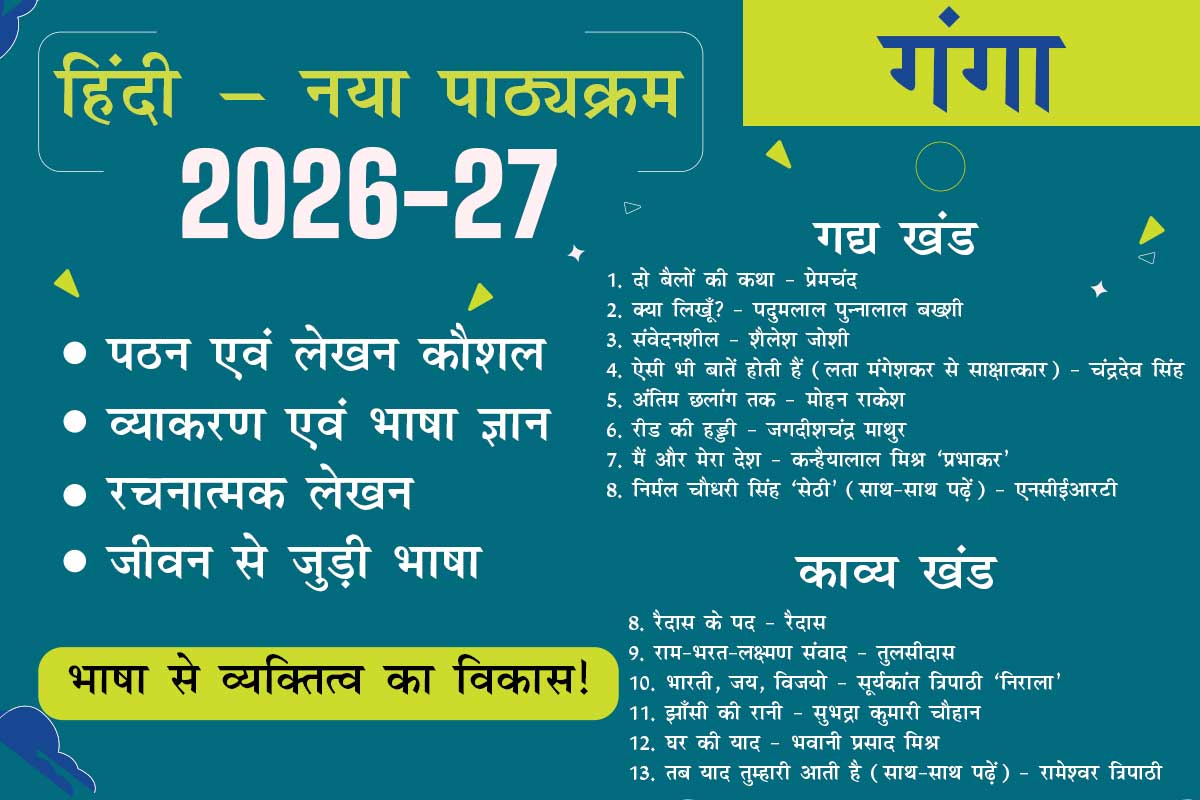
Are you searching for the complete and updated Class 9 Hindi Syllabus 2026-27? NCERT has released a thoroughly revised Hindi curriculum for Class 9 in alignment with the National Education Policy (NEP) 2020 and the National Curriculum Framework for School Education 2023 (NCF-SE 2023). This new curriculum introduces a brand-new textbook titled “Ganga”, a reformed assessment model, experience-based pedagogy and a strong focus on multilingualism and critical thinking.

This detailed guide is designed to help students, parents, and teachers understand every aspect of the Class 9 Hindi Syllabus 2026-27 — from curriculum philosophy and learning goals to grammar topics, textbook details and assessment patterns.

For free, chapter-wise NCERT Solutions, summaries, word meanings and grammar notes for Class 9 Hindi (Ganga), visit Tiwari Academy — updated for the 2026-27 academic session.


Class 9 Hindi Syllabus 2026-27 – Quick Overview Table

Before diving into details, here is a quick snapshot of the Class 9 Hindi Syllabus 2026-27:

FeatureDetails
Academic Session2026-27
Class9 (Secondary Stage – Phase I)
SubjectHindi
Syllabus FrameworkNEP 2020 + NCF-SE 2023
New Textbook NameGanga (Developed by NCERT/RSHAP)
Total Lessons12 (Poetry + Prose)
Grammar ApproachContextual and Integrated
Assessment Pattern360-Degree (Formative + Summative)
Syllabus PartPart I – Languages
Language MediumHindi
Solutions AvailableTiwari Academy – Class 9 Hindi

What Is New in the Class 9 Hindi Syllabus 2026-27?

The 2026-27 syllabus brings several landmark changes compared to the previous curriculum. Here is a side-by-side comparison:

AspectOld SyllabusNew Syllabus 2026-27
TextbookKshitij + KritikaGanga (single integrated book)
Textbook FocusLiterature-heavy, exam-orientedCritical thinking + creative expression
PedagogyTeacher-centred, chalk-and-talkLearner-centred, activity-based
Grammar TeachingIsolated, rule-basedContextual, integrated into texts
AssessmentRecall-based written exams360-degree holistic evaluation
Language ViewHindi as a school subjectHindi as a discourse and thinking tool
MultilingualismLimited acknowledgementCentral to curriculum design
Media IntegrationMinimalRadio, TV, films, internet included
Community ConnectAbsentInterviews, field activities included
Teacher ResourceSeparate workbookCombined Teacher’s Book for Classes 9 and 10

Structure of the Class 9 Syllabus Under NCF-SE 2023

How Is the Grade 9 Syllabus Divided?

Under NEP 2020’s 5 + 3 + 3 + 4 curricular design, Classes 9 and 10 form the Secondary Stage (Phase I), covering learners aged 14–18 years. The Grade 9 syllabus is officially divided into three parts:

Part I – Languages (4 Subjects)

  1. Hindi
  2. Urdu
  3. English
  4. Sanskrit

Part II – Core Subjects (3 Subjects)

  1. Mathematics
  2. Science
  3. Social Science


Part III – Other Curricular Areas (4 Areas)

  1. Individuals in Society
  2. Vocational Education
  3. Arts Education
  4. Physical Education and Well-being
Note: The Class 9 Hindi syllabus falls under Part I – Languages. Hindi may be taken as Language 1 (R1), Language 2 (R2) or Language 3 (R3) depending on the student’s language choice. In Grade 10, “Individuals in Society” from Part III will be replaced by Environmental Education.

Core Philosophy of the New Class 9 Hindi Curriculum

Hindi as a Language of Discourse (विमर्श की भाषा)

The most important shift in the Class 9 Hindi Syllabus 2026-27 is the treatment of Hindi – not as a subject to be memorised but as a living language of thought, expression and democratic dialogue. The syllabus states clearly that its primary objective is to develop the understanding and ability to use Hindi as a language of discourse.
By the end of Grade 9, students should be able to:

  • Think critically and analytically through Hindi
  • Express original ideas clearly in both written and oral forms
  • Engage meaningfully with social, cultural and literary content
  • Participate in democratic dialogue using language effectively
  • Connect language with their social, cultural and ideological identity
  • Understand and appreciate India’s linguistic and cultural diversity
  • Develop a positive attitude toward multilingualism

Why Multilingualism Is Central to This Curriculum

The new syllabus strongly highlights India’s multilingual reality and positions it as a strength:

  • India’s linguistic diversity creates a unique multilingual image where Indian languages enrich one another
  • Research consistently shows that multilingual students learn faster and perform better in life than monolingual learners
  • Multilingualism enriches students both intellectually and culturally
  • The curriculum builds its framework around a multilingual and multicultural environment
  • All students’ home languages are respected and given equal standing
  • Hindi learning is explicitly connected to other Indian languages and global literary traditions


Pedagogy: How Hindi Will Be Taught in Class 9 (2026-27)

Key Principles of Language Teaching Under NEP 2020

NEP 2020 clearly states that language teaching must be reformed to be:

  • Experience-based — rooted in real-life situations and lived experiences
  • Conversation-focused — emphasising the ability to interact and communicate in Hindi
  • Beyond grammar-only — not limited to literature, vocabulary and grammar rules
  • Environment-connected — linking the classroom to home, media and community
  • Student-centred — driven by curiosity, exploration, collaborative dialogue, and discovery

Recommended Classroom Activities and Learning Processes

The syllabus outlines a rich variety of pedagogical processes. Students should be given opportunities to:

Listening and Speaking Activities

  • Listen carefully to sounds, language, and conversations in their environment
  • Watch and listen to radio and TV programmes on sports, films, music and national/social discussions
  • Discuss the language, rhythm and communication style of media content
  • Conduct interviews and conversations with people in the community to understand their needs
  • Participate in role-play, drama and public speaking exercises
  • Listen to national and social discussions and comment on them

Reading Activities

  • Read literary works across genres – stories, poems, essays, memoirs, travelogues
  • Read content from newspapers, magazines, advertisements, cartoons and announcements
  • Read mystery, adventure and fantasy literature
  • Explore works from various Indian languages and world literature in translation
  • Discuss the socio-cultural and aesthetic dimensions of what is read

Writing Activities

  • Creative writing – stories, poems, scripts, slogans
  • Practical writing – letters, emails, reports, book reviews, travelogues, interviews
  • Paragraph writing, essay writing, commentary and critical response
  • Sharing opinions in school publications and newspapers
  • Writing freely in one’s own developing language style

Creative and Performing Activities

  • Poetry recitation and literary appreciation
  • Script writing for plays and programmes
  • Report writing for events and activities
  • Role-play (भूमिका निर्वहन) in different social contexts
  • Discussions on the social, cultural and aesthetic aspects of language and literature
  • Visits to observe agriculture, folk arts, handicrafts and small industries – and learning related vocabulary

Curriculum Goals (CG), Competencies, and Learning Indicators

CG-1: Effective Communication Through Writing and New Media

Goal Statement: Use language effectively for communication through various forms of writing — essay, letter, article, discussion, interview, public speech — and new media formats such as email, audio-visual content.

Competency CodeCompetency DescriptionKey Learning Indicators
C-3.1Analyse and evaluate various audio and written materials• Observe and systematically record details from different materials
• Verify credibility of information gathered from multiple sources on a single topic
C-3.2Thoughtfully evaluate context in composition with appropriate arguments• Identify personal preconceptions while reading/listening
• Assess credibility of texts using evidence

CG-4: Appreciating India’s Literary and Cultural Heritage Linked to Linguistic Diversity

Goal Statement: Appreciate the literary and cultural heritage connected to India’s vast linguistic diversity and understand the role of language in building cultural identity.

Competency CodeCompetency DescriptionKey Learning Indicators
C-4.1Identify the multilingual nature of Indian society through diverse literary styles• Watch regional language films and documentaries
• Share thoughts about India’s multilingual character
C-4.2Appreciate cultural diversity and heritage in various Indian literary works• Connect literary works to personal experiences
• Appreciate uniqueness and contributions of literatures from various Indian languages
C-4.3Understand and express the role of language in building culture and identity• Share examples of proverbs, riddles, idioms influenced by cultural traditions
• Use culturally influenced vocabulary appropriately in writing and speech

Subject Content and Thematic Areas

Broad Thematic Areas in the Class 9 Hindi Curriculum

The content in the new Class 9 Hindi Syllabus 2026-27 spans a wide range of thematic areas:

CategoryThemes Included
Constitutional and Civic ValuesDemocracy, secularism, constitutional rights, social justice, equality
EnvironmentEnvironmental conservation, ecological awareness, local geography
Health and ScienceHealth, nutrition, disaster management, science and technology, medical practices
Culture and HeritageCommon cultural heritage, folk culture, folk arts, handicrafts, architecture
Society and IdentityGender equality, sensitivity, inclusion, social harmony
Global PerspectiveInternational cooperation, peaceful coexistence, global outlook
Arts and MediaCinema, performing arts, music, dance, drama
Economy and LivelihoodTraditional means of enterprise, tribal practices, organic farming
History and KnowledgeFreedom movement, ancient and contemporary knowledge, Indian knowledge traditions
Language and LiteratureLiterary genres, regional literature, multilingual texts, media writing

Class 9 Hindi Textbook 2026-27 – New Textbook “Ganga”

Key Features of the New NCERT Class 9 Hindi Textbook

FeatureDetails
Textbook NameGanga
Developed ByNCERT (RSHAP — Rashtriya Shaikshik Anusandhan aur Prashikshan Parishad)
Based OnNCF-SE 2023
Number of Lessons12
Content TypePoetry (Kavya) + Prose (Gadya)
AuthorsProminent Indian literary writers across genres
Grammar IntegrationContextual – through lesson-based exercises
Teacher ResourceSeparate Teacher’s Book for Classes 9 and 10 (combined)

What Does the Teacher’s Book Include?

The Teacher’s Book is a combined resource for Classes 9 and 10 and contains:

  • Teaching strategies for different literary genres
  • New techniques for introducing grammar contextually
  • Materials for creative and practical writing – book reviews, travelogues, interviews
  • Guidance on using electronic media for effective Hindi teaching
  • Methods for multilingual and multicultural classroom engagement

Class 9–10 Hindi Grammar Topics (भाषा विश्लेषण/व्याकरण बिंदु)

Complete Grammar Syllabus for Class 9 Hindi 2026-27

The following grammar points are to be covered across Classes 9 and 10. Some were introduced in Classes 6–8 and will be developed further at this stage:

Grammar TopicHindi Term
1. Nouns, Pronouns, Adjectives, Verbs, Adverbsसंज्ञा, सर्वनाम, विशेषण, क्रिया, क्रियाविशेषण
2. Gender, Number, Tenseलिंग, वचन, काल
3. Prefixes, Suffixes, Postpositionsउपसर्ग, प्रत्यय, परसर्ग
4. Active Voice, Passive Voiceकर्तृवाच्य, कर्मवाच्य
5. Synonyms, Antonyms, Polysemous Wordsसमानार्थी, विपरीतार्थक, अनेकार्थी शब्द
6. Idioms and Proverbsमुहावरे और लोकोक्तियाँ
7. Particles and Punctuation Marksनिपात, विराम चिह्न
8. Figures of Speechअलंकार


Figures of Speech Covered in Class 9 Hindi

Figure of SpeechHindi Name
1. Simileउपमा
2. Alliterationअनुप्रास
3. Personificationमानवीकरण
4. Metaphorरूपक
5. Hyperbole / Poetic Fancyउत्प्रेक्षा
6. Paradoxविरोधाभास
7. Symbolप्रतीक
8. Imageryबिंब

Pro Tip: Grammar in the new Class 9 Hindi syllabus is NOT taught in isolation. It is integrated into literary texts and everyday language contexts so students understand usage naturally.

Assessment Pattern for Class 9 Hindi 2026-27

360-Degree Assessment Model

NEP 2020 recommends a 360-degree assessment approach for Hindi. This means assessment is not limited to end-of-term written examinations. It is continuous, holistic and multi-dimensional.

Objectives of Assessment in Class 9 Hindi

The assessment framework is built around the following objectives:

S.No.Assessment Objective
1Identifying and nurturing students’ interests, abilities and capacities
2Providing constructive feedback to improve expression
3Maintaining a positive outlook toward different learning abilities
4Relating to students’ views, perspectives, behaviour and aspirations
5Understanding learning layer by layer – not just measurable behavioural changes
6Involving peers, parents and students themselves in the assessment process
7Using students’ language skill levels as evaluation elements from multiple perspectives
8Ensuring accommodation and adaptations for students with learning challenges

Who Participates in Assessment?

Unlike traditional assessment where only the teacher evaluates:

  • Teacher — based on defined benchmarks and learning standards
  • Student (Self-Assessment) — reflection on own learning progress
  • Peers — fellow students assess each other’s work
  • Parents — participatory role in holistic evaluation

Types of Assessment Activities

  1. Formative Assessment — ongoing classroom activities, discussions, role-play
  2. Reflective Assessment — journals, self-evaluation, learning logs
  3. Creative Assessment — creative writing, poetry recitation, script writing
  4. Performance Assessment — oral presentations, interviews, debates
  5. Summative Assessment — end-of-term written tests and board examinations (Grade 10)

Principles for Selection of Textual Content

The syllabus prescribes clear guidelines for what kind of content should be included in the Class 9 Hindi textbook. These are:

  1. Diversity of genres — narrative (कथात्मक) and informational (सूचनात्मक) content both included
  2. Interdisciplinary connections — literary texts linked to concepts from other subjects
  3. Media content — newspaper writing, advertisements, slogans, cartoons, speeches, announcements
  4. Indian and world literature — some selections from Indian languages and translated world literature
  5. Wide thematic scope — gender, environment, constitutional duty, peace, science, history, inclusion
  6. Regional language flavour — regional vocabulary, idioms, and aesthetic variety
  7. Subject-specific language — texts exposing students to language usage across disciplines
  8. Multilingual classroom analysis — language structure analysis in a multilingual context
    ✅ Observation-based questions — questions about students’ surroundings and society
    ✅ Multiple perspectives — questions helping students view a text or topic from different angles

How to Prepare for Class 9 Hindi 2026-27 – Study Tips

Subject-Wise Preparation Strategy

AreaPreparation Tips
Literature (Prose and Poetry)Read each chapter carefully; understand themes, characters and context
GrammarLearn grammar through examples from the text, not isolation
Writing SkillsPractice creative writing, letters, reports and essays regularly
Listening SkillsListen to Hindi news, radio programmes and documentaries
Speaking SkillsParticipate in class discussions, debate and role-play activities
VocabularyNote new words, idioms and proverbs from every chapter
NCERT SolutionsRefer to Tiwari Academy for step-by-step solutions

Why Use Tiwari Academy for Class 9 Hindi?

For students navigating the new NCERT Class 9 Hindi curriculum (Ganga), Tiwari Academy is one of India’s most trusted free educational platforms. Here is what you get:

FeatureDetails
Chapter-wise NCERT SolutionsAll prose and poetry chapters solved in detail
Chapter SummariesEasy-to-understand summaries in Hindi and English
Word MeaningsAll difficult words explained with context
Grammar NotesAll Class 9–10 grammar topics explained with examples
Important QuestionsPrevious year and expected questions with answers
Completely FreeNo login, no subscription, no hidden charges
Mobile FriendlyAccess on any device, anytime, anywhere

Visit https://www.tiwariacademy.com/ncert-solutions/class-9/hindi/ for all Class 9 Hindi resources – updated for 2026-27.

Frequently Asked Questions (FAQs) – Class 9 Hindi Syllabus 2026-27

What is the new Class 9 Hindi textbook for 2026-27?

The new Class 9 Hindi textbook developed by NCERT in alignment with NCF-SE 2023 is titled “Ganga”. It replaces the earlier Kshitij and Kritika textbooks used in the previous curriculum.

How many chapters are there in the Class 9 Hindi textbook Ganga?

The new textbook Ganga contains approximately 12–15 lessons, covering a balanced mix of poetry (kavya) and prose (gadya) from various literary genres written by prominent Indian authors.

What grammar topics are covered in Class 9 Hindi 2026-27?

The grammar syllabus includes:

  • Nouns, Pronouns, Adjectives, Verbs, Adverbs
  • Gender, Number, Tense
  • Prefixes, Suffixes, Postpositions
  • Active and Passive Voice
  • Synonyms, Antonyms, Idioms, Proverbs
  • Particles, Punctuation
  • Figures of Speech (Simile, Alliteration, Personification, Metaphor, etc.)

Is the Class 9 Hindi assessment only exam-based?

No. The new syllabus follows a 360-degree assessment model that includes formative assessment, reflective assessment, creative assessment, performance-based assessment, peer evaluation, self-assessment and parental involvement – not just written examinations.

What is the difference between the old and new Class 9 Hindi syllabus?

The old syllabus was exam-oriented with a focus on textbook content, grammar rules and recall-based questions. The new 2026-27 syllabus is learner-centred, focuses on critical thinking, creative expression, multilingual engagement, media literacy and holistic assessment.

Where can I find free NCERT Solutions for Class 9 Hindi Ganga?

You can find detailed, free and updated NCERT Solutions for Class 9 Hindi (Ganga) at Tiwari Academy. No login or payment is required.

Is Hindi compulsory in Class 9 under the new curriculum?

Yes. Under NCF-SE 2023, every student must study three languages (R1, R2, R3) in Classes 9 and 10. Hindi can be taken as Language 1, Language 2 or Language 3 depending on the student’s school and language choices.

What is the role of multilingualism in the Class 9 Hindi curriculum?

Multilingualism is central to the new curriculum. The syllabus builds around a multilingual and multicultural framework, ensuring that students’ home languages are respected, Hindi is connected to other Indian languages and diversity is seen as a strength rather than a challenge.

Conclusion

The Class 9 Hindi Syllabus 2026-27 represents a bold and progressive shift in how Hindi is taught and assessed in Indian schools. Moving well beyond textbook reading and grammar memorisation, the new curriculum — built on NEP 2020 and NCF-SE 2023 — positions Hindi as a language of thought, culture, creativity and democratic participation.
With a fresh new textbook (Ganga), 12 richly selected lessons, a wide grammar syllabus, a 360-degree assessment model and pedagogy rooted in real-life experiences and multilingualism, this is one of the most comprehensive and student-friendly Hindi curricula India has seen.
To make the most of this new curriculum, students are encouraged to:

  • Read the Ganga textbook carefully and connect lessons to real life
  • Practice all types of writing – creative, practical and reflective
  • Engage with media – radio, TV, films, and newspapers in Hindi
  • Learn grammar through context, not memorisation
  • Use Tiwari Academy for free NCERT Solutions, summaries and grammar support

Bookmark this page and share it with fellow Class 9 students and teachers. For complete chapter-wise NCERT Solutions for Class 9 Hindi Ganga — visit Tiwari Academy today.

Recent Posts
  • NCERT Solutions for Class 10 Maths 2026-27 – Welcome to Your New Session
  • CBSE Class 10 English Exam Paper 2026: Solutions, Answer Key & Analysis
  • CBSE Class 10 Science Board Exam Paper 2026: Complete Solutions and Answer Key
  • Class 10 Maths CBSE Exam Paper 2026 Solutions
  • Class 9 Maths Chapter 6 Lines and Angles Preparation


Important Links
  • What is NCERT?
  • Important Questions
  • Vedic Maths Tricks
  • Link Study Materials
  • Useful Resources & Formulae
  • Holiday Homework Solutions


Buy NCERT Books Online

NCERT Books for 2026-27

NCERT Solutions
  • NCERT Solutions for Class 6 Maths
  • NCERT Solutions for Class 7 Maths
  • NCERT Solutions for Class 8 Maths
  • NCERT Solutions for Class 11 Maths
  • NCERT Solutions for Class 12 Maths
  • NCERT Solutions for Class 11 Physics
  • NCERT Solutions for Class 12 Physics


High School
  • Class 9 NCERT Maths Solutions
  • Class 9 NCERT Science Solutions
  • Class 9 NCERT English Solutions
  • Class 10 NCERT Maths Solutions
  • Class 10 NCERT Science Solutions
  • Class 10 NCERT English Solutions
  • Class 10 NCERT Social Solutions

Quick Links
  • NCERT Books
  • NCERT Solutions
  • CBSE Syllabus
  • Home Tutors
  • NIOS Admissions
  • CBSE Sample Papers
  • Vedic Maths Tricks
Help & Support
  • About Us
  • Contact Us
  • Advertise With Us
  • Discussion
  • Latest Blogs
  • Holiday Homework
  • Useful Resources
Copyright 2026 by Tiwari Academy | A step towards Free Education
facebook
twitter
linkedin
youtube
instagram
pinterest
google-news