
Tiwari Academy  – Free CBSE NCERT Books and Solutions
  • Apps
    • CBSE Apps
    • Hast Rekha App
  • NCERT Solutions
    • NCERT Solutions for Class 12
      • NCERT Solutions for Class 12 Maths
      • NCERT Solutions for Class 12 Physics
      • NCERT Solutions for Class 12 Chemistry
      • NCERT Solutions for Class 12 Biology
      • NCERT Solutions for Class 12 English
      • NCERT Solutions for Class 12 Accounts
      • NCERT Solutions for Class 12 Business Studies
      • NCERT Solutions for Class 12 Economics
      • NCERT Solutions for Class 12 Geography
      • NCERT Solutions for Class 12 Physical Education
      • NCERT Solutions for Class 12 Political Science
      • NCERT Solutions for Class 12 Psychology
      • NCERT Solutions for Class 12 Sociology
    • NCERT Solutions for Class 11
      • NCERT Solutions for Class 11 Maths
      • NCERT Solutions for Class 11 Physics
      • NCERT Solutions for Class 11 Chemistry
      • NCERT Solutions for Class 11 Biology
      • NCERT Solutions for Class 11 English
      • NCERT Solutions for Class 11 Business Studies
      • NCERT Solutions for Class 11 Sociology
      • NCERT Solutions for Class 11 Political Science
      • NCERT Solutions for Class 11 Psychology
      • NCERT Solutions for Class 11 Physical Education
    • NCERT Solutions for Class 10
      • NCERT Solutions for Class 10 Maths
      • NCERT Solutions for Class 10 Science
      • NCERT Solutions for Class 10 English
      • NCERT Solutions for Class 10 Hindi Course A and B
      • NCERT Solutions for Class 10 Sanskrit
      • NCERT Solutions for Class 10 Social Science
    • NCERT Solutions for Class 9
      • NCERT Solutions for Class 9 Maths
      • NCERT Solutions for Class 9 Science
      • NCERT Solutions for Class 9 English
      • NCERT Solutions for Class 9 Hindi
      • NCERT Solutions for Class 9 Sanskrit
      • NCERT Solutions for Class 9 Social Science
    • NCERT Solutions for Class 8
      • NCERT Solutions for Class 8 Maths
      • NCERT Solutions for Class 8 Science
      • NCERT Solutions for Class 8 English
      • NCERT Solutions for Class 8 Hindi
      • NCERT Solutions for Class 8 Sanskrit
      • NCERT Solutions for Class 8 Social Science
      • NCERT Solutions for Class 8 Computer
    • NCERT Solutions for Class 7
      • NCERT Solutions for Class 7 Maths
      • NCERT Solutions for Class 7 Science
      • NCERT Solutions for Class 7 English
      • NCERT Solutions for Class 7 Hindi
      • NCERT Solutions for Class 7 Sanskrit
      • NCERT Solutions for Class 7 Social Science
      • NCERT Solutions for Class 7 Computer
    • NCERT Solutions for Class 6
      • NCERT Solutions for Class 6 Maths
      • NCERT Solutions for Class 6 Science
      • NCERT Solutions for Class 6 English
      • NCERT Solutions for Class 6 Hindi
      • NCERT Solutions for Class 6 Sanskrit
      • NCERT Solutions for Class 6 Social Science
      • NCERT Solutions for Class 6 Computer
    • NCERT Solutions for Class 5
      • NCERT Solutions for Class 5 Hindi
      • NCERT Solutions for Class 5 English
      • NCERT Solutions for Class 5 Maths
      • NCERT Solutions for Class 5 EVS
      • NCERT Solutions for Class 5 Computer
      • NCERT Solutions for Class 5 GK
    • NCERT Solutions for Class 4
      • NCERT Solutions for Class 4 Hindi
      • NCERT Solutions for Class 4 English
      • NCERT Solutions for Class 4 Maths
      • NCERT Solutions for Class 4 EVS
      • NCERT Solutions for Class 4 Computer
      • NCERT Solutions for Class 4 GK
    • NCERT Solutions for Class 3
      • NCERT Solutions for Class 3 Hindi
      • NCERT Solutions for Class 3 English
      • NCERT Solutions for Class 3 Maths
      • NCERT Solutions for Class 3 EVS
      • NCERT Solutions for Class 3 Science
      • NCERT Solutions for Class 3 Computer
      • NCERT Solutions for Class 3 GK
    • NCERT Solutions for Class 2
      • NCERT Solutions for Class 2 Hindi
      • NCERT Solutions for Class 2 English
      • NCERT Solutions for Class 2 Maths
      • NCERT Solutions for Class 2 EVS
      • NCERT Solutions for Class 2 Science
      • NCERT Solutions for Class 2 Computer
      • NCERT Solutions for Class 2 GK
    • NCERT Solutions for Class 1
      • NCERT Solutions for Class 1 Hindi
      • NCERT Solutions for Class 1 English
      • NCERT Solutions for Class 1 Maths
      • NCERT Solutions for Class 1 EVS
      • NCERT Solutions for Class 1 Computer
      • NCERT Solutions for Class 1 Science
      • NCERT Solutions for Class 1 GK
    • Study Material for KG
      • Study Material for KG English
      • Study Material for KG Hindi
      • Study Material for KG Maths
    • Study Material for Nursery
      • Study Material for Nursery Maths
      • Study Material for Nursery English
      • Study Material for Nursery Hindi
  • MCQ
  • NEWS
    • Educational NEWS
    • Explore More
  • Grammar
    • Class 1 English Grammar
      • Class 1 Hindi Vyakaran
    • Class 2 English Grammar
      • Class 2 Hindi Vyakaran
    • Class 3 English Grammar
      • Class 3 Hindi Vyakaran
    • Class 4 English Grammar
      • Class 4 Hindi Vyakaran
    • Class 5 English Grammar
      • Class 5 Hindi Vyakaran
    • Class 6 English Grammar
      • Class 6 Hindi Vyakaran
    • Class 7 English Grammar
      • Class 7 Hindi Vyakaran
    • Class 8 English Grammar
      • Class 8 Hindi Vyakaran
  • Sample Papers
    • CBSE Sample Papers for Class 9
    • CBSE Sample Papers for Class 10
    • CBSE Sample Papers for Class 11
    • CBSE Sample Papers for Class 12
  • NCERT Books
    • NCERT Books for Class 1 All Subjects
    • NCERT Books for Class 2 All Subjects
    • NCERT Books for Class 3 All Subjects
    • NCERT Books for Class 4 All Subjects
    • NCERT Books for Class 5 All Subjects
    • NCERT Books for Class 6 All Subjects
    • NCERT Books for Class 7 All Subjects
    • NCERT Books for Class 8 All Subjects
    • NCERT Books for Class 9 All Subjects
    • NCERT Books for Class 10 All Subjects
    • NCERT Books for Class 11 All Subjects
    • NCERT Books for Class 12 All Subjects
  • Syllabus
    • CBSE Date Sheet 2025
    • CBSE Syllabus
    • NCERT Exemplar
    • What is NIOS?
    • NIOS Online Admission
  • Contact
    • Contact Us
    • About Us
    • Online Tutors
    • Career Options
  • Apps
    • CBSE Apps
    • Hast Rekha App
  • NCERT Solutions
    • NCERT Solutions for Class 12
      • NCERT Solutions for Class 12 Maths
      • NCERT Solutions for Class 12 Physics
      • NCERT Solutions for Class 12 Chemistry
      • NCERT Solutions for Class 12 Biology
      • NCERT Solutions for Class 12 English
      • NCERT Solutions for Class 12 Accounts
      • NCERT Solutions for Class 12 Business Studies
      • NCERT Solutions for Class 12 Economics
      • NCERT Solutions for Class 12 Geography
      • NCERT Solutions for Class 12 Physical Education
      • NCERT Solutions for Class 12 Political Science
      • NCERT Solutions for Class 12 Psychology
      • NCERT Solutions for Class 12 Sociology
    • NCERT Solutions for Class 11
      • NCERT Solutions for Class 11 Maths
      • NCERT Solutions for Class 11 Physics
      • NCERT Solutions for Class 11 Chemistry
      • NCERT Solutions for Class 11 Biology
      • NCERT Solutions for Class 11 English
      • NCERT Solutions for Class 11 Business Studies
      • NCERT Solutions for Class 11 Sociology
      • NCERT Solutions for Class 11 Political Science
      • NCERT Solutions for Class 11 Psychology
      • NCERT Solutions for Class 11 Physical Education
    • NCERT Solutions for Class 10
      • NCERT Solutions for Class 10 Maths
      • NCERT Solutions for Class 10 Science
      • NCERT Solutions for Class 10 English
      • NCERT Solutions for Class 10 Hindi Course A and B
      • NCERT Solutions for Class 10 Sanskrit
      • NCERT Solutions for Class 10 Social Science
    • NCERT Solutions for Class 9
      • NCERT Solutions for Class 9 Maths
      • NCERT Solutions for Class 9 Science
      • NCERT Solutions for Class 9 English
      • NCERT Solutions for Class 9 Hindi
      • NCERT Solutions for Class 9 Sanskrit
      • NCERT Solutions for Class 9 Social Science
    • NCERT Solutions for Class 8
      • NCERT Solutions for Class 8 Maths
      • NCERT Solutions for Class 8 Science
      • NCERT Solutions for Class 8 English
      • NCERT Solutions for Class 8 Hindi
      • NCERT Solutions for Class 8 Sanskrit
      • NCERT Solutions for Class 8 Social Science
      • NCERT Solutions for Class 8 Computer
    • NCERT Solutions for Class 7
      • NCERT Solutions for Class 7 Maths
      • NCERT Solutions for Class 7 Science
      • NCERT Solutions for Class 7 English
      • NCERT Solutions for Class 7 Hindi
      • NCERT Solutions for Class 7 Sanskrit
      • NCERT Solutions for Class 7 Social Science
      • NCERT Solutions for Class 7 Computer
    • NCERT Solutions for Class 6
      • NCERT Solutions for Class 6 Maths
      • NCERT Solutions for Class 6 Science
      • NCERT Solutions for Class 6 English
      • NCERT Solutions for Class 6 Hindi
      • NCERT Solutions for Class 6 Sanskrit
      • NCERT Solutions for Class 6 Social Science
      • NCERT Solutions for Class 6 Computer
    • NCERT Solutions for Class 5
      • NCERT Solutions for Class 5 Hindi
      • NCERT Solutions for Class 5 English
      • NCERT Solutions for Class 5 Maths
      • NCERT Solutions for Class 5 EVS
      • NCERT Solutions for Class 5 Computer
      • NCERT Solutions for Class 5 GK
    • NCERT Solutions for Class 4
      • NCERT Solutions for Class 4 Hindi
      • NCERT Solutions for Class 4 English
      • NCERT Solutions for Class 4 Maths
      • NCERT Solutions for Class 4 EVS
      • NCERT Solutions for Class 4 Computer
      • NCERT Solutions for Class 4 GK
    • NCERT Solutions for Class 3
      • NCERT Solutions for Class 3 Hindi
      • NCERT Solutions for Class 3 English
      • NCERT Solutions for Class 3 Maths
      • NCERT Solutions for Class 3 EVS
      • NCERT Solutions for Class 3 Science
      • NCERT Solutions for Class 3 Computer
      • NCERT Solutions for Class 3 GK
    • NCERT Solutions for Class 2
      • NCERT Solutions for Class 2 Hindi
      • NCERT Solutions for Class 2 English
      • NCERT Solutions for Class 2 Maths
      • NCERT Solutions for Class 2 EVS
      • NCERT Solutions for Class 2 Science
      • NCERT Solutions for Class 2 Computer
      • NCERT Solutions for Class 2 GK
    • NCERT Solutions for Class 1
      • NCERT Solutions for Class 1 Hindi
      • NCERT Solutions for Class 1 English
      • NCERT Solutions for Class 1 Maths
      • NCERT Solutions for Class 1 EVS
      • NCERT Solutions for Class 1 Computer
      • NCERT Solutions for Class 1 Science
      • NCERT Solutions for Class 1 GK
    • Study Material for KG
      • Study Material for KG English
      • Study Material for KG Hindi
      • Study Material for KG Maths
    • Study Material for Nursery
      • Study Material for Nursery Maths
      • Study Material for Nursery English
      • Study Material for Nursery Hindi
  • MCQ
  • NEWS
    • Educational NEWS
    • Explore More
  • Grammar
    • Class 1 English Grammar
      • Class 1 Hindi Vyakaran
    • Class 2 English Grammar
      • Class 2 Hindi Vyakaran
    • Class 3 English Grammar
      • Class 3 Hindi Vyakaran
    • Class 4 English Grammar
      • Class 4 Hindi Vyakaran
    • Class 5 English Grammar
      • Class 5 Hindi Vyakaran
    • Class 6 English Grammar
      • Class 6 Hindi Vyakaran
    • Class 7 English Grammar
      • Class 7 Hindi Vyakaran
    • Class 8 English Grammar
      • Class 8 Hindi Vyakaran
  • Sample Papers
    • CBSE Sample Papers for Class 9
    • CBSE Sample Papers for Class 10
    • CBSE Sample Papers for Class 11
    • CBSE Sample Papers for Class 12
  • NCERT Books
    • NCERT Books for Class 1 All Subjects
    • NCERT Books for Class 2 All Subjects
    • NCERT Books for Class 3 All Subjects
    • NCERT Books for Class 4 All Subjects
    • NCERT Books for Class 5 All Subjects
    • NCERT Books for Class 6 All Subjects
    • NCERT Books for Class 7 All Subjects
    • NCERT Books for Class 8 All Subjects
    • NCERT Books for Class 9 All Subjects
    • NCERT Books for Class 10 All Subjects
    • NCERT Books for Class 11 All Subjects
    • NCERT Books for Class 12 All Subjects
  • Syllabus
    • CBSE Date Sheet 2025
    • CBSE Syllabus
    • NCERT Exemplar
    • What is NIOS?
    • NIOS Online Admission
  • Contact
    • Contact Us
    • About Us
    • Online Tutors
    • Career Options
เคนเคฟเค‚เคฆเฅ€ เคฎเฅ€เคกเคฟเคฏเคฎเคนเคฟเค‚เคฆเฅ€ เคฎเฅ€เคกเคฟเคฏเคฎ Latest BlogsLatest Blogs Ask QuestionsAsk Questions
Tiwari Academy  /  Latest News  /  Class 9 Social Science Syllabus 2026-27 โ€“ All Chapters & Learning Outcomes

Class 9 Social Science Syllabus 2026-27 โ€“ All Chapters & Learning Outcomes

Class 9 Social Science syllabus for the academic session 2026-27
Post Date: April 1, 2026

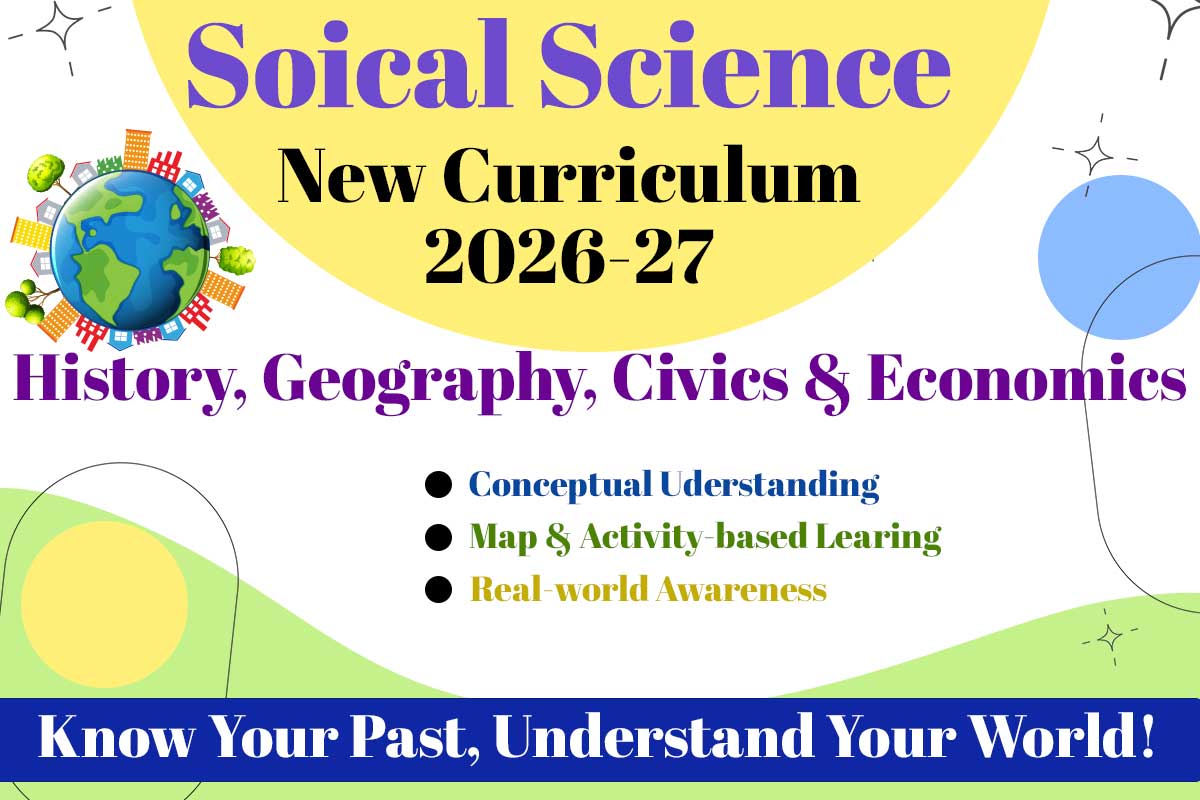
The Class 9 Social Science syllabus for the academic session 2026-27 has been restructured in alignment with the National Curriculum Framework for School Education (NCF-SE) 2023 and the National Education Policy (NEP) 2020. This revised curriculum moves decisively away from rote memorisation and toward a competency-driven, inquiry-oriented and interdisciplinary approach to understanding society, history, geography, politics and economics.
Whether you are a student preparing chapter by chapter, a teacher planning lessons or a parent trying to understand what your child will study this year, this guide covers everything โ€” all chapters from Part 1 and Part 2, key concepts, learning outcomes, time allocations and preparation strategies.
For chapter-wise, curriculum-aligned answers, visit Class 9 Social Science NCERT Solutions at Tiwari Academy.

What Is the Class 9 Social Science Curriculum Based On?

The Class 9 Social Science curriculum is an integrated study of human society covering four core disciplines: History, Geography, Political Science and Economics. Rather than treating these as isolated subjects, the NCF-SE 2023 envisions them as interconnected lenses through which students understand both India and the world.

The three primary aims of Social Science education in Grades 9 and 10, as outlined in the NCF-SE 2023, are:

AimDescription
1. Understanding SocietyComprehend how societies function through historical, geographical, political, economic and cultural perspectives
2. Developing Capacities for InquiryFoster critical thinking, analysis, and problem-solving through disciplinary and interdisciplinary approaches
3. Nurturing Responsible CitizenshipCultivate values of compassion, justice, equality and sustainability to become engaged, active citizens

Class 9 Social Science Syllabus 2026-27 – Subject-wise Time Allocation

The total recommended instructional time for Class 9 Social Science is 125 hours (150 periods). The curriculum is distributed across the four disciplines as follows:

SubjectIndicative Time AllocationPeriods (Approx.)
History30%45
Geography23.33%35
Political Science23.33%35
Economics23.33%35
Total100%150

The full syllabus is divided into 16 chapters โ€” 9 chapters in Part 1 and 7 chapters in Part 2 โ€” designed to be lighter in factual content but richer in core concepts, visuals and analytical activities.

Class 9 Social Science Part 1 – Chapter-wise Overview (Quick Reference)

Chapter NameSubject (Time Allocation)Key Competencies
1. Understanding Social ScienceIntegrated (4 Hours)Scope and relevance of Social Science
2. Shaping of the Earth’s SurfaceGeography (8 Hours)C4.2 โ€“ Plate tectonics, landforms, disasters
3. Atmosphere and ClimateGeography (7 Hours)C4.3, C4.4, C4.5 โ€“ Climate, monsoons, change
4. Early Humans and Beginning of CivilisationHistory (9 Hours)C1.2, C2.1, C2.2, C2.3
5. State and Society (up to 1000 CE)History (9 Hours)C1.3, C2.3, C3.1, C1.4
6. DemocracyPolitical Science (9 Hours)C5.1, C5.2
7. ElectionsPolitical Science (9 Hours)C5.2โ€“C5.5, C6.2โ€“C6.4, C9.1
8. Building Blocks in EconomicsEconomics (7 Hours)C8.2
9. The Price Puzzle: What Drives the MarketEconomics (8 Hours)C7.1

Class 9 Social Science Part 1 – Chapter-wise Details

Chapter 1. Understanding Social Science (4 Hours)

This introductory chapter orients students to the secondary stage by explaining the meaning, scope, and relevance of Social Science. Students learn how Geography, History, Political Science and Economics are interconnected disciplines. The chapter emphasises diversity, inclusivity, sustainability and equity as guiding values when studying society and making decisions.


Chapter 2. Shaping of the Earth’s Surface (8 Hours)

A Geography chapter covering the theory of plate tectonics, the Earth’s interior, and agents of gradation โ€” rivers, waves, wind, glaciers and underground water. Students study how different landforms are shaped and also examine natural disasters such as earthquakes, landslides, avalanches, GLOFs and dust storms, along with mitigation strategies.

Chapter 3. Atmosphere and Climate (7 Hours)

This chapter explores the structure of the atmosphere, elements of weather and climate, Indian seasons, and monsoons. Students study climate change, floods and carbon footprints. A key skill developed here is representing climatic data through graphs, charts and diagrams, and analysing how climate change intensifies natural disasters.

Chapter 4. Early Humans and Beginning of Civilisation (9 Hours)

This History chapter traces cultural development from 2 million years ago through the Palaeolithic, Mesolithic and Neolithic ages. Students learn about the Harappan civilisation alongside the Mesopotamian, Egyptian and Chinese civilisations, appreciating the diversity of early trade, crafts, food habits and social structures.

Chapter 5. State and Society (up to 1000 CE) (9 Hours)

This chapter examines India’s ancient social and political structures including the Vedic Age, early empires, educational institutions and knowledge traditions. Students explore the role of traders, trade routes, guilds and crafts in shaping the Indian economy and understand the foundations of Indian social and political institutions.

Chapter 6. Democracy (9 Hours)

A Political Science chapter covering the meaning, features and types of democracy. Students explore India’s early democratic traditions โ€” from assemblies in Mahajanapadas and village councils to modern institutions โ€” and compare parliamentary and presidential systems across India, the USA, France, Russia and Canada.


Chapter 7. Elections (9 Hours)

This chapter examines the Indian electoral system in detail โ€” including types of electoral systems, the Delimitation Commission, the Election Commission of India, constituency management, electoral rolls, India’s party system, coalition governments and key provisions of the Anti-Defection Law.

Chapter 8. Building Blocks in Economics (7 Hours)

The first Economics chapter introduces foundational concepts: scarcity, opportunity cost and the need for choice. Students explore the three central economic problems โ€” what, how and for whom to produce โ€” and compare planned, free market and mixed economic systems, along with the concept of a welfare economy.

Chapter 9. The Price Puzzle: What Drives the Market (8 Hours)

This chapter covers the Laws of Demand and Supply with real-life examples, market equilibrium and what happens when conditions change. Students also learn about price ceilings, market failures, externalities, information asymmetry and public goods such as parks and street lighting.

Class 9 Social Science Part 2 – Chapter-wise Overview (Quick Reference)

Chapter NameSubject (Time Allocation)Key Competencies
1. Oceans and LifeGeography (7 Hours)C4.1, C4.2
2. Life on EarthGeography (7 Hours)C4.3, C4.4, C4.5, C4.6
3. Resistance and Resilience (1000 CEโ€“1700 CE)History (9 Hours)C1.3, C1.4, C3.1
4. India and the World-I (1900 BCEโ€“1200 CE)History (8 Hours)C1.2, C1.4, C6.1, C2.3, C9.1
5. AuthorityPolitical Science (10 Hours)C5.1, C5.2, C5.3
6. From Ideas to StartupsEconomics (8 Hours)C7.3
7. Smart Ways to Manage Your FinancesEconomics (6 Hours)CG8

Class 9 Social Science Part 2 – Chapter-wise Details

Chapter 1. Oceans and Life (7 Hours)

This Geography chapter introduces ocean relief, currents, tides, and waves, and examines the importance of marine resources for human livelihoods. Students explore the relationship between oceans, climate and natural disasters like cyclones and tsunamis, as well as international maritime rules governing ocean navigation and resource use.

Chapter 2. Life on Earth (7 Hours)

Focused on biomes and biodiversity, this chapter examines the distribution of major biomes, biosphere reserves in India and the concept of ecotourism. Students learn about forest dwellers and their challenges, forest and wildlife conservation and government efforts to support forest communities. Students also investigate causes of forest fires and prepare mitigation plans.

Chapter 3. Resistance and Resilience (1000 CEโ€“1700 CE) (9 Hours)

This chapter covers India’s medieval period from 1000 to 1700 CE. It focuses on regional kingdoms safeguarding sovereignty through resistance, alliances and confederacies; the development of art, architecture and literature; the Bhakti tradition; and the expansion of the Indian economy. Students trace the continuity of India’s civilisational history up to the 18th century.

Chapter 4. India and the World-I (1900 BCEโ€“1200 CE) (8 Hours)

This chapter examines India’s ancient global connections through trade with Mesopotamia, Greece, the Roman Empire, China and Southeast Asia. Students study India’s cultural influence on Southeast Asia and appreciate contributions from Indian Knowledge Systems in Medicine, Mathematics, Astronomy and Religion.

Chapter 5. Authority (10 Hours)

Rooted in Indian political philosophy, this chapter explores the concept of authority through Kautilya’s Arthashastra and Shukraniti. Students examine the relationship between Danda (discipline/force) and Nyaya (justice) as twin foundations of governance. The chapter traces the evolution of authority structures in India from ancient times to the post-Independence period and the role of citizens in democratic institutions.

Chapter 6. From Ideas to Startups (8 Hours)

An Economics chapter focused on entrepreneurship and India’s startup ecosystem. Students learn about the resources required to start a business, study real-world case studies of successful entrepreneurs, explore creative destruction and understand initiatives like Make in India, Startup India and Digital India. The role of MSMEs and the unorganised sector is also covered, alongside basic accounting concepts and how to develop a business plan.

Chapter 7. Smart Ways to Manage Your Finances (6 Hours)

The final chapter introduces personal financial literacy โ€” including inflation and its impact on purchasing power, simple versus compound interest, budgeting, savings and investment options such as fixed deposits, stocks, bonds and mutual funds. Students also learn about risk, insurance and the concept of personal income tax.

Curricular Goals and Competency Framework – At a Glance

Curricular GoalFocus Area
CG-1Important phases in Indian history
CG-2Important phases in world history
CG-3Emergence of the modern Indian nation
CG-4Human beings and their physical environment
CG-5Indian Constitution and democracy
CG-6Social, cultural and political life in India
CG-7Economy of a nation with reference to India
CG-8Economic development and its impact on people
CG-9India’s contributions to Social Science disciplines

Recommended Pedagogy โ€“ Subject-wise Summary

SubjectKey Pedagogical Methods
Geography3D models, field observation, Bhuvan satellite imagery, map reading, photo interpretation
HistoryInscription analysis, literary source reading, research on monuments, world map tracing
Political ScienceDocument-based inquiry, case-based learning, evidence from Census/NITI Aayog, multimedia
EconomicsRole-play activities, budget games, field visits to MSMEs, newspaper and Union Budget analysis

Assessment Methods for Class 9 Social Science 2026-27

Assessment is designed to be holistic, varied and competency-focused. Key formats include:


Assessment TypeMethods
FormativeIn-class activities, map interpretation, field surveys, group discussions
SummativeBoard examinations, essay-type questions, case-based questions, data interpretation
Self-AssessmentReflection on feedback, monitoring personal progress
Project-BasedGeographical models, debates, infographic creation, local surveys

Assessments must avoid verbatim repetition of textbook questions, instead using novel, context-based problems that test inquiry and critical thinking.

How to Prepare for Class 9 Social Science 2026-27

Understand, don’t memorise: The entire curriculum is built around core concepts rather than accumulation of facts. Focus on understanding each chapter’s central ideas.
Practice map work regularly: Multiple chapters require locating landforms, physiographical regions, biosphere reserves, tectonic plates and trade routes on maps. Regular map practice is essential.
Link concepts to real life: Connect demand and supply to everyday prices, the monsoon to agriculture, and elections to current news. The syllabus explicitly rewards real-world application.
Use NCERT Solutions wisely: For chapter-wise, step-by-step answers aligned with the latest syllabus and competency framework, refer to trusted resources that explain concepts clearly.

Access all chapters of NCERT Solutions for Class 9 Social Science โ€” covering Part 1 and Part 2 in full, with clear explanations for every topic in the 2026-27 syllabus.

Frequently Asked Questions – Class 9 Social Science Syllabus 2026-27

How many chapters are there in Class 9 Social Science 2026-27?

There are 16 chapters in total in the Class 9 Social Science syllabus 2026-27 โ€” 9 chapters in Part 1 and 7 chapters in Part 2. Part 1 covers foundational topics across all four disciplines, while Part 2 builds upon them with deeper thematic content. Each chapter is designed to be lighter in factual load but stronger in conceptual understanding, visual learning and analytical thinking, in line with the NCF-SE 2023 approach.

Which subjects are included in Class 9 Social Science?

Class 9 Social Science is an integrated study covering four core disciplines โ€” History, Geography, Political Science and Economics. Rather than being taught in isolation, these subjects are treated as interconnected lenses. History helps students understand the past; Geography explains the physical world and human-environment relationships; Political Science explores governance and democracy; and Economics introduces students to how markets, resources and financial systems work in everyday life.

Is the Class 9 Social Science syllabus 2026-27 based on NCF-SE 2023?

Yes, the Class 9 Social Science syllabus 2026-27 is fully aligned with the National Curriculum Framework for School Education (NCF-SE) 2023 and the National Education Policy (NEP) 2020. The NCF-SE 2023 emphasises competency-based, inquiry-oriented learning rooted in Indian Knowledge Systems and lived realities. It deliberately reduces content load, focuses on core concepts over memorisation, and encourages interdisciplinary connections โ€” all of which are reflected in the structure and pedagogy of this syllabus.

How many total periods are allotted to Class 9 Social Science?

The Class 9 Social Science syllabus recommends 150 periods (125 instructional hours) for the full academic year. These are distributed across the four disciplines โ€” with History receiving the largest share at approximately 30%, and Geography, Political Science and Economics each receiving around 23.33%. This distribution is indicative rather than rigid, reflecting the integrated and interdisciplinary nature of the curriculum. Teachers are encouraged to adapt the pacing based on student needs and local context.

Which chapter has the highest time allocation in Class 9 Social Science Part 2?

In Part 2, Chapter 5 โ€“ Authority (Political Science) has the highest time allocation at 10 instructional hours. This chapter covers the roots of authority in Indian political thought โ€” including concepts from Kautilya’s Arthashastra and Shukraniti โ€” and explores the relationship between Danda (discipline/force) and Nyaya (justice) as twin foundations of governance. The higher time allocation reflects the conceptual depth and philosophical richness of the content, which requires more classroom discussion and inquiry.

Where can I find NCERT Solutions for all Class 9 Social Science chapters?

You can find complete, curriculum-aligned NCERT Solutions for Class 9 Social Science โ€” covering all 16 chapters from both Part 1 and Part 2 โ€” at Class 9 Social Science NCERT Solutions on Tiwari Academy. The solutions are structured chapter-wise, explain core concepts clearly, and are aligned with the NCF-SE 2023 competency framework. Whether you need help with Geography map-based questions, History source analysis, Political Science case studies or Economics application questions, the solutions cover every type of question format prescribed in the 2026-27 syllabus.

What is the difference between Class 9 Social Science Part 1 and Part 2?

Part 1 of Class 9 Social Science contains 9 chapters covering foundational concepts across all four disciplines โ€” including plate tectonics, early human civilisations, democracy, elections and basic economics. Part 2 contains 7 chapters that build on this foundation with more thematic and applied content โ€” such as ocean life, medieval Indian history, political authority, entrepreneurship and personal finance management. Both parts together constitute the complete Class 9 Social Science syllabus for the session 2026-27.

Is Class 9 Social Science difficult?

Class 9 Social Science is considered moderately challenging because it covers a wide range of disciplines in an integrated manner. However, the revised NCF-SE 2023 syllabus has deliberately reduced factual content load and instead focuses on understanding core concepts, map work, data interpretation and real-world application. Students who read the NCERT textbook thoroughly, practise map-based questions regularly and connect concepts to current events will find the subject both manageable and genuinely interesting.

What competencies does Class 9 Social Science develop?

The Class 9 Social Science syllabus is built around 9 Curricular Goals (CG-1 to CG-9) and a detailed set of competencies covering historical analysis, geographical reasoning, democratic citizenship, economic literacy, and appreciation of India’s civilisational contributions. Beyond subject knowledge, the syllabus also develops skills such as sourcing and interpreting evidence, critical thinking, data analysis, map reading, ethical reasoning and the ability to participate responsibly in civic and social life.

This article is based on the official draft syllabus for Class 9 Social Science, Secondary Stage Phase I, prepared in accordance with NCF-SE 2023 and NEP 2020.

Recent Posts
  • NCERT Solutions for Class 10 Maths 2026-27 – Welcome to Your New Session
  • CBSE Class 10 English Exam Paper 2026: Solutions, Answer Key & Analysis
  • CBSE Class 10 Science Board Exam Paper 2026: Complete Solutions and Answer Key
  • Class 10 Maths CBSE Exam Paper 2026 Solutions
  • Class 9 Maths Chapter 6 Lines and Angles Preparation


Important Links
  • What is NCERT?
  • Important Questions
  • Vedic Maths Tricks
  • Link Study Materials
  • Useful Resources & Formulae
  • Holiday Homework Solutions


Buy NCERT Books Online

NCERT Books for 2026-27

NCERT Solutions
  • NCERT Solutions for Class 6 Maths
  • NCERT Solutions for Class 7 Maths
  • NCERT Solutions for Class 8 Maths
  • NCERT Solutions for Class 11 Maths
  • NCERT Solutions for Class 12 Maths
  • NCERT Solutions for Class 11 Physics
  • NCERT Solutions for Class 12 Physics


High School
  • Class 9 NCERT Maths Solutions
  • Class 9 NCERT Science Solutions
  • Class 9 NCERT English Solutions
  • Class 10 NCERT Maths Solutions
  • Class 10 NCERT Science Solutions
  • Class 10 NCERT English Solutions
  • Class 10 NCERT Social Solutions

Quick Links
  • NCERT Books
  • NCERT Solutions
  • CBSE Syllabus
  • Home Tutors
  • NIOS Admissions
  • CBSE Sample Papers
  • Vedic Maths Tricks
Help & Support
  • About Us
  • Contact Us
  • Advertise With Us
  • Discussion
  • Latest Blogs
  • Holiday Homework
  • Useful Resources
Copyright 2026 by Tiwari Academy | A step towards Free Education
facebook
twitter
linkedin
youtube
instagram
pinterest
google-news