



by Tiwari Academy Team
NCERT Class 7 Social Science Chapter 11 Part 1 From Barter to Money Solutions – Exercises and Extra Question Answers for Exam preparation. Chapter 11 of the new NCERT Class 7 Social Science textbook (Exploring Society: India and Beyond, Part 1), From Barter to Money, is part of the updated syllabus for the 2026-27 academic session. This chapter explains how exchange of goods took place before money existed through the barter system and the difficulties people faced due to problems like the double coincidence of wants, lack of a common standard of value, divisibility, portability and durability. It traces the journey of money from commodities like cowrie shells and cattle, to metal coinage, paper currency and modern digital forms of money like UPI and QR codes.
Quick Links:
- Exercises Question Answers
- Very Short Answer Type Questions
- Short Answer Type Questions
- Long Answer Type Questions
Download Class 7 Social Science App to study Class 7 Social Offline.
NCERT Class 7 Social Science Part 1 Chapter 11 Solutions
Class 7 Social Science Part 1 Chapter 11 Question Answer
Page 229 – The Big Questions
1. How did exchange take place before money?
Answer:
Before money existed, people used the barter system, where they directly exchanged goods or services for other goods and services. For example, they used commodities like cowrie shells, salt, tea, tobacco, cloth, cattle and seeds to trade with each other.
2. Why did money come into existence?
Answer:
Money came into existence because barter had many problems. It became hard to find someone who wanted exactly what you had and could give exactly what you wanted (double coincidence of wants), goods couldn’t be compared fairly in value, some things couldn’t be divided, some were hard to carry and some couldn’t be stored for long. Money solved all these problems by becoming a common medium of exchange.
3. How has money transformed into various forms over time?
Answer:
Money changed from commodity money (like cowrie shells and cattle) to metal coins, then to paper currency and now to digital money like debit cards, credit cards, UPI and QR code payments.
Page 236 – Let’s Explore
The illustrations above shows you some of the ways in which people practise barter today. Have you observed similar practices in your locality? What are the types of experiences people have in this process?
Answer:
Yes, I have seen similar practices, like the “kabadiwala” who comes to our locality exchanging old newspapers, clothes and broken items for new steel utensils or plastic items. People also exchange old clothes among relatives and in school, students sometimes swap lunch items, stationery or storybooks with friends. These exchanges save money and let people get rid of things they don’t need while getting something useful in return.
Page 238 – Let’s Explore
Look at the timeline given below. What are the changes in money that you observe?
Answer:
The changes I observe are exchange started with the barter system, then people used commodities like cowrie shells, then metal coins made of iron, silver, gold and copper came into use, followed by official paper money and finally digital money like debit/credit cards and UPI. Money has become lighter, easier to carry and more convenient to use over time.
Page 239 – Let’s Explore
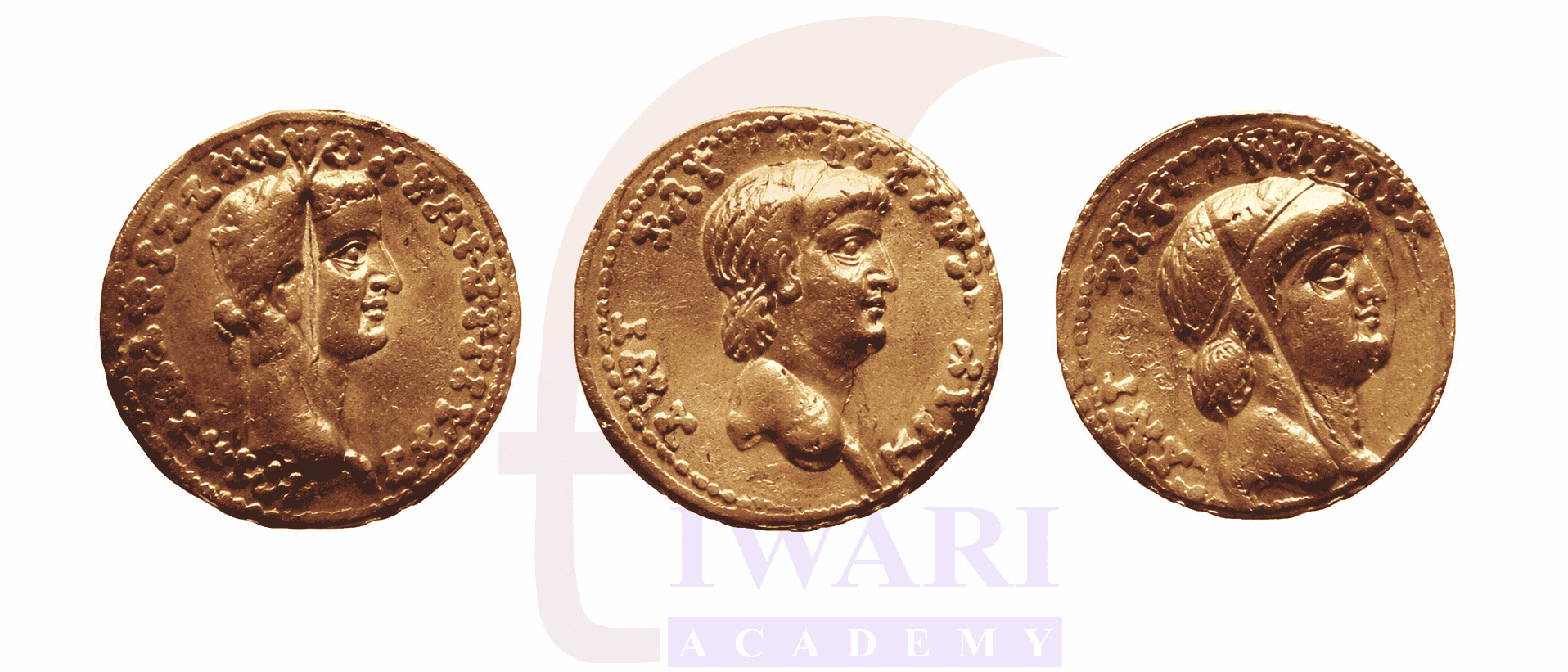
The coin shown in Fig 11.12 were found during excavations in Pudukottai in Tamil Nadu. Their heads embossed are thode of Roman kings. What conclusion can we draw from such a finding?
Answer:
This shows that in ancient times, southern India (Tamil Nadu and Kerala) had strong trade relations with the Roman Empire. It tells us that Indian goods, like spices and textiles, were probably exported to Rome and Roman traders paid Indians using their own gold coins, which shows India’s importance in maritime trade routes at that time.
Page 241 – Let’s Explore
Organise yourselves into groups of five students each. Take up a group project to collect old coins from family members, neighbours, shopkeepers, and so on. Document their various features – what are they made of, what is the year inscribed on the coins, what do you observe on the obverse and reverse sides of the coins. What can you guess from your observations? How would you know if your guesses are true?
Answer:
Our group of five collected old coins from our grandparents and neighbourhood shopkeepers. We found a 1975 25 paise coin with a lotus and “Food for All” written on it, a 1990 50 paise coin with the parliament building and a 2007 2 rupee coin showing India’s map. From these, we guessed that coin designs reflect what was important to the country at that time, like agriculture and national unity. To check if our guesses are true, we will compare our coins with pictures on the RBI website, read our school library book on Indian currency and confirm with our Social Science teacher.
Page 241 – Let’s Explore
What do you think happened as coins began to be used for all types of exchanges, whether to buy vegetables or to buy some land? What problems could have come up?
Answer:
As coins started being used for big transactions like buying land, it would become very heavy and difficult to carry a large number of coins and storing so many coins safely would also become a big problem. This is why paper money was invented as a lighter and easier alternative.
Page 242 – Let’s Explore
Look at a 50 and a 100-rupee note. Can you identify the motifs depicting India’s cultural heritage on the reverse side of the notes? Find out more about them.
Feel the surface of the notes. What special features of currency notes help visually impaired persons to identify the notes’ denominations?
Answer:
The reverse side of the ₹50 note shows the Hampi Chariot (representing India’s cultural heritage in Karnataka) and the ₹100 note shows the Rani ki Vav stepwell in Gujarat. For visually impaired persons, currency notes have special raised printing (like small raised lines or shapes) that can be felt with fingers and different notes are also different sizes, which helps people identify the denomination by touch.
Page 244 – Questions and activities
1. How does the barter system take place and what kinds of commodities were used for exchange under the system?
Answer:
The barter system takes place through the direct exchange of goods or services for other goods or services, without using money. It requires finding someone who wants what you have and has what you need (double coincidence of wants). Commodities used included cowrie shells, salt, tea, tobacco, cloth, cattle (cows, goats, etc.), seeds and sometimes unique items like large stone discs or feather coils in specific cultures.
2. What were the limitations of the barter system?
Answer:
Limitations included:
- Difficulty finding a ‘double coincidence of wants’ (both parties wanting each other’s goods).
- Lack of a common standard measure of value (making it hard to agree on fair exchange rates).
- Problem of divisibility (cannot divide items like livestock easily for smaller exchanges).
- Problem of portability (difficult to carry bulky goods for exchange).
- Lack of durability/storability (perishable goods couldn’t be stored easily for future use).
3. What were the salient features of ancient Indian coins?
Answer:
Ancient Indian coins (like kārşhāpaņas or paņas):
- Were often made from precious metals like gold, silver, copper or their alloys.
- Were issued by rulers of different kingdoms.
- Had symbols (called rūpas) punched or engraved on them.
- Symbols included nature motifs (animals, trees, hills), rulers or deities.
- Facilitated trade across different regions.
4. How has money as a medium of exchange transformed over time?
Answer:
Money has evolved significantly:
- Started with barter using various commodities (shells, salt, cattle, etc.).
- Moved to metallic money (coinage) made of precious metals (gold, silver, copper) with stamped symbols.
- Progressed to paper money (currency notes), especially for higher values, issued by a central authority (like RBI in India).
- Advanced to modern intangible forms like digital money (electronic), accessed via debit cards, credit cards, net banking, UPI, QR codes, etc., allowing direct bank account transfers.
5. What steps might have been taken in ancient times so that Indian coins could become the medium of exchange across countries?
Answer:
- Use of Precious Metals: Making coins from universally valued materials like gold and silver likely increased their acceptance abroad.
- Political Influence: Coins issued by powerful and stable kingdoms with extensive trade networks might have gained credibility and acceptance in other regions.
- Trade Routes: Active land and sea trade routes facilitated the circulation and use of coins across different territories.
- Trustworthiness: Consistent weight and purity of coins (implied) would build trust for international exchange.
6. Read the following lines from the Arthaśhāstra.
“An annual salary of 60 paņas could be substituted by an ādhaka of grain per day, enough for four meals…” (One ādhaka is equal to about 3 kg) What does this indicate about the value of one paņa?
The fine for failing to help a neighbour was 100 paņas. Compare this with the annual salary. What conclusion can you draw about the human values being encouraged through this?
Answer:
Value of 1 paņa: An annual salary of 60 paņas was equivalent to roughly 365 ādhakas of grain (1 ādhaka/day). This means 1 paņa was worth about 6 ādhakas of grain (approx. 18 kg), indicating it had considerable purchasing power for basic necessities.
Fine vs Salary & Values: The fine of 100 paņas for not helping a neighbour was substantially higher than the annual salary of 60 paņas. This suggests that community cohesion and mutual help were highly valued and neglecting these duties was penalized very heavily, emphasizing their social importance.
7. Write and enact a skit to show how people may have persuaded each other to use cowrie shells (or other such items) as the medium of exchange.
Answer:
Skit: “The Trouble with Trading”
Characters: Meru (a farmer), Tana (a fisherman), Old Elder Boro (village elder), Villagers
Scene 1
(Meru enters with a sack of rice, Tana with a basket of fish.)
Meru: Tana, would you trade fish for my rice?
Tana: I already have rice! I need a new net instead.
Meru: I don’t make nets… you’ll have to find someone who does.
(Tana wanders around, offering fish to villagers, who all refuse.)
Tana: (tired) This barter system is so difficult!
Scene 2
(Meru and Tana go to Old Elder Boro.)
Meru: Elder Boro, trading is so hard! We can never find the right person with the right need.
Old Elder Boro: (holding up shells) What if we all agree to accept these cowrie shells for anything we sell? They’re light, easy to carry and don’t rot.
Tana: So I could sell fish for shells, then use those shells to buy a net from anyone?
Old Elder Boro: Exactly! We just need to agree on how many shells each item is worth.
Scene 3
(All villagers gather.)
Old Elder Boro: From today, let’s use cowrie shells to trade among ourselves!
All Villagers: Agreed!
Meru: No more searching for the exact person to trade with!
Tana: And no more arguing over how much fish equals how much rice!
(Villagers cheer, holding up their shells.)
THE END
Moral: This skit shows how the difficulties of barter – like the double coincidence of wants – pushed ancient communities to adopt commonly accepted items like cowrie shells as an early form of money.
8. The RBI is the only legal source that prints and distributes paper currency in India. To prevent illegal printing of notes and their misuse, the RBI has introduced many security features. Find out what some of these measures are and discuss them in class.
Answer:
Security Features of Indian Currency Notes
The Reserve Bank of India (RBI) incorporates numerous security features in Indian banknotes to prevent counterfeiting. Here are the key security features:
- Watermark: Indian currency notes contain a multi-directional watermark featuring the portrait of Mahatma Gandhi with a light and shade effect, visible when held against light.
- Security Thread: Currency notes have a windowed security thread with inscriptions ‘भारत’ and ‘RBI’ that changes color when viewed from different angles. In higher denominations, the thread appears as a continuous line when held against light.
- Latent Image: On the front of higher denomination notes (₹100, ₹200, ₹500, ₹2000), there’s a latent image of the note’s denomination visible only when the note is held at a specific angle.
- Microlettering: Very small text “RBI” and the denomination value can be seen under a magnifying glass in various areas of the notes.
- Intaglio Printing: Raised printing creates a tactile effect on the main image, Mahatma Gandhi portrait, RBI seal, guarantee and promise text, and Ashoka Pillar emblem.
- Color-shifting Ink: In higher denominations, certain elements are printed with color-shifting ink (like green to blue) that changes color when viewed from different angles.
- See-through Register: Partial designs on front and back that form a complete picture when held against light.
- Fluorescence: Several elements on the notes glow under ultraviolet light.
- Optically Variable Ink (OVI): Used in the denomination numeral on the ₹500 and ₹2000 notes, changing color from green to blue when tilted.
- Geometric Patterns: Intricate geometric designs that are difficult to reproduce accurately.
- Bleed Lines: Colored lines at the edges that are precisely aligned and printed.
- EURion Constellation: A pattern of symbols designed to prevent color photocopying.
- Angular Security Feature: Some denominations have angular lines and designs that are visible only at certain angles.
- Identification Mark: Raised shapes (like circle, triangle, etc.) on the left edge to help visually impaired people identify the denomination.
- Year of Printing: Each note contains the year of printing, allowing for authentication and tracking.
9. Interview a few of your family members and local shopkeepers, and ask them their preferences in making and receiving payments-do they prefer cash or UPI? Why?
Answer:
Payment Preferences: Cash vs. UPI
Interview Report by Yogesh
Class 7-B
For this assignment, I interviewed six people – three family members and three local shopkeepers – about their preferences between cash and UPI payments.
Family Members Interviewed:
1. My Mother (38 years old)
Preference: Mostly UPI, sometimes cash
Reasons:
- “UPI is very convenient for quick payments”
- “I don’t have to worry about carrying exact change”
- “I can check all my payments in the app history”
- “But I still keep some cash for small shops or when networks are down”
2. My Father (42 years old)
Preference: Uses both equally
Reasons:
- “UPI is excellent for bill payments and online shopping”
- “For daily expenses like vegetables or small items, I prefer cash”
- “I’m a bit concerned about digital security sometimes”
3. My Grandmother (65 years old)
Preference: Strongly prefers cash
Reasons:
- “I understand cash better – I can see and count it”
- “I’m not very comfortable with smartphone apps”
- “I feel more in control of my spending with physical money”
- “My son is teaching me how to use UPI, but I’m still learning”
Local Shopkeepers Interviewed:
1. Mr. Sharma (General Store Owner)
Preference: Prefers UPI for receiving payments
Reasons:
- “Money directly goes to my account – safer than keeping cash”
- “No issues with giving change to customers”
- “Easy to keep track of daily sales”
- “Network problems sometimes cause delays”
2. Mrs. Patel (Vegetable Vendor)
Preference: Prefers cash
Reasons:
- “UPI payments sometimes fail due to network issues”
- “Some customers take too long to make UPI payments during busy hours”
- “I’m not very comfortable with technology”
- “Cash is immediate – I can use it right away for my suppliers”
3. Mr. Khan (Medical Store Owner)
Preference: Accepts both, slightly prefers UPI
Reasons:
- “UPI reduces the risk of counterfeit notes”
- “Easier accounting at the end of the day”
- “But I never refuse cash – many elderly customers prefer it”
- “During rush hours, UPI transactions can be faster than counting change”
Conclusion:
From my interviews, I found that:
- Younger people generally prefer UPI for its convenience and record-keeping.
- Older people often prefer cash because they find it more familiar and easier to understand.
- Shopkeepers have mixed preferences depending on their business type and customer base.
- Everyone mentioned keeping some cash for emergencies or when digital payments aren’t working.
- The main reasons people prefer UPI are convenience, security and not needing exact change.
- The main reasons people prefer cash are familiarity, no dependency on technology and immediate availability.
This project helped me understand that both payment methods have advantages and disadvantages. As India moves toward digital payments, it’s interesting to see how different people are adapting at different rates.
Class 7 Social Science Part 1 Chapter 11 Extra Questions
Class 7 Social Science Part 1 Chapter 11 Very Short Answer Type Questions.
Very Short Answer Type Questions
1. What is the barter system?
See AnswerThe barter system is a way of exchanging goods and services without using money.
2. What is money?
See AnswerMoney is the common tool that everybody accepts to make or receive payments for goods and services.
3. What is a transaction?
See AnswerA transaction is a piece of business done between people, especially an act of buying or selling.
4. What are commodities?
See AnswerCommodities are products or goods that can be traded, bought and sold.
5. What is the double coincidence of wants?
See AnswerIt is a situation where two people each have something the other wants and can exchange directly.
6. What is divisibility, as explained in the chapter?
See AnswerDivisibility is the capacity of an object or material to be split into pieces or portions.
7. What is portability?
See AnswerPortability is the ability of an object or material to be carried or moved from one place to another.
8. What is durability?
See AnswerDurability is the trait of an object that indicates its longevity and ability to withstand damage over time.
9. What were ancient Indian coins called?
See AnswerAncient Indian coins were called kārṣhāpaṇas or paṇas, with symbols punched on them called rūpas.
10. What is minting?
See AnswerMinting is the process of producing coins in a facility called a mint.
11. What is an alloy?
See AnswerAn alloy is a metal made by combining two or more metallic elements, making the coin strong.
12. Where was paper money first used?
See AnswerPaper money was first used in China and introduced in India in the late 18th century.
13. Which authority controls the issue of currency in India today?
See AnswerThe Reserve Bank of India (RBI) controls the issue of currency in India today.
14. What is a QR code used for, as explained in the chapter?
See AnswerA QR code contains information about a receiver’s bank account and is used for making digital payments.
15. Name any one traditional fair mentioned in the chapter where barter still exists today.
See AnswerThe Junbeel Mela in Morigaon district of Assam is a fair where barter still exists today.
Class 7 Social Science Part 1 Chapter 11 Short Answer Type Questions.
Short Answer Type Questions
1. How did the barter system work, and what commodities were used?
See AnswerIn the barter system, people exchanged goods or services directly for other goods and services without money. Commodities like cowrie shells, salt, tea, tobacco, cloth, cattle and seeds were commonly used for such exchanges around the world.
2. What problem does the ‘double coincidence of wants’ create in the barter system?
See AnswerThis problem requires that two people each have exactly what the other wants and are willing to exchange them directly. Finding such a perfect match was difficult, making barter transactions time-consuming and inconvenient for everyday needs.
3. Why was there a need for a ‘common standard measure of value’ in the barter system?
See AnswerWithout a common standard measure of value, it became difficult to compare the worth of different goods, such as how many bags of wheat should equal one pair of shoes. This often led to disagreements and made exchanges seem unfair to one party.
4. Explain the problems of divisibility, portability and durability in the barter system using the farmer’s example.
See AnswerThe farmer could not divide his ox to exchange for smaller items like shoes (divisibility), found it difficult to carry the ox everywhere for exchanges (portability), and even after exchanging it for wheat, the wheat would rot or get eaten by rats (durability).
5. What are the four basic functions of money?
See AnswerMoney serves as a medium of exchange, replacing the need for barter; a store of value, since it can be saved for later, unlike perishable goods; a common measure of value for comparing prices; and a standard of deferred payment, allowing payments later.
6. Describe the coinage system used in ancient India.
See AnswerAncient Indian coins were called kārṣhāpaṇas or paṇas, made from precious metals like gold, silver, copper or their alloys. They had symbols called rūpas punched on them and different kingdoms issued their own coins with unique motifs.
7. How did Roman coins found in Pudukkottai, Tamil Nadu, help historians?
See AnswerThese coins, embossed with the heads of Roman kings, were found during excavations in Tamil Nadu. Their discovery indicates that southern India had maritime trade with Rome and scholars conclude that this trade was in favour of India.
8. What is the Junbeel Mela, and why is it significant?
See AnswerThe Junbeel Mela is a three-day annual fair in Assam where tribal communities like the Tiwa, Karbi, Khasi and Jaintia still practise barter today, exchanging local produce, herbs, spices and handmade goods, showing that barter traditions continue alongside modern money.
9. Why did paper money replace coins as the preferred medium of exchange?
See AnswerAs coins began to be used for all types of transactions, it became difficult to carry and store large numbers of coins. This led to the search for a lighter, more convenient alternative, resulting in the use of paper money or currency.
10. What are the new, digital forms of money described in the chapter?
See AnswerNew forms of money include digital money, which is intangible and exists in electronic form. This includes payment methods like debit cards, credit cards, net banking and UPI (Unified Payments Interface), which transfer money directly between bank accounts.
Class 7 Social Science Part 1 Chapter 11 Long Answer Type Questions.
Long Answer Type Questions
1. Explain the barter system and the difficulties people faced while using it, with examples.
See AnswerThe barter system involved exchanging goods or services directly for other goods and services without using money, using commodities like cowrie shells, cattle, salt and cloth. As shown through the farmer’s example, this system created several difficulties: the double coincidence of wants (finding someone who wants exactly what you offer and offers exactly what you want), no common standard measure of value to compare goods fairly, the problem of divisibility (an ox cannot be split for smaller exchanges), portability (carrying an ox or heavy goods everywhere) and durability (wheat rotting or being eaten by rats before it could be used).
2. Why did money come into existence, and what are its basic functions?
See AnswerAs the variety of goods exchanged grew and trade distances increased, the barter system became inconvenient, creating a need for a common medium of exchange – leading to the invention of money. Money performs four basic functions: it acts as a medium of exchange, replacing the need to barter goods directly; a store of value, since unlike wheat, money doesn’t rot and can be saved for future use; a common measure of value, allowing comparison of prices of different goods and services; and a standard of deferred payment, allowing people to pay for goods at a later date.
3. Describe the evolution of money in India, from commodities to digital payments.
See AnswerMoney in India evolved through several stages. It began with barter and commodity money like cowrie shells around 6000 BCE, followed by metal coinage using iron, silver, gold and copper by 1000-600 BCE, minted and controlled by rulers of various kingdoms. Official paper money was introduced around 1861, offering a lighter alternative to carrying large amounts of coins. In modern times, digital money emerged, including debit and credit cards from around 1980 and UPI (Unified Payments Interface) since 2016, allowing instant transfer of money between bank accounts using mobile phones and QR codes.
4. What historical evidence do we have about ancient Indian coinage, and what does it tell us?
See AnswerAncient Indian coins, called kārṣhāpaṇas or paṇas, were made from precious metals like gold, silver and copper or their alloys, with symbols called rūpas punched onto them. Different kingdoms issued their own coins, such as the Chalukyas, whose coins featured a Varaha image and a royal parasol and the Cholas, whose silver coins showed a tiger emblem. Interestingly, Roman gold coins found during excavations in Pudukkottai, Tamil Nadu, show that southern India had established maritime trade links with Rome, indicating that ancient Indian trade extended well beyond the subcontinent.
5. How has the concept of barter survived even today, despite the widespread use of money?
See AnswerAlthough money has largely replaced barter, some barter practices continue even today. The Junbeel Mela in Assam is a centuries-old fair where tribal communities still exchange local produce, herbs, spices and handmade goods without using money. Similarly, modern examples include book exchange clubs where children swap old books for new ones and vendors who exchange new utensils for old clothes from households, benefiting both parties. These examples show that while money has become the dominant medium of exchange, the spirit of barter still exists in various forms across India’s economic and social life.
Frequently Asked Questions
What is the main idea behind Chapter 11 of Class 7 Social Science 2026-27?
Chapter 11, From Barter to Money, explains how people exchanged goods and services through the barter system before money existed, the practical problems this system created and how money evolved over time as a solution – from commodities and metal coins to paper currency and today’s digital payments like UPI.
Is Class 7 Social Chapter 11 part of the new NCERT syllabus for 2026-27?
Yes. This chapter is included in the revised NCERT Class 7 Social Science textbook titled “Exploring Society: India and Beyond, Part 1”, which has been prepared under the new curriculum framework and reprinted for the 2026-27 academic session.
How does Class 7 Social Part 1 Chapter 11 connect economics with Indian history and culture?
This chapter links economic concepts with historical evidence, such as ancient Indian coins called kārṣhāpaṇas or paṇas, Roman coins excavated in Pudukkottai and living traditions like the Junbeel Mela in Assam, where barter still continues today. This helps students see how money and trade are deeply connected to India’s history and living cultural practices.
What are the four basic functions of money explained in Class 7 Social Chapter 11?
The chapter explains that money serves as a medium of exchange (replacing barter), a store of value (unlike wheat, which can rot, money can be saved for later use), a common measure of value (helping compare prices of goods and services) and a standard of deferred payment (allowing payments to be made at a later date).
How will Class 7 Social Science Part 1 Chapter 11 help students in exams?
This chapter uses relatable examples like a farmer needing shoes, a sweater and medicines, along with real historical evidence and a timeline of money’s evolution in India. Practising the question-answer sets below, along with the textbook’s own activities on ancient coins and payment preferences, will help students build strong conceptual clarity for exams.