



by Tiwari Academy Team
NCERT Class 7 Social Science Chapter 6 Part 1 The Age of Reorganisation Solutions – Exercise and Extra Question Answers for Exam. Chapter 6, The Age of Reorganisation, from the NCERT Class 7 Social Science textbook Exploring Society: India and Beyond (Part 1), for the 2026-27 session, explores the eventful period between the 2nd century BCE and the 3rd century CE, following the decline of the mighty Maurya Empire. After the assassination of the last Maurya emperor around 185 BCE by his commander-in-chief Pushyamitra Shunga, the Indian subcontinent witnessed the rise of numerous regional kingdoms—both from within, like the Shungas, Chedis, Satavahanas, Cholas, Cheras, Pandyas and from outside, like the Indo-Greeks, Shakas and Kushanas. Continuing the story of time-travellers Bhavisha and Dhruv, the chapter examines how these kingdoms competed for power through warfare and matrimonial alliances, while simultaneously enriching India through trade, art, architecture and literature. Students learn about the Sangam Age in the south, iconic structures like the Bharhut Stupa and Udayagiri caves, the fusion of Greek and Indian art in the Gandhara and Mathura schools and cultural milestones such as the Silappadikaram epic and the origin of the Shaka Samvat calendar. This guide provides a complete summary, key concepts and practice questions to help students revise Chapter 6 effectively for exams.
Quick Links:
- Exercises Question Answers
- Very Short Answer Type Questions
- Short Answer Type Questions
- Long Answer Type Questions
Download Class 7 Social Science App to study Class 7 Social Offline.
NCERT Class 7 Social Science Part 1 Chapter 6 Solutions
Class 7 Social Science Part 1 Chapter 6 Question Answer
Page 117 – The Big Questions
1. Why is the period that followed the Maurya empire sometimes called the ‘Age of Reorganisation’?
Answer:
The period after the Maurya Empire is called the ‘Age of Reorganisation’ because the big empire split into smaller kingdoms. These kingdoms often fought for power and new rulers, including some from outside India, mixed their cultures with Indian traditions. This led to changes in politics, art and society.
2. What were the values or principles that guided emperors of that period?
Answer:
The emperors valued “religious tolerance”, “fairness” and “welfare for their people”. They supported all faiths (like Hinduism, Buddhism, Jainism), built temples and caves and helped scholars. Many kings, like Khāravela and the Sātavāhanas, also took pride in protecting their subjects and promoting art, trade and justice.
3. How did foreign invaders assimilate into Indian society and contribute to cultural confluence?
Answer:
Foreign invaders like Indo-Greeks, Śhakas and Kuṣhāṇas adopted local customs and religions while introducing their own elements. They issued coins featuring Indian deities, built monuments honoring Indian gods and created unique art styles that blended their traditions with Indian aesthetics, especially visible in the Gāndhāra and Mathurā schools of art.
Page 118 – Let’s Explore
Create a timeline on a sheet of paper marking the period from the first year of the 2nd century BCE and ending in the last year of the 3rd century CE. How many years does this period cover? As we progress through the chapter, mark the key individuals, kingdoms and events on the timeline.
Answer:
The 2nd century BCE starts from 200 BCE and the 3rd century CE ends at 300 CE.
So the timeline covers 200 (BCE) + 300 (CE) = 500 years in total.
I would draw a line, mark 200 BCE at one end and 300 CE at the other end, with 0 (the middle point) showing where BCE changes to CE.
Page 120 – Let’s Explore
In the previous chapter, you studied the map of the Maurya empire (see page 100). Above is a map of the post-Maurya period. How many kingdoms can you count in the area that were previously under the control of the Maurya empire?
Answer:
Indo-Greeks, Kushanas, Shakas, Shungas, Sātavāhanas, Chedis, Cholas, Cheras and Pāṇḍyas. That makes about 9 kingdoms/dynasties in the region that was once one single Maurya empire.
Page 124 – Let’s Explore
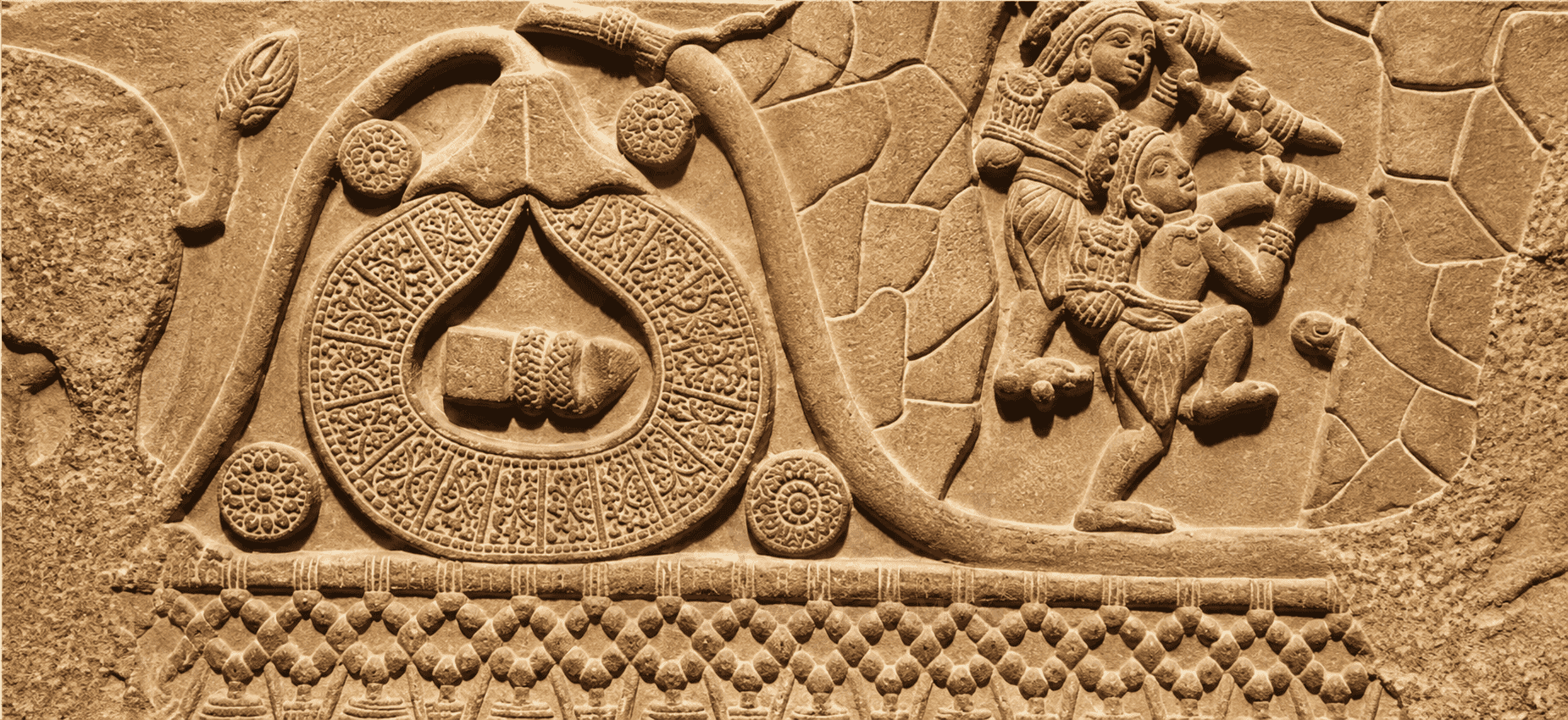
Below is a panel from the Bharhut Stūpa. Look at the two figures on the right. What are they doing? Can you guess their profession? Notice their attire. What does this tell us about them? List other details that you notice in the panel and discuss your findings in class.
Answer:
The two figures on the right look like they are dancing and playing music – one seems to be dancing with raised arms and the other looks like a musician. So their profession was probably dancers or performers/artists. Their attire has jewellery, ornaments and specific hairstyles which shows they may have belonged to the artist or performer class of that time. Other details in the panel: there’s a stupa/lotus shape in the middle, decorative border patterns and figures who seem to be devotees.
Page 124 – Let’s Explore
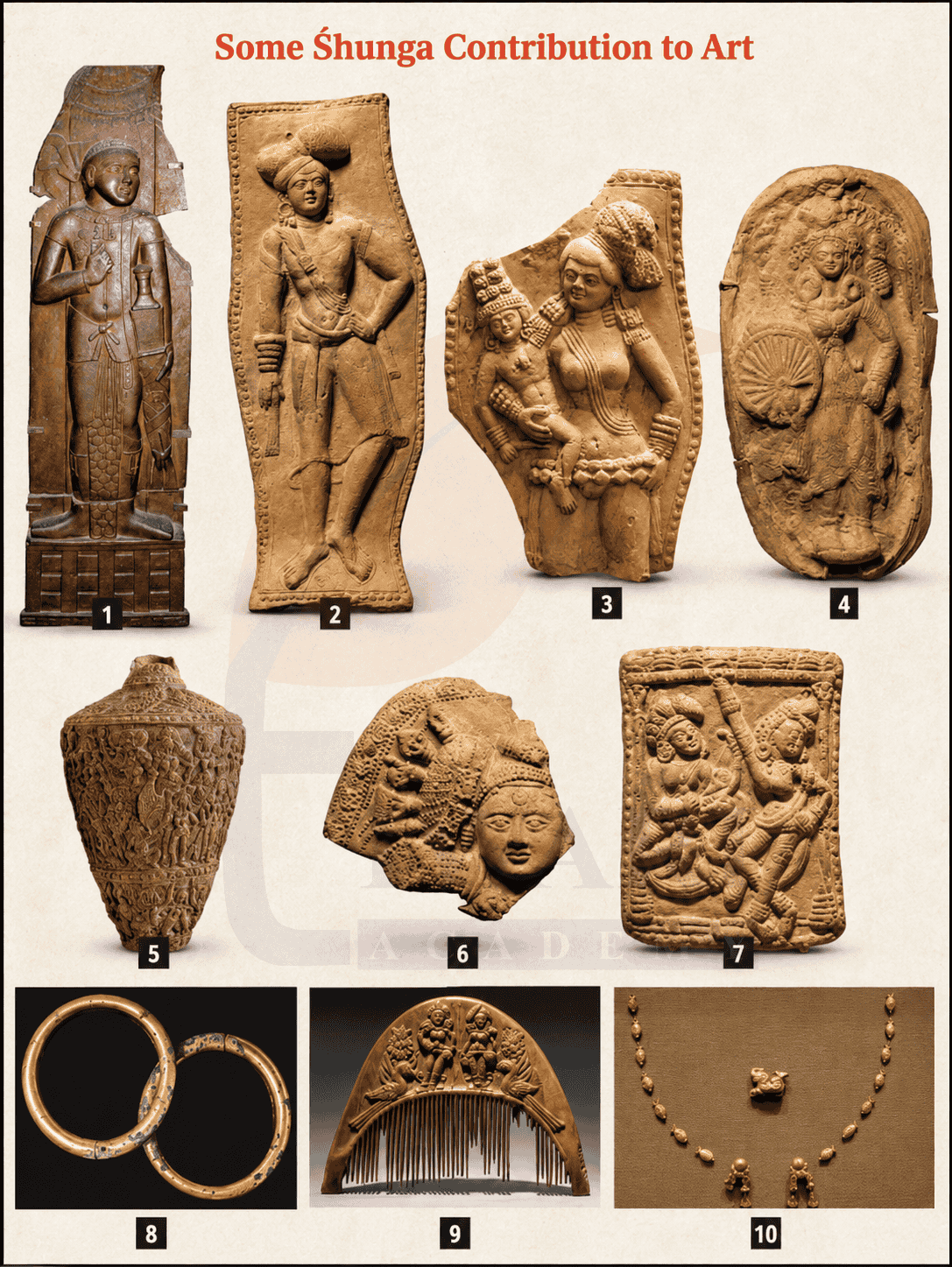
Look closely at the pictures in the collage in Fig 6.6 (on the previous page). In a note, write down your observations on the clothes, the jewellery, and other objects of daily use.
Answer:
- Clothes: The figures wear draped garments and some wear elaborate turbans/headdresses.
- Jewellery: There are bangles, necklaces with beads, combs decorated with carvings and hair ornaments – showing people liked to decorate themselves a lot.
- Other objects: There’s a vase with carvings, showing pottery / craft skills and a comb made of ivory, showing personal grooming items were used.
This tells me that people in the Shunga period cared about fashion, wore detailed jewellery and had skilled craftsmen who made fine objects.
Page 135 – Let’s Explore
What do you think might have been the meaning of having deities like Vāsudeva-Kṛiṣhṇa or Lakṣhmī on some Indo-Greek coins?
Answer:
I think this shows that the Indo-Greek rulers, even though they came from outside India, respected and adopted Indian gods and culture to connect with the local people. It shows that they wanted to be accepted by Indians, so they mixed their own Greek beliefs with Indian religious symbols on coins.
Page 136 – Let’s Explore
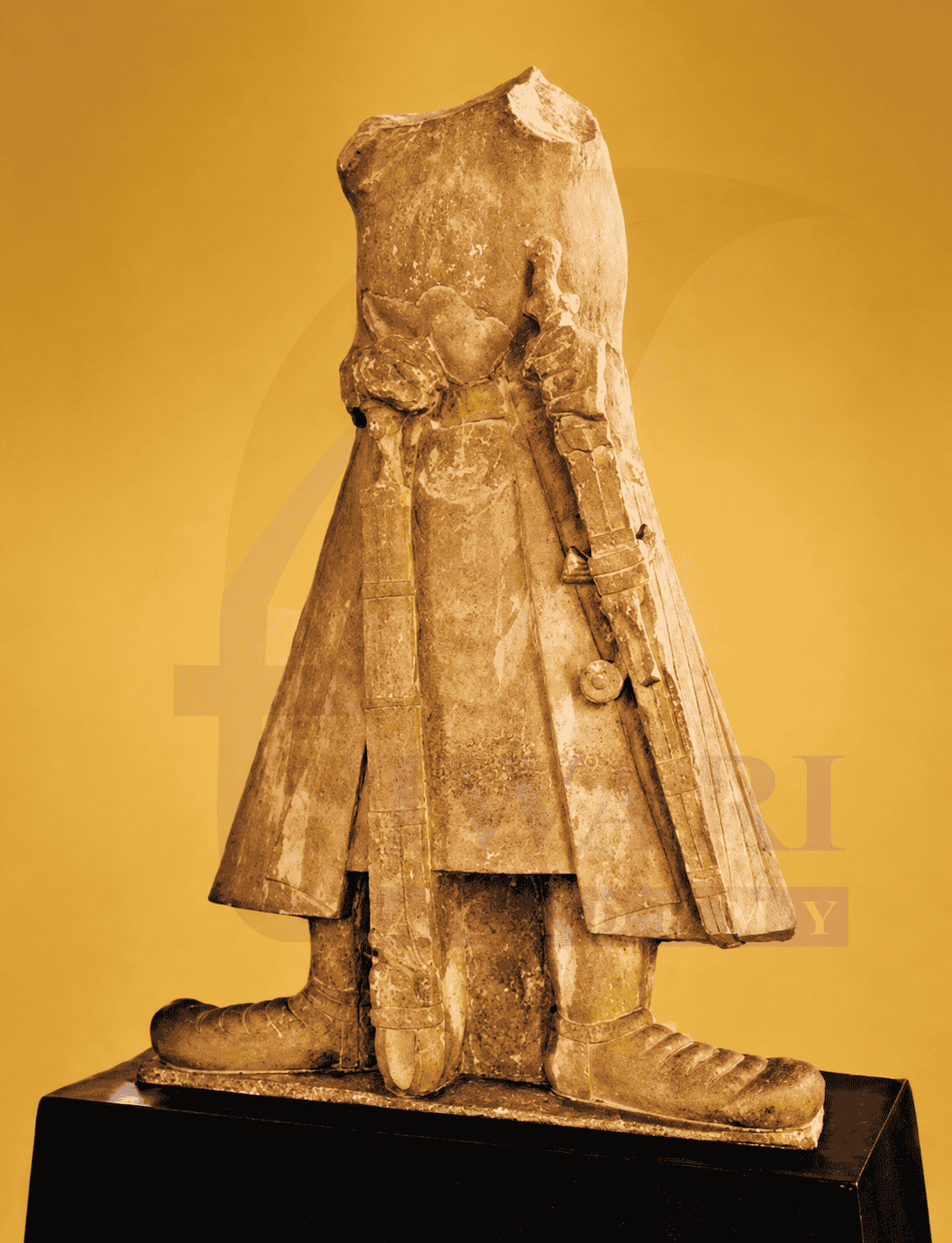
Carefully observe this massive statue (1.85 m high) and notice the clothing, weapon, and footwear. What does it tell us about this figure?
Answer:
The statue shows heavy, thick clothing like a long coat/robe, which looks like clothing from Central Asia (not typical Indian clothing) — showing his foreign origin. He is shown holding a weapon (mace or sword), which tells us he was a warrior king. His footwear (boots) also looks foreign style, suitable for horse-riding, which shows the Kushanas were originally horse-riding people from Central Asia.
Page 136 – Let’s Explore
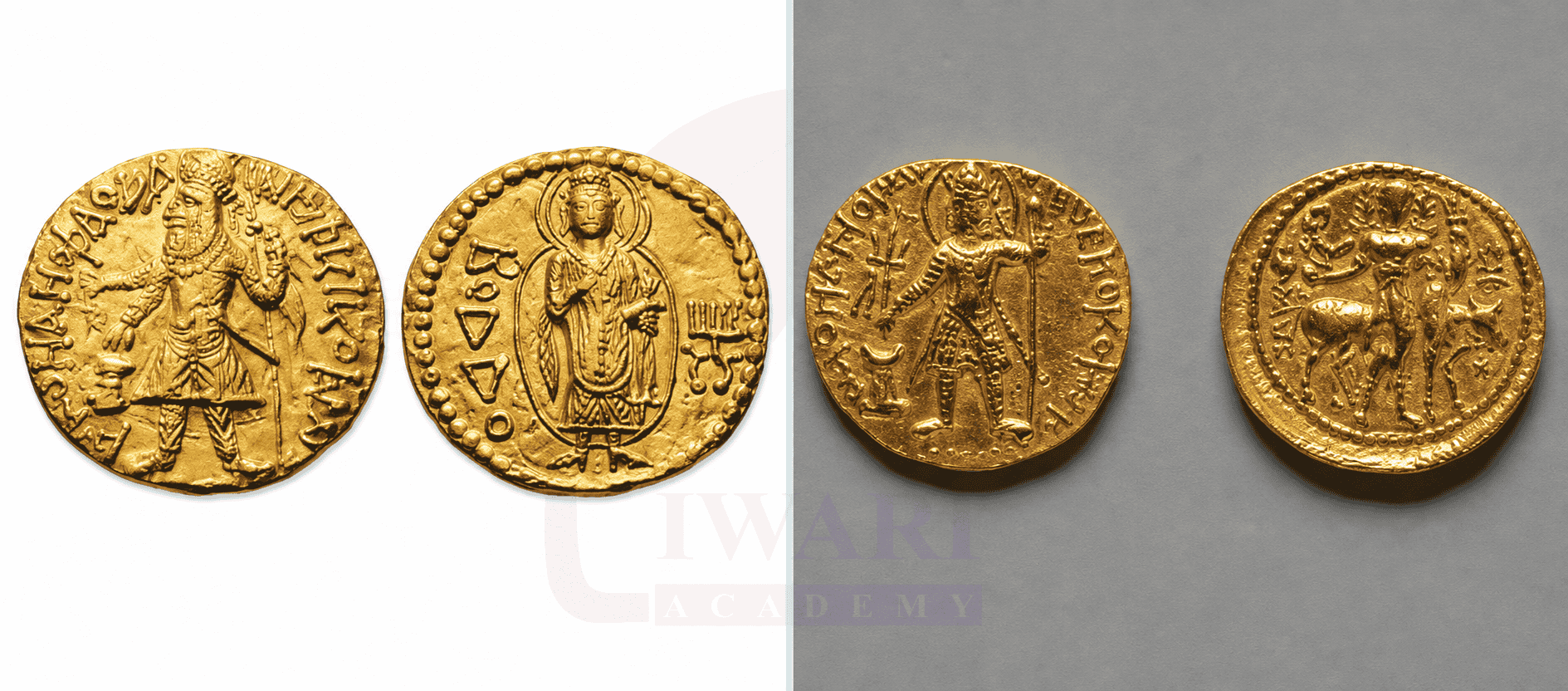
Observe the coins carefully. Who, besides the emperor, appears on the coin?
Answer:
Along with the emperor, gods like Buddha and Śhiva (with the bull Nandi) appear on the coins. This shows Kaṇiṣhka respected many religions, not just one.
Page 140 – Let’s Explore
Now that you are familiar with the basic characteristics of the Mathurā and Gāndhāra styles of art, study the pictures of artefacts given in Fig. 6.27 on the right page and try to identify which school of art each artefact belongs to. Write your observations with justifications and discuss your answers with your classmates.
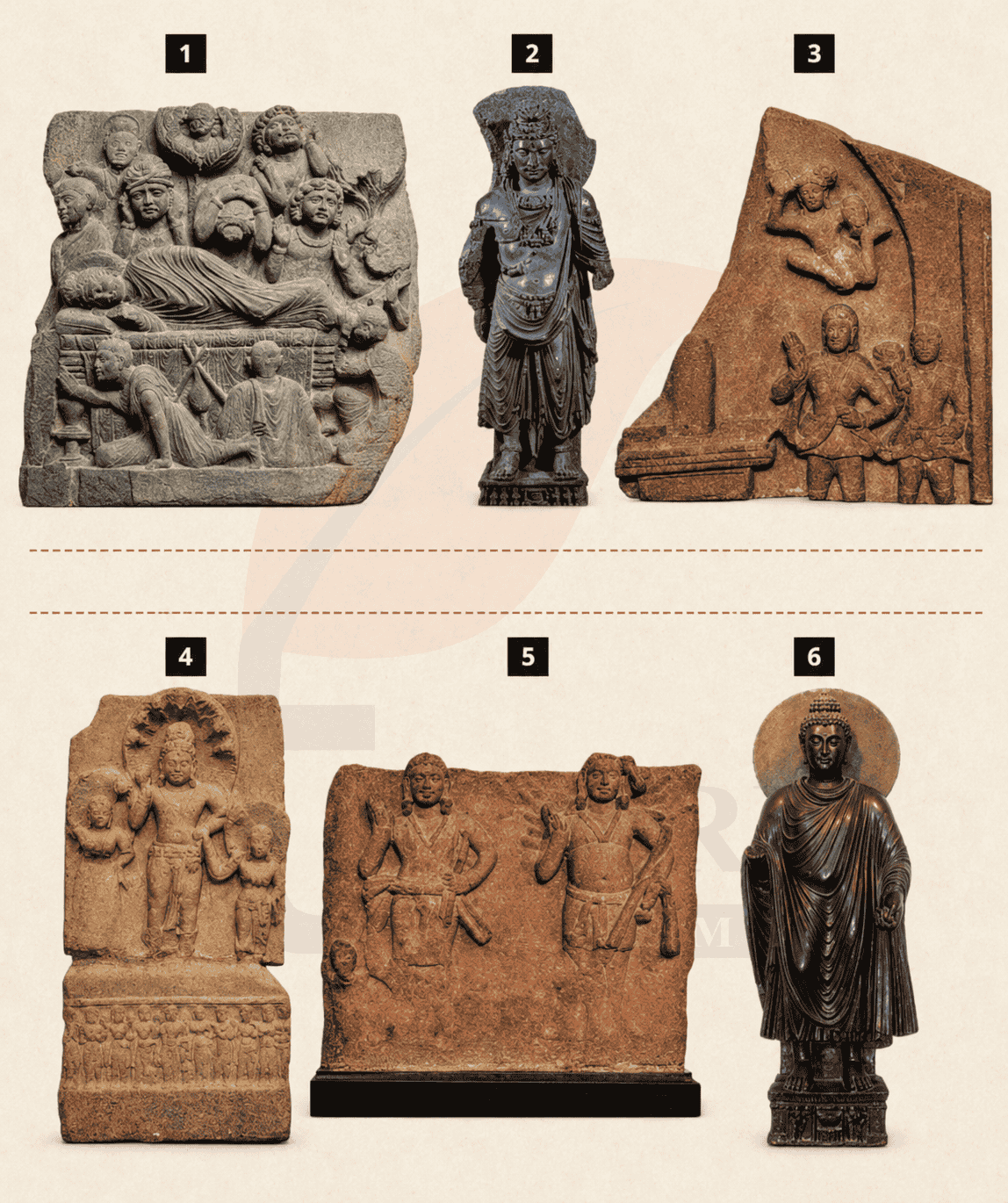
Answer:
- Death of Buddha – Gandhara style (grey stone, realistic figures)
- Bodhisattva Maitreya – Gandhara style (grey stone, Greek-style robe)
- Shiva linga with devotees – Mathura style (reddish stone, Indian theme)
- Naga between two Nagis – Mathura style (reddish stone, Indian deity)
- Kartikeya and Agni – Mathura style (reddish stone, Indian gods)
- Standing Buddha – Gandhara style (dark stone, flowing Greek-style robe)
Page 143 – Questions and activities
1. Why was the post-Maurya era also known as the era of reorganisation?
Answer:
The Era of Reorganization
After Ashoka’s death around 185 BCE, the powerful Maurya Empire broke apart. This period is called the “Age of Reorganization” because many regions formed new competing kingdoms across India. The political map changed significantly as former tributary kingdoms became independent powers.
Despite political conflicts, this era saw remarkable cultural development. Art, architecture and literature flourished with new styles. The Bharhut Stupa showcases beautiful Buddhist carvings from the Shunga period. Sanskrit emerged as a preferred language for literature and philosophy.
Foreign invaders like Indo-Greeks and Kushanas brought new influences but also embraced Indian culture, creating unique fusion styles like the Gandhara and Mathura schools of art. Trade expanded both within India and with distant regions like Rome, further enriching cultural exchange.
2. Write a note on the Sangam literature in 150 words.
Answer:
Sangam literature emerged during the period between the 2nd or 3rd century BCE and the 3rd century CE in South India. The word “sangam” comes from Sanskrit “sangha”, meaning “association” or “coming together”, referring to assemblies of poets.
This literature developed during the rule of three powerful southern kingdoms: the Cheras, Cholas and Pāṇḍyas. These kingdoms often competed with each other but also contributed to the region’s cultural growth and trade prosperity.
The relative political stability and economic prosperity of these kingdoms created conditions where arts and literature could flourish. Sangam literature consists of several collections of poems and is the oldest literature from South India.
Historians value these works because they provide insights into the society and culture of that time. Sangam poetry skillfully expresses personal emotions like love and societal values like heroism and generosity. These works defined the entire era, which came to be known as the “Sangam Age”.
3. Which rulers mentioned in this chapter included their mother’s name in their title, and why did they do so?
Answer:
Rulers Who Used Their Mother’s Names
In the Sātavāhana dynasty, princes were often named after their mothers. The most famous example was Gautamīputra Sātakarṇi, whose name included his mother Gautamī Balaśhrī’s name. The word “putra” means “son”, so his name literally meant “son of Gautamī”.
This tradition was significant because it showed the importance and respect given to women, particularly mothers, in the Sātavāhana society. Gautamī Balaśhrī herself was a powerful queen who donated land to Buddhist monks and had an important inscription carved in Nāśhik, demonstrating her influence in the kingdom.
A coin of Sātakarṇi even bears the inscription “King Lord Sātakarṇi, son of Gautamī”, highlighting how important this connection was to their royal identity and possibly indicating that maternal lineage was valued in their culture.
4. Write a note of 250 words about one kingdom from this chapter that you find interesting. Explain why you chose it. After presenting your note in class, find out what kingdoms have been the most selected by your classmates.
Answer:
My Chosen Kingdom: The Satavahanas
Out of all the kingdoms we studied in this chapter, I found the Satavahanas the most interesting and I have chosen to write about them.
The Satavahanas ruled large parts of the Deccan, including present-day Andhra Pradesh, Telangana and Maharashtra, starting from the 2nd century BCE. What fascinates me most about them is how advanced and connected their kingdom was. Their coins often showed ships with two masts, which tells us they had strong shipbuilding skills and were active in maritime trade. Their trade network reached all the way to the Roman Empire, exchanging goods like spices, textiles, sandalwood, pearls and ivory. I find it amazing that a kingdom so long ago was already trading internationally by sea.
Another reason I chose the Satavahanas is because of their unique tradition of naming princes after their mothers, like Gautamiputra Satakarni, named after his mother, Gautami Balashri. This shows that royal women had real influence and importance in their society, which is quite unusual and modern-sounding for such an ancient period.
I also liked learning about the Naneghat caves near Pune, where a Satavahana queen performed the ashvamedha yajna and made generous donations of land, cows and silver coins. The caves at Karla and Pitalkhora, carved beautifully out of rock for Buddhist monks, show how skilled their artisans were.
Overall, the Satavahanas’ mix of trade, religious tolerance, strong queens and beautiful rock-cut art makes them the most interesting kingdom to me from this chapter.
5. Imagine you have the chance to create your own kingdom. What royal emblem would you choose, and why? What title would you take as the ruler? Write a note about your kingdom, including its values, rules and regulations, and some unique features.
Answer:
My Kingdom: The Land of Harmony
Royal Emblem: A banyan tree with roots shaped like hands holding a lotus and a sword. The tree shows strength and unity, the lotus stands for peace and the sword for protection.
Title: Rajadhiraja Samrat Vikramaditya (“Great King of Kings, Sun of Power”) – to show strength and fairness.
Values & Rules:
- Religious Tolerance: Like Khāravela and the Sātavāhanas, all faiths are respected.
- Justice: Inspired by Silappadikāram, rulers must be fair to everyone.
- Trade & Art: Like the Cheras and Kushāṇas, we’ll support traders and artists.
Unique Features:
- Free schools near temples, caves, and libraries (like the Naneghat Caves).
- A grand water system like the Cholas’ Kallanai to help farmers.
To build a kingdom where everyone feels safe, valued and inspired – just like the great empires of the past.
6. You have read about the architectural developments of the post-Maurya era. Take an outline of the Indian subcontinent and mark the approximate locations of some of the ancient structures mentioned in this chapter.
Answer:

Class 7 Social Science Part 1 Chapter 6 Extra Questions for Exam Preparation
Class 7 Social Science Part 1 Chapter 6 Very Short Answer Type Questions.
Very Short Answer Type Questions
1. Who assassinated the last Maurya emperor, and around which year?
See AnswerPushyamitra Shunga, the commander-in-chief, assassinated the last Maurya emperor around 185 BCE.
2. Name the dynasty founded by Pushyamitra Shunga.
See AnswerPushyamitra Shunga founded the Shunga dynasty, which ruled over parts of north and central India.
3. What Vedic ritual did Pushyamitra Shunga perform to establish his power?
See AnswerHe performed the ashvamedha yajna, a Vedic ritual, to establish himself as a powerful ruler.
4. Who compiled the Yoga Sutras during the Shunga period?
See AnswerPatanjali compiled the Yoga Sutras during the Shunga period.
5. Name the famous stupa to which the Shungas added carved railings.
See AnswerThe Shungas added beautifully carved railings and reliefs to the Bharhut Stupa in Madhya Pradesh.
6. Which region did the Satavahanas primarily rule over?
See AnswerThe Satavahanas primarily ruled over the Deccan, including Andhra Pradesh, Telangana, and Maharashtra.
7. Name the two famous capital cities of the Satavahanas.
See AnswerThe two famous Satavahana capitals were Amravati and Pratishthana (Paithan).
8. Which ruler of the Chedi dynasty was known as “bhikshu-raja”?
See AnswerKing Kharavela of the Chedi dynasty was sometimes called “bhikshu-raja,” meaning monk-king.
9. Name the three “crowned kings” mentioned in Sangam literature.
See AnswerThe three “crowned kings” mentioned are the Cholas, Cheras and Pandyas.
10. What is the meaning of the word ‘sangam’?
See AnswerThe word ‘sangam’ comes from Sanskrit ‘sangha’, meaning “association” or “coming together”.
11. Name the epic that tells the story of Kannagi.
See AnswerThe epic Silappadikaram, or “The Tale of the Anklet”, tells the story of Kannagi.
12. Which king built the Kallanai or Grand Anicut?
See AnswerThe Chola king Karikala built the Kallanai or Grand Anicut for irrigation purposes.
13. Who were the ‘Indo-Greeks’, and how did they emerge?
See AnswerIndo-Greeks were descendants of Alexander’s satraps who established independent domains in northwest India.
14. What is the Heliodorus pillar associated with and where is it located?
See AnswerThe Heliodorus pillar, near Vidisha, is named after an Indo-Greek ambassador who praised Vasudeva.
15. Name the two major schools of art from the Kushana period.
See AnswerThe two major schools of art are the Gandhara school and the Mathura school.
Class 7 Social Science Part 1 Chapter 6 Short Answer Type Questions.
Short Answer Type Questions
1. Why is the period after the Maurya Empire called the ‘Age of Reorganisation’?
See AnswerThis period is called the ‘Age of Reorganisation’ because existing regions were being reorganised into new kingdoms that constantly competed to become powerful. The map of India changed significantly and many earlier tributary kingdoms became independent, reshaping political power across the subcontinent.
2. What methods did the ‘new’ kingdoms use to gain control over territories?
See AnswerThe new kingdoms used both peaceful methods like matrimonial alliances between neighbouring kingdoms and the use of force through warfare to gain control. There was constant competition for border areas, as controlling them was important to keep a kingdom safe from attacks.
3. Describe the significance of the Bharhut Stupa in the Shunga period.
See AnswerThe Bharhut Stupa, probably built during Ashoka’s time, had beautifully carved railings and reliefs added by the Shungas depicting stories from the Buddha’s life. These carvings are considered some of the earliest examples of Buddhist art in India.
4. What evidence suggests that the Satavahanas had strong maritime trade links?
See AnswerSatavahana coins found from Gujarat to Andhra Pradesh often depicted ships with two masts, suggesting advanced shipbuilding and navigation technology. Their trade networks reached as far as the Roman Empire, exchanging spices, textiles, sandalwood and luxury items.
5. What do the Naneghat cave inscriptions tell us about the Satavahana queen?
See AnswerThe Naneghat inscriptions describe a Satavahana widow queen who performed several Vedic rituals, including the ashvamedha yajna and mention Vedic gods like Indra, Chandra and Surya. They also record her generous donations of land, cattle and silver coins to priests and scholars.
6. Describe the importance of the Hathigumpha inscription and King Kharavela.
See AnswerThe Hathigumpha inscription, written in Brahmi script, records King Kharavela’s military victories and welfare works year by year. It highlights his creation of a “council of ascetics and sages” and his respect for all schools of thought, reflecting the Indian ethos of religious tolerance.
7. What role did matrimonial alliances play in the politics of this period?
See AnswerMatrimonial alliances were a peaceful method used by kingdoms to build relationships with neighbouring powers, often through a king offering his daughter in marriage to a neighbouring royal family. This helped cement political alliances and reduce the need for constant warfare between competing kingdoms.
8. Describe the key features of Sangam literature and its historical importance.
See AnswerSangam literature refers to poetry composed by an assembly of poets during the Sangam Age in south India. It is the oldest literature of the region, consisting of anthologies expressing personal emotions like love and societal values like heroism and remains a key historical source for understanding society and culture of the time.
9. How did the Indo-Greeks blend with local Indian culture after their conquest?
See AnswerAlthough the Indo-Greeks arrived as conquerors, they were deeply influenced by rich local Indian culture. This led to a blend of Greek and Indian elements in governance, art and daily life, as seen in the Heliodorus pillar and coins depicting Indian deities like Vasudeva-Krishna and Lakshmi.
10. What was the significance of the Kushana Empire’s control over the Silk Route?
See AnswerThe Kushanas controlled significant sections of the Silk Route, which connected China with the Mediterranean world through Central Asia. This control helped trade grow substantially, connecting India with other parts of Asia and the West and boosting cultural and economic exchange.
Class 7 Social Science Part 1 Chapter 6 Long Answer Type Questions.
Long Answer Type Questions
1. Explain how the disintegration of the Maurya Empire led to the emergence of new kingdoms, and describe the main methods these kingdoms used to establish and expand their power.
See AnswerThe Maurya Empire disintegrated around 185 BCE when the last Maurya emperor was assassinated by his commander-in-chief, Pushyamitra Shunga, barely half a century after Ashoka’s reign. This breakup led to the emergence of many new kingdoms across the subcontinent, often earlier tributary kingdoms that had been under Mauryan overlordship. The northwest region became particularly weak, exposing it to invasions from outside the subcontinent by groups like the Indo-Greeks. These new kingdoms competed constantly for territorial control, using both peaceful methods, such as matrimonial alliances between neighbouring royal families to cement political relationships and the use of force through warfare, especially to gain control over border regions that were important for safety from attacks. This constant competition and restructuring is why the period is called the ‘Age of Reorganisation’ – while political events unfolded, there was also a simultaneous burst in the development of art, architecture, literature and cultural exchanges across the subcontinent.
2. Describe the rise and contributions of the Satavahana dynasty, including their trade networks, art and the role of royal women, with suitable examples from the chapter.
See AnswerThe Satavahanas, sometimes called ‘Andhras’, ruled large parts of the Deccan – present-day Andhra Pradesh, Telangana and Maharashtra – from the 2nd century BCE onward, with capitals at Amravati and Pratishthana. Their economy flourished through agriculture in the Krishna-Godavari river system and extensive trade networks reaching as far as the Roman Empire, exchanging goods like spices, textiles, sandalwood and luxury items such as gold-plated pearls and ivory. Coins depicting seafaring ships with two masts suggest advanced shipbuilding and maritime trade skills. Royal women held notable influence in Satavahana society – princes were named after their mothers, as seen with Gautamiputra Satakarni, named after Queen Gautami Balashri, who donated land to Buddhist monks and had inscriptions carved in her honour. The Naneghat inscriptions also describe a Satavahana widow queen performing Vedic rituals and making generous donations. Economic prosperity and relative peace allowed art and architecture to flourish, evident in structures like the Karla and Pitalkhora caves, carved for Buddhist monks with remarkable precision.
3. Discuss the three prominent south Indian kingdoms of the Sangam Age — the Cholas, Cheras and Pandyas – and explain their contributions to trade, literature and public welfare.
See AnswerThe Cholas, Cheras and Pandyas, referred to in Sangam literature as the three “crowned kings,” ruled prominent kingdoms in south India between roughly the 2nd-3rd century BCE and the 3rd century CE. The Cholas, ruling from capitals like Uraiyur, are known for King Karikala, who defeated a combined force of the Cheras and Pandyas and built the Kallanai or Grand Anicut, a water diversion system that transformed the Kaveri delta into the “rice bowl of the South” and is still in use today. The Cheras, also called Keralaputra, ruled western Tamil Nadu and Kerala from their capital Vanji and were known for extensive trade connections with the Roman Empire and West Asia, exporting spices, timber, ivory and pearls. The Pandyas, ruling from Madurai, were mentioned by Megasthenes as a prosperous kingdom with strong administration and were an important naval power. All three kingdoms patronised Sangam poets, whose works form the oldest body of literature in south India and later inspired epics like Silappadikaram, which centres on themes of justice and dharma.
4. Trace the arrival and impact of foreign invaders such as the Indo-Greeks, Shakas, and Kushanas on Indian history, culture, and art during the Age of Reorganisation.
See AnswerAfter Alexander’s brief campaign in the Indus plains, the satraps he left behind gradually established independent domains known as the Indo-Greeks, who took control of the weakened northwestern regions after the Mauryan decline. Although they arrived as conquerors, they were deeply influenced by local Indian culture, blending Greek and Indian elements in governance, art and daily life, as seen in the Heliodorus pillar near Vidisha and coins depicting Indian deities like Vasudeva-Krishna. The Indo-Greeks were succeeded by the Shakas (Indo-Scythians), who ruled from the late 2nd century BCE to the 5th century CE and developed the Shaka Samvat calendar, later adopted as India’s National Calendar in 1957. Following the Shakas, the Kushanas, originally from Central Asia, entered India around the 2nd century CE and under rulers like Kanishka, controlled significant portions of the Silk Route, boosting trade with Asia and the West. Their rule fostered extensive cultural intermixing, exemplified by the Gandhara and Mathura schools of art, which blended Greek and Indian artistic styles and laid the groundwork for later Indian temple architecture.
5. Explain how art and architecture flourished during this period despite political conflicts, with reference to the Gandhara and Mathura schools of art and other examples from the chapter.
See AnswerDespite the constant political conflicts and power struggles of the Age of Reorganisation, this period witnessed remarkable growth in art, architecture and cultural exchange. The Shungas patronised literature and architecture, adding beautifully carved railings depicting the Buddha’s life to the Bharhut Stupa, among the earliest examples of Buddhist art. In Kalinga, the Chedi ruler Kharavela supported the creation of the Udayagiri-Khandagiri caves, notable examples of rock-cut architecture featuring intricate panels carved for Jain monks. Following the arrival of foreign rulers, the Gandhara school of art emerged in the northwest, blending Greco-Roman elements with Indian features using grey-black schist stone to create detailed Buddha images, while the distinctly Indian Mathura school, using red sandstone, depicted deities like Kubera, Lakshmi and Shiva with fuller, smoothly modelled figures. This cultural interaction shows a dominance of Indian themes, especially Hindu and Buddhist ones, even as foreign styles were absorbed. The period also saw Sanskrit literature flourish, including the compilation of major texts like the Mahabharata and Ramayana, reflecting how art and culture continued to thrive as a dynamic, evolving ‘tapestry’ despite ongoing political change.
Frequently Asked Questions
Is Class 7 Social Science Chapter 6, The Age of Reorganisation, easy?
This chapter is moderately easy to understand but can feel a bit heavy on names and dates because it covers many dynasties – Shungas, Satavahanas, Chedis, Cholas, Cheras, Pandyas, Indo-Greeks, Shakas and Kushanas — within a single chapter. Students who are comfortable with the earlier chapter on the Mauryas usually find this chapter manageable, especially since the narrative style (through Bhavisha and Dhruv) and the many pictures, maps and inscriptions make it easier to visualise and remember compared to a purely text-based chapter.
How to score well in Class 7 Social Science Chapter 6?
To score well in this chapter, students should focus on creating a simple chart or timeline listing each dynasty along with its key ruler, capital city and one notable contribution (like a monument, coin or inscription). Practising the map-based activities given in the chapter, revising the “Don’t Miss Out”, “Think About It” and “Let’s Explore” boxes carefully and writing short notes on important terms like Sangam literature, ashvamedha yajna and the Shaka Samvat calendar can significantly improve scores in exams.
What are the main topics to revise in Class 7 Social Science Chapter 6?
The main topics to revise are: the fall of the Mauryas and the rise of the Shungas; the Satavahana dynasty and their trade with Rome; the Chedis and King Kharavela; the Sangam Age kingdoms in the south (Cholas, Cheras, Pandyas); the arrival of the Indo-Greeks, Shakas, and Kushanas; and the Gandhara and Mathura schools of art. Reviewing the timeline diagram (Fig. 6.28) at the end of the chapter is also very useful for quick revision.
What is the best way to remember so many dynasties and rulers in Class 7 Social Science Chapter 6?
The easiest way is to group the dynasties into two categories, exactly as the textbook does: dynasties from within the subcontinent (Shungas, Chedis, Satavahanas, Cholas, Cheras, Pandyas) and dynasties from outside the subcontinent (Indo-Greeks, Shakas, Kushanas). Associating each dynasty with one famous ruler and one famous monument or artefact – for example, Kanishka with his headless statue or Karikala with the Grand Anicut – also makes recall much easier during revision and exams.
Which questions are most likely to be asked from Class 7 Social Science Chapter 6 in exams?
Commonly asked questions include: why this period is called the ‘Age of Reorganisation’; differences between the Gandhara and Mathura schools of art; the significance of the Sangam Age and its literature; the story and message of the Silappadikaram; and the contributions of rulers like Kharavela, Karikala, and Kanishka. Map-based questions identifying kingdoms, capitals and trade routes are also frequently asked.
How much time should a Class 7 student spend preparing Class 7 Social Science Chapter 6 for exams?
Since this chapter covers a long historical period with multiple dynasties, students generally benefit from spreading revision across 3-4 short sessions rather than trying to cover it all at once. One session can focus on the northern dynasties (Shungas, Satavahanas, Chedis), another on the southern kingdoms (Sangam Age), another on foreign invaders (Indo-Greeks, Shakas, Kushanas) and a final session for maps, timelines and important terms.
Are there any tricky or commonly confused points in Class 7 Social Science Chapter 6?
Yes, students often confuse the Shungas with the Satavahanas or mix up the Shakas with the Kushanas, since all these dynasties existed in overlapping timeframes. Another common confusion is between the Gandhara school (Greek-influenced, grey-black schist stone) and the Mathura school (distinctly Indian, red sandstone) – remembering the material and style of each separately helps avoid mixing them up in exams.
Does Class 7 Social Science Chapter 6 have any activities that are important for internal assessment or projects?
Yes, the chapter has several “Let’s Explore” activities well-suited for projects and internal assessment, such as creating a timeline of the period, analysing sculptures from the Bharhut Stupa panel, comparing Gandhara and Mathura artefacts and marking ancient monuments on an outline map of India. Teachers often use these activities for classwork or assignment marks, so completing them thoughtfully is a good way to boost internal scores.
What real-world or current affairs connections can be made from Class 7 Social Science Chapter 6?
This chapter connects nicely to current affairs through the Shaka Samvat calendar, which is still used today as India’s National Calendar and appears in official government publications like the Gazette of India. The Grand Anicut built by King Karikala is also still functional today, supporting irrigation and agriculture in Tamil Nadu, making it a good example of how ancient engineering continues to benefit people in modern times.
Is Class 7 Social Science Chapter 6 important for future classes or only for Class 7 exams?
This chapter builds a foundational understanding of ancient Indian political history, trade and art history that becomes important again in higher classes covering ancient Indian history, art and architecture and Indian culture in more depth. Concepts introduced here, like rock-cut architecture, the Silk Route and the fusion of artistic styles, are often revisited and expanded upon in Class 9-12 History and Fine Arts syllabi.