



by Tiwari Academy Team
NCERT Solutions for Class 9 English Kaveri Chapter 5 The World of Limitless Possibilities with Word Meaning, Chapter Summary in Hindi and English & Hindi Translation for Session 2026-27. Class 9 Kaveri Chapter 5, “The World of Limitless Possibilities”, is one of the most inspiring chapters in the entire textbook. It revolves around the theme of the Paralympic and Special Olympic Games – celebrating the extraordinary courage, resilience and determination of athletes with disabilities.
The chapter has two main literary pieces. The first is a motivational interview with Dr. Deepa Malik, India’s celebrated para-athlete and Khel Ratna awardee, who overcame paralysis to become a world-famous sportswoman. The second is a touching poem titled “Nine Gold Medals” by David Roth, which beautifully captures the spirit of compassion, empathy and unity at a Special Olympics race.
Together, these two pieces teach students that disability is never a limitation – it is, as Dr. Malik herself says, a unique strength waiting to be unleashed. This chapter is prescribed for the academic session 2026-27 and holds great value for reading comprehension, grammar, vocabulary and value-based learning.
NCERT Class 9 English Kaveri Chapter 5 Question Answer
Kaveri Textbook Chapter 5 Question Answers:
Page 137 – Reflect and Respond
I This is picture of Sheetal Devi, a para-archer who was honoured with the Arjuna Award in January 2024.

1. Look at the picture carefully and share your observations with your classmates and teacher.
See AnswerThe picture shows Sheetal Devi, a young para-archer, holding a bow with her feet since she has no arms. She is wearing sports attire and the Paralympic logo is visible in the background. She appears focused, confident and determined. A gold medal is also shown near the picture.
2. Does this personality inspire you? Explain how.
See AnswerYes, Sheetal Devi is deeply inspiring. Despite being born without arms, she has mastered archery using her feet and mouth. Her achievement teaches us that physical limitations cannot stop a determined mind. She inspires us to never give up, work hard and believe in ourselves no matter what challenges we face in life.
3. Give a caption for this picture.
See Answer“Where there’s a will, there’s a way – Sheetal Devi, shooting for glory with limitless spirit”.
II. Complete the table given below about Paralympics Share your responses with your classmates and teacher.

Answer:

Page 143 – Check Your Understanding
I Fill in the fact table given below based on the interview with Dr. Deepa Malik. Discuss your answers with your classmates and teacher.

Answer:

II Read the two sets of sentences given below. Choose whether the given statements display: fact-opinion or cause-effect.
(1)
(i) In the 2016 Rio Paralympic Games, I secured the silver medal in the shot-put event.
(ii) I feel it was a moment of personal victory and a step forward in changing perceptions.
See AnswerSentence (i) is a fact – it can be verified as a true event.
Sentence (ii) is an opinion – it is Dr. Malik’s personal feeling/belief about the event.
(2)
(i) I was diagnosed with a tumour in my spine.
(ii) I had a surgery and was told that I would be bound to a wheelchair for the rest of my life.
See AnswerSentence (i) is the cause – being diagnosed with a spinal tumour.
Sentence (ii) is the effect – the surgery led to permanent paralysis from the waist down.

III Work in pairs to identify which of these pairs of sentences show:
1. cause-effect
2. fact-opinion
Write 1 or 2 in the boxes given.

Answer:

Page 144 – Critical Reflection
I Read the extracts given below and answer the questions that follow.
1. “I had two choices – squander my life in remorse or transform it to a world of limitless possibilities. I love sports and had been a swimmer too, so I decided to switch to para-athletics. This is how my Paralympics journey began. My breakthrough moment came in the 2016 Rio Paralympic Games, when I secured the silver medal in the shot-put event. In hindsight, I feel it was a moment of personal victory and a step forward in changing perceptions.”
(i) Give a reason for the following statement:
The speaker’s decision to transform her life can be likened to the concept of a caterpillar transforming into a butterfly.
See AnswerJust as a caterpillar undergoes a complete transformation to become a beautiful butterfly, Dr. Malik too transformed her life from one of despair and physical limitation into one of achievement and glory. When she was told she would be confined to a wheelchair, she could have given up. Instead, she chose to reinvent herself as a para-athlete, emerging stronger and more inspiring – just like a butterfly emerges from its cocoon.
(ii) Why could the speaker switch to para-athletics quite comfortably?
See AnswerThe speaker could switch to para-athletics quite comfortably because she already had a deep love for sports and had been a swimmer earlier in her life. Her prior experience in sports and her passion for athletic activity made the transition to para-athletics natural and smooth.
(iii) Complete the sentence with an appropriate reason. The speaker calls 2016 Rio Paralympic Games as a ‘breakthrough moment’ because ________.
See AnswerThe speaker calls the 2016 Rio Paralympic Games as a ‘breakthrough moment’ because it was there that she secured the silver medal in the shot-put event — her first major international Paralympic achievement, which marked a turning point both in her personal journey and in changing public perceptions about disability.
(iv) Select the correct option to complete the sentence. The phrase ‘in hindsight’ indicates the speaker is __________.
A. curious
B. reflective
C. determined
D. courageous
See AnswerB. Reflective
(v) The speaker uses the phrase ‘changing perceptions’. List one likely perception the speaker might have changed.
See AnswerOne likely perception that the speaker might have changed is that people with physical disabilities cannot compete at a high level in sports. By winning a silver medal at the Rio Paralympics, Dr. Malik proved that a person who is paralysed from the waist down can not only participate but also excel at an international sporting event.
2. Honestly, I feel sports, especially Paralympics, have the extraordinary ability to challenge stereotypes and change attitudes towards disability. When people witness the strength, skill and competitive spirit of para-athletes, it breaks down preconceived notions. Paralympics has given me a new lease of life and helped me push boundaries.
(i) Choose the option that lists the words to describe the tone of the speaker.
A. appreciative
B. moralistic
C. sentimental
D. optimistic
E. defensive
(a) A and D
(b) B, D and E
(c) B and C
(d) A, C, and E
See Answer(a) A and D
(ii) Complete the analogy given below with a word from the extract.
ability : potential :: preconceived notions : _________
See Answerability : potential :: preconceived notions : stereotypes
(iii) State whether the following sentence is true or false.
Paralympics is a platform that not only showcases the remarkable abilities of para-athletes but also questions stereotypes.
See AnswerTrue
(iv) What does ‘helped me push boundaries’ tell us about the speaker?
See AnswerThe phrase ‘helped me push boundaries’ tells us that the speaker is a person of great determination and courage. It shows that through Paralympics, Dr. Malik was able to go beyond what was expected of someone with her disability. She refused to accept limitations and continuously challenged herself to achieve more, both physically and mentally.
(v) Which phrase from the extract suggests that the speaker was able to transform her life?
See AnswerThe phrase “given me a new lease of life” suggests that the speaker was able to transform her life. This phrase means that Paralympics gave her a renewed sense of purpose, energy and direction after her paralysis.
II Answer the following questions.
1. Explain how Dr. Malik’s achievements challenge societal perceptions.
See AnswerDr. Deepa Malik’s achievements powerfully challenge societal perceptions that consider persons with physical disabilities as incapable or dependent. Society often underestimates the potential of wheelchair-bound individuals. However, Dr. Malik, paralysed from the waist down, became the first Indian woman to win a Paralympic medal and the first Indian female para-athlete to win an Asian Games medal in athletics. These achievements prove that physical limitations do not define a person’s potential. Her life embodies the philosophy of ‘ability beyond disability,’ demonstrating that with determination, support and the right opportunities, individuals with disabilities can excel at the highest levels of competition.
2. What can be the long-term impact of involving youth in schools and colleges in advocacy with respect to disability?
See AnswerInvolving youth in disability advocacy through schools and colleges can have several long-term positive impacts. Firstly, young people who are educated about disability from an early age will grow up with greater empathy, sensitivity and inclusive attitudes. Secondly, they become ambassadors of change, spreading awareness in their families and communities. Thirdly, it helps create a future generation of policy-makers, teachers, and leaders who prioritize accessibility and equal opportunities for persons with disabilities. Additionally, it reduces bullying, discrimination and social stigma associated with disability. As Dr. Malik believes, “youth is the voice of tomorrow” and their involvement today can create a more inclusive and equitable society in the future.
3. Rationalise the appropriateness of the title of this text with reference to Dr. Deepa Malik’s attitude and achievements.
See AnswerThe title “The World of Limitless Possibilities” is highly appropriate for this text. Dr. Deepa Malik’s life is the perfect embodiment of this idea. When she was diagnosed with a spinal tumour at 29 and left paralysed from the waist down, the world might have seen her future as limited. However, she chose to see limitless possibilities instead. She became a para-swimmer, then a para-athlete, won medals at the Asian Games and the Rio Paralympics, received the Khel Ratna, Arjuna and Padma Shri awards, and went on to become a global inspiration. Every aspect of her journey reflects the belief that no boundary is truly fixed – the world is, indeed, full of limitless possibilities for those who dare to dream and work towards their goals.
4. “Every setback is an opportunity to prove your strength.” How might this be a life lesson for every individual, and not just sportspersons?
See AnswerThis powerful thought by Dr. Deepa Malik applies universally to all individuals, not just sportspersons. In everyday life, people face setbacks in various forms – failing an exam, losing a job, facing rejection, dealing with illness or experiencing personal loss. If one views these setbacks as endings, they lead to despair. But if one views them as opportunities to demonstrate resilience and inner strength, they become stepping stones to growth. A student who fails an exam can use it as motivation to study harder. A person who loses a job can use it as an opportunity to discover a better career path. In each case, the setback becomes a teacher. Dr. Malik’s own life proves this – her paralysis was a massive setback, yet she used it to build a life of extraordinary achievement and inspiration.
5. Examine how Dr. Deepa Malik’s recognition as one of the 10 most inspirational para-athletes globally contributes to the larger discourse on gender equality in sports.
See AnswerDr. Deepa Malik’s recognition as one of the 10 most inspirational women para-athletes globally by the International Paralympic Committee is a landmark achievement not just for disability sports but also for gender equality in sports. In India, women athletes – especially those with disabilities – often receive far less recognition, funding and media coverage compared to their male counterparts. Dr. Malik’s global recognition challenges this imbalance by placing a woman with disability at the forefront of international sports discourse. It sends a strong message that women, regardless of their physical condition, are capable of achieving excellence at the highest level. Her story encourages more girls and women with disabilities to take up sports and urges institutions and policymakers to invest equally in female para-athletes, thereby advancing the cause of gender equality in sports.
6. How might Dr. Deepa Malik’s thought, ‘ability beyond disability’, serve as a guideline for success for all future para-athletes?
See AnswerDr. Deepa Malik’s philosophy of ‘ability beyond disability’ can serve as a powerful guiding principle for all future para-athletes. It encourages athletes to focus on what they can do rather than what they cannot. This mindset shift is crucial – instead of seeing themselves through the lens of their limitation, para-athletes are inspired to discover and develop their unique strengths. This thought also guides them to not let societal stereotypes or preconceived notions hold them back. It pushes them to train with dedication, set ambitious goals and pursue excellence fearlessly. For coaches and institutions, this philosophy serves as a reminder to create inclusive training environments that nurture the abilities of every athlete. In essence, ‘ability beyond disability’ is not just a motto but a complete approach to life that can guide para-athletes toward success and self-fulfilment.
7. What have you learnt from this interview, and how can you implement these learnings in your life?
See AnswerFrom this interview with Dr. Deepa Malik, I have learnt several valuable lessons. The most important is that adversity is not the end of the road – it can be the beginning of an extraordinary journey. Dr. Malik faced a devastating physical setback but chose courage over despair. I have also learnt that self-belief, determination and a strong support system are essential for overcoming challenges. In my own life, I can implement these learnings by not giving up when I face difficulties in studies, relationships, or other areas. I can also learn to view failure as a lesson rather than a defeat. Furthermore, Dr. Malik’s advocacy work inspires me to be more inclusive, empathetic and respectful towards people with disabilities in my school and community, treating everyone with dignity regardless of their abilities.
Page 147 – Vocabulary and structures in Context
I Work in pairs. Match the given phrases in Column 1 with their meanings in Column 2. Use the phrases in sentences of your own.

Answer:

II A common words used in athletic is ‘sprinting’ which relates to movement. Read the words related to movement given in the box below.
Arrange them on the word cline in increasing order of pace from the slowest to the fastest. Some examples have been done for you.

Answer:

III Match the highlighted verbs in Column 1 with their functions in Column 2. There are two extra functions that you do not need.

Answer:

IV Read the table which shows other functions of the modal auxiliaries.

See AnswerCould:
1. (possibility) – It could rain heavily tomorrow, so can carry an umbrella.
2. (unreal ability) – If I had wings, I could fly to any place in the world.
3. (request) — Could you please help me carry these books?
4. (suggestion) — You could try a different approach to solve this problem.
Couldn’t:
1. (inability) — She couldn’t attend the class because she was unwell.
Should:
1. (probability) — He studied hard, so he should pass the exam easily.
2. (advice) — You should drink plenty of water to stay healthy.
Would:
1. (request) — Would you mind closing the window?
2. (past habit) — When I was young, I would go for a walk every morning.
V Read the following sentences.
Interviewer: You’ve been listed as one of the 10 most inspirational women para-athletes globally by the International Paralympic Committee.
Dr. Malik: I love sports and had been a swimmer too, so I decided to switch to para-athletics.
The sentences given above are in _______________.
(Direct Speech/Report Speech)
The sentences given above are in _______________ sentences. (declarative/interrogative/exclamatory/imperative)
Now, work in pairs. Observe the changes from Column 1 to Column 2. Note these changes in Column 3. One example has been done for you.

Answer:
The sentences given above are in: 𝗗𝗶𝗿𝗲𝗰𝘁 𝗦𝗽𝗲𝗲𝗰𝗵
The sentences given above are: 𝗗𝗲𝗰𝗹𝗮𝗿𝗮𝘁𝗶𝘃𝗲 𝘀𝗲𝗻𝘁𝗲𝗻𝗰𝗲𝘀

VI Read the conversation given below.
SIYA: I WATCHED A DOCUMENTARY ON THE PARA EQUESTRIAN EVENT ON TELEVISION LAST NIGHT.
TARUN: I DIDN’T KNOW PARALYMPIC HAS EQUESTRIAN EVENTS.
SIYA: It does. It was so interesting to watch.
TARUN: That’s wonderful. So, para equestrians must be training from months for this.
SIYA: They also have to find and develop their own style of communication with their horse.
Tarun: I will watch this documentary the next weekend.
Change the conversation given above to reported speech.
Siya said that she 1. _____________________________. Tarun replied that he hadn’t know that Paralympics had equestrian events. Siya added that 2. _________________________. Tarun remarked that is was wonderful and the para equestrians must be training for months for that. Siya replied that 3. ______________________. Tarun said that 4. _________________________.
See AnswerSiya said that she 𝟭. 𝗵𝗮𝗱 𝘄𝗮𝘁𝗰𝗵𝗲𝗱 𝗮 𝗱𝗼𝗰𝘂𝗺𝗲𝗻𝘁𝗮𝗿𝘆 𝗼𝗻 𝘁𝗵𝗲 𝗽𝗮𝗿𝗮 𝗲𝗾𝘂𝗲𝘀𝘁𝗿𝗶𝗮𝗻 𝗲𝘃𝗲𝗻𝘁 𝗼𝗻 𝘁𝗲𝗹𝗲𝘃𝗶𝘀𝗶𝗼𝗻 𝘁𝗵𝗲 𝗽𝗿𝗲𝘃𝗶𝗼𝘂𝘀 𝗻𝗶𝗴𝗵𝘁.
Tarun replied that he hadn’t known that Paralympics had equestrian events.
Siya added that 𝟮. 𝗶𝘁 𝗱𝗶𝗱 𝗮𝗻𝗱 𝘁𝗵𝗮𝘁 𝗶𝘁 𝗵𝗮𝗱 𝗯𝗲𝗲𝗻 𝘃𝗲𝗿𝘆 𝗶𝗻𝘁𝗲𝗿𝗲𝘀𝘁𝗶𝗻𝗴 𝘁𝗼 𝘄𝗮𝘁𝗰𝗵.
Tarun remarked that it was wonderful and that para equestrians must be training for months for that.
Siya replied that 𝟯. 𝘁𝗵𝗲𝘆 𝗮𝗹𝘀𝗼 𝗵𝗮𝗱 𝘁𝗼 𝗳𝗶𝗻𝗱 𝗮𝗻𝗱 𝗱𝗲𝘃𝗲𝗹𝗼𝗽 𝘁𝗵𝗲𝗶𝗿 𝗼𝘄𝗻 𝘀𝘁𝘆𝗹𝗲 𝗼𝗳 𝗰𝗼𝗺𝗺𝘂𝗻𝗶𝗰𝗮𝘁𝗶𝗼𝗻 𝘄𝗶𝘁𝗵 𝘁𝗵𝗲𝗶𝗿 𝗵𝗼𝗿𝘀𝗲.
Tarun said that 𝟰. 𝗵𝗲 𝘄𝗼𝘂𝗹𝗱 𝘄𝗮𝘁𝗰𝗵 𝘁𝗵𝗮𝘁 𝗱𝗼𝗰𝘂𝗺𝗲𝗻𝘁𝗮𝗿𝘆 𝘁𝗵𝗲 𝗳𝗼𝗹𝗹𝗼𝘄𝗶𝗻𝗴 𝘄𝗲𝗲𝗸𝗲𝗻𝗱.
Page 152 – Listen and Respond
I You will listen to an announcement for special assembly in school. As you listen, fill in the blanks with one or two exact words.
(Transcript for teacher on page 268)
1. The venue for the special assembly is the ___________.
2. A presentation on inclusion will be made by the ___________.
3. The dance performance will focus on themes of ___________ and ___________.
4. A ___________ will be conducted by experts who support inclusion.
5. The celebration will end with a ___________ to encourage team work.
See Answer1. The venue for the special assembly is the 𝘀𝗰𝗵𝗼𝗼𝗹 𝗮𝘂𝗱𝗶𝘁𝗼𝗿𝗶𝘂𝗺.
2. A presentation on inclusion will be made by the 𝗜𝗻𝘁𝗲𝗿𝗮𝗰𝘁 𝗖𝗹𝘂𝗯.
3. The dance performance will focus on the themes of 𝗱𝗶𝘃𝗲𝗿𝘀𝗶𝘁𝘆 and 𝗮𝗰𝗰𝗲𝗽𝘁𝗮𝗻𝗰𝗲.
4. A 𝗽𝗮𝗻𝗲𝗹 𝗱𝗶𝘀𝗰𝘂𝘀𝘀𝗶𝗼𝗻 will be conducted by experts who support inclusion.
5. The celebration will end with a 𝘀𝗼𝗻𝗴 to encourage team work.
Page 153 – Writing Task
I. Read the details about a notice in the table given below.

Answer:

Kaveri Chapter 5 Poem Question Answers
Class 9 English Chapter 5 Poem – Quesiton Answers and Solutions
Page 156 – Reflect and Respond
I Work in pairs. Discuss the difference between Olympics, Special Olympics, and Paralympics.
Answer:
Types: Olympics : Paralympics : Special Olympics
Participants : Able-bodied athletes : Athletes with physical, sensory or locomotor disabilities : Athletes with intellectual disabilities
When held : Every 4 years : Shortly after the Olympics : Year-round, with World Games every 4 years
Purpose : Competitive excellence : Showcasing talent of physically disabled athletes : Inclusion, training and competition for intellectually disabled
First held : 776 BC (ancient); 1896 (modern) : 1960, Rome : 1968, Chicago
II Work in pairs to match the words ’empathy’, ‘sympathy’ and ‘compassion’ to the sentences given the table below.

Answer:

III Work in pairs. List the words you associate with ’empathy’. Share your responses with your classmates and teacher.
See AnswerUnderstanding, kindness, sensitivity, compassion, care, awareness, concern, warmth, consideration, listening, respect, support, emotional intelligence, shared feelings.
Page 158 – Check Your Understanding
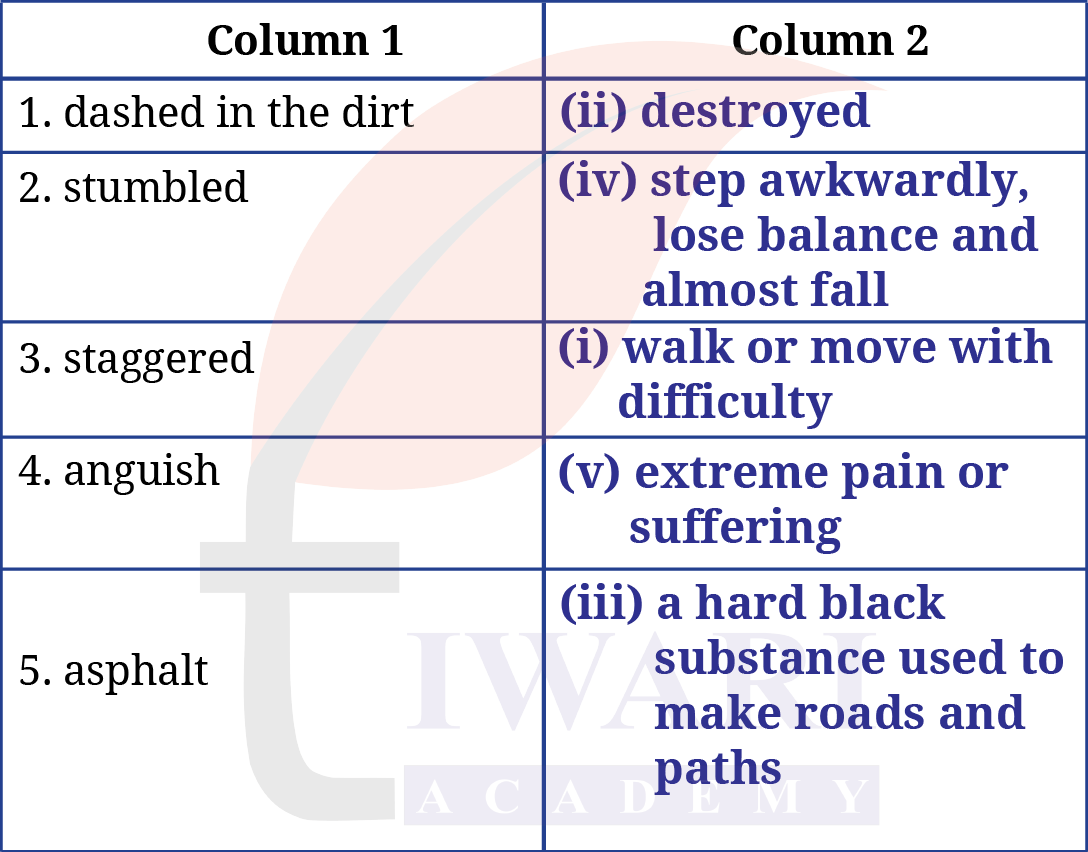
I Work in pairs. Match the words and phrases in Column 1 with their meanings in Column 2. You may read the poem again and infer the contextual meaning. Check your answers with the teacher.
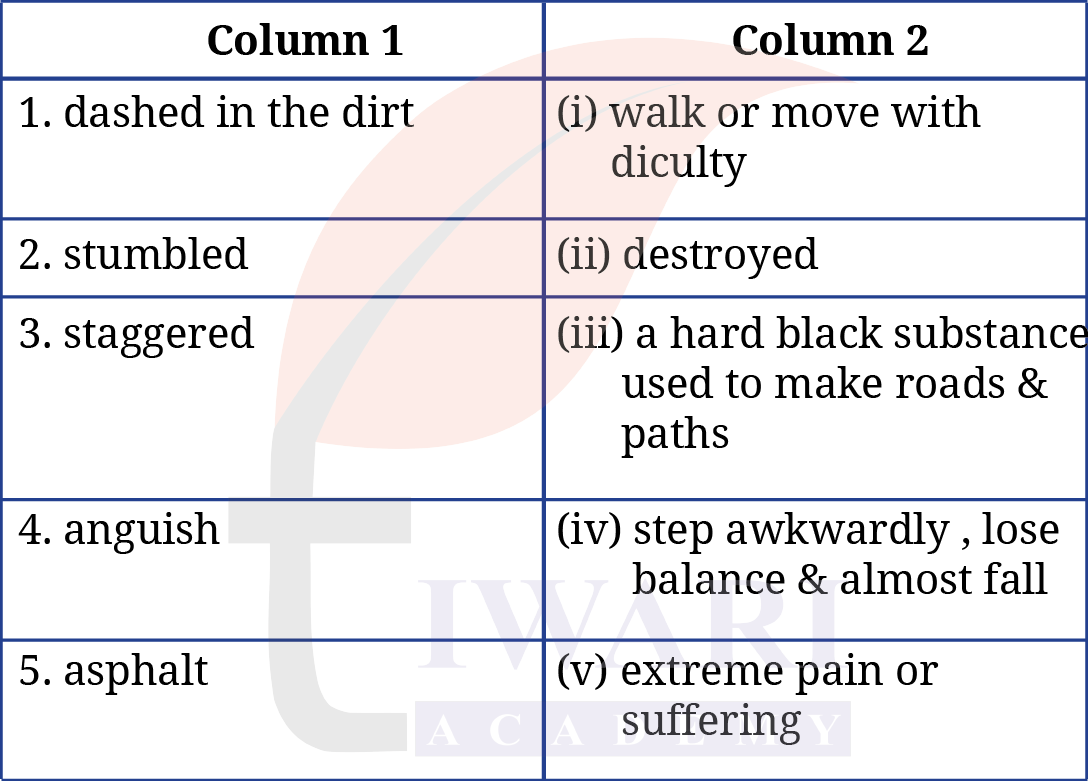
Answer:
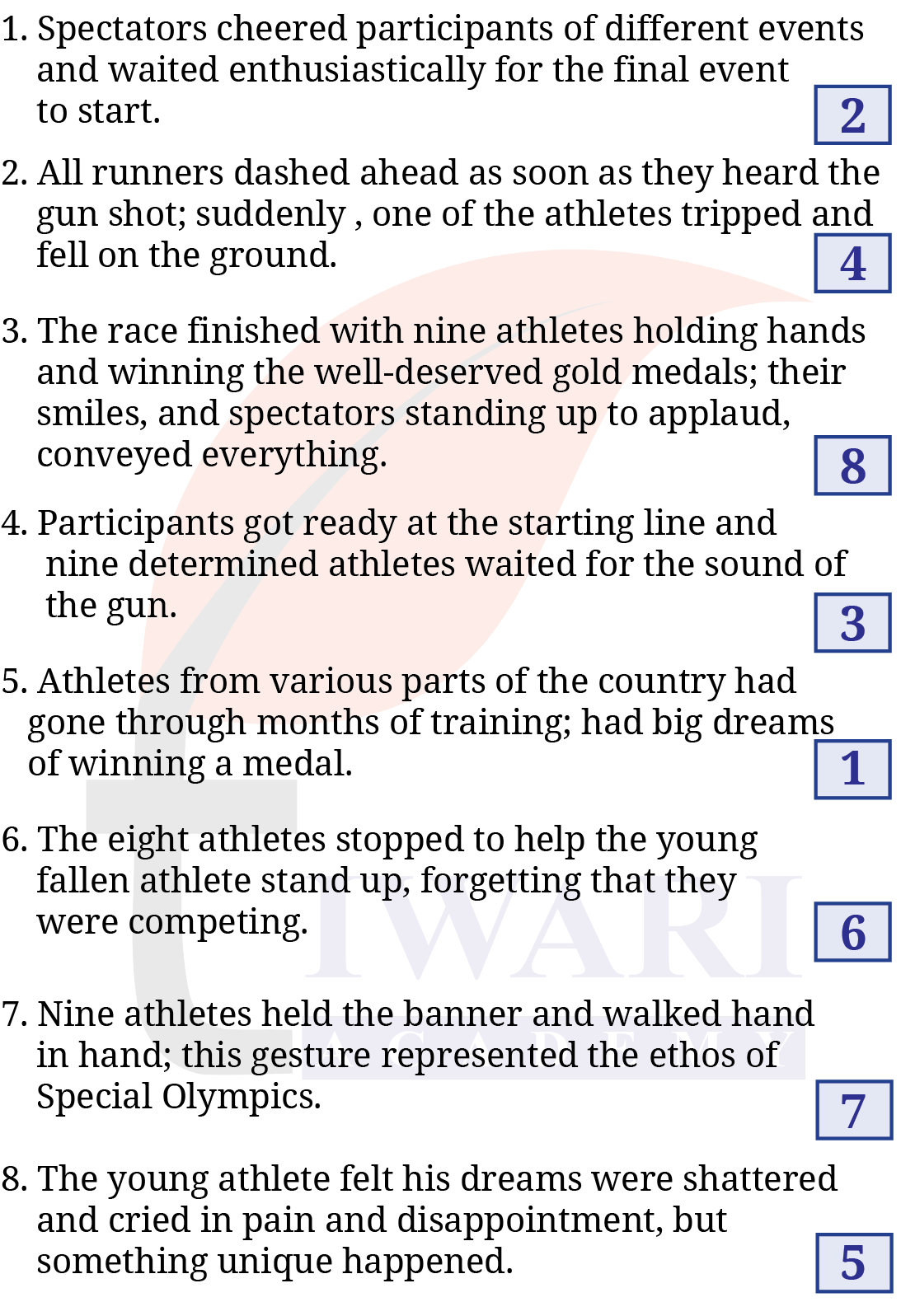
II Identify the gist of each stanza. Write the number of the stanza in the boxes given.
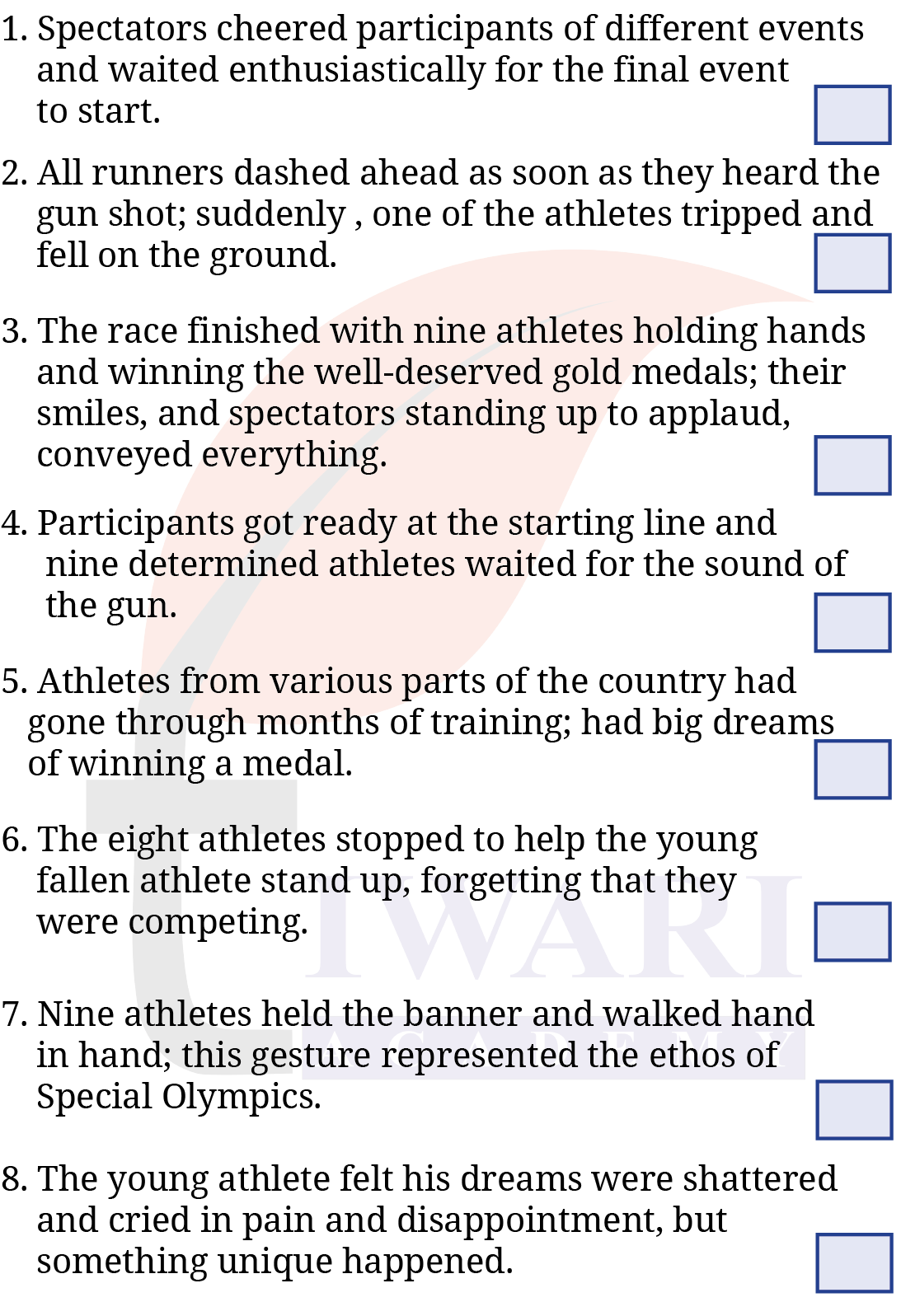
Answer:
III. Let us appreciate the poem.
1. Two example of alliteration from the poem are (i) ________________ and (ii) ________________.
See Answer(i) “silver and bronze”
(ii) “standing here telling this story
2. Give three examples of visual imagery from the poem.
(i) ________________
(ii) ________________
(iii) ________________
See Answer(i) “The blocks were all lined up for those who would use them” — we can visualise the starting blocks arranged at the race track.
(ii) “He stumbled and staggered and fell to the asphalt” — we can clearly picture the boy tripping and falling on the hard road.
(iii) “Nine beaming faces” at the finish line — we can picture nine smiling, joyful athletes holding hands.
3. Give an example of auditory imagery from the poem. (i) ________________
See Answer(i) “The pistol exploded”
4. How does the use of imagery make the poem more appealing?
See AnswerThe use of imagery makes the poem more vivid, engaging, and emotionally powerful. Visual imagery helps readers clearly picture the race track, the fallen athlete and the touching finale. Auditory imagery like the explosion of the pistol makes the reader feel present at the event. This sensory detail brings the poem to life, making the reader feel the excitement, tension, despair and finally the joy and unity of the athletes. Without such imagery, the poem would be a simple narration; with it, it becomes an emotionally moving experience.
5. How does the poet’s tone change from the beginning to the end of the poem.
See AnswerAt the beginning of the poem, the tone is excited and anticipatory — the athletes have trained hard, spectators are gathered and everyone is eagerly waiting for the race. In the middle stanzas, when the young boy falls, the tone shifts to sympathetic and tense, filled with anguish and disappointment. However, as the eight athletes stop to help him and all nine walk hand in hand to the finish line, the tone transforms into one of warmth, admiration and inspiration. The final stanza carries a deeply uplifting and triumphant tone, celebrating human empathy over individual achievement.
6. What is the overall mood created by the poem?
See AnswerThe overall mood of the poem is inspirational and emotionally uplifting. While it begins with competitive excitement and passes through a moment of sadness (the boy’s fall), it ultimately leaves the reader with a profound sense of warmth, togetherness and hope. The poem creates a mood that celebrates humanity – the idea that true victory lies not in defeating others but in lifting them up. The mood shifts from competitive to deeply compassionate, ending on a joyful and heartwarming note.
7. What is the message being conveyed by the poem?
See AnswerThe central message of the poem is that compassion, empathy, and unity are greater than individual victory. The eight athletes, despite training for months and longing to win, chose to stop and help their fallen fellow competitor rather than race ahead to win. By doing so, they all crossed the finish line together and were awarded nine gold medals – symbolising that when we support each other, everyone wins. The poem also conveys the spirit of the Special Olympics, which is not just about competition but about inclusion, dignity and the celebration of every individual’s effort. It teaches us that true sportsmanship is about the heart, not just skill.
Page 160 – Critical Reflection
I Read the extracts given below and answer the questions that follow.
1. The eight other runners pulled on their heel The ones who had trained for so long to compete One by one they all turned round and went back to help him
And brought the young boy to his feet.
(i) Select the correct option to complete the sentence.
The phrase ‘pulled up on their heels’ means that the runners _________.
A. moved aside
B. stopped running
C. tried to run faster
D. jumped ahead
See AnswerB. stopped running
(ii) Mention one character trait common to all the eight other runners.
See AnswerThe one character trait common to all eight runners is empathy.
(iii) What is the tone of the poet in these lines?
See AnswerThe tone of the poet in these lines is admiring and deeply appreciative. The poet conveys a sense of wonder and respect for the eight athletes who gave up their chance of winning to help the fallen boy. There is warmth and tenderness in how the poet describes their collective act of kindness.
(iv) How might the young athlete have felt on being helped by the others?
See AnswerThe young athlete must have felt an overwhelming mixture of emotions – initially he was in pain, frustration and deep disappointment after his fall. However, when the other eight runners turned back one by one to help him, he likely felt deeply moved, grateful and comforted. The act of kindness must have replaced his anguish with a sense of belonging and being valued. He would have felt that he was not alone and that his fellow athletes saw him as a person worthy of support rather than just a competitor.
(v) Would you consider this incident as a turning point in the poem? If yes, why? If no, why not?
See AnswerYes, this incident is absolutely a turning point in the poem. Before this moment, the poem follows the typical narrative of a competitive race – athletes training, spectators cheering and runners charging ahead. The fall of the young boy introduces the conflict. But when the eight runners stop and go back to help him, the entire nature of the poem changes. It transforms from a story about winning a race to a story about winning in life through compassion and unity. From this point, the poem’s focus shifts from individual achievement to collective humanity and that shift is the very heart of the poem’s message.
2. That’s how the race ended, with nine gold medals They came to the finish line holding hands still And a standing ovation and nine beaming faces Said more than these words ever will.
(i) How did the nine contestants feel when they reached the finishing line together?
See AnswerThe nine contestants felt immensely joyful, proud, and united when they reached the finishing line together. Their “beaming faces” indicate that they experienced deep happiness – not the competitive thrill of having beaten others, but the far more meaningful joy of having helped someone and finished the race as a team. They felt a sense of togetherness and shared triumph that individual victory could never have provided.
(ii) Why do you think all the nine contestants were given gold medals?
See AnswerAll nine contestants were given gold medals because they all demonstrated the true spirit of the Special Olympics, which is not just about winning but about inclusion, support and the dignity of every participant. The eight athletes who sacrificed their chance to win in order to help their fallen fellow competitor showed extraordinary sportsmanship, empathy and unity. Together, all nine crossed the finish line as one team. The medals recognised not just athletic effort but the highest human values – compassion and togetherness.
(iii) Complete the sentence appropriately. The holding of hands signifies a feeling of ___________________.
See AnswerThe holding of hands signifies a feeling of unity, solidarity and shared triumph / brotherhood and compassion.
(iv) Choose the correct option to complete the sentence.
The spectators giving a ‘standing ovation’ indicates that they were ______________.
A. amazed
B. speechless
C. distracted
D. thoughtful
See AnswerA. amazed
(v) Explain the last line of the extract.
See AnswerThis final line is deeply powerful. The poet is saying that the smiling faces of the nine athletes and the thunderous applause of the crowd conveyed a message so profound and moving that no words – not even the words of this poem – could fully capture it. The image of nine young people with disabilities crossing the finish line hand in hand, radiating joy and unity, speaks louder than any written or spoken language. The poet humbly acknowledges that the emotional truth of that moment goes beyond the power of words, making it one of the most touching and thought-provoking conclusions in poetry.
II Answer the following questions.
1. Describe how the setting established in the first two stanzas of the poem create a vivid atmosphere for the events that follow.
See AnswerThe first two stanzas establish a lively and charged atmosphere. We learn that athletes have come from across the country after months of rigorous training, all hoping to win gold, silver or bronze. The second stanza adds to this by showing spectators gathered around the field, cheering enthusiastically, with excitement reaching its peak as the final event approaches. This setting creates a sense of high expectation, competitive energy and national pride. By building this atmosphere of intense anticipation, the poet makes the moment of the young boy’s fall and the subsequent act of compassion all the more striking and emotionally powerful in contrast.
2. How do you think the youngest athlete might have felt when he fell?
See AnswerWhen the youngest athlete fell, he must have felt a rush of intense emotions. Physically, the fall would have caused pain. Emotionally, he would have experienced deep frustration, embarrassment, and heartbreak – seeing his months of training and his dreams come crashing down in an instant. The poem describes how he “gave out a cry of frustration and anguish”, confirming that he felt his efforts were wasted. He must have also felt a sense of shame and helplessness in front of the cheering crowd and fellow competitors. It was a moment of complete despair.
3. Why were the athletes eager to begin the race?
See AnswerThe athletes were eager to begin the race because they had dedicated many weeks and months of intense training towards this very moment. They had come from all over the country, each carrying the dream of winning a medal – gold, silver or bronze. The race represented the culmination of all their hard work, sacrifice, and determination. The excitement of the crowd, the competitive atmosphere and the presence of the starting blocks all added to their eagerness. For each athlete, this was their chance to prove their ability and achieve glory.
4. What does the transformation of the hundred-yard dash to a walk symbolise?
See AnswerThe transformation of the hundred-yard dash (a fast, competitive sprint) to a walk (slow, together) is deeply symbolic. It represents the shift from individual competition to collective compassion. The race, which was meant to find the fastest runner, becomes something far more meaningful – a shared journey where no one is left behind. The walk symbolises equality, unity and the idea that in the truest sense, no one wins unless everyone does. It also reflects the core philosophy of the Special Olympics – that participation, inclusion and support matter far more than speed or victory.
5. How might the poem be different if the focus was solely on individual achievement rather than collective support?
See AnswerIf the poem focused solely on individual achievement, it would be a very ordinary story about a race with a winner and losers. The athlete who fell would simply be forgotten – a casualty of competition. There would be no moment of empathy, no standing ovation, no nine gold medals and no profound message about human compassion. The poem would lose its emotional depth and its universal appeal. The beauty and power of “Nine Gold Medals” lies entirely in the collective act of kindness. Without it, the poem would inspire no one. The focus on collective support is what transforms a simple race narrative into a timeless lesson about humanity.
6. How does the poet’s use of language and tone enhance the reader’s engagement with the poem?
See AnswerDavid Roth uses simple, accessible language that allows readers of all ages to connect with the poem effortlessly. The tone shifts naturally from excitement to tension to sorrow to triumph, keeping the reader emotionally engaged throughout. The use of vivid imagery – “the pistol exploded”, “fell to the asphalt”, “nine beaming faces” – creates strong mental pictures. The conversational storytelling style (“as sure as I’m standing here telling this story”) makes the reader feel as if they are personally witnessing the event. The rhythm of the poem gives it a musical quality that makes it easy to read and remember. All these elements together make the poem deeply engaging and memorable.
7. What might be the poet’s purpose of writing this poem?
See AnswerThe poet David Roth wrote this poem to celebrate the true spirit of the Special Olympics and to convey the message that compassion and unity are more valuable than individual victory. His purpose seems to be to challenge the conventional definition of winning – showing that helping others is the greatest achievement of all. He also aims to raise awareness about athletes with special abilities and the unique spirit they bring to sports. By telling this moving story, he hopes to inspire readers to be more empathetic, to value human connection and to understand that a world where everyone supports one another is a world where everyone truly wins.
Page 162 – Vocabulary in Context
I The phrase ‘standing ovation’ is an example of an adjective-noun collocation. Identify two other similar examples from the poem.
See Answer1. “resolved athletes” — adjective (resolved) + noun (athletes)
2. “young boy” — adjective (young) + noun (boy)
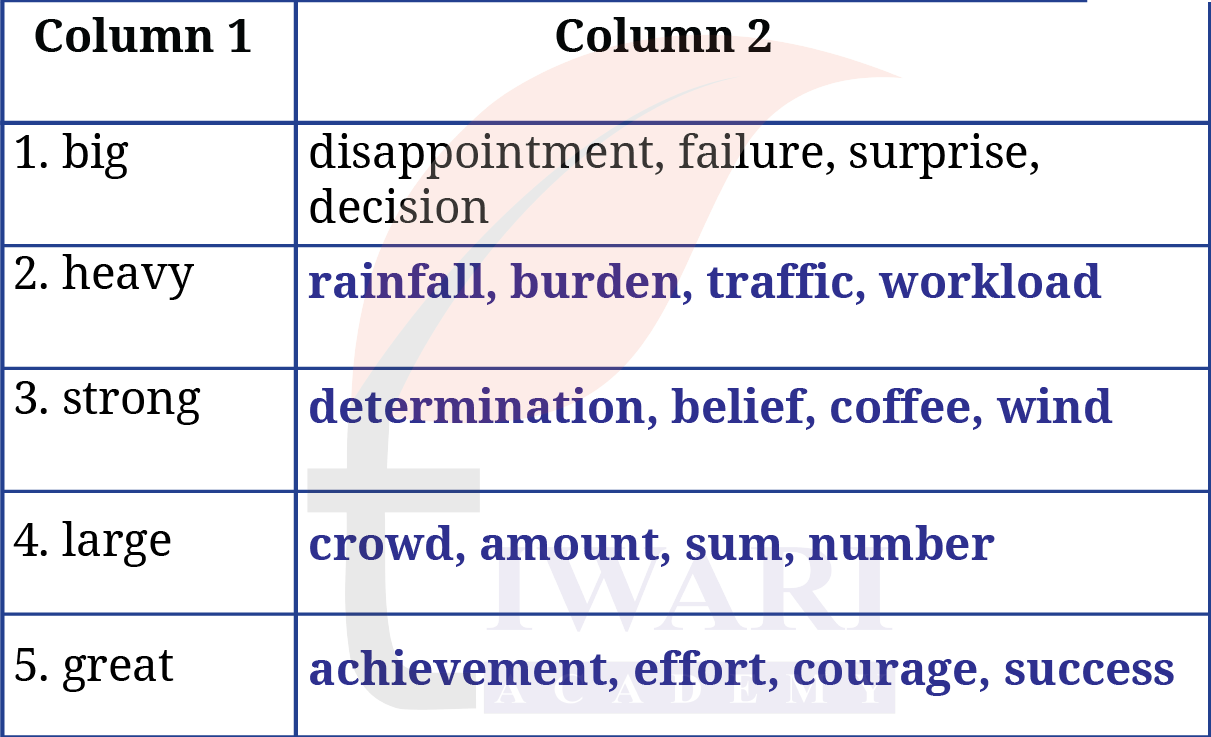
II Complete the table given below by writing four nouns in Column 2 that collocate with the adjectives in Column 1. One example has been done for you. You may take the help of a dictionary.
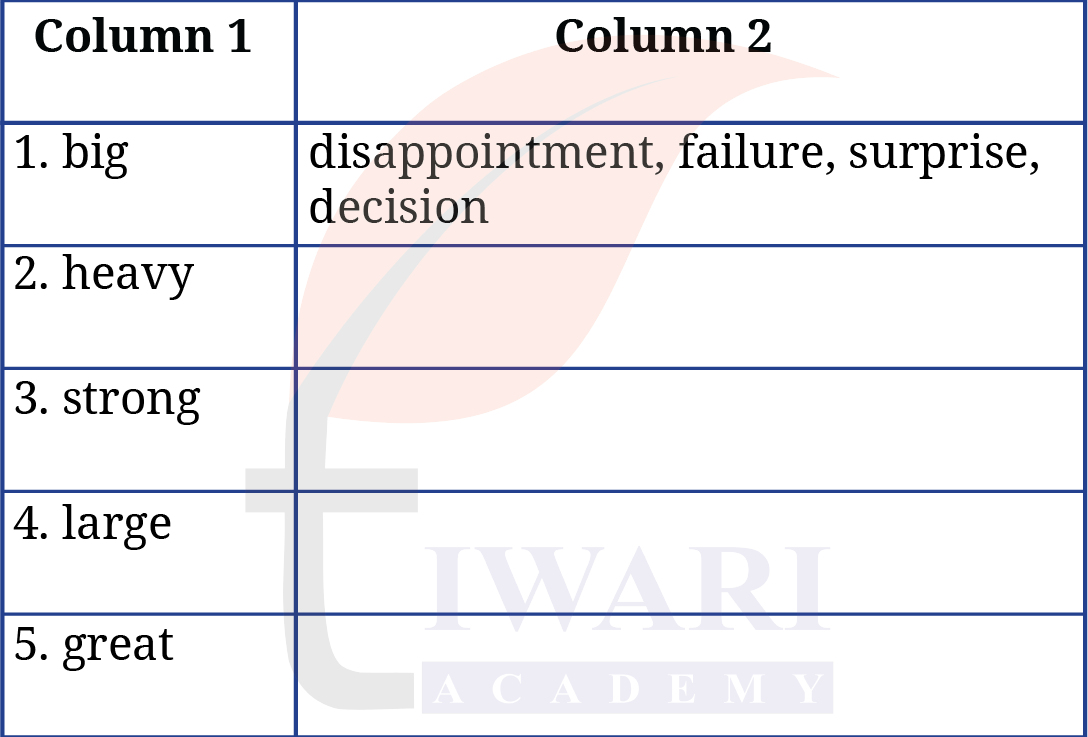
Answer:
III Choose the correct adjectives from those given in the box for the underlined words given in the sentences below. Ensure you do not use the same adjective twice.
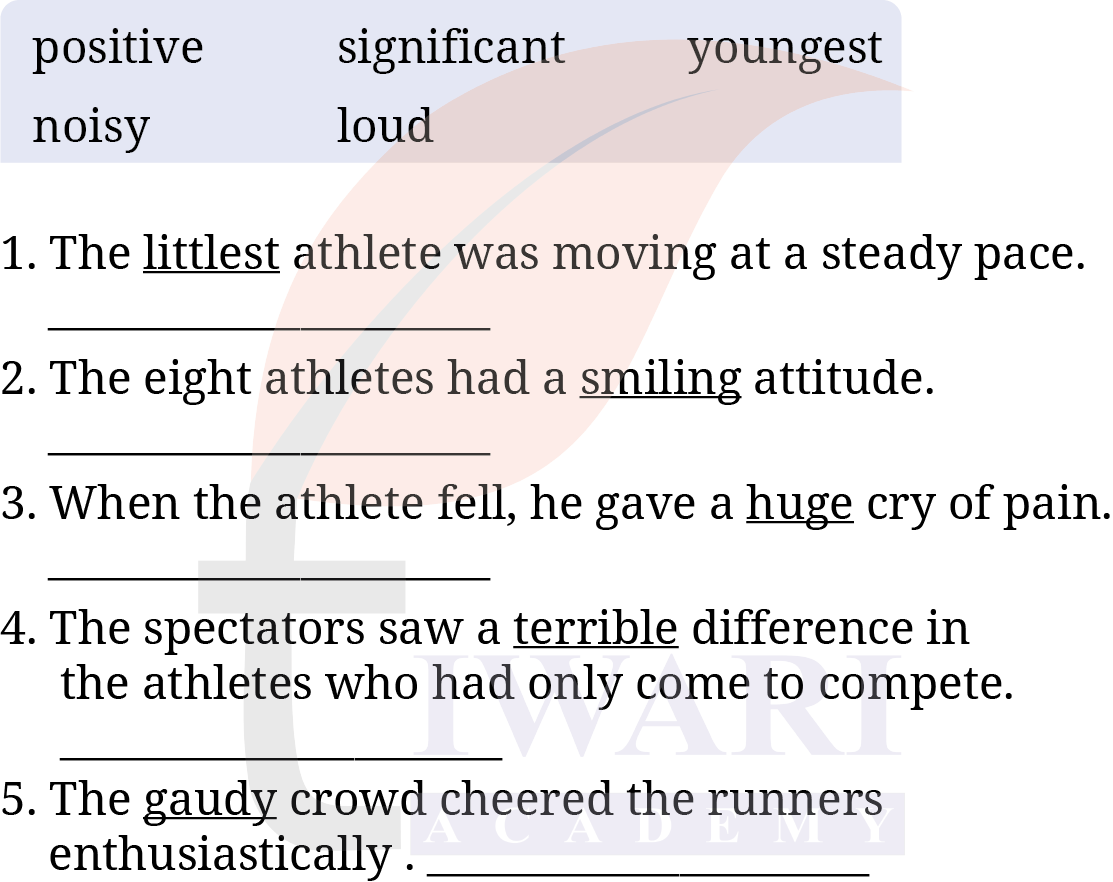
Answer:
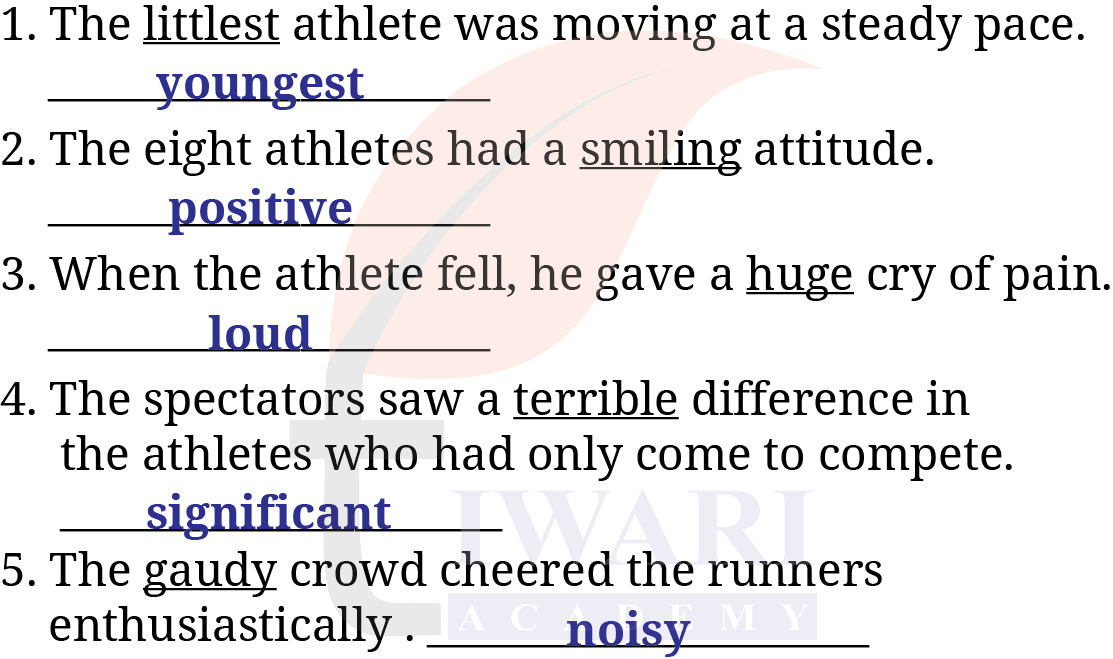
Page 163 – Listen and Respond
I You will listen to a radio-talk about Patrick Gomes, a coach of special athletes. As you listen, write true or false for the statements given.
(Transcript for teacher on page 268)
1. Patrick Gomes begin his career in sports with track events.
2. Patrick Gomes has been coaching special athletes for 10 years.
3. Patrick Gomes does all the household work himself.
See Answer1. Patrick Gomes began his career in sports with track events. → TRUE
2. Patrick Gomes has been coaching special athletes for 10 years. → FALSE
3. Patrick Gomes does all the household work himself. → TRUE
II You will listen to the radio-talk once again. As you listen, choose the correct options for each question.
1. When the speaker uses the phrase ‘push your boundaries’, he wants listeners to _________.
(i) challenge themselves
(ii) meet new people
(iii) be open-minded
See Answer(i) challenge themselves
2. Patrick Gomes is a __________ at present.
(i) special athlete
(ii) coach of special athletes
(iii) value education teacher
See Answer(ii) coach of special athletes
3. Special Olympic Games held at Connecticut was a _____________ for Patrick Gomes.
(i) motivational year
(ii) turning point
(iii) gradual change
See Answer(ii) turning point
4. As a special athlete, Patrick Gomes mostly participated in ____________.
(i) track events
(ii) jogging
(iii) football
See Answer(iii) football
5. Patrick Gomes believes that sports is essential because it encourages _____________ along with fitness.
(i) a positive outlook
(ii) a peaceful mind
(iii) an active life
See Answer(i) a positive outlook
Page 165 – Writing Task
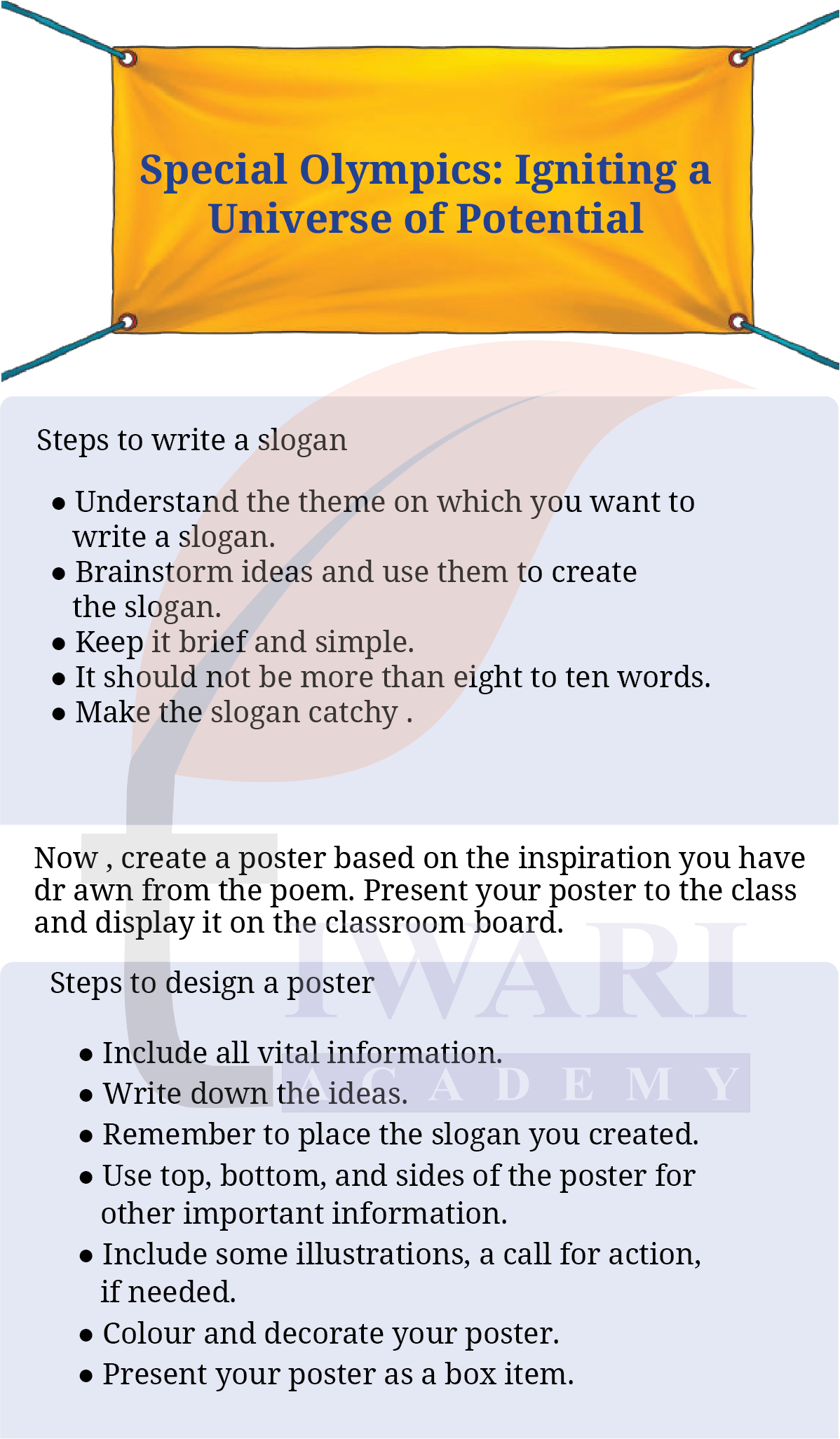
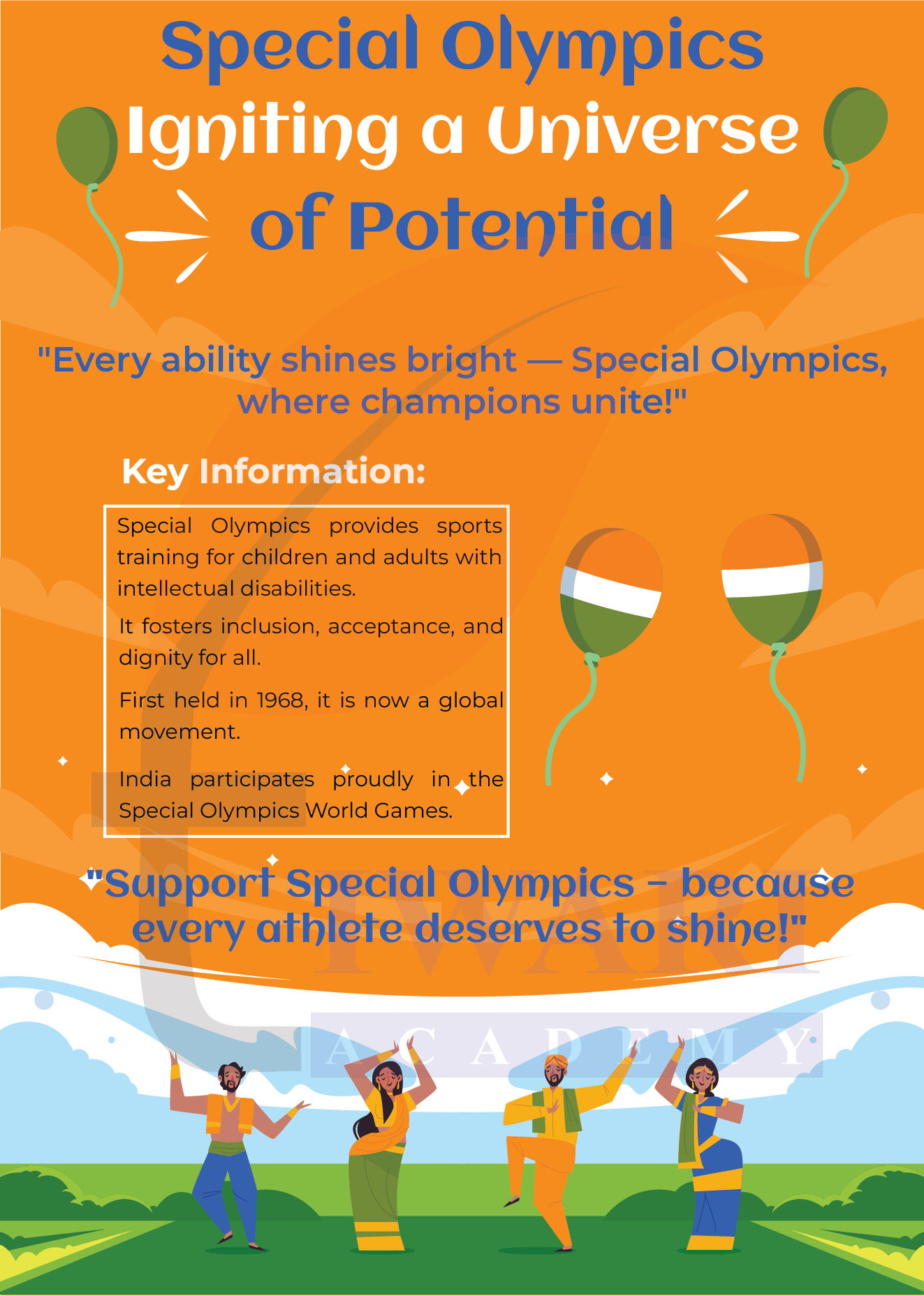
I Work in pairs to write three creative slogans on Special Olympics
One example of a slogan on Special Olympics has been given below.
Special Olympics: Igniting a Universe of Potential
Present your slogans in a creative manner and share with your classmates and teacher.
Answer:
Kaveri Chapter 5 English to Hindi Translation:
Class 9 English Kaveri Chapter 5 Hindi Translation
Ever wondered what happens when incredibleIncredible (adjective)
Meanings:
Unbelievable, extraordinary, amazing (अविश्वसनीय, अद्भुत, असाधारण)
Examples:
1. The view from the top of the mountain was incredible. (पहाड़ की चोटी से नज़ारा अद्भुत था।)
2. It is incredible that he finished the whole project in just one day. (यह अविश्वसनीय है कि उसने पूरा प्रोजेक्ट सिर्फ़ एक दिन में पूरा कर दिया।)
3. She has an incredible talent for singing. (उसमें गाने की असाधारण प्रतिभा है।) athletes defy the oddsDefy the odds (idiom)
Meanings:
Succeed despite difficulties, achieve something considered unlikely (विपरीत परिस्थितियों के बावजूद सफल होना, बाधाओं को मात देना)
Examples:
1. The young athlete defied the odds and won the race. (युवा खिलाड़ी ने बाधाओं को मात देकर दौड़ जीत ली।)
2. Despite limited resources, the team defied the odds and reached the final. (सीमित संसाधनों के बावजूद टीम ने बाधाओं को मात दी और फाइनल में पहुँच गई।)
3. She worked hard to defy the odds and achieve her dream. (उसने विपरीत परिस्थितियों के बावजूद अपना सपना पूरा करने के लिए कड़ी मेहनत की।) and showcase their exceptional skills on a global stage? Well, enter the world of Paralympic Games, a thrilling celebration of resilienceResilience (noun)
Meanings:
Ability to recover from setbacks, strength to adapt and continue during difficulties (कठिनाइयों से उबरने की क्षमता, विपरीत परिस्थितियों में संभलकर आगे बढ़ने की शक्ति)
Examples:
1. The athlete showed resilience by returning to training after her defeat. (हार के बाद फिर से अभ्यास शुरू करके खिलाड़ी ने कठिनाइयों से उबरने की क्षमता दिखाई।)
2. His resilience helped him try again after several failures. (कठिनाइयों से उबरने की उसकी क्षमता ने कई असफलताओं के बाद फिर प्रयास करने में उसकी मदद की।)
3. The villagers showed resilience by rebuilding their homes after the flood. (बाढ़ के बाद अपने घर दोबारा बनाकर ग्रामीणों ने संकट से उबरने की क्षमता दिखाई।), and extraordinary talent of athletes with locomotorLocomotor (adjective)
Meanings:
Related to movement from one place to another, connected with the body’s ability to move (चलने-फिरने से संबंधित, शारीरिक गति से संबंधित)
Examples:
1. Walking and running are locomotor activities. (चलना और दौड़ना एक स्थान से दूसरे स्थान तक जाने वाली गतिविधियाँ हैं।)
2. The coach observed the children’s locomotor skills during practice. (प्रशिक्षक ने अभ्यास के दौरान बच्चों के चलने-फिरने संबंधी कौशल को देखा।)
3. The teacher demonstrated different locomotor movements, such as hopping and jumping. (शिक्षक ने एक पैर पर फुदकने और कूदने जैसी विभिन्न गमन-संबंधी गतिविधियाँ करके दिखाईं।), sensory, or intellectual disabilities. Paralympics go beyond competition, to quellQuell (verb)
Meanings:
Put an end to, bring under control, calm or reduce (समाप्त करना, काबू में करना, शांत करना या कम करना)
Examples:
1. The teacher’s explanation helped quell the students’ fears. (शिक्षक की व्याख्या ने विद्यार्थियों का डर दूर करने में मदद की।)
2. The captain tried to quell the argument between the players. (कप्तान ने खिलाड़ियों के बीच की बहस शांत करने की कोशिश की।)
3. Her excellent performance helped quell doubts about her ability. (उसके उत्कृष्ट प्रदर्शन ने उसकी क्षमता को लेकर उठे संदेह दूर करने में मदद की।) stereotypesStereotypes (plural noun; singular: stereotype)
Meanings:
Fixed and oversimplified beliefs about a group, generalised ideas that ignore individual differences (रूढ़ धारणाएँ, व्यक्तिगत भिन्नताओं की अनदेखी करने वाली सामान्यीकृत मान्यताएँ)
Examples:
1. We should judge people by their actions, not by stereotypes. (हमें लोगों को रूढ़ धारणाओं के आधार पर नहीं, बल्कि उनके कार्यों के आधार पर परखना चाहिए।)
2. The achievements of para-athletes challenge stereotypes about disability. (पैरा-खिलाड़ियों की उपलब्धियाँ दिव्यांगता से जुड़ी रूढ़ धारणाओं को चुनौती देती हैं।)
3. Stories about successful women can help break gender stereotypes. (सफल महिलाओं की कहानियाँ लिंग से जुड़ी रूढ़ धारणाओं को तोड़ने में मदद कर सकती हैं।) and redefine possibilities.
Hindi Translationक्या आपने कभी सोचा है कि क्या होता है जब अविश्वसनीय एथलीट बाधाओं को मात देते हैं और वैश्विक मंच पर अपने असाधारण कौशल का प्रदर्शन करते हैं? तो चलिए, पैरालंपिक खेलों की दुनिया में प्रवेश करते हैं, जो लोकोमोटर, संवेदी या बौद्धिक विकलांगता वाले एथलीटों के लचीलेपन और असाधारण प्रतिभा का एक रोमांचक उत्सव है। पैरालंपिक्स प्रतिस्पर्धा से आगे जाकर रूढ़िवादिता को दूर करने और संभावनाओं को पुनर्परिभाषित करने का काम करता है।
Grammar AnalysisThe paragraph uses the Present Simple tense to state general facts about the Paralympic Games and the Present Continuous (“redefine,” “quell”) to explain the ongoing purpose of the event.
► Adjectives (Describing Words)
• Incredible / Exceptional: Describe the high quality of the athletes and their skills.
• Global: Describes the international scale of the stage.
• Thrilling: Describes the exciting nature of the celebration.
• Extraordinary: Describes the talent of the athletes.
• Intellectual: Describes a specific type of disability.
► Verbs (Action/State Words)
• Defy: Simple Present showing the action of overcoming obstacles.
• Showcase: Simple Present showing the display of skills.
• Enter: Imperative verb inviting the reader into the topic.
• Go beyond: Phrasal verb showing that the games do more than just sport.
• Redefine: Simple Present showing the change in how people see possibilities.
► Adverbs (How/When/Where)
• Ever: Adverb of time used in a question.
• Well: Used as a transition or introductory adverb.
Bharat’s debutDebut (noun)
Meanings:
First appearance, first participation, first public performance (पहली उपस्थिति, पहली भागीदारी, पहला सार्वजनिक प्रदर्शन)
Examples:
1. The young swimmer made her debut at the national championship. (युवा तैराक ने राष्ट्रीय प्रतियोगिता में पहली बार भाग लिया।)
2. His debut on the school stage was a memorable experience. (स्कूल के मंच पर उसका पहला प्रदर्शन एक यादगार अनुभव था।)
3. The team won a medal on its international debut. (टीम ने अपनी पहली अंतरराष्ट्रीय भागीदारी में पदक जीता।) in the Paralympics dates back to 1968, and the first medal was clinchedClinched (verb; past tense of clinch)
Meanings:
Secured, won decisively, successfully settled (हासिल किया, निर्णायक रूप से जीता, सफलतापूर्वक तय किया)
Examples:
1. She clinched the gold medal with her final throw. (उसने अपने अंतिम थ्रो से स्वर्ण पदक जीत लिया।)
2. The team clinched victory by scoring in the last minute. (टीम ने अंतिम मिनट में गोल करके जीत पक्की कर ली।)
3. His clear explanation clinched the argument in his favour. (उसकी स्पष्ट व्याख्या ने बहस का फैसला उसके पक्ष में कर दिया।) in swimming in 1972. Since then, many Indian Paralympians have brought incredible honour to our country. One such Paralympian, Dr. Deepa Malik, a Khel Ratna, Arjuna, and Padma Shri Awardee, has left an indelibleIndelible (adjective)
Meanings:
Impossible to remove or erase, permanent, lasting and unforgettable (अमिट, स्थायी, कभी न भूलने वाला)
Examples:
1. Her kindness left an indelible impression on the students. (उसकी दयालुता ने विद्यार्थियों पर अमिट छाप छोड़ी।)
2. The athlete’s courage left an indelible mark on my memory. (खिलाड़ी के साहस ने मेरी यादों पर अमिट छाप छोड़ी।)
3. Write your name on the label with indelible ink. (लेबल पर अपना नाम न मिटने वाली स्याही से लिखो।) mark on innumerableInnumerable (adjective)
Meanings:
Countless, very many, too numerous to count (अनगिनत, असंख्य, गिनती से परे)
Examples:
1. Innumerable stars shone in the clear night sky. (रात के साफ़ आकाश में अनगिनत तारे चमक रहे थे।)
2. The library contains innumerable stories waiting to be discovered. (पुस्तकालय में पढ़े जाने की प्रतीक्षा करती हुई असंख्य कहानियाँ हैं।)
3. Her achievements have inspired innumerable young athletes. (उसकी उपलब्धियों ने अनगिनत युवा खिलाड़ियों को प्रेरित किया है।) aspiringAspiring (adjective)
Meanings:
Hoping and working to become successful in a particular field, ambitious (किसी क्षेत्र में सफल होने की इच्छा रखने वाला और प्रयास करने वाला, आकांक्षी, महत्वाकांक्षी)
Examples:
1. The coach organised a training camp for aspiring athletes. (प्रशिक्षक ने खिलाड़ी बनने की इच्छा रखने वाले युवाओं के लिए प्रशिक्षण शिविर आयोजित किया।)
2. As an aspiring writer, she writes a short story every week. (लेखिका बनने की आकांक्षा रखने वाली वह हर सप्ताह एक छोटी कहानी लिखती है।)
3. The competition gave aspiring singers a chance to show their talent. (प्रतियोगिता ने गायक बनने की इच्छा रखने वालों को अपनी प्रतिभा दिखाने का अवसर दिया।) athletes.
Hindi Translationपैरालंपिक्स में भारत की शुरुआत 1968 से हुई, और पहला पदक 1972 में तैराकी में जीता गया। तब से, कई भारतीय पैरालंपियन ने हमारे देश के लिए अविश्वसनीय सम्मान लाया है। ऐसी ही एक पैरालंपियन, डॉ. दीपा मलिक, जो खेल रत्न, अर्जुन और पद्मश्री पुरस्कार पुरस्कार से सम्मानित हैं—ने अनगिनत महत्वाकांक्षी एथलीटों पर एक गहरी छाप छोड़ी है।
Grammar AnalysisThe paragraph uses the Simple Past tense (“dates back,” “was clinched,” “left”) to discuss historical milestones and the Present Perfect tense (“have brought,” “has left”) to show the lasting impact of these achievements up to the present day.
► Adjectives (Describing Words)
• First: Describes the initial medal won.
• Incredible: Describes the high level of honour brought to the country.
• Indian: Proper adjective describing the nationality of the athletes.
• Indelible: Describes the permanent nature of the mark left by Dr. Deepa Malik.
• Innumerable: Describes the large number of aspiring athletes.
► Verbs (Action/State Words)
• Dates back: Phrasal verb in Simple Present showing a historical starting point.
• Was clinched: Passive voice in Simple Past showing the winning of the medal.
• Have brought: Present Perfect showing ongoing glory.
• Has left: Present Perfect showing the continuing influence of her legacy.
► Adverbs (How/When/Where)
• Back: Adverb of time/direction.
• Since then: Adverbial phrase showing the passage of time from 1972 onwards.
Read the following interview.
Interviewer: Namaste, ma’am! It is my privilegePrivilege (noun)
Meanings:
A special honour, benefit, or opportunity (विशेष सम्मान, लाभ या अवसर; सौभाग्य)
Examples:
1. It was a privilege to meet my favourite author. (अपने प्रिय लेखक से मिलना मेरे लिए सौभाग्य था।)
2. She had the privilege of representing her school. (उसे अपने विद्यालय का प्रतिनिधित्व करने का सौभाग्य मिला।)
3. I consider it a privilege to learn from you. (मैं आपसे सीखने को अपना सौभाग्य मानता हूँ।) to have this opportunityOpportunity (noun)
Meanings:
A chance to do something, a favourable occasion (अवसर, मौका, अनुकूल स्थिति)
Examples:
1. The competition gave me an opportunity to improve. (प्रतियोगिता ने मुझे बेहतर बनने का अवसर दिया।)
2. She welcomed the opportunity to help others. (उसने दूसरों की मदद करने के अवसर का स्वागत किया।)
3. Every student deserves an opportunity to participate. (हर विद्यार्थी को भाग लेने का अवसर मिलना चाहिए।) to meet a famousFamous (adjective)
Meanings:
Well-known, widely recognised (प्रसिद्ध, मशहूर, सुविख्यात)
Examples:
1. The famous singer visited our school. (प्रसिद्ध गायक हमारे विद्यालय आया।)
2. This town is famous for its handicrafts. (यह नगर अपने हस्तशिल्प के लिए प्रसिद्ध है।)
3. She became famous for her sporting achievements. (वह अपनी खेल उपलब्धियों के कारण प्रसिद्ध हुई।) personalityPersonality (noun)
Meanings:
A well-known person; a person’s distinctive character and qualities (प्रसिद्ध व्यक्ति; व्यक्तित्व और विशिष्ट गुण)
Examples:
1. A famous sports personality addressed the students. (खेल जगत की एक प्रसिद्ध हस्ती ने विद्यार्थियों को संबोधित किया।)
2. Her cheerful personality makes people feel welcome. (उसका प्रसन्नचित्त व्यक्तित्व लोगों को अपनापन महसूस कराता है।)
3. The interviewer spoke to a respected television personality. (साक्षात्कारकर्ता ने टेलीविज़न की एक सम्मानित हस्ती से बातचीत की।) in the world of Paralympics, such as you.
Dr. Malik: Namaste! Believe me, I’m trulyTruly (adverb)
Meanings:
Really, genuinely, sincerely (वास्तव में, सचमुच, सच्चे मन से)
Examples:
1. I am truly grateful for your help. (मैं आपकी मदद के लिए सचमुच आभारी हूँ।)
2. Her courage is truly inspiring. (उसका साहस वास्तव में प्रेरणादायक है।)
3. He truly believes in equal opportunities. (वह समान अवसरों में सच्चे मन से विश्वास रखता है।) honouredHonoured (adjective)
Meanings:
Feeling proud and grateful because of respect or recognition (सम्मानित महसूस करने वाला, सम्मान पाकर गौरवान्वित)
Examples:
1. I feel honoured to receive this award. (यह पुरस्कार पाकर मैं सम्मानित महसूस करता हूँ।)
2. She was honoured to lead the team. (टीम का नेतृत्व करने का अवसर पाकर उसने गौरव महसूस किया।)
3. We are honoured by your presence. (आपकी उपस्थिति से हम गौरवान्वित हैं।).
Hindi Translationसाक्षात्कारकर्ता: नमस्ते, मैम! यह मेरा सौभाग्य है कि मुझे पैरालंपिक्स की दुनिया में आप जैसी प्रसिद्ध हस्ती से मिलने का यह अवसर मिला।
डॉ. मलिक: नमस्ते! विश्वास कीजिए, मैं वास्तव में सम्मानित महसूस कर रही हूँ।
Grammar AnalysisThe paragraph uses the Simple Present tense for the current interaction (“It is,” “I am”) and Infinitive phrases (“to have,” “to meet”) to express the purpose of the meeting.
► Adjectives (Describing Words)
• Famous: Describes the high status of Dr. Malik.
• Truly: (Used here as an adverb to modify the adjective “honoured”).
► Verbs (Action/State Words)
• Is: Simple Present used to state a fact about the current moment.
• To have / To meet: Infinitives showing the action being discussed.
• Believe: Imperative verb used to emphasize a statement.
• Am: Simple Present showing a state of feeling.
► Adverbs (How/When/Where)
• Truly: Describes the genuine nature of her feeling of being honoured.
Interviewer: You’ve been listedListed (verb; past participle of list)
Meanings:
Included in a list, recorded among others (सूची में शामिल किया गया, दर्ज किया गया)
Examples:
1. Her name was listed among the winners. (उसका नाम विजेताओं की सूची में शामिल था।)
2. All the required books are listed here. (सभी आवश्यक पुस्तकें यहाँ सूचीबद्ध हैं।)
3. The selected players have been listed on the noticeboard. (चुने गए खिलाड़ियों के नाम सूचना-पट्ट पर सूचीबद्ध किए गए हैं।) as one of the 10 most inspirationalInspirational (adjective)
Meanings:
Encouraging, motivating, filling others with hope (प्रेरणादायक, उत्साह बढ़ाने वाला, आशा जगाने वाला)
Examples:
1. The coach gave an inspirational speech. (प्रशिक्षक ने एक प्रेरणादायक भाषण दिया।)
2. We read an inspirational story about courage. (हमने साहस के बारे में एक प्रेरणादायक कहानी पढ़ी।)
3. Her inspirational journey encouraged young athletes. (उसकी प्रेरणादायक यात्रा ने युवा खिलाड़ियों का उत्साह बढ़ाया।) women para-athletes globallyGlobally (adverb)
Meanings:
Worldwide, across the world (विश्व स्तर पर, पूरी दुनिया में)
Examples:
1. The singer’s music is enjoyed globally. (गायक का संगीत पूरी दुनिया में पसंद किया जाता है।)
2. The organisation supports young artists globally. (संस्था विश्व स्तर पर युवा कलाकारों का समर्थन करती है।)
3. Her achievements were recognised globally. (उसकी उपलब्धियों को विश्व स्तर पर मान्यता मिली।) by the International Paralympic Committee. How did you brave the oddsBrave the odds (verb phrase)
Meanings:
Face difficulties courageously, confront unfavourable circumstances (कठिनाइयों का साहसपूर्वक सामना करना, विपरीत परिस्थितियों से जूझना)
Examples:
1. The climbers braved the odds to reach the summit. (पर्वतारोहियों ने शिखर तक पहुँचने के लिए कठिनाइयों का साहसपूर्वक सामना किया।)
2. She braved the odds and continued her education. (उसने विपरीत परिस्थितियों का सामना किया और अपनी पढ़ाई जारी रखी।)
3. Our team is ready to brave the odds. (हमारी टीम कठिनाइयों का डटकर सामना करने के लिए तैयार है।) to be who you are today?
Dr. Malik: I was 29, an awful tragedyTragedy (noun)
Meanings:
An event causing great suffering, a deeply distressing misfortune (त्रासदी, अत्यंत दुखद घटना, बड़ी विपत्ति)
Examples:
1. The accident was a tragedy for the family. (दुर्घटना परिवार के लिए एक त्रासदी थी।)
2. The community supported those affected by the tragedy. (समुदाय ने त्रासदी से प्रभावित लोगों की सहायता की।)
3. The story describes courage in the face of tragedy. (कहानी त्रासदी का सामना करते समय दिखाए गए साहस का वर्णन करती है।) struck me when I was diagnosedDiagnosed (verb; past participle of diagnose)
Meanings:
Identified an illness or problem after examination (जाँच के बाद बीमारी या समस्या की पहचान की)
Examples:
1. The doctor diagnosed the illness after an examination. (चिकित्सक ने जाँच के बाद बीमारी की पहचान की।)
2. She was diagnosed with an ear infection. (जाँच में उसे कान का संक्रमण होने का पता चला।)
3. The mechanic diagnosed the problem with the engine. (मिस्त्री ने इंजन की समस्या की पहचान की।) with spine tumour. I underwent a surgerySurgery (noun)
Meanings:
A medical operation, treatment involving an operation (शल्य-चिकित्सा, ऑपरेशन द्वारा उपचार)
Examples:
1. The patient was waiting for surgery. (रोगी ऑपरेशन की प्रतीक्षा कर रहा था।)
2. The doctor explained the surgery to the family. (चिकित्सक ने परिवार को ऑपरेशन के बारे में समझाया।)
3. Her brother visited her after the surgery. (ऑपरेशन के बाद उसका भाई उससे मिलने आया।), but misfortune raised its ugly head again. The doctors declared that I would be bound to a wheelchair for the rest of my life, as I was paralysedParalysed (adjective)
Meanings:
Unable to move part or all of the body; unable to act because of an overwhelming feeling (शरीर का कोई भाग या पूरा शरीर न हिला पाने वाला, लकवाग्रस्त; डर आदि से स्तब्ध)
Examples:
1. The accident left his left arm paralysed. (दुर्घटना के कारण उसका बायाँ हाथ लकवाग्रस्त हो गया।)
2. The frightened child stood paralysed with fear. (डरा हुआ बच्चा भय से स्तब्ध खड़ा रहा।)
3. The story describes a paralysed athlete’s determination. (कहानी एक लकवाग्रस्त खिलाड़ी के दृढ़ संकल्प का वर्णन करती है।) waist down. I had two choices—squanderSquander (verb)
Meanings:
Waste carelessly, use valuable resources foolishly (लापरवाही से बर्बाद करना, व्यर्थ गँवाना)
Examples:
1. Do not squander your time on unnecessary arguments. (अनावश्यक बहस में अपना समय व्यर्थ मत गँवाओ।)
2. He squandered his savings on things he did not need. (उसने अपनी बचत अनावश्यक चीज़ों पर बर्बाद कर दी।)
3. She refused to squander the opportunity to learn. (उसने सीखने का अवसर व्यर्थ गँवाने से इनकार कर दिया।) my life in remorseRemorse (noun)
Meanings:
Deep regret, sorrow or guilt over something done (गहरा पछतावा, ग्लानि, अपने किए पर दुख)
Examples:
1. He felt remorse after hurting his friend. (अपने मित्र को दुख पहुँचाने के बाद उसे पछतावा हुआ।)
2. Her apology showed genuine remorse. (उसकी माफ़ी में सच्चा पछतावा झलक रहा था।)
3. Instead of remaining lost in remorse, he tried to correct his mistake. (पछतावे में डूबे रहने के बजाय उसने अपनी गलती सुधारने की कोशिश की।) or transform it to a world of limitless possibilities.
Hindi Translationसाक्षात्कारकर्ता: आपको अंतर्राष्ट्रीय पैरालंपिक समिति द्वारा विश्व की 10 सबसे प्रेरणादायक महिला पैरा-एथलीटों में शामिल किया गया है। आज आप जिस मुकाम पर हैं, वहाँ तक पहुँचने के लिए आपने बाधाओं का सामना कैसे किया?
डॉ. मलिक: मेरी उम्र 29 साल थी, जब एक भयानक त्रासदी ने मुझे घेर लिया और मुझे रीढ़ की हड्डी के ट्यूमर होने का पता चला। मेरी सर्जरी हुई, लेकिन दुर्भाग्य ने फिर से अपना क्रूर रूप दिखाया। डॉक्टरों ने घोषित किया कि मैं अपने जीवन के बाकी समय के लिए व्हीलचेयर तक सीमित रहूँगी, क्योंकि मैं कमर से नीचे लकवाग्रस्त हो गई थी। मेरे पास दो विकल्प थे — अपने जीवन को पछतावे में बर्बाद करना या इसे असीमित संभावनाओं की दुनिया में बदलना।
Grammar AnalysisThe paragraph uses the Past Tense (“was,” “struck,” “underwent,” “declared”) to describe the life-changing events of her past. It uses Modal Verbs (“would be”) to show a future prediction made in the past.
► Adjectives (Describing Words)
• Inspirational: Describes the type of women listed by the Committee.
• Globally: (Used here as an adverb to describe the scale).
• Awful: Describes the severity of the tragedy.
• Ugly: Describes the nature of the misfortune (metaphorical).
• Bound: Describes her physical state relative to the wheelchair.
• Limitless: Describes the possibilities she chose to create.
► Verbs (Action/State Words)
• Struck: Simple Past showing the sudden occurrence of the tragedy.
• Underwent: Simple Past showing she went through a medical process.
• Declared: Simple Past showing the doctors’ formal statement.
• Would be: Future in the Past showing what was expected to happen.
• Squander / Transform: Infinitives used to show her two available choices.
► Adverbs (How/When/Where)
• Globally: Shows the worldwide scope of her recognition.
• Today: Adverb of time.
• Again: Shows the repetition of misfortune.
I love sports and had been a swimmer too, so I decided to switchSwitch (verb)
Meanings:
Change from one activity or choice to another (एक गतिविधि या विकल्प से दूसरे को अपनाना, बदलना)
Examples:
1. She decided to switch from swimming to athletics. (उसने तैराकी छोड़कर एथलेटिक्स अपनाने का निर्णय लिया।)
2. We can switch to a different method if this one fails. (यदि यह तरीका काम नहीं करता, तो हम दूसरा तरीका अपना सकते हैं।)
3. He will switch to a lighter racket for practice. (वह अभ्यास के लिए हल्का रैकेट अपनाएगा।) to para-athletics. This is how my Paralympics journey began. My breakthrough momentBreakthrough moment (noun phrase)
Meanings:
A moment of major progress or success (बड़ी सफलता या महत्वपूर्ण प्रगति का क्षण)
Examples:
1. Winning her first medal was a breakthrough moment for her. (पहला पदक जीतना उसके लिए बड़ी सफलता का क्षण था।)
2. The successful experiment was a breakthrough moment for the team. (सफल प्रयोग टीम के लिए महत्वपूर्ण प्रगति का क्षण था।)
3. His first published story was a breakthrough moment in his writing career. (उसकी पहली प्रकाशित कहानी उसके लेखन जीवन में बड़ी सफलता का क्षण थी।) came in the 2016 Rio Paralympic Games, when I securedSecured (verb)
Meanings:
Successfully obtained, gained through effort (प्राप्त किया, प्रयास से हासिल किया)
Examples:
1. She secured a silver medal in the competition. (उसने प्रतियोगिता में रजत पदक हासिल किया।)
2. Hard work helped him secure a place in the team. (कड़ी मेहनत ने उसे टीम में जगह दिलाने में मदद की।)
3. Our school secured first position in the debate. (हमारे विद्यालय ने वाद-विवाद में पहला स्थान प्राप्त किया।) the silver medal in the shot-put event. In hindsightIn hindsight (phrase)
Meanings:
Looking back with a better understanding after an event (बाद में समझ आने पर पीछे मुड़कर देखना)
Examples:
1. In hindsight, I should have started revising earlier. (अब पीछे मुड़कर देखने पर लगता है कि मुझे दोहराई पहले शुरू कर देनी चाहिए थी।)
2. In hindsight, joining the club was a wise decision. (अब पीछे मुड़कर देखने पर क्लब में शामिल होना एक समझदारी भरा निर्णय लगता है।)
3. In hindsight, that difficult year taught her patience. (अब पीछे मुड़कर देखने पर समझ आता है कि उस कठिन वर्ष ने उसे धैर्य सिखाया।), I feel it was a moment of personal victory and a step forward in changing perceptionsPerceptions (plural noun)
Meanings:
Ways of understanding or viewing people and situations (धारणाएँ, लोगों या परिस्थितियों को देखने और समझने के तरीके)
Examples:
1. Meeting the athletes changed our perceptions of disability. (खिलाड़ियों से मिलने पर दिव्यांगता के बारे में हमारी धारणाएँ बदल गईं।)
2. People may have different perceptions of the same event. (एक ही घटना के बारे में लोगों की अलग-अलग धारणाएँ हो सकती हैं।)
3. Books can broaden our perceptions of the world. (किताबें दुनिया के प्रति हमारी समझ को व्यापक बना सकती हैं।).
Hindi Translationमुझे खेल पसंद है और मैं तैराक भी रही हूँ, इसलिए मैंने पैरा-एथलेटिक्स में जाने का फैसला किया। इस तरह मेरी पैरालंपिक्स यात्रा शुरू हुई। मेरा सफलता का क्षण 2016 के रियो पैरालंपिक खेलों में आया, जब मैंने शॉट-पुट स्पर्धा में रजत पदक जीता। पीछे मुड़कर देखने पर, मुझे लगता है कि यह व्यक्तिगत जीत का एक क्षण था लोगों की सोच बदलने की दिशा में एक बड़ा कदम था।
Grammar AnalysisThe paragraph uses the Past Perfect tense (“had been”) to describe her background before the switch, and the Simple Past (“decided,” “began,” “came,” “secured”) to narrate the specific events of her sports career.
► Adjectives (Describing Words)
• Para-athletics: Describes the specific type of sports she moved into.
• Breakthrough: Describes the most important moment in her career.
• Silver: Describes the type of medal won.
• Personal: Describes the nature of her victory.
► Verbs (Action/State Words)
• Love: Simple Present showing a permanent feeling.
• Had been: Past Perfect showing a state that existed before another past action.
• Decided: Simple Past showing a completed action in the past.
• Secured: Simple Past showing the successful act of winning.
• Changing: Present Participle showing the ongoing process of shifting ideas.
► Adverbs (How/When/Where)
• Too: Adverb meaning “also.”
• How: Interrogative adverb used to explain a process.
• Forward: Adverb of direction showing progress.
Interviewer: You’re a trailblazerTrailblazer (noun)
Meanings:
A pioneer who does something new and opens a path for others (नई राह दिखाने वाला व्यक्ति, पथप्रदर्शक)
Examples:
1. The athlete became a trailblazer for young women in sports. (वह खिलाड़ी खेलों में युवतियों के लिए पथप्रदर्शक बन गई।)
2. As the village’s first woman pilot, she was a trailblazer. (गाँव की पहली महिला पायलट के रूप में वह नई राह दिखाने वाली बनी।)
3. A trailblazer inspires others to explore new possibilities. (एक पथप्रदर्शक दूसरों को नई संभावनाएँ तलाशने की प्रेरणा देता है।)—the first ever Indian female para-athlete to win an Asian Games medal in athletics. You’re also India’s first ever female Paralympics medallistMedallist (noun)
Meanings:
A person who has won a medal in a competition (प्रतियोगिता में पदक जीतने वाला व्यक्ति, पदक विजेता)
Examples:
1. The medallist thanked her coach for his support. (पदक विजेता ने सहयोग के लिए अपने प्रशिक्षक को धन्यवाद दिया।)
2. Our school invited a national medallist to speak to us. (हमारे विद्यालय ने हमसे बात करने के लिए एक राष्ट्रीय पदक विजेता को आमंत्रित किया।)
3. The young medallist practises every morning. (युवा पदक विजेता हर सुबह अभ्यास करता है।) across any sport and the list of ‘firsts’ is never ending. You’ve been bestowedBestowed (verb)
Meanings:
Gave or awarded an honour, gift, or title (सम्मान, उपहार या उपाधि प्रदान की)
Examples:
1. The school bestowed an award on its best athlete. (विद्यालय ने अपने सर्वश्रेष्ठ खिलाड़ी को पुरस्कार प्रदान किया।)
2. A special honour was bestowed on the brave firefighter. (बहादुर अग्निशामक को विशेष सम्मान प्रदान किया गया।)
3. The title of captain was bestowed on her. (उसे कप्तान की उपाधि प्रदान की गई।) with several covetedCoveted (adjective)
Meanings:
Greatly desired, eagerly wanted (बहुत चाहा गया, जिसे पाने की प्रबल इच्छा हो)
Examples:
1. She finally won the coveted trophy. (अंततः उसने वह ट्रॉफी जीत ली जिसे पाने की उसे प्रबल इच्छा थी।)
2. He earned a coveted place in the national team. (उसने राष्ट्रीय टीम में वह स्थान हासिल किया जिसे पाने की उसकी बहुत इच्छा थी।)
3. The coveted scholarship helped her continue her studies. (उस मनचाही छात्रवृत्ति ने उसे अपनी पढ़ाई जारी रखने में मदद की।) awards too. What do these accomplishmentsAccomplishments (plural noun)
Meanings:
Achievements, things successfully completed through effort or skill (उपलब्धियाँ, मेहनत या कौशल से प्राप्त सफलताएँ)
Examples:
1. Her accomplishments made her family proud. (उसकी उपलब्धियों ने उसके परिवार को गर्व महसूस कराया।)
2. The school celebrated the students’ accomplishments. (विद्यालय ने विद्यार्थियों की उपलब्धियों का उत्सव मनाया।)
3. Learning to swim was one of his proudest accomplishments. (तैरना सीखना उसकी सबसे गर्वपूर्ण उपलब्धियों में से एक था।) mean to you?
Dr. Malik: I truly appreciateAppreciate (verb)
Meanings:
Value something, recognise its worth, feel grateful for it (कद्र करना, महत्व समझना, आभारी होना)
Examples:
1. I appreciate your help with my homework. (गृहकार्य में आपकी मदद के लिए मैं आभारी हूँ।)
2. We appreciate the hard work of our teachers. (हम अपने शिक्षकों की कड़ी मेहनत की कद्र करते हैं।)
3. She learned to appreciate small acts of kindness. (उसने दयालुता के छोटे-छोटे कार्यों की कद्र करना सीखा।) these accoladesAccolades (plural noun)
Meanings:
Awards, honours, or praise for achievement (उपलब्धि के लिए पुरस्कार, सम्मान या प्रशंसा)
Examples:
1. The athlete received many accolades for her performance. (खिलाड़ी को उसके प्रदर्शन के लिए कई सम्मान मिले।)
2. The young writer’s book earned widespread accolades. (युवा लेखक की पुस्तक को व्यापक प्रशंसा मिली।)
3. Despite her accolades, she remained humble. (अपने सम्मानों के बावजूद वह विनम्र बनी रही।) that have been showered on me. These achievements are a testimonyTestimony (noun)
Meanings:
Evidence or proof that something is true (प्रमाण, किसी बात की सच्चाई का सबूत)
Examples:
1. Her success is a testimony to her hard work. (उसकी सफलता उसकी कड़ी मेहनत का प्रमाण है।)
2. The clean playground is a testimony to the students’ efforts. (साफ खेल का मैदान विद्यार्थियों के प्रयासों का प्रमाण है।)
3. Their teamwork is a testimony to their trust in one another. (उनका मिलकर काम करना एक-दूसरे पर उनके भरोसे का प्रमाण है।) to my belief that physical limitations don’t define one’s potentialPotential (noun)
Meanings:
Ability or capacity to develop and achieve success (क्षमता, आगे बढ़ने और सफलता पाने की योग्यता)
Examples:
1. Every child has the potential to learn new skills. (हर बच्चे में नए कौशल सीखने की क्षमता होती है।)
2. The coach recognised her potential as a runner. (प्रशिक्षक ने धाविका के रूप में उसकी क्षमता पहचानी।)
3. Regular practice can help you reach your full potential. (नियमित अभ्यास आपको अपनी पूरी क्षमता विकसित करने में मदद कर सकता है।). Moreover, I’m a proponentProponent (noun)
Meanings:
A person who supports an idea or cause (किसी विचार या उद्देश्य का समर्थक)
Examples:
1. She is a proponent of equal opportunities in sports. (वह खेलों में समान अवसरों की समर्थक है।)
2. Our teacher is a proponent of learning through activities. (हमारे शिक्षक गतिविधियों के माध्यम से सीखने के समर्थक हैं।)
3. As a proponent of clean energy, he encourages the use of solar power. (स्वच्छ ऊर्जा के समर्थक के रूप में वह सौर ऊर्जा के उपयोग को प्रोत्साहित करता है।) of the school of thoughtSchool of thought (noun phrase)
Meanings:
A particular set of ideas or way of thinking shared by people (विचारधारा, लोगों की साझा सोच या मान्यताएँ)
Examples:
1. One school of thought supports learning through experience. (एक विचारधारा अनुभव से सीखने का समर्थन करती है।)
2. She belongs to a school of thought that values cooperation over competition. (वह उस विचारधारा को मानती है जो प्रतिस्पर्धा से अधिक सहयोग को महत्व देती है।)
3. This school of thought encourages students to ask questions. (यह विचारधारा विद्यार्थियों को प्रश्न पूछने के लिए प्रोत्साहित करती है।), ‘ability beyond disability’.
Hindi Translationसाक्षात्कारकर्ता: आप एक पथप्रदर्शक हैं — एथलेटिक्स में एशियाई खेलों का पदक जीतने वाली पहली भारतीय महिला पैरा-एथलीट। आप किसी भी खेल में भारत की पहली महिला पैरालंपिक पदक विजेता भी हैं और इन ‘प्रथम’ उपलब्धियों की सूची कभी खत्म नहीं होती। आपको कई प्रतिष्ठित पुरस्कारों से भी नवाज़ा गया है। इन उपलब्धियों का आपके लिए क्या मायने है?
डॉ. मलिक: मैं सच में उन तमाम प्रशंसाओं और सम्मानों की सराहना करती हूँ जो मुझ पर बरसाए गए हैं। ये उपलब्धियाँ मेरे इस विश्वास का प्रमाण हैं कि शारीरिक सीमाएँ किसी व्यक्ति की क्षमता को तय नहीं करती हैं। इसके अलावा, मैं ‘विकलांगता से परे क्षमता’ की विचारधारा की समर्थक हूँ।
Grammar AnalysisThe paragraph uses the Present Perfect (“have been bestowed,” “have been showered”) to link past honors to the present. It also uses the Simple Present (“don’t define,” “I’m”) to state Dr. Malik’s core beliefs and philosophy.
► Adjectives (Describing Words)
• First: Emphasizes her unique position in Indian sports history.
• Never-ending: Describes the long list of her successes.
• Several / Coveted: Describe the many highly-respected awards she received.
• Physical: Describes the nature of her limitations.
► Verbs (Action/State Words)
• Are: Simple Present used to identify what the achievements represent.
• Appreciate: Simple Present showing her current feeling of gratitude.
• Define: Simple Present (negative) used to show what physical limits cannot do.
• Showered: Past Participle used to describe how the awards were given.
► Adverbs (How/When/Where)
• Ever: Used for emphasis with “first.”
• Truly: Describes the sincerity of her appreciation.
• Moreover: A transition adverb used to add more information.
Interviewer: That’s incredible. Could you share something about the challengesChallenges (plural noun)
Meanings:
Difficult tasks or situations that test ability and effort (चुनौतियाँ, क्षमता और प्रयास की परीक्षा लेने वाली कठिन परिस्थितियाँ)
Examples:
1. The team faced many challenges during training. (प्रशिक्षण के दौरान टीम को कई चुनौतियों का सामना करना पड़ा।)
2. Learning a new language brings exciting challenges. (नई भाषा सीखने में रोचक चुनौतियाँ आती हैं।)
3. We can overcome challenges by working together. (हम मिलकर काम करके चुनौतियों पर विजय पा सकते हैं।) you faced in your journeyJourney (noun)
Meanings:
A process of development or progress over time; also, travel from one place to another (विकास या प्रगति का सफर; यात्रा)
Examples:
1. Her journey as an athlete began at school. (एक खिलाड़ी के रूप में उसका सफर विद्यालय से शुरू हुआ।)
2. The journey towards success requires patience. (सफलता की ओर बढ़ने के सफर में धैर्य की आवश्यकता होती है।)
3. He shared the story of his journey from beginner to champion. (उसने शुरुआती खिलाड़ी से विजेता बनने तक के अपने सफर की कहानी साझा की।) and how you overcameOvercame (verb)
Meanings:
Successfully dealt with or defeated a difficulty (कठिनाई पर विजय पाई, समस्या से सफलतापूर्वक निपटा)
Examples:
1. She overcame her fear of speaking on stage. (उसने मंच पर बोलने के अपने डर पर विजय पाई।)
2. The team overcame several obstacles to reach the final. (टीम ने फाइनल में पहुँचने के लिए कई बाधाओं को पार किया।)
3. He overcame his difficulties with the help of his family. (उसने अपने परिवार की मदद से अपनी कठिनाइयों पर विजय पाई।) them?
Dr. Malik: One of the significant challenges for me was societalSocietal (adjective)
Meanings:
Related to society or the way people live together (समाज से संबंधित, सामाजिक)
Examples:
1. Education can bring positive societal change. (शिक्षा सकारात्मक सामाजिक बदलाव ला सकती है।)
2. The story challenges unfair societal beliefs. (यह कहानी समाज की अनुचित मान्यताओं को चुनौती देती है।)
3. They discussed societal attitudes towards disability. (उन्होंने दिव्यांगता के प्रति समाज के दृष्टिकोण पर चर्चा की।) perceptions. People often underestimatedUnderestimated (verb)
Meanings:
Judged someone or something as less capable, important, or strong than they really are (कम आँका, वास्तविक क्षमता या महत्व से कम समझा)
Examples:
1. People underestimated her ability to lead the team. (लोगों ने टीम का नेतृत्व करने की उसकी क्षमता को कम आँका।)
2. We underestimated how much time the project would take. (हमने परियोजना में लगने वाले समय का अनुमान वास्तविक समय से कम लगाया।)
3. The other team underestimated our players and lost the match. (दूसरी टीम ने हमारे खिलाड़ियों को कम आँका और मैच हार गई।) my abilities. Overcoming this required not only physical strength but also mental resilience. I embracedEmbraced (verb)
Meanings:
Accepted willingly and positively (खुशी से स्वीकार किया, उत्साह से अपनाया)
Examples:
1. She embraced the chance to learn a new sport. (उसने नया खेल सीखने के अवसर को खुशी से स्वीकार किया।)
2. The students embraced the idea of a school garden. (विद्यार्थियों ने विद्यालय में बगीचा बनाने के विचार को उत्साह से अपनाया।)
3. He embraced each challenge as a chance to grow. (उसने हर चुनौती को आगे बढ़ने के अवसर के रूप में स्वीकार किया।) challenges as opportunities to prove my capabilitiesCapabilities (plural noun)
Meanings:
Abilities or skills needed to do something (क्षमताएँ, किसी काम को करने की योग्यताएँ)
Examples:
1. The competition helped her discover her capabilities. (प्रतियोगिता ने उसे अपनी क्षमताएँ पहचानने में मदद की।)
2. Our teacher encourages us to develop our capabilities. (हमारे शिक्षक हमें अपनी क्षमताएँ विकसित करने के लिए प्रोत्साहित करते हैं।)
3. Do not judge someone’s capabilities by their appearance. (किसी की क्षमताओं का आकलन उसके रूप-रंग से मत करो।). The support of my family, coupled with my fortitudeFortitude (noun)
Meanings:
Courage and mental strength during pain or difficulty (कठिनाई में साहस और धैर्य, मानसिक दृढ़ता)
Examples:
1. She faced the difficult situation with fortitude. (उसने कठिन परिस्थिति का सामना साहस और धैर्य से किया।)
2. His fortitude helped him continue after the setback. (उसकी मानसिक दृढ़ता ने बाधा आने के बाद भी आगे बढ़ने में उसकी मदद की।)
3. The injured player showed fortitude during recovery. (घायल खिलाड़ी ने स्वस्थ होने के दौरान साहस और धैर्य दिखाया।), allowed me to turn obstacles into stepping stonesStepping stones (noun phrase)
Meanings:
Experiences or actions that help someone progress towards a goal (लक्ष्य तक पहुँचने में सहायक अनुभव या कदम, सफलता की सीढ़ियाँ)
Examples:
1. Small achievements can be stepping stones to greater success. (छोटी उपलब्धियाँ बड़ी सफलता की सीढ़ियाँ बन सकती हैं।)
2. She used her mistakes as stepping stones to improvement. (उसने अपनी गलतियों को सुधार की दिशा में सहायक अनुभव बनाया।)
3. Local competitions became stepping stones in his sporting career. (स्थानीय प्रतियोगिताएँ उसके खेल जीवन में आगे बढ़ने की सीढ़ियाँ बनीं।).
Hindi Translationसाक्षात्कारकर्ता: यह अविश्वसनीय है। क्या आप अपनी यात्रा में सामने आई चुनौतियों और उन्हें कैसे पार किया, इसके बारे में कुछ साझा कर सकती हैं?
डॉ. मलिक: मेरे लिए एक महत्वपूर्ण चुनौती सामाजिक धारणाएँ थीं। लोग अक्सर मेरी क्षमताओं को कम आँकते थे। इससे पार पाने के लिए न केवल शारीरिक शक्ति बल्कि मानसिक दृढ़ता की भी आवश्यकता थी। मैंने चुनौतियों को अपनी क्षमताओं को साबित करने के अवसरों के रूप में स्वीकार किया। मेरे परिवार के सहयोग और मेरे साहस ने मुझे बाधाओं को सफलता की सीढ़ियों में बदलने की शक्ति दी।
Grammar AnalysisThe paragraph uses the Simple Past tense (“was,” “underestimated,” “required,” “embraced,” “allowed”) to look back at the hurdles she has already cleared. It also uses “not only… but also” to emphasize the combination of physical and mental effort.
► Adjectives (Describing Words)
• Significant: Describes the level of challenge she faced.
• Societal: Describes the type of perceptions (from society).
• Physical / Mental: Describe the different types of strength and resilience needed.
• Capabilities: (Used here as a noun, but refers to her “capable” nature).
► Verbs (Action/State Words)
• Share: Infinitive used in the question to ask for a story.
• Underestimated: Simple Past showing the wrong judgment of other people.
• Required: Simple Past showing what was necessary for success.
• Embraced: Simple Past showing her positive attitude toward challenges.
• Turn: Infinitive showing the result of her actions.
► Adverbs (How/When/Where)
• Often: Adverb of frequency showing how many times people doubted her.
• Not only / But also: Correlative conjunctions used to join ideas for emphasis.
Interviewer: Your story is indeed a testamentTestament (noun)
Meanings:
Clear evidence or proof of a quality or achievement (स्पष्ट प्रमाण, किसी गुण या उपलब्धि का सबूत)
Examples:
1. Her medal is a testament to her dedication. (उसका पदक उसके समर्पण का प्रमाण है।)
2. Their friendship is a testament to mutual respect. (उनकी मित्रता आपसी सम्मान का प्रमाण है।)
3. The successful play was a testament to the students’ teamwork. (सफल नाटक विद्यार्थियों के आपसी सहयोग का प्रमाण था।) to the power of determinationDetermination (noun)
Meanings:
A firm decision and strong will to achieve a goal despite difficulties (दृढ़ निश्चय, कठिनाइयों के बावजूद लक्ष्य पाने का संकल्प)
Examples:
1. Her determination helped her finish the race. (उसके दृढ़ निश्चय ने उसे दौड़ पूरी करने में मदद की।)
2. With determination and practice, he improved his reading. (दृढ़ संकल्प और अभ्यास से उसने अपना पठन कौशल सुधारा।)
3. The team showed determination even when it was losing. (हार की स्थिति में भी टीम ने दृढ़ संकल्प दिखाया।). How do you believe sports and Paralympics can contributeContribute (verb)
Meanings:
Help bring about a result; give time, effort, ideas, or resources (योगदान देना, किसी परिणाम को लाने में मदद करना)
Examples:
1. Every student can contribute to keeping the school clean. (हर विद्यार्थी विद्यालय को साफ रखने में योगदान दे सकता है।)
2. She wants to contribute to creating a fairer society. (वह अधिक न्यायपूर्ण समाज बनाने में योगदान देना चाहती है।)
3. Regular practice can contribute to better performance. (नियमित अभ्यास बेहतर प्रदर्शन में योगदान दे सकता है।) to challenging societal stereotypes? What has been the impactImpact (noun)
Meanings:
A strong effect or influence (गहरा प्रभाव, असर)
Examples:
1. Her encouraging words had a positive impact on me. (उसके प्रोत्साहन भरे शब्दों का मुझ पर सकारात्मक प्रभाव पड़ा।)
2. Sports can have a lasting impact on a person’s confidence. (खेलों का व्यक्ति के आत्मविश्वास पर स्थायी प्रभाव पड़ सकता है।)
3. The class discussed the impact of pollution on rivers. (कक्षा में नदियों पर प्रदूषण के प्रभाव की चर्चा हुई।) of Paralympics in your life?
Dr. Malik: Honestly, I feel sports, especially Paralympics, have the extraordinary ability to challenge stereotypes and change attitudes towards disability. When people witnessWitness (verb)
Meanings:
See an event happen, observe something directly (किसी घटना को होते देखना, प्रत्यक्ष देखना)
Examples:
1. We were lucky to witness her winning performance. (हम भाग्यशाली थे कि हमने उसका विजयी प्रदर्शन देखा।)
2. The students witnessed the launch of the rocket. (विद्यार्थियों ने रॉकेट का प्रक्षेपण होते देखा।)
3. Many fans gathered to witness the final match. (अंतिम मैच देखने के लिए अनेक प्रशंसक इकट्ठा हुए।) the strength, skill, and competitive spiritCompetitive spirit (noun phrase)
Meanings:
A strong desire to compete, improve, and do well (प्रतिस्पर्धा में भाग लेने और अच्छा प्रदर्शन करने की भावना)
Examples:
1. Her competitive spirit encouraged her to practise daily. (प्रतिस्पर्धा में अच्छा प्रदर्शन करने की भावना ने उसे रोज अभ्यास करने के लिए प्रेरित किया।)
2. A healthy competitive spirit can help us improve. (स्वस्थ प्रतिस्पर्धा की भावना हमें बेहतर बनने में मदद कर सकती है।)
3. The players showed competitive spirit while respecting their opponents. (खिलाड़ियों ने अपने विरोधियों का सम्मान करते हुए प्रतिस्पर्धा की भावना दिखाई।) of para-athletes, it breaks down preconceived notionsPreconceived notions (noun phrase)
Meanings:
Ideas formed before knowing enough facts or having direct experience (पूरी जानकारी या अनुभव के बिना पहले से बनी धारणाएँ)
Examples:
1. Meeting the athletes changed his preconceived notions about disability. (खिलाड़ियों से मिलने पर दिव्यांगता के बारे में उसकी पहले से बनी धारणाएँ बदल गईं।)
2. We should question our preconceived notions about unfamiliar people. (अपरिचित लोगों के बारे में अपनी पहले से बनी धारणाओं पर हमें सवाल करना चाहिए।)
3. Travel can help us move beyond preconceived notions about other cultures. (यात्रा हमें अन्य संस्कृतियों के बारे में पहले से बनी धारणाओं से आगे बढ़ने में मदद कर सकती है।). Paralympics has given me a new lease of lifeA new lease of life (idiom)
Meanings:
Renewed energy, hope, or enthusiasm for living (जीवन में नई ऊर्जा, आशा या उत्साह)
Examples:
1. Joining the sports club gave her a new lease of life. (खेल क्लब में शामिल होने से उसके जीवन में नई ऊर्जा आई।)
2. The community garden gave the quiet neighbourhood a new lease of life. (सामुदायिक बगीचे ने शांत मोहल्ले में नई रौनक ला दी।)
3. After recovering, he felt that he had a new lease of life. (स्वस्थ होने के बाद उसे लगा कि उसके जीवन में नया उत्साह आ गया है।) and helped me push boundariesPush boundaries (idiom)
Meanings:
Go beyond accepted limits and explore what more is possible (सीमाओं से आगे बढ़ना, नई संभावनाएँ तलाशना)
Examples:
1. The athlete trained hard to push boundaries in her sport. (खिलाड़ी ने अपने खेल में सीमाओं से आगे बढ़ने के लिए कड़ा अभ्यास किया।)
2. Creative students push boundaries by trying new ideas. (रचनात्मक विद्यार्थी नए विचार आजमाकर सीमाओं से आगे बढ़ते हैं।)
3. Scientists push boundaries through research and experiments. (वैज्ञानिक अनुसंधान और प्रयोगों से नई संभावनाएँ तलाशते हैं।). It has made me what I am today. It has made me realise that individuals with disabilities can be as capable, if not more than their able-bodied counterpartsCounterparts (plural noun)
Meanings:
People who have similar roles or positions in another group (दूसरे समूह में समान भूमिका या पद वाले लोग, समकक्ष)
Examples:
1. Our players met their counterparts from another school. (हमारे खिलाड़ी दूसरे विद्यालय के अपने समकक्ष खिलाड़ियों से मिले।)
2. The village teachers shared ideas with their city counterparts. (गाँव के शिक्षकों ने शहर के अपने समकक्ष शिक्षकों के साथ विचार साझा किए।)
3. Young artists displayed their work alongside their older counterparts. (युवा कलाकारों ने अपने वरिष्ठ समकक्ष कलाकारों के साथ अपनी कला प्रदर्शित की।).
Hindi Translationसाक्षात्कारकर्ता: आपकी कहानी वास्तव में दृढ़ संकल्प की शक्ति का एक प्रमाण है। आप कैसे मानती हैं कि खेल और पैरालंपिक्स सामाजिक रूढ़िवादिता को चुनौती देने में योगदान दे सकते हैं? आपके जीवन में पैरालंपिक्स का क्या प्रभाव पड़ा है?
डॉ. मलिक: सच कहूँ तो, मुझे लगता है कि खेल, विशेष रूप से पैरालंपिक्स, में रूढ़िवादिता को चुनौती देने और विकलांगता के प्रति दृष्टिकोण बदलने की असाधारण क्षमता है। जब लोग पैरा-एथलीटों की शक्ति, कौशल और प्रतिस्पर्धी भावना को देखते हैं, तो यह पूर्वधारणाओं को तोड़ता है। पैरालंपिक्स ने मुझे जीवन का एक नया अवसर दिया है और और सीमाओं को पार करने में मेरी मदद की है।। इसने मुझे यह अहसास कराया है कि विकलांग व्यक्ति भी उतने ही सक्षम हो सकते हैं, जितने कि शारीरिक रूप से सक्षम व्यक्ति, बल्कि शायद उनसे भी अधिक।
Grammar AnalysisThe paragraph uses the Present Perfect tense (“has given,” “has made”) to describe the impact of sports on her life. It also uses the Simple Present (“I feel,” “witness,” “breaks down”) to explain the general power of the Paralympics to change society.
► Adjectives (Describing Words)
• Extraordinary: Describes the special ability of sports to change minds.
• Competitive: Describes the spirit of the athletes.
• Preconceived: Describes notions formed without actual knowledge.
• New: Describes her fresh perspective on life.
• Capable: Describes the potential of individuals with disabilities.
• Able-bodied: Describes those without physical disabilities.
► Verbs (Action/State Words)
• Contribute: Infinitive showing how sports help society.
• Challenge: Infinitive showing the action against stereotypes.
• Witness: Simple Present showing what happens when people watch.
• Breaks down: Phrasal verb in Simple Present showing the removal of barriers.
• Push: Infinitive showing the act of moving beyond limits.
► Adverbs (How/When/Where)
• Indeed: Used for emphasis to mean “certainly.”
• Honestly: Adverb used to show the speaker is being sincere.
• Especially: Used to single out Paralympics from other sports.
Interviewer: Beyond the medals, you’ve become vocalVocal (adjective)
Meanings:
Open and clear in expressing opinions or support (अपनी राय या समर्थन खुलकर व्यक्त करने वाला, मुखर)
Examples:
1. She is vocal about the need for equal opportunities. (वह समान अवसरों की आवश्यकता के बारे में मुखर है।)
2. The students were vocal in their support for a cleaner playground. (विद्यार्थियों ने अधिक साफ खेल के मैदान के लिए खुलकर समर्थन व्यक्त किया।)
3. He became a vocal supporter of the reading programme. (वह पठन कार्यक्रम का मुखर समर्थक बन गया।) for inclusivityInclusivity (noun)
Meanings:
The practice of welcoming everyone and giving them opportunities to participate (सबको अपनाने और भाग लेने का अवसर देने की भावना, समावेशिता)
Examples:
1. Our school promotes inclusivity by welcoming students of all abilities. (हमारा विद्यालय सभी क्षमताओं वाले विद्यार्थियों का स्वागत करके समावेशिता को बढ़ावा देता है।)
2. Inclusivity helps every team member feel valued. (समावेशिता टीम के हर सदस्य को अपना महत्व महसूस करने में मदद करती है।)
3. The club showed inclusivity by making activities suitable for everyone. (क्लब ने गतिविधियों को सबके अनुकूल बनाकर समावेशिता दिखाई।) and accessibilityAccessibility (noun)
Meanings:
The ease with which people, including those with disabilities, can enter, use, or take part in something (सबके लिए पहुँच और उपयोग की सुगमता, सुलभता)
Examples:
1. The ramp improved the library’s accessibility. (रैंप ने पुस्तकालय में प्रवेश को अधिक सुलभ बनाया।)
2. Captions increase the accessibility of videos for people with hearing difficulties. (कैप्शन सुनने में कठिनाई वाले लोगों के लिए वीडियो को अधिक सुलभ बनाते हैं।)
3. The school checked the accessibility of its sports facilities. (विद्यालय ने जाँचा कि उसकी खेल सुविधाएँ सभी के लिए कितनी सुलभ हैं।). How do you see your role in advocatingAdvocating (verb)
Meanings:
Publicly supporting or speaking in favour of an idea, cause, or right (किसी विचार, उद्देश्य या अधिकार का सार्वजनिक समर्थन करना, पक्ष रखना)
Examples:
1. She is advocating equal opportunities for all athletes. (वह सभी खिलाड़ियों के लिए समान अवसरों का समर्थन कर रही है।)
2. The students are advocating the use of reusable bottles. (विद्यार्थी दोबारा इस्तेमाल होने वाली बोतलों के उपयोग का समर्थन कर रहे हैं।)
3. He has been advocating better access to public libraries. (वह सार्वजनिक पुस्तकालयों तक बेहतर पहुँच का समर्थन करता रहा है।) for disability rights and inclusivity?
Dr. Malik: AdvocacyAdvocacy (noun)
Meanings:
Public support for a cause, idea, or group’s rights (किसी उद्देश्य, विचार या समूह के अधिकारों का सार्वजनिक समर्थन)
Examples:
1. Her advocacy helped people understand disability rights. (उसके समर्थन से लोगों को दिव्यांग व्यक्तियों के अधिकार समझने में मदद मिली।)
2. The club’s advocacy encouraged the school to reduce plastic waste. (क्लब के समर्थन अभियान ने विद्यालय को प्लास्टिक कचरा कम करने के लिए प्रेरित किया।)
3. Advocacy can help bring attention to neglected issues. (सार्वजनिक समर्थन उपेक्षित मुद्दों की ओर ध्यान खींचने में मदद कर सकता है।) is integralIntegral (adjective)
Meanings:
Essential to the whole, forming an important and necessary part (अभिन्न, आवश्यक अंग)
Examples:
1. Practice is an integral part of learning a sport. (अभ्यास किसी खेल को सीखने का अभिन्न अंग है।)
2. Respect is integral to a healthy friendship. (सम्मान अच्छी मित्रता का आवश्यक अंग है।)
3. Teamwork played an integral role in their success. (उनकी सफलता में आपसी सहयोग ने आवश्यक भूमिका निभाई।) to my mission. I strongly believe in working for the cause of strengthening the emotional health of persons with challenges and empoweringEmpowering (verb)
Meanings:
Giving people confidence, skills, resources, or control to make choices and act (लोगों को आत्मविश्वास, कौशल, संसाधन या निर्णय लेने की शक्ति देना, सशक्त बनाना)
Examples:
1. Education is empowering young people to shape their future. (शिक्षा युवाओं को अपना भविष्य बनाने के लिए सशक्त कर रही है।)
2. The programme is empowering women through sports. (यह कार्यक्रम खेलों के माध्यम से महिलाओं को सशक्त बना रहा है।)
3. Teaching digital skills is empowering villagers to access useful services. (डिजिटल कौशल सिखाना ग्रामीणों को उपयोगी सेवाओं तक पहुँचने में सक्षम बना रहा है।) women through outdoor sports and adventure activities. I also support persons from lower socio–economic strataSocio-economic strata (noun phrase)
Meanings:
Groups or levels in society based on social and economic conditions (सामाजिक और आर्थिक स्थिति के आधार पर बने वर्ग या स्तर)
Examples:
1. The school welcomes children from different socio-economic strata. (विद्यालय विभिन्न सामाजिक और आर्थिक वर्गों के बच्चों का स्वागत करता है।)
2. The survey included families from all socio-economic strata. (सर्वेक्षण में सभी सामाजिक और आर्थिक वर्गों के परिवार शामिल थे।)
3. Affordable sports facilities can benefit people from lower socio-economic strata. (कम खर्च वाली खेल सुविधाएँ निचले सामाजिक और आर्थिक वर्गों के लोगों को लाभ पहुँचा सकती हैं।) and provide equipmentEquipment (uncountable noun)
Meanings:
Tools or other items needed for a particular activity (किसी गतिविधि के लिए आवश्यक उपकरण या सामान)
Examples:
1. The players checked their equipment before practice. (खिलाड़ियों ने अभ्यास से पहले अपने उपकरण जाँचे।)
2. Our school bought new equipment for the science laboratory. (हमारे विद्यालय ने विज्ञान प्रयोगशाला के लिए नए उपकरण खरीदे।)
3. The club provides sports equipment to young athletes. (क्लब युवा खिलाड़ियों को खेल के उपकरण उपलब्ध कराता है।) to para sportspersons. I believe youth is the voice of tomorrow. So, we organise disability sports awarenessAwareness (noun)
Meanings:
Knowledge or understanding of a situation or issue (जागरूकता, किसी स्थिति या मुद्दे की जानकारी और समझ)
Examples:
1. The campaign raised awareness about saving water. (अभियान ने पानी बचाने के बारे में जागरूकता बढ़ाई।)
2. The workshop helped spread awareness of disability sports. (कार्यशाला ने दिव्यांग खिलाड़ियों के खेलों के बारे में जागरूकता फैलाने में मदद की।)
3. Awareness of road rules helps us travel safely. (सड़क के नियमों की जानकारी हमें सुरक्षित यात्रा करने में मदद करती है।) and advocacy sessions at various schools and colleges. My goal is to contributeContribute (verb)
Meanings:
Help bring about a result; give time, effort, ideas, or resources (योगदान देना, किसी परिणाम को लाने में मदद करना)
Examples:
1. Every student can contribute to keeping the school clean. (हर विद्यार्थी विद्यालय को साफ रखने में योगदान दे सकता है।)
2. She wants to contribute to creating a fairer society. (वह अधिक न्यायपूर्ण समाज बनाने में योगदान देना चाहती है।)
3. Regular practice can contribute to better performance. (नियमित अभ्यास बेहतर प्रदर्शन में योगदान दे सकता है।) to create a society where everyone, regardlessRegardless (adverb; used with “of”)
Meanings:
Without being affected by or taking account of a particular difference or condition (बिना भेद किए, की परवाह किए बिना)
Examples:
1. Everyone deserves respect regardless of age. (उम्र का भेद किए बिना हर व्यक्ति सम्मान का हकदार है।)
2. All students may join the club regardless of their sporting ability. (खेल की क्षमता का भेद किए बिना सभी विद्यार्थी क्लब में शामिल हो सकते हैं।)
3. She treats everyone kindly regardless of their background. (वह लोगों की पृष्ठभूमि का भेद किए बिना सबसे दयालुता से पेश आती है।) of ability, is treated with dignityDignity (noun)
Meanings:
The worth of a person that deserves respect; self-respect (मानवीय गरिमा, सम्मान पाने का अधिकार, आत्मसम्मान)
Examples:
1. Every person should be treated with dignity. (हर व्यक्ति के साथ गरिमा और सम्मान से व्यवहार होना चाहिए।)
2. The captain accepted defeat with dignity. (कप्तान ने गरिमा के साथ हार स्वीकार की।)
3. Respecting someone’s choices helps protect their dignity. (किसी के निर्णयों का सम्मान करना उसकी गरिमा बनाए रखने में मदद करता है।) and given a fair chanceFair chance (noun phrase)
Meanings:
A reasonable and just opportunity to try or succeed (निष्पक्ष और उचित अवसर)
Examples:
1. Every player deserves a fair chance to join the team. (हर खिलाड़ी टीम में शामिल होने के निष्पक्ष अवसर का हकदार है।)
2. The teacher gave each student a fair chance to speak. (शिक्षक ने हर विद्यार्थी को बोलने का उचित अवसर दिया।)
3. Accessible facilities give more athletes a fair chance to compete. (सुलभ सुविधाएँ अधिक खिलाड़ियों को प्रतिस्पर्धा में भाग लेने का उचित अवसर देती हैं।) to succeed.
Hindi Translationसाक्षात्कारकर्ता: पदकों से परे, आप समावेशिता और सुलभता के लिए एक मुखर आवाज बन गई हैं। आप विकलांगता के अधिकारों और समावेशिता की वकालत करने में अपनी भूमिका को कैसे देखती हैं?
डॉ. मलिक: वकालत मेरे मिशन का अभिन्न अंग है। मैं चुनौतियों का सामना कर रहे व्यक्तियों के मानसिक स्वास्थ्य को मजबूत करने और बाहरी खेलों व साहसिक गतिविधियों के माध्यम से महिलाओं को सशक्त बनाने के कार्य में दृढ़ विश्वास रखती हूँ। मैं निम्न सामाजिक-आर्थिक वर्ग के लोगों की भी मदद करती हूँ और पैरा खिलाड़ियों को उपकरण प्रदान करती हूँ। मेरा मानना है कि युवा ही आने वाले कल की आवाज हैं। इसलिए, हम विभिन्न स्कूलों और कॉलेजों में विकलांगता खेल जागरूकता और वकालत सत्र आयोजित करते हैं। मेरा लक्ष्य एक ऐसे समाज बनाने में योगदान देना है जहाँ हर किसी को, उसकी शारीरिक क्षमता चाहे जो भी हो, सम्मान के साथ देखा जाए और सफल होने का समान अवसर दिया जाए।
Grammar AnalysisThe paragraph uses the Simple Present tense (“is,” “believe,” “support,” “organise”) to describe her current ongoing mission and values. It also uses Present Participle forms (“working,” “strengthening”) to describe the specific nature of her efforts.
► Adjectives (Describing Words)
• Vocal: Describes her active and outspoken nature for a cause.
• Integral: Describes how essential advocacy is to her life.
• Emotional: Describes the type of health she aims to strengthen.
• Lower socio-economic: Describes the specific financial background of people she supports.
• Fair: Describes the type of chance everyone should receive.
► Verbs (Action/State Words)
• See: Simple Present used in the question to ask for her perspective.
• Empowering: Present Participle showing the act of giving power to women.
• Provide: Simple Present showing her action of giving equipment.
• Organise: Simple Present showing a regular, repeated activity.
• Succeed: Infinitive showing the end goal for people in society.
► Adverbs (How/When/Where)
• Beyond: Shows that the topic is moving outside of just medals.
• Strongly: Describes the intensity of her belief.
• Regardless: Shows that ability level does not change how people should be treated.
Interviewer: Lastly, what adviceAdvice (uncountable noun)
Meanings:
Guidance or suggestions about what someone should do (सलाह, मार्गदर्शन)
Examples:
1. My teacher gave me useful advice about studying. (मेरे शिक्षक ने मुझे पढ़ाई के बारे में उपयोगी सलाह दी।)
2. She followed her coach’s advice and practised regularly. (उसने अपने प्रशिक्षक की सलाह मानी और नियमित अभ्यास किया।)
3. His advice helped me make a better decision. (उसकी सलाह ने मुझे बेहतर निर्णय लेने में मदद की।) do you have for individualsIndividuals (plural noun)
Meanings:
Separate people, each considered as a person (व्यक्ति, अलग-अलग लोग)
Examples:
1. The activity allows individuals to work at their own pace. (यह गतिविधि व्यक्तियों को अपनी गति से काम करने देती है।)
2. Individuals can make a difference through small acts of kindness. (व्यक्ति दयालुता के छोटे कार्यों से बदलाव ला सकते हैं।)
3. The team included individuals with different skills. (टीम में अलग-अलग कौशल वाले व्यक्ति शामिल थे।) facing challenges or setbacksSetbacks (plural noun)
Meanings:
Problems or delays that temporarily slow progress (प्रगति को अस्थायी रूप से रोकने वाली बाधाएँ या झटके)
Examples:
1. The team faced several setbacks before reaching the final. (फाइनल में पहुँचने से पहले टीम को कई बाधाओं का सामना करना पड़ा।)
2. Setbacks can teach us patience and resilience. (बाधाएँ हमें धैर्य और कठिनाइयों से उबरना सिखा सकती हैं।)
3. She continued working towards her goal despite the setbacks. (बाधाओं के बावजूद वह अपने लक्ष्य की ओर बढ़ती रही।), especially those with disabilities, who aspireAspire (verb)
Meanings:
Strongly wish or aim to achieve something (कुछ प्राप्त करने की प्रबल इच्छा रखना, आकांक्षा करना)
Examples:
1. Many young athletes aspire to represent their country. (कई युवा खिलाड़ी अपने देश का प्रतिनिधित्व करने की आकांक्षा रखते हैं।)
2. She aspires to become a teacher. (वह शिक्षिका बनने की आकांक्षा रखती है।)
3. We should aspire to improve ourselves every day. (हमें हर दिन खुद को बेहतर बनाने का लक्ष्य रखना चाहिए।) to achieve their goals?
Dr. Malik: I would say, every setbackSetback (noun)
Meanings:
A problem or delay that temporarily slows progress (प्रगति को अस्थायी रूप से रोकने वाली बाधा या झटका)
Examples:
1. The injury was a setback in his training. (चोट उसके प्रशिक्षण में एक बाधा बनी।)
2. One setback did not stop her from trying again. (एक झटके ने उसे दोबारा प्रयास करने से नहीं रोका।)
3. We treated the setback as a chance to improve our plan. (हमने उस बाधा को अपनी योजना सुधारने के अवसर के रूप में लिया।) is an opportunity to prove your strength. Surround yourself with a support systemSupport system (noun phrase)
Meanings:
People or resources that provide emotional or practical help (भावनात्मक या व्यावहारिक सहायता देने वाले लोग या साधन)
Examples:
1. Her family and friends form a strong support system. (उसका परिवार और मित्र उसे मजबूत सहारा देते हैं।)
2. A good support system helps us face difficult times. (अच्छा सहारा देने वाले लोग कठिन समय का सामना करने में हमारी मदद करते हैं।)
3. Teachers can be an important part of a student’s support system. (शिक्षक विद्यार्थी को सहारा देने वाले लोगों का महत्वपूर्ण हिस्सा हो सकते हैं।), believe in yourself, and let your journey inspireInspire (verb)
Meanings:
Encourage someone to act, create, or feel hopeful and confident (प्रेरित करना, आशा और आत्मविश्वास जगाना)
Examples:
1. Her courage can inspire others to try again. (उसका साहस दूसरों को फिर प्रयास करने के लिए प्रेरित कर सकता है।)
2. Good books inspire us to explore new ideas. (अच्छी किताबें हमें नए विचार तलाशने की प्रेरणा देती हैं।)
3. The coach’s words inspired the team to do its best. (प्रशिक्षक के शब्दों ने टीम को अपना सर्वश्रेष्ठ प्रदर्शन करने की प्रेरणा दी।) others. Remember, disability is not a limitationLimitation (noun)
Meanings:
Something that restricts what a person or thing can do (सीमा, किसी कार्य की क्षमता या संभावना पर लगी पाबंदी)
Examples:
1. A lack of space was a limitation for the indoor game. (जगह की कमी कमरे के अंदर खेले जाने वाले खेल में एक बाधा थी।)
2. He did not let one limitation define his future. (उसने अपनी एक सीमा को अपना भविष्य तय नहीं करने दिया।)
3. Recognising a limitation can help us find another way forward. (किसी सीमा को पहचानना हमें आगे बढ़ने का दूसरा रास्ता खोजने में मदद कर सकता है।); it’s a uniqueUnique (adjective)
Meanings:
Unlike anything else, having special qualities of its own (अनोखा, अपनी विशेषताओं वाला, अद्वितीय)
Examples:
1. Every student has unique talents. (हर विद्यार्थी में अनोखी प्रतिभाएँ होती हैं।)
2. She found a unique way to solve the problem. (उसने समस्या हल करने का अनोखा तरीका खोजा।)
3. The artist’s unique style made his paintings easy to recognise. (कलाकार की अनोखी शैली के कारण उसके चित्रों को पहचानना आसान था।) strength waiting to be unleashedUnleashed (verb)
Meanings:
Released or allowed to express full strength or ability (मुक्त किया गया, पूरी शक्ति या क्षमता प्रकट करने दी गई)
Examples:
1. The art workshop unleashed her creativity. (कला कार्यशाला ने उसकी रचनात्मकता को खुलकर प्रकट होने दिया।)
2. The winning goal unleashed a wave of excitement among the fans. (विजयी गोल ने प्रशंसकों में उत्साह की लहर दौड़ा दी।)
3. The challenge unleashed abilities he had never used before. (चुनौती ने उसकी उन क्षमताओं को उभारा जिनका उसने पहले कभी उपयोग नहीं किया था।).
Hindi Translationसाक्षात्कारकर्ता: अंत में, उन व्यक्तियों के लिए आपकी क्या सलाह है जो चुनौतियों या बाधाओं का सामना कर रहे हैं, विशेष रूप से वे जो दिव्यांग हैं और अपने लक्ष्यों को प्राप्त करने की आकांक्षा रखते हैं?
डॉ. मलिक: मैं कहूँगी, हर असफलता आपकी शक्ति साबित करने का एक अवसर है। अपने आस-पास एक सहायक प्रणाली रखें, खुद पर विश्वास रखें, और अपनी यात्रा को दूसरों के लिए प्रेरणा बनने दें। याद रखें, अक्षमता कोई सीमा नहीं है; यह एक अनूठी शक्ति है जो बाहर आने का इंतजार कर रही है
Grammar AnalysisThe paragraph uses the Imperative Mood (“Surround yourself,” “believe,” “let,” “remember”) to give strong, direct advice. It also uses the Simple Present to state a powerful final philosophy.
► Adjectives (Describing Words)
• Every: Used to show that no setback is excluded from being an opportunity.
• Unique: Describes the special nature of the strength found in disability.
• Unleashed: (Used here as a Past Participle) describes the state of the strength once it is set free.
► Verbs (Action/State Words)
• Facing: Present Participle describing the people who are currently dealing with challenges.
• Prove: Infinitive showing the purpose of facing a setback.
• Surround: Imperative verb giving a command to build a network of help.
• Inspire: Infinitive showing the result of a shared journey.
Is not: Simple Present (negative) used to redefine what disability is.
► Adverbs (How/When/Where)
• Lastly: Adverb of order used to introduce the final question.
• Especially: Used to focus the advice on a specific group.
Interviewer: Thank you for sharing your insightsInsights (plural noun)
Meanings:
Clear or deep understandings of a person, situation, or subject (गहरी समझ, किसी विषय या स्थिति की सूझबूझ भरी जानकारी)
Examples:
1. The athlete shared valuable insights into her training. (खिलाड़ी ने अपने प्रशिक्षण के बारे में बहुमूल्य जानकारी साझा की।)
2. Reading the diary gave us insights into the writer’s life. (डायरी पढ़ने से हमें लेखक के जीवन की गहरी समझ मिली।)
3. Our discussion offered new insights into the story’s characters. (हमारी चर्चा से कहानी के पात्रों के बारे में नई समझ मिली।). Your story is undoubtedlyUndoubtedly (adverb)
Meanings:
Certainly, without doubt (निस्संदेह, निश्चित रूप से)
Examples:
1. She is undoubtedly a talented athlete. (वह निस्संदेह एक प्रतिभाशाली खिलाड़ी है।)
2. Practice will undoubtedly improve your confidence. (अभ्यास निश्चित रूप से आपका आत्मविश्वास बढ़ाएगा।)
3. Their teamwork was undoubtedly the key to success. (उनका आपसी सहयोग निस्संदेह सफलता की कुंजी था।) inspirationalInspirational (adjective)
Meanings:
Encouraging, motivating, filling others with hope (प्रेरणादायक, उत्साह बढ़ाने वाला, आशा जगाने वाला)
Examples:
1. The coach gave an inspirational speech. (प्रशिक्षक ने एक प्रेरणादायक भाषण दिया।)
2. We read an inspirational story about courage. (हमने साहस के बारे में एक प्रेरणादायक कहानी पढ़ी।)
3. Her inspirational journey encouraged young athletes. (उसकी प्रेरणादायक यात्रा ने युवा खिलाड़ियों का उत्साह बढ़ाया।).
Dr. Malik: Thank you for having meHaving me (phrase)
Meanings:
Inviting or welcoming me as a guest (मुझे अतिथि के रूप में बुलाना या मेरा स्वागत करना)
Examples:
1. Thank you for having me at your school today. (आज मुझे अपने विद्यालय में आमंत्रित करने के लिए धन्यवाद।)
2. I enjoyed the interview; thank you for having me. (मुझे साक्षात्कार अच्छा लगा; मुझे बुलाने के लिए धन्यवाद।)
3. Thank you for having me at your family celebration. (अपने पारिवारिक समारोह में मुझे आमंत्रित करने के लिए धन्यवाद।)! It’s been a pleasurePleasure (noun)
Meanings:
Enjoyment, happiness, or satisfaction (आनंद, खुशी, संतोष)
Examples:
1. It was a pleasure to meet the young athletes. (युवा खिलाड़ियों से मिलकर खुशी हुई।)
2. She takes pleasure in helping others. (उसे दूसरों की मदद करने में आनंद मिलता है।)
3. Reading gives him great pleasure. (पढ़ने से उसे बहुत आनंद मिलता है।).
Hindi Translationसाक्षात्कारकर्ता: अपने विचार साझा करने के लिए आपका धन्यवाद। आपकी कहानी निस्संदेह प्रेरणादायक है।
डॉ. मलिक: मुझे यहाँ बुलाने के लिए धन्यवाद! आपसे बात करके बहुत खुशी हुई।
Grammar AnalysisThe paragraph uses the Present Perfect tense (“It’s been”) to reflect on the experience of the interview that has just concluded.
► Adjectives (Describing Words)
• Inspirational: Describes the quality of Dr. Malik’s life story.
• Undoubtedly: (Used here as an adverb to emphasize the adjective “inspirational”).
► Verbs (Action/State Words)
• Sharing: Present Participle showing the act of giving information.
• Having: Present Participle used here to mean “inviting” or “hosting.”
• Has been: Present Perfect showing the state of the experience from the start until now.
► Adverbs (How/When/Where)
Undoubtedly: Emphasizes that there is no question about how inspiring she is.
Lastly: (Implied context) though not in this specific snippet, it marks the end of the dialogue.
Kaveri Chapter 5 Poem – Hindi Translation
Class 9 English Kaveri Poem 5 Hindi Translation
1. The athletesAthletes (plural noun)
Meanings:
People trained to take part in sports or physical competitions (खेलों या शारीरिक प्रतियोगिताओं में भाग लेने के लिए प्रशिक्षित खिलाड़ी)
Examples:
1. The athletes warmed up before the race. (खिलाड़ियों ने दौड़ से पहले शरीर को तैयार करने के लिए हल्का व्यायाम किया।)
2. Athletes need regular practice and proper rest. (खिलाड़ियों को नियमित अभ्यास और उचित आराम की आवश्यकता होती है।)
3. The crowd welcomed the athletes with loud cheers. (भीड़ ने ज़ोरदार जयकारों के साथ खिलाड़ियों का स्वागत किया।) had come from all over the country
To run for the gold, for the silver, and bronzeBronze (noun)
Meanings:
A medal awarded for third place; also, a brownish metal made mainly from copper and tin (तीसरे स्थान का कांस्य पदक; मुख्यतः ताँबे और टिन से बनी धातु)
Examples:
1. She won bronze in the swimming competition. (उसने तैराकी प्रतियोगिता में कांस्य पदक जीता।)
2. The runner proudly displayed his bronze medal. (धावक ने गर्व से अपना कांस्य पदक दिखाया।)
3. The statue was made of bronze. (मूर्ति कांसे से बनी थी।)
Many weeks and months of trainingTraining (noun)
Meanings:
Practice and preparation to develop skills or fitness (प्रशिक्षण, कौशल या शारीरिक क्षमता बढ़ाने का अभ्यास)
Examples:
1. The team began training early in the morning. (टीम ने सुबह जल्दी प्रशिक्षण शुरू किया।)
2. Regular training helped her run faster. (नियमित प्रशिक्षण ने उसे अधिक तेज दौड़ने में मदद की।)
3. His training included running, stretching, and strength exercises. (उसके प्रशिक्षण में दौड़ना, शरीर में खिंचाव के व्यायाम और ताकत बढ़ाने वाले अभ्यास शामिल थे।)
All coming down toComing down to (phrasal verb)
Meanings:
Leading to or depending finally on one important event, result, or issue (अंततः किसी महत्वपूर्ण घटना, परिणाम या बात पर आकर टिकना)
Examples:
1. Months of practice were coming down to one final race. (महीनों का अभ्यास अंततः एक अंतिम दौड़ पर आकर टिक गया था।)
2. The contest was coming down to the last question. (प्रतियोगिता का परिणाम अंततः आखिरी प्रश्न पर निर्भर हो रहा था।)
3. All their preparations were coming down to this performance. (उनकी सारी तैयारियाँ अंततः इसी प्रदर्शन पर आकर टिक गई थीं।) these games.
Hindi Translationदेश भर से एथलीट आए थे
स्वर्ण, रजत और कांस्य पदक के लिए दौड़ने
कई हफ्तों और महीनों का प्रशिक्षण
सब कुछ इन खेलों पर निर्भर था।
Grammar AnalysisThe paragraph uses the Past Perfect tense (“had come”) to show that the athletes arrived before the games started. It also uses Present Participle forms (“training,” “coming”) to describe the long-term effort leading up to the event.
► Adjectives (Describing Words)
• All: Describes the entire extent of the country.
• Gold / Silver / Bronze: Describe the specific types of medals.
• Many: Describes the large number of weeks and months.
• These: Demonstrative adjective pointing to the specific games.
► Verbs (Action/State Words)
• Had come: Past Perfect showing an action completed before a specific point in the past.
• To run: Infinitive showing the purpose of the athletes’ arrival.
• Training: Gerund/Participle describing the continuous activity of preparation.
• Coming down: Phrasal verb showing the culmination of their efforts.
► Adverbs (How/When/Where)
• Over: Preposition used here with “all” to show the wide area of the country.
2. The spectatorsSpectators (plural noun)
Meanings:
People who watch an event, especially a sporting event (दर्शक, विशेषकर खेल देखने वाले लोग)
Examples:
1. The spectators cheered as the runners approached the finish line. (धावकों के समापन रेखा के पास पहुँचते ही दर्शकों ने उनका उत्साह बढ़ाया।)
2. Hundreds of spectators gathered at the stadium. (सैकड़ों दर्शक स्टेडियम में इकट्ठा हुए।)
3. The spectators applauded both teams after the match. (मैच के बाद दर्शकों ने दोनों टीमों के लिए तालियाँ बजाईं।) gatheredGathered (verb)
Meanings:
Came together in one place (एक जगह इकट्ठा हुए, एकत्र हुए)
Examples:
1. The students gathered in the hall for the assembly. (विद्यार्थी सभा के लिए हॉल में इकट्ठा हुए।)
2. People gathered around the stage to watch the play. (नाटक देखने के लिए लोग मंच के आसपास इकट्ठा हुए।)
3. The players gathered near their coach before the match. (मैच से पहले खिलाड़ी अपने प्रशिक्षक के पास एकत्र हुए।) around the old field
To cheer onCheer on (phrasal verb)
Meanings:
Encourage someone by shouting or showing enthusiastic support (जयकारों या उत्साहपूर्ण समर्थन से हौसला बढ़ाना)
Examples:
1. We went to the stadium to cheer on our team. (हम अपनी टीम का हौसला बढ़ाने के लिए स्टेडियम गए।)
2. Her friends stayed to cheer her on during the race. (दौड़ के दौरान उसका हौसला बढ़ाने के लिए उसके मित्र रुके रहे।)
3. The crowd cheered on every runner. (भीड़ ने हर धावक का उत्साह बढ़ाया।) all the young women and men
The final event of the day was approachingApproaching (verb)
Meanings:
Coming nearer in time or distance (समय या दूरी में पास आना, निकट आना)
Examples:
1. The final race was approaching. (अंतिम दौड़ का समय निकट आ रहा था।)
2. We could see a bus approaching the school gate. (हमें विद्यालय के फाटक की ओर आती एक बस दिखाई दे रही थी।)
3. With the exams approaching, she made a revision plan. (परीक्षाएँ नज़दीक आने पर उसने दोहराई की योजना बनाई।)
Excitement was high to begin.
Hindi Translationदर्शक पुराने मैदान के चारों ओर इकट्ठा हुए
सभी युवा महिलाओं और पुरुषों का हौसला बढ़ाने
दिन की अंतिम स्पर्धा नज़दीक आ रही थी
शुरुआत को लेकर उत्साह चरम पर थी।
Grammar AnalysisThe paragraph uses the Simple Past tense (“gathered,” “was”) to set the scene and the Past Continuous tense (“was approaching”) to describe an action that was in progress at that time.
► Adjectives (Describing Words)
• Old: Describes the condition of the field.
• Young: Describes the age of the athletes (women and men).
• Final: Describes which event of the day it was.
• High: Describes the level of excitement.
► Verbs (Action/State Words)
• Gathered: Simple Past showing a completed action of people coming together.
• To cheer: Infinitive showing the purpose of the spectators.
• Was approaching: Past Continuous showing the event was getting closer.
• To begin: Infinitive showing what everyone was waiting for.
► Adverbs (How/When/Where)
• Around: Describes the position of the spectators relative to the field.
3. The blocksBlocks (plural noun)
Meanings:
Starting blocks: supports against which runners place their feet to push off at the start of a race (दौड़ शुरू करते समय पैर टिकाकर धक्का देने के सहारे, स्टार्टिंग ब्लॉक)
Examples:
1. The runners placed their feet against the blocks. (धावकों ने अपने पैर स्टार्टिंग ब्लॉक से टिकाए।)
2. The coach adjusted the blocks before the sprint. (प्रशिक्षक ने छोटी तेज दौड़ से पहले स्टार्टिंग ब्लॉक ठीक किए।)
3. She pushed off the blocks as soon as the race began. (दौड़ शुरू होते ही उसने स्टार्टिंग ब्लॉक से धक्का देकर आगे बढ़ना शुरू किया।) were all lined upLined up (phrasal verb)
Meanings:
Arranged or stood in a row (कतार में लगाए गए या खड़े हुए)
Examples:
1. The runners lined up at the starting line. (धावक शुरुआती रेखा पर कतार में खड़े हुए।)
2. The chairs were lined up neatly in the hall. (हॉल में कुर्सियाँ व्यवस्थित ढंग से कतार में लगाई गई थीं।)
3. The students lined up outside the classroom. (विद्यार्थी कक्षा के बाहर कतार में खड़े हुए।) for those who would use them
The hundred-yard dashDash (noun)
Meanings:
A short, fast race; a quick run (छोटी तेज दौड़, तेज़ी से दौड़ना)
Examples:
1. She won the hundred-yard dash. (उसने सौ गज की तेज दौड़ जीती।)
2. The dash was over in a few seconds. (छोटी तेज दौड़ कुछ ही सेकंड में समाप्त हो गई।)
3. He made a quick dash to catch the bus. (बस पकड़ने के लिए वह तेज़ी से दौड़ा।) and the race to be run
These were nine resolvedResolved (adjective)
Meanings:
Firmly determined to do something (दृढ़ निश्चय वाला, संकल्पबद्ध)
Examples:
1. The resolved athletes waited for the starting signal. (संकल्पबद्ध खिलाड़ी शुरुआत के संकेत की प्रतीक्षा कर रहे थे।)
2. She was resolved to finish the race despite her tiredness. (थकान के बावजूद वह दौड़ पूरी करने के लिए दृढ़ निश्चय कर चुकी थी।)
3. The team remained resolved to give its best. (टीम अपना सर्वश्रेष्ठ देने के लिए संकल्पबद्ध रही।) athletes in the back of the starting line
PoisedPoised (adjective)
Meanings:
Ready and prepared to move or act (तैयार, कार्य या गति शुरू करने के लिए तत्पर)
Examples:
1. The runner was poised at the starting line. (धावक शुरुआती रेखा पर तैयार खड़ा था।)
2. The dancer stood poised, waiting for the music. (नर्तकी संगीत की प्रतीक्षा में तैयार खड़ी थी।)
3. The goalkeeper was poised to stop the ball. (गोलकीपर गेंद रोकने के लिए तैयार था।) for the sound of the gun.
Hindi Translationब्लॉक उन लोगों के लिए सभी कतार में थे जो उनका उपयोग करेंगे
सौ-गज की दौड़ का मुकाबला अब होने को था।
शुरुआती रेखा के पीछे नौ दृढ़ एथलीट थे
पिस्तौल की आवाज़ के लिए तैयार।
Grammar AnalysisThe paragraph uses the Simple Past tense (“were”) to describe the setup and the athletes’ state. It uses the Modal “would” to show the future intent from the perspective of that past moment.
► Adjectives (Describing Words)
• Lined up: Describes the arrangement of the blocks.
• Hundred-yard: Describes the specific distance of the dash.
• Nine: Specifies the number of athletes.
• Resolved: Describes the focused and determined mindset of the runners.
• Poised: Describes the physical readiness of the athletes.
► Verbs (Action/State Words)
• Were: Simple Past used to state the condition of the scene.
• Would use: Future in the Past showing the intended action of the athletes.
• To be run: Passive Infinitive describing the race that was scheduled.
• Starting: Present Participle used here as an adjective for the line.
► Adverbs (How/When/Where)
• All: Used to emphasize that every block was ready.
• In the back of: Phrasal preposition showing the exact location of the athletes.
4. The signalSignal (noun)
Meanings:
A sound, sign, or action that gives information or tells someone to begin (संकेत, शुरू करने या सूचना देने वाली ध्वनि, निशान या क्रिया)
Examples:
1. The whistle was the signal to begin the game. (सीटी खेल शुरू करने का संकेत थी।)
2. The runners waited for the starting signal. (धावकों ने दौड़ शुरू होने के संकेत की प्रतीक्षा की।)
3. The teacher raised her hand as a signal for silence. (शिक्षिका ने शांत होने के संकेत के रूप में अपना हाथ उठाया।) was given, the pistol explodedExploded (verb)
Meanings:
Made a sudden loud bang; burst violently (अचानक तेज धमाका हुआ; फट पड़ा)
Examples:
1. The starting pistol exploded with a sharp bang. (दौड़ शुरू करने वाली पिस्तौल से तेज धमाके की आवाज़ आई।)
2. The firework exploded high in the sky. (आतिशबाज़ी आकाश में ऊँचाई पर फट पड़ी।)
3. The balloon exploded with a loud pop. (गुब्बारा तेज आवाज़ के साथ फट गया।)
And so did the runners all chargingCharging (verb)
Meanings:
Moving forward quickly and forcefully (तेज़ी और जोश से आगे बढ़ना)
Examples:
1. The runners were charging towards the finish line. (धावक तेज़ी और जोश से समापन रेखा की ओर बढ़ रहे थे।)
2. The excited puppy came charging across the garden. (उत्साहित पिल्ला बगीचे में तेज़ी से दौड़ता हुआ आया।)
3. The players went charging onto the field. (खिलाड़ी जोश से दौड़ते हुए मैदान में आए।) ahead
But the smallest among them, he stumbledStumbled (verb)
Meanings:
Tripped or briefly lost balance while walking or running (ठोकर खाई, चलते या दौड़ते समय संतुलन खोया)
Examples:
1. He stumbled over a small stone on the path. (रास्ते के छोटे पत्थर से उसे ठोकर लगी।)
2. The runner stumbled but quickly regained her balance. (धाविका लड़खड़ाई, लेकिन उसने जल्दी ही संतुलन सँभाल लिया।)
3. I stumbled on the uneven steps. (असमतल सीढ़ियों पर मुझे ठोकर लगी।) and staggeredStaggered (verb)
Meanings:
Moved unsteadily, as if about to fall (डगमगाया, गिरने जैसी स्थिति में असंतुलित होकर चला)
Examples:
1. The tired runner staggered towards the finish line. (थका हुआ धावक डगमगाते हुए समापन रेखा की ओर बढ़ा।)
2. He staggered under the weight of the heavy bag. (भारी बैग के बोझ से वह डगमगा गया।)
3. She staggered for a moment before holding the railing. (रेलिंग पकड़ने से पहले वह एक क्षण के लिए लड़खड़ाई।)
And fell to the asphaltAsphalt (noun)
Meanings:
A dark mixture used to make a hard surface for roads or tracks (सड़क या ट्रैक की सतह बनाने वाला गहरा मिश्रण, डामरयुक्त पदार्थ)
Examples:
1. The workers spread asphalt on the road. (मज़दूरों ने सड़क पर डामरयुक्त मिश्रण बिछाया।)
2. The runner fell onto the asphalt. (धावक डामर की सतह पर गिर पड़ा।)
3. The asphalt became hot in the afternoon sun. (दोपहर की धूप में डामर की सतह गर्म हो गई।) instead.
Hindi Translationसंकेत दिया गया, पिस्तौल चली
और उसी के साथ सभी धावक आगे की ओर लपके
लेकिन उनमें से सबसे छोटा, वह ठोकर खाकर लड़खड़ाया
और दौड़ने के बजाय सड़क पर गिर पड़ा।
Grammar AnalysisThe paragraph uses the Simple Past tense (“was given,” “exploded,” “did,” “stumbled,” “staggered,” “fell”) to describe a rapid sequence of events. The passive voice (“was given”) focuses on the action of the signal.
► Adjectives (Describing Words)
• Smallest: Superlative adjective identifying the specific runner who fell.
• Charging: (Used here as a participle) describing the energetic movement of the runners.
► Verbs (Action/State Words)
• Was given: Passive voice in Simple Past showing the starting signal.
• Exploded: Simple Past used to describe the sudden noise of the gun.
• Charging: Present Participle describing the action of running ahead.
• Stumbled / Staggered: Simple Past verbs showing the loss of balance.
• Fell: Simple Past showing the final result of the trip.
► Adverbs (How/When/Where)
• Ahead: Adverb of direction showing where the runners were moving.
• Instead: Adverb used to show that falling happened rather than running.
5. He gave out a cry of frustrationFrustration (noun)
Meanings:
Annoyance or disappointment when progress or success is blocked (काम न बन पाने से होने वाली झुँझलाहट या निराशा)
Examples:
1. He felt frustration when he could not solve the puzzle. (पहेली हल न कर पाने पर उसे झुँझलाहट हुई।)
2. The runner cried out in frustration after falling. (गिरने के बाद धावक निराशा में चिल्ला पड़ा।)
3. She took a short break to calm her frustration. (अपनी झुँझलाहट शांत करने के लिए उसने थोड़ा विराम लिया।) and anguishAnguish (noun)
Meanings:
Very great emotional or physical pain (गहरी पीड़ा, तीव्र मानसिक या शारीरिक कष्ट)
Examples:
1. The child’s cry revealed his anguish. (बच्चे की चीख से उसकी गहरी पीड़ा झलक रही थी।)
2. She felt anguish when her beloved pet went missing. (अपने प्यारे पालतू जानवर के लापता होने पर उसे गहरा दुख हुआ।)
3. His friends comforted him in his anguish. (उसके मित्रों ने गहरे दुख में उसे सांत्वना दी।)
His dreams and his efforts dashedDashed (verb)
Meanings:
Destroyed hopes or expectations, ruined plans or dreams (आशाएँ तोड़ दीं, उम्मीदों पर पानी फेर दिया)
Examples:
1. The sudden injury dashed his hopes of playing in the final. (अचानक लगी चोट ने फाइनल में खेलने की उसकी उम्मीदों पर पानी फेर दिया।)
2. Their hopes of a picnic were dashed by heavy rain. (तेज बारिश से उनकी पिकनिक की उम्मीदें टूट गईं।)
3. The cancellation dashed her dream of performing that evening. (कार्यक्रम रद्द होने से उस शाम प्रस्तुति देने का उसका सपना टूट गया।) in the dirt
But as sure as I’m standing here telling this story
The same goes for what next occurredOccurred (verb)
Meanings:
Happened, took place (हुआ, घटित हुआ)
Examples:
1. The incident occurred during the final race. (यह घटना अंतिम दौड़ के दौरान हुई।)
2. A sudden change occurred in the weather. (मौसम में अचानक बदलाव आया।)
3. The teacher asked us to describe what occurred next. (शिक्षक ने हमसे बताने को कहा कि इसके बाद क्या हुआ।).
Hindi Translationउसके मुँह से हताशा और पीड़ा की एक चीख निकली,
उसके सपने और उसकी मेहनत धूल में मिल गई
लेकिन जितना निश्चित मैं यहाँ खड़े होकर यह कहानी सुना रहा हूँ,
उतना ही निश्चित वो भी है, जो इसके बाद हुआ।
Grammar AnalysisThe paragraph uses the Simple Past tense (“gave,” “occurred”) to describe the immediate aftermath of the fall. It also uses a unique phrase (“as sure as I’m standing here”) which is a Present Continuous idiom used to emphasize the truth of the statement.
► Adjectives (Describing Words)
• Dashed: (Used here as a participle) describing the ruined state of his dreams.
• Sure: Describes the certainty of the narrator’s statement.
• Same: Describes the upcoming event as being just as remarkable as the fall.
► Verbs (Action/State Words)
• Gave out: Phrasal verb in Simple Past showing the release of a sound.
• Dashed: Simple Past (passive sense) showing the destruction of efforts.
• Standing / Telling: Present Participles used to describe the narrator’s current state.
• Occurred: Simple Past showing that something else happened next.
► Adverbs (How/When/Where)
• Next: Adverb of time showing the sequence of events.
• Here: Adverb of place.
6. The eight other runners pulled upPulled up (phrasal verb)
Meanings:
Stopped moving, often suddenly (चलते या दौड़ते हुए रुक गए, अचानक रुक गए)
Examples:
1. The runners pulled up when they saw the boy fall. (लड़के को गिरते देखकर धावक रुक गए।)
2. The cyclist pulled up near the school gate. (साइकिल सवार विद्यालय के फाटक के पास रुक गया।)
3. She pulled up suddenly to avoid stepping on the kitten. (बिल्ली के बच्चे पर पैर पड़ने से बचने के लिए वह अचानक रुक गई।) on their heels
The ones who had trainedTrained (verb)
Meanings:
Practised or prepared to develop a skill or fitness (प्रशिक्षण लिया, कौशल या शारीरिक क्षमता बढ़ाने का अभ्यास किया)
Examples:
1. The athletes trained for months before the competition. (खिलाड़ियों ने प्रतियोगिता से पहले महीनों तक अभ्यास किया।)
2. She trained every morning to improve her speed. (अपनी गति सुधारने के लिए उसने हर सुबह अभ्यास किया।)
3. He trained under an experienced coach. (उसने एक अनुभवी प्रशिक्षक की देखरेख में प्रशिक्षण लिया।) for so long to competeCompete (verb)
Meanings:
Take part in a contest and try to do well or win (प्रतियोगिता में भाग लेना, प्रतिस्पर्धा करना)
Examples:
1. Students from five schools will compete in the race. (पाँच विद्यालयों के विद्यार्थी दौड़ में प्रतिस्पर्धा करेंगे।)
2. She hopes to compete at the national level. (वह राष्ट्रीय स्तर पर प्रतिस्पर्धा करने की आशा रखती है।)
3. We can compete fairly and still help one another. (हम निष्पक्ष रूप से प्रतिस्पर्धा करते हुए भी एक-दूसरे की मदद कर सकते हैं।)
One by one they all turned roundTurned round (phrasal verb)
Meanings:
Changed direction to face or move the other way (मुड़कर दूसरी दिशा में देखा या चले, पीछे मुड़े)
Examples:
1. The runners turned round to help the fallen boy. (गिरे हुए लड़के की मदद करने के लिए धावक पीछे मुड़े।)
2. She turned round when someone called her name. (किसी के उसका नाम पुकारने पर वह पीछे मुड़ी।)
3. We turned round and walked back to the school. (हम मुड़े और वापस विद्यालय की ओर चले।) and went back to help him
And brought the young boy to his feet.
Hindi Translationआठों अन्य धावक अचानक रुक गए,
वे जो प्रतिस्पर्धा करने के लिए इतने लंबे समय से प्रशिक्षण ले रहे थे
एक-एक करके सभी मुड़े और उसकी मदद के लिए वापस गए
और उस युवा लड़के को उसके पैरों पर खड़ा किया।
Grammar AnalysisThe paragraph uses the Simple Past tense (“pulled up,” “turned,” “went,” “brought”) to show the sudden actions of the other runners. It uses the Past Perfect (“had trained”) to remind the reader of the long preparation that they were willing to set aside.
► Adjectives (Describing Words)
• Eight: Specifies the number of runners who stopped.
• Other: Distinguishes these runners from the one who fell.
• Long: Describes the duration of their training.
• Young: Describes the boy who was helped.
► Verbs (Action/State Words)
• Pulled up: Phrasal verb in Simple Past showing the sudden stop.
• Had trained: Past Perfect showing action that happened before the race.
• To compete: Infinitive showing the purpose of their training.
• Turned round / Went back: Simple Past actions showing their choice to help.
• To help: Infinitive showing the intent behind turning back.
► Adverbs (How/When/Where)
• One by one: Adverbial phrase showing that each runner made the same choice.
• Back: Adverb of direction showing they returned to the fallen boy.
7. Then all the nine runners joined handsJoined hands (phrase)
Meanings:
Held one another’s hands; also, united to work together (एक-दूसरे के हाथ पकड़े; मिलकर काम करने के लिए एकजुट हुए)
Examples:
1. The children joined hands and formed a circle. (बच्चों ने एक-दूसरे के हाथ पकड़े और घेरा बनाया।)
2. The runners joined hands before crossing the finish line. (धावकों ने समापन रेखा पार करने से पहले एक-दूसरे के हाथ पकड़े।)
3. The villagers joined hands to clean the pond. (तालाब साफ करने के लिए ग्रामीण एकजुट हुए।) and continued
The hundred-yard dash now reducedReduced (verb)
Meanings:
Made smaller or less in amount, degree, or speed; changed to a less intense form (कम किया गया; गति या तीव्रता घटाई गई)
Examples:
1. The race was reduced to a walk as the runners helped their friend. (अपने साथी की मदद करते समय धावकों की दौड़ पैदल चाल में बदल गई।)
2. The driver reduced the speed near the school. (चालक ने विद्यालय के पास गति कम कर दी।)
3. We reduced the amount of plastic used at the event. (हमने कार्यक्रम में इस्तेमाल होने वाले प्लास्टिक की मात्रा कम कर दी।) to a walk
And a bannerBanner (noun)
Meanings:
A long piece of cloth or other material displaying a message or name (संदेश या नाम लिखा हुआ लंबा कपड़ा या पट्टी, बैनर)
Examples:
1. A colourful banner welcomed the athletes. (रंगीन बैनर ने खिलाड़ियों का स्वागत किया।)
2. The students hung a banner above the stage. (विद्यार्थियों ने मंच के ऊपर बैनर लगाया।)
3. The banner carried the message “Play Fair”. (बैनर पर “निष्पक्ष खेलो” का संदेश लिखा था।) above that said (Special Olympics)
Could not have been more on the markOn the mark (idiom)
Meanings:
Exactly right, accurate, or appropriate (बिल्कुल सही, सटीक, पूरी तरह उपयुक्त)
Examples:
1. Her answer was right on the mark. (उसका उत्तर बिल्कुल सही था।)
2. The coach’s comment about teamwork was on the mark. (आपसी सहयोग के बारे में प्रशिक्षक की टिप्पणी बिल्कुल सटीक थी।)
3. The banner’s message was on the mark for the occasion. (बैनर का संदेश उस अवसर के लिए पूरी तरह उपयुक्त था।).
Hindi Translationफिर सभी नौ धावकों ने हाथ थामे और जारी रखा
सौ-गज की दौड़ अब चलने में बदल गई
और ऊपर लगा वो बैनर जिस पर लिखा था ‘स्पेशल ओलंपिक्स’,
इससे ज़्यादा सटीक और कुछ भी नहीं हो सकता था।
Grammar AnalysisThe paragraph uses the Simple Past tense (“joined,” “continued,” “said”) to describe the final stage of the event. It uses a Past Participle (“reduced”) to describe the new state of the race, and a Modal Perfect (“could not have been”) to express a strong opinion about the appropriateness of the situation.
► Adjectives (Describing Words)
• Nine: Confirms all runners were now moving together.
• Hundred-yard: Describes the original distance of the race.
• Reduced: Describes the race’s transformation from a run to a walk.
• Special: Part of the proper name “Special Olympics,” describing the unique nature of the event.
► Verbs (Action/State Words)
• Joined: Simple Past showing the collective action of holding hands.
• Continued: Simple Past showing they finished what they started.
• Said: Simple Past used to describe the text written on the banner.
• Could not have been: Modal Perfect used to emphasize that the label was perfect.
► Adverbs (How/When/Where)
• Then: Adverb of time showing the sequence after the boy was helped up.
• Now: Adverb of time showing the change in the moment.
• Above: Adverb of place showing the position of the banner.
8. That’s how the race ended, with nine gold medals
They came to the finish lineFinish line (noun phrase)
Meanings:
The line that marks the end of a race (दौड़ समाप्त होने की रेखा, समापन रेखा)
Examples:
1. The runners crossed the finish line together. (धावकों ने एक साथ समापन रेखा पार की।)
2. She increased her speed near the finish line. (समापन रेखा के पास उसने अपनी गति बढ़ाई।)
3. The crowd cheered as he reached the finish line. (उसके समापन रेखा पर पहुँचते ही भीड़ ने जयकारे लगाए।) holding handsHolding hands (phrase)
Meanings:
Keeping one person’s hand clasped in another’s (एक-दूसरे का हाथ पकड़े हुए)
Examples:
1. The children walked into the park holding hands. (बच्चे एक-दूसरे का हाथ पकड़े हुए पार्क में आए।)
2. The runners finished the race holding hands. (धावकों ने एक-दूसरे का हाथ पकड़े हुए दौड़ पूरी की।)
3. The sisters stood holding hands during the song. (गीत के दौरान बहनें एक-दूसरे का हाथ पकड़े हुए खड़ी थीं।) still
And a standing ovationStanding ovation (noun phrase)
Meanings:
Applause given by an audience standing up to show great admiration (खड़े होकर तालियाँ बजाकर किया गया सम्मान)
Examples:
1. The athletes received a standing ovation. (खिलाड़ियों के सम्मान में दर्शकों ने खड़े होकर तालियाँ बजाईं।)
2. The audience gave the young singer a standing ovation. (दर्शकों ने युवा गायिका के सम्मान में खड़े होकर तालियाँ बजाईं।)
3. The moving performance ended with a standing ovation. (भावपूर्ण प्रस्तुति के अंत में दर्शकों ने खड़े होकर तालियाँ बजाईं।) and nine beamingBeaming (adjective)
Meanings:
Smiling brightly with happiness or pride (खुशी या गर्व से दमकता और मुस्कराता हुआ)
Examples:
1. The winners had beaming faces. (विजेताओं के चेहरे खुशी से दमक रहे थे।)
2. Her beaming smile showed how proud she felt. (उसकी खिली हुई मुस्कान बता रही थी कि उसे कितना गर्व हो रहा था।)
3. The beaming children held up their certificates. (खुशी से मुस्कराते बच्चों ने अपने प्रमाणपत्र ऊपर उठाए।) faces
Said more than these words ever will.
Hindi Translationइस तरह दौड़ समाप्त हुई, नौ स्वर्ण पदकों के साथ
वे फिनिश लाइन पर हाथ थामे हुए आए
और दर्शकों की वो खड़े होकर दी गई तालियाँ और वे नौ मुस्कुराते चेहरे,
इन शब्दों से कहीं अधिक कह गए।
Grammar AnalysisThe paragraph uses the Simple Past tense (“ended,” “came,” “said”) to conclude the narrative. It also uses the Future tense (“ever will”) to make a timeless statement about the impact of the event.
► Adjectives (Describing Words)
• Nine: Repeated to emphasize the collective victory.
• Gold: Describes the highest honor given to all participants.
• Standing: Describes the type of applause (ovation) from the crowd.
• Beaming: Describes the extremely happy expressions on the runners’ faces.
► Verbs (Action/State Words)
• Ended: Simple Past showing the completion of the story.
• Holding: Present Participle describing the continuous action of their hands being together.
• Said: Simple Past used here to mean that their expressions “communicated” a message.
• Will: Modal verb used for the future to show a lasting truth.
► Adverbs (How/When/Where)
• Still: Shows that they continued to hold hands from the track to the finish.
• Ever: Adverb of time used for emphasis.
Kaveri Chapter 5 Summary in English and Hindi:
Class 9 English Kaveri Chapter 5 Summary
Summary of Class 9 English Kaveri Chapter 5 – Interview with Dr. Deepa Malik
Chapter 5 of Kaveri opens with a brief introduction to the Paralympic Games — a global sporting event for athletes with locomotor, sensory or intellectual disabilities. India’s first participation in the Paralympics dates back to 1968, and the country won its first medal in swimming in 1972.
The heart of the chapter is a fictional yet realistic interview with Dr. Deepa Malik, one of India’s greatest para-athletes. She has been honoured with the Khel Ratna, Arjuna Award and Padma Shri, and has been named among the 10 most inspirational women para-athletes globally by the International Paralympic Committee.
Dr. Malik shares that at the age of 29, she was diagnosed with a spinal tumour. After surgery, doctors declared she would remain paralysed from the waist down and be wheelchair-bound for life. Faced with this devastating news, she chose not to waste her life in regret. Instead, she decided to transform her life into a world of limitless possibilities.
Since she had always loved sports and had been a swimmer, she switched to para-athletics. Her defining moment came at the 2016 Rio Paralympic Games, where she won the silver medal in the shot-put event — becoming India’s first female Paralympics medallist across any sport. She was also the first Indian woman to win an Asian Games medal in athletics (para category).
When asked about challenges, Dr. Malik spoke about societal perceptions — people constantly underestimating her abilities. She overcame this with mental resilience, family support, and her own fortitude, turning every obstacle into a stepping stone.
She firmly believes that sports, especially Paralympics, have the power to break stereotypes and change how society views disability. Her philosophy is: “Ability beyond disability.”
Beyond medals, Dr. Malik is a passionate advocate for disability rights and inclusivity. She works to strengthen the emotional health of persons with challenges, supports women through adventure sports, helps people from lower socio-economic backgrounds, and organises disability awareness sessions at schools and colleges.
Her final message to students: “Every setback is an opportunity to prove your strength. Disability is not a limitation; it’s a unique strength waiting to be unleashed.”
Summary in Hindiपाठ 5 – “असीमित संभावनाओं की दुनिया”
कक्षा 9 की अंग्रेज़ी पुस्तक कावेरी का पाँचवाँ पाठ पैरालंपिक खेलों और दिव्यांग खिलाड़ियों की असाधारण प्रतिभा को समर्पित है। इस पाठ में डॉ. दीपा मलिक का एक प्रेरणादायक साक्षात्कार प्रस्तुत किया गया है।
डॉ. दीपा मलिक को खेल रत्न, अर्जुन पुरस्कार और पद्म श्री से सम्मानित किया जा चुका है। जब वे 29 वर्ष की थीं, तब उन्हें रीढ़ की हड्डी में ट्यूमर हो गया। ऑपरेशन के बाद डॉक्टरों ने बताया कि वे जीवनभर व्हीलचेयर पर निर्भर रहेंगी क्योंकि उनका शरीर कमर से नीचे लकवाग्रस्त हो गया था।
लेकिन डॉ. मलिक ने हार नहीं मानी। उन्होंने खेल के प्रति अपने प्रेम को आधार बनाकर पैरा-एथलेटिक्स में कदम रखा। 2016 के रियो पैरालंपिक खेलों में उन्होंने शॉट-पुट स्पर्धा में रजत पदक जीतकर इतिहास रचा और किसी भी खेल में पदक जीतने वाली भारत की पहली महिला पैरालंपियन बनीं।
उनका मानना है कि शारीरिक अक्षमता किसी की क्षमता को परिभाषित नहीं करती। वे विकलांगता जागरूकता के लिए स्कूलों और कॉलेजों में अभियान चलाती हैं और समाज के कमज़ोर वर्गों की मदद करती हैं।
उनका संदेश है: “हर असफलता आपकी शक्ति को साबित करने का एक अवसर है। विकलांगता कोई सीमा नहीं है — यह एक अनूठी शक्ति है जो उजागर होने की प्रतीक्षा में है।”
Class 9 English Kaveri Poem 5 – “Nine Gold Medals” by David Roth
“Nine Gold Medals” is a deeply moving poem by David Roth set at a Special Olympics event. The poem tells the story of nine athletes who have trained hard for months, all coming from different parts of the country, gathered to compete in a hundred-yard dash for gold, silver, and bronze medals.
As the starting gun fires, all nine athletes charge ahead with great energy and determination. But suddenly, the smallest among them stumbles and falls on the hard asphalt track. He cries out in frustration and anguish — his dreams and hard work seemingly shattered in a single moment.
What happens next is the true heart of the poem. One by one, the eight other runners stop running, turn back, and go to help the fallen boy. Despite having trained for months with dreams of winning, they forget their personal ambitions. Together, they lift him back on his feet, and then all nine athletes join hands and walk together to the finish line.
The race — once a sprint — is now reduced to a walk, but it carries a far greater meaning. The banner above the field reads “Special Olympics”, and the poet says it could not have been more fitting. Every single one of the nine athletes is awarded a gold medal — not for speed, but for the golden quality of their hearts.
The poem ends with the crowd giving a standing ovation, and nine beaming, smiling faces that say more than any words could. The poem beautifully conveys that true victory lies not in individual triumph but in compassion, empathy, and collective support.
Summary in Hindi“नौ स्वर्ण पदक” – डेविड रॉथ
यह कविता स्पेशल ओलंपिक्स के एक दौड़ प्रतियोगिता पर आधारित है। देश के विभिन्न हिस्सों से आए नौ खिलाड़ी महीनों की कड़ी मेहनत के बाद सौ गज की दौड़ में भाग लेने आए हैं।
जैसे ही दौड़ शुरू होती है, सभी खिलाड़ी तेज़ी से दौड़ने लगते हैं। लेकिन अचानक उनमें सबसे छोटा खिलाड़ी ठोकर खाकर गिर पड़ता है। वह दर्द और निराशा में चीख उठता है — उसके सपने मानो टूट जाते हैं।
लेकिन इसके बाद जो होता है, वह इस कविता को अमर बना देता है। बाकी आठों खिलाड़ी एक-एक करके रुक जाते हैं, पीछे मुड़ते हैं और गिरे हुए लड़के की मदद करते हैं। फिर सभी नौ खिलाड़ी हाथ में हाथ थामकर साथ-साथ फिनिश लाइन पार करते हैं।
दौड़ एक स्प्रिंट से बदलकर एक साझा सफर बन जाती है। मैदान के ऊपर लगा “स्पेशल ओलंपिक्स” का बैनर इस दृश्य को और भी सार्थक बना देता है। सभी नौ खिलाड़ियों को स्वर्ण पदक से नवाज़ा जाता है।
दर्शक खड़े होकर तालियाँ बजाते हैं और नौ चमकते हुए चेहरे बिना शब्दों के सब कुछ कह देते हैं। यह कविता सिखाती है कि सच्ची जीत व्यक्तिगत सफलता में नहीं, बल्कि करुणा, सहानुभूति और साथ मिलकर आगे बढ़ने में है।
Class 9 English Kaveri Chapter 5 – Frequently Asked Questions
Is Chapter 5 of Class 9 Kaveri English important for exams?
Yes, Chapter 5 is very important. It carries questions from the interview (prose), the poem “Nine Gold Medals,” grammar sections on reported speech and modal verbs and vocabulary exercises. Expect questions on comprehension, extract-based questions and writing tasks like notices in board or school exams.
Who is Dr. Deepa Malik and why is she in the Class 9 syllabus?
Dr. Deepa Malik is a real Indian para-athlete who won a silver medal at the 2016 Rio Paralympics in shot-put. She is the first Indian woman to win a Paralympic medal and has received the Khel Ratna, Arjuna Award, and Padma Shri. She is included in the syllabus to inspire students about resilience, inclusion and breaking social stereotypes.
What is the difference between Paralympics, Special Olympics and Olympics?
The Olympics is for able-bodied athletes. The Paralympics is held alongside the Olympics for athletes with physical, sensory, or intellectual disabilities. The Special Olympics specifically focuses on athletes with intellectual disabilities and promotes participation, inclusion and personal growth over competitive ranking.
What is the moral or message of the poem “Nine Gold Medals”?
The central message of the poem is that true sportsmanship goes beyond winning. When the eight runners stopped to help their fallen fellow competitor, they demonstrated that empathy, compassion and unity are more valuable than individual trophies. All nine received gold medals – symbolising that human kindness is the greatest victory of all.
What grammar topics are covered in Chapter 5 of Class 9 Kaveri?
Class 9 English Kaveri Chapter 5 covers two major grammar topics: (1) Modal Auxiliaries (could, couldn’t, should, would) and their various functions such as possibility, ability, obligation, advice, and past habit; and (2) Reported Speech / Indirect Speech — how to convert direct speech (declarative sentences) into reported speech, including changes in pronouns, tenses, and linking words.
What is a word cline and how is it used in kaveri chapter 5?
A word cline is a scale that arranges words in a gradual order — from one extreme to another. In Chapter 5, students arrange movement-related words (crawl, creep, plod, amble, saunter, stroll, walk, jog, run, dart, sprint) from slowest to fastest pace. It helps expand vocabulary and understand subtle differences in meaning between similar words.
What type of writing task is given in Chapter 5 and how should students attempt it?
The writing task asks students to draft a notice on behalf of the Sports Club for an Inter-school Athletic Meet.
A notice must follow the proper format:
Name of Organisation → NOTICE (heading) → Date → Heading → Body Details → Signature/Name/Designation.
It should be within 50 words, placed in a box, and include all necessary information such as event name, date, venue and registration details.
Why are all nine athletes given gold medals at the end of the poem?
The nine athletes are given gold medals not because they ran the fastest, but because they demonstrated the highest human values — empathy, selflessness and unity. In the spirit of Special Olympics, which celebrates participation and inclusion above competition, their act of stopping to help a fallen teammate and finishing together was considered the most golden achievement of all.
How is the title “The World of Limitless Possibilities” justified?
The title perfectly reflects Dr. Deepa Malik’s life philosophy and journey. Despite being paralysed waist-down, she chose to see her life as full of possibility rather than limitation. Her achievements – Paralympic medals, advocacy work, global recognition – prove that when one refuses to be defined by their disability, the world truly becomes a place of limitless possibilities.
The banner reading “Special Olympics” at the end of the poem is deeply significant. Special Olympics stands for inclusion, compassion and celebrating every athlete’s participation regardless of ability. When all nine runners crossed the finish line hand-in-hand, the banner’s message was perfectly embodied – making the poet say it “could not have been more on the mark”.