


by Tiwari Academy
NCERT Solutions for Class 4 EVS Our Wondrous World Chapter 2 Exploring Our Neighbourhood of Unit 1: Our Community. These are provided here in a simple, clear and student-friendly language for academic session 2025-26 including Looking around Chapter 2 Ear to Ear. These solutions help Class 4 students understand important concepts related to neighbourhood services, communication, transport, public places, directions and community helpers as explained in the NCERT textbook.
Looking Around Chapter 2 Ear to Ear
Class 4 EVS NCERT Solutions
Class 4 all Subjects Solutions
Exploring Our Neighbourhood Class 4 EVS Our Wondrous World Chapter 2 Solutions
Page 18
Activity 1
1. Write a letter to a friend and post it.
Answer:
Dear Riya,
How are you? I hope you are fine. I am also doing well.
I want to tell you that my school is going good and I enjoyed visiting the library last week. I miss playing with you after school. Please write back soon.
Yours lovingly,
Ananya
2. Teacher can take students on a field trip to a post office, to explore various activities that take place there.
Answer:
Our teacher took us to a post office on a field trip.
There we see how letters and parcels are collected, sorted and sent to different places. We also learn about services like sending letters, parcels, money orders and speed post. It will help us understand how people communicate through letters.
Page 19
Post Office Exercise
1. Have you or your family members ever sent, or received a letter or a parcel?
Answer:
Yes, my family has sent and received letters and parcels. Last year, I received a birthday card from my grandmother who lives in another city. My parents also occasionally send parcels containing gifts to relatives during festivals and special occasions.
2. How does the post office help people stay connected with each other?
Answer:
The post office helps people stay connected by delivering letters, parcels and important documents to people across the country and around the world. It provides affordable communication services that reach even remote areas where internet access might be limited. Post offices also offer services like money orders, which help people send money to their loved ones. Even in today’s digital age, post offices remain important for sending physical items and official documents that can’t be transmitted electronically.
Page 20
Activity 2
Interview with Elders
1. Discuss with the elders in your neighbourhood and find out how they communicated with each other when they were of your age. Compare their answers to how you and your friends communicate today; and fill in the table below:
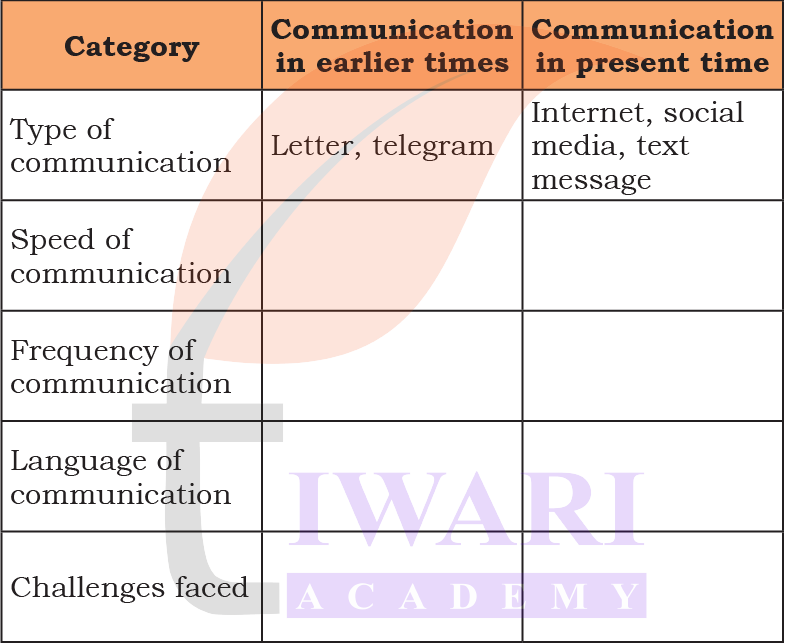
Answer:
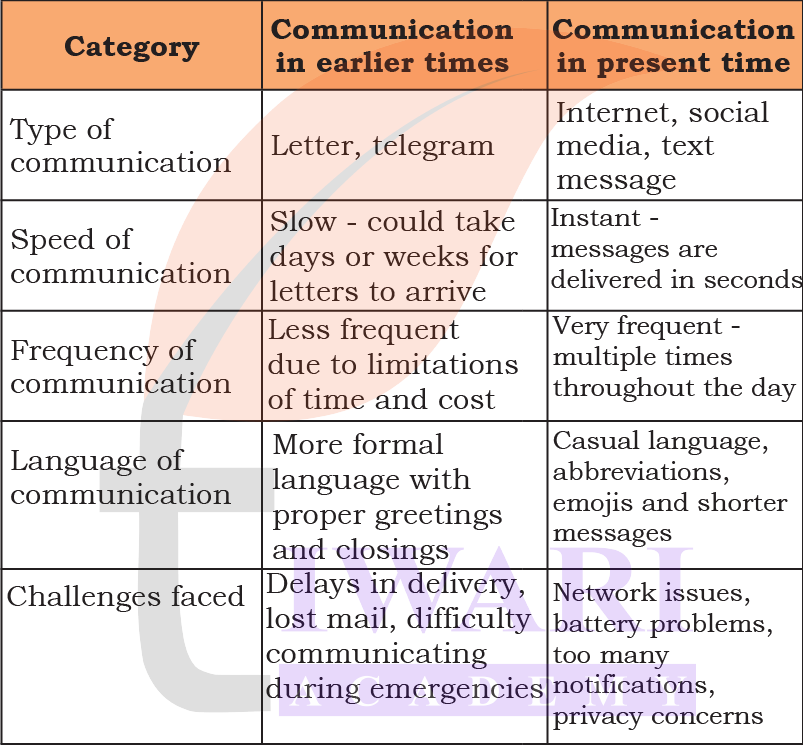
Page 21
Discuss
1. Letters took a long time to reach other persons. How do you think it affected communication between people in the past?
Answer:
In the past, the slow speed of letters affected communication in several ways:
► People had to plan their messages carefully since they couldn’t quickly clarify misunderstandings.
► Important news or urgent messages could arrive too late to be helpful.
► People communicated less frequently and wrote longer, more thoughtful letters that covered many topics at once.
► There was also a special excitement and anticipation while waiting for replies.
This slower pace meant people had to be more patient and deliberate in their communication.
2. How is it different from the way people communicate now?
Answer:
Today, communication is drastically different:
► Messages are sent and received instantly through smartphones and computers.
► People can have continuous conversations throughout the day instead of waiting weeks between exchanges.
► Video calls allow people to see and hear each other in real-time regardless of distance.
► Communication has become more casual, shorter and more frequent.
► We can also share photos, videos and links instantly, making communication richer.
However, the instant nature sometimes means messages are less thoughtful and carefully composed than traditional letters.
3. Today quick messages make sharing the news easier, but sometimes wrong information spreads very quickly too. How can we ensure the news we share is true?
Answer:
To ensure the news we share is true, we should:
► Check information from multiple reliable sources before sharing
► Look for official announcements from trusted organizations
► Be cautious of sensational headlines that seem designed to trigger emotional reactions
► Verify the date of the news to ensure it’s current and not outdated
► Check if respected fact-checking websites have evaluated the information
► Ask adults or teachers if we’re unsure about something we’ve read online
► Avoid sharing information immediately without verifying it first
► Look at the source’s credibility and reputation for accuracy.
Page 22
Write
1. Which mode of transportation do you use the most?
Answer:
I use the school bus most frequently to travel between home and school on weekdays. For shorter distances within my neighborhood, I often walk. On weekends, my family uses our car when we go shopping or visit relatives who live further away. Sometimes we also use public buses when traveling to crowded areas where parking is difficult.
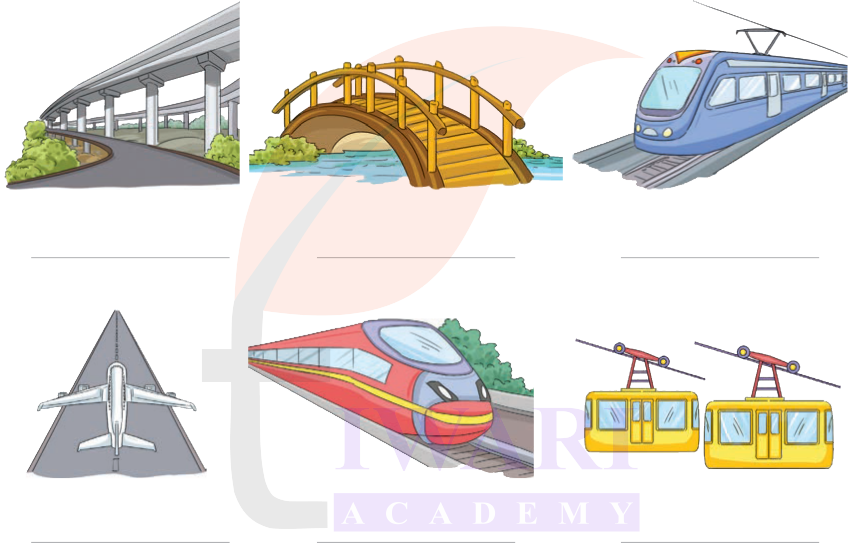
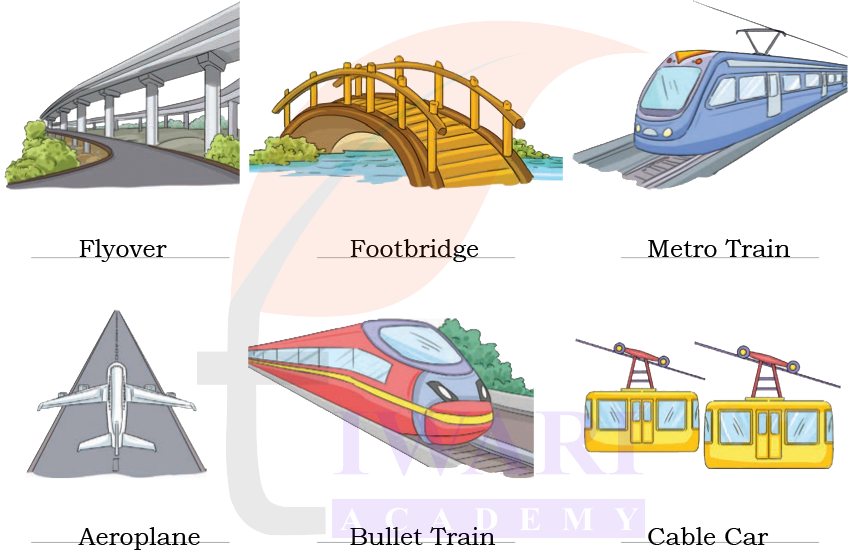
2. Can you identify the structures in the pictures, and explain how they have made travel faster and connectivity better?
Answer:
► Flyover: It helps vehicles avoid traffic by allowing them to pass over busy roads, reducing congestion and saving time.
► Footbridge: It allows people to safely walk across rivers, roads or railway tracks, especially where it’s dangerous or not possible to cross directly.
► Metro Train: It provides fast and efficient transportation within cities, helping people avoid road traffic and reach their destinations quickly.
► Aeroplane: Airplanes are the fastest mode of travel over long distances, connecting cities and countries across the world in a short time.
► Bullet Train: These trains travel at very high speeds and are used for quick travel between cities, saving a lot of time compared to regular trains.
► Cable Car: Cable cars are useful in hilly or mountainous regions where roads are difficult. They provide a quick and scenic way to travel over tough terrains.
Page 23
Find Out
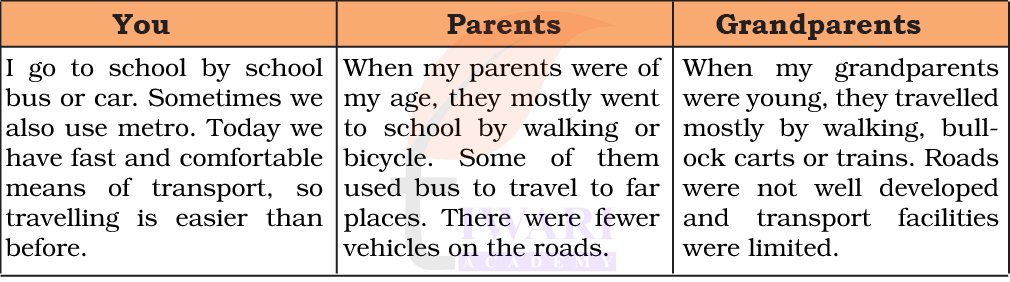
How did your parents and grandparents go to school or other places, when they were of your age? Is it different from how you travel today? Note it down below:

Answer:
Page 23
Write
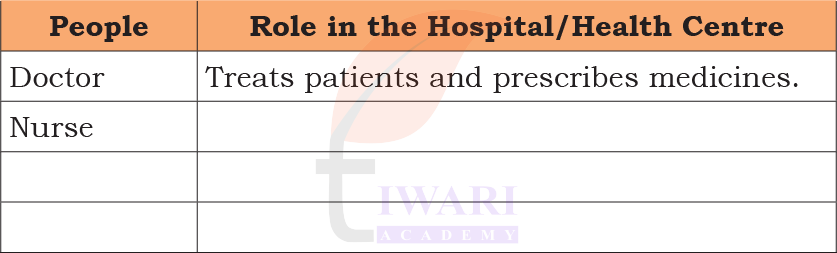
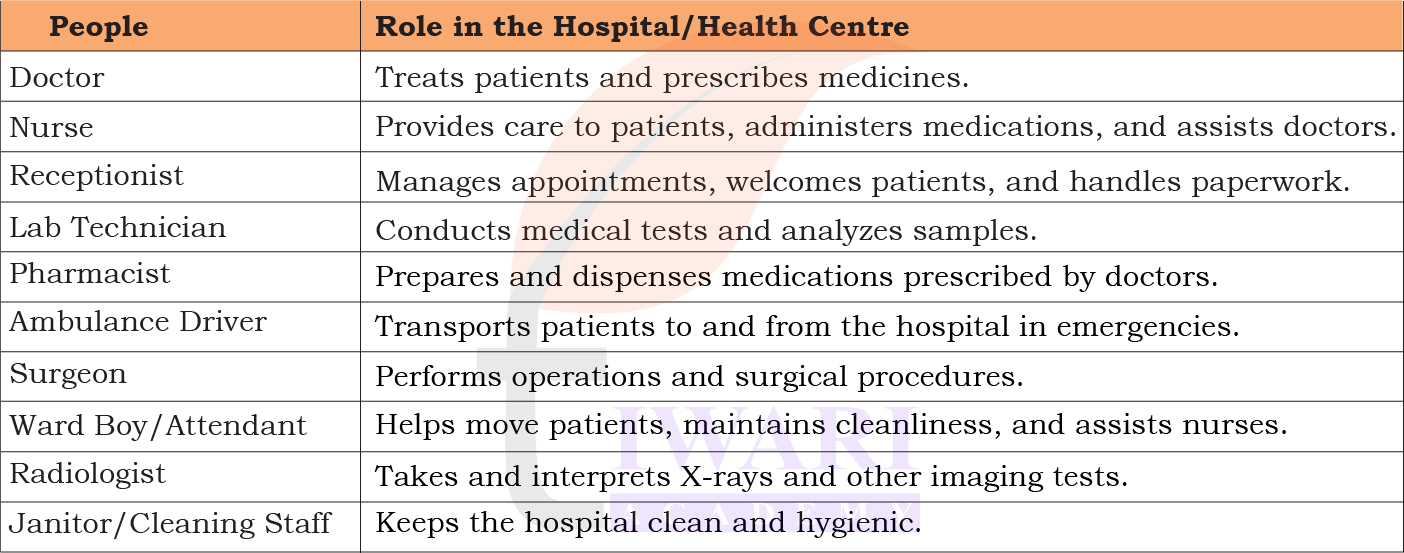
List the people who works at a hospital or a health centre; and write down their role in the following table. One example has been given in the table.
Answer:
Page 25
Discuss
If you had to send money to someone, which method would you choose — using a phone, Money Order or some other mode? Why?
Answer:
I would choose to send money using a phone through a mobile banking app because it’s the fastest and most convenient method. The money gets transferred instantly and the recipient can access it immediately without having to visit any office. It saves time as there’s no need to travel to a post office or bank. Additionally, mobile transfers usually provide a digital receipt and confirmation, making it easy to track the transaction. This method is also available through out the day, unlike post offices which have limited working hours. However, for people who don’t have smartphones or bank accounts, I might still recommend a Money Order as it’s reliable and accessible to everyone.
Page 25
Write
1. If you get pocket money, do you save it? If yes, where do you put your savings?
Answer:
Yes, I save about half of my pocket money each month. I keep my savings in a small piggy bank that my parents gave me for this purpose. Once the piggy bank is full, my parents help me deposit the money into savings account at the bank. This helps me learn how banks work while keeping my money safe. I also have a small section in my drawer where I keep some money for immediate needs.
2. Why do you think it is important to save money?
Answer:
Saving money is important because:
► It helps prepare for unexpected expenses or emergencies.
► It allows us to buy more expensive items that we really want instead of spending on small things.
► It teaches us how to manage money wisely and not spend everything at once.
► It helps us achieve future goals like higher education or starting a project.
► It provides financial security and reduces stress about money.
► It creates good habits that will be valuable throughout life.
► It allows us to help others or donate to causes we care about.
3. What are some things you could do to save more money?
Answer:
To save more money, I could:
► Make a list before shopping to avoid impulse purchases.
► Keep track of my spending in a notebook to see where my money goes.
► Choose less expensive activities with friends.
► Use the library instead of buying books.
► Reuse and repair items instead of buying new ones.
► Save a fixed percentage of any money I receive as gifts.
► Wait a few days before buying something to decide if I really need it.
► Find free activities and entertainment options.
► Walk or use public transport instead of asking for rides that use fuel.
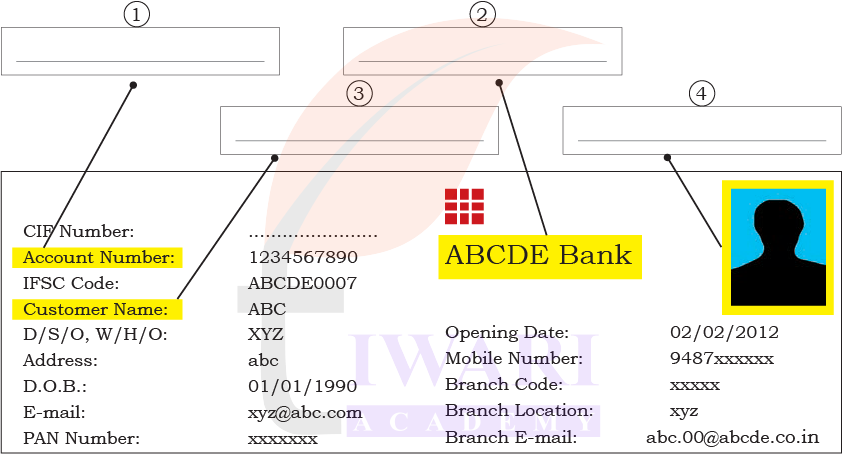
4. Request one of your family members to show you their bank passbook. Note the important elements given on the first page of the passbook.
Answer:
The important elements on the first page of a bank passbook include:
► Account holder’s name
► Account number
► Customer ID/CIF number
► IFSC code
► Branch name and code
► Branch location and contact details
► Account opening date
► Date of birth
► Address of the account holder
► Mobile number and email ID
► PAN number
► Parent/guardian’s name.
Page 26
Activity 3
1. Visit a bank in your locality or find out from your elders about how it works. After that, answer the following questions:
(a) Other than saving money, what else do people use banks for?
Answer:
People use banks for many services beyond saving money:
► Taking loans for education, homes, vehicles or businesses.
► Making bill payments for electricity, water and other utilities.
► Transferring money to other accounts domestically and internationally.
► Converting one currency to another when traveling abroad.
► Getting credit cards for purchases.
► Renting safe deposit lockers to store valuable items.
► Setting up recurring deposits and fixed deposits for long-term savings.
► Getting bank drafts and banker’s cheques for official payments.
► Investing in mutual funds and other financial products.
► Using online banking services to track expenses and manage finances.
(b) What is an ATM and how does it help people?
Answer:
An ATM (Automated Teller Machine) is an electronic banking device that allows people to perform basic banking transactions without needing to visit a bank branch or speak with a teller. ATMs help people by:
► Providing access to cash 24 hours a day, even outside banking hours.
► Allowing people to check their account balance quickly.
► Enabling deposits of cash and cheques.
► Providing mini statements of recent transactions.
► Allowing fund transfers between accounts.
► Facilitating bill payments.
► Reducing the need to carry large amounts of cash.
► Saving time by avoiding long queues in banks.
► Being available in many convenient locations like shopping malls, airports and railway stations.
2. Take an Indian currency note. Look at it closely and answer the following questions:
(a) What is the value of the note?
Answer:
The value of the note I examined is ₹100.
(b) How many languages do you see on the note?
Answer:
There are 17 languages on the note. Hindi and English are prominently displayed, with the value written in 15 other official Indian languages on the language panel at the back of the note.
(c) What pictures or symbols are there on the note?
Answer:
The note contains several pictures and symbols:
► Portrait of Mahatma Gandhi on the front
► National emblem (Lion Capital of Ashoka)
► RBI seal and governor’s signature
► Ashoka Pillar emblem on the right
► Micro letters ‘RBI’ and the note’s value
► Security thread running vertically
► Watermark of Mahatma Gandhi
► Rani ki Vav (stepwell in Gujarat) depicted on the reverse
► Swachh Bharat logo with slogan
► Year of printing
► Geometric patterns and floral designs for security.
Compass directions explained in Class 4 EVS Chapter 2
Page 28
Write
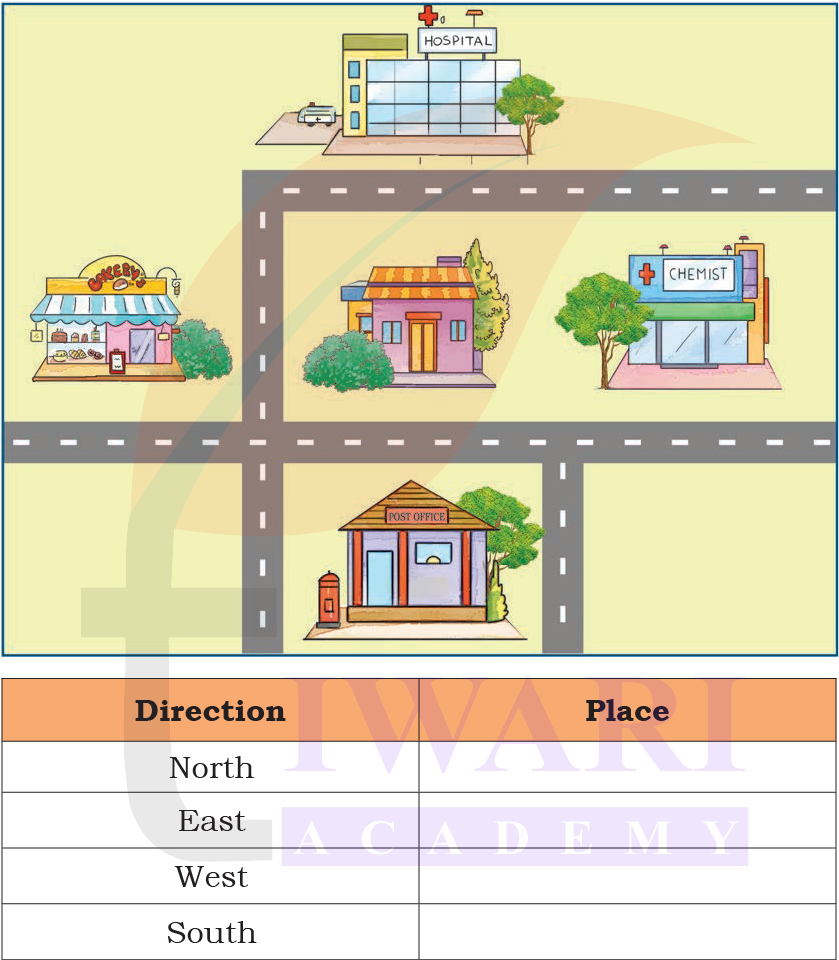
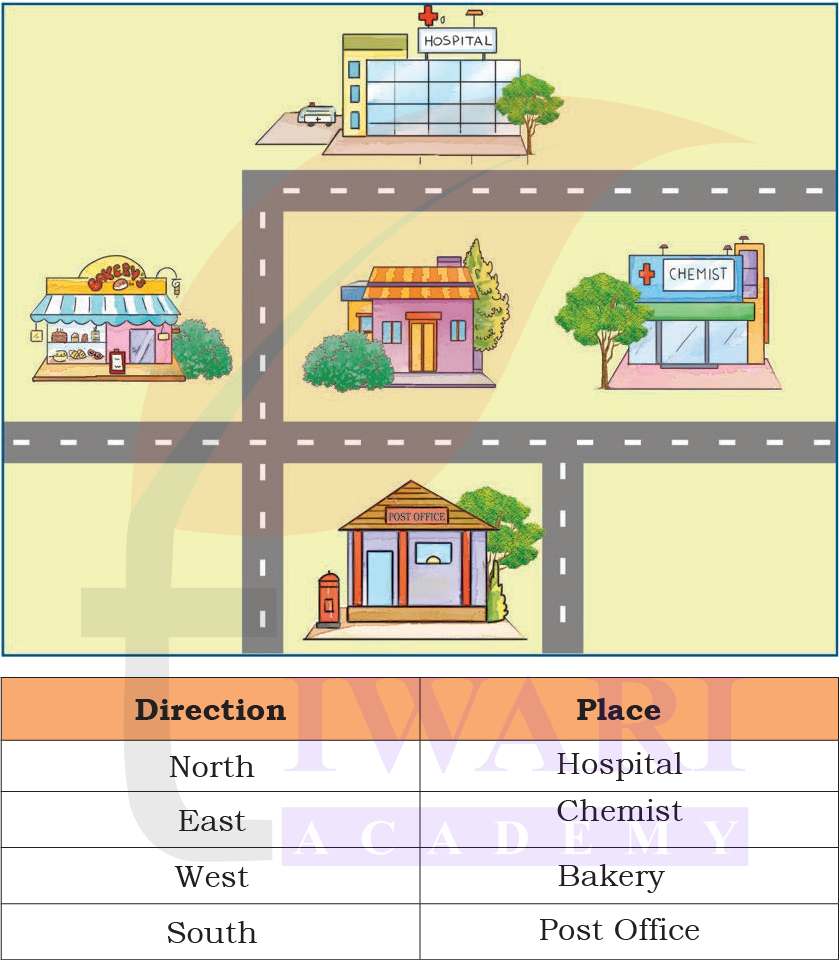
1. Look at the picture above, and write down the places located in the North, East, West, and South of Navya’s home.
Answer:
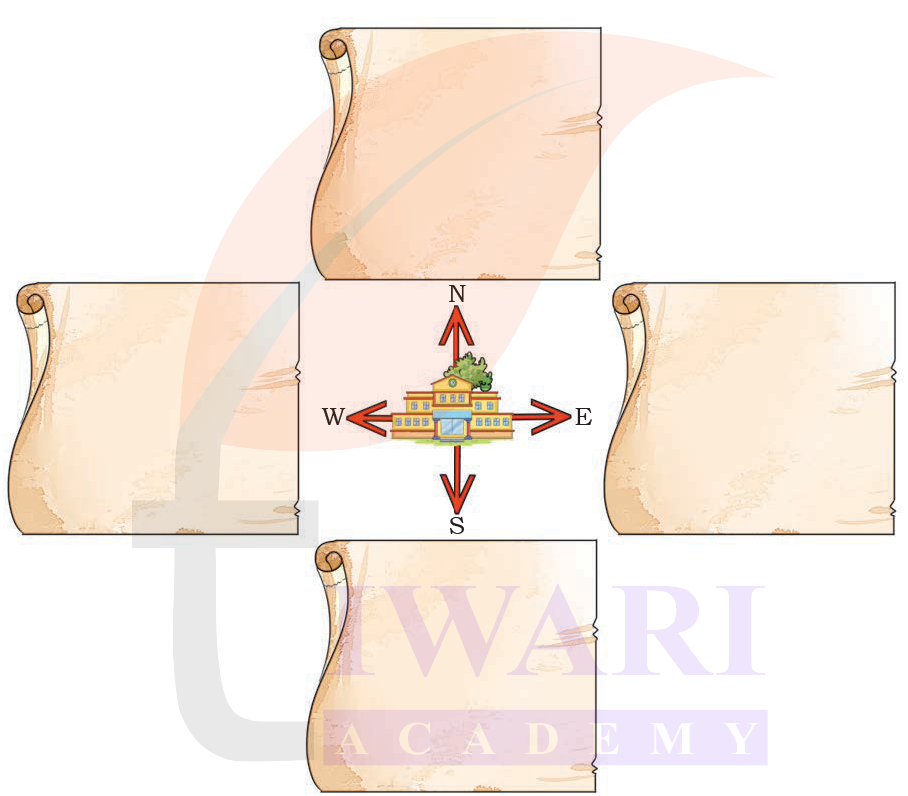
2. Look at the picture on the next page, and imagine your school at the center. Name the buildings or areas near your school and write the direction they are situated in the given spaces.
Answer:
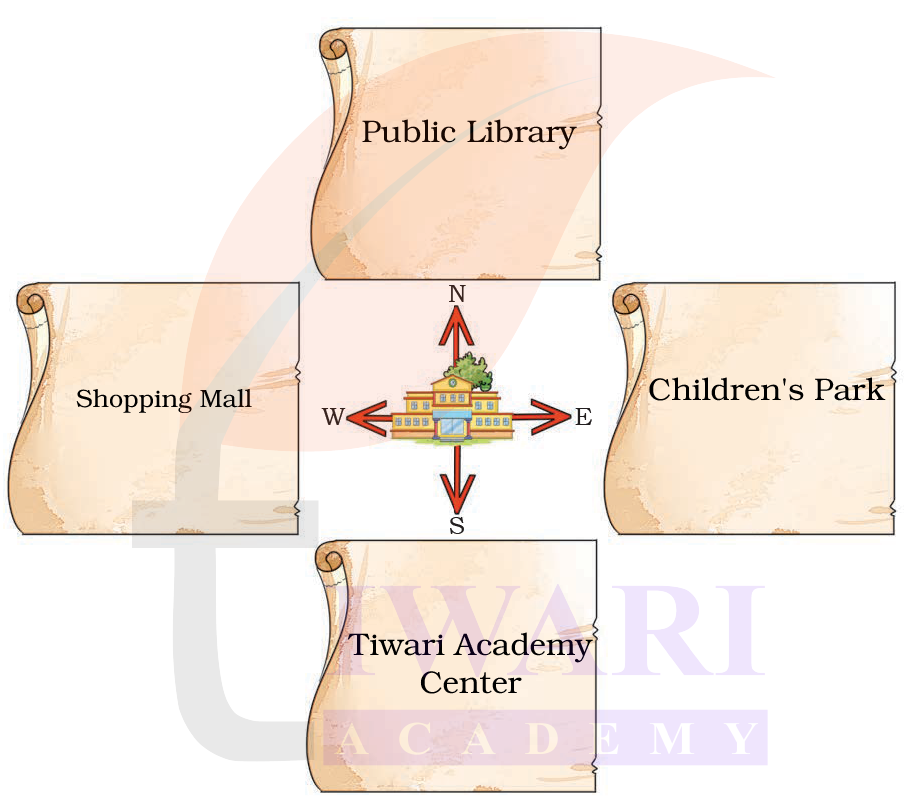
3. Imagine you are giving directions to a friend to visit your favourite place near your school. How would you explain it using directions (left, right, forward, backward, etc.) and landmarks?
Answer:
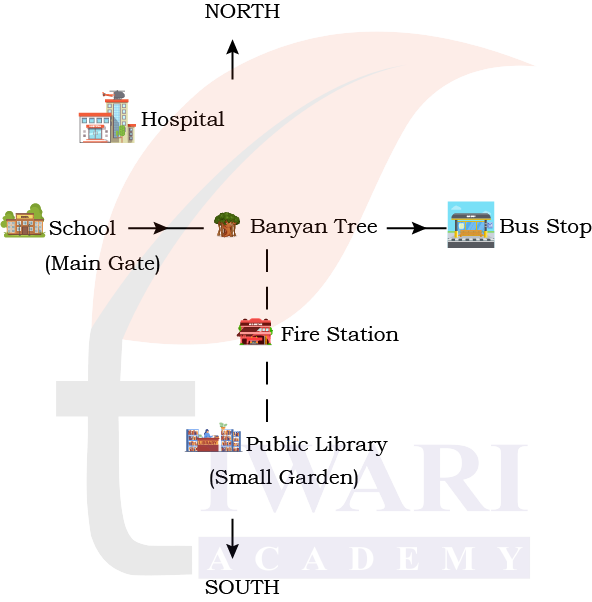
Place: Public Library
Instruction:
► Exit from the main gate of our school and turn right.
► Walk straight for about 200 meters until you reach the big banyan tree.
► At the tree, take a left turn and continue walking for another 100 meters.
► You’ll see a yellow building with a red roof – that’s the fire station.
► The public library is right opposite to the fire station.
It’s a two-story white building with a blue board that says “Public Library” at the entrance. You can’t miss the small garden with flowering plants in front of it.
Page 30
Activity 4
Draw a map showing the route from your school to the public library or any such place near your school. Identify landmarks like parks, shops, hospitals, bus stops, etc. on the map.
Answer:
Page 31
Let Us Reflect
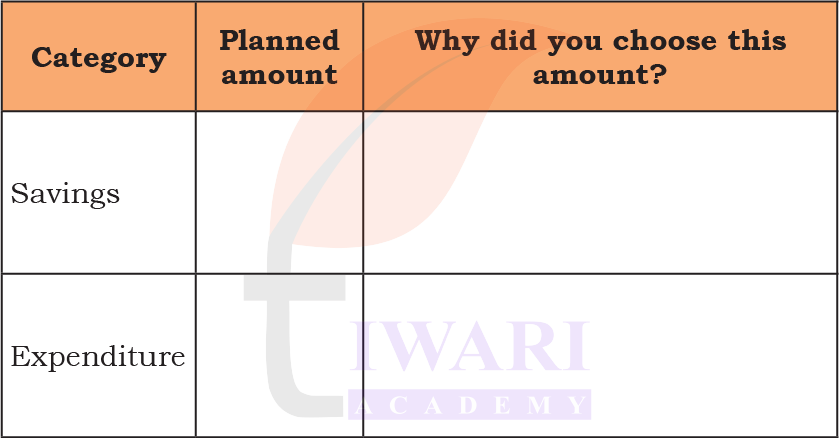
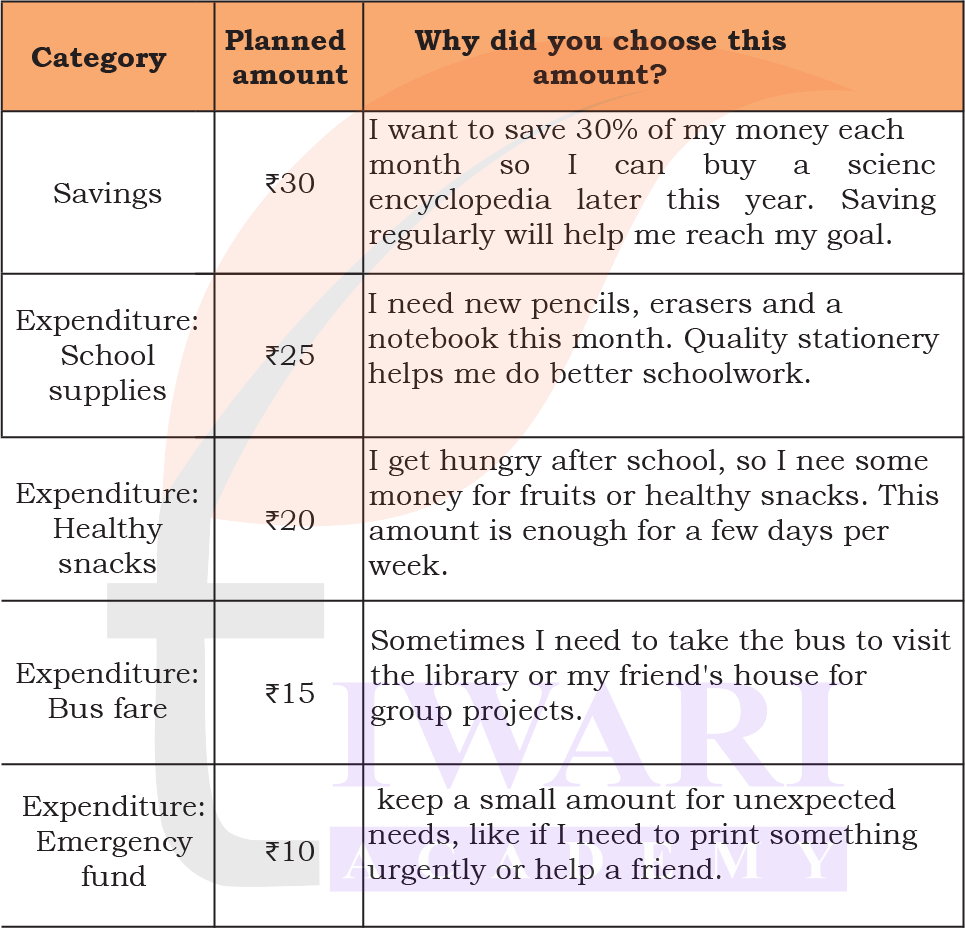
1. Imagine you have ₹100 to utilise in a month. Your task is to plan how to spend and save wisely. Think about your expenses for stationery, snacks, toys, etc. Decide how much you will save in your piggy bank and how much you will use for your expenses. After making this plan, think about how saving money could help you in the future.
Use the table below to create your budget:
Answer:
2. Imagine that your group is in charge of making your neighbourhood better. Discuss what new services or facilities you would add or improve. Present how these changes would help everyone in the community.
Answer:
Our group would make the following improvements to our neighborhood:
Create a community garden:
► Would provide fresh vegetables for residents
► Create a beautiful space where people can relax
► Teach children about plants and sustainability
► Give community members a chance to work together
Set up a recycling center:
► Help reduce waste going to landfills
► Create awareness about environmental protection
► Generate small income from recyclable materials that can fund other community projects
► Keep the neighborhood cleaner
Establish a skills exchange program:
► Allow community members to teach and learn different skills from each other
► Create stronger bonds between neighbors
► Help people save money by learning to repair things or make items themselves
► Preserve traditional crafts and knowledge
Improve street lighting:
► Make the neighborhood safer at night
► Allow children to play outside longer during winter months
► Help elderly people navigate streets more confidently
► Reduce accidents and improve security
These improvements would make our neighborhood more connected, environmentally friendly, safer and more self-sufficient.
3. As a class, take help of the elders around you to list people in your neighbourhood who helped the community during COVID-19. These could include doctors, nurses, garbage collectors, shopkeepers, teachers and others. Discuss how they made the community safer and why it is important to thank them.
Answer:
People who helped during COVID-19:
Dr. Sharma (local physician): Continued seeing patients despite risks, set up telemedicine services and provided correct health information to community members.
Nurse Priya: Worked extra shifts at the hospital, conducted door-to-door temperature checks and administered vaccines when they became available.
Mr. Raju (grocery store owner): Kept his shop open with safety measures, arranged home delivery for elderly residents and maintained fair prices despite shortages.
Mrs. Verma (teacher): Quickly adapted to online teaching, provided extra support to struggling students and created learning materials for those without internet access.
Sanitation workers: Continued collecting waste regularly despite personal risk, ensuring cleanliness and preventing disease spread.
Mr. Khan (apartment security guard): Helped deliver essential supplies to quarantined families and monitored visitors to prevent virus spread.
Ms. Lakshmi (volunteer): Organized a community kitchen to provide meals for those who lost their income during lockdowns.
These community heroes made our neighborhood safer by providing essential services, accurate information and emotional support during a challenging time. They often put themselves at risk to help others. It’s important to thank them because their work was often taken for granted despite its difficulty and importance. Showing gratitude not only acknowledges their sacrifices but also encourages a culture of appreciation and community service. When we recognize people’s contributions, it strengthens community bonds and inspires others to help in future crises.
4. Can you list out the people involved and vehicles used in each of these services in the boxes given below?
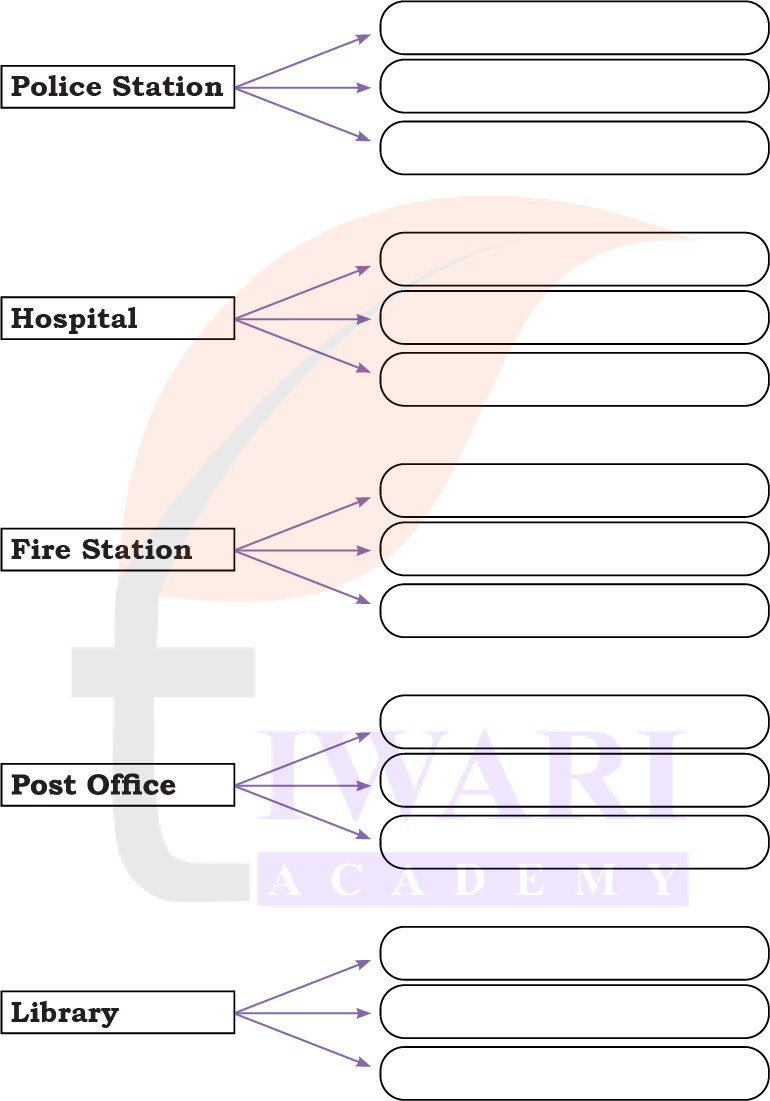
Answer:
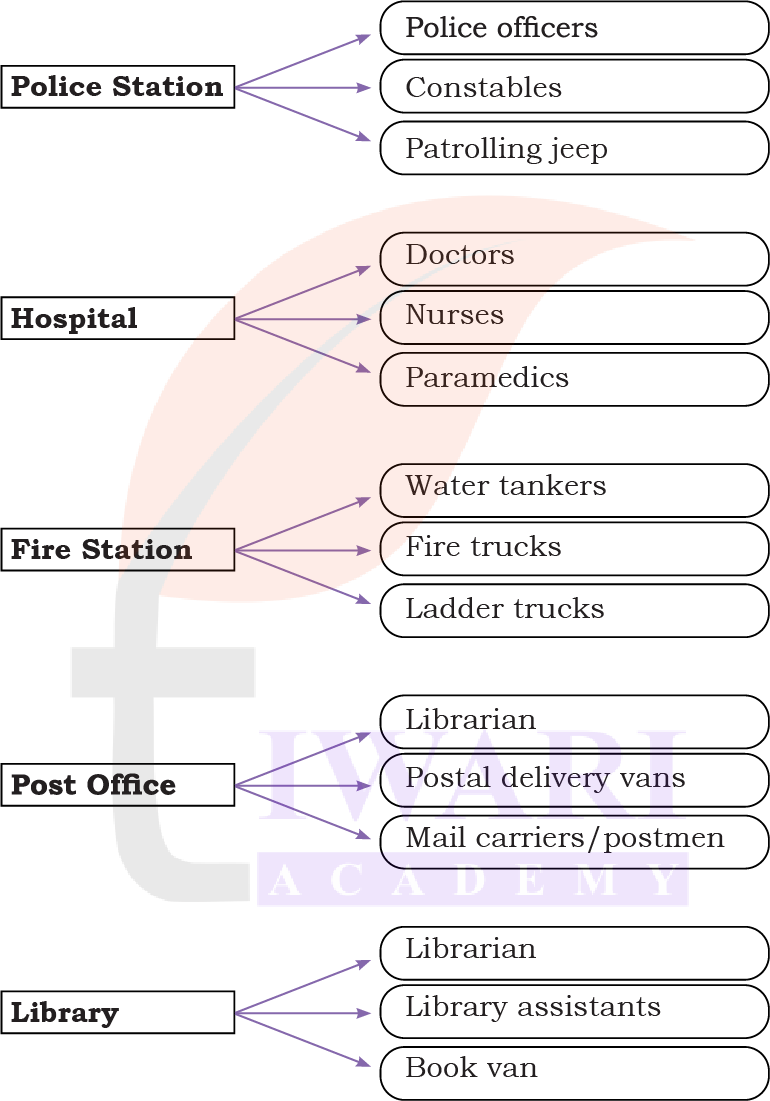
Class 4 EVS Chapter 2 Question Answers with Important Extra Questions
Question:
Who has got my ears?
Answer:
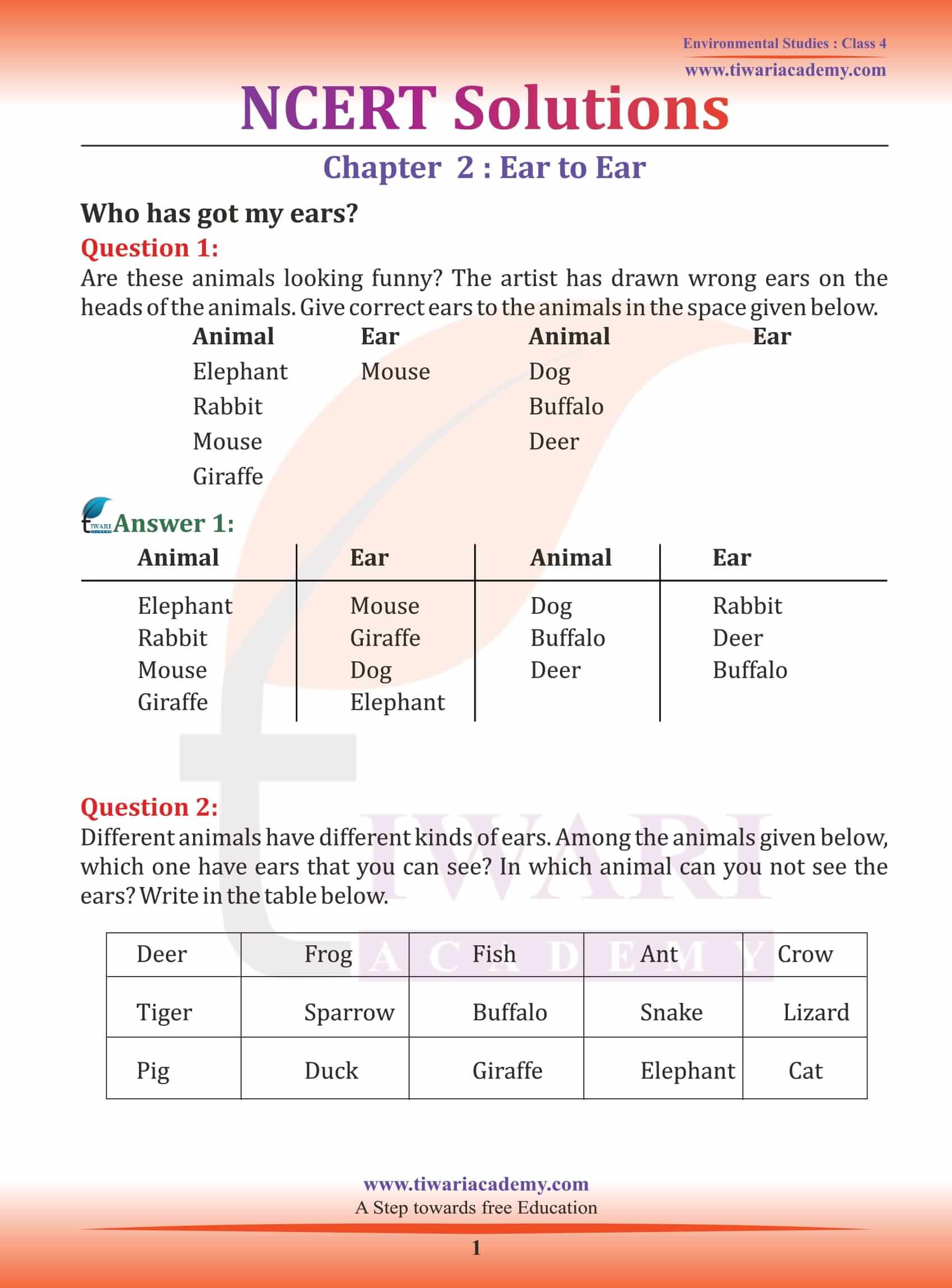
Are these animals looking funny? The artist has drawn wrong ears on the heads of the animals. Give correct ears to the animals in the space given below.
| Animal | Ear |
|---|---|
| Elephant | Mouse |
| Dog | Rabbit |
| Buffalo | Deer |
| Mouse | Giraffe |
| Giraffe | Elephant |
Question:
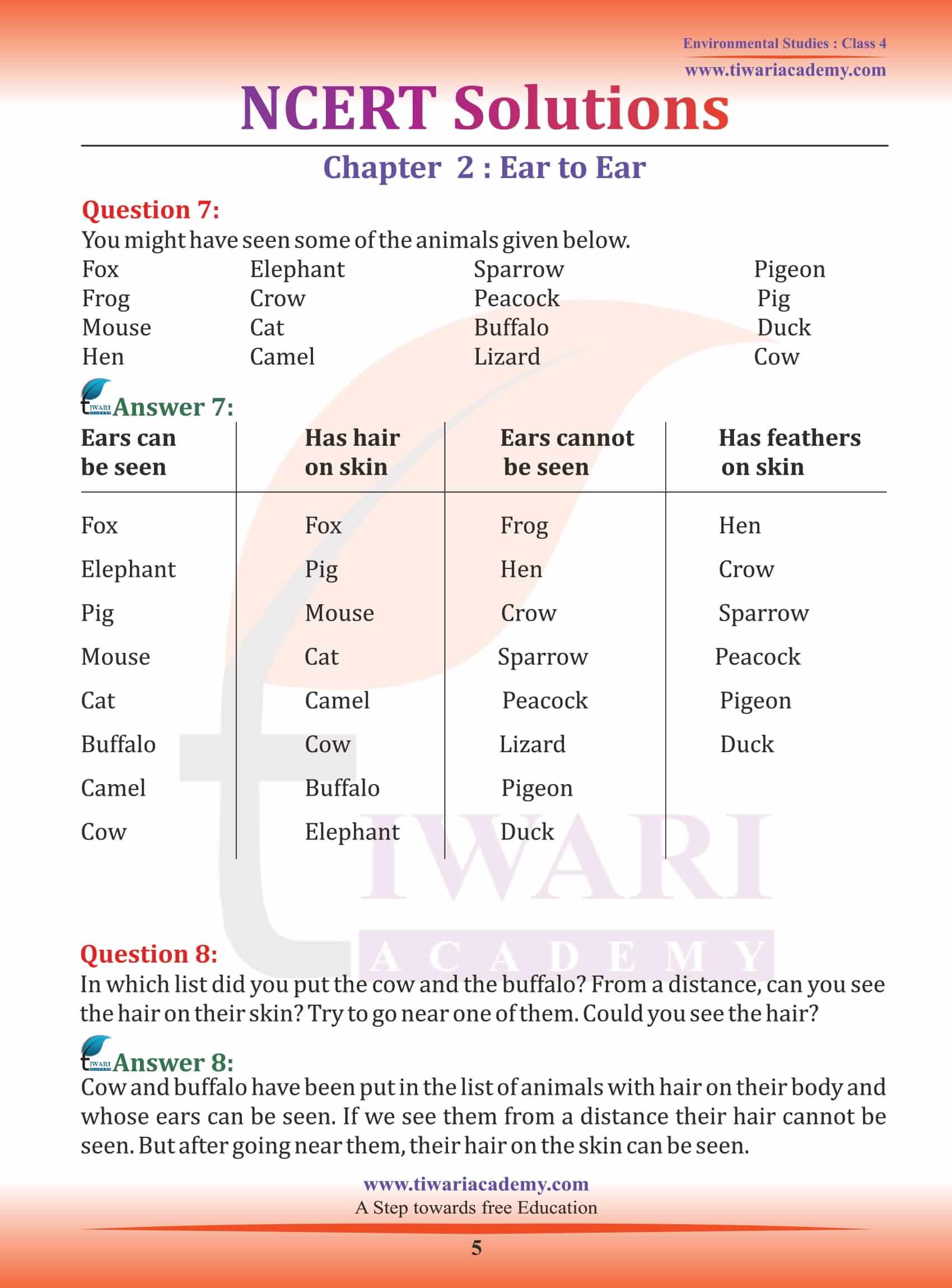
Different animals have different kinds of ears. Among the animals given below, which one have ears that you can see? In which animal can you not see the ears? Write in the table below. Deer, Frog, Fish, Ant, Crow, Tiger, Sparrow, Buffalo, Snake, Lizard, Pig, Duck, Giraffe, Elephant, Cat.
Answer:
Animals whose ears we can see and animals whose ears we cannot see given below:
| Animals whose ears we can see | Animals whose ears we cannot see |
|---|---|
| Deer | Frog |
| Tiger | Fish |
| Buffalo | Ant |
| Pig | Crow |
| Giraffe | Sparrow |
| Elephant | Snake |
| Cat | Lizard, Duck |
Class 4 EVS Chapter 2 Question Answers Set 1
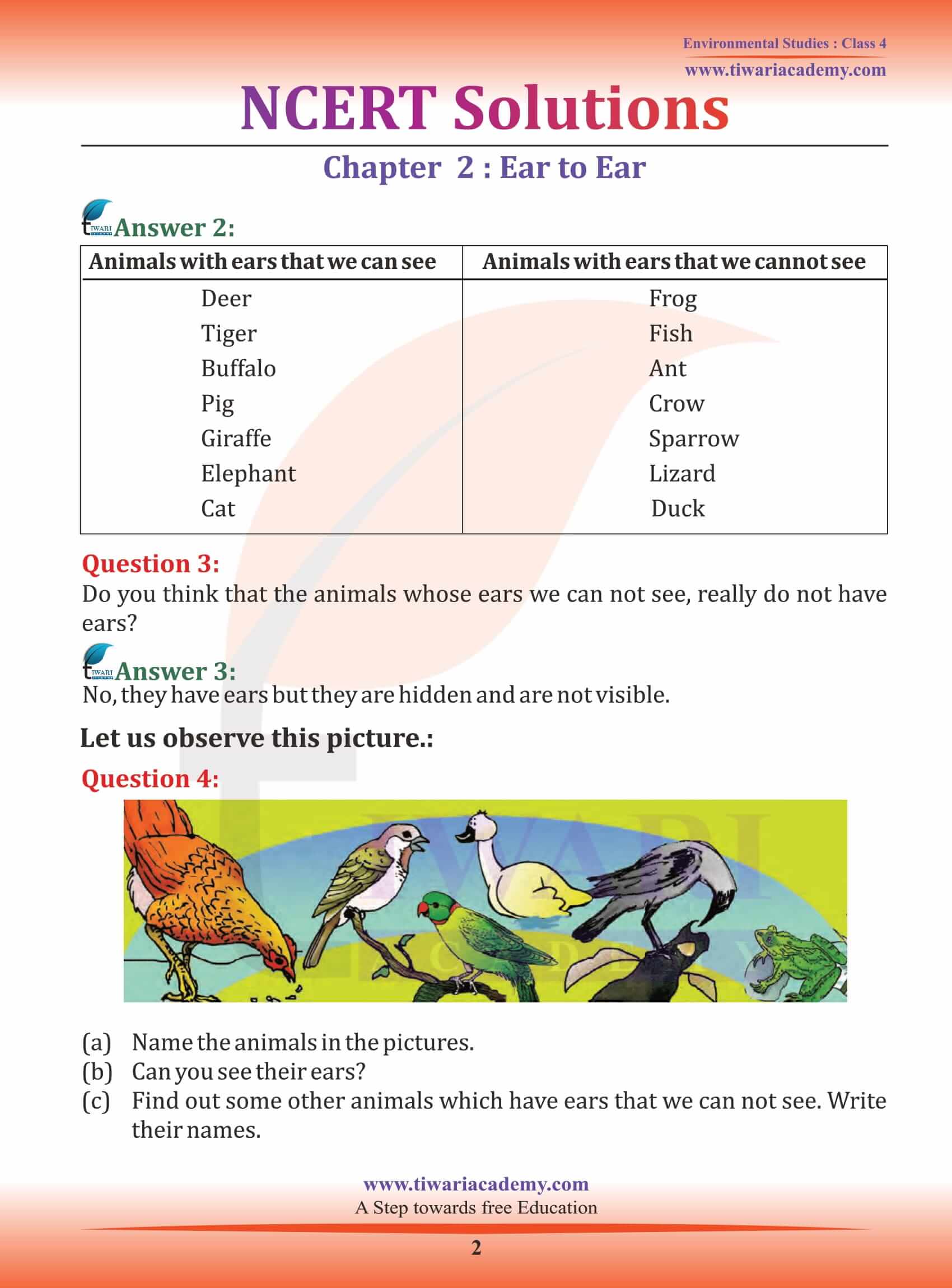
Do you think that the animals whose ears we cannot see, really do not have ears?
In some animals we can see the ears, in some we cannot. No, they have ears in tiny shape which are not visible. We cannot see a bird’s ears. A bird has tiny holes on both sides of its head. Generally, the holes are covered with feathers. They help the bird to hear.
Have you seen animals around your house or school that have small babies? Write their names in your notebook.
We Have seen animals around our house or school that have small babies for example cow, pig, dog and several types of bird.
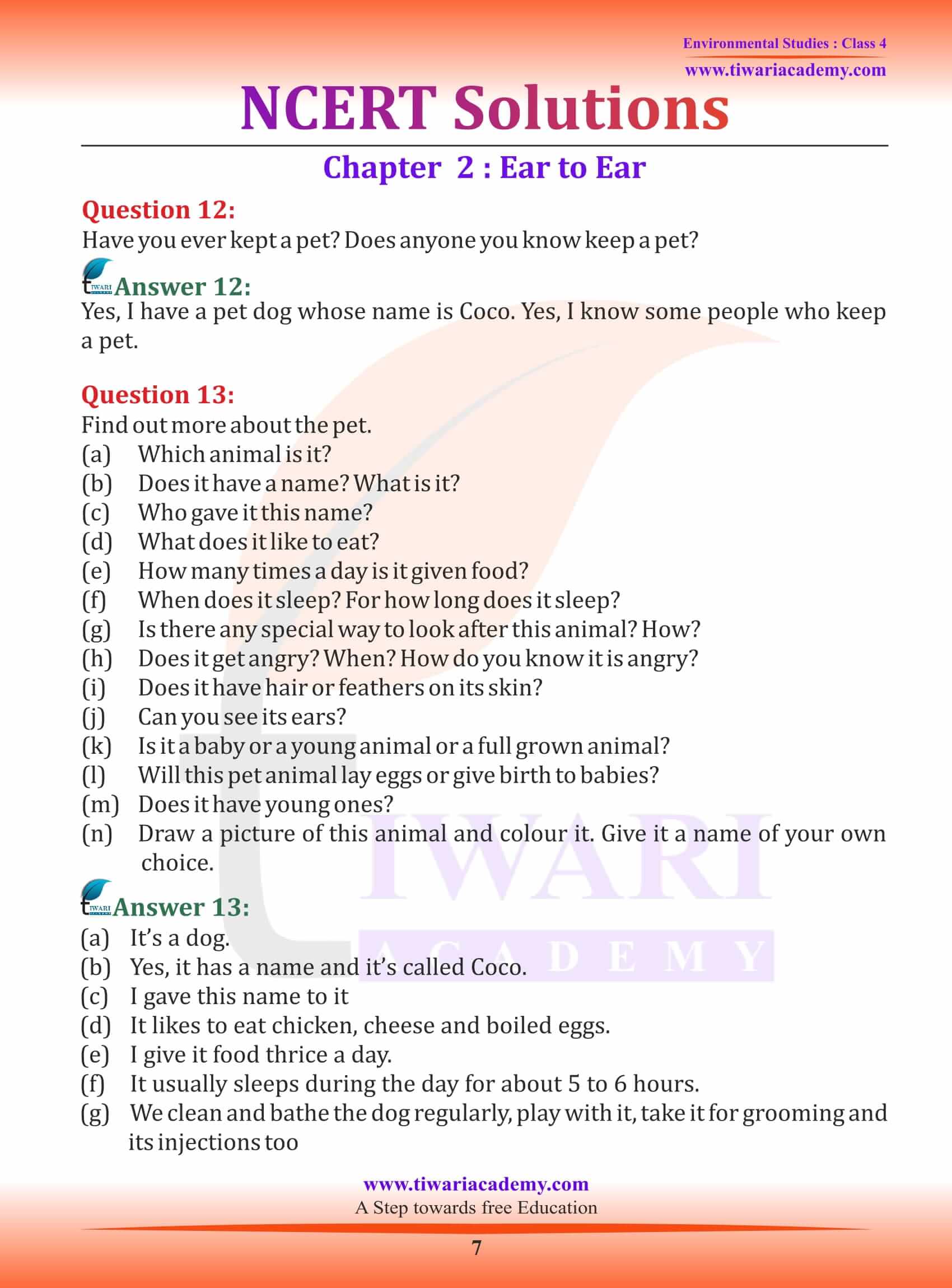
Have you ever kept a pet? Does anyone you know keep a pet?
Yes, we have several pets when I was lived in my village like cow, buffalo etc. now in cities trend has been changed I know several people who keep pet like dog and cat.
Which animal is it?
This is a little puppy.
Does it have a name? What is it?
Yes, his name is “tomy”.
Question:
Who gave it this name?
Answer:
This name given by his master’s little daughter.
Class 4 EVS Chapter 2 Question Answers Set 2
What does it like to eat?
He like to eat milk and rusk.
How many times a day is it given food?
In a day it is given food three time.
When does it sleep? For how long does it sleep?
He is a lazy puppy, it sleeps mostly.
Is there any special way to look after this animal? How?
Pet animals require lot of care specially dogs. First of all, keep in mind their hygiene for good health and feed them carefully and on right time. We should fix the time for outing.
Class 4 EVS Chapter 2 Question Answers Set 3
Does it get angry? When? How do you know it is angry?
He gets angry when some tease him or when someone unknown person enters in house. When he becomes angry barking loudly and jumping here and there.
Does it have hair or feathers on its skin?
It has hair on its skin
Can you see its ears?
Yes, we can see its ears.
Is it a baby or a young animal or a full grown animal?
It is a baby animal.
Will this pet animal lay eggs or give birth to babies?
This pet animal give birth to babies.
Does it have young ones?
No, it is itself a small puppy.
Class 4 EVS Chapter 2 Extra Question Answers Set 1
How does an elephant use its ears?
An elephant uses its ears in the following ways-
• To hear long distance sounds
• To keep its body cool
• To communicate joys and sorrows, show anger, excitement by flapping the ears
Why do elephants keep flapping or moving their ears?
Elephants keep moving or flapping their ears in hot weather to keep their body cool. Flapping the ears helps to cool an elephant as the ears act as a fan and move air over the rest of the elephant’s body, flapping also cools the blood as it circulates through the veins in the ears.
How are bats ears a substitute for its eyes?
Bats have large ears on their small head which help them to navigate or find their way in the dark as their vision is not good in comparison to the other animals.
How do bats fly to find their prey?
Every night a bat puts in 600-700 kilometres of airtime. Flying at a low level, the bat catch insects at speeds of around 40 metres per second. At night, the bat uses its ears which are good at hearing to find its prey. Bats catch insects continuously using sound which as a navigation system.
How does hair on an animal’s body help them?
Hair on the body is a body covering that –
• Keeps the animal warm and dry
• Gives different pattern to the animal on their skin
• Protects them from any danger like enemies
• Protects them from harsh weather conditions
• Helps them to hide from their enemies (Camouflage)
Mention a few features of mammals.
The features of the mammals are as given below-
• They give birth to their young ones directly
• Most of them live on land
• They have four limbs
• They have hair on their body
• The young ones feed on their mother’s milk
• They have ears which can be seen
Who are mammals?
Mammals are the organisms which have mammary glands to produce milk, they give birth to young ones and have hair on their body. They are also warm blooded e.g., human beings, cat, dogs, monkeys, cow etc.
Question:
How are ears useful to animals?
Answer:
The ears are useful to animals as –
• Ear is an important organ that is used for hearing. Animals use their hearing power to sense danger/enemies and to find their prey
• It helps in maintaining balance of the body in mammals.
• In some animal ears help to keep their body cool. For eg: Elephant.
Class 4 EVS Chapter 2 Extra Question Answers Set 2
What does reproduction mean?
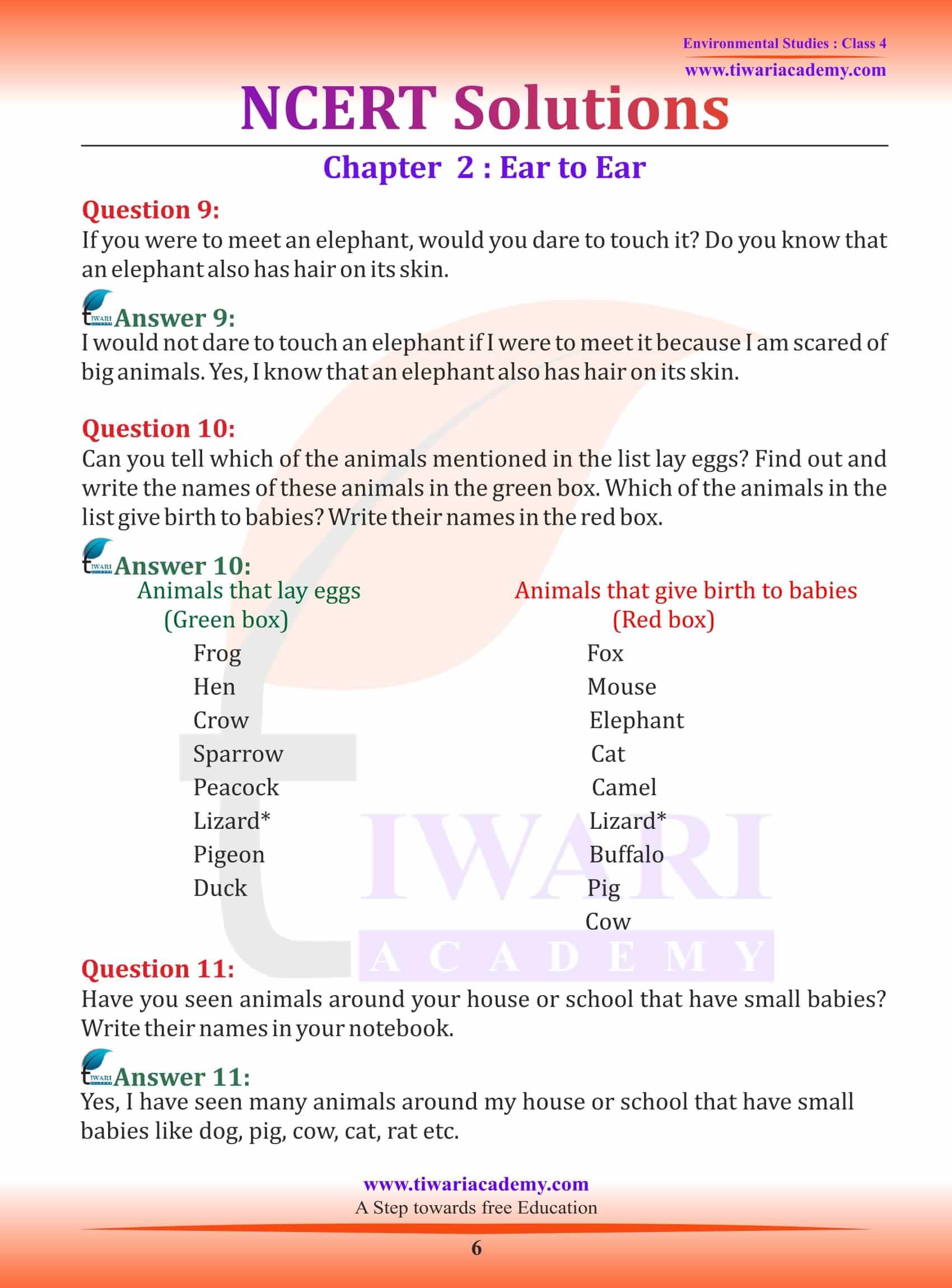
Reproduction is the process by which the living things produce young ones of their own kind. Some living things reproduce by laying eggs and some give birth to the young ones directly.
Why is reproduction necessary?
Reproduction is an important process which helps animals to-
• Increase the number of animals
• Prevent extinction of animals
• Maintain continuity of life.
Mention the different ways in which the animals reproduce?
The animals reproduce by two ways-
• By laying eggs- birds, reptiles, fish and amphibians
• By giving birth to the young ones directly-mammals
How do the birds hear?
Hearing is birds’ important sense, and their ears are funnel-shaped which help them to hear sound. The ears are located slightly behind and below the eyes, and they are covered with soft feathers. Although the birds do not have external ears, their ears help them to identify sounds coming from different levels. Birds are also able to make out whether the source of a sound is above them, below them, or at the same level.
Why do animals have different patterns on their body?
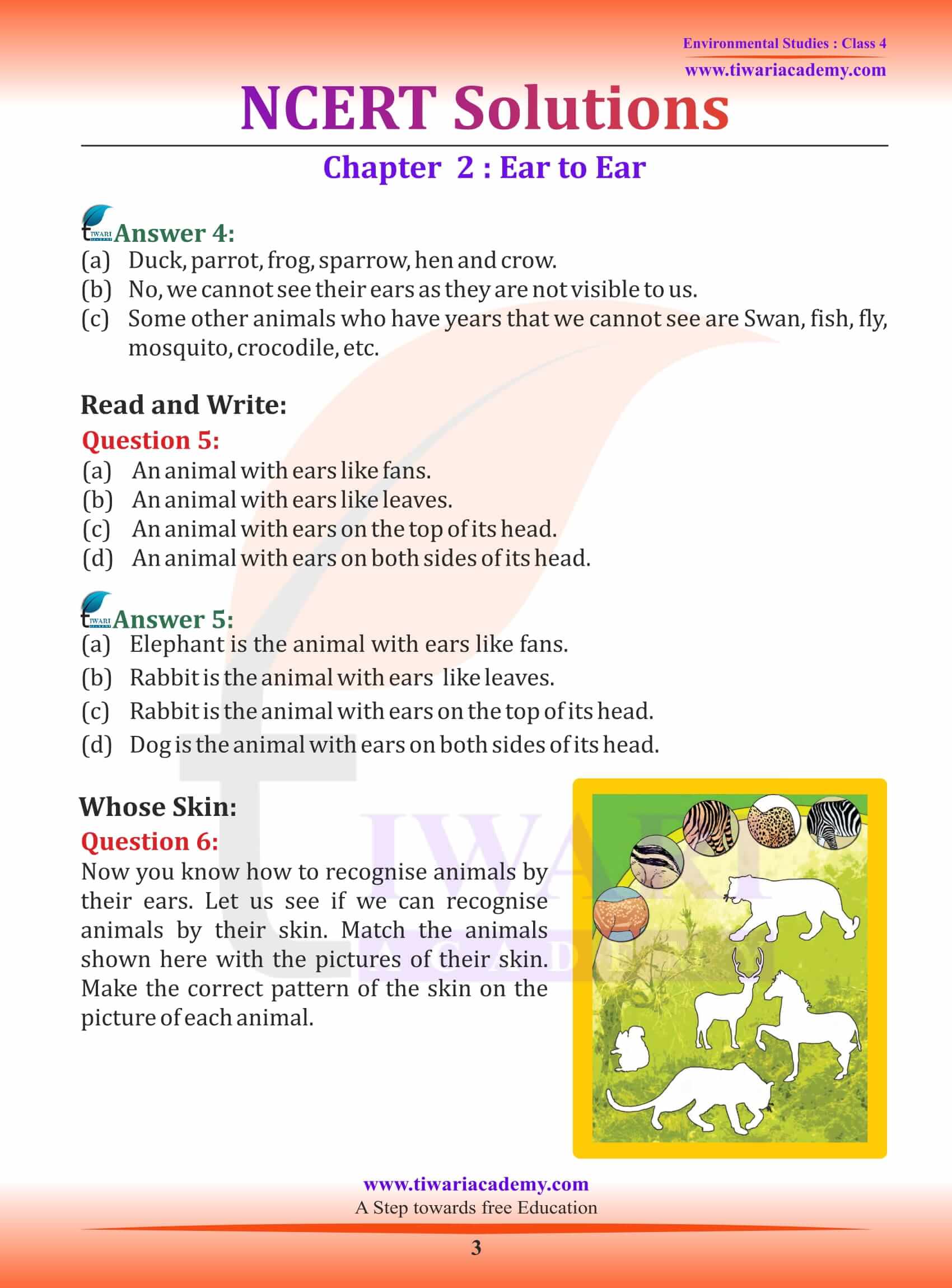
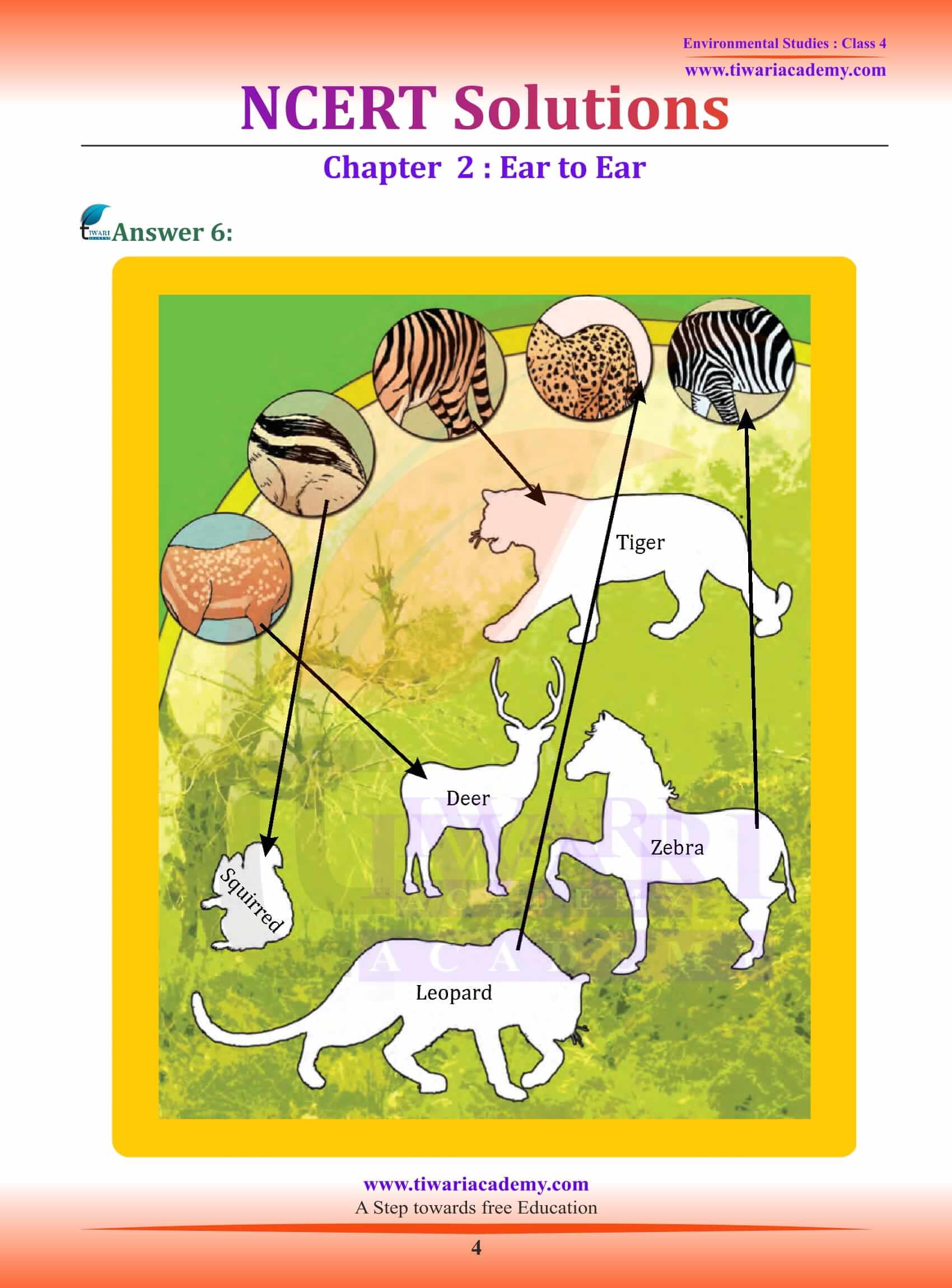
There are different patterns on the animal body due to the hair on their skin. If the animal did not have any hair on its skin then there would be no patterns. These patterns or stripes present on the body of animals match with their surroundings like grass, plants etc and are very useful for them. The patterns prevent animals from being spotted by the enemies. For e.g. when zebra hides itself behind the grass, these stripes confuse the enemies in identifying it and thus protects it
Why are the tigers decreasing in numbers in India?
India has a habitat to support about 10,000 tigers in the country, but the number of tiger is decreasing day by day due to the cutting of forests resulting in loss of habitat and less availability of preys to feed on. Thus human activities, such as hunting, poaching and habitat destruction, are the reasons why some species of tigers have declined over the years.
How does a snake hear?
Snakes do not have external ears but they can hear the vibrations with the help of their internal ear which are present in their jaw bones. Snakes feel the waves of the sound and transfer it to the internal ear to take action. Snake moves its body in response to the sound waves obtained from it.
Why are a bird’s ears not visible to us?
A bird’s ears are not visible to us because it does not have external ear structures. Its ears are like openings that are hidden under the feathers on the side of the head, just behind and slightly below the eyes. Birds do have ears and an excellent sense of hearing and are able to hear a much wider range of sounds than humans, but we can’t see their ears because they are covered with feathers. The feathers that cover the ear hole protect it from the noise of the wind as the bird flies.
Class 4 EVS Chapter 2 Extra Question Answers Set 3
What is the reason that animals can be recognised by their skin?
Animals can be recognised by skin due to the smell generated by the sweat glands present in the skin of animals.
Do crocodiles have ears?
Crocodiles are the only reptiles with external ear. Their ears are located behind their eyes, in the upper part of their heads. They have flaps which cover their ears forming a tight seal, preventing water from entering the ear when they are in water.
What type of ears do bats have?
Bats have large ears. Bats have a bad eyesight, being blind for the most part so they depend upon their sense of hearing. A bat can shrill at the same time as in flight and navigate their way to where they need to be.
What type of mammal is a platypus?
Platypuses are grouped as separate type of mammals which are different from all other mammals because they do not give birth to the young ones directly but they lay eggs.
Why is a platypus considered a mammal?
The platypus is considered a mammal because it has fur on its body and feeds its young with milk.
What is pangolin?
Pangolins are actually mammals. They are the only mammals whose whole body is covered in scales and they use those scales to protect themselves from enemies in the wild.
What makes a pangolin a very unusual mammal?
Pangolins are covered in hard scales. These mammals eat ants and termites using an very long, sticky tongue, and are able to quickly roll themselves up into a tight ball when they feel threatened.
What are nocturnal animals? Give examples.
Nocturnal animals are those animals that are active at night time and then sleep during the day. There are many examples of nocturnal animals, including hedgehogs, foxes, owls, bats. Since they are awake when it is dark outside, their bodies adapt them to survive.
Class 4 EVS Chapter 2 Extra Question Answers Set 4
What are diurnal animals?
These animals are active during the night hours. Animals that are diurnal are usually awake and active during the day. These animals are well adapted to live during daylight. Many diurnal animals are inactive during night time because their body temperature drops at night. Examples include human, many birds, deer, cows etc.
Write one use of each of the following, for mammals:
(i). Hair -The most important function of hair in mammals is that it prevents the body against cold by conserving body heat. The different colours and colour patterns in hair coats also serve purpose of camouflage.
(ii). Ear- The ear is the organ that enables the mammals to hear and maintain balance of the body.
Why do animals move their ears?
Many animals move their ears to focus their attention on sound. Many animals, including dogs, cats and various species of monkeys move their ears for better focus.
What are the features of fish to live in water?
The features which help fish to adapt to live in water:
• It has streamlined body which is covered with scales.
• The skeleton is made up of thin bones with a flexible backbone.
• It is a cold blooded animal with flat fins
• fins and tails help them swim and also help to change direction and keep the body balanced.
• Gills that are the organs used for respiration in fishes. They are capable of absorbing oxygen from the water.
What are reptiles?
Reptiles are a group of cold-blooded animals which have skins covered with small hard plates called scales.They breathe through lungs and reproduce by laying eggs. Their skin is dry, and rough, without any glands. The body is divided into head, neck, trunk, and tail. Example-Snakes, lizards, and crocodiles are reptiles.
What are amphibians?
Amphibians are a class of animals like reptiles, mammals, and birds. They live in the water and on the land. When they hatch from their eggs, amphibians have gills so they can breathe in the water. They also have fins to help them swim, just like fish.
What is a vertebrate?
A vertebrate is an animal that has a backbone and a skeleton. It includes humans. It refers to those animals who have a backbone that protects their spinal cord.
What is hibernation?
Hibernation is also known as winter sleep. The warm and cold blooded animals undergo hibernation. It is a inactive stage in which all the activities of animals slow down. They maintain constant body temperature.
Question:
Differentiate between diurnal and nocturnal animals.
| Nocturnal animals | Diurnal animals |
|---|---|
| They are the animals that are active during the night hours. | They are the animals that are active during the day hours. |
| These animals have cells for proper night vision. | These animals have cones for proper daylight watch. |
| They communicate by the means of sounds only. | They use different methods for communication. |
| Examples are bats, owls and some reptiles | Example includes human, birds, deer |
FAQs – Class 4 EVS Chapter 2: Exploring Our Neighbourhood
Is Chapter 2 of Class 4 EVS difficult for students?
No, Class 4 EVS Chapter 2 is not difficult. It talks about familiar things like neighbourhoods, schools, hospitals, banks and communication. Since students see these places in daily life, the chapter is easy to understand and enjoyable to learn.
What is the easiest way to learn Class 4 EVS Chapter 2?
The easiest way to learn Class 4 EVS Chapter 2 is by connecting lessons to real life. Observing nearby places, discussing daily experiences, drawing neighbourhood maps and reading the chapter story slowly helps students understand concepts naturally and remember them better.
Which topic is most interesting in Class 4 EVS Chapter 2?
Many students find the topics of communication, journey by bus and modern facilities like metro trains and ATMs the most interesting in Class 4 EVS Chapter 2 because these topics relate closely to their everyday experiences.
What does Class 4 EVS Chapter 2 mainly teach students?
Class 4 EVS Chapter 2 teaches students about neighbourhoods, public places, communication methods, transport, saving money and community services. It helps children understand how people depend on each other and how neighbourhood facilities make life easier.
How can parents help children learn Class 4 EVS Chapter 2 better?
Parents can help by taking children for short walks around the neighbourhood, showing real places like banks or post offices, sharing personal experiences and encouraging children to draw maps or ask questions related to Class 4 EVS Chapter 2.