


by Tiwari Academy Team
NCERT Solutions for Class 4 English Santoor Chapter 2 The Tinkling Bells updated for session 2026-27. Get here Class 4 English Marigold Unit 2 Chapter 1 Noses and Unit 2 Chapter 2 The Little Fir Tree also. All the questions are solved in simple format so that students of standard 4 can understand easily. Get the best App for Standard 4 English and other subjects.
Class 4 English Santoor Chapter 2 The Tinkling Bells Solutions
Let us Think
A. Answer the following:
1. Why was Chinna upset?
See AnswerChinna was upset because he lost the money his Dadaji had given him, and he couldn’t buy the tinkling bells for his pet kid Tara.
2. How did Kamala help Chinna feel better?
See AnswerKamala consoled Chinna by wiping his tears, comforting him, and promising to give him money to buy the bells. She also encouraged him to be careful with money in the future.
3. What did the fruit seller do by mistake?
See AnswerThe fruit seller gave Chinna ten rupees extra as change by mistake.
4. How did Chinna manage to buy the bells from Chacha in the end?
See AnswerChinna’s mother felt pleased with his honesty when he returned the extra money to the fruit seller, so she took him to Chacha’s shop and gave him money to buy the tinkling bells.
B. Write ‘T’ for true or ‘F’ for false:
1. Chinna wanted to buy the bells to attach them to his bicycle.
2. Chinna’s mother, Kamala, comforted him when he came home feeling sad.
3. The fruit seller gave Chinna twenty rupees extra as change.
4. Chinna decided to keep the extra money and bought chocolates with it.
5. The fruit seller was unhappy when Chinna returned the extra money.
See Answer1. Chinna wanted to buy the bells to attach them to his bicycle. – F
2. Chinna’s mother, Kamala, comforted him when he came home feeling sad. – T
3. The fruit seller gave Chinna twenty rupees extra as change. – F
4. Chinna decided to keep the extra money and bought chocolates with it. – F
5. The fruit seller was unhappy when Chinna returned the extra money. – F
C. Think and discuss:
1. Why do you think Chinna decided to return the money instead of keeping it?
See AnswerChinna decided to return the money because his mother helped him understand that keeping it would be like stealing. She reminded him how he felt when he lost his own money, and Chinna realized the fruit seller would feel the same way. He wanted to be honest and do the right thing.
2. Think of a time when you found something that didn’t belong to you. What did you do? How did it make you feel?
See Answer(This is a personal reflection question. Students would share their own experiences.)
Let us Learn
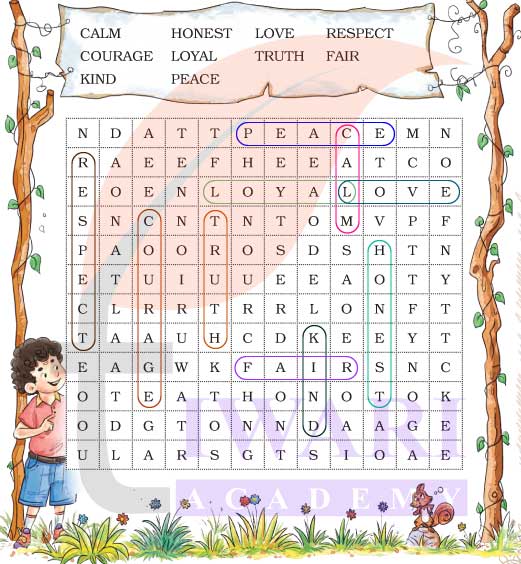
A. Find the given words.
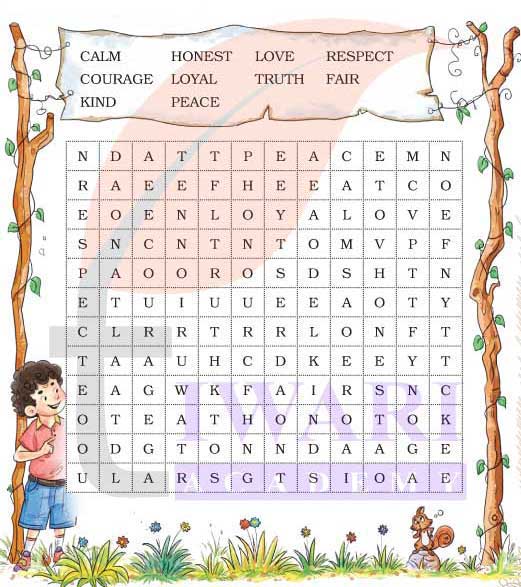
Answer of the Above Puzzle
B. Read the following.
Chinna, Charu and Jasmine are friends. They study in grade 4.
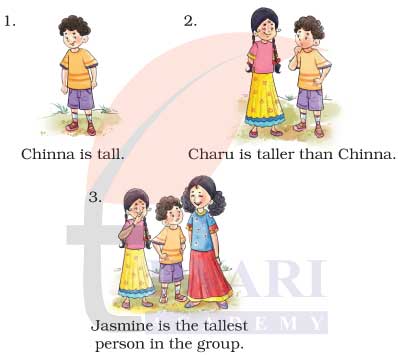
Fill in the blanks using the correct comparison markers (-er or -est).
1. I am tall……. than my brother.
2. January is the cold……. month of the year.
3. An ant is small……. than an elephant.
4. My sister is smart……. than me.
5. Jay was the fast……. person in the race.
See Answer1. I am taller than my brother.
2. January is the coldest month of the year.
3. An ant is smaller than an elephant.
4. My sister is smarter than me.
5. Jay was the fastest person in the race.
C. Circle the word that means the opposite of the highlighted word in each sentence.
1. Chacha showed him some beautiful tinkling bells.
a) Attractive
b) Ugly
c) Broken
2. The fruit seller was so happy that he gave Chinna ten rupees as a reward.
a) Offer
b) Prize
c) Punishment
3. I’ll give you money to buy the bells.
a) Sell
b) Purchase
c) Order
4. “Can I buy chocolates with the money?” whispered Chinna.
a) Murmured
b) Shouted
c) Talked
See Answer1. Chacha showed him some beautiful tinkling bells. b) Ugly
2. The fruit seller was so happy that he gave Chinna ten rupees as a reward. c) Punishment
3. I’ll give you money to buy the bells. a) Sell
4. “Can I buy chocolates with the money?” whispered Chinna. b) Shouted
Let us Listen
Your teacher will read out the story ‘The Tinkling Bells’ once again to you. Now read the following sentences and number them in the sequence of the story.
• Chinna discovered that his money was missing and felt sad.
• Chinna went to the market with his mother.
• Chinna hugged his mother and told her about the missing money.
• Chinna returned the extra money to the fruit seller.
• Chinna bought the tinkling bells after getting some money from his mother.
• Chinna wanted to buy bells for his pet at Chacha’s shop.
See Answer1. Chinna wanted to buy bells for his pet at Chacha’s shop.
2. Chinna discovered that his money was missing and felt sad.
3. Chinna hugged his mother and told her about the missing money.
4. Chinna went to the market with his mother.
5. Chinna returned the extra money to the fruit seller.
6. Chinna bought the tinkling bells after getting some money from his mother.
Let us Speak
What would you do in the following situations?
1. You borrowed your friend’s favorite pen. After using it, you accidentally broke it. What would you do?
See AnswerI would apologize to my friend honestly and offer to replace the pen or do something nice to make up for it.
2. During a math quiz, your friends ask you to show them your answers because they didn’t study. If you don’t help, your friends might get upset with you. What would you do?
See AnswerI would politely refuse to show my answers because that would be cheating. I would explain that this isn’t helpful for their learning and offer to study together next time instead.
3. You see a classmate taking a notebook from the teacher’s desk without permission. The classmate tells you not to tell anyone. What would you do?
See AnswerI would encourage my classmate to return the notebook and ask for permission properly. If they refuse, I might talk to the teacher about it because taking things without permission isn’t right.
4. You bring your favourite snack to school. But you find that your classmate has not brought anything to eat. You really want to enjoy the snack alone. What would you do?
See AnswerI would share my snack with my classmate because sharing makes both of us happy. I know how it feels to be hungry when others are eating.
Let us Write
A. Frame sentences using the following words from the story.
1. smiling: ……………………………..
2. mistake: ……………………………..
3. honest: ………………………………
4. praise: ………………………………
5. careful: ……………………………..
See Answer1. smiling: The little girl was smiling happily when she received her birthday gift.
2. mistake: I made a mistake in my math homework, but my teacher helped me correct it.
3. honest: We should always be honest and tell the truth in every situation.
4. praise: My teacher gave me praise for completing my project on time.
5. careful: We should be careful while crossing the road.
B. Draw two national symbols (e.g., national flag, national bird) and write a few sentences about each:

See Answer1. Indian National Flag: Our national flag is called the Tricolor or Tiranga. It has three colors – saffron at the top, white in the middle, and green at the bottom. The blue Ashoka Chakra with 24 spokes is in the middle of the white band. The saffron color represents courage, the white represents peace, and the green represents fertility.
2. Indian National Bird: The peacock is our national bird. It has beautiful blue and green feathers. The male peacock spreads its colorful tail feathers in a fan-like display during the rainy season. Peacocks are found in many parts of India and are protected birds.
Class 4 English Santoor – Unit 1: My Land – Chapter 2 The Tinkling Bells – Hindi Translation
Class 4 English Santoor Chapter 2 English to Hindi Translation
Chinna was a little boy who lived in a village. He studied in grade 4. He was a bright boy who liked to read storybooks and learn new things. He had many friends with whom he played. But, most of all, he loved to play with his little pet “kid” named Tara.
Hindi Translationचिन्ना एक छोटा लड़का था, जो एक गाँव में रहता था। वह कक्षा 4 में पढ़ता था। वह एक होशियार लड़का था, जिसे कहानियों की किताबें पढ़ना और नई-नई चीजें सीखना बहुत पसंद था। उसके कई दोस्त थे, जिनके साथ वह खेलता था। लेकिन सबसे ज्यादा उसे अपनी छोटी पालतू बकरी के बच्चे “तारा” के साथ खेलना पसंद था।
Tara was a five-monthold kid, milky white in colour. One day, while coming back from school, Chinna stopped at Chacha’s shop. He saw a pair of beautiful, shiny tinkling bells. He went inside the shop and politely asked the shopkeeper to show him the tinkling bells.
Hindi Translationतारा पाँच महीने की बकरी का बच्चा था, जिसका रंग दूध जैसा सफेद था। एक दिन स्कूल से लौटते समय चिन्ना चाचा की दुकान पर रुका। वहाँ उसने सुंदर, चमकदार और छनछनाती घंटियों की एक जोड़ी देखी। वह दुकान के अंदर गया और दुकानदार से विनम्रता से वे घंटियाँ दिखाने के लिए कहा।
“Ten rupees please,” Chacha said.
Chinna liked the bells a lot. He put his hand in his pocket to take out the money.
Hindi Translation“दस रुपये दीजिए,” चाचा ने कहा।
चिन्ना को वे घंटियाँ बहुत पसंद आईं। उसने पैसे निकालने के लिए अपनी जेब में हाथ डाला।
He was shocked to find that his money was missing. “Oh! Where is the money Dadaji gave me yesterday?”
Hindi Translationयह देखकर वह हैरान रह गया कि उसके पैसे गायब थे।
“अरे! दादाजी ने मुझे कल जो पैसे दिए थे, वे कहाँ हैं?”
He searched all his pockets but couldn’t find the money.
Hindi Translation“उसने अपनी सभी जेबों में पैसे ढूँढ़े, लेकिन पैसे नहीं मिले।”
Feeling sad, he returned the tinkling bells to Chacha and began walking home.
Hindi Translationउदास होकर, उसने झुनझुनाती घंटियाँ चाचा को वापस कर दीं और घर की ओर चल पड़ा।
Chinna reached home. He removed his shoes and placed them in the corner.
Hindi Translationचिन्ना घर पहुँचा। उसने अपने जूते उतारे और उन्हें कोने में रख दिया।
He went inside and dropped his school bag on the study table. He sat on the chair and rested his head on the table.
Hindi Translationवह अंदर गया और अपना स्कूल बैग पढ़ाई की मेज़ पर रख दिया। वह कुर्सी पर बैठ गया और अपना सिर मेज़ पर टिकाकर आराम करने लगा।
His mother Kamala, who had been watching all this, came to Chinna.
Hindi Translationउसकी माँ कमला, जो यह सब देख रही थीं, चिन्ना के पास आईं।
She asked gently, “What happened, Chinna?”
Hindi Translation“उसने प्यार से पूछा, ‘क्या हुआ, चिन्ना?’”
Kamala laid her hands softly on his shoulders. At once, Chinna hugged her and started crying. On seeing this, Kamla wiped his tears. After a while, Chinna told her about the missing money.
Hindi Translationकमला ने प्यार से उसके कंधों पर हाथ रखा। तभी चिन्ना ने उन्हें गले लगा लिया और रोने लगा। यह देखकर कमला ने उसके आँसू पोंछ दिए। कुछ देर बाद चिन्ना ने उन्हें गायब हुए पैसों के बारे में बताया।
Kamla consoled him, saying, “I’m so sorry, dear. It’s ok, don’t cry. I’ll give you money to buy the bells. But, make sure to be careful with money in the future”.
Hindi Translationकमला ने उसे दिलासा देते हुए कहा, “मुझे बहुत अफ़सोस है, बेटा। कोई बात नहीं, रोओ मत। मैं तुम्हें घंटियाँ खरीदने के लिए पैसे दूँगी। लेकिन ध्यान रखना, आगे से पैसों को संभालकर रखना।”
Chinna smiled and said, “Sure Amma”.
“That’s my boy! Cheer up! Now, let’s go to the market to buy some fruits and vegetables,” Kamala said warmly.
Hindi Translationचिन्ना मुस्कुराया और बोला, “ज़रूर अम्मा।”
“शाबाश मेरे बेटे! उदास मत हो। अब चलो, बाज़ार चलते हैं और कुछ फल और सब्जियाँ खरीदते हैं,” कमला ने प्यार से कहा।
Kamala and Chinna went to the market. They bought apples, mangoes, tomatoes and brinjals. Chinna also wanted pineapples. So, they stopped at the pineapple stall.
Hindi Translationकमला और चिन्ना बाजार गए। उन्होंने सेब, आम, टमाटर और बैंगन खरीदे। चिन्ना को अनानास भी चाहिए थे। इसलिए, वे अनानास की ठेले पर रुक गए।
“What is the cost of the pineapples?”
Kamala asked. “Forty-five rupees each,” replied the fruit seller.
Hindi Translation“अनानास की कीमत कितनी है?” कमला ने पूछा।
“एक अनानास के पैंतालीस रुपये,” फलवाले ने जवाब दिया।
Kamala bought two pineapples and gave him a hundred-rupee note. She asked Chinna to take the change. Then, she went to other shops to buy some more fruits.
Hindi Translationकमला ने दो अनानास खरीदे और फलवाले को सौ रुपये का नोट दिया। उसने चिन्ना से बाकी पैसे लेने को कहा। फिर वह कुछ और फल खरीदने के लिए दूसरी दुकानों पर चली गई।
The fruit seller gave Chinna two ten-rupee notes. Hiding a mischievous smile, Chinna ran to his mother.
Hindi Translationफलवाले ने चिन्ना को दस-दस रुपये के दो नोट दिए। शरारती मुस्कान छिपाते हुए, चिन्ना अपनी माँ के पास दौड़कर गया।
“Amma, do you know? The fruit seller gave me ten rupees extra by mistake. Can I buy the bells and some chocolates?” whispered Chinna.
Hindi Translation“अम्मा, तुम्हें पता है? फलवाले ने गलती से मुझे दस रुपये ज्यादा दे दिए। क्या मैं घंटियाँ और कुछ चॉकलेट खरीद सकता हूँ?” चिन्ना ने फुसफुसाते हुए कहा।
“Chinna, that’s very bad. It is stealing. How did you feel when you found your money missing?” asked Kamla.
Hindi Translation“चिन्ना, यह बहुत बुरी बात है। यह चोरी है। जब तुम्हें पता चला था कि तुम्हारे पैसे गायब हैं, तब तुम्हें कैसा लगा था?” कमला ने पूछा।
“I felt very sad and angry!” replied Chinna.
“The fruit seller will also feel the same when he comes to know the mistake.
Now, be a good boy,” said Kamala gently.
Hindi Translation“मुझे बहुत दुख हुआ और गुस्सा भी आया!” चिन्ना ने जवाब दिया।
“जब फलवाले को अपनी गलती का पता चलेगा, तो उसे भी ऐसा ही महसूस होगा। अब अच्छे बच्चे बनो,” कमला ने प्यार से कहा।
Chinna looked at his mother thoughtfully. He ran back to the fruit seller to return the extra money. The fruit seller was very happy. “You are an honest boy,” he praised him.
Hindi Translationचिन्ना ने सोचते हुए अपनी माँ की ओर देखा। वह अतिरिक्त पैसे लौटाने के लिए फलवाले के पास वापस दौड़ा। फलवाला बहुत खुश हुआ। “तुम एक ईमानदार लड़के हो,” उसने उसकी प्रशंसा की।
Chinna ran back to his mother. Kamla felt pleased with Chinna’s honesty and took him to Chacha’s shop to buy the tinkling bells.
Hindi Translationचिन्ना वापस दौड़कर अपनी माँ के पास आया। कमला चिन्ना की ईमानदारी से खुश हुई और झुनझुनाती घंटियाँ खरीदने के लिए उसे चाचा की दुकान पर ले गई।
Chacha was about to close his shop. ‘Wait!’ called Chinna. ‘Do you still have the bells?’ ‘Yes, I do’ said Chacha. Chinna paid him ten rupees and they both happily walked home. The bells were tinkling in Chinna’s pocket. Hearing the sound of bells, Chinna’s pet kid Tara came running out. Chinna happily tied the tinkling bells around Tara’s neck.
Hindi Translationचाचा अपनी दुकान बंद करने ही वाले थे। “रुको!” चिन्ना ने पुकारकर कहा। “क्या तुम्हारे पास अभी भी घंटियाँ हैं?” “हाँ, हैं,” चाचा ने कहा। चिन्ना ने उन्हें दस रुपये दिए और दोनों खुशी-खुशी घर की ओर चल पड़े। चिन्ना की जेब में घंटियाँ झुनझुना रही थीं। घंटियों की आवाज़ सुनकर चिन्ना की पालतू बकरी का बच्चा तारा दौड़ता हुआ बाहर आया। चिन्ना ने खुशी-खुशी झुनझुनाती घंटियाँ तारा के गले में बाँध दीं।
Class 4 English Marigold Textbook Solutions
Class 4 English Unit 2 Chapter 1 Noses – Summary
Aileen Fisher wrote this beautiful poem we can sing together about the Nose. She says it funny that whenever she sees herself in the mirror the first thing she notices is the nose and how it grows as she is growing. It seems funny how it is sticking out with two holes (Nostrils) where the air goes in. It resembles a Hand of some kind and asked us to see our nose how it looks so funny in the mirror.
4th English Unit 2 Chapter 1 New Word Meanings
| Word | Meaning |
|---|---|
| Mirror | Reflective surface made of glass |
| Funniest | Humorous |
| Giggle | Laughing without making noise |
| Breathing | Inhale and exhale the air with nose |
| Sticking | Paste it together |
| Nostrils | Two holes under the nose |
Free App for Class 4


Class 4 English Unit 2 Chapter 2 The little fir tree – Summary
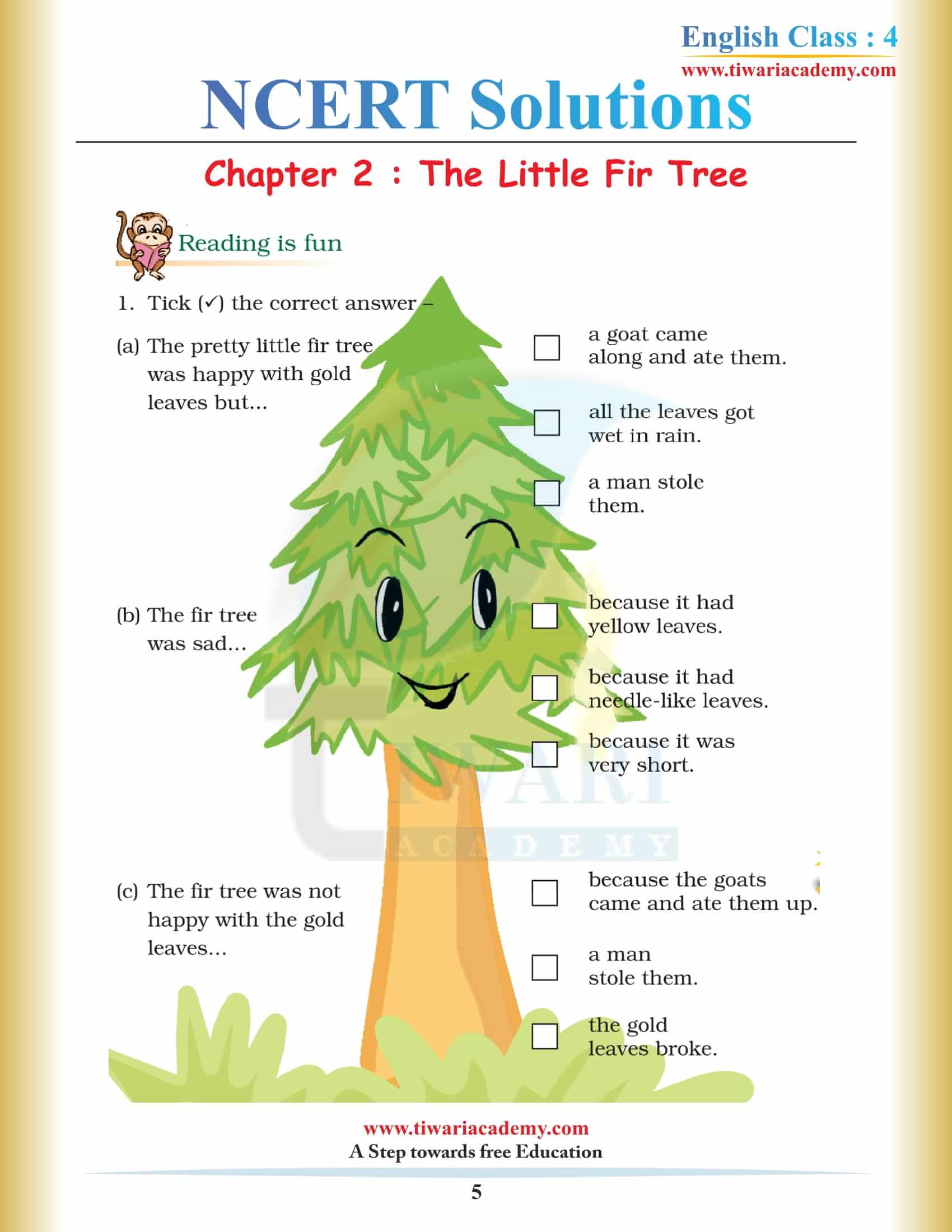
One fine day the magician was returning home and suddenly it start raining and the magician went under the little fir tree and saved. In return, he asked for fir tree the 4 wishes that he can fulfill for him as he saved him. The tree asked the 1st wish to have green and soft leaves as no bird come to him and because of needles like leave.
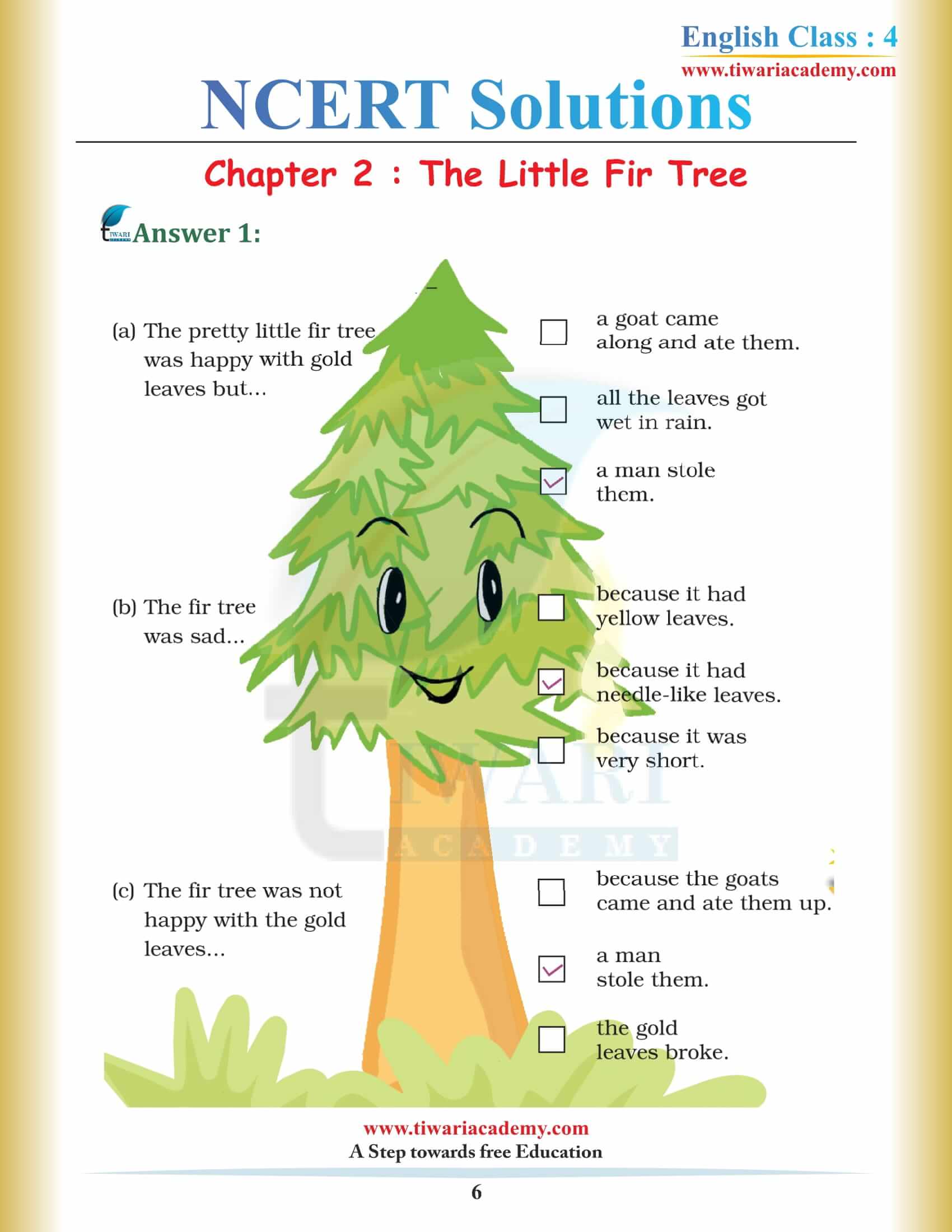
The next morning when he woke up his leaves turned to soft and suddenly a goat came and ate all the soft leaves. Upset little fir tree then wished to have gold leaves as the goats don’t like to eat gold. But men came and stole all the gold leaves and upset the wished to have all the gold leaves turned to glass as men won’t steal glass.
The next morning it had glass leaves he was shining in day time but at night when the wind blew all her leaves it broke all the leaves. The tree is upset now and wished he had the best needles like leaves as nobody stole them and no one eats them and also it doesn’t beak and fall. Next wished for it and the next morning he got the return.
4th English Unit 2 Chapter 2 Word Meanings
| Word | Meaning |
|---|---|
| Pretty | Beautiful |
| Needles | Sharp pointy objects used for sewing |
| Stole | Took without permission |
| Gold | Color, Metal |
| Leaves | Tree parts handing on every stem |
Yes, the poem shared the information about how it grows and How air goes in and out and, it has two holes and why it looks funny are the points which were informed funnily.
In the unit 2.1 Class 4th Marigold poem Noses do thinks the poet Aileen fisher was successful to depict a child’s thought in a funny poem?
Aileen fished shared the importance of nose in really funny language with the example.
What do you think about the moral of the poem in Chapter 2 of Unit 2 in the Class 4th Marigold is?
In the poem The Fir tree the poet tells us about the tree that wished to change itself but after its wish was fulfilled it found that he was good the way it was and never a complaint.
What are the three different types of leaves that the fir tree from the magician in unit 2 Chapter 2 in class 4th NCERT English book?
The Tree wished for Gold Leaves. Soft leaves and Glass leaves.