


by Tiwari Academy Team
Class 4 Maths Mela Chapter 6 measuring length helps students understand the important concept of measurement in a simple and practical way. In Math-Magic Chapter 6 The Junk Seller and class 4 Maths Mela chapter 6, children learn how to measure objects using centimetres (cm) and metres (m), compare lengths, estimate distances and convert between different units of measurement. The chapter also introduces the idea of perimeter, which means the total length around a shape.
Class 4 Maths Mela Chapter 6 MCQ
Class 4 Math Magic Chapter 6 MCQ
Chapter 6 The Junk Seller
Class 4 Maths Chapter 6 – Measuring Length Explained
Page 80
Let Us Observe
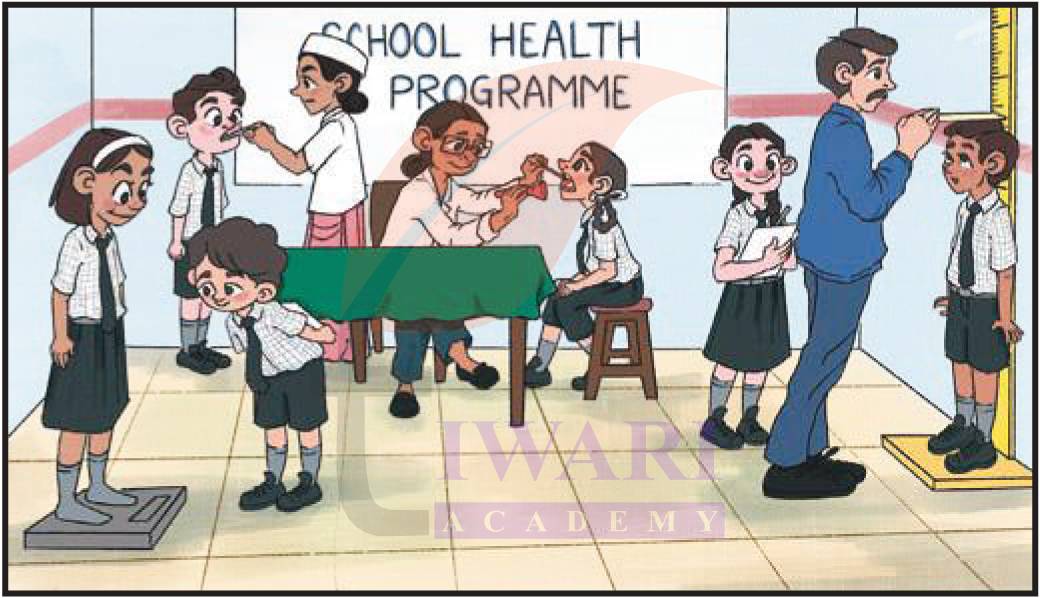
1. Look at the picture. What are the students measuring? Put a tick mark (✓) if you find it being measured.
a) Length
b) Height
c) Weight
d) Depth
e) Breadth
f) Temperature
Answer:
a) Length ✓
b) Height ✓
e) Breadth ✓
2. What is being used to measure the height? What other tools can be used to measure height?
Answer:
A measuring tape is being used to measure height.
Other tools: ruler, metre stick, height chart, stadiometer, wall marking.
3. Recall in Grade 3 you studied that lengths are measured in metres. Check and fill in the blanks whether the following are correct/incorrect for your classroom.
a) The height of most of the students in my grade is more than a metre.
b) The length of my arm is less than a metre.
c) The height of the door of the grade is less than a metre.
d) The breadth of the blackboard is more than a metre.
Answer:
a) Correct
b) Correct
c) Incorrect (doors are typically more than a metre high)
d) Correct
Page 81
Let Us Do
Use your ropes to carry out the following activities. You can use a combination of ropes, if needed.
1. Walk, Jump, and Crawl on 1, 5 and 10 m line
Draw lines of 1m, 5m, and 10m on the floor of the classroom or outside in the playground.
How will you make these lines? Think and share with your friends. Walk, jump, and crawl on the lines.
Answer:
First, we will place one metre rope straight on the ground to make a 1 metre line. Then, to make a 5 metre line, we will place five 1 metre ropes one after another in a straight line.
To make a 10 metre line, we will place ten 1 metre ropes together in a straight line. If we do not have enough ropes, we can use a combination of ropes like half metre and quarter metre ropes.
After drawing the lines, we will walk, jump and crawl on each line.
By doing this activity, we can understand how long 1 m, 5 m and 10 m really are and compare their lengths easily.
2. Long Jump
Each child can participate in a long jump competition. How far have your friends jumped? Measure as accurately as possible using a combination of ropes. Who jumped the longest distance?
Fill the following table.
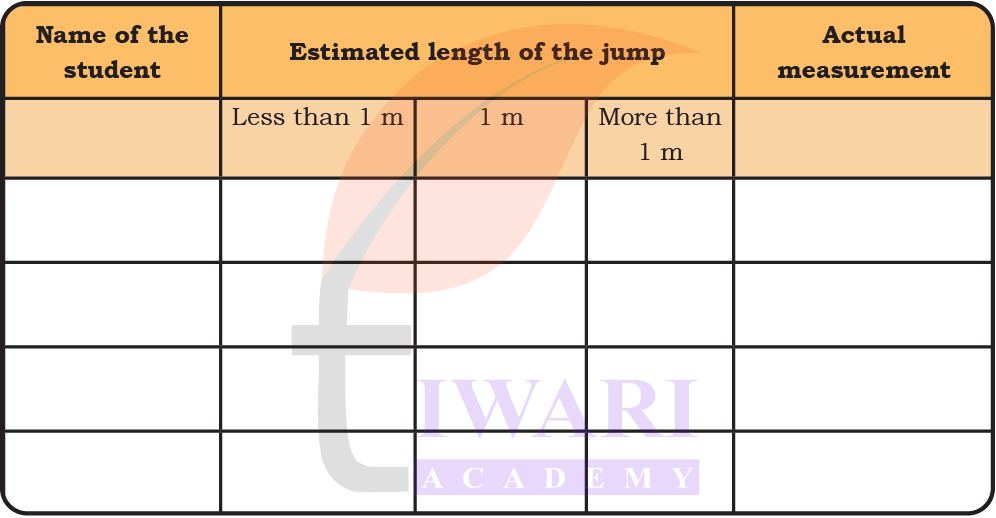
Answer:
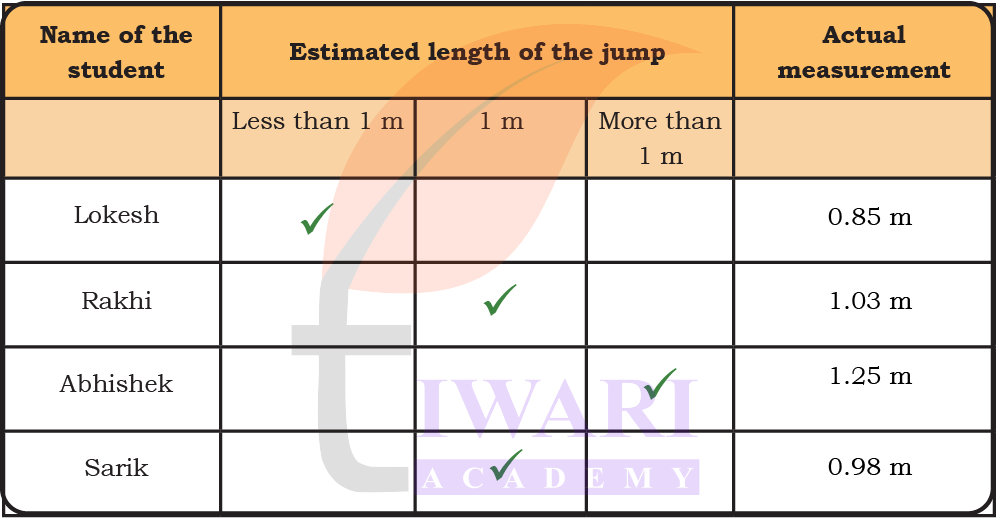
3. Estimate how long and broad is your classroom. Measure and check.
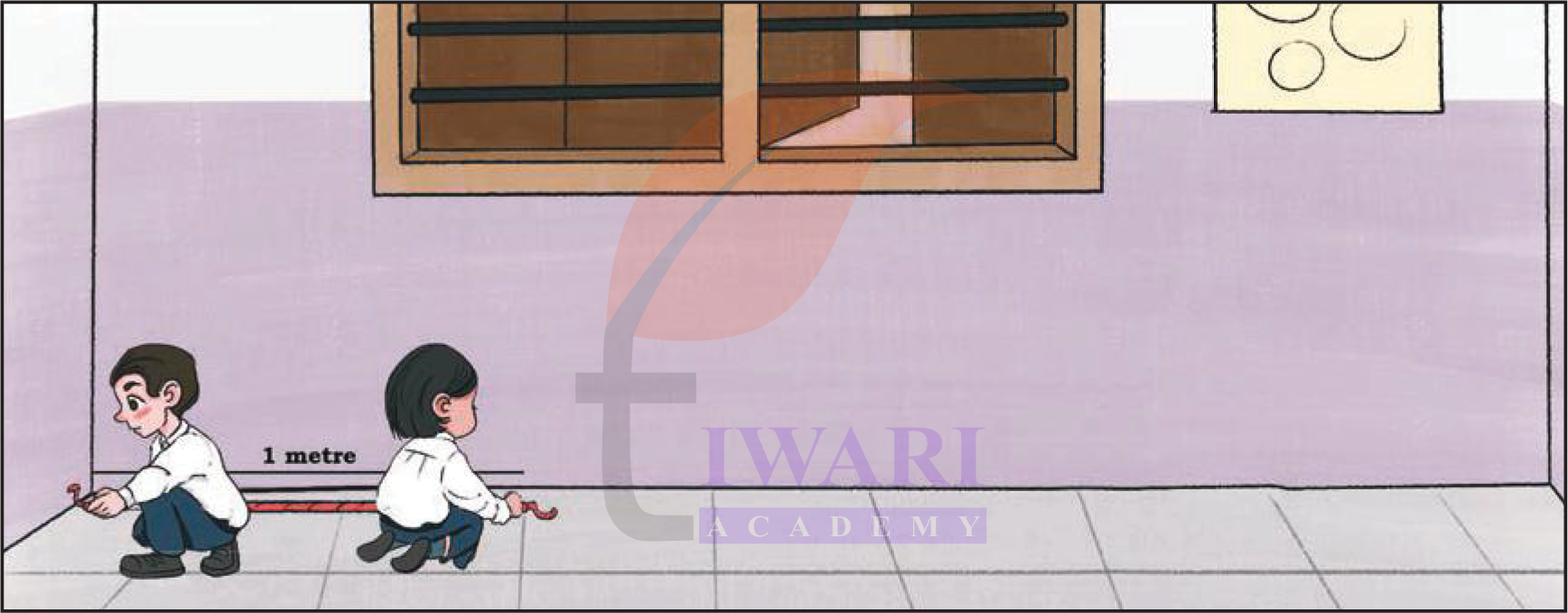
Answer:
First, I estimated the length and breadth of my classroom by looking at it.
I thought the length of my classroom is about 8 metres and the breadth is about 6 metres.
Then I measured the classroom using a measuring tape and metre rope.
After measuring, I found that the actual length of my classroom is 9 metres and the actual breadth is 6 metres.
My estimate was close to the actual measurement.
Page 83
Let Us Think: Guess the Length
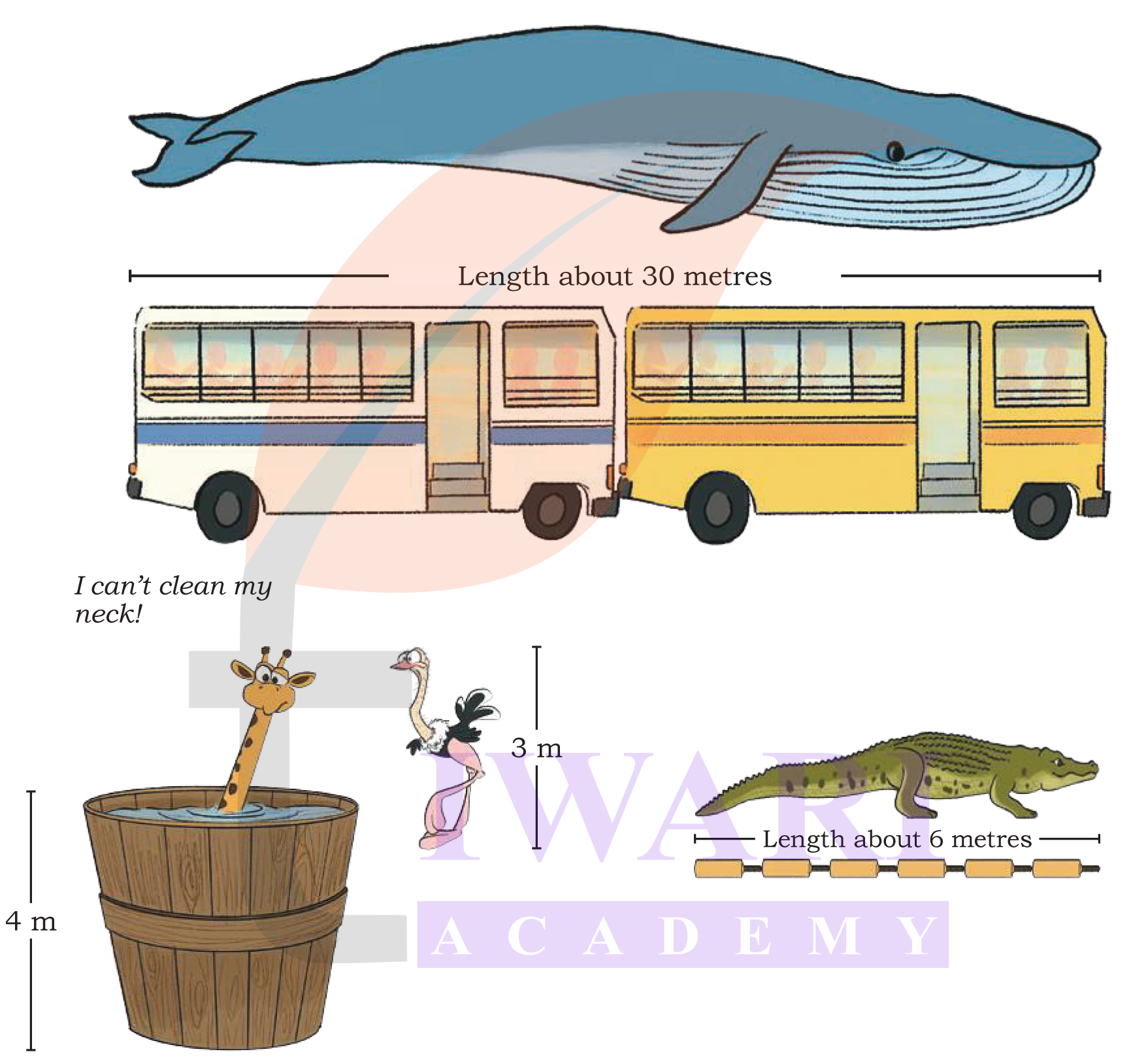
Look at the pictures carefully and answer the questions.
1. What is the length of one bus in metres? What is the length of one cricket bat in metres?
Answer:
One bus: approximately 15 metres
One cricket bat: approximately 0.85-0.9 metres
2. How many buses would be equal to the length of two blue whales?
Answer:
A blue whale is about 30 metres long
Two blue whales would be 60 metres
Number of buses = 60 ÷ 15 = 4 buses.
3. How many cricket bats will be needed to measure one whale?
Answer:
Cricket bat = 0.9 metres (approximately)
One whale = 30 metres
Number of cricket bats = 30 ÷ 0.9 = 33-34 bats (approximately)
4. If two ostriches stand one above another, their height will be equal to the height of______________.
Answer:
Ostriches are around 2.5m tall and giraffes are about 5m tall.
If two ostriches stand one above another, their height will be equal to the height of “a giraffe”.
5. How many crocodiles will be equal to the length of a blue whale?
Answer:
Crocodile length = 6 metres (from image)
Whale length = 30 metres
Number of crocodiles = 30 ÷ 6 = 5 crocodiles.
Class 4 Maths Chapter 6 centimetre and metre scale explanation
Page 84
Let Us Observe
Chutki wants to keep track of the increase in height of her plant.
Compare the metre rope with the measuring tape used by a tailor. Is the length of both the same or different?
Answer:
When comparing a meter rope with a tailor’s measuring tape, they are the same length (1 meter = 100 cm), but the measuring tape has more detailed markings for precise measurements.
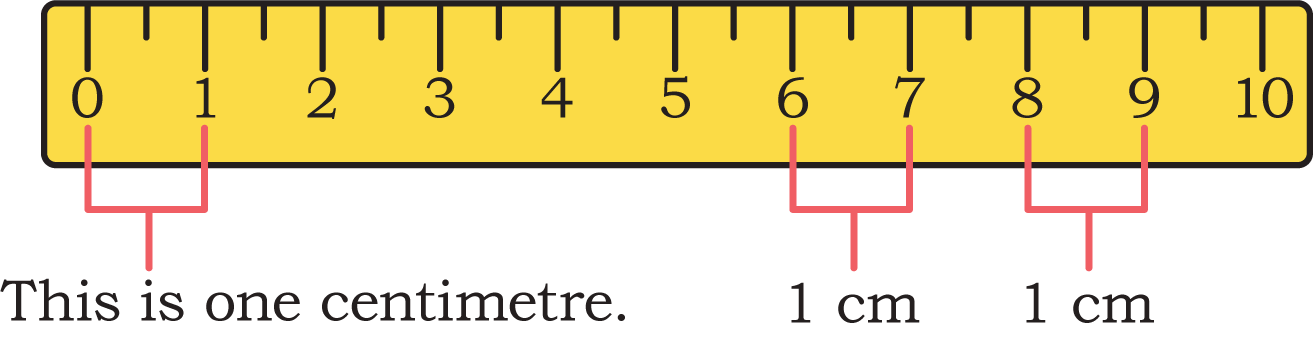
Observe the measuring tape carefully. What do you notice?
Answer:
Observing the measuring tape carefully, we notice it has clear markings for each centimeter and sometimes smaller markings for millimeters, helping us measure with greater precision.
Discuss how these marks help us measure clearly.

Answer:
These marks help us measure clearly by providing consistent, standardized units that everyone agrees upon, allowing us to be precise when measuring small objects like Chutki’s growing plant.
Page 85
Let Us Do
1. Measure each object using a scale.
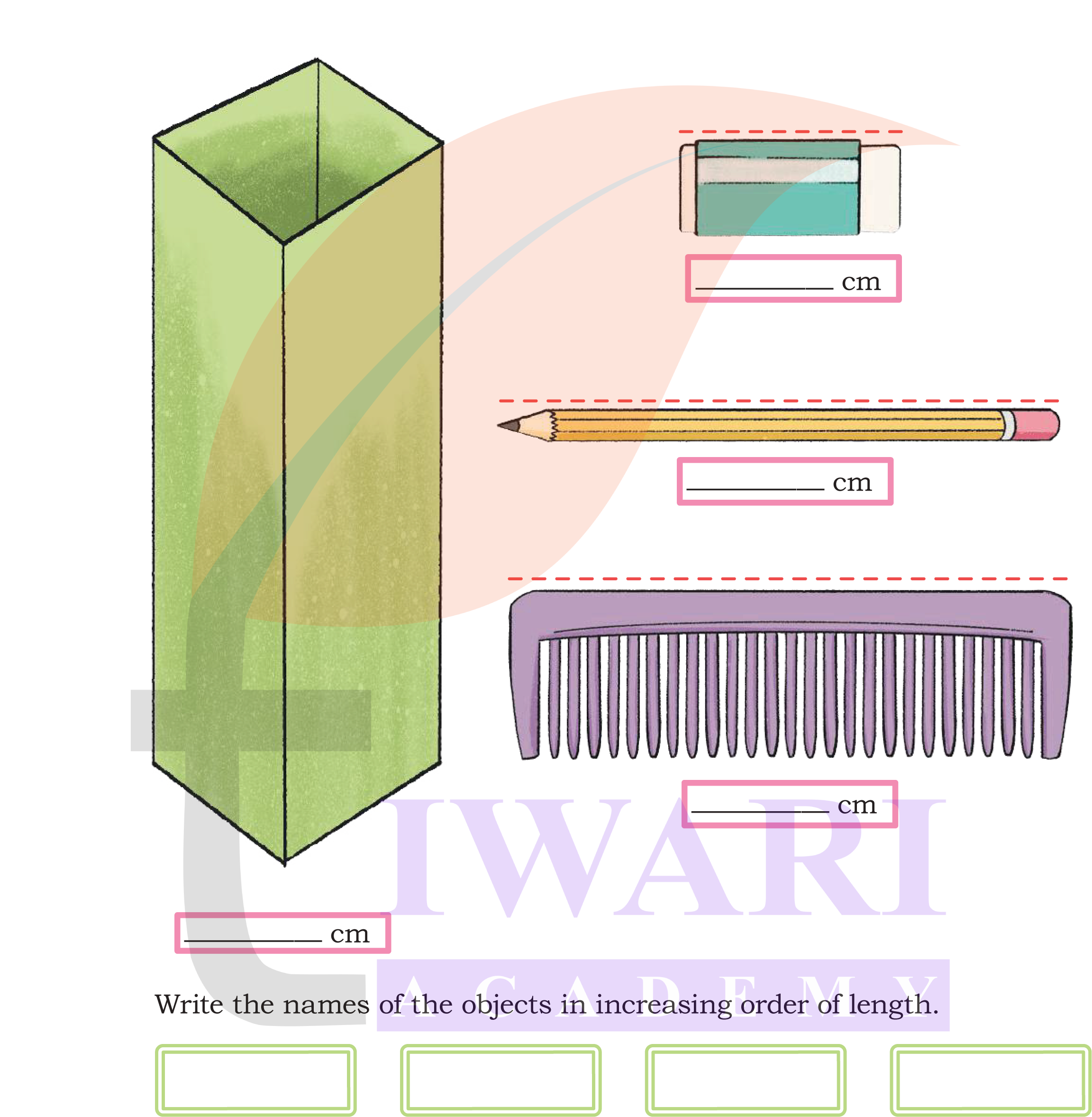
Answer:
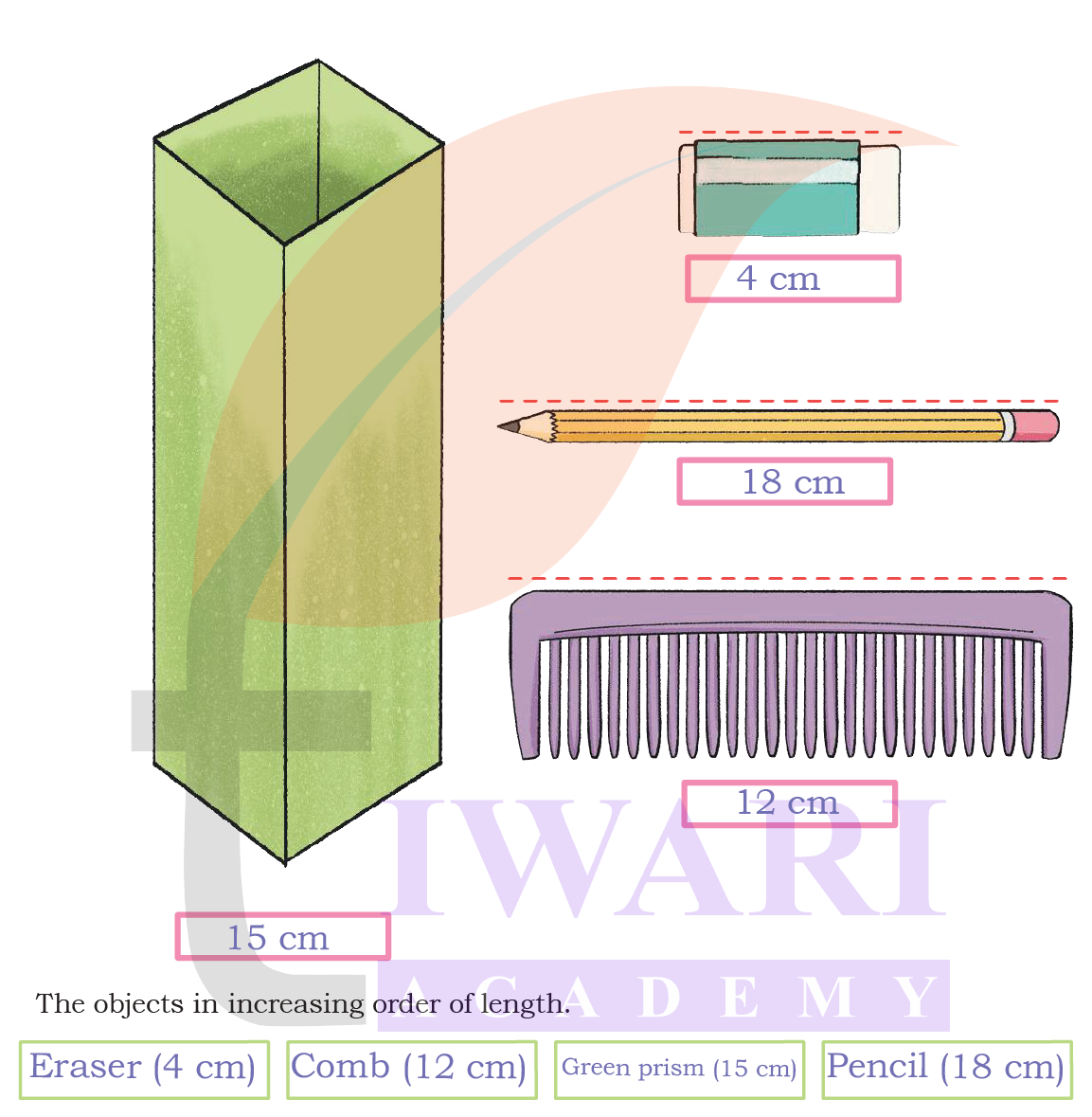
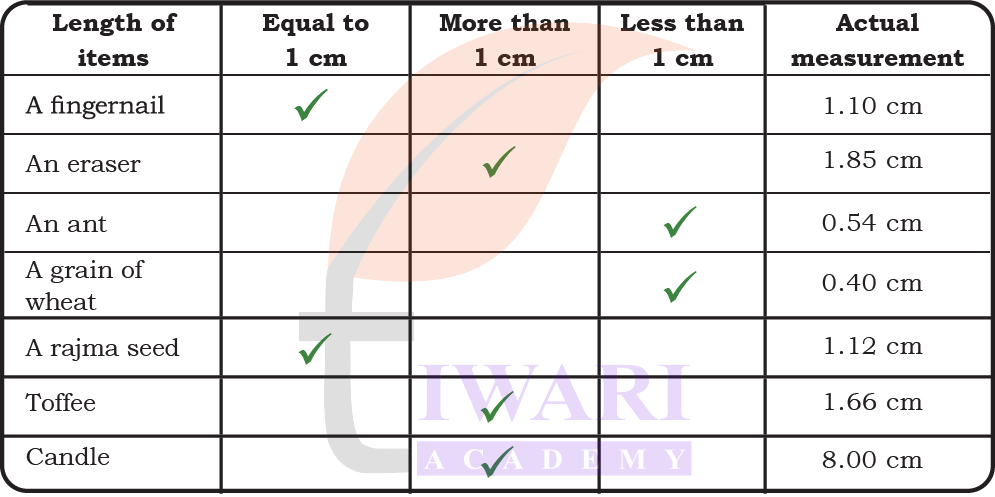
2. Estimate the lengths of the following and compare your responses with your friends, in the grade. Write some examples of things that can be lesser than or equal to 1 cm in length. Verify by measuring.
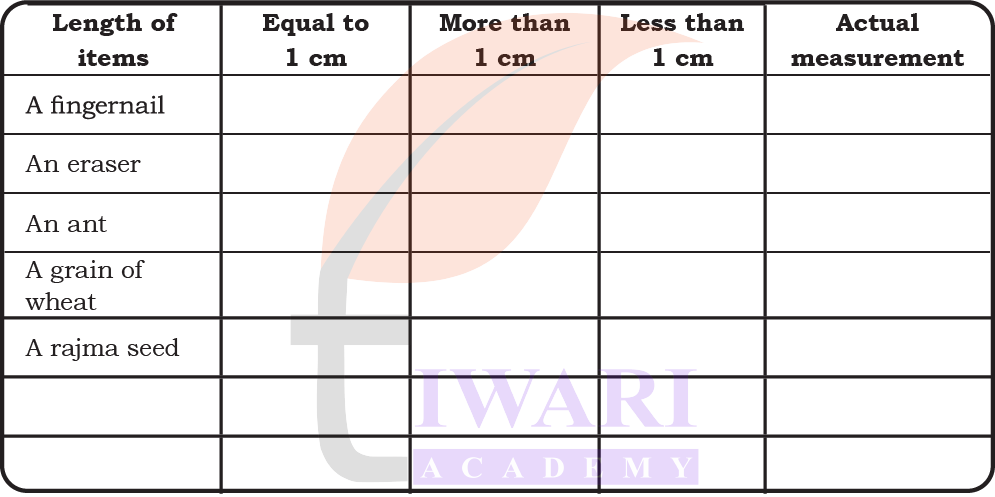
Answer:
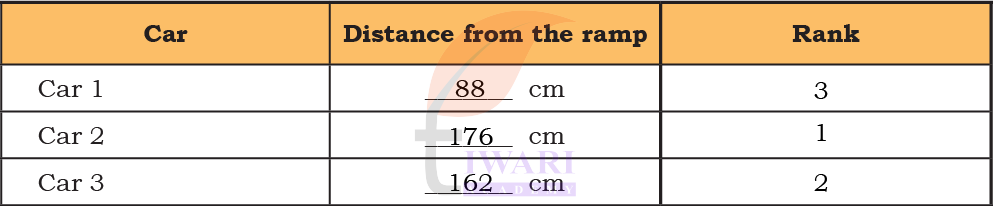
3. Take three toy cars and find out how far each one can go. You can use a small wooden ramp or you might like to make a ramp using any material that you have.
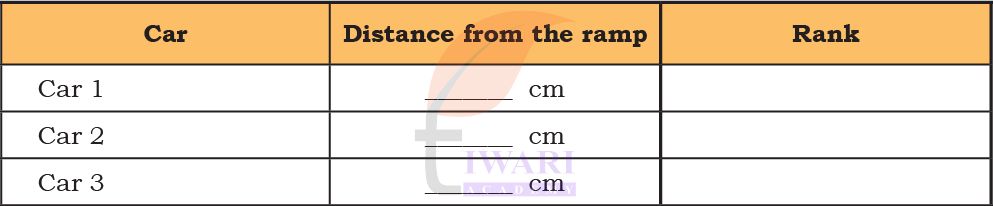
Answer:
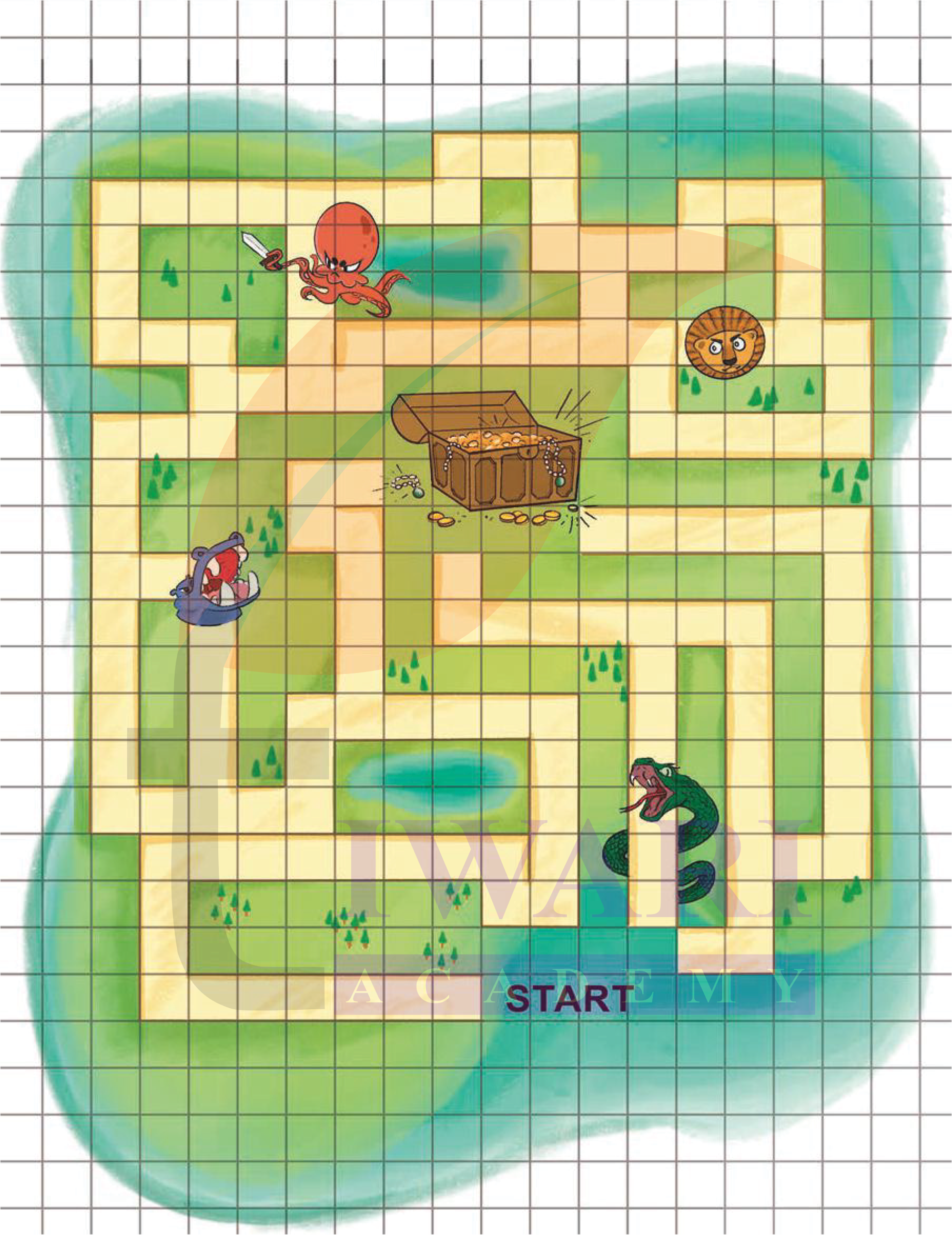
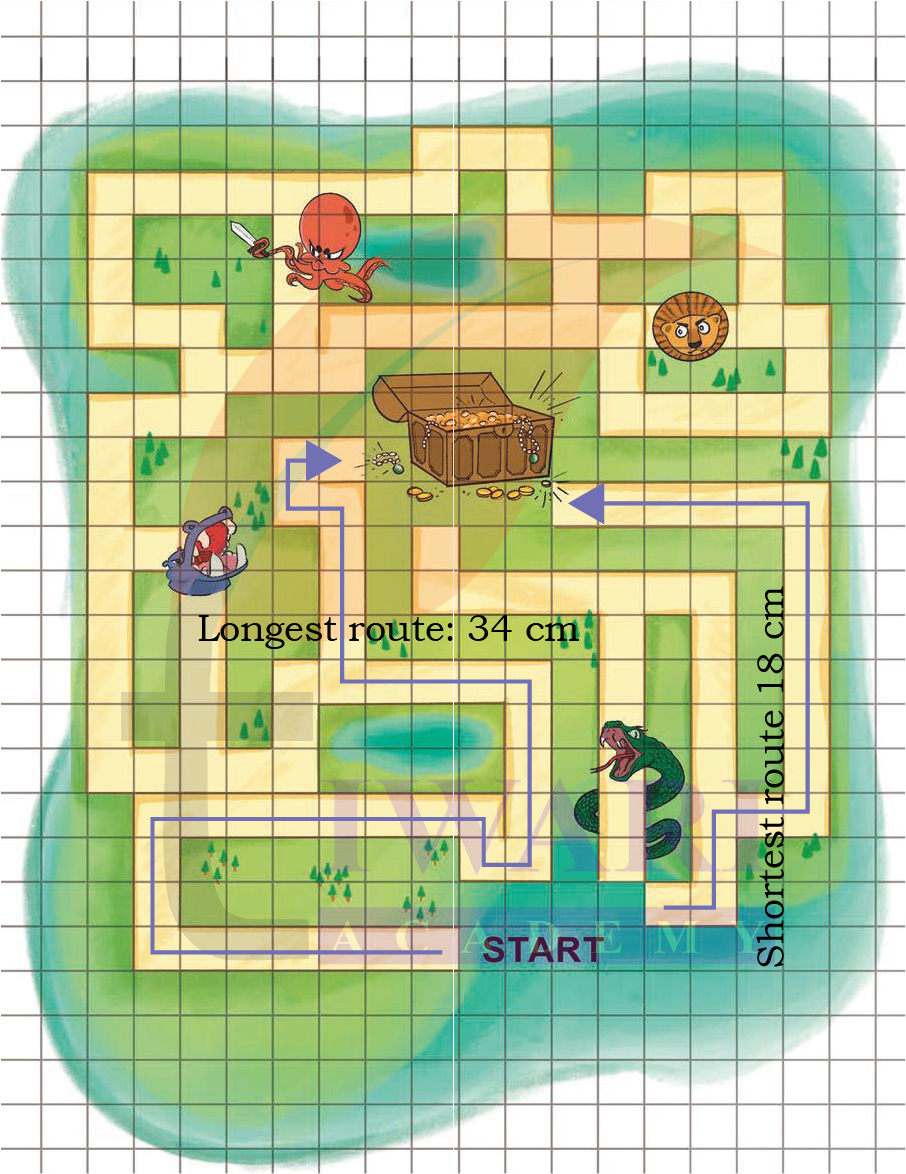
4. Find the longest and the shortest route in this treasure hunt. You can go around the obstacles but cannot jump over them. You can only walk on the yellow tiles and not on the grass. Can you find the length of your route in centimetres? Look for the 1 cm clue in the map
Answer:
Distance of the longest route = 34 cm
Distance of the shortest route = 18 cm
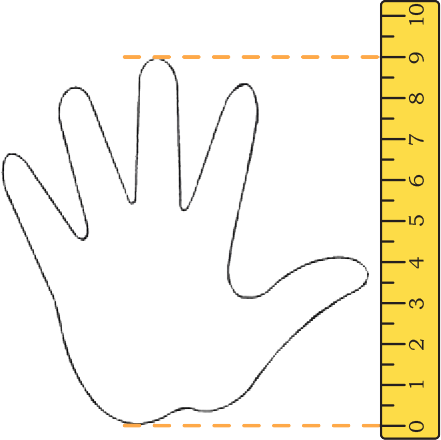
5. Trace your hand on a piece of paper. Measure it using the scale.
Answer:
Length of my hand = 9 cm (Given in picture)
Length of my hand = 8 cm (I measured myself)
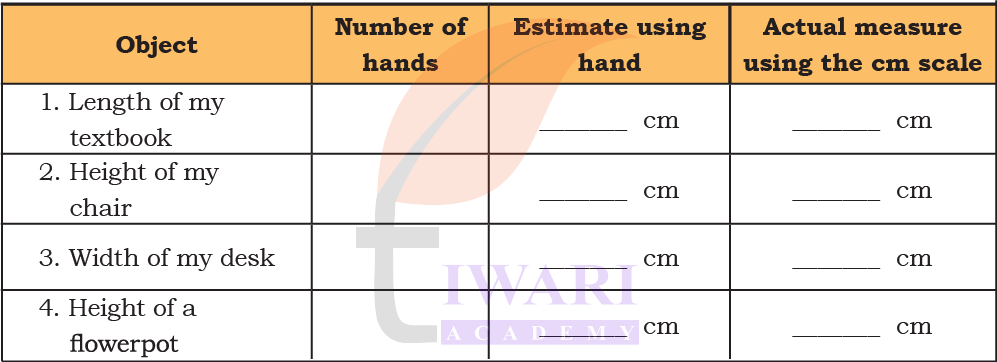
6. Use your hand to estimate the measurement of any object. Convert into centimetres. Verify using the scale.
Answer:
Length of my hand = 8 cm
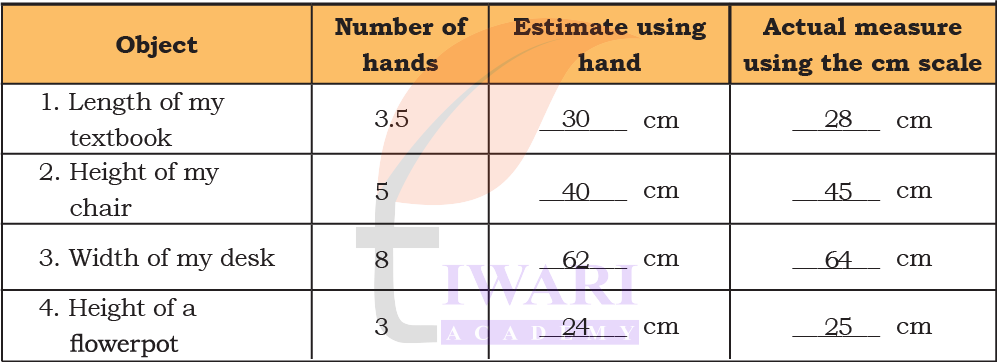
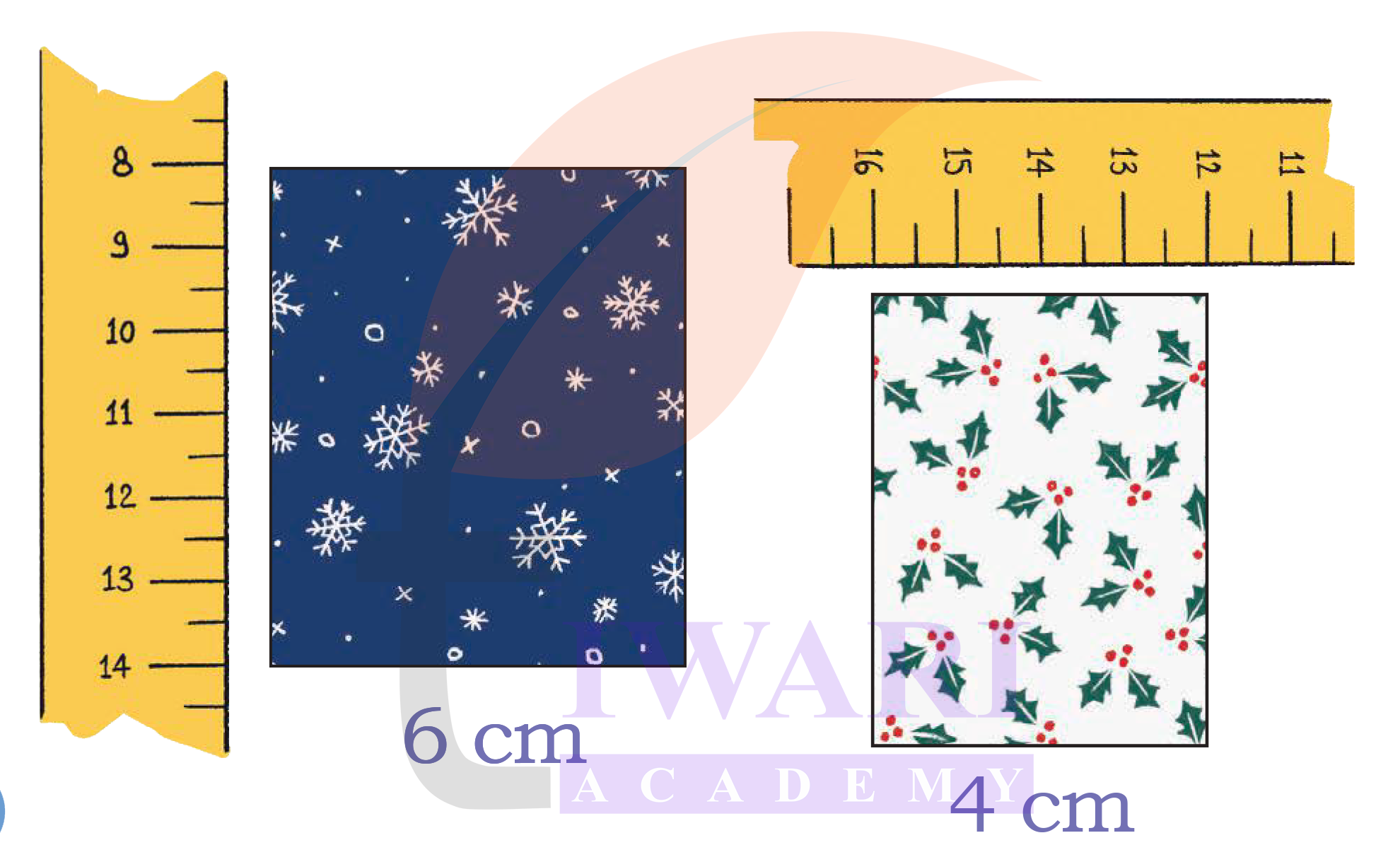
7. Ashwin’s scale is broken. Can you help him to measure using this scale?
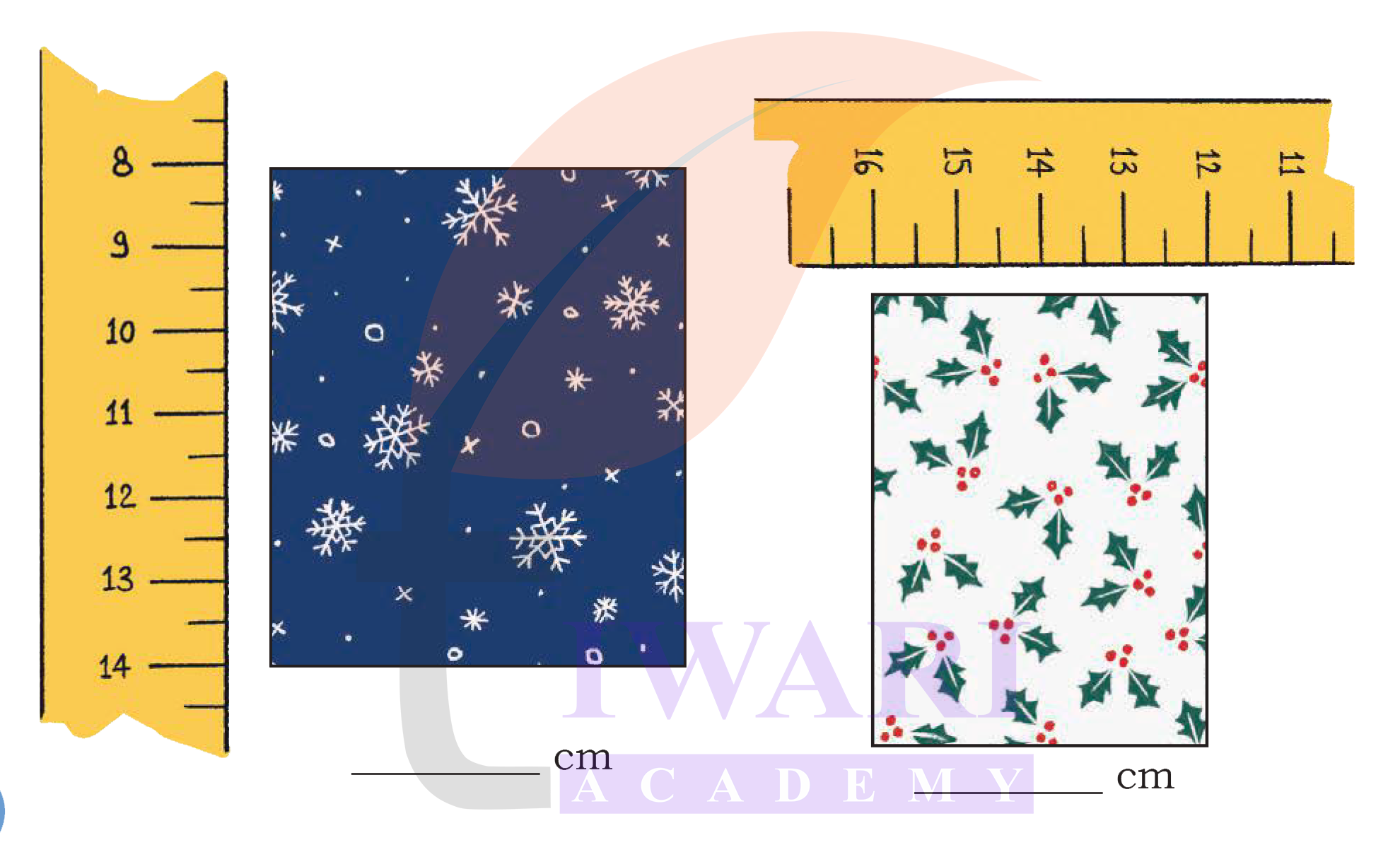
Answer:
Blue snowflake fabric: 6 cm (measured from 8 cm to 14 cm marks)
Holly pattern fabric: 4 cm (measured from 12 cm to 16 cm marks)
8. Fill in the blanks on the number line below approximately.
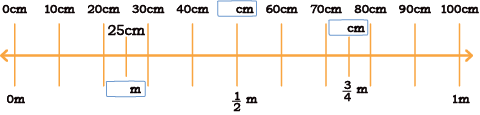
Answer:
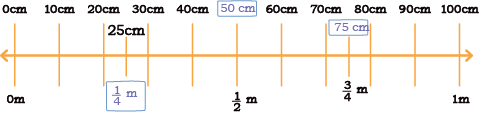
9. The length of a board is 2 metres. Sonu has a decorative border sticker which is 20 cm long How many such stickers are needed to cover the length of the board completely?

Answer:
The board is 2 meters = 200 cm long
The sticker is 20 cm long
Number of stickers needed = 200 ÷ 20 = 10 sticker.
Page 90
Let Us Do
1. The Village Sarpanch got the depth of some wells in his village measured by two different people.
a) Fill in the blanks such that the depths are the same.
i) 2m = 200 cm
ii) __m = 400 cm
iii) 6m = ___cm
(iv) __m = 800m
Answer:
i) 2 m = 200 cm (already filled)
ii) 4 m = 400 cm
iii) 6 m = 600 cm
iv) 8 m = 800 cm
b) Identify the wells with the same depth and match them
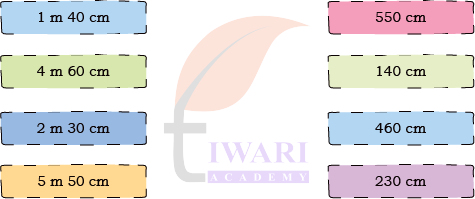
Answer:
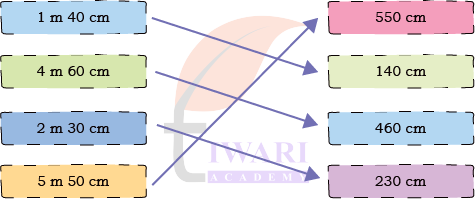
Page 90
Let Us Explore
Activity: Students will measure their height using a measuring tape. Make a table in your notebook and complete it.
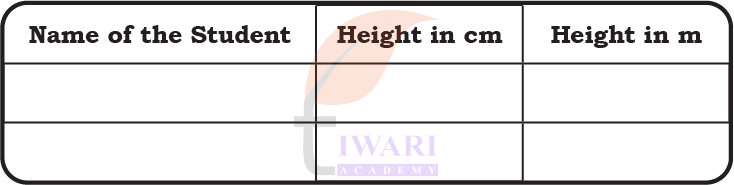
Answer:
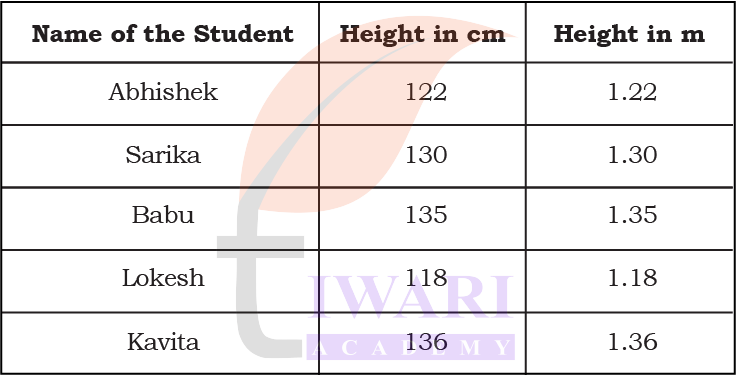
Answer the following questions.
1. Height of the tallest child is _____.
2. Height of the shortest child is _____.
3. Number of children who are more than 1 m tall _____.
4. Number of children who are shorter than 1 m _____.
Answer:
1. Height of the tallest child is “Kavita”.
2. Height of the shortest child is “Lokesh”.
3. Number of children who are more than 1 m tall is “5”.
4. Number of children who are shorter than 1 m is “0”.
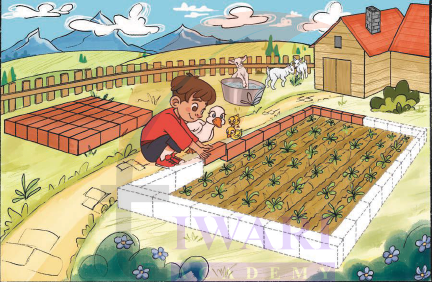
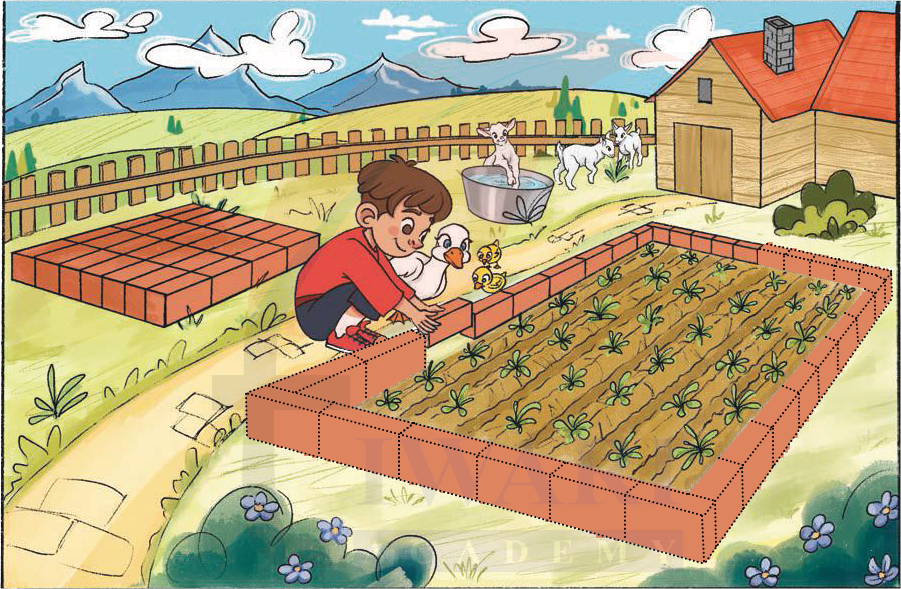
Answer:
Number of bricks required = 28.
Page 92
Let Us Do
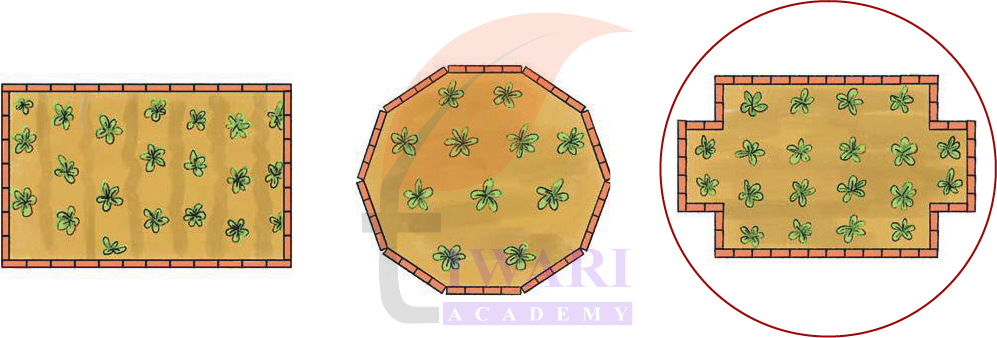
1. Bhola made the boundary of his gardens in the following ways. Circle the boundary that is longest.
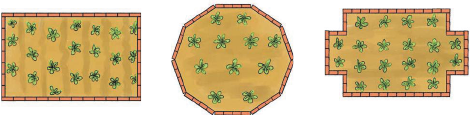
Answer:
Number of bricks in the following:
First Graden = 38
Second Graden = 40
Third Graden = 50
So, the boundary of the third garden is largest.
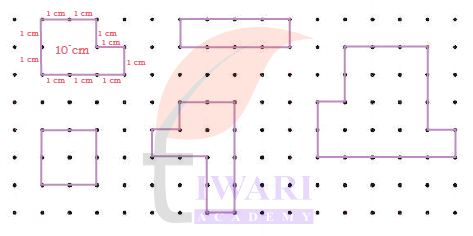
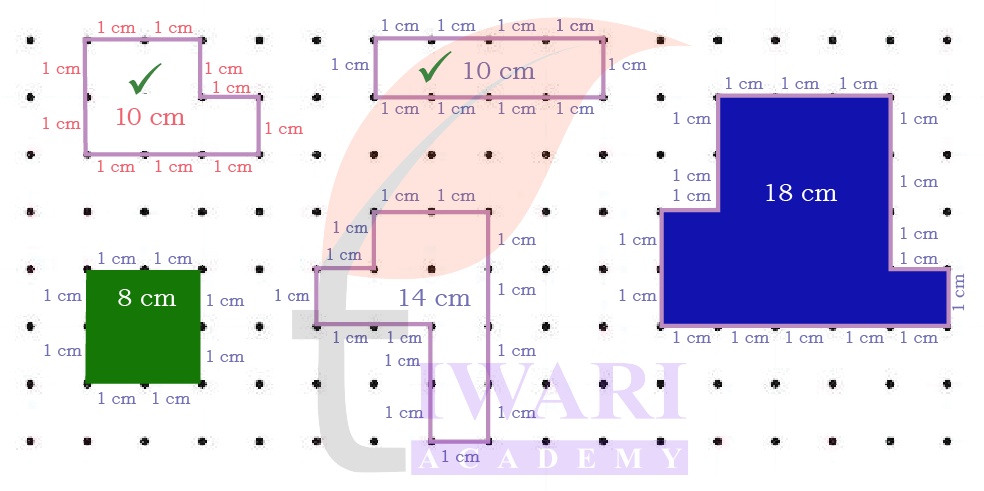
2. Let us find the perimeter of some shapes using the dot grid. One is done for you.
a) Colour the boundary with the longest length in blue.
b) Colour the boundary with the shortest length in green.
c) Tick the shapes with the same length.
Answer:
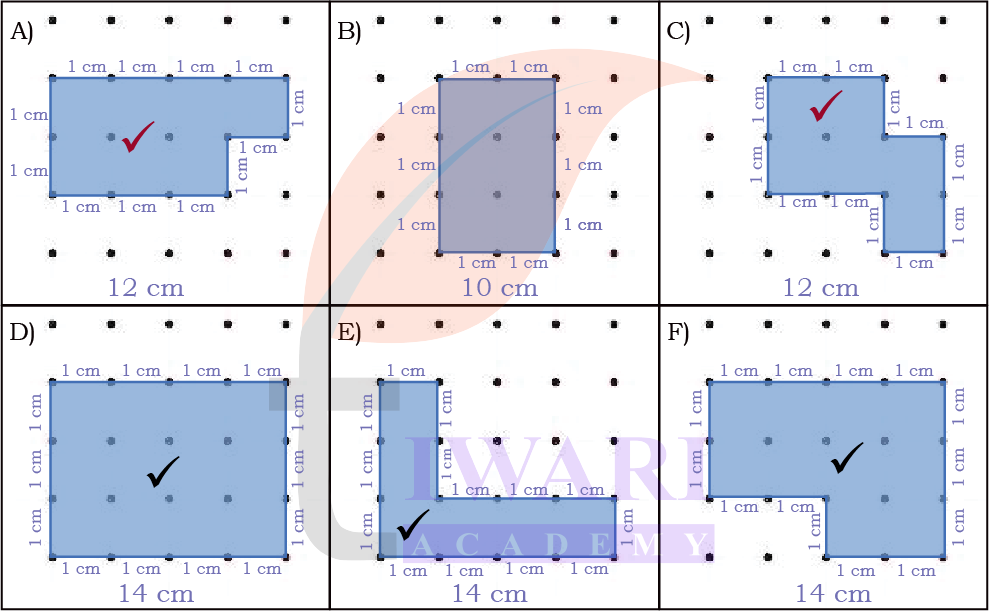
3. Do any of the following shapes have the same perimeter? Tick them
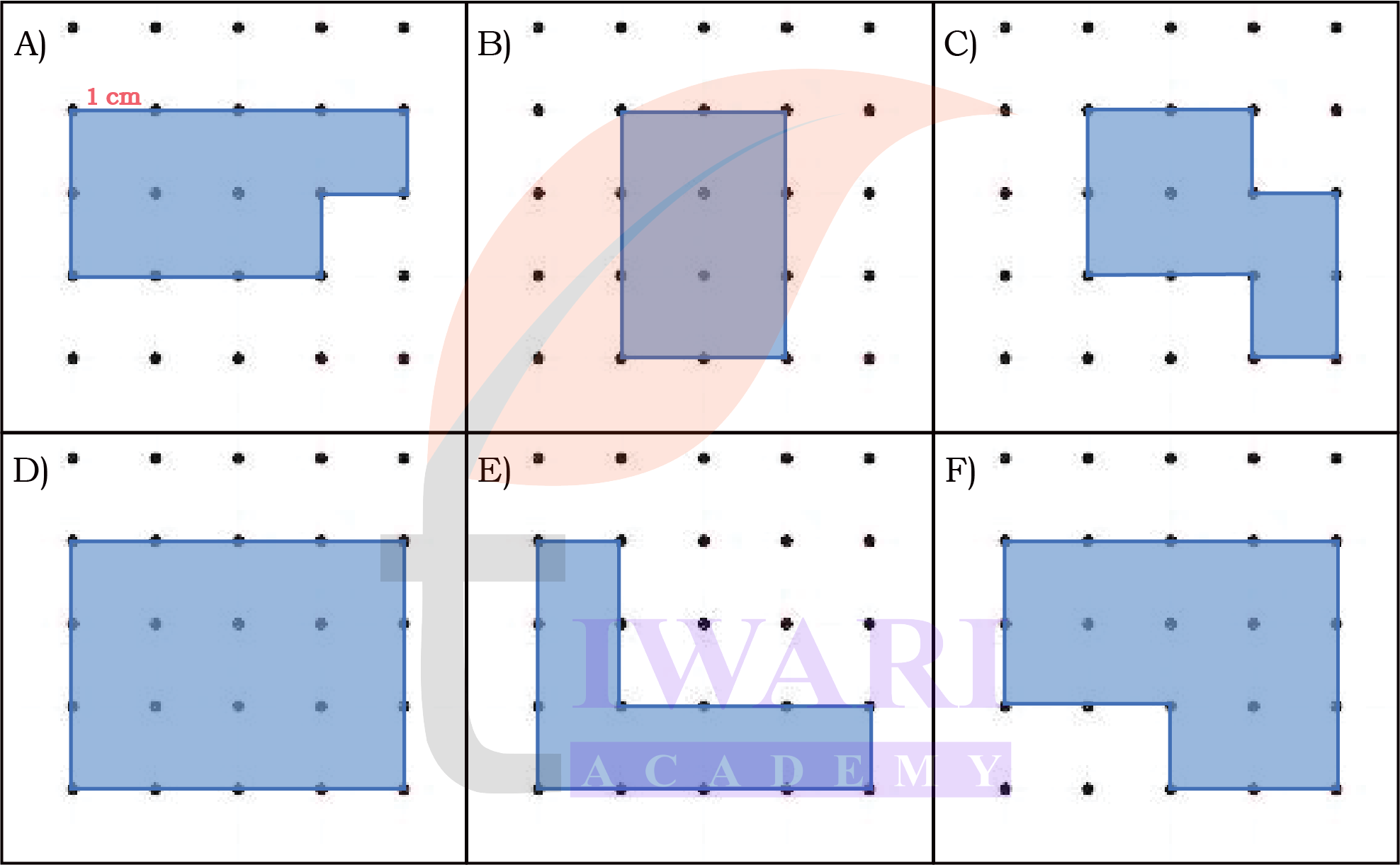
Answer:
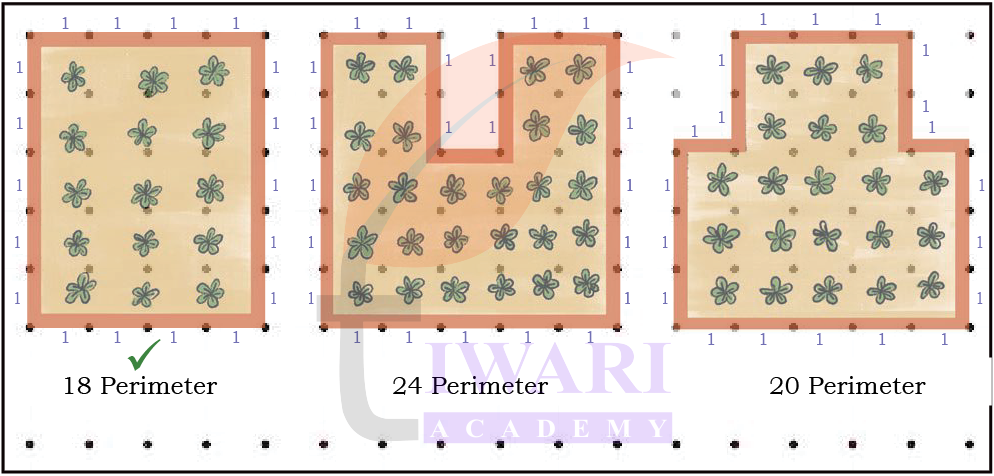
4. Tick the garden with the minimum perimeter.
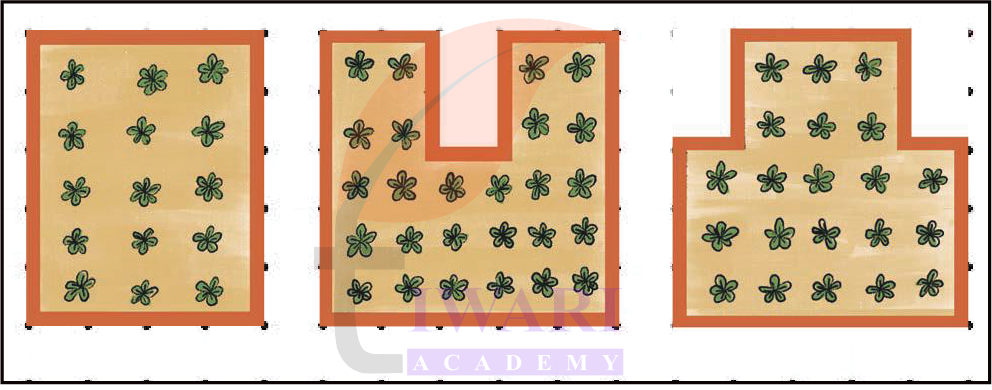
Answer:
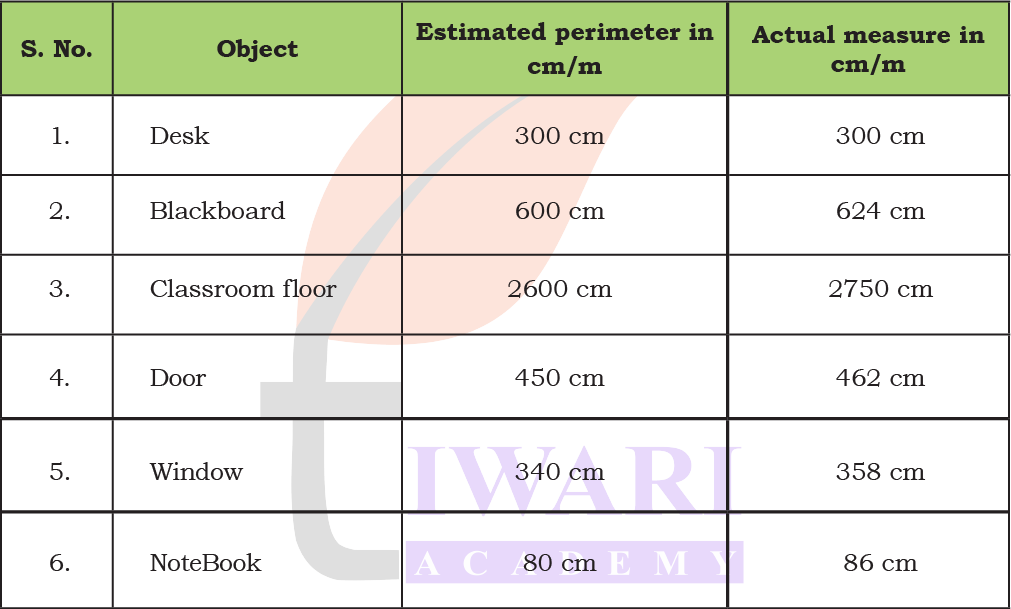
5. Estimate and measure the perimeters of shapes around you using a scale and write them in the space given below.
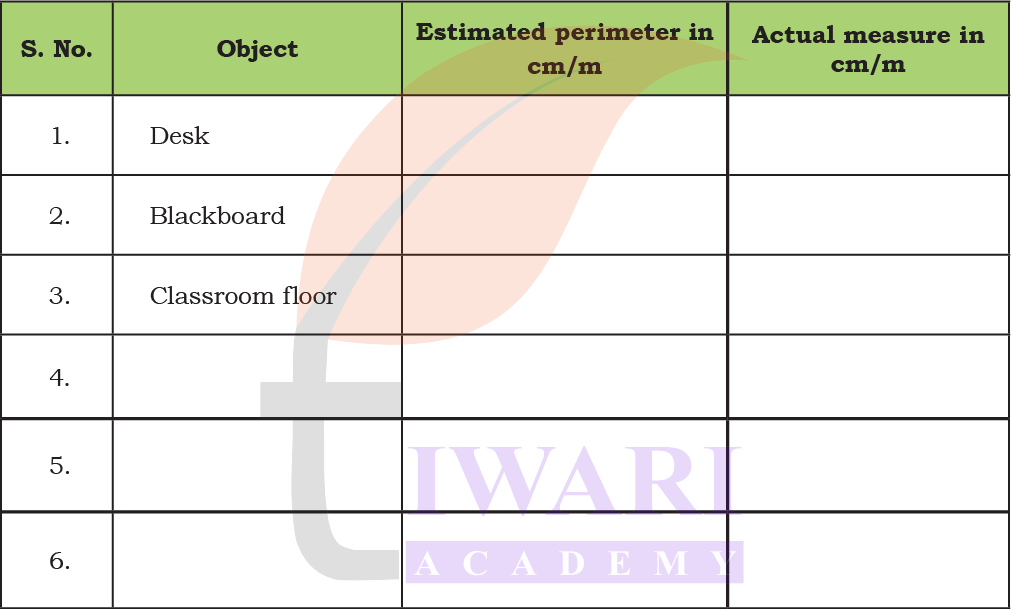
Answer:
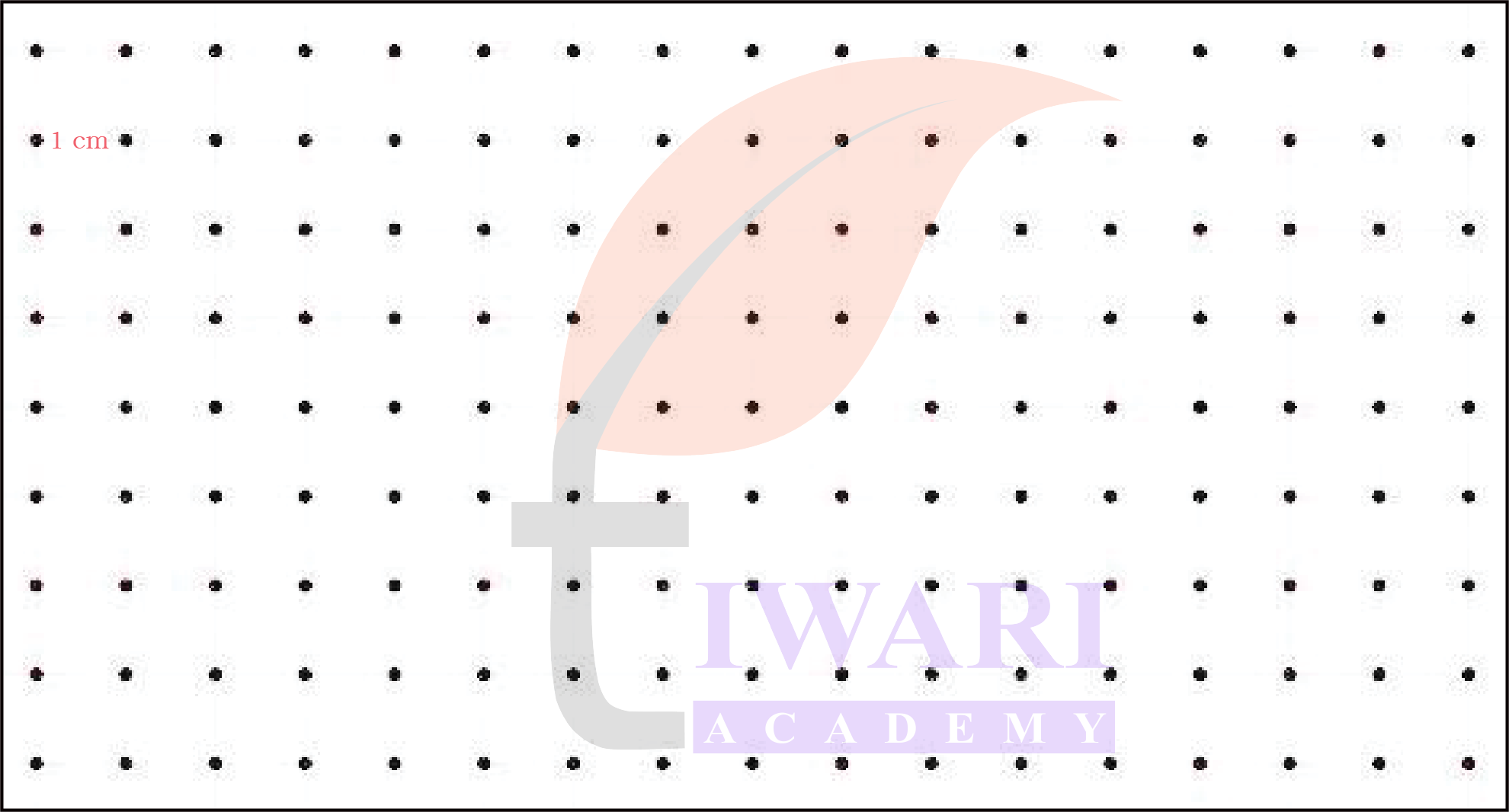
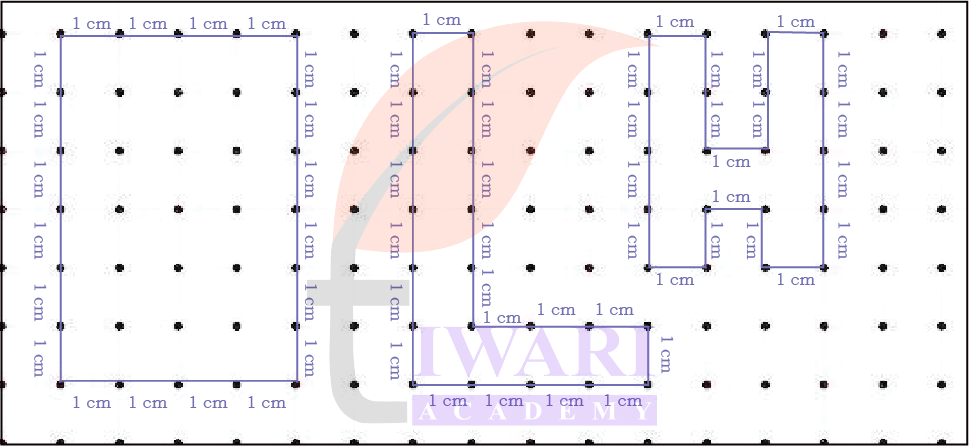
6. Draw three different shapes with perimeter of 20 cm.
Answer:
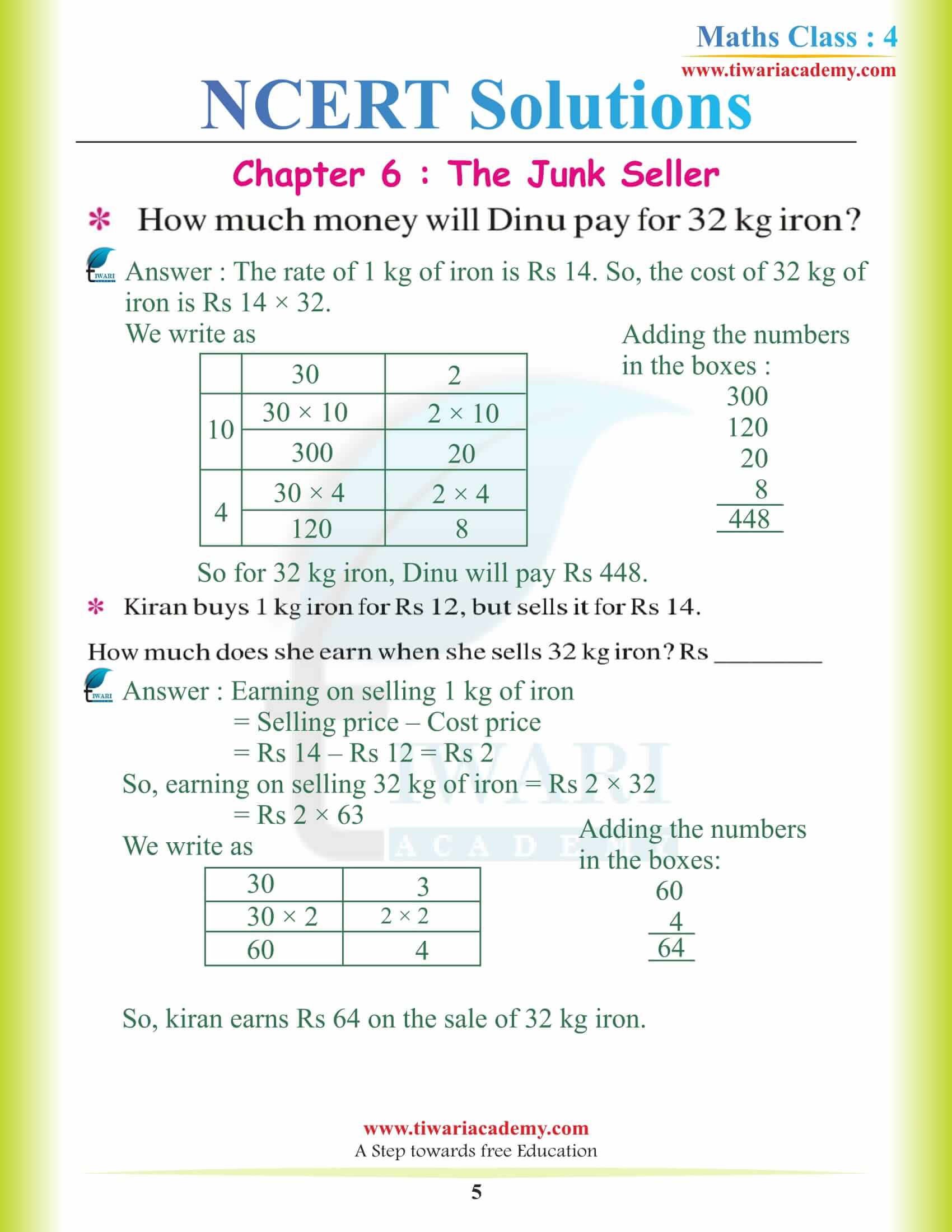
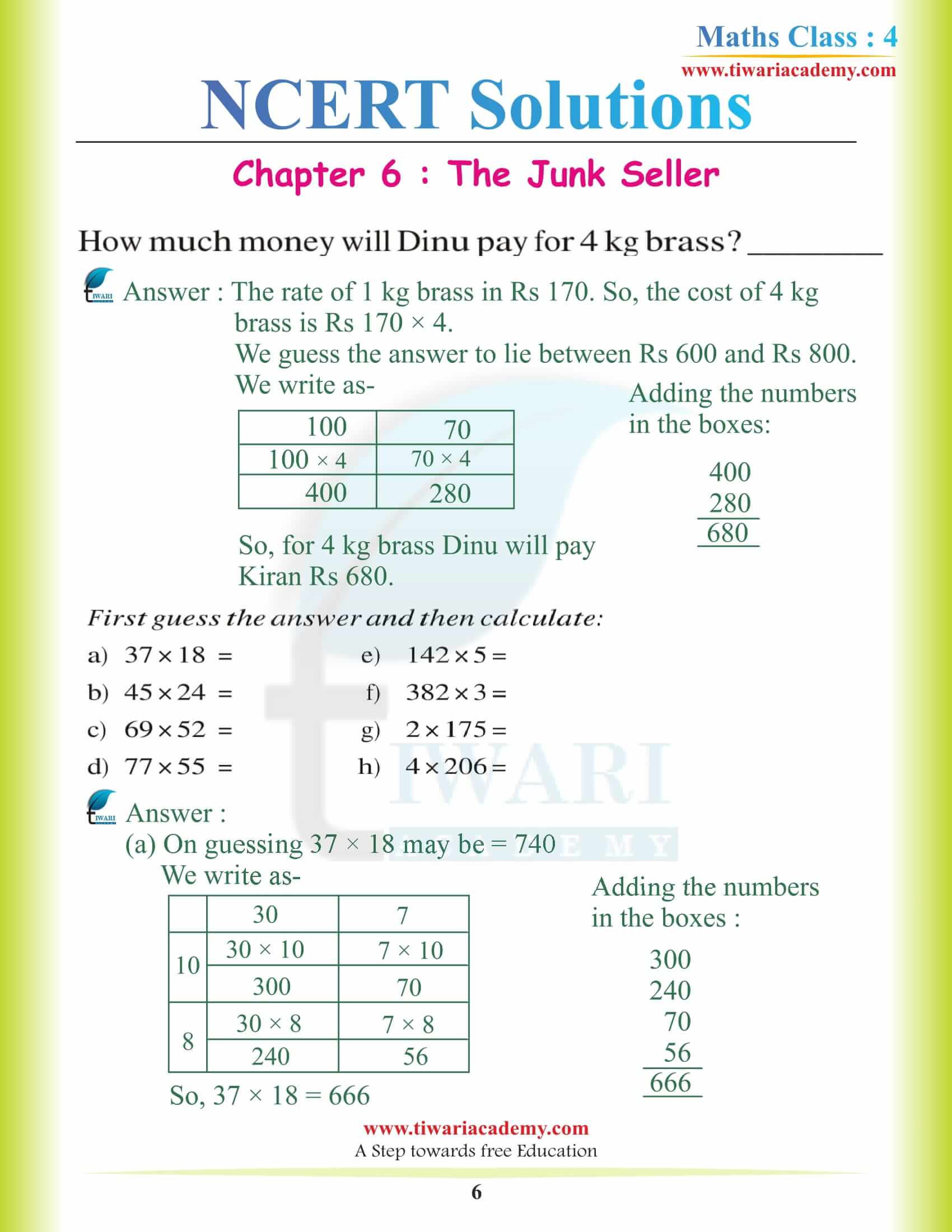
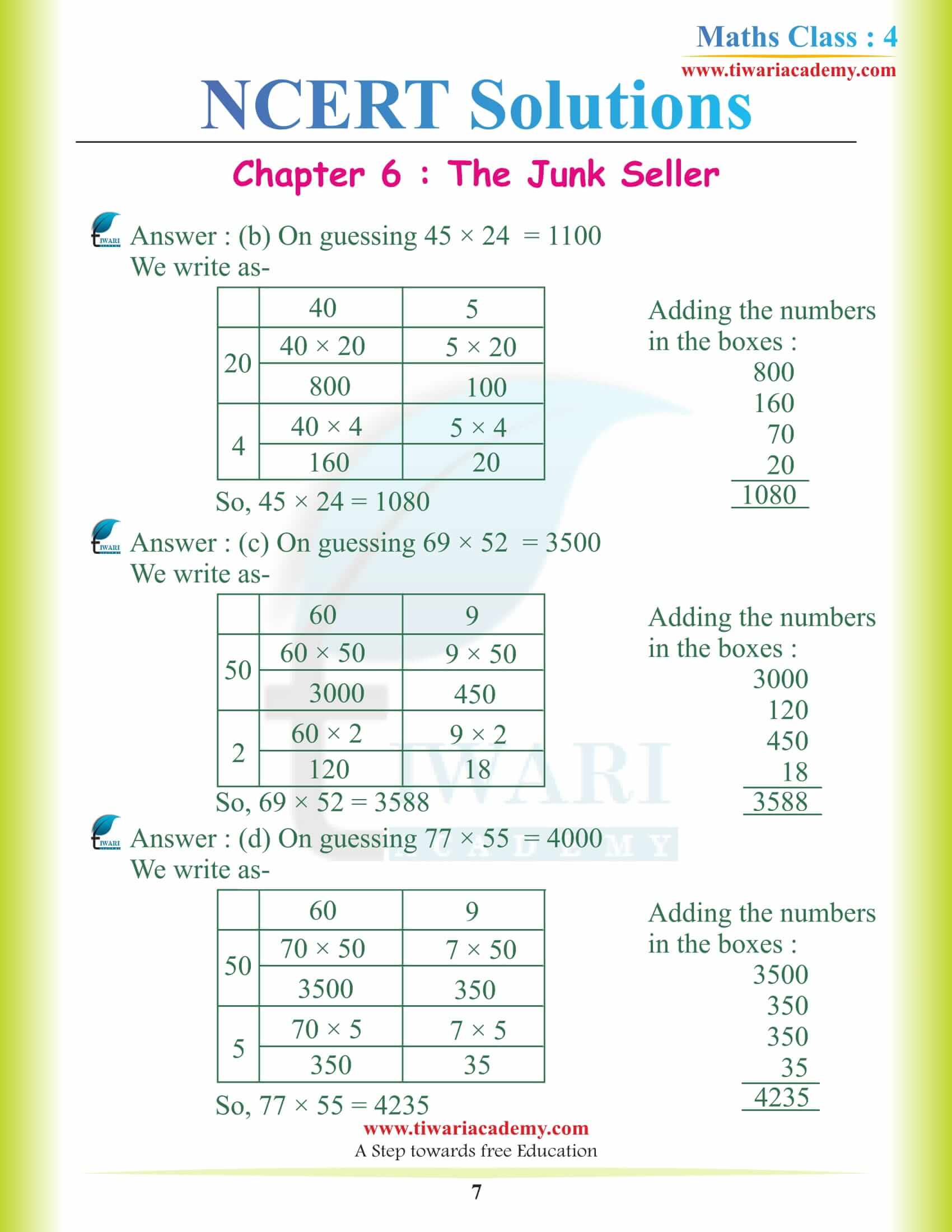
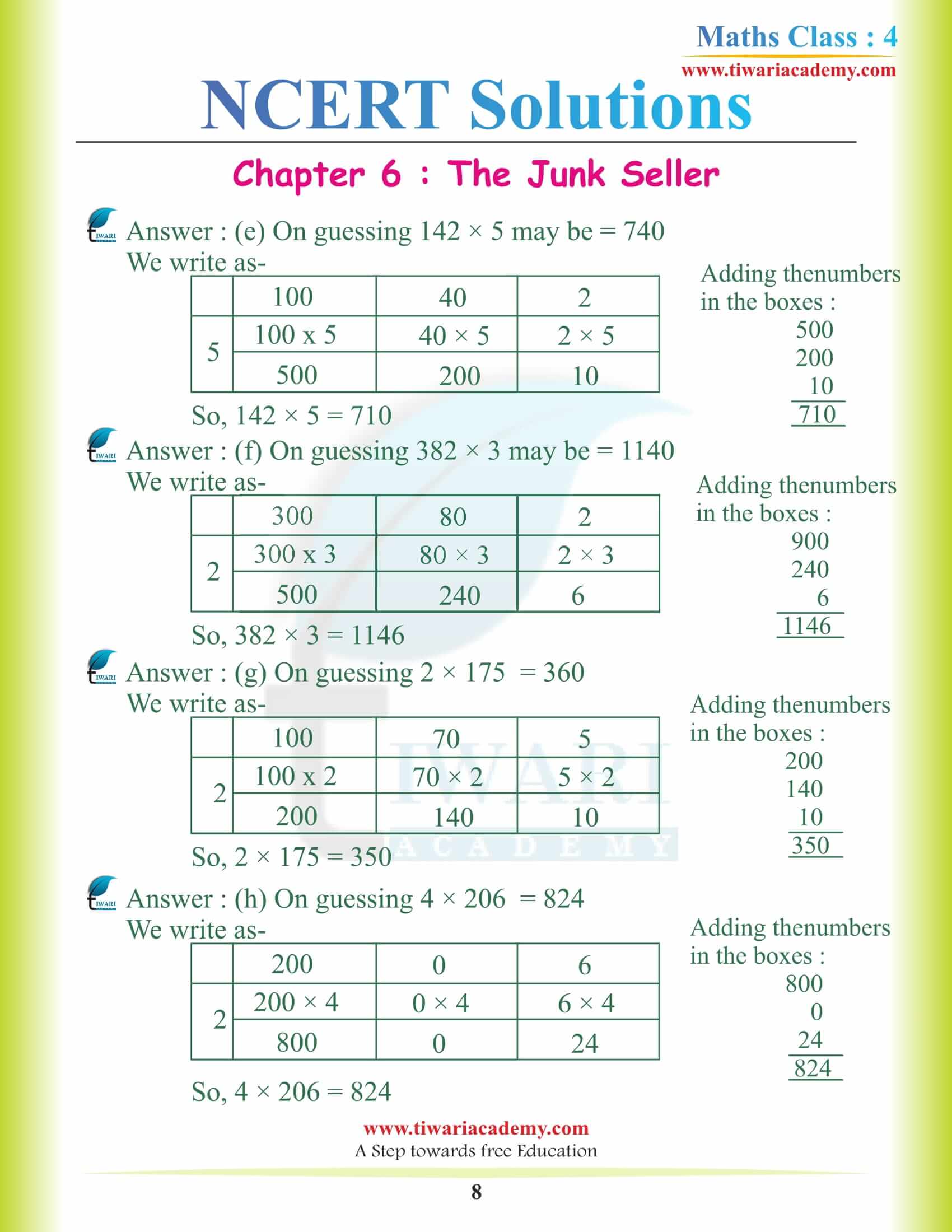
NCERT Solutions for Class 4 Maths Chapter 6 The Junk Seller
NCERT App for Class 4 all Subjects


Class 4 NCERT Maths Chapter 6 Idea About Business
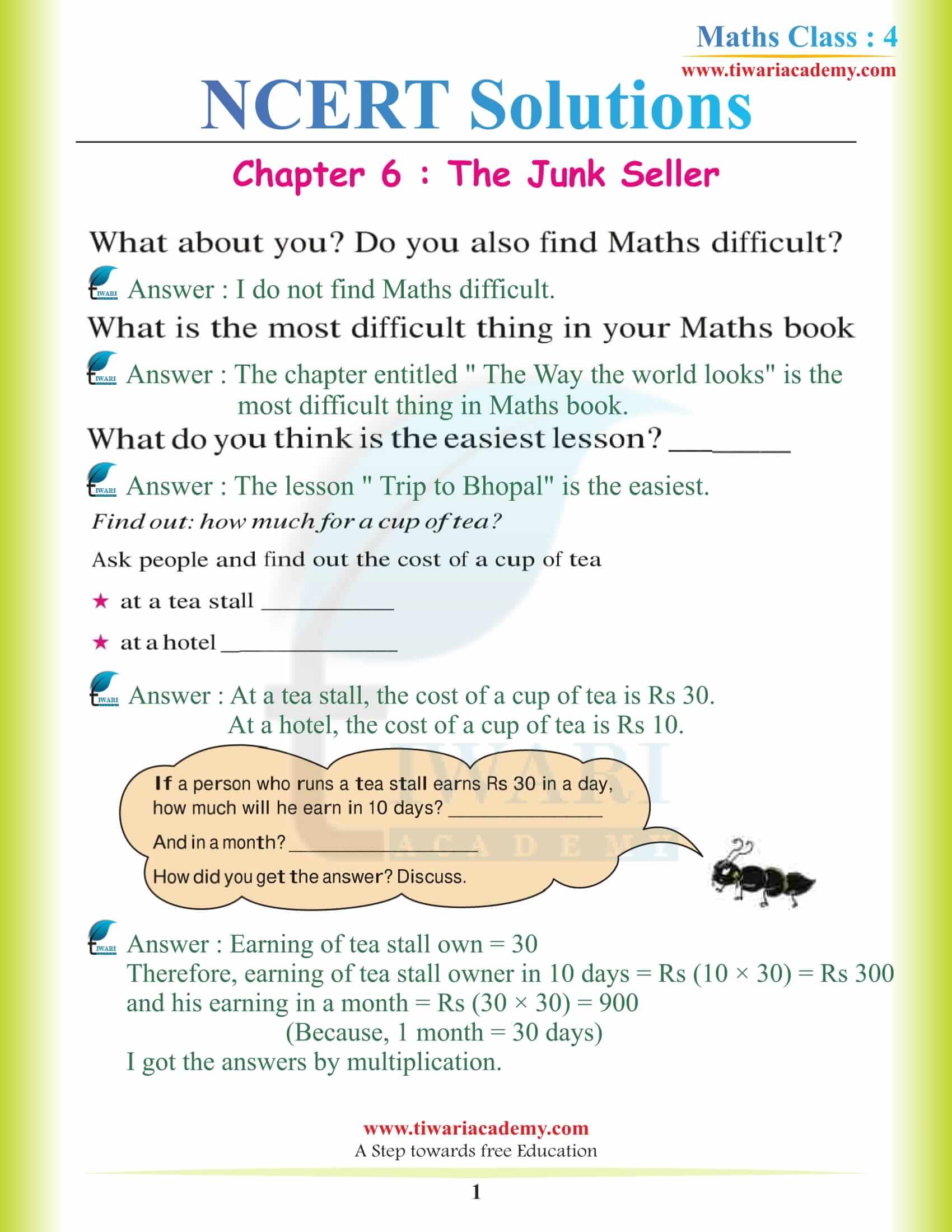
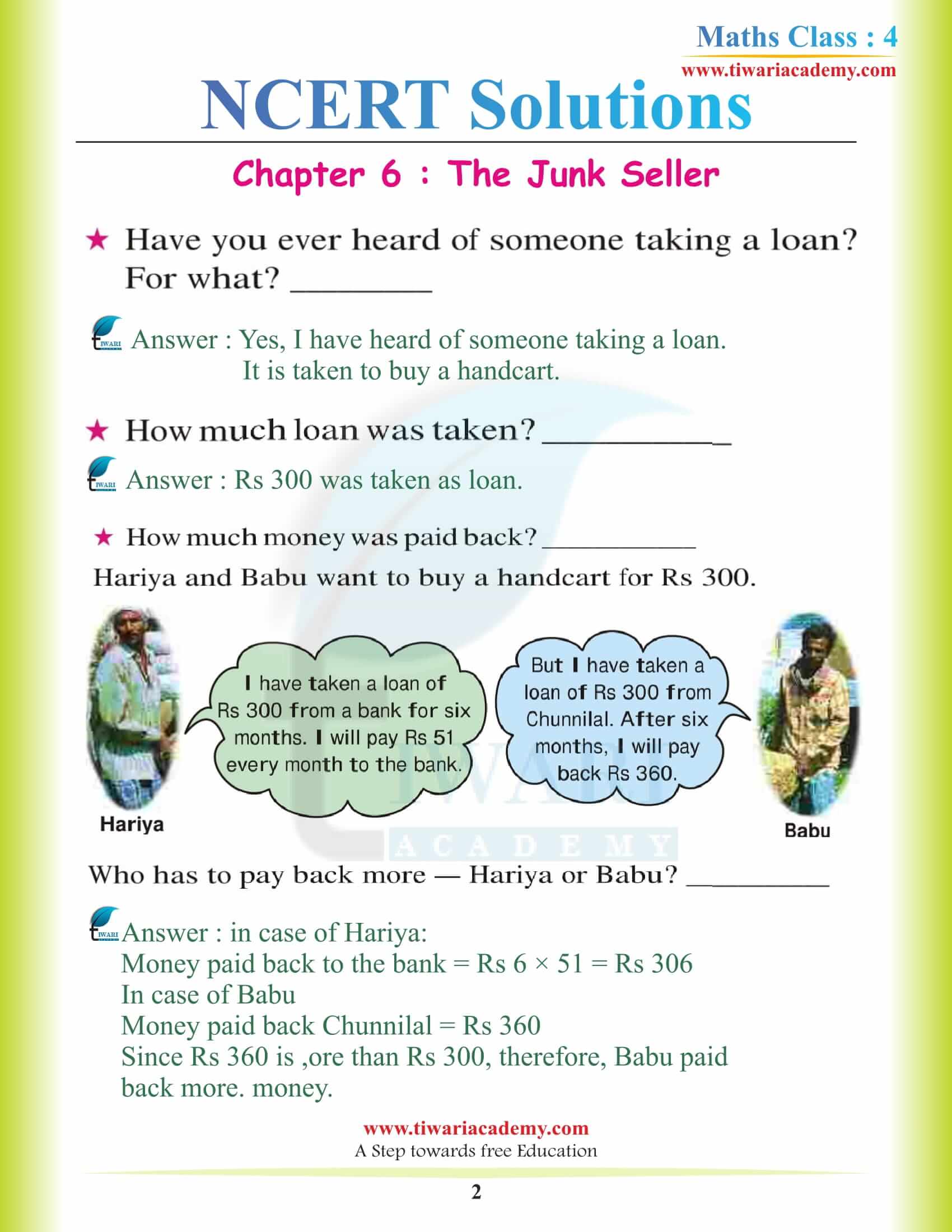
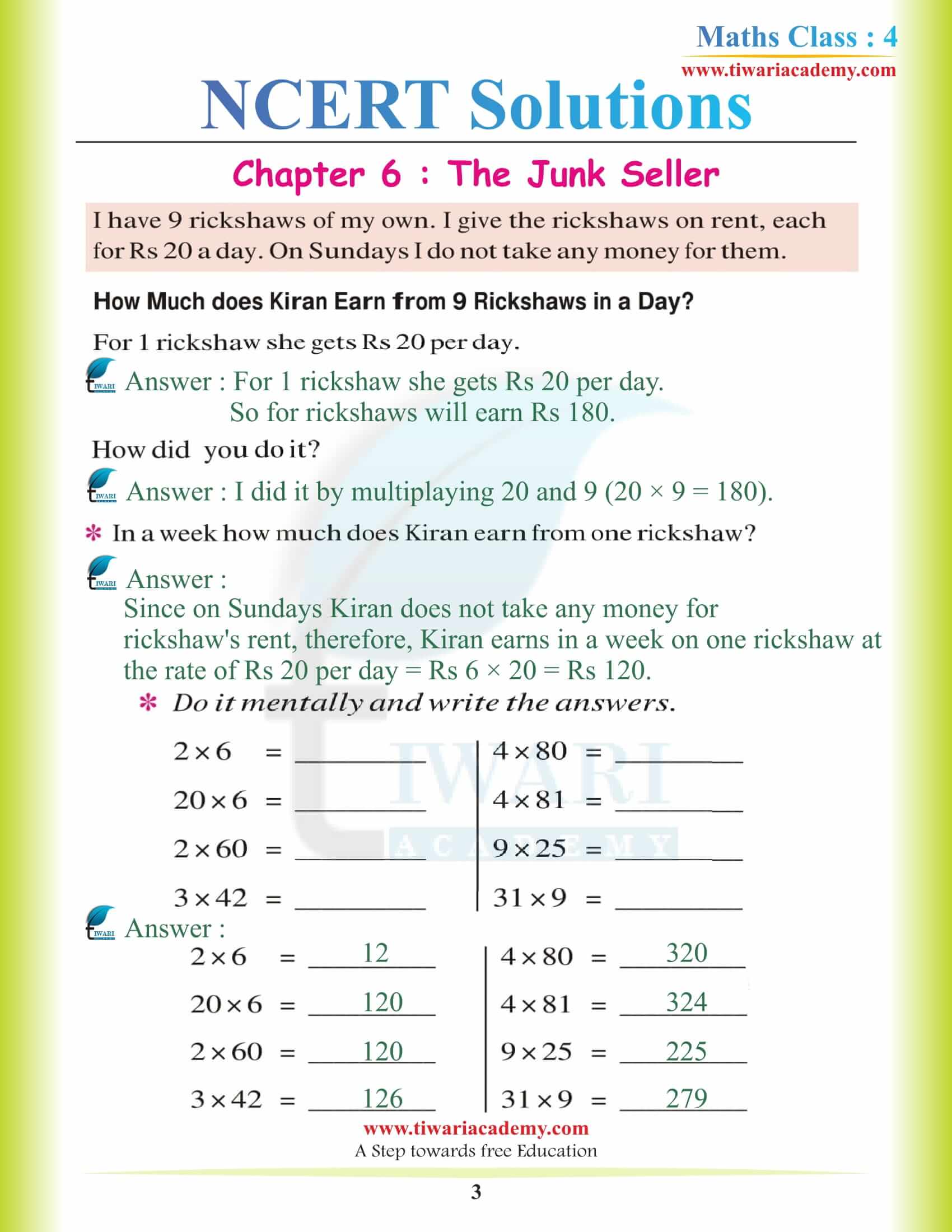
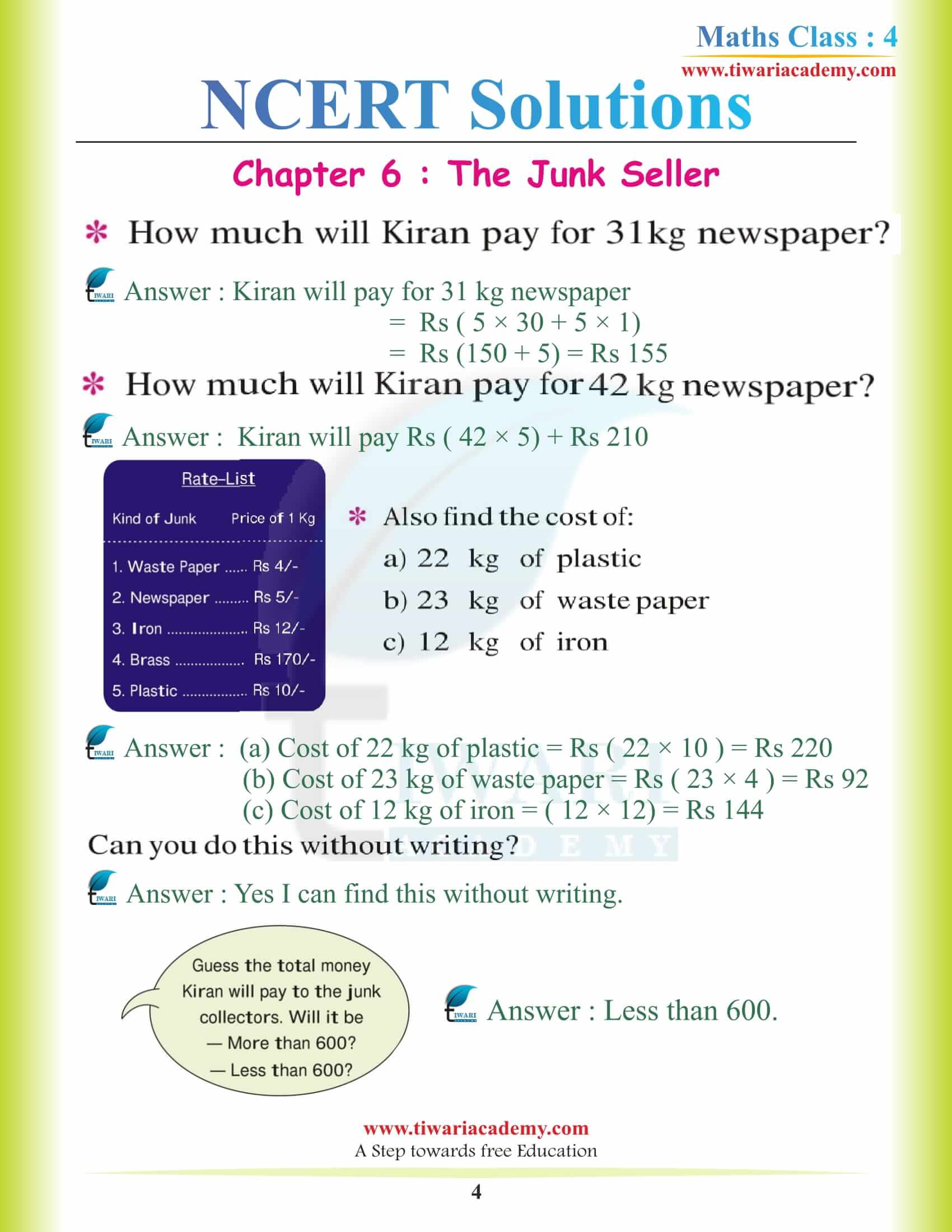
This is the story of a woman named Kiran who started a business. The business, everyone called it dirty. do you want to know about the business why this business is called dirty job even when this business gives her clean food and a way of living? Well, all the answers are given in the story. I found this story is inspirational for all the women and girls who are struggling and being challenged that they cannot do the business.
CBSE Class 4 NCERT Maths Chapter 6 Activity
Do you know what business your parents do? Find out what is their business and the details and discuss this with your friends. However, one thing is to keep in your mind that the business is not dirty business as you have read the story and now you already know why.
Perimeter and Its Meaning in Class 4 Maths Chapter 6
Through engaging activities such as measuring classroom objects, using hand spans, reading scales and finding boundaries of shapes, students develop strong real-life measurement skills. This chapter focuses not only on calculation but also on estimation, observation, and logical thinking, which are essential for building a solid foundation in mathematics.
On this page, you will find easy NCERT solutions for Class 4 Maths Mela Chapter 6, explained step by step in simple language. These solutions are helpful for students preparing for exams, parents guiding their children and teachers looking for clear explanations. All answers are designed as per the latest NCERT syllabus and follow a child-friendly learning approach.
Class 4 Maths Chapter 6 – Frequently Asked Questions (FAQs)
What do students learn in Class 4 Maths Mela Chapter 6?
In Class 4 Maths Mela Chapter 6, students learn how to measure length using centimetres (cm) and metres (m). They also learn estimation, unit conversion and perimeter, which means the distance around a shape.
What is perimeter in simple words for Class 4?
Perimeter is the total length around a shape.
For example, if we add the lengths of all sides of a desk or a garden, we get its perimeter.
What units are used to measure length in Class 4 Maths?
In Class 4 Maths, length is mainly measured using:
– Centimetre (cm) for small objects
– Metre (m) for bigger objects
Students also learn that 1 metre = 100 centimetres.
Why is estimation taught in Class 4 Maths Chapter 6?
Estimation in Class 4 Maths Chapter 6 helps students guess the length before measuring. It improves thinking skills and helps students check if their measurement is reasonable.
How can students practice Class 4 Maths Chapter 6 at home?
Students can practice Class 4 Maths Chapter 6 by measuring objects like books, desks, doors and windows using a scale or measuring tape and finding their lengths and perimeters.
How do students measure length correctly in Class 4 Maths Chapter 6?
In Class 4 Maths Chapter 6, students should place the object starting from 0 cm on the scale and read the marking at the end of the object to get the correct measurement.