



by Tiwari Academy Team
NCERT Solutions for Class 9 Science Exploration Chapter 2 Cell: The Building Block of Life – in Hindi and English Medium updated for Session 2026-27 CBSE and other boards following NCERT. Chapter 2 of Class 9 Science Exploration – Cell: The Building Block of Life — introduces students to the fundamental unit of all living organisms.
Beginning with how life is believed to have originated in water, possibly in hot spring environments similar to Puga Valley in Ladakh, the chapter builds up to the microscopic world of cells. Students learn how to study cells using light and electron microscopes, explore the structure of the cell membrane and cell wall, discover the roles of organelles like mitochondria, ribosomes, chloroplasts and the Golgi apparatus and understand how cells divide through mitosis and meiosis.
Class 9 Science chapter 2 also introduces Cell Theory – the unifying principle of biology – and connects cell biology to real-life phenomena such as osmosis, food preservation and cancer. As part of the revised NCERT curriculum for session 2026-27, this chapter lays the scientific foundation for understanding all living systems.
Quick Links:
- Chapter 2 Exercises Solutions
- Very Short Answer Type Questions
- Short Answer Type Questions
- Long Answer Type Questions
- Class 9 Science Exploration Chapter 2 in Hindi Medium
- Download Class 9 Science Offline App to study Class 9 Science Exploration Offline.
Class 9 Science Exploration Chapter 2 Question Answer
NCERT Class 9 Science Exploration Chapter 2 Solutions
Revise, Reflect, Refine
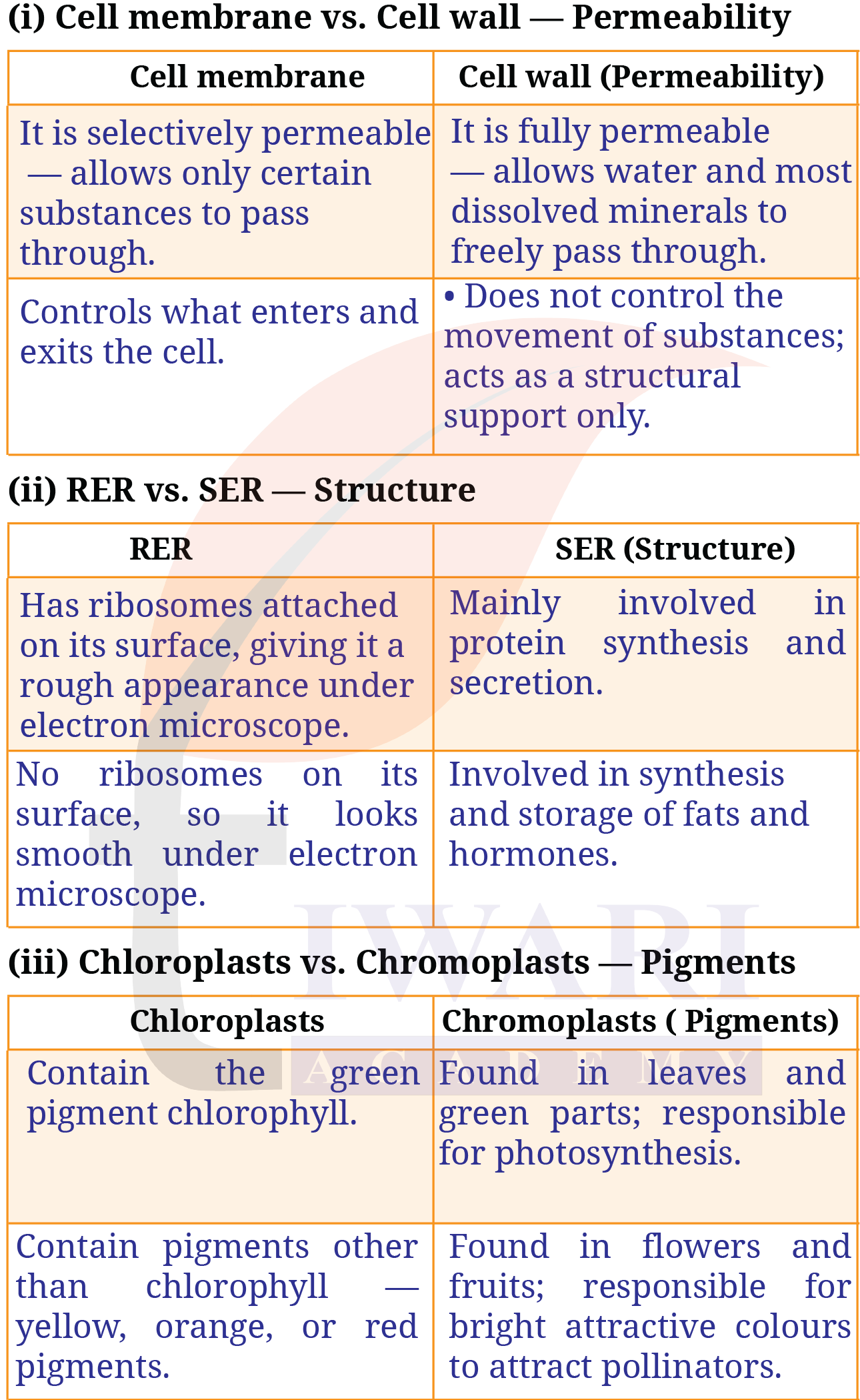
1. Differentiate between the following pairs based on the clues in parentheses:
(i) Cell membrane and cell wall (permeability)
(ii) RER and SER (structure)
(iii) Chloroplasts and chromoplasts (pigments)
Answer:
2. Two similar animal ells are placed in two different solutions:
• Cell X is paced in pure water
• Cell Y is placed in a concentrated salt solution.
Cells are observed after some time. Cell X swells and Cell Y shrinks Which statement provides the correct explanation for the above observation?
(i) Salt molecules moved into Cell Y, causing it to shrink.
(ii) Water moved into Cell X and more water moved out of Cell Y than the salt solution entered in it.
(iii) Water moved into Cell C and moved out of Cell Y through the cell membrane.
(iv) Solute movement caused osmosis in both cells.
Answer:
(iii) Water moved into Cell X and moved out of Cell Y through the cell membrane.
Explanation: The cell membrane is selectively permeable. It allows water to pass through by the process of osmosis. Water always moves from a region of higher water concentration (lower solute) to lower water concentration (higher solute).
• Cell X in pure water: Pure water has a higher water concentration than inside the cell. So water moves into Cell X → cell swells.
• Cell Y in concentrated salt solution: The salt solution has less water than inside the cell. So water moves out of Cell Y → cell shrinks.
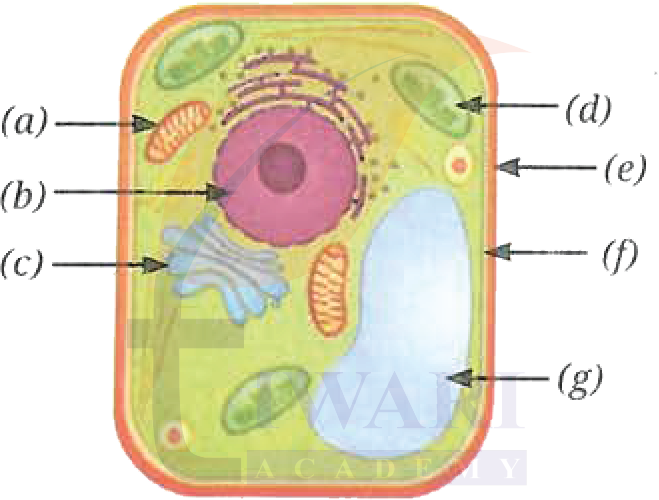
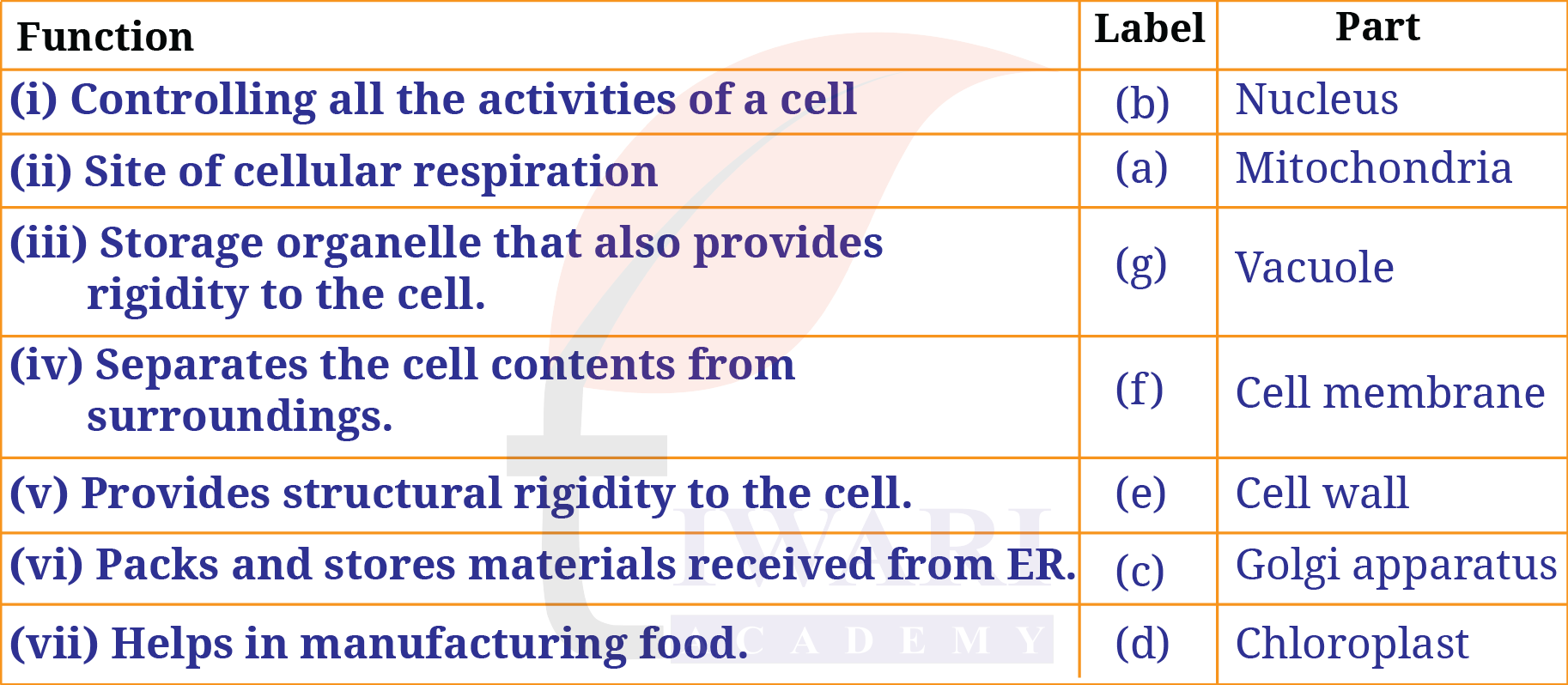
3. Look at the diagram of cell in Fig. 2.20 Identify the parts labelled from (a) to (g) and correctly match them with their functions given below:
(i) Controlling all the activities of a cell.
(ii) Site of cellular respiration.
(iii) Storage organelle that also provides rigidity to the cell.
(iv) Separates the cell contents from surroundings.
(v) Provides structural rigidity to the cell.
(vi) Packs and stores materials received from ER.
(vii) Helps in manufacturing food.
Answer:
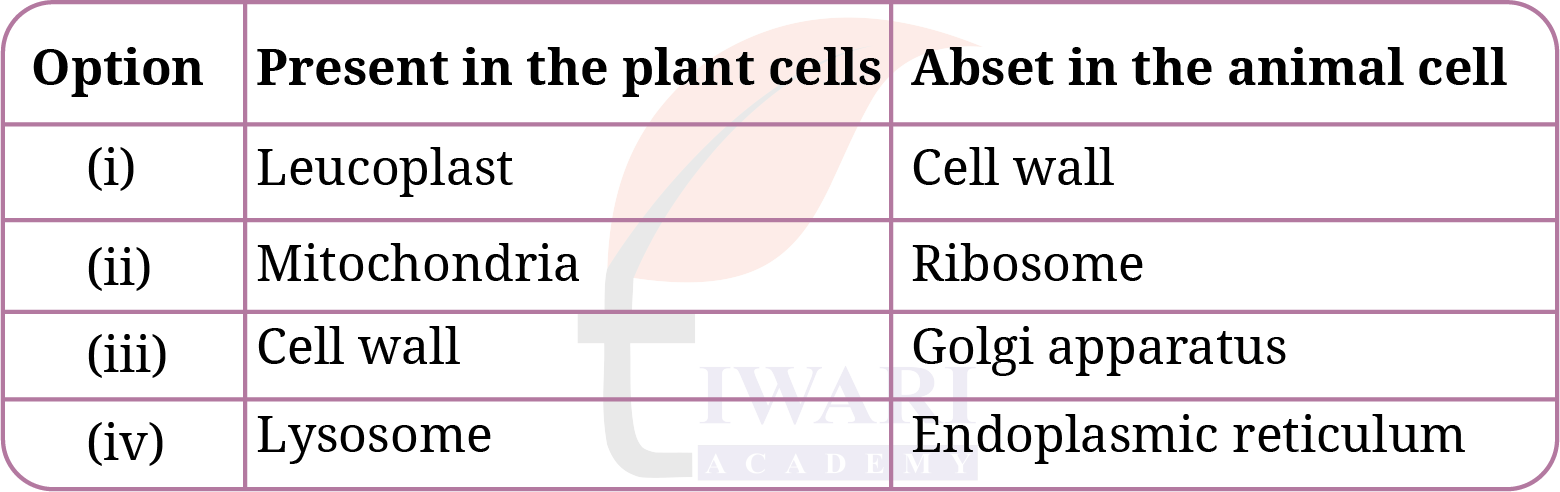
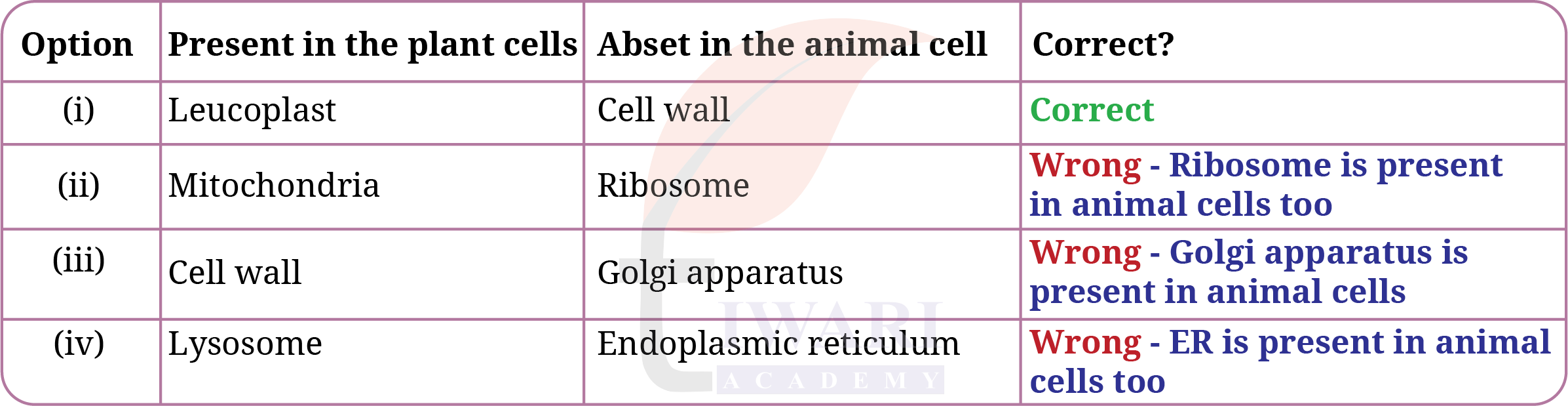
4. Which of the following option(s) of the pairs of cell organelles are correctly placed under the given categories?
Answer:
5. Two students, Renu and Rohit, were having a discussion on the plastids. Renu emphasised that all parts of the plants, even roots, contain plastids.
However, Rohit did not agree with the statement and told her that plastids are absent in plant roots since the roots are underground and do not need to perform photosynthesis. Who is correct? Justify your answer.
Answer:
Rohit is partially correct, but Renu is more accurate overall.
𝗝𝘂𝘀𝘁𝗶𝗳𝗶𝗰𝗮𝘁𝗶𝗼𝗻:
- Plastids are of three types: Chloroplasts (green, for photosynthesis), Chromoplasts (coloured, in flowers/fruits), and Leucoplasts (colourless, for storage).
- Roots do NOT contain chloroplasts (they cannot do photosynthesis as they are underground and have no access to light). In this sense, Rohit is right.
- However, roots do contain leucoplasts — colourless plastids that store starch, oils or proteins. For example, potato and taro roots store starch in leucoplasts.
- Therefore, Renu is correct in saying all plant parts contain plastids – roots contain leucoplasts, even though they lack chloroplasts.
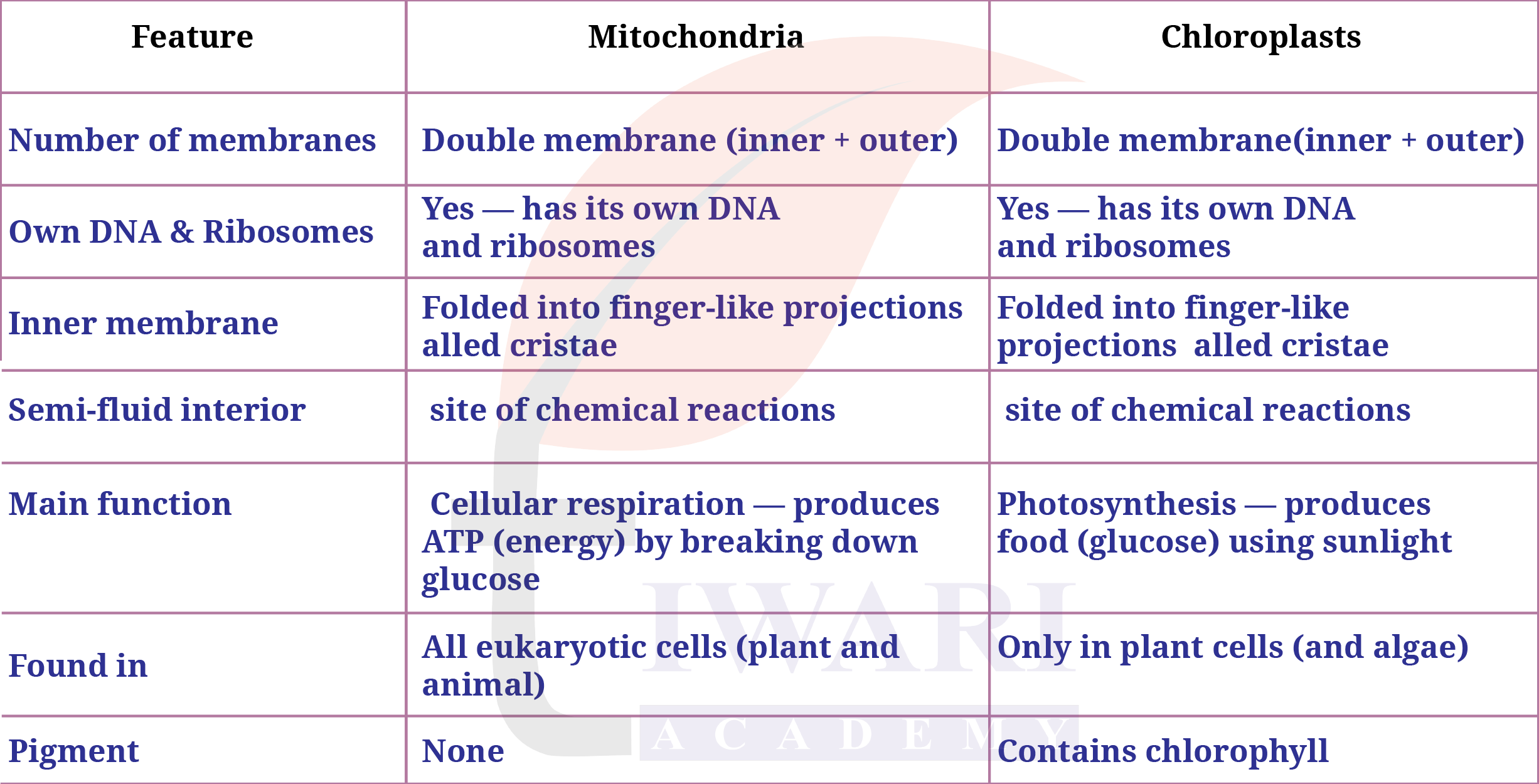
6. Mitochondria and chloroplasts are two important organelles in a plant cell. Discuss how these two organelles are structurally and functionally similar to each other, and different from each other.
Answer:
7. Which of the following pairs of cell organelles contains DNA?
(i) Chloroplasts, Ribosomes
(ii) Mitochondria, Nucleus
(iii) Golgi bodies, Ribosomes
(iv) Nucleus, Lysosomes
Answer:
(ii) Mitochondria and Nucleus
Explanation:
• Nucleus — Contains chromosomes made of DNA. It is the main store of genetic information in a eukaryotic cell.
• Mitochondria — Has its own circular DNA (similar to bacteria). This is why mitochondria can make some of their own proteins.
• Chloroplasts also have DNA, but that option is not given here with the correct pair. Ribosomes, Golgi bodies and Lysosomes do NOT contain DNA.
8. A researcher carried out an experiment in which she took two carrots of similar size. She placed one carrot in plain water and the other carrot in concentrated salt solution (Fig. 2.21). After 24 hours she recorded her observations.
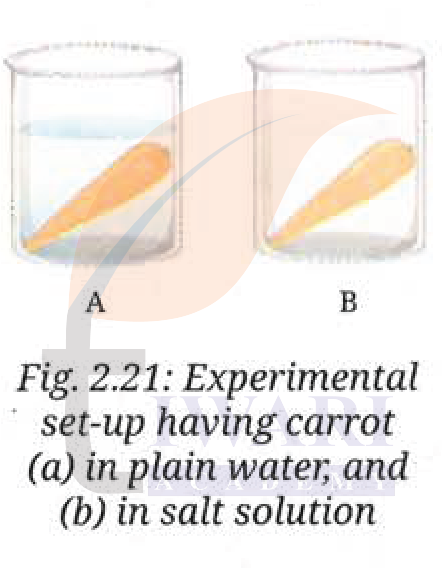
(i) What hypothesis does she want to test through this experiment?
Answer:
Hypothesis: The researcher wants to test: “The cell membrane is selectively permeable and water moves across it by osmosis — from a dilute solution to a concentrated solution.” Specifically, she is testing how different concentrations of external solutions affect the firmness of plant tissue through osmosis.
(ii) What would you suggest for the improvement of this experiment?
Answer:
Improvements
• Use equal-sized carrot pieces and measure initial and final weight/length for quantitative comparison.
• Add a third carrot piece in an isotonic solution (same concentration as inside the cell) as a control — it should show no change.
• Record observations at multiple time intervals (e.g., every 30 minutes) to track the rate of change.
• Maintain constant temperature throughout the experiment to avoid interference.
(iii) Why does the carrot in plain water stay stiff and crunchy, but the carrot in concentrated salt solution become rubbery and limp?
Answer:
𝗖𝗮𝗿𝗿𝗼𝘁 𝗶𝗻 𝗽𝗹𝗮𝗶𝗻 𝘄𝗮𝘁𝗲𝗿 (𝗕𝗲𝗮𝗸𝗲𝗿 𝗔): Plain water is a hypotonic solution (lower solute concentration than inside carrot cells). Water moves into the carrot cells by osmosis. The cells become turgid (swollen with water), pressing against the rigid cell wall. This pressure (turgor pressure) keeps the carrot stiff and crunchy.
𝗖𝗮𝗿𝗿𝗼𝘁 𝗶𝗻 𝗰𝗼𝗻𝗰𝗲𝗻𝘁𝗿𝗮𝘁𝗲𝗱 𝘀𝗮𝗹𝘁 𝘀𝗼𝗹𝘂𝘁𝗶𝗼𝗻 (𝗕𝗲𝗮𝗸𝗲𝗿 𝗕): The salt solution is a hypertonic solution (higher solute concentration than inside carrot cells). Water moves out of the carrot cells by osmosis (plasmolysis). The cells lose water and become flaccid (limp). The inner content shrinks away from the cell wall, making the carrot rubbery and soft.
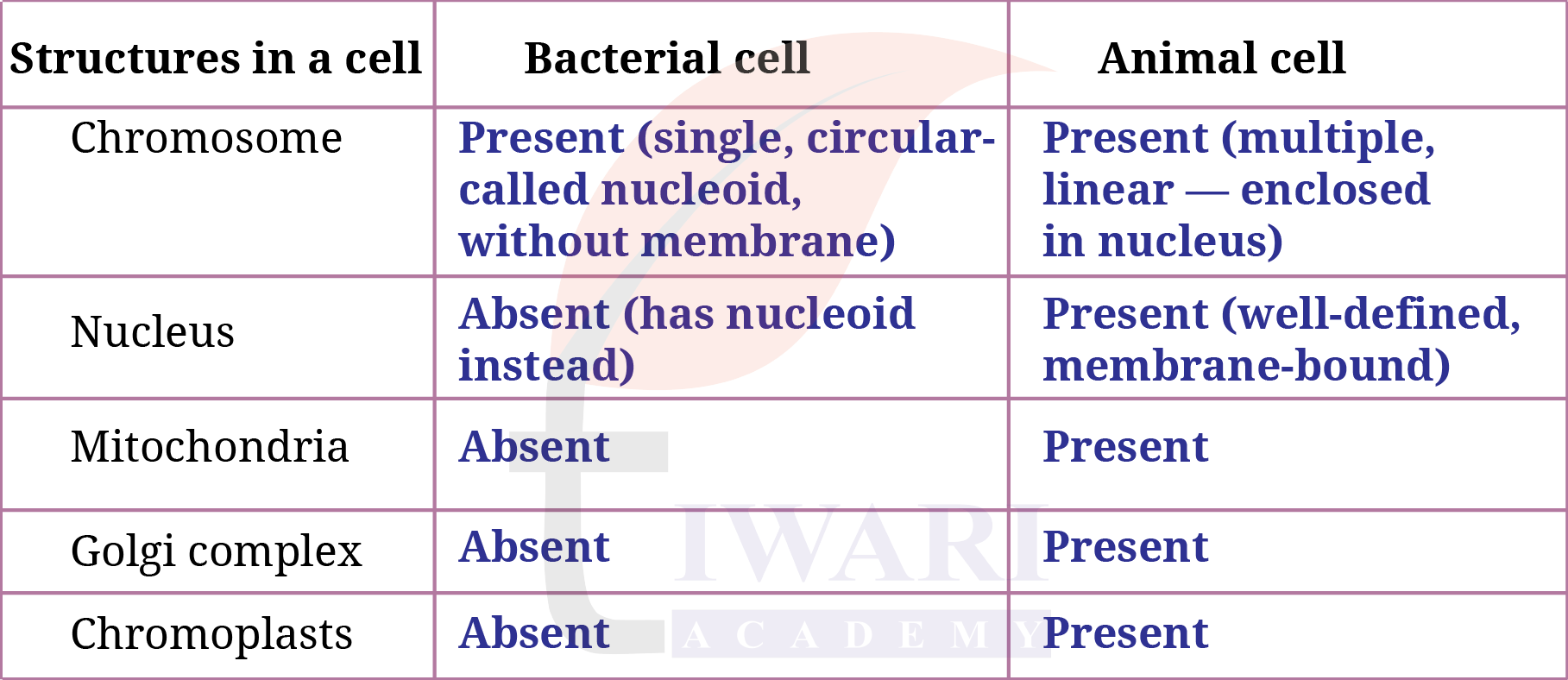
9. Indicate the presence or absence of following structures in bacterial and animal cells:
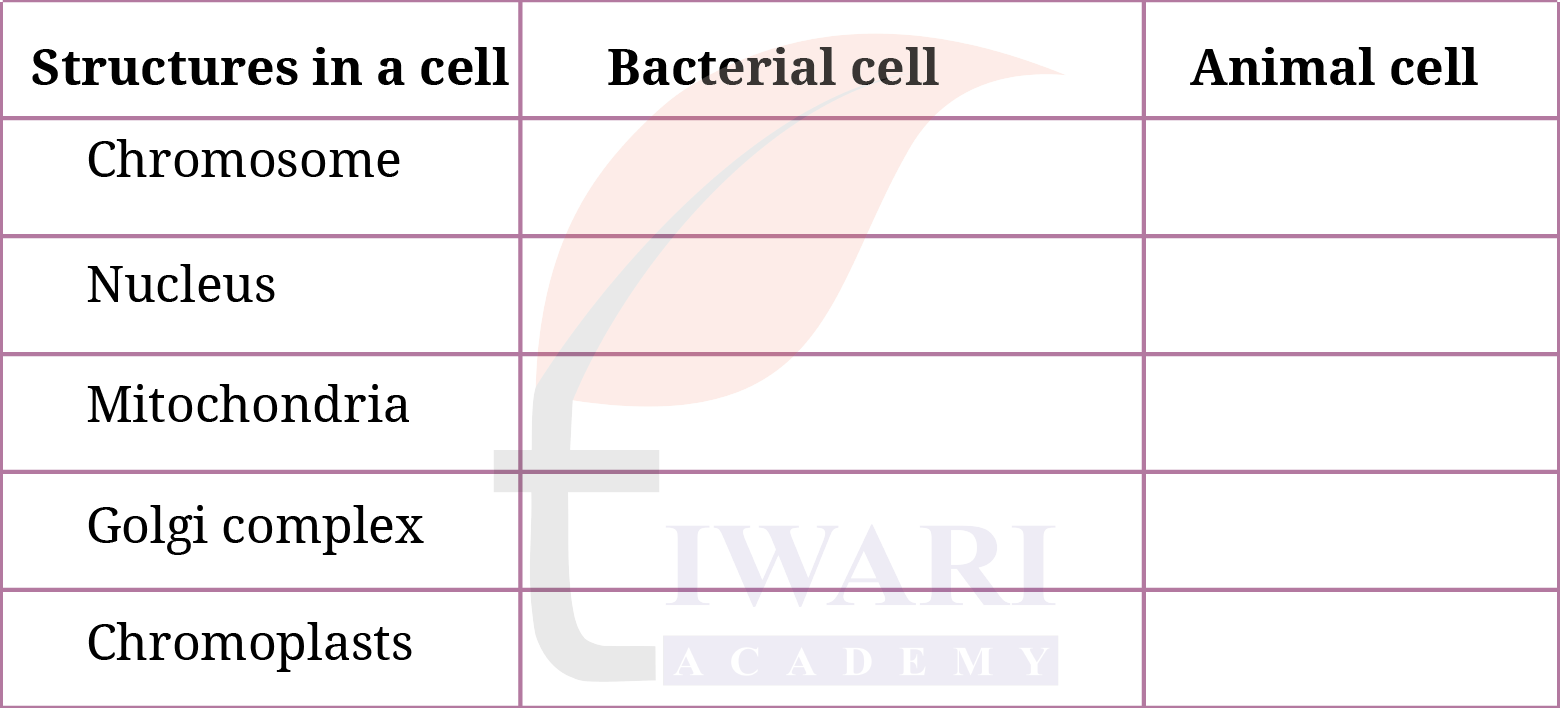
Answer:
10. Carry out the following experiment:
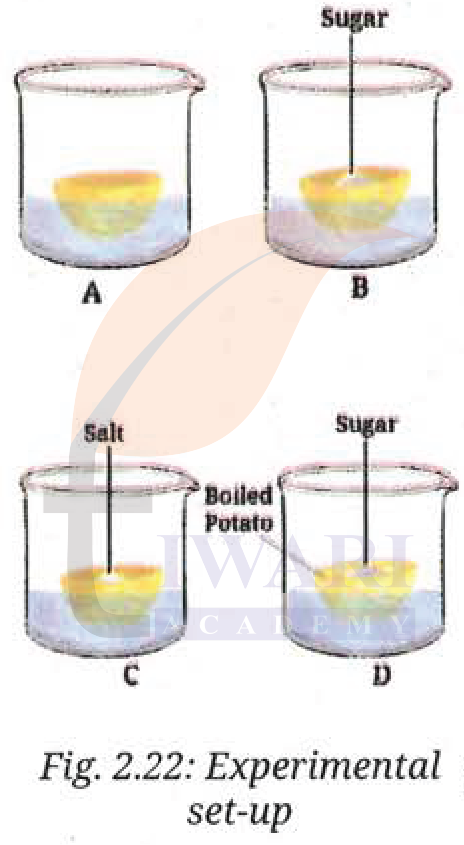
Take four peeled potato halves and scoop each one out to make potato cups. One of these potato cups should be made from a boiled potato. Place each of the potato cups in a beaker containing water (Fig. 2.22).
Now, set up the experiment as follows:
(a) Keep Cup A empty.
(b) Add one teaspoon sugar in Cup B.
(c) Add one teaspoon salt in Cup C.
(d) Add one teaspoon sugar in the boiled potato in Cup D.
Observe the four potato cups at least two hours and answer the following questions:
(i) Explain why water gathers in the hollowed portion of Cup B and Cup C.
(ii) Why is Cup A necessary for this experiment?
(iii) Explain why water does not gather in the hollowed portions of Cups A and D.
Answer:
(i) Cups B and C contain sugar and salt respectively inside the hollowed potato. These create a hypertonic solution (high solute concentration) inside the cup. The surrounding water in the beaker is hypotonic (low solute concentration). Therefore, water moves into the potato cups by osmosis — from the region of high water concentration (outside) to low water concentration (inside the cup). This water accumulates visibly inside the cup.
(ii) Cup A is the control of the experiment. It has nothing added inside — just an empty potato cup. This helps us compare and confirm that any water collection in other cups is due to the solutes (sugar/salt) added and NOT due to any natural property of the potato itself.
(iii) • Cup A (empty): No solute is added. The concentration inside and outside is equal or the inside is not concentrated enough to draw significant water. There is no concentration gradient to drive osmosis. So no water collects.
• Cup D (boiled potato with sugar): The potato is boiled, which kills the cells and destroys the cell membranes. Dead cells cannot carry out osmosis because osmosis requires a living, selectively permeable membrane. Even though sugar is present, water cannot be drawn in through osmosis. Hence, no water collects.
11. Identify the pair that incorrectly matches the cell organelle with its function.
(i) Ribosome – Protein synthesis
(ii) SER – Lipid and cellulose synthesis
(iii) Lysosome – Digestion of foreign agents
Answer:
(ii) SER – Lipid and cellulose synthesis
𝗘𝘅𝗽𝗹𝗮𝗻𝗮𝘁𝗶𝗼𝗻:
- Correct Ribosome → Protein synthesis. Ribosomes are indeed the sites of protein synthesis.
- Incorrect SER → Lipid and cellulose synthesis. SER (Smooth Endoplasmic Reticulum) is involved in synthesis and storage of lipids and hormones, NOT cellulose. Cellulose is a component of the cell wall and is synthesised by the Golgi apparatus.
- Correct Lysosome → Digestion of foreign agents. Lysosomes contain digestive enzymes and break down foreign particles, worn-out organelles, etc.
12. What outcome do you expect if all the mitochondria are removed from a eukaryotic cell?
Answer:
If all mitochondria are removed from a eukaryotic cell, the following outcomes would occur:
• No ATP production: Mitochondria are the “powerhouses” of the cell — they carry out cellular respiration and produce ATP (Adenosine Triphosphate), which is the energy currency of the cell.
• Cell activities stop: All energy-dependent activities — active transport across membranes, muscle contraction, protein synthesis, cell division — would stop because there is no energy (ATP) available.
• Cell death: Without energy, the cell cannot maintain its structure, repair itself or carry out metabolism. The cell would quickly die.
• Only anaerobic respiration (in the cytoplasm) could still produce small amounts of energy temporarily, but this is highly inefficient and not enough to sustain cellular life for long.
13. Which phenomenon inhibits the formation of tumors in the human body? Can plants also develop tumors? Explain.
Answer:
The phenomenon is called contact inhibition. In many animal cells, cell division usually stops when cells come in contact with neighbouring cells. This prevents uncontrolled growth and thus inhibits the formation of tumors. However, cancer cells lose this control and keep dividing uncontrollably, which leads to the formation of tumors.
No, plants do not show contact inhibition and therefore follow a different pattern of growth. This is because plant cells have rigid cell walls — due to this rigidity, plant cells do not respond to contact with neighbouring cells the same way animal cells do.
So while uncontrolled division can technically occur in plants too (and certain bacterial infections like crown gall disease can cause tumour-like growths), the chapter specifically states that plants do not show contact inhibition and grow differently from animal cells. The rigid cell wall is the key reason plants follow a different growth pattern altogether.
14. The cell membrane of a cell is made up of proteins and lipids. Which cell organelles help in the synthesis of cell membrane?
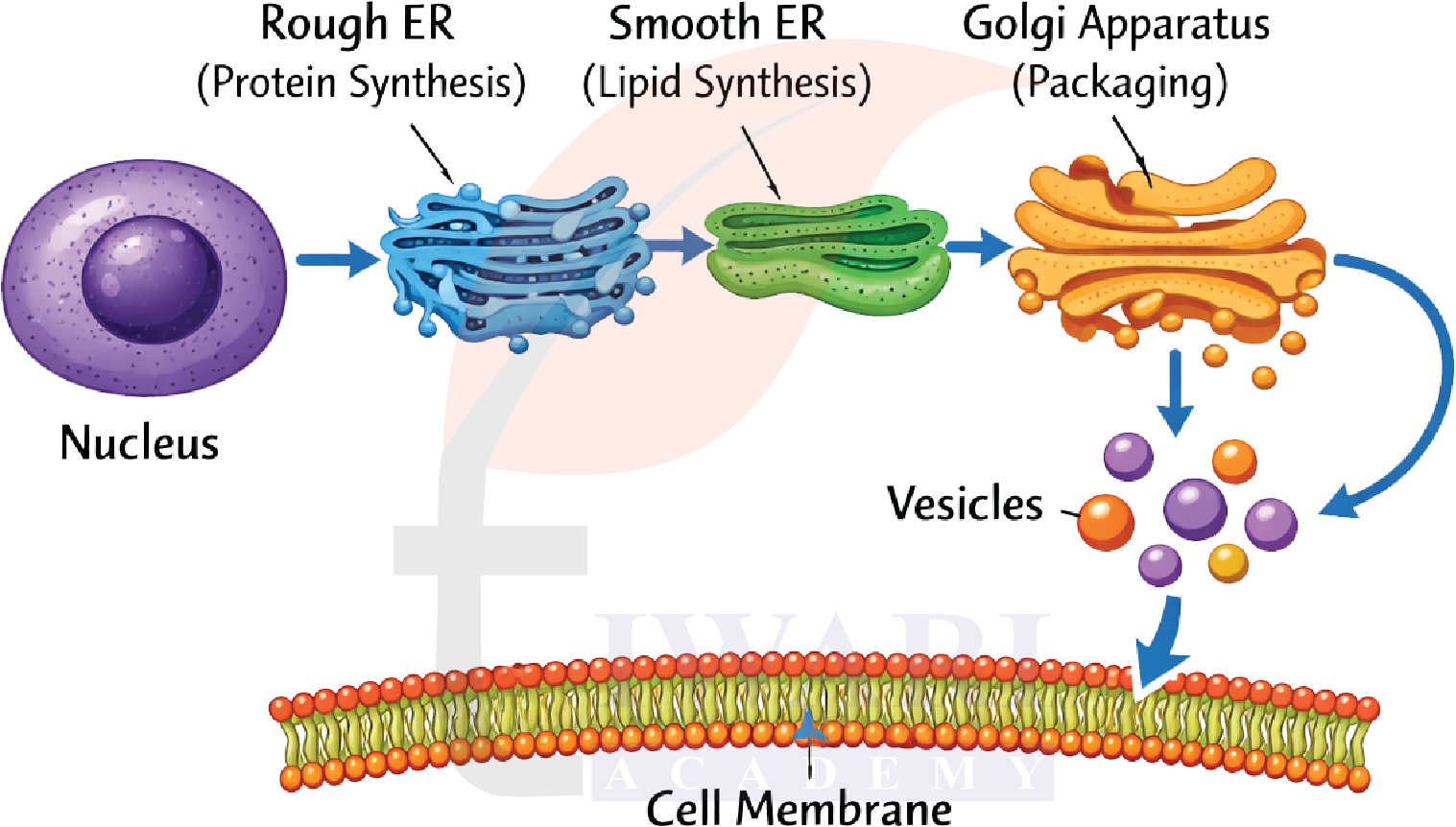
Write the path of these compounds from their site of synthesis to the cell membrane and show this through a labelled diagram.
Answer:
Organelles involved:
• Ribosomes — synthesise proteins (on RER surface).
• SER (Smooth Endoplasmic Reticulum) — synthesises lipids.
• Golgi apparatus — receives proteins and lipids from ER, modifies, packages, and sends them to the cell membrane via vesicles.
Pathway: Ribosomes (on RER) → Proteins synthesised → transported through ER → Golgi apparatus → packaged into vesicles → vesicles fuse with Cell Membrane
Similarly: SER → Lipids synthesised → transported to Golgi apparatus → packaged → sent to Cell Membrane
15. What would happen if gametes are formed by mitotic divisions?
Answer:
Normally, gametes (sperm and egg) are formed by meiosis, which halves the chromosome number. If gametes were formed by mitosis instead, the following problems would arise:
• Double chromosome number: Mitosis produces cells with the SAME number of chromosomes as the parent cell. So gametes would have the full chromosome number (e.g., 46 in humans) instead of the halved number (23).
• Doubling every generation: When fertilisation occurs, two gametes combine. If each gamete already has 46 chromosomes, the fertilised egg (zygote) would have 92 chromosomes. The next generation would have 184 and so on. The chromosome number would double with every generation.
• No genetic diversity: Meiosis creates genetic variation through crossing over and random assortment. Mitosis does not. Gametes formed by mitosis would be genetically identical, eliminating the diversity seen in offspring.
• Species extinction: Eventually the genome would become unmanageable — organisms would not be able to survive with continuously increasing chromosome numbers. This would likely lead to the extinction of sexually reproducing species.
16. A farmer, Deepa, was very happy with the harvest of amla (Indian Gooseberry) and lemons on her farm.
However, she could sell only one-fourth of the produce in the local market. Recognising that a significant amount of produce may be lost post-harvest, she employed a traditional yet scientifically sound method to extend the shelf life of amla and lemons. She turned perishable produce into profitable products, such as pickles and sharbat. She used the excess produce to prepare pickles, murabbas, and sharbat by adding appropriate amounts of salt, sugar, or jaggery to small pieces of fruit and their juices. These were then stored in small glass bottles for sale, helping her prevent the wastage of post-harvest produce. This shift from farming to agro-processing would strengthen food security and boost the local economy, creating a sustainable model that cuts waste while increasing her income. Based on the above passage answer the following questions:
(i) Which scientific concept has the farmer applied in the preservation of the farm produce?
(ii) How does the addition of high concentrations of salt and sugar create an environment that prevents the growth of spoilage-causing bacteria and fungi?
(iii) Suggest a healthy recipe of this kind for food preservation.
(iv) What are the scientific values addressed in this case?
Answer:
(i) Deepa is applying the concept of Osmosis. By adding high concentrations of salt or sugar, she creates a hypertonic environment around spoilage-causing microorganisms (bacteria and fungi).
(ii) When bacteria or fungi are placed in a highly concentrated salt or sugar solution (hypertonic), water moves out of their cells by osmosis. The microbial cells lose water, shrink (plasmolysis), and cannot carry out normal metabolic activities. This dehydration effect kills or prevents the growth of spoilage-causing microorganisms, thereby preserving the food.
(iii) Healthy recipe for food preservation
𝗔𝗺𝗹𝗮–𝗚𝗶𝗻𝗴𝗲𝗿 𝗠𝘂𝗿𝗮𝗯𝗯𝗮:
• Take fresh amla (Indian Gooseberry), wash and prick them with a fork.
• Boil in water briefly to soften. Drain and let cool.
• Prepare a sugar syrup using jaggery (healthier than refined sugar) with a pinch of cardamom and dry ginger powder.
• Add the amla pieces into the syrup. Store in clean, airtight glass jars.
• The high jaggery concentration preserves the amla through osmosis while retaining its Vitamin C content.
(iv) 𝗦𝗰𝗶𝗲𝗻𝘁𝗶𝗳𝗶𝗰 𝘃𝗮𝗹𝘂𝗲𝘀 𝗮𝗱𝗱𝗿𝗲𝘀𝘀𝗲𝗱
• Application of science: Using osmosis to preserve food without artificial chemicals.
• Sustainability: Reducing post-harvest waste and promoting eco-friendly preservation methods.
• Entrepreneurship: Converting perishable farm produce into marketable products to improve livelihood.
• Food security: Making nutritious food available throughout the year by extending shelf life.
NCERT Class 9 Science Exploration Chapter 2 Very Short Answer Type Questions with Explanation.
Class 9 Science Exploration Chapter 2 Very Short Questions
Very Short Answer Type Questions (1 word or 1 sentence)
1. Who was the first person to observe a cell and in which year?
See AnswerRobert Hooke was the first person to observe a cell in 1665, using a self-designed microscope while examining a thin slice of cork.
2. What is the limit of resolution of the human eye?
See AnswerThe limit of resolution of the human eye is 0.1 mm — any two points closer than this appear as a single point when viewed from about 25 cm.
3. What is another name for the cell membrane?
See AnswerThe cell membrane is also called the plasma membrane.
4. Name the model that explains the structure of the cell membrane.
See AnswerThe fluid-mosaic model explains the structure of the cell membrane.
5. Define osmosis in one sentence.
See AnswerOsmosis is the diffusion of water across a selectively permeable membrane from a region of higher water concentration (dilute solution) to a region of lower water concentration (concentrated solution).
6. What is the primary chemical component of the plant cell wall?
See AnswerCellulose – a carbohydrate formed by many glucose units linked together – is the primary component of the plant cell wall.
7. What are cells that lack a well-defined nucleus called?
See AnswerCells that lack a well-defined nucleus are called prokaryotic cells (pro = primitive; karyon = nucleus).
8. Which organelle is known as the ‘powerhouse of the cell’?
See AnswerMitochondria are known as the powerhouse of the cell because they supply energy in the form of ATP needed for most cellular activities.
9. What is the watery fluid inside the large central vacuole of a plant cell called?
See AnswerThe watery fluid inside a plant cell’s large central vacuole is called cell sap, which stores water, minerals, sugars and waste material.
10. Which scientist stated that new cells are formed only from pre-existing cells?
See AnswerRudolf Virchow stated in 1855 that new cells are formed only from pre-existing cells, completing the formulation of Cell Theory.
11. Name the green pigment present in chloroplasts.
See AnswerChlorophyll is the green pigment present in chloroplasts that absorbs sunlight to carry out photosynthesis.
12. What is the dense round body inside the nucleus called?
See AnswerThe dense round body inside the nucleus is called the nucleolus, which is the site where ribosomal subunits are synthesised.
13. Name the molecule that acts as the energy currency of the cell.
See AnswerAdenosine Triphosphate (ATP) is the energy currency of the cell, storing and supplying energy for all cellular activities.
14. Name the two major types of cell division.
See AnswerThe two major types of cell division are mitosis (for growth and repair) and meiosis (for sexual reproduction and genetic diversity).
15. What are colourless plastids that store food material called?
See AnswerColourless plastids that store food material such as starch, oils, or proteins are called leucoplasts (from the Greek leukos, meaning white).
NCERT Class 9 Science Exploration Chapter 2 Short Answer Type Questions with Explanation.
Class 9 Science Exploration Chapter 2 Short Questions
Short Answer Type Questions (Answer in about 30 words)
1. What is the difference between diffusion and osmosis?
See AnswerDiffusion is the net movement of any particles from a region of higher concentration to lower concentration and occurs without a membrane. Osmosis is the movement of water specifically across a selectively permeable membrane from a dilute solution to a concentrated solution. Osmosis is therefore a special type of diffusion.
2. Why does a potato piece swell in plain water but shrink in a salt solution? (Activity 2.2)
See AnswerIn plain water (hypotonic solution), water concentration outside the potato is higher than inside the cells, so water enters by osmosis, causing the piece to swell. In 20% salt solution (hypertonic solution), water concentration inside the cells is higher, so water moves out by osmosis, causing the piece to shrink. The cell membrane allows water to pass but blocks salt molecules.
3. Differentiate between Rough Endoplasmic Reticulum (RER) and Smooth Endoplasmic Reticulum (SER).
Answer:
| Feature | RER | SER |
|---|---|---|
| Ribosomes | Present on surface | Absent |
| Appearance | Rough (under microscope) | Smooth |
| Main function | Protein synthesis and secretion | Synthesis and storage of fats and hormones |
| Example location | Pancreatic (gland) cells | Cells producing steroid hormones |
4. What is the role of the Golgi apparatus in a cell?
See AnswerThe Golgi apparatus acts like the cell’s post office or packaging and shipping centre. It receives proteins and lipids from the Endoplasmic Reticulum, then modifies, sorts and packages them into vesicles. These vesicles are dispatched for secretion outside the cell, transport to the cell membrane or lysosome formation. It is functionally linked to the ER, cell membrane and other organelles.
5. Why do plant cells not shrink in shape when placed in a concentrated solution, unlike animal cells?
See AnswerPlant cells have a rigid cell wall made of cellulose outside the cell membrane. When placed in a concentrated solution, water leaves the cell by osmosis, but the cell wall maintains the outer shape — only the inner content (cytoplasm) shrinks away from the wall, a process called plasmolysis. Animal cells, which lack a cell wall, have no such protection and shrink entirely when water leaves.
6. What are chromoplasts? What is their role in flowers and fruits?
See AnswerChromoplasts are plastids found in flower petals and fruits that contain pigments other than chlorophyll — such as yellow, orange or red pigments (from the Greek chroma = colour). They give bright colours to flowers and fruits that attract pollinators such as bees and butterflies for pollination and fruit-eating animals that help in seed dispersal.
7. What is contact inhibition? How does its failure lead to cancer?
See AnswerContact inhibition is the process by which animal cells automatically stop dividing when they come into physical contact with neighbouring cells, keeping growth controlled. When this mechanism fails, cells lose control and divide uncontrollably, forming a mass called a tumour. Errors in mitosis cause abnormal chromosome numbers. Malignant (cancerous) tumours can invade nearby tissues and spread to other parts of the body.
8. What is the nucleoid in prokaryotic cells? How is it different from the nucleus of eukaryotic cells?
See AnswerIn prokaryotic cells, DNA exists as a single circular molecule associated with specific proteins, without any surrounding membrane. The region holding this genetic material is called the nucleoid. It differs from the eukaryotic nucleus in that the nucleoid has no membrane around it, contains a single circular DNA molecule with no chromosomes, whereas a true eukaryotic nucleus has a double-layered nuclear membrane with pores, a nucleolus and linear chromosomes.
9. Why are mature Red Blood Cells (RBCs) in humans considered a special type of cell?
See AnswerMature human RBCs are enucleate — they do not have a nucleus. The absence of a nucleus provides more space for haemoglobin, allowing RBCs to transport a larger amount of oxygen to all body cells. However, because they lack a nucleus, RBCs cannot repair or divide themselves, giving them a short lifespan of approximately 120 days.
10. State the three principles of Cell Theory and name the scientists who contributed to it.
See AnswerThe three principles of Cell Theory are:
► All living organisms are made up of one or more cells.
► The cell is the basic unit of structure and function in living beings.
► All cells arise from pre-existing cells.
Contributors: Matthias Schleiden (1838 — plants are made of cells), Theodor Schwann (1839 — animals are made of cells), and Rudolf Virchow (1855 — cells arise only from pre-existing cells).
NCERT Class 9 Science Exploration Chapter 2 Long Answer Type Questions with Explanation.
Class 9 Science Exploration Chapter 2 Long Questions
Long Answer Type Questions (Description Questions)
1. Describe the structure and functions of mitochondria. Why are they called the powerhouse of the cell?
Answer:
Structure of Mitochondria: Mitochondria are double membrane-bound organelles present in the cytoplasm of eukaryotic cells. Each mitochondrion has the following parts:
- Outer membrane: Smooth and porous, allowing most small molecules to pass freely.
- Inner membrane: Folded into finger-like projections called cristae. These folds greatly increase the surface area available for chemical reactions, facilitating energy production.
- Intermembrane space: The region between the outer and inner membranes.
- Matrix: The innermost compartment containing its own circular DNA, ribosomes and enzymes needed for cellular respiration.
Why called the Powerhouse of the Cell?
Inside the mitochondria, glucose and other organic molecules are broken down through a process called cellular respiration. The energy released is stored in a molecule called Adenosine Triphosphate (ATP), which acts as the energy currency for all cellular activities — from muscle contraction to protein synthesis. Since all cellular work depends on ATP produced here, mitochondria are rightly called the powerhouse of the cell.
Extra fact: Mitochondria have their own DNA and ribosomes, enabling them to produce some of their own proteins independently. This suggests an evolutionary history shared with ancient bacteria.
2. Compare mitosis and meiosis on the basis of: (a) occurrence, (b) number of divisions, (c) daughter cells produced, (d) chromosome number, (e) genetic nature of daughter cells and (f) significance.
Answer:
| Feature | Mitosis | Meiosis |
|---|---|---|
| Occurrence | All body (somatic) cells | Only in cells of reproductive organs (testes, ovaries, anthers) |
| Number of divisions | One division | Two successive divisions |
| Daughter cells produced | 2 daughter cells | 4 daughter cells (gametes) |
| Chromosome number | Same as parent cell (diploid) | Half of parent cell (haploid) |
| Genetic nature | Genetically identical to parent | Genetically varied (creates diversity) |
| Significance | Growth, repair, asexual reproduction | Sexual reproduction; restores chromosome number during fertilisation |
During the first division of meiosis, the parent cell divides into two cells with half the chromosome number. The second division is similar to mitosis, producing four daughter cells, each with half the chromosomes of the original parent cell. When two gametes unite during fertilisation, the original chromosome number is restored in the offspring.
3. State Cell Theory. Name the scientists who formulated it. What is contact inhibition and how does its failure cause cancer? What role does Programmed Cell Death (PCD) play in the body?
Answer:
Cell Theory – Formulation and Scientists:
- 1838 – Matthias Schleiden (German botanist): Reported that all plants are made up of cells.
- 1839 – Theodor Schwann (German zoologist): Found that all animals are also made up of cells.
- 1855 – Rudolf Virchow (German scientist): Expanded Cell Theory by stating that new cells are formed only from pre-existing cells.
Together, their work led to the three principles of Classical Cell Theory:
- All living organisms are made up of one or more cells.
- The cell is the basic unit of structure and function in living beings.
- All cells arise from pre-existing cells.
Contact Inhibition and Cancer: Cells grow and divide in a controlled and orderly manner. In animal cells, when cells come into contact with neighbouring cells, they stop dividing – this is called contact inhibition. It acts as a natural braking mechanism for cell division.
When cancer cells lose contact inhibition, they divide uncontrollably regardless of neighbouring cells. This leads to the formation of tumours:
- Benign tumours – remain localised and do not spread.
- Malignant tumours – invade nearby tissues and can spread (metastasise) to other parts of the body, forming new tumours.
Errors in mitosis resulting in abnormal chromosome numbers are a key cause of uncontrolled cell growth.
Role of Programmed Cell Death (PCD): Cells also have a natural, genetically regulated process of controlled self-destruction called Programmed Cell Death (PCD). It is essential for normal development, cellular quality control, and immune function. For example, during embryo development, PCD eliminates the cells between fingers — without it, we would have webbed hands. PCD ensures that the total number of cells in the body remains balanced throughout life.
Frequently Asked Question – Class 9 Science Exploration Chapter 2
Is Chapter 2 of Class 9 Science Exploration part of the 2026-27 board exam syllabus?
Yes. Cell: The Building Block of Life is a core chapter in the Class 9 Science Exploration textbook issued by NCERT for session 2026-27. It is part of the Life Sciences section and is examinable. Students should not confuse it with the older NCERT Biology textbook – the new Science Exploration book integrates Physics, Chemistry and Biology into a single volume with revised content and new activities.
How is the new Class 9 Science Exploration textbook different from the old NCERT Science book?
The new Science Exploration series (introduced for 2026-27) replaces the separate Physics, Chemistry, and Biology books with a single integrated textbook. Chapter 2 on cells, for instance, now includes inquiry-based activities (like estimating cell size under a microscope), real-world Indian contexts (Puga Valley hot springs, Birbal Sahni Institute research), updated models like the fluid-mosaic membrane model and newer sections on Programmed Cell Death and synthetic biology — content that wasn’t in the old Class 9 Biology chapter.
How many marks is Chapter 2 worth in the Class 9 Science annual exam?
CBSE does not publish chapter-wise mark breakdowns officially. However, based on past paper trends and the weightage given to Life Sciences, questions from the cell chapter typically contribute 8–12 marks across MCQs, short-answer and long-answer questions. Topics like osmosis, organelle functions and differences between mitosis and meiosis are consistently high-frequency in board and school exams.
Which topics from Chapter 2 are most important for the Class 9 Science exam?
Based on exam frequency, the highest-priority topics are:
- difference between prokaryotic and eukaryotic cells
- functions of cell organelles (especially mitochondria, chloroplast, Golgi apparatus, and ribosomes)
- osmosis and its demonstration via the potato experiment
- differences between cell membrane and cell wall
- comparison of mitosis and meiosis.
The “Pause and Ponder” and “Revise, Reflect, Refine” sections in the textbook are excellent indicators of what may appear in exams.
Are the activities and experiments in Chapter 2 asked in exams?
Yes, practical-based questions and activity-related questions are increasingly common in CBSE exams. Activity 2.2 (potato osmosis experiment) and Activity 2.1 (estimating cell size under a microscope) are frequently referenced in questions. Students should understand the procedure, observation and inference for each activity – not just memorise steps – as examiners often ask “what would happen if…” variations.
How long does it take to complete Chapter 2 of Class 9 Science Exploration?
For most students, a thorough first reading with notes takes 3–4 hours. The chapter spans about 20 pages with multiple sub-sections, diagrams and activities. A recommended approach: read one section per day (2.1 → 2.2 → 2.3 → 2.4 → 2.5), draw and label the diagrams yourself and solve the “Revise, Reflect, Refine” questions at the end. Revision can be done in 1–1.5 hours using the “At a Glance” summary in the textbook.
What diagrams from Grade 9 Science Exploration Chapter 2 must students draw for the exam?
The five diagrams students must practise drawing and labelling are:
- a plant cell
- an animal cell
- a bacterial (prokaryotic) cell
- a mitochondrion
- a chloroplast.
Additionally, the structure of the nucleus and the cell membrane (fluid-mosaic model) are frequently asked. Diagrams should include all standard labels – neat, pencil-drawn, with a title and label lines that don’t cross.
What is the most common mistake students make in Class 9 Science Chapter 2 questions?
The most common errors are:
- Confusing osmosis with diffusion – students often forget osmosis requires a selectively permeable membrane
- Saying animal cells have no vacuoles – they do, just smaller ones
- Stating that all plant parts have chloroplasts – roots have leucoplasts, not chloroplasts and
- Mixing up RER and SER functions.
Examiners specifically test these fine distinctions in MCQs and one-mark questions.
My child finds Chapter 2 very difficult – what is the best way to help them understand it?
The chapter becomes much easier when students visualise rather than memorise. Encourage them to watch a short animated video on cell organelles (freely available on DIKSHA or YouTube), then redraw the diagrams from memory. The potato osmosis experiment from Activity 2.2 can actually be done at home with kitchen materials — hands-on experience makes the concept of osmosis stick far better than reading alone. Breaking the chapter into three parts — cell boundary, cell interior and cell division — also reduces the feeling of being overwhelmed.
Where can I find NCERT solutions and notes for Class 9 Science Exploration Chapter 2 for 2026-27?
The official NCERT textbook PDF for Class 9 Science Exploration (2026-27 edition) is available free on ncert.nic.in. The DIKSHA platform (diksha.gov.in) also hosts official learning resources, including videos and interactive content linked to the QR codes printed in the textbook. For additional notes and solved questions, look specifically for resources tagged “Science Exploration 2026-27” — older NCERT solutions may not match the revised chapter content.